
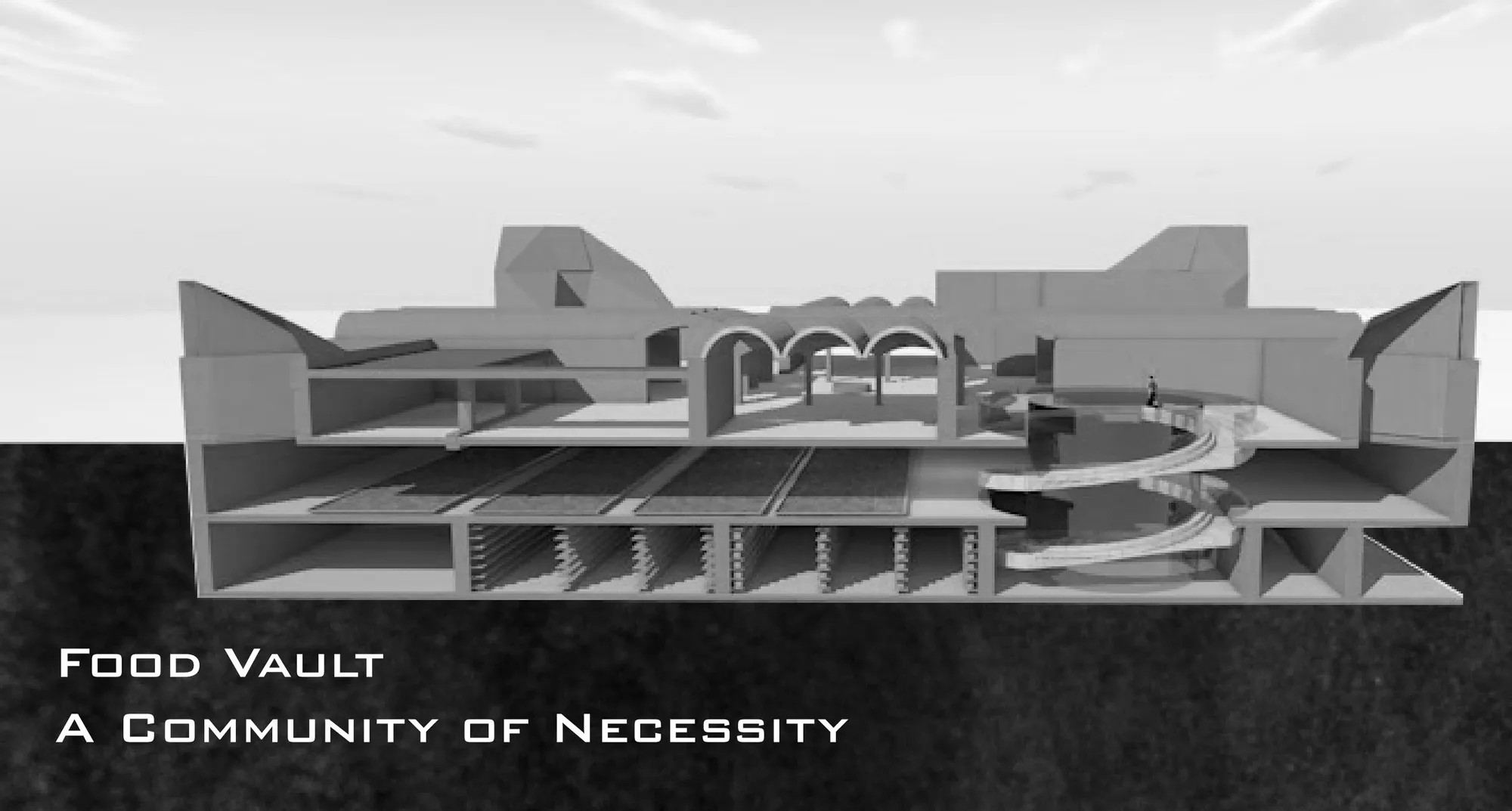
A Community of Necessity
A Project Embracing the Needs of the User
Concept
The concept behind this idea is that the function of a food vault can go beyond the safekeeping and distribution of food in case of an emergency. It can work all year round and serve the needs of the people in addition to its regular function. Furthermore, in order to create an enticing experience that would attract people to use the building, the design incorporates the concept of open spaces that can enhance the user experience and give the idea of an outdoor excursion.
Intent
The intent behind my design was to create a structure with extra functions that work in tandem with its intended purpose, as well as incorporate traditional elements that can attract and influence the users such as open courtyard spaces for various uses. Furthermore, underground spaces are being utilized for critical functions of the building. While the ground level is dedicated to the user experience and needs, the underground spaces serve to support that and the primary directive of the building, which is food protection and distribution in case of an emergency.
Program
My structure is separated into three different levels, each with its own intended purpose and program. The ground level is a mix between everyday use and emergency use. In regular times, the entire level can work as a bazaar, for people to showcase, buy and sell their own products as well as use the open courtyard spaces as gathering points for social or official interactions. In case of emergencies the same spaces can be used for distributing necessary goods to those in need or provide temporary shelter. On the same level there are also the offices for the NGOs and volunteers as well as the space for the transportation of the goods. On the level below there is an underground farm that people can use to grow their own food and sell it above in the bazaar or use it to replenish the supply of stored and protected food below. This level is also supported by four towers that aid in the collection and direction of light and manage the interior environment. Finally on the last underground level, below the farm, there is the food vault where the necessary goods are stored and protected and waiting to be used in an emergency.
Iterations
In addition to the research of the program which aimed to expand and enhance the required food vault criteria, I tried to integrate certain traditional elements into the structure. This attempt to return to the past while maintaining the needs of the present took a few iterations and trials to reach this proposal.
Investigation
The investigation into the project was two-sided. One with regard to the structure and one with regard to the users. In order to avoid an impersonal approach that would alienate the users and make them avoid the structure, I tried to create a design that would attract them to it. The large opening entrances on all sides, the open courtyards, the pathways to the underground, even the program aims to entice the users into visiting and using the building both in their everyday lives and if the necessity arrives in case of an emergency.
Expansion
This project does not utilize the entire available plot which gives it the opportunity to expand in the future. It can expand to the very limits of the plot either with a continuation of the existing structure or with separate other smaller scale structures. Furthermore, these parts can be raised in height or continue with the underground concept and expand further into the earth. Finally, it could even expand without the need for new construction. The interior bazaar for example, can expand and start utilizing the exterior spaces and create an entirely different outdoor experience.


Popular Articles
Popular articles from the community


The Musturak Paradise: Senior Living Architecture for a Connected Future in Temara, Morocco
The Musturak Paradise reimagines senior living architecture in Temara via private homes, social spaces, culture, community, and shared care.

Co-life: Sustainable Architecture for Age-Friendly Community Living
Co-life reimagines sustainable architecture for seniors through courtyards, rammed earth, shared gardens, and spaces designed for belonging.

Riyadh For All: Intergenerational Urban Design for Active Aging in Rabat
Riyadh For All reimagines urban design in Rabat with intergenerational co-living, adaptive courtyards, and Moroccan cultural exchange today.

Conexión: Biophilic Design Reimagines High-Rise Living in Hong Kong
Conexión reimagines high-rise living in Hong Kong through biophilic design, green facades, shared spaces, daylight, water and nature within.

Similar Reads
You might also enjoy these articles

Day and Night Park: A Time-Based Urban Newsstand in Beijing
A temporary urban newsstand in Beijing blending travel, light, and reading through poetic colors, compact form, and community-focused design.

Modernist Patio Renovation in El Masnou, Barcelona by Oliver Segura Arquitectura + Cebrià Arquitectura
Modernist patio renovation blending tradition and innovation with a movable pool, leveled floors, and Catalan materials in El Masnou.

Alto Residencial Coop: Cooperative Housing Development in Santiago de Compostela by Carbajo Barrios Arquitectos
A linear cooperative housing complex blending white volumes and perforated metal façades, enhancing community living, natural light, privacy, and urban integration.
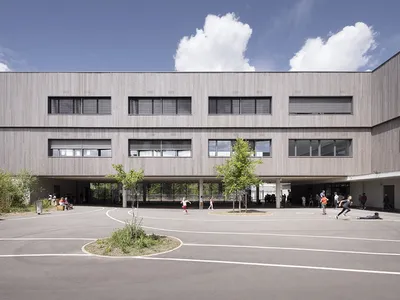
Vil Genis School by BPA ARCHITECTURE – Massy, France
Vil Genis School in Massy, France, features sustainable design, south-facing classrooms, community integration, accessible spaces, and modern educational architecture.

Explore Planning Concept Competitions
Discover active competitions in this discipline




Challenge to reimagine the Iron Throne


Photograph architecture without architects


Illustrate the lost glory of Angkor Wat - Render Challenge


Design challenge to reuse E-waste
Comments (0)
Please login or sign up to add comments
No comments yet. Be the first to comment!