
A Day at the Bazaar: Revitalizing Amravati’s Historic Jawahar Gate Market
Breathing new life into forgotten spaces while preserving cultural heritage and fostering community.


Reviving the Heart of Amravati: A Day at the Bazaar
Amravati’s Jawahar Gate market, a bustling core of commerce and culture, has long been a center for vibrant street life. Yet, over the years, the area has faced challenges in balancing its historical charm with the demands of a growing urban population. "A Day at the Bazaar," a project by Palak Bhattad, shortlisted for the UnIATA '24 award, presents a visionary strategy for urban revitalization in this historic marketplace. This project focuses on breathing new life into underutilized and neglected pockets, creating a cohesive and inviting urban tapestry while respecting the organic essence of the area.
The Vision: Transforming Defunct Spaces
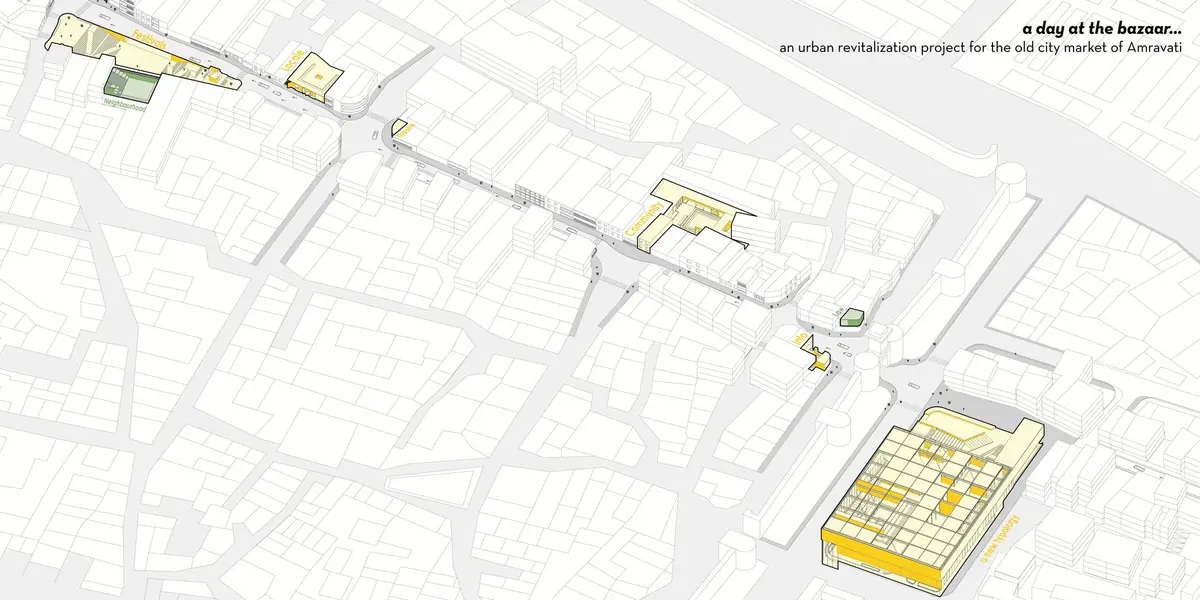
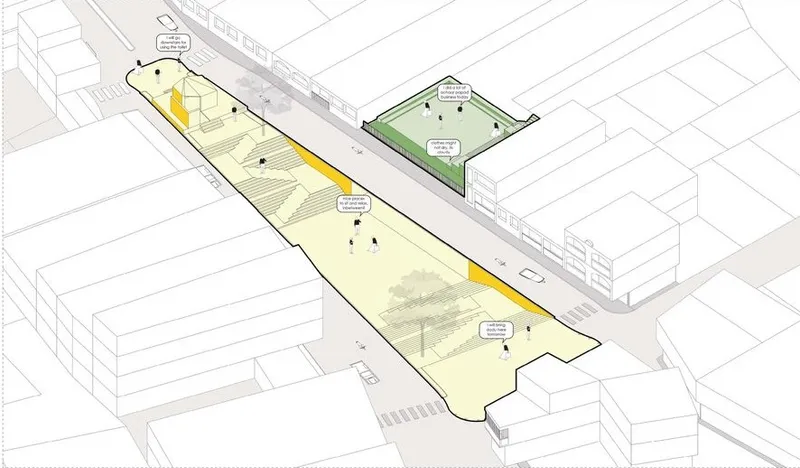
At the heart of the project lies a novel approach to urban regeneration. Through detailed surveys, defunct plots and buildings—many abandoned, disputed, or misused—were meticulously identified along the market’s 10-minute walking trail. These forgotten spaces, which previously contributed to congestion, disrepair, and underutilization, were reimagined as functional public spaces.
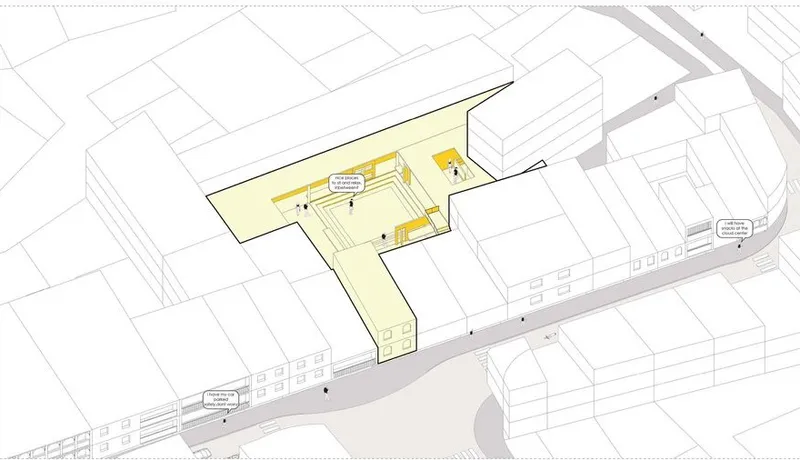
Each intervention was carefully tailored to meet the unique needs of the community. From vibrant public plazas and eateries to green pockets and women’s community centers, the design proposals reflect a balance of tradition and innovation. These spaces were not only redefined architecturally but also socially, transforming them into areas that encourage community interaction, commerce, and leisure.
Preserving Heritage While Modernizing Infrastructure
A critical aspect of the project was to maintain the organic, historical fabric of the Jawahar Gate market while introducing contemporary urban planning principles. The old market's charm lies in its labyrinth of narrow streets, bustling vendors, and the mix of permanent and temporary structures. However, this same vibrancy often led to chaos, with traffic congestion, safety concerns, and unorganized commercial activity affecting the area's efficiency.
The proposal seeks to strike a delicate balance between tradition and modernization. Roads and footpaths were widened, and pedestrian-friendly zones were introduced to ensure smoother flow and better connectivity. By converting parts of the street into a one-way route and reallocating space for loading and unloading during designated time frames, the project envisions a streamlined yet lively market experience.
A New Typology for Public and Commercial Spaces
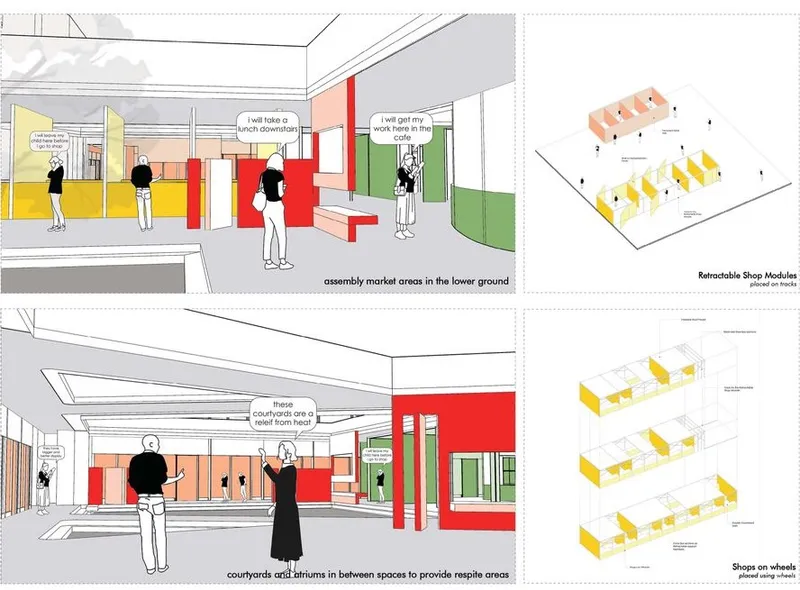
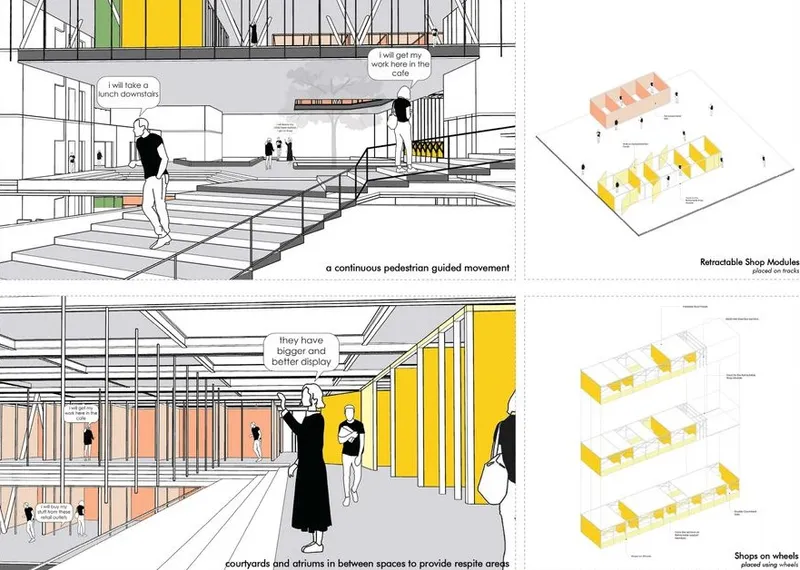
The revitalization efforts also extend to creating a new typology for the market. Retractable shop modules were designed to adapt to different times of the day and varied uses. This flexibility accommodates both permanent vendors and seasonal stalls, ensuring inclusivity for all stakeholders.
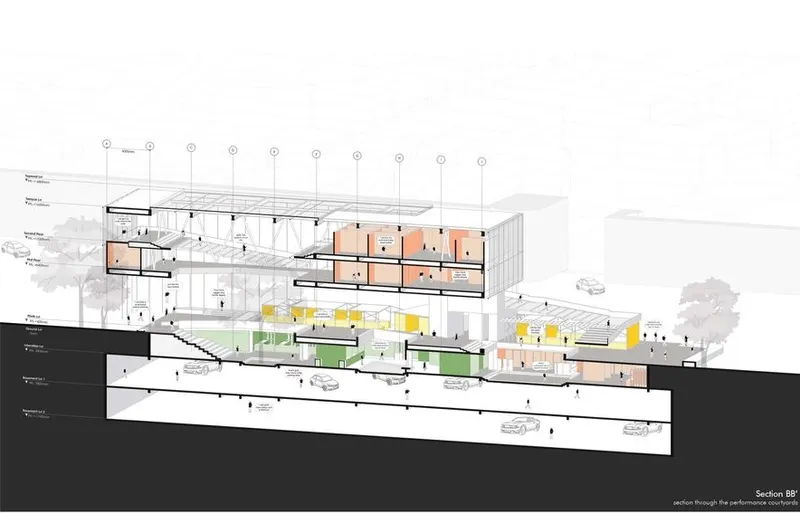
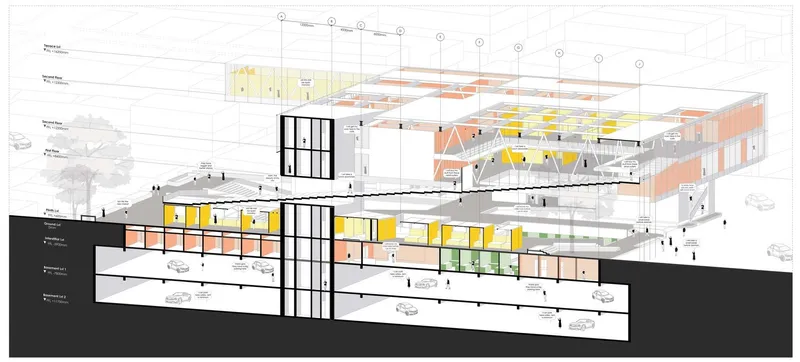
Courtyards and atriums were integrated into the architectural design, providing much-needed respite for pedestrians and visitors. These spaces foster interaction, create shade, and act as oases within the bustling market environment. The modular design of shop units and public spaces ensures that they can cater to evolving urban needs while maintaining the market’s character.
Redefining Public and Community Spaces
Key interventions in the project included reimagining neglected plots and buildings into vibrant, functional spaces. An island in the middle of the street, once used haphazardly for parking and vendor carts, was transformed into a public plaza. This new space became a focal point for the community, hosting activities such as festivals, gatherings, and recreational events for all age groups.
Similarly, a dilapidated corner plot was reimagined as a local eatery, celebrating the culinary heritage of the market. Under the shade of colorful umbrellas, visitors can enjoy traditional delicacies while soaking in the market’s lively ambiance. This eatery is not just a dining space; it’s a hub of cultural exchange, bringing together residents, shoppers, and tourists.
Another notable intervention is the creation of a women’s community center, operating as a cloud kitchen specializing in traditional recipes. This space not only empowers local women by providing them with a platform to showcase their culinary skills but also preserves the culinary traditions of Amravati.
Integrating Public Amenities
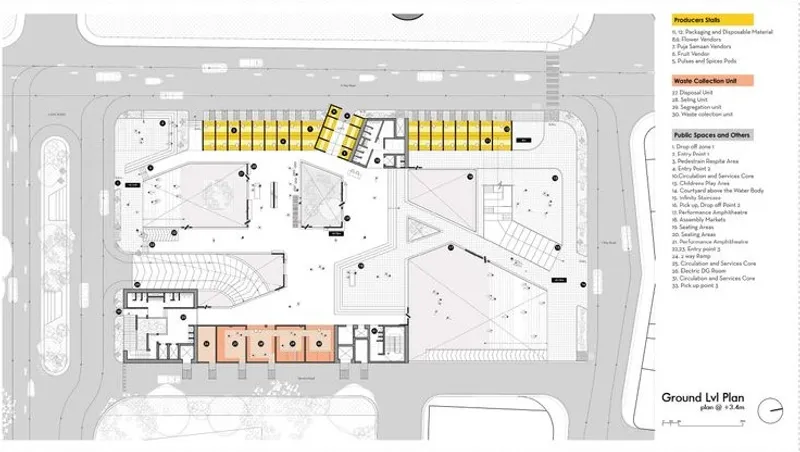
To address the needs of the market's diverse users—shoppers, residents, hawkers, and shopkeepers—a range of public amenities was seamlessly incorporated. Restrooms, lounges, shaded respite areas, and police kiosks were strategically placed throughout the market. Charging points and emergency dials were added to ensure a safe and comfortable environment for everyone.
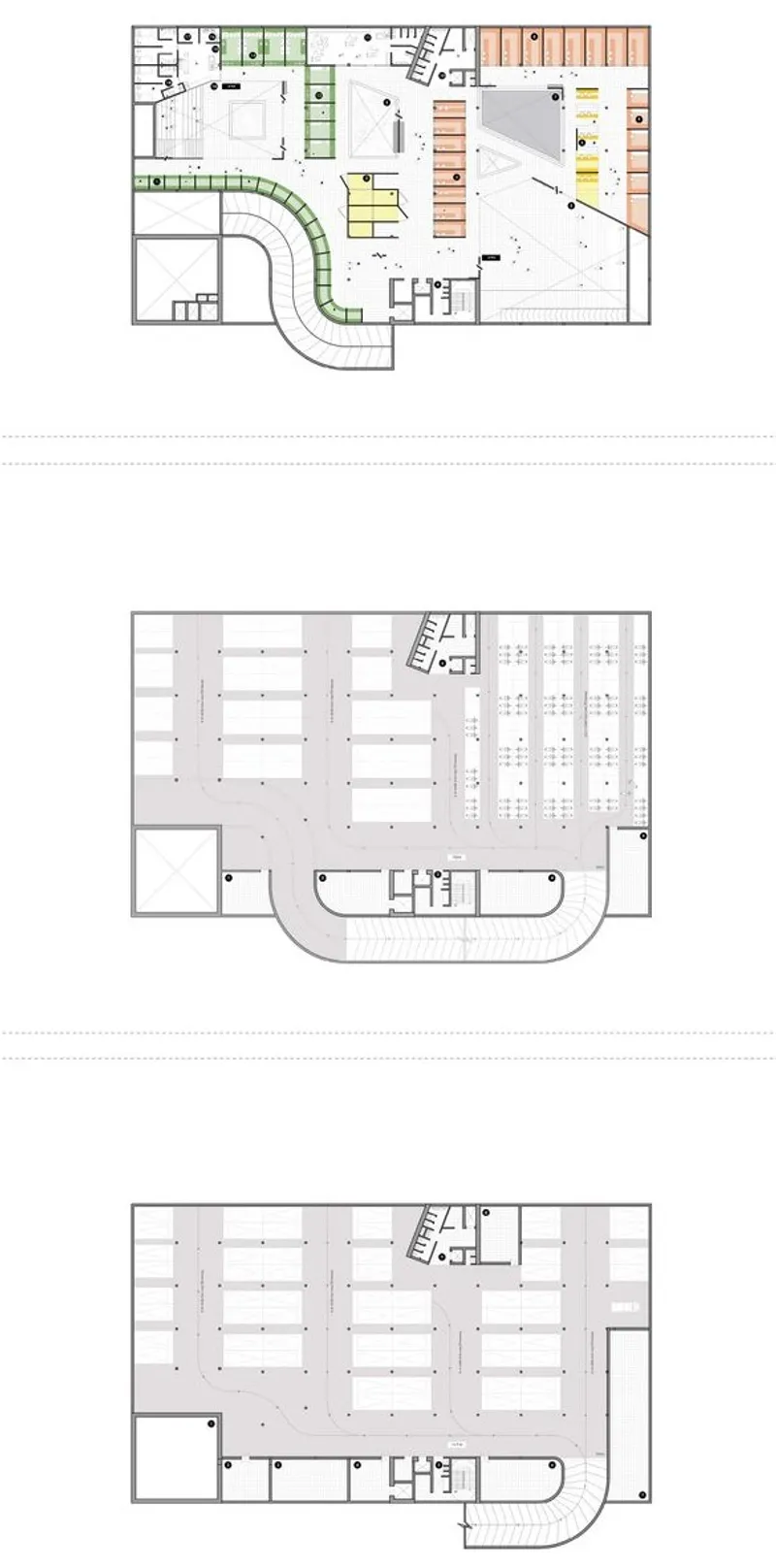
Parking, often a source of chaos in busy market areas, was relocated to designated zones, freeing up valuable street space for pedestrians and vendors. This move, along with the introduction of pedestrian-guided movement, enhances the market’s accessibility and experience.
A Sustainable Approach to Urban Revitalization
Sustainability lies at the core of the project. Materials like PET-G panels were chosen for their durability and eco-friendliness. Modular designs allow for flexibility, ensuring that spaces can evolve with changing community needs. The integration of green pockets and the reuse of abandoned plots contribute to environmental sustainability while also enhancing the aesthetic appeal of the market.
The project also aligns with Maharashtra’s TDR (Transfer of Development Rights) policy, ensuring that revitalization efforts are both economically and legally viable. By turning neglected spaces into productive urban assets, the project serves as a model for sustainable urban renewal.
Creating a Vibrant and Inclusive Urban Experience
Ultimately, "A Day at the Bazaar" reimagines the Jawahar Gate market as a vibrant, inclusive space that caters to the needs of its diverse users. By addressing the challenges of urban decay and congestion while preserving the market’s cultural and historical essence, the project revitalizes the heart of Amravati.
This visionary initiative showcases how thoughtful architectural and urban planning can transform neglected spaces into thriving public domains, fostering a sense of community and belonging. As a model for urban revitalization, it serves as an inspiring example for other cities seeking to breathe new life into their historic markets and public spaces.


Popular Articles
Popular articles from the community


David Ortega Stacks a Two-Story Mexico City Penthouse Around a Steel Stair and a Pergola-Shaded Roof Terrace
In Colonia Roma, a 300 m² penthouse uses oak joinery, a planted steel stair and a slatted roof pergola to make a new-build apartment feel like a house.

FCC Arquitectura Expands a Portuguese Granite House with a Board-Marked Concrete Wing
In Portugal, JV House pairs a cleaned-up whitewashed and granite dwelling with a timber-shuttered concrete extension, courtyards and a garden pool.

Cube Design Draws an Ecological Corridor Between Two Shenzhen Hills with the Nankai Building
Beside Shenzhen's container docks, the Nankai Building pairs stacked balconies with a climbing green screen to connect two hillsides across its height.

ETEH Reworks the Shared Spaces of São Domingos School in Brazil Around Timber, Color and Hanging Plants
At São Domingos School in Brazil, 436 m² of hall, refectory and library are recast with timber joinery, a yellow and blue code and trailing greenery.

Similar Reads
You might also enjoy these articles


Vereda Arquitetos Renovates a 40-Square-Meter Apartment Inside Niemeyer's Copan Building
A compact unit in São Paulo's most iconic residential tower gets a material overhaul that pairs exposed concrete with bold blue Formica.

Shakur's House: Exposed Brick as an Interior Organiser in a 168 m² Mashhad Residence
Brick moves indoors in this Mashhad residence, where masonry walls, glass partitions and teal planes sequence a compact home without closing it off.

Day and Night Park: A Time-Based Urban Newsstand in Beijing
A temporary urban newsstand in Beijing blending travel, light, and reading through poetic colors, compact form, and community-focused design.

Modernist Patio Renovation in El Masnou, Barcelona by Oliver Segura Arquitectura + Cebrià Arquitectura
Modernist patio renovation blending tradition and innovation with a movable pool, leveled floors, and Catalan materials in El Masnou.

Comments (0)
Please login or sign up to add comments
No comments yet. Be the first to comment!