

A House Designed by an Architect for Her Family
A minimalist family home blending indoor-outdoor spaces, spiritual reflection, and local traditions, creating serene, contemplative, and modern Jordanian living.


Located in Amman, Jordan, this 1,100 m² family home was designed by Maisam Architects, led by Meisa Batayneh, in 2001. Captured by Osman Hakouz, the residence blends contemporary design with local traditions, creating serene indoor-outdoor spaces. Minimalist interiors, thoughtful layouts, and harmonious materials foster reflection, family connection, and modern Jordanian living.
This architect-designed family home blends contemporary design with local tradition, unfolding as a journey through indoor-outdoor spaces. Expansive views, a central olive tree, and minimalist interiors create a sanctuary for reflection, spiritual healing, and family connection. Harmonious materials and thoughtful layout redefine modern residential living in Jordan.This residential project is a deeply personal creation, designed by an architect for her own family during a pivotal moment of personal and spiritual reflection. Set on a sprawling 7,000 m² site of rolling oak hills and serene landscapes, the 1,100 m² house harmoniously balances simplicity, sophistication, and introspection.
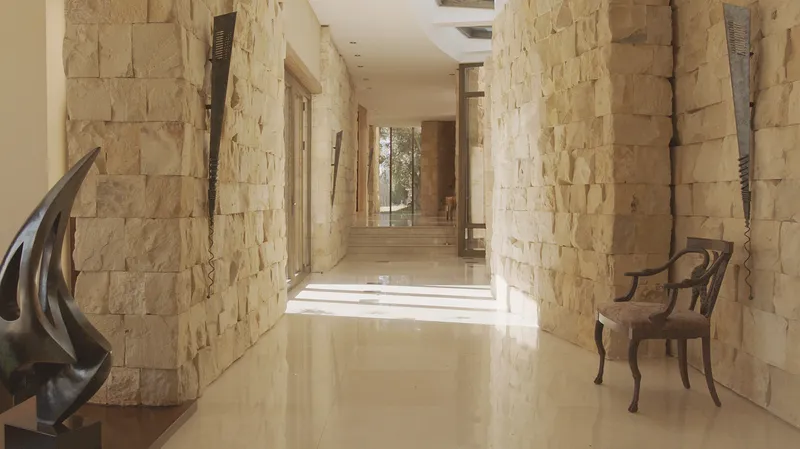
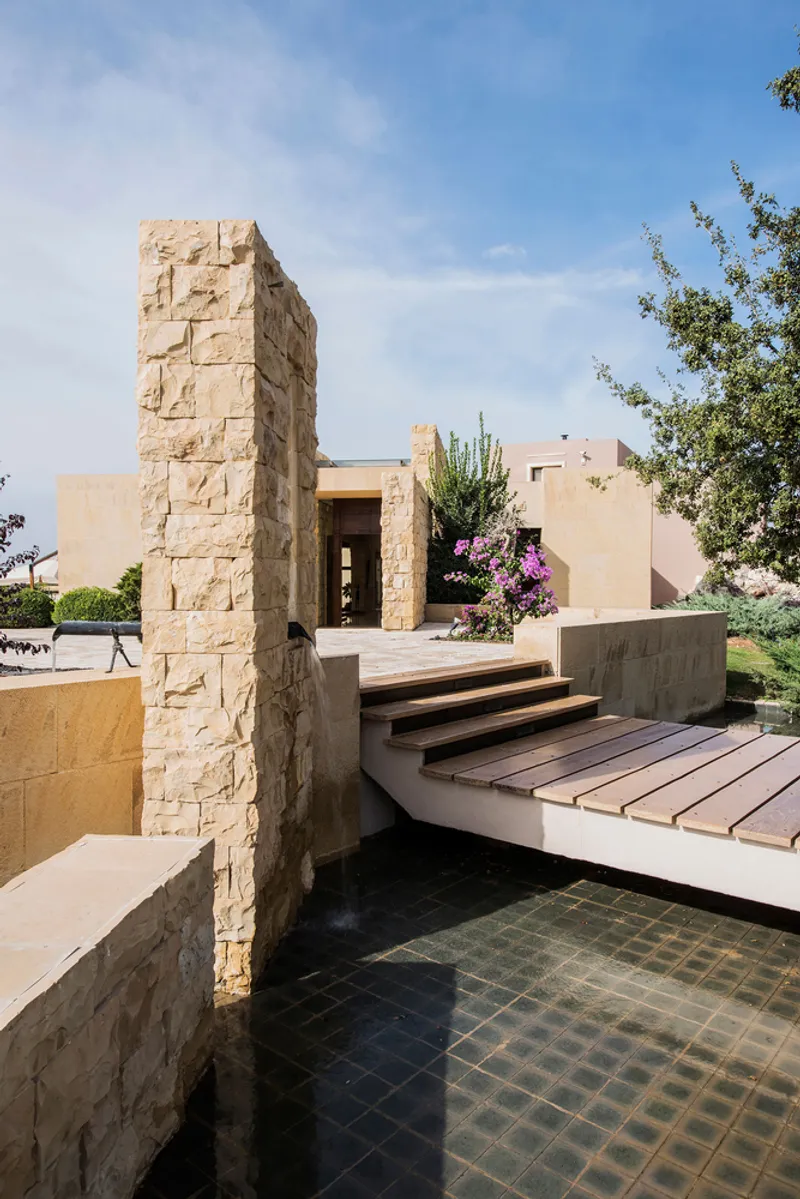
The design unfolds as a journey, guiding inhabitants and visitors through a carefully considered sequence of spaces that intertwine public and private, indoor and outdoor realms. The house begins with a commanding entrance podium, offering expansive views of the surrounding terrain—a gift of uninterrupted scenery to welcome friends and guests. This experience culminates in a central olive tree, symbolizing the “tree of life,” and distant vistas of Jerusalem, creating a poetic connection between home, nature, and spirituality.
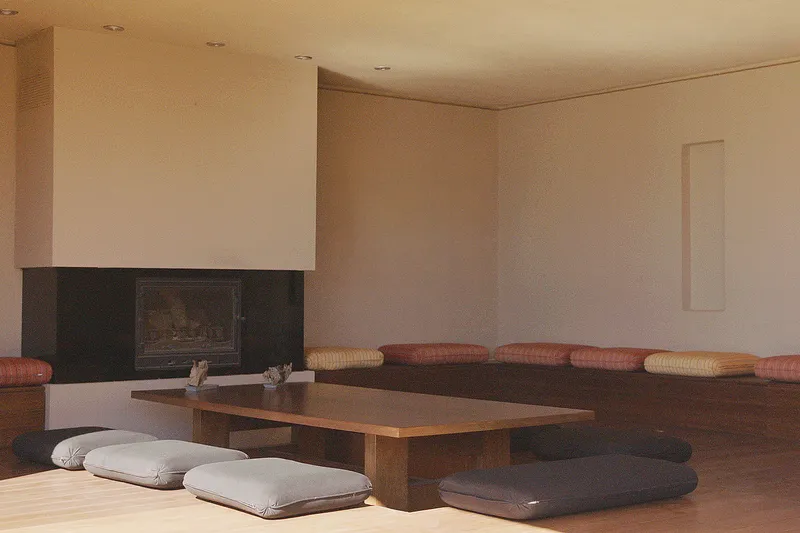
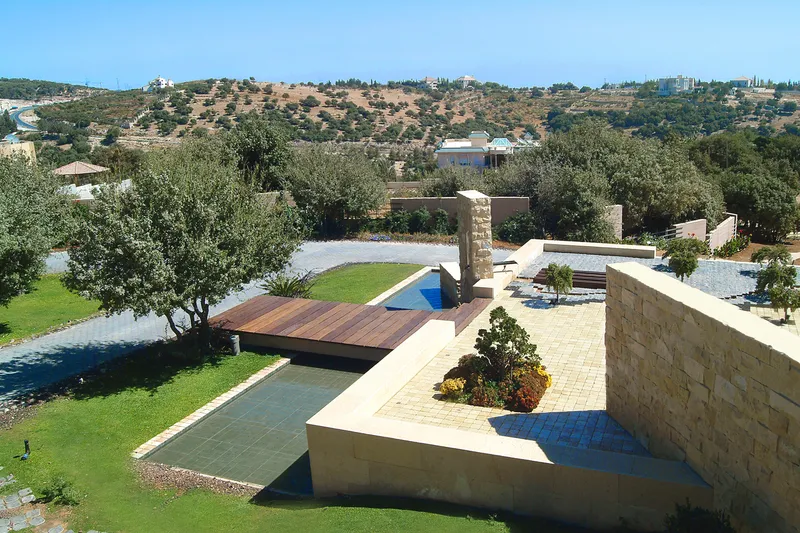
At the heart of the residence lies a 30-meter-long corridor, seamlessly linking dining, living, and family spaces. The design liberates surfaces, roofs, and walls, transforming them into functional areas of dwelling while preserving privacy and seclusion. Roof terraces invite outdoor living, and walls are thoughtfully composed to maintain openness without compromising intimacy.
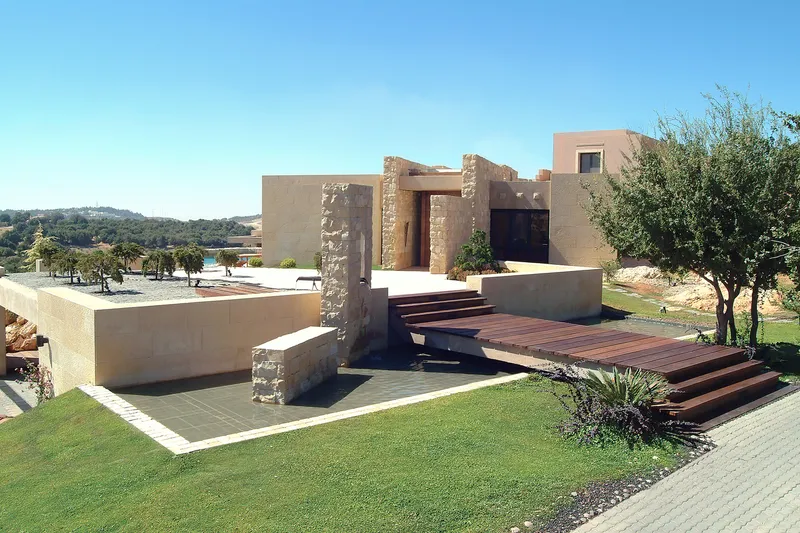

The materials further root the home in its context. Local stone, plastered surfaces, and natural finishes integrate the house with the surrounding topography, creating a sense of weightlessness and quiet presence. The home is a contemporary interpretation of the traditional village concept, clustering spaces around a spiritual “journey of life” while embracing modern architectural principles.
Beyond its functional aspects, the house is a sanctuary of reflection. From public gathering areas to private family quarters inspired by traditional attics of northern Jordanian villages, every space encourages contemplation and personal introspection. The minimalist approach transforms the dwelling into a symbol of life’s transience, offering a setting for spiritual healing, self-evaluation, and emotional grounding.
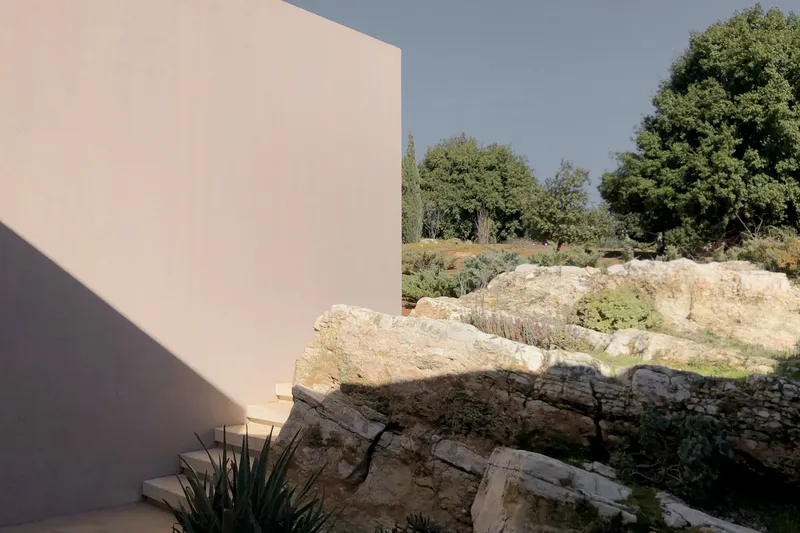
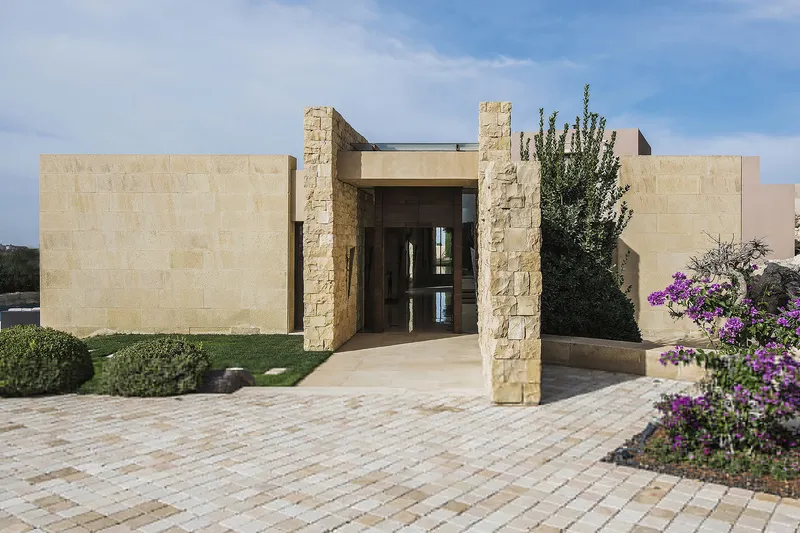
This residence represents a paradigm shift in contemporary residential design, redefining spatial organization, integrating natural light and technology, and connecting deeply with both nature and local architectural heritage. It stands as a quiet yet powerful testament to the possibilities of thoughtful, context-aware design.
All photographs are works of Osman Hakouz


Popular Articles
Popular articles from the community

Opera by the Sea Estonia: Three Shells Dissolving Architecture into Tallinn's Coastline
A winning opera house proposal replaces monumental form with interconnected shells that blur the boundary between building, park and Baltic Sea.

Singing Woman: Contemporary Architecture Inspired by Estonia’s Voice and the Sea
Singing Woman turns Estonia’s song culture into flowing opera house architecture, blending public life, landscape, sea, and national memory.

The Amber Palace Opera: A Geological Fiction Surfaces on Tallinn's Baltic Waterfront
Pierre Brillard reimagines a Baltic legend as a public landscape, opera house, and waterfront promenade rooted in Tallinn's coastal identity.
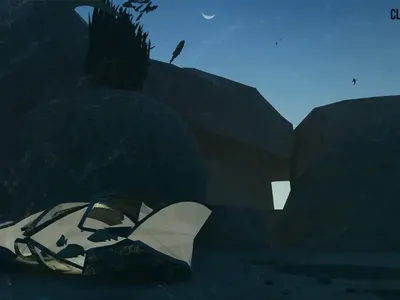
Cloaked Colonization: A Mobile Underwater Habitat That Moves Like a Fish
Micah Abaya's shortlisted EHC Pacific entry reimagines ocean settlement as a dispersed network of self-sustaining architectural organisms.

Similar Reads
You might also enjoy these articles


Hodi-Mandai Geram
Project Function: Preservation and revitalization of the Intangible heritage and socio-spatial identity of the Hodi by Housing, Cultural Memory Center, Sacred Grove, landscape, local tourism economy


Olio Towers: A Mid-Rise for Performers That Fuses Housing, Rehearsal, and Stage
Located blocks from Houston's Theater District, this modular tower stacks living units around a central performance atrium.

Oasis: Modular Green Housing Carved into Dhaka's Urban Fabric
A shortlisted Plugin Housing entry reclaims unauthorized settlements in Dhaka with stepped concrete volumes, green roofs, and ventilation-driven design.

Black Hole: A Floating Megastructure for the Post-Physical Era
Emiliano Mazzarotto envisions a spherical, self-scaling arena where e-sports, digital hotels, and holographic stadiums replace traditional public space.

Explore Arabic Architecture Competitions
Discover active competitions in this discipline

Challenge to reimagine the Iron Throne

Photograph architecture without architects

Illustrate the lost glory of Angkor Wat - Render Challenge

Design challenge to reuse E-waste
Comments (0)
Please login or sign up to add comments
No comments yet. Be the first to comment!