

A House in Žvėrynas by Inblum Architects
A contemporary wooden house in Vilnius blends family memory, CLT construction, minimalist interiors, and seamless indoor-outdoor living within a historic setting.


Residential Architecture Rooted in Memory, Wood, and Contemporary Craft
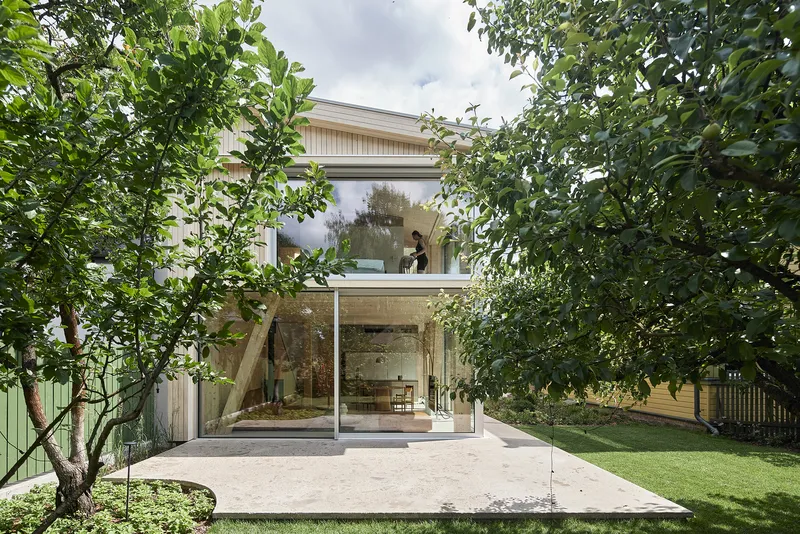
Set within the historic Žvėrynas district of Vilnius, A House in Žvėrynas by Inblum Architects is a sensitive residential renovation that weaves together family history, local architectural identity, and sustainable construction. Located behind a 1935 wooden modernist villa, the house occupies a deeply personal site, the client’s childhood home, imbuing the project with emotional continuity and long-term cultural value.
Rather than replacing the existing structure, the architects approached the project as a careful architectural reconstruction, adapting the house to contemporary living standards while preserving its historical presence within the urban fabric of Vilnius. The result is a modest yet highly refined single-family house that respects both its surroundings and its legacy.
Contemporary Interpretation of Wooden Architecture
The design draws inspiration from the traditional wooden architecture that defines Žvėrynas, reinterpreted through modern construction methods and minimalist spatial thinking. Cross-laminated timber (CLT) technology was employed throughout, allowing the house to be constructed entirely from glued pinewood with exceptional precision. This approach treats the building as a carefully crafted object: almost like a piece of furniture: where structure, surface, and detail form a cohesive whole.
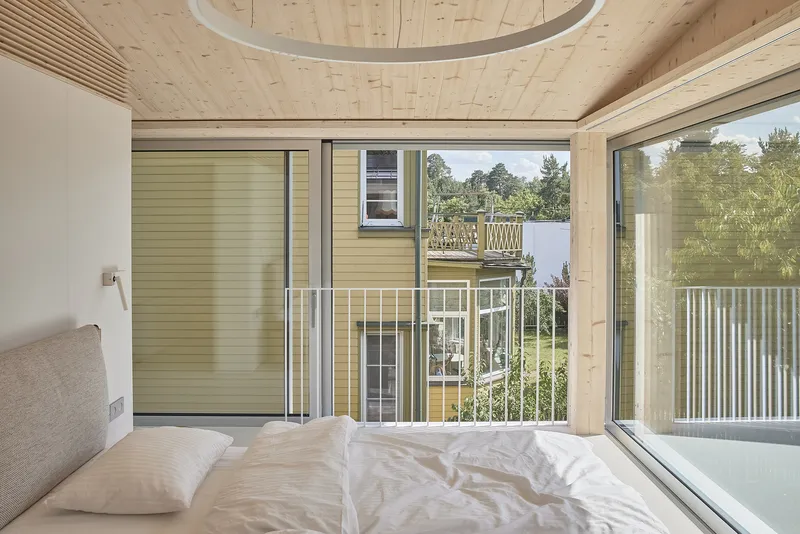
Pinewood defines both the interior and exterior architecture, creating a seamless visual continuity that blurs the boundary between inside and outside. The material palette remains intentionally restrained, emphasizing craftsmanship, sustainability, and tactile quality.

Spatial Organization and Indoor, Outdoor Living
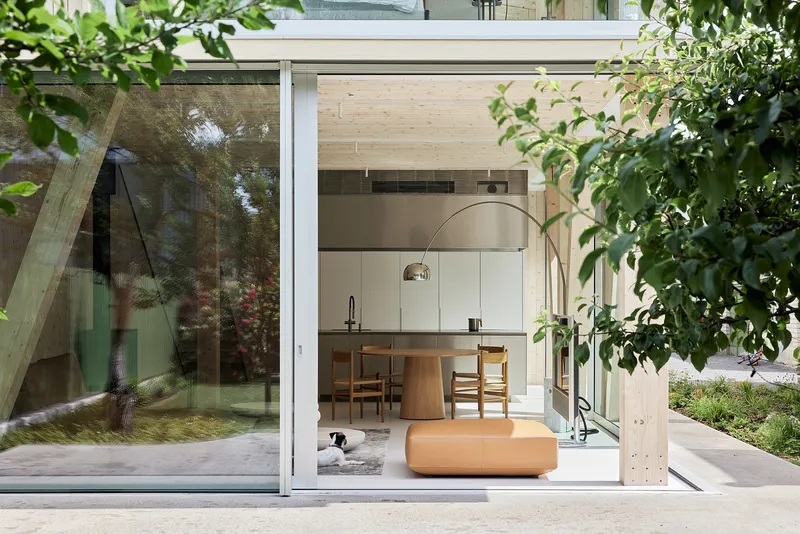
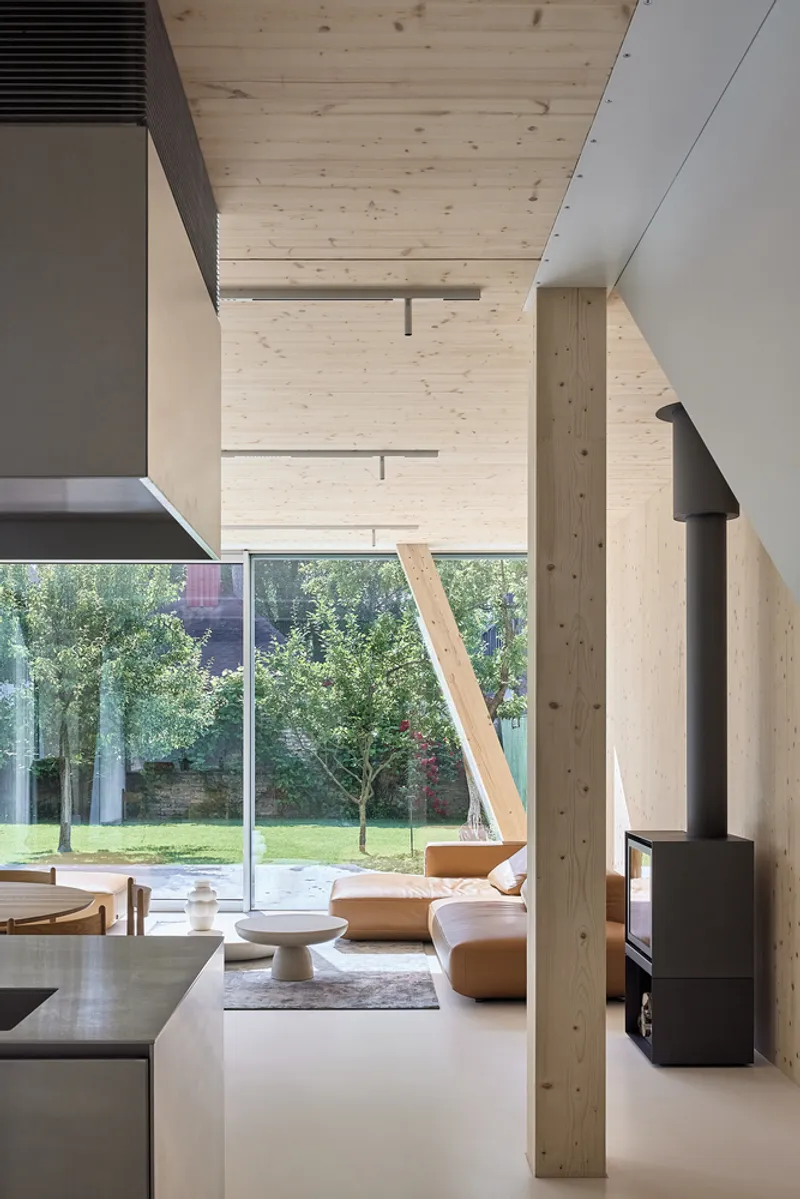
The living spaces are oriented toward a private courtyard, while a solid northern wall functions as a firewall between neighboring plots. Large sliding glass windows on both floors open the interior to the outdoors, transforming the courtyard into an extension of the living spaces. On the ground floor, concrete flooring continues from the interior to the terrace, reinforcing the fluid transition between indoor and outdoor environments.
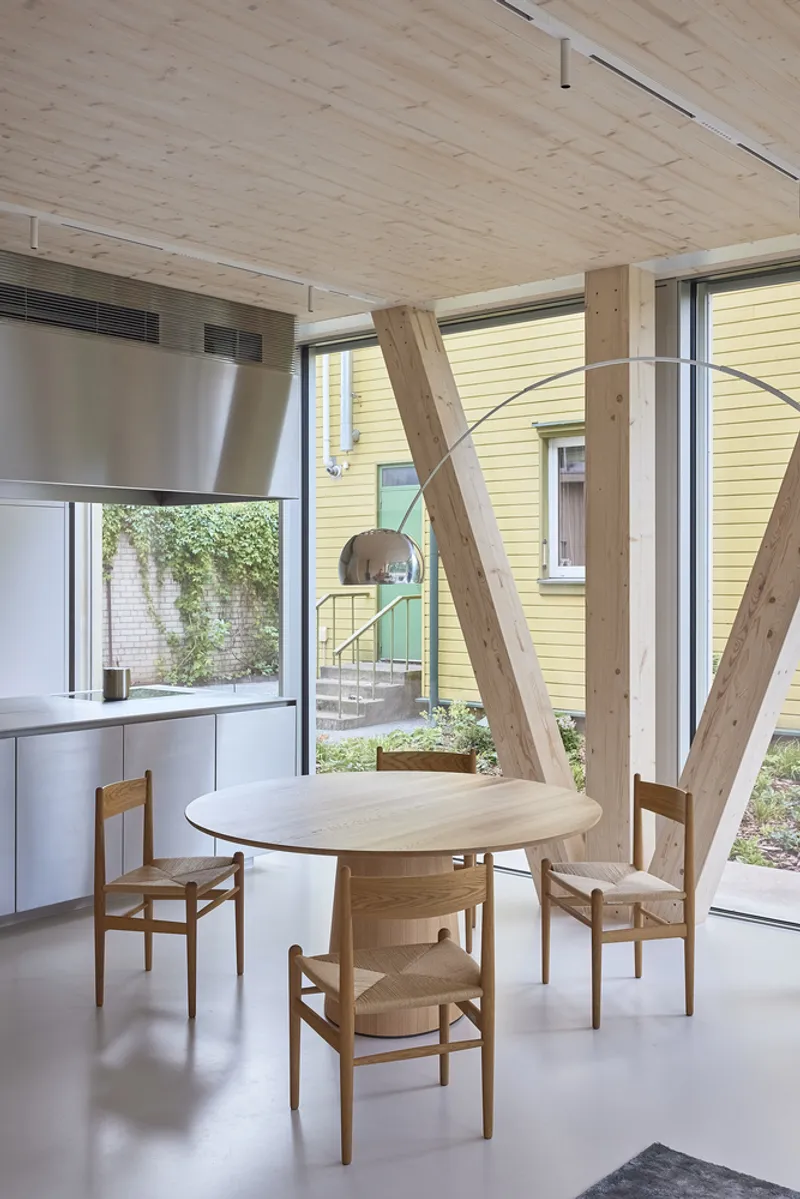
Inside, the architecture is deliberately minimal. Homogeneous walls, ceilings, and built-in furniture form a quiet, neutral backdrop that allows natural light, wood textures, and views to take center stage. This understated interior design enhances the home’s sense of calm and spatial clarity.

Framing Landscape, Light, and History
Each window in the house is precisely positioned to frame a distinct view: the historic wooden villa seen from the dining area, the surrounding pine forest visible from the bedroom, and neighboring heritage buildings observed from the children’s rooms. These carefully curated views strengthen the dialogue between architecture, landscape, and memory.
Exposed wooden ceiling edges and integrated skylights subtly reveal the structure, celebrating the honesty of the material. All engineering systems, including HVAC, are discreetly integrated into custom furniture, preserving the clean lines and uncluttered aesthetic of the interior spaces.
Architectural Expression and Material Detail
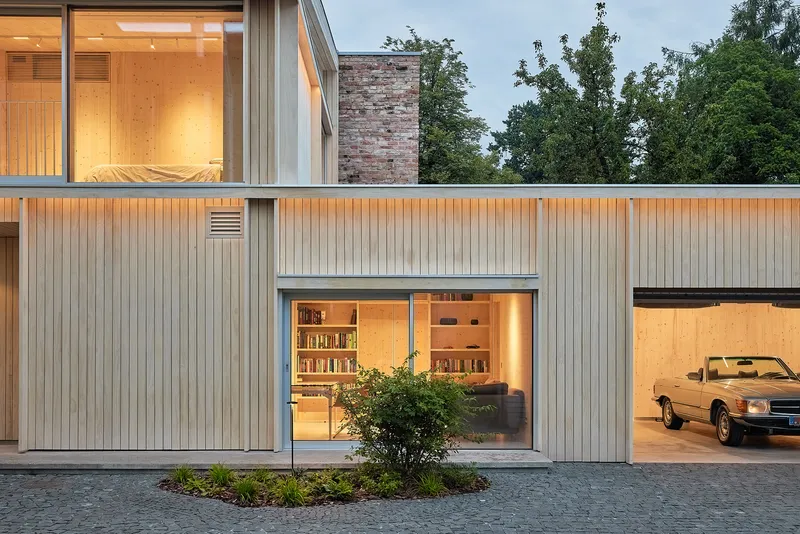
The building’s volume is defined by a composition of horizontal and vertical lines, dividing the facades into planes of windows and solid walls. Pinewood cladding continues across exterior and interior surfaces, incorporating integrated roller blinds and concealed lighting for visual coherence.
A bush-hammered concrete terrace wraps the house, giving the volume a sense of lightness while anchoring it to the ground. Distinctive wooden truss columns serve both structural and expressive roles, becoming key architectural elements that articulate the house’s identity.

Landscape Preservation and Environmental Sensitivity
Outdoor spaces were designed with great care to preserve the site’s original character. Existing fruit trees, which hold personal significance for the family, were retained, reinforcing the emotional continuity of the place. The courtyard’s original granite tiles were protected during construction and reinstalled with subtle adjustments, reflecting a respectful and sustainable design approach.

All photographs are works of
Norbert Tukaj


Popular Articles
Popular articles from the community


The Amber Palace Opera: A Geological Fiction Surfaces on Tallinn's Baltic Waterfront
Pierre Brillard reimagines a Baltic legend as a public landscape, opera house, and waterfront promenade rooted in Tallinn's coastal identity.
Tsunami Convergenics: Turning Catastrophic Ocean Forces into Underwater Housing Infrastructure
A speculative underwater settlement off the coast of Onagawa, Japan, treats tsunamis and typhoons as energy sources rather than threats.

Singing Woman: Contemporary Architecture Inspired by Estonia’s Voice and the Sea
Singing Woman turns Estonia’s song culture into flowing opera house architecture, blending public life, landscape, sea, and national memory.

Temporary Home for Dogs: A Reversed Zoo Rethinks Animal Shelter Architecture
In Bucharest, a sinuous corridor and freed landscape flip the logic of containment, designing a shelter that works to make itself unnecessary.

Similar Reads
You might also enjoy these articles


Hodi-Mandai Geram
Project Function: Preservation and revitalization of the Intangible heritage and socio-spatial identity of the Hodi by Housing, Cultural Memory Center, Sacred Grove, landscape, local tourism economy


Olio Towers: A Mid-Rise for Performers That Fuses Housing, Rehearsal, and Stage
Located blocks from Houston's Theater District, this modular tower stacks living units around a central performance atrium.

Oasis: Modular Green Housing Carved into Dhaka's Urban Fabric
A shortlisted Plugin Housing entry reclaims unauthorized settlements in Dhaka with stepped concrete volumes, green roofs, and ventilation-driven design.

Black Hole: A Floating Megastructure for the Post-Physical Era
Emiliano Mazzarotto envisions a spherical, self-scaling arena where e-sports, digital hotels, and holographic stadiums replace traditional public space.

Explore Wood Construction Competitions
Discover active competitions in this discipline

Challenge to design mud housing for contemporary communities

Challenge to reimagine the Iron Throne

Photograph architecture without architects

Illustrate the lost glory of Angkor Wat - Render Challenge
Comments (0)
Please login or sign up to add comments
No comments yet. Be the first to comment!