
Rodapé Arquitetura Turns a São Paulo Motel Suite into a Radical Case Study in Accessible Intimacy
The Nuu Auge Suite in Tatuapé reimagines the Brazilian motel as an inclusive, research-driven space for diverse bodies and desires.


The motel occupies a strange, specific niche in Brazilian culture: a place of anonymity, pleasure, and architectural indifference. Suites are designed for a narrow script of use, and the bodies they anticipate tend to be even narrower. Rodapé Arquitetura, led by architect Luciana Ligeiro, looked at that script and rewrote it. The Nuu Auge Suite, completed in 2024 inside a renovated 2000s-era motel in Tatuapé, São Paulo, is the result: a three-story, six-environment suite where accessibility is not a compliance checklist but the generative idea behind every surface, rail, and threshold.
What makes this project worth paying attention to is its refusal to treat accessibility as a problem to solve and then move on. Rodapé conducted research into how Brazilians imagine motel space, what cultural weight it carries, and what gets excluded when architecture serves only one kind of encounter. The result is a suite that includes an elevator, grab bars that double as spatial ornaments, bathing platforms designed for wheelchair transfer, and material choices (glass block, mirror, tile) that function as what the studio calls "prosthetics," extending what bodies can do rather than restricting where they can go. It is part of the larger Nuu Motel, a 3,500 square meter complex with four suite categories, but the Auge is the one that pushes the hardest.
Color as Spatial Cue
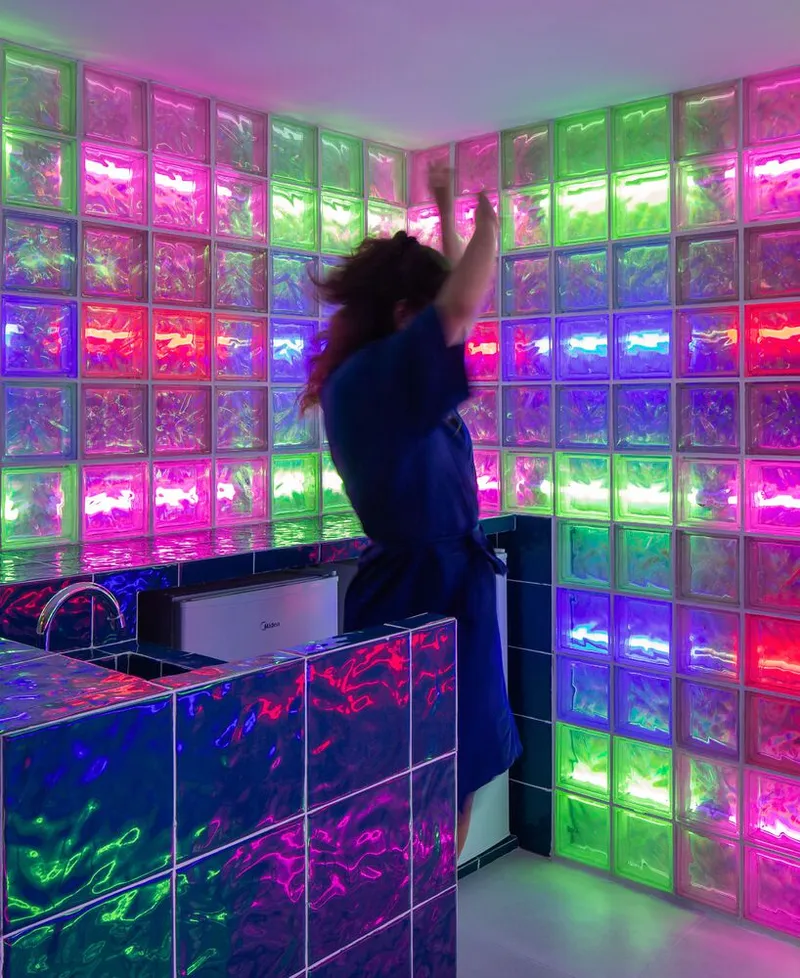
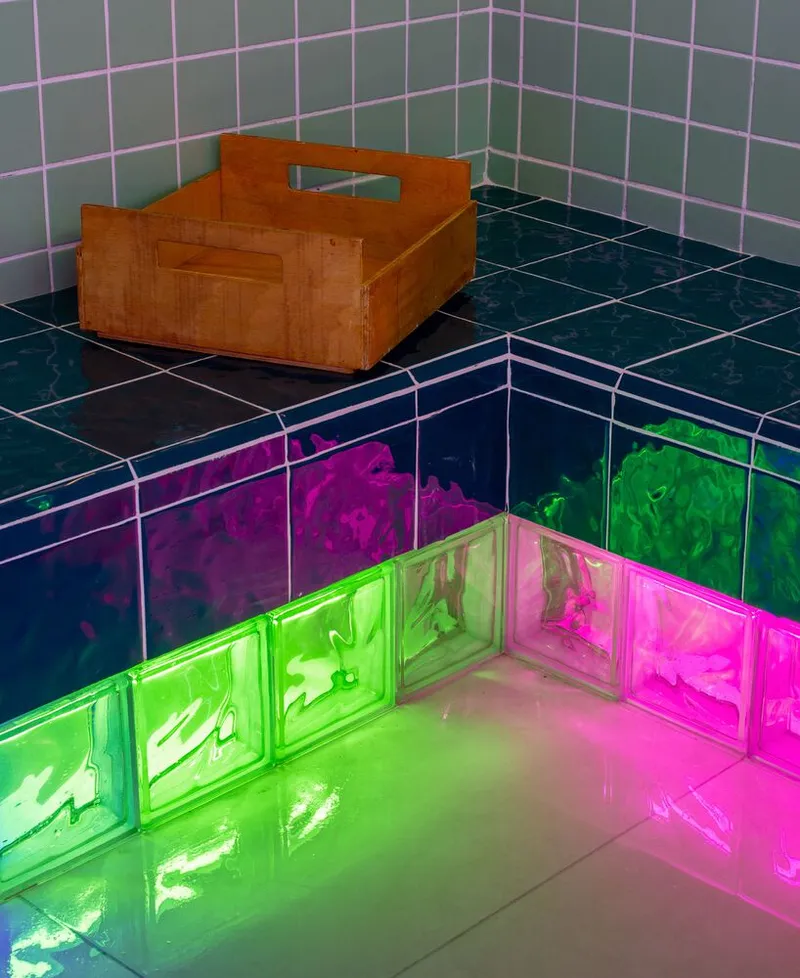
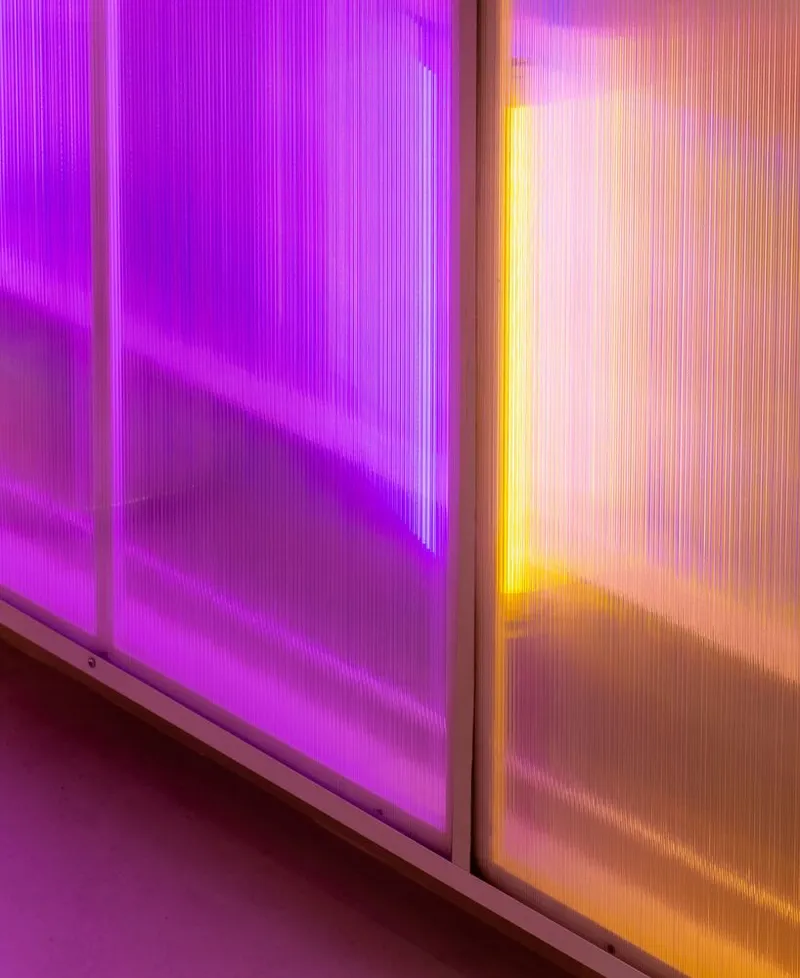
The suite's palette is not decorative. Glass block walls shift from green to pink to purple depending on the backlight, and polycarbonate panels glow in magenta and orange. These surfaces serve as wayfinding devices, marking transitions between the suite's six distinct zones: dance floor, bar, lounge, bedroom, round jacuzzi, and interactive shower boxes. The color gradients are legible from a distance, which matters in a space designed to be navigated by people with varying degrees of vision, mobility, and spatial orientation.
There is a tendency in inclusive design to strip spaces down to neutral, clinical palettes on the assumption that simplicity equals access. Rodapé does the opposite. The color here is intense, saturated, almost theatrical, yet it organizes the suite more clearly than signage ever could. Each zone has a chromatic identity, and the transitions between them are gradual rather than abrupt.
The Bathing Platform as Social Space
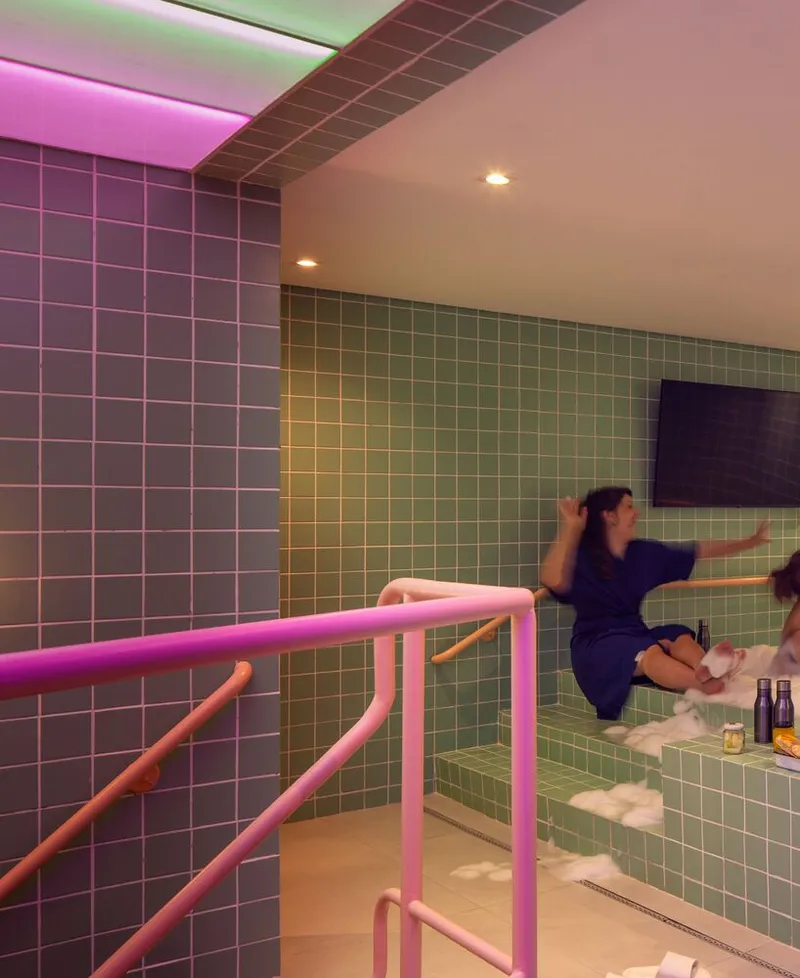
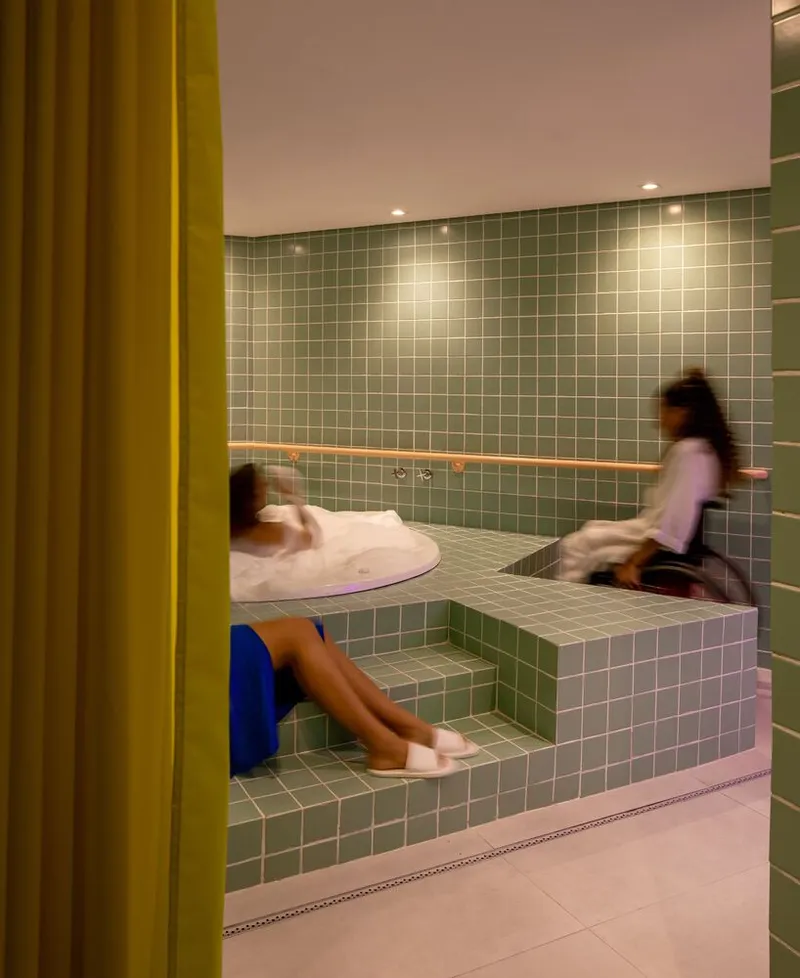
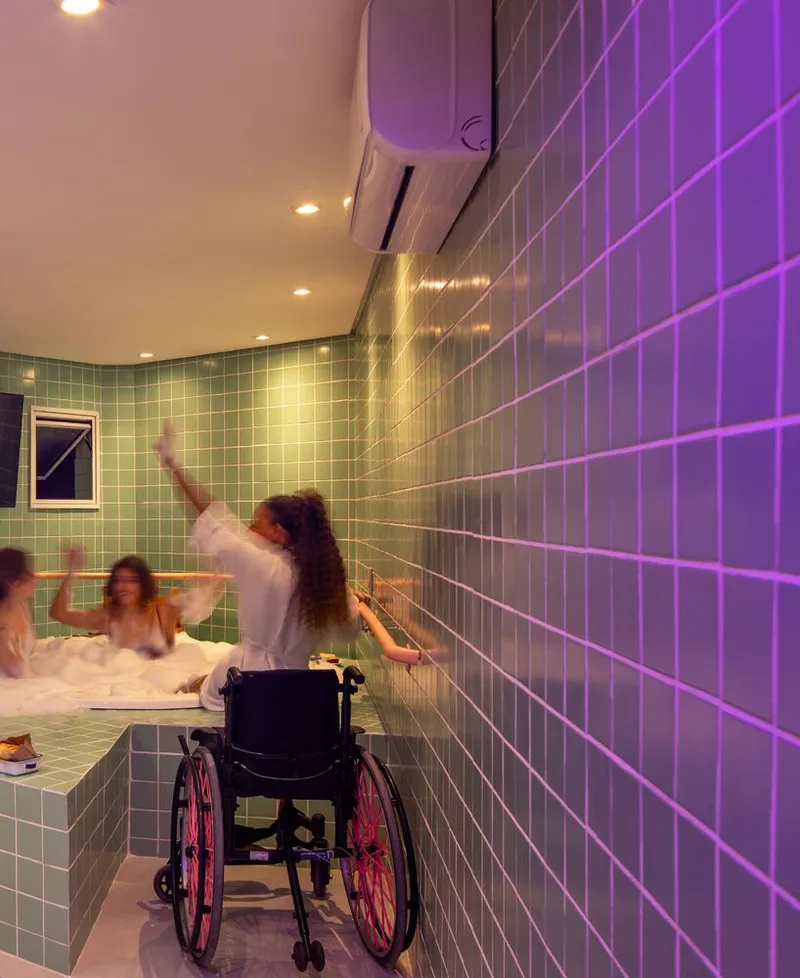
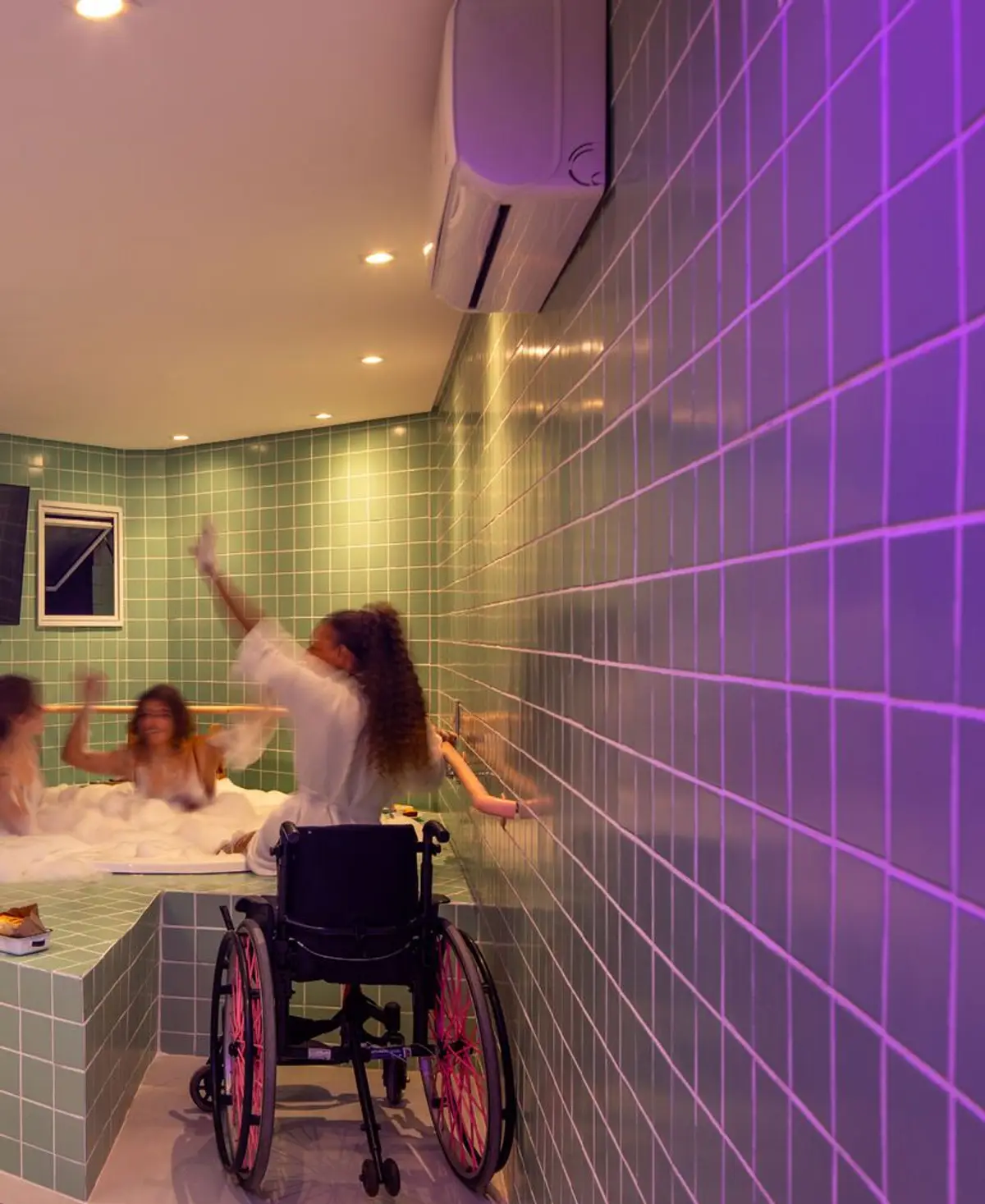
The tiered bathing platform is probably the suite's most provocative element. Pink tubular railings frame a series of tile steps that descend toward the jacuzzi, creating a landscape that can be occupied at multiple heights. A wheelchair user can reach the water from the upper tier. Two people can sit at different levels, separated or together, with a yellow curtain offering optional privacy. The platform is not a bathroom. It is closer to a Roman bath: a social, bodily, communal space.
The image of a wheelchair user reaching toward a purple-lit tile wall alongside seated bathers is quietly radical. It depicts access not as a separate accommodation but as a shared spatial condition. Everyone is on the same platform, engaging with the same water and light, just at different heights. That is a more honest model of inclusivity than a grab bar bolted to an afterthought.
Railings and Grab Bars as Architecture
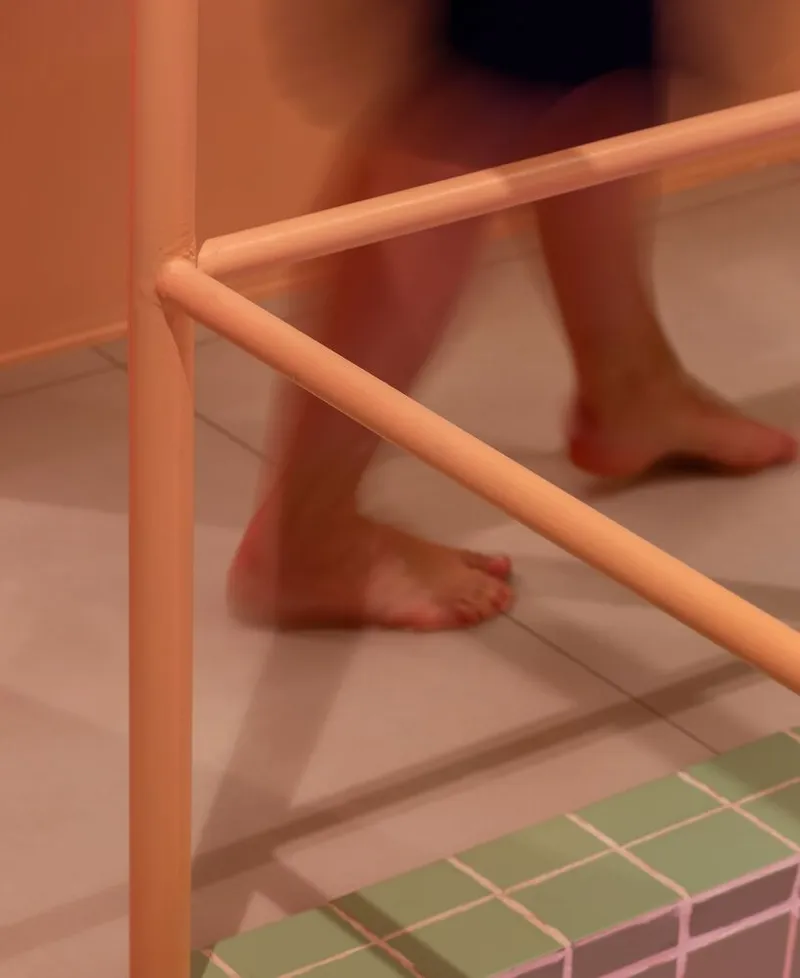
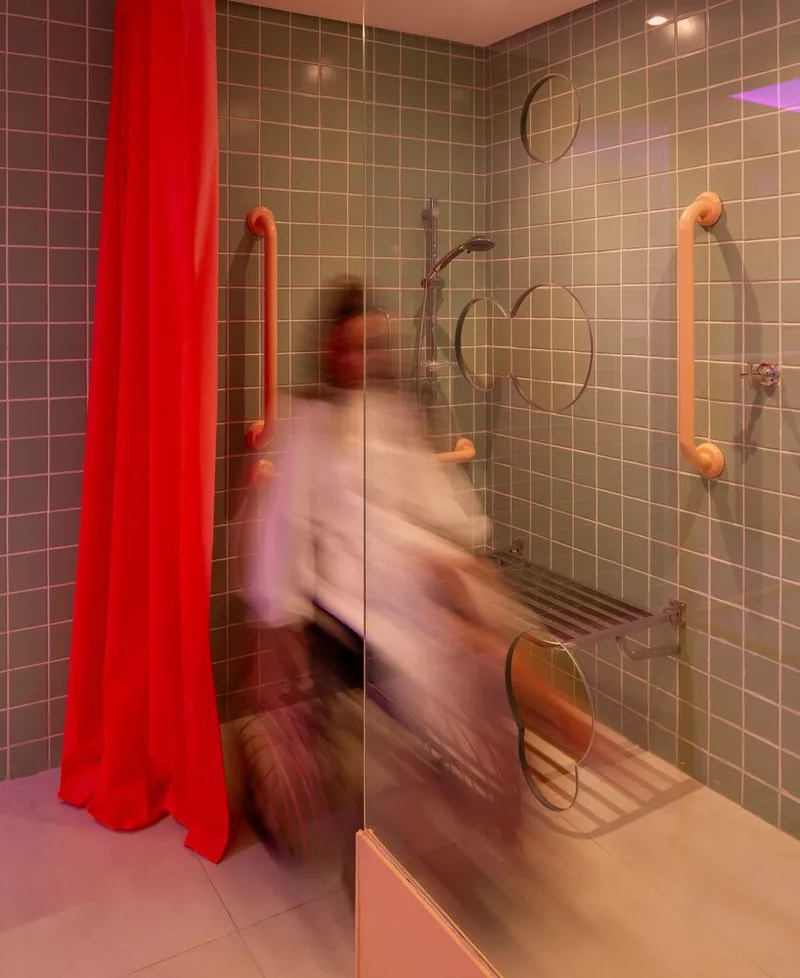
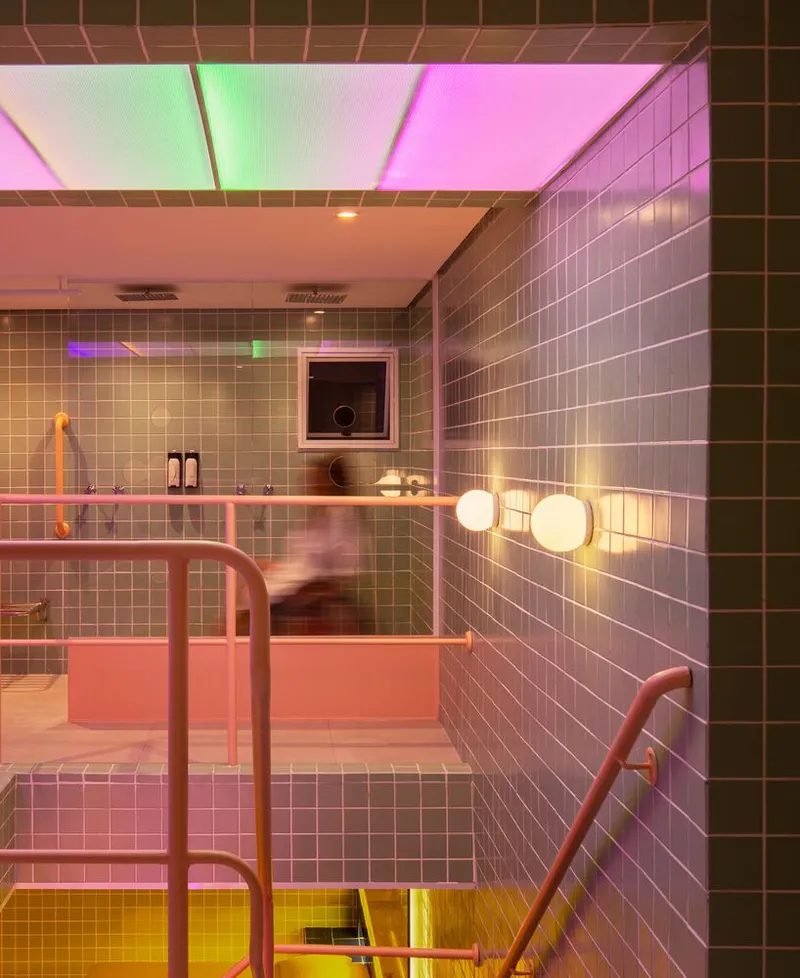
In most accessible projects, grab bars are products selected from a catalog and screwed into finished walls. Here, the pink tubular steel railings are integral to the suite's visual identity. They run along stairs, frame bathing zones, and appear in the shower stall alongside a handheld showerhead. The close-up of a peach-colored handrail junction against white tile and bare feet tells the whole story: this is hardware designed to be touched, leaned on, and inhabited, not hidden.
The accessible shower stall itself goes beyond ABNT parameters. Gradient tile walls and colored lighting turn what is typically a sterile enclosure into an environment with atmosphere. Grab bars are positioned at multiple heights. The result is a shower that a wheelchair user or a standing person can both use comfortably, without one of them feeling like the space was designed for the other.
Vertical Circulation and the Pink Staircase
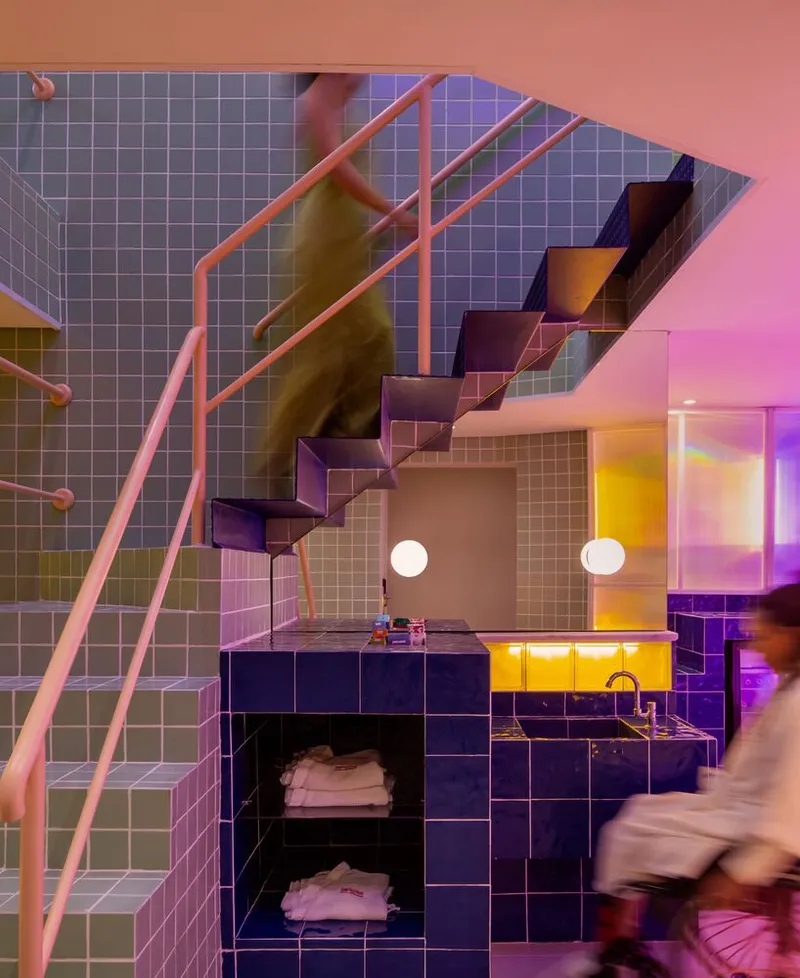
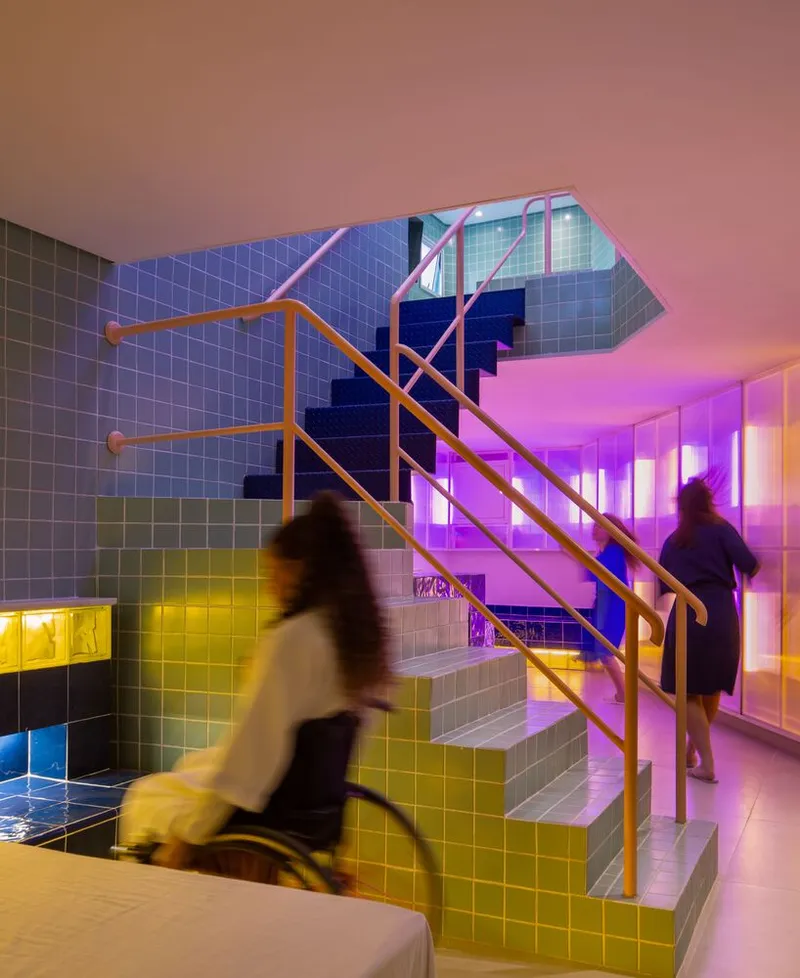
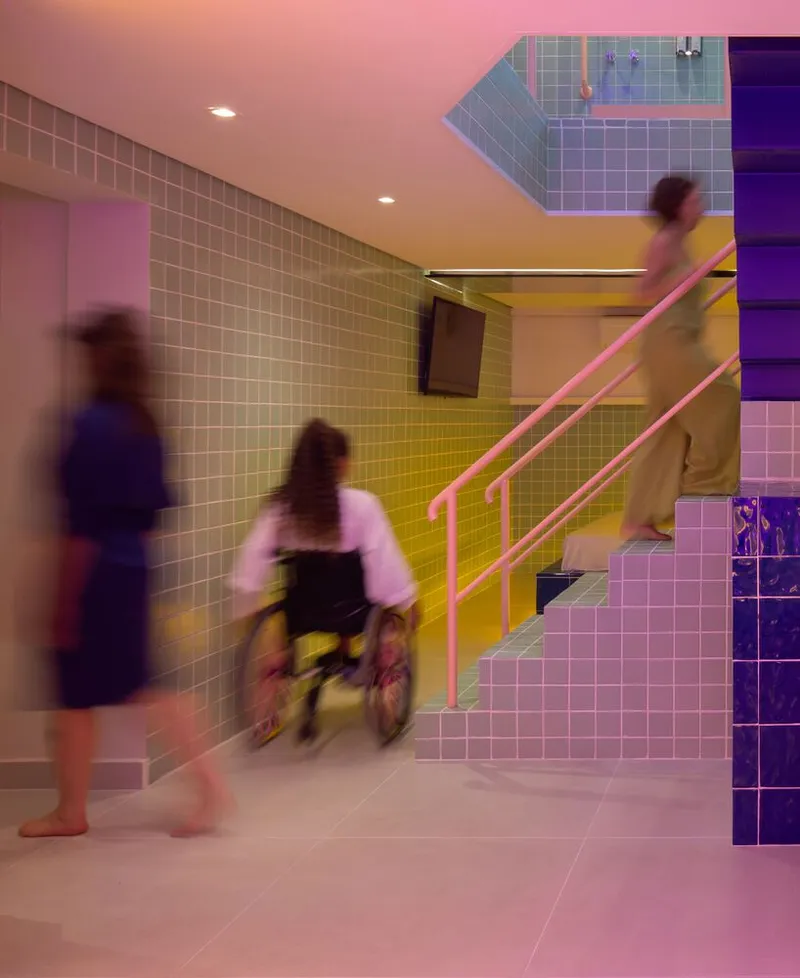
The suite spans three floors, and the staircase is not just a connector but a set piece. Pink metal railings ascend past yellow and blue glazed tile walls under purple light. The stair treads are wide enough to pause on, and the wine glasses perched on them in one image suggest that Rodapé designed this vertical space to be occupied, not just traversed. An elevator provides an alternative route, but the staircase is clearly meant to be an experience in its own right.
The decision to make the staircase visually dominant while also providing full elevator access is a smart one. It avoids the common trap where the "accessible route" feels like the service entrance. Both paths through the suite are designed with equal care, which sends a clear message about who the space is for: everyone.
Glass Block, Mirror, and the Prosthetic Interior
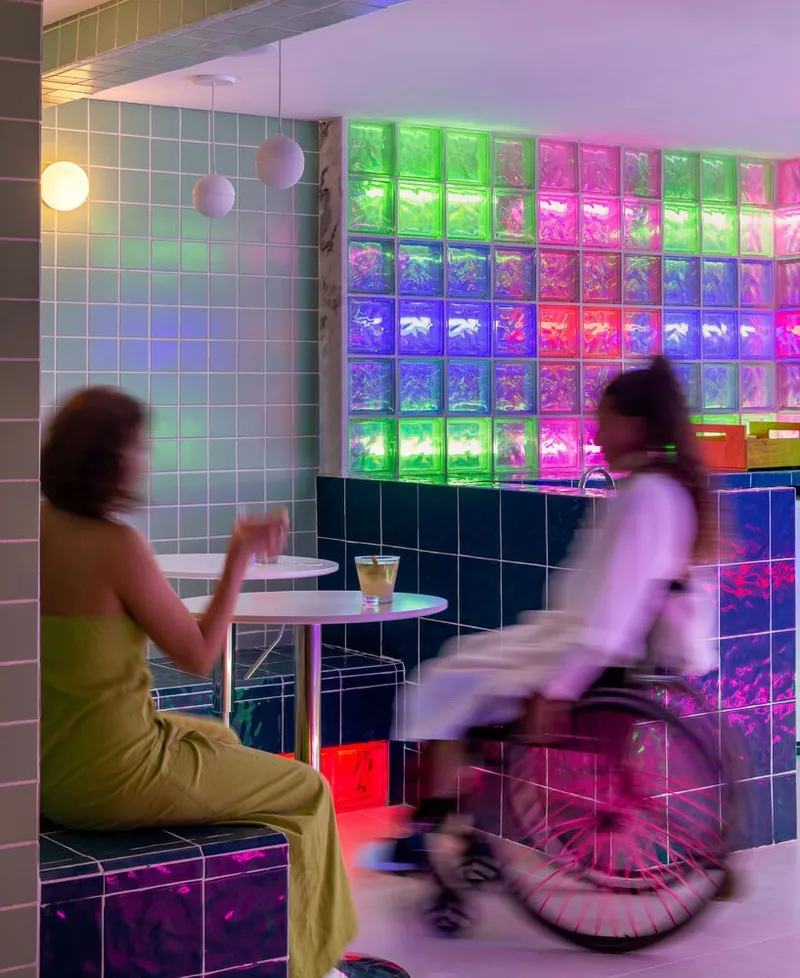
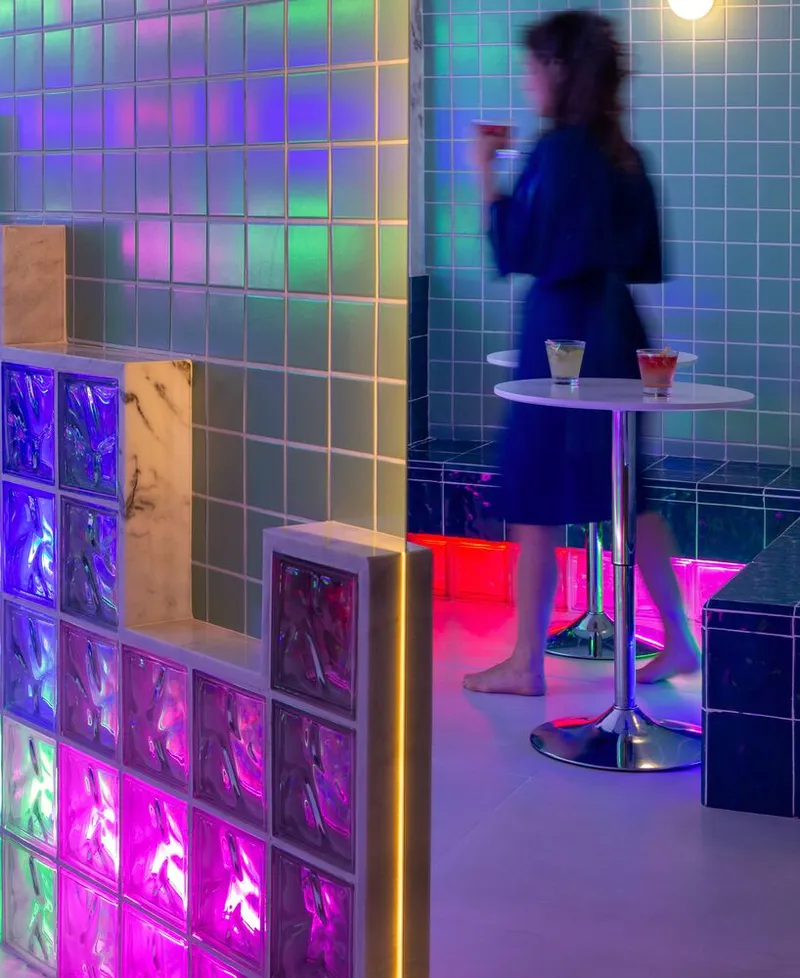
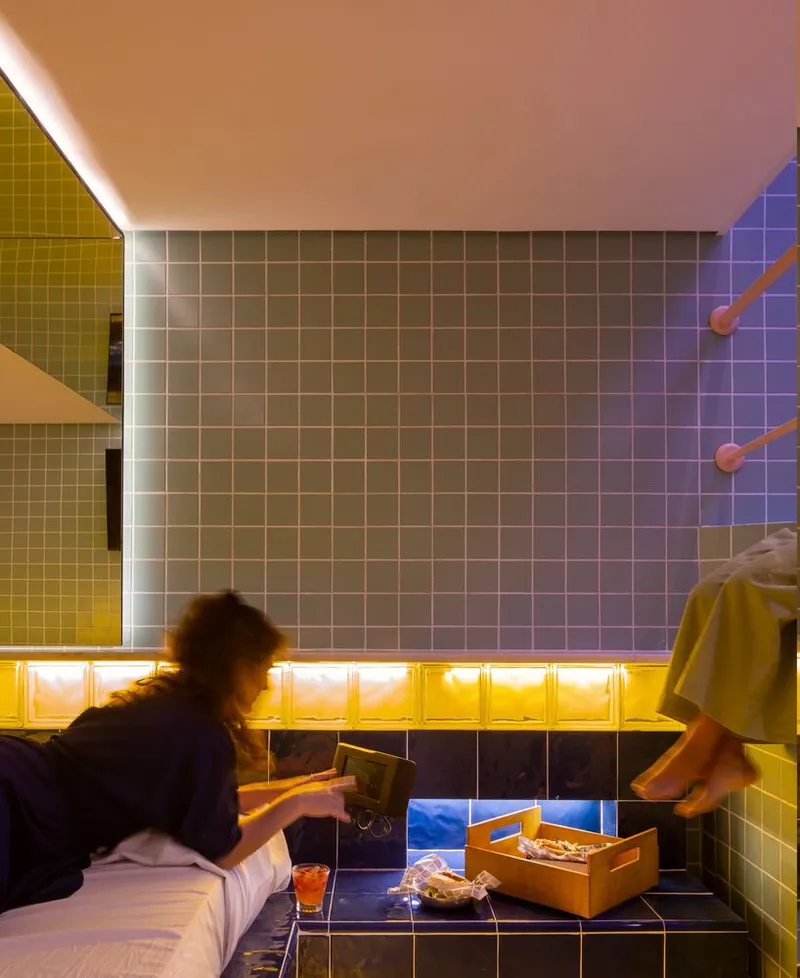
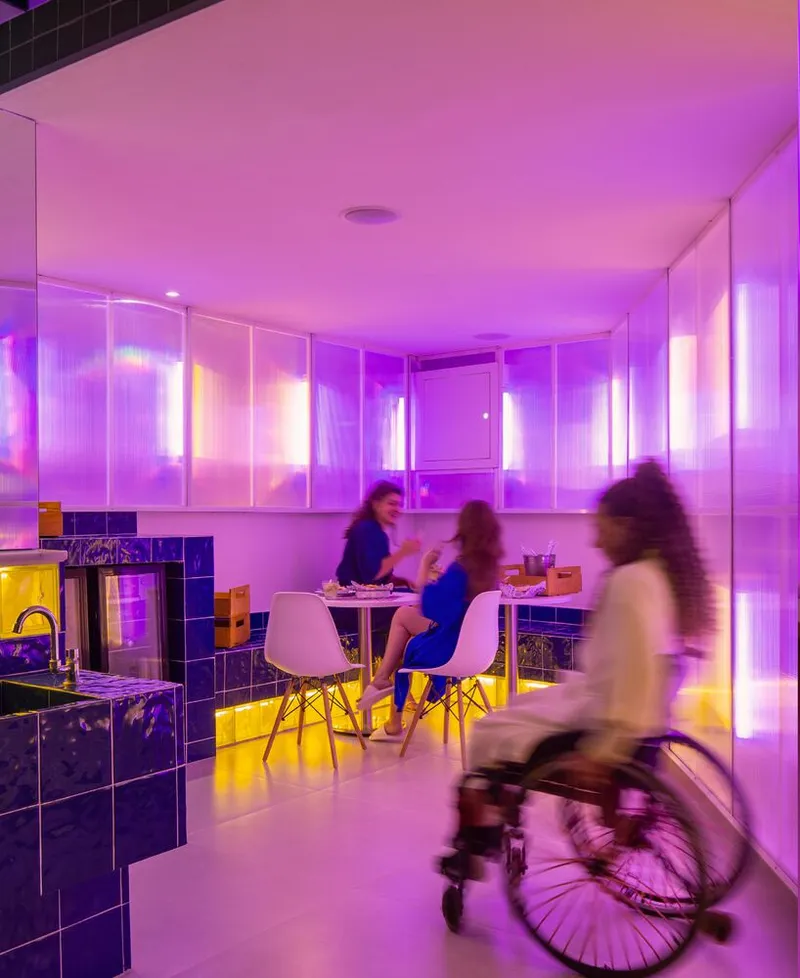
Rodapé describes the suite's material elements as prosthetics: objects that extend the body's capacity rather than merely containing it. Glass block walls let light through while maintaining the anonymity that is central to Brazilian motel culture. Mirrors amplify the perception of space and multiply the body within it. Built-in counters at the bar and cafe level put surfaces at transfer height for wheelchair users, doubling as communal gathering points.
The cafe area, with its backlit glass block partitions and pedestal tables, reads as genuinely convivial. Figures move through the space in the photographs, and the blurred motion reinforces the sense that this is architecture designed for use, not display. There is nothing precious about the material choices. Tile, glass block, and painted steel are durable, cleanable, and unpretentious. They will age well in a space that sees heavy rotation.
Intimacy Without Assumption
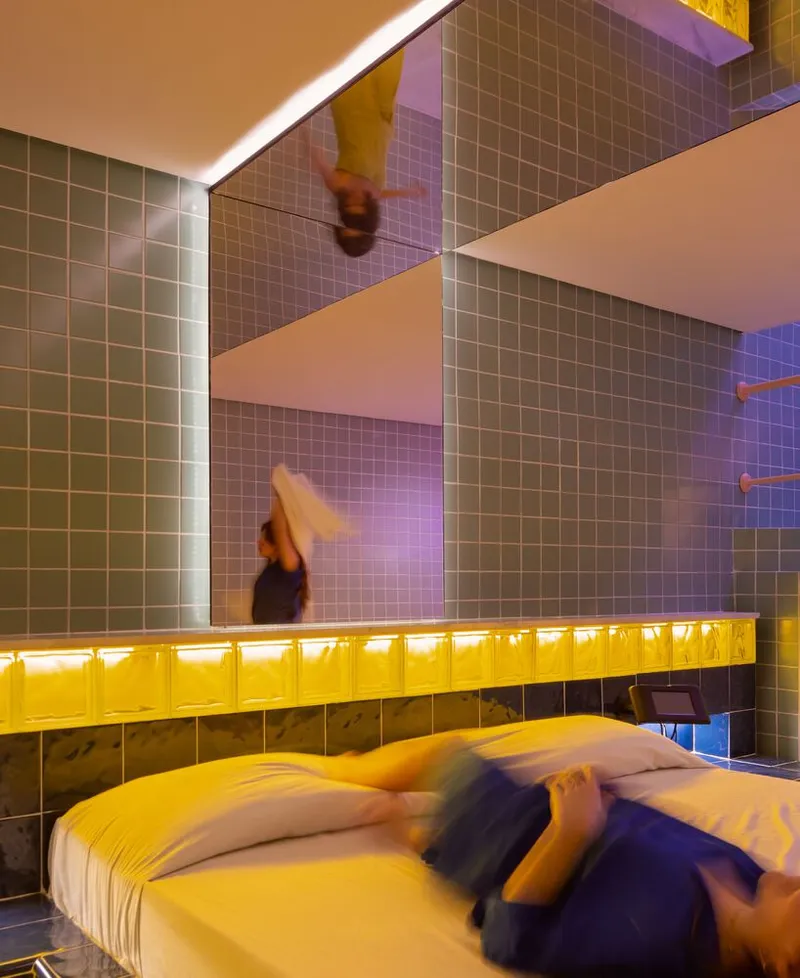
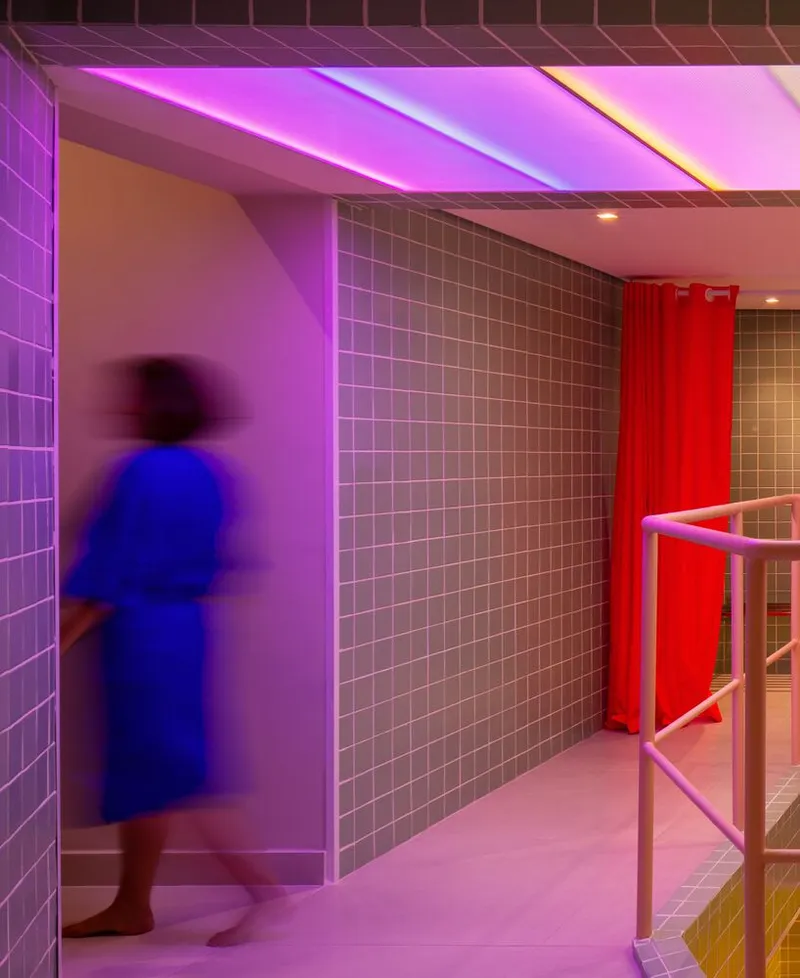
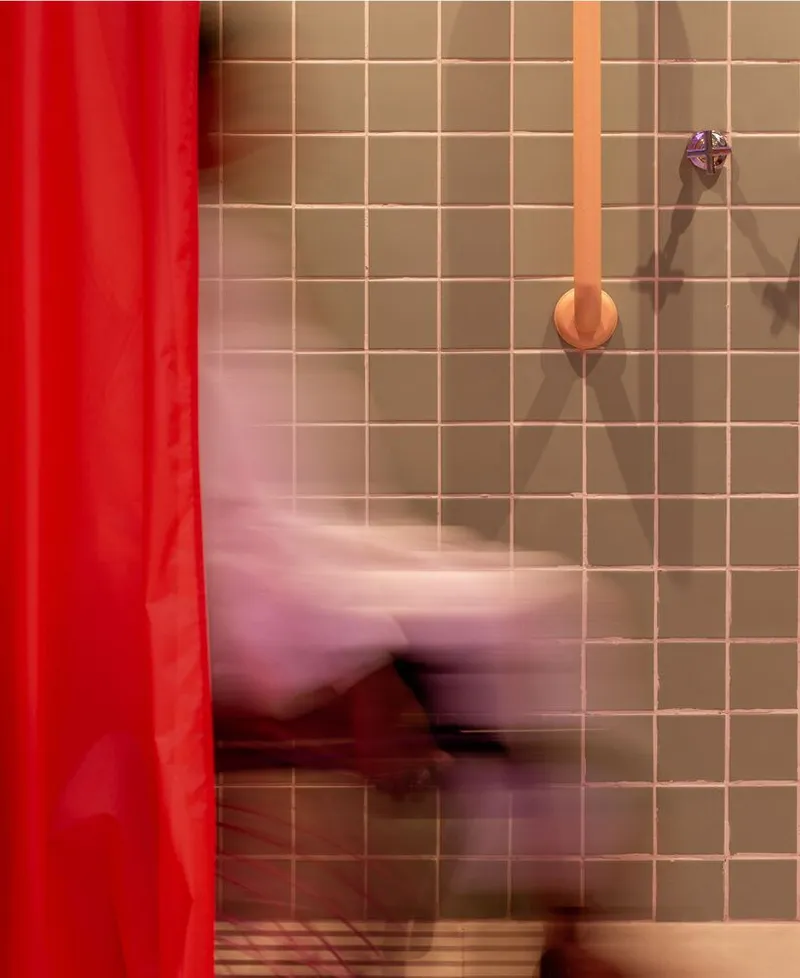
The bedroom is deliberately understated compared to the rest of the suite. A king bed sits against tiled walls with a strip of backlit yellow glass block above. The corridor outside glows pink and purple. Wall-mounted fixtures in warm tones and a red curtain suggest that every zone in the suite can be configured for privacy or exposure, depending on the occupant's preference.
What Rodapé gets right here is the refusal to prescribe how the space should be used. The six environments offer a menu of atmospheres rather than a sequence of rooms. A couple might spend the entire visit in the jacuzzi zone. A group might never leave the dance floor. A solo visitor might use the shower boxes and the bedroom and nothing else. The architecture accommodates all of these scripts without privileging one over another, and it does so for bodies of every kind.
Stair Details
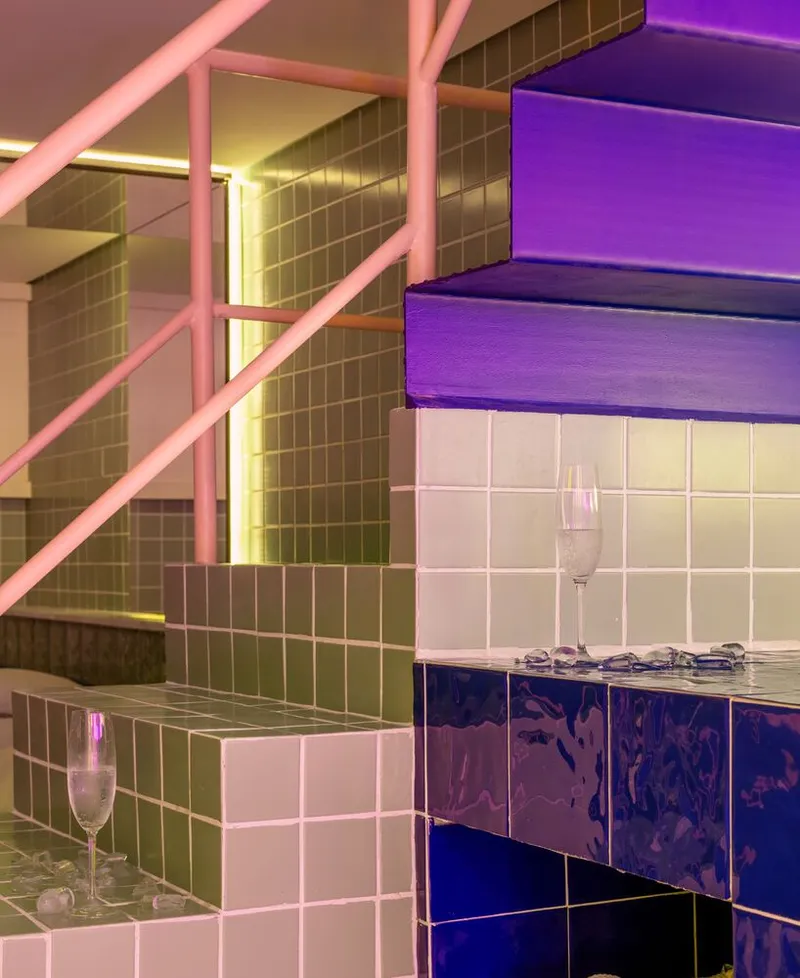
A close-up of the tiled steps with wine glasses on the treads confirms what the wider shots suggest: these stairs are furniture as much as infrastructure. The dining area nearby, with its translucent backlit panels and communal table, reinforces the suite's social ambition. This is not a motel room. It is closer to a small club with a bed.
Plans and Drawings
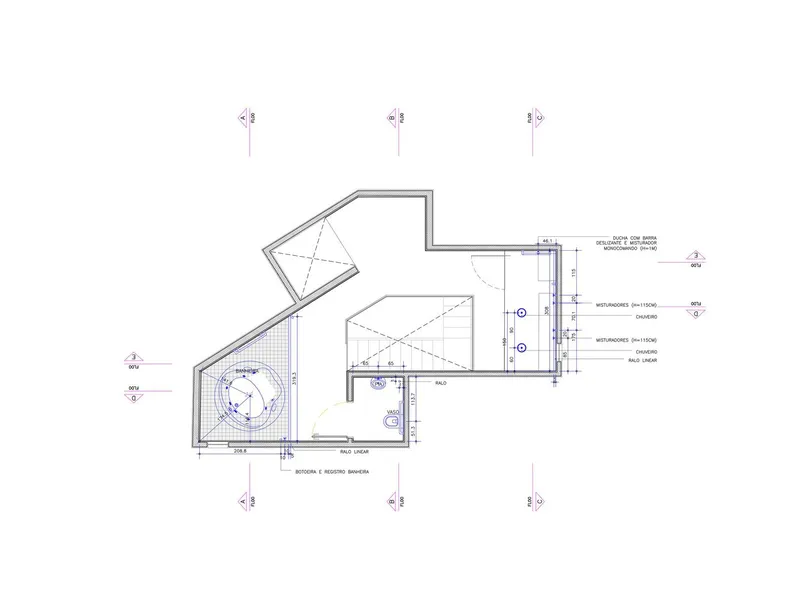
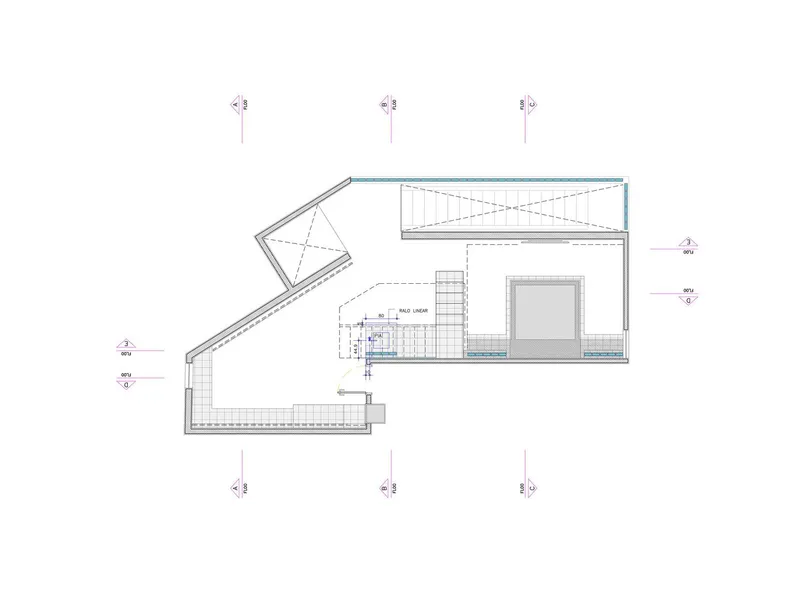
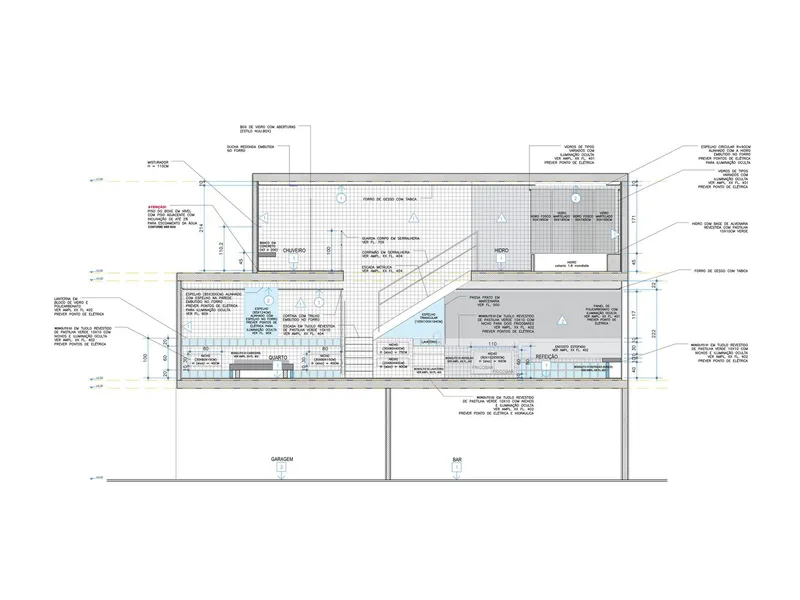
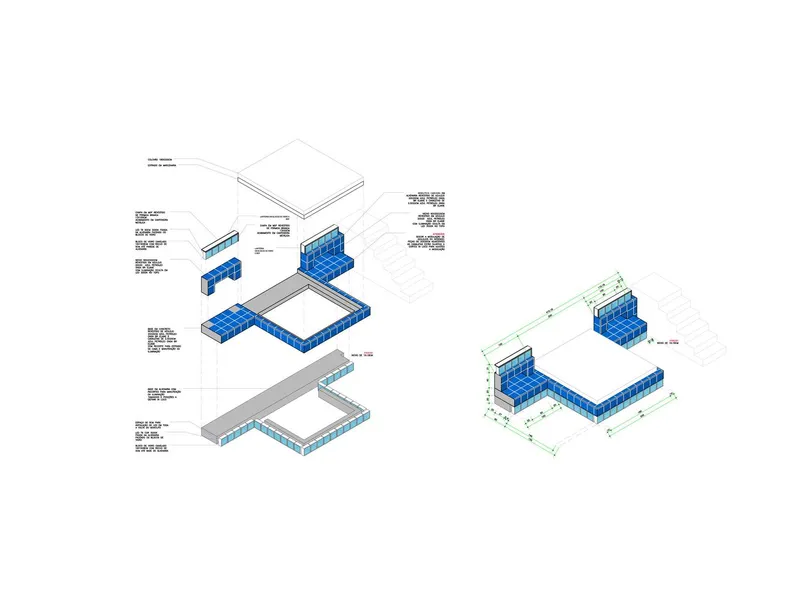
The floor plan reveals an angled layout with a circular stair and adjacent bathroom, confirming the tight, irregular footprint that the renovation inherited from the existing motel shell. Sections show how the three levels are stacked within a compact volume, with the staircase threading through as the primary vertical spine. The axonometric drawing is the most revealing: blue tiled walls and floor slabs are pulled apart to show how the suite's zones nest within one another, each defined by material and level rather than by conventional room divisions.
What the drawings clarify is just how compressed the suite is vertically. The elevator and stair occupy a significant share of the plan, which makes sense given that six distinct environments are packed into three floors. The angled geometry is likely a site constraint, but Rodapé uses it to create sightlines and spatial surprises that a rectangular box would not offer.
Why This Project Matters
Accessibility in architecture is too often reduced to ramp gradients and door widths. The Nuu Auge Suite argues that real access means designing for the full range of human desire, not just human mobility. By grounding the project in cultural research and then pushing past code minimums, Rodapé Arquitetura has produced a space where a wheelchair user and an able-bodied person share the same jacuzzi, the same bar, and the same staircase with equal dignity. That is a harder problem than compliance, and a more interesting one.
The project also matters because of what it is: a motel. Architecture culture tends to reserve its attention for museums, houses, and cultural centers. Motels, strip clubs, and other spaces of pleasure rarely receive serious design thinking, which is exactly why they tend to exclude so many people. Rodapé's decision to apply rigorous research and spatial intelligence to a building type that most firms would treat as beneath them is, in its own quiet way, one of the more radical moves in recent Brazilian architecture.
Nuu Auge Suite by Rodapé Arquitetura, Tatuapé, São Paulo, Brazil, 2024. Part of the Nuu Motel (3,500 m² total). Photography by Carolina Lacaz.
About the Studio
Share Your Own Work on uni.xyz
If projects like this are the kind of work you want to make, uni.xyz is a place to publish your own, find collaborators, and enter design competitions.


Popular Articles
Popular articles from the community


longwave studio Reorganizes a 112 m² Tainan Apartment Around the Daily Routines of a Family and Two Cats
In Tainan, Taiwan, birch plywood, rust-red furniture and a freestanding plaster wall link arrival, storage, work and family life in one apartment.

David Macias Steps a Doorless Stone and Plaster House Down a Tropical Colombian Hillside
In the humid hills of Colombia, Threshold House replaces the front door with an open void and terraces its 850 m² down the slope instead of fighting it.

David Ortega Stacks a Two-Story Mexico City Penthouse Around a Steel Stair and a Pergola-Shaded Roof Terrace
In Colonia Roma, a 300 m² penthouse uses oak joinery, a planted steel stair and a slatted roof pergola to make a new-build apartment feel like a house.

GROUP A Strips a 1969 Rotterdam Harbor Headquarters to Its Frame and Wraps It in Timber Louvers
In Rotterdam's M4H harbor district, Ferro Offices reuses a 1969 frame, adds one timber storey and reaches BREEAM-NL Outstanding.

Similar Reads
You might also enjoy these articles


Hodi-Mandai Geram
Project Function: Preservation and revitalization of the Intangible heritage and socio-spatial identity of the Hodi by Housing, Cultural Memory Center, Sacred Grove, landscape, local tourism economy


Olio Towers: A Mid-Rise for Performers That Fuses Housing, Rehearsal, and Stage
Located blocks from Houston's Theater District, this modular tower stacks living units around a central performance atrium.

Oasis: Modular Green Housing Carved into Dhaka's Urban Fabric
A shortlisted Plugin Housing entry reclaims unauthorized settlements in Dhaka with stepped concrete volumes, green roofs, and ventilation-driven design.

Black Hole: A Floating Megastructure for the Post-Physical Era
Emiliano Mazzarotto envisions a spherical, self-scaling arena where e-sports, digital hotels, and holographic stadiums replace traditional public space.

Explore Architecture Competitions
Discover active competitions in this discipline

Challenge to reimagine the Iron Throne

Photograph architecture without architects

Illustrate the lost glory of Angkor Wat - Render Challenge

Design challenge to reuse E-waste
Comments (0)
Please login or sign up to add comments
No comments yet. Be the first to comment!