
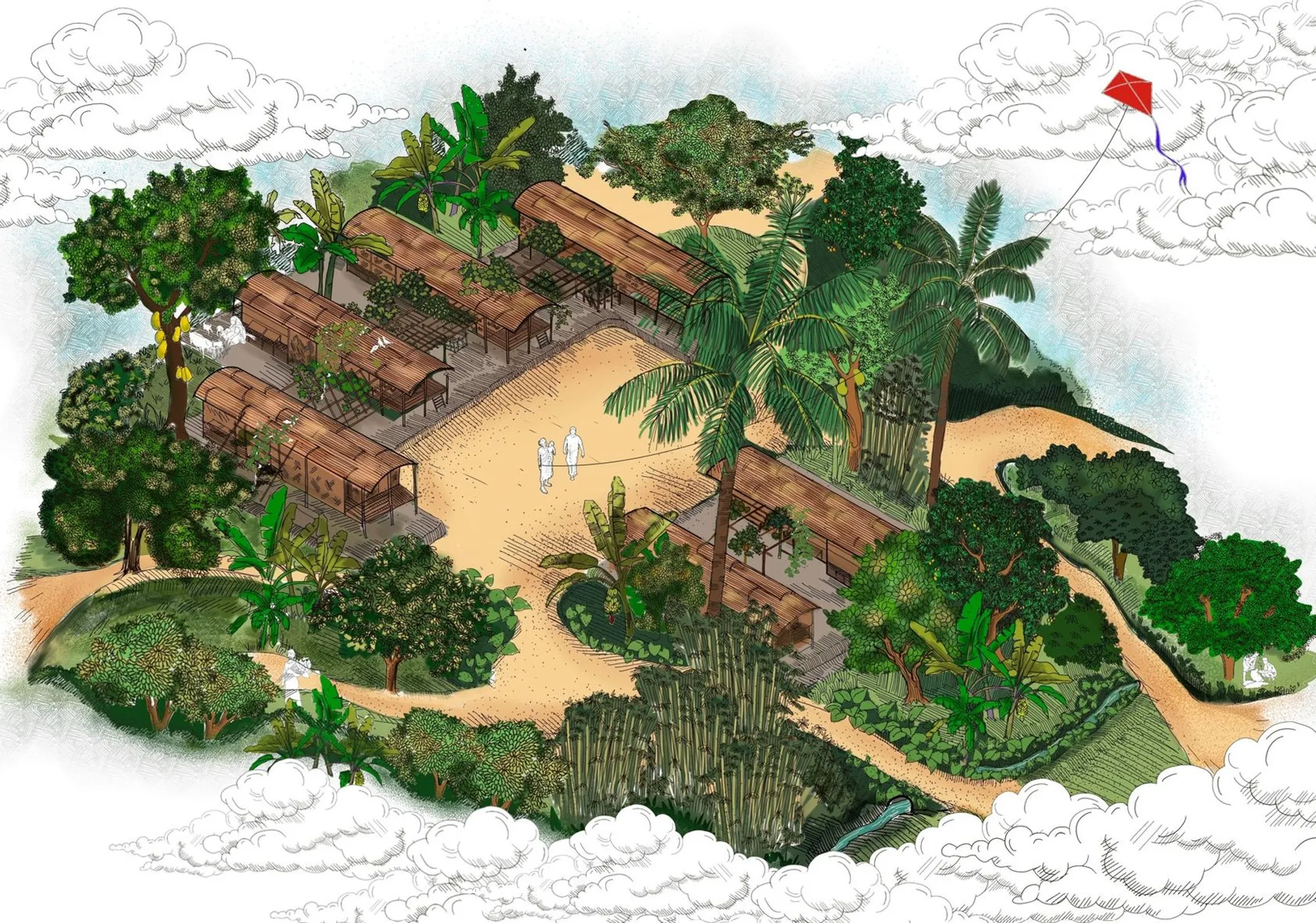
Adaptive Heritage Dwellings for the Bede Community
A Case Study in Affordable Housing


Bangladesh's Bede community, a historically nomadic group, faces significant challenges in accessing adequate and culturally relevant housing. This project, shortlisted for the UnIATA '24 Awards, proposes a solution: "Adaptive Heritage Dwellings." This innovative approach merges traditional architectural elements with modern design principles to create affordable, adaptable, and culturally sensitive housing that caters to the Bede's evolving needs.
Understanding the Bede Community
The Bede people, also known as "river gypsies," have a rich cultural heritage intrinsically tied to Bangladesh's waterways. Their traditional lifestyle, once characterized by boat-dwelling and seasonal migration, has gradually shifted towards more settled living arrangements due to various factors including environmental changes, economic pressures, and government initiatives. However, this transition has presented significant challenges, particularly regarding access to suitable housing. Existing government housing programs often fail to consider the community's specific cultural needs and preferences, leading to low adoption rates and a reversion to traditional, often precarious, living situations.
Case Study Findings and Design Implementation
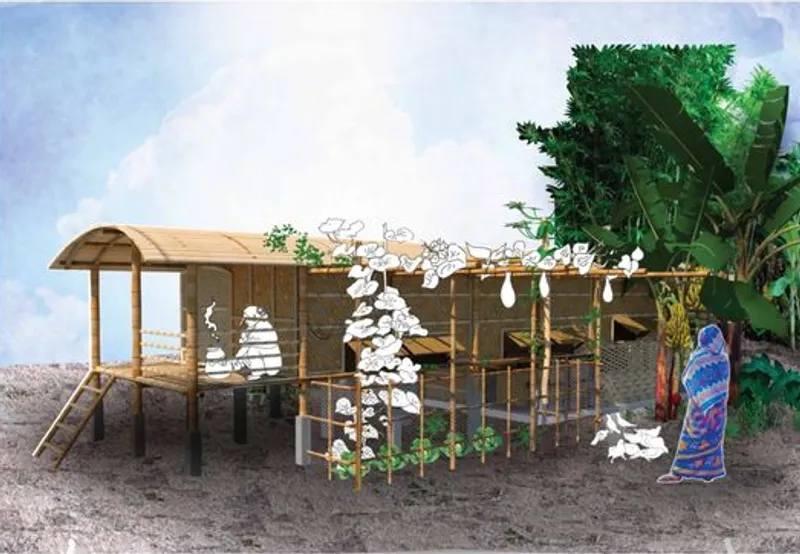
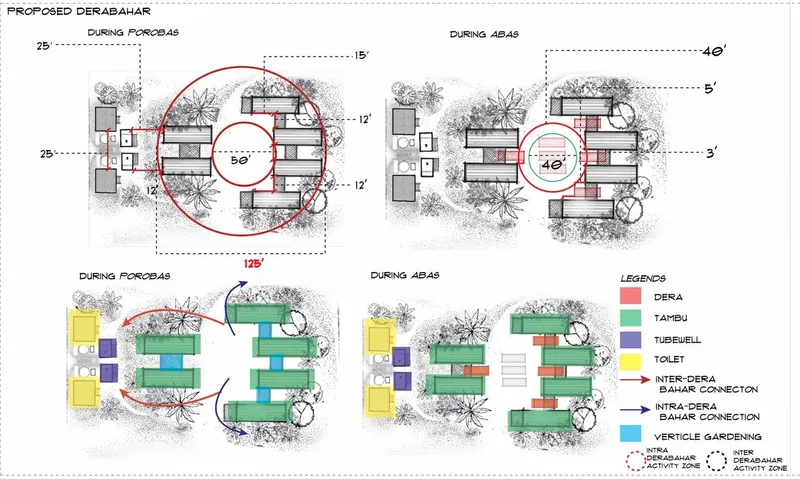
The project began with a thorough case study of existing Bede settlements, focusing on the traditional "Dera," a lightweight, bamboo-based structure adaptable to both land and water. Key findings revealed the importance of communal spaces like the "Chaunighar" (community center) and "Treeshed," the spatial organization within the Dera, and the challenges posed by seasonal flooding and the community's semi-nomadic lifestyle during trading seasons ("Porobas" and "Abas").
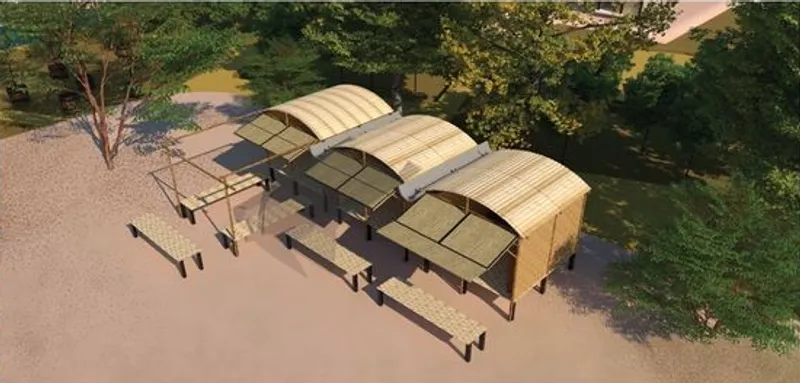
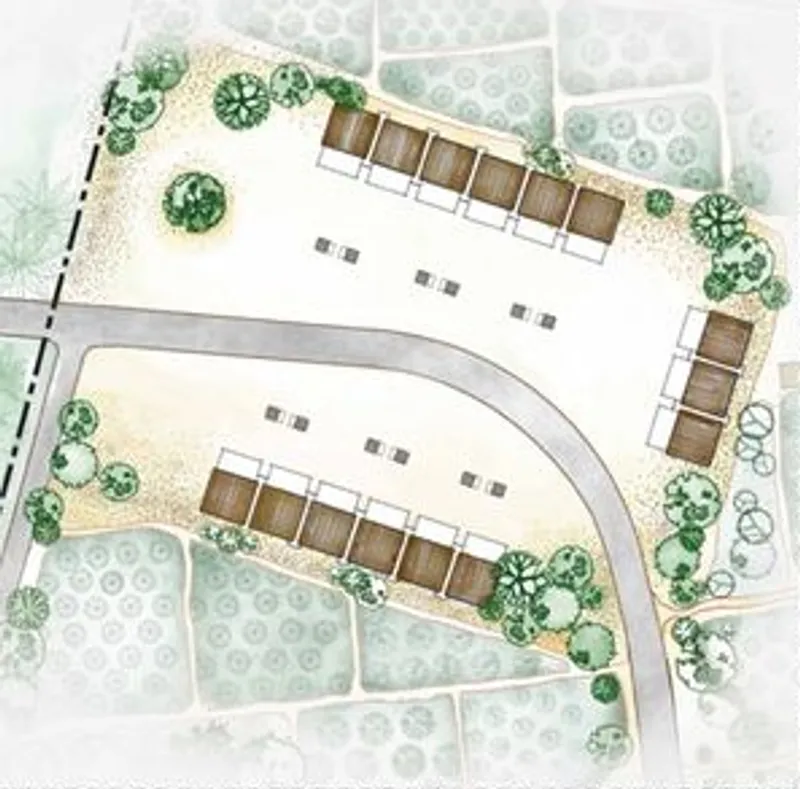
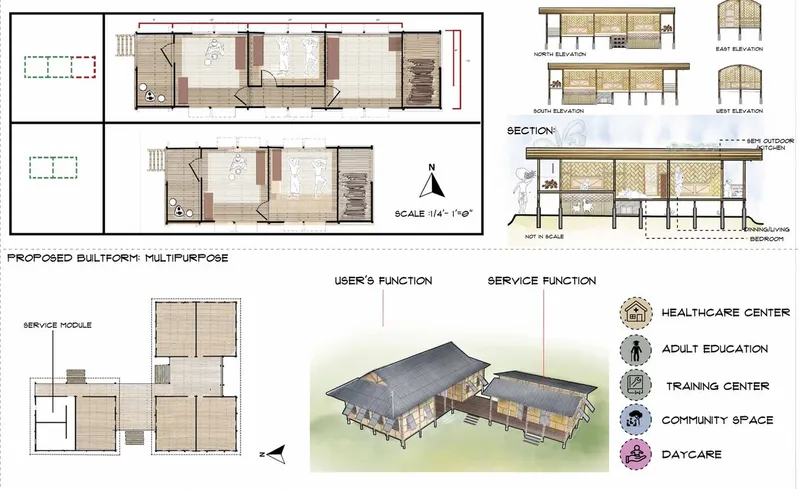
The proposed design draws inspiration from the Dera's adaptable nature. It retains the core structural principles of bamboo construction while incorporating modern materials and techniques to enhance durability, resilience, and sanitation. The design introduces modularity, allowing individual Dera units to be combined in various configurations to form larger "Bahar" clusters. This adaptability accommodates both individual family needs and communal activities, responding to the fluctuating population during different seasons. The design also integrates vital community spaces, including healthcare centers, adult education facilities, daycare centers, and designated areas for traditional crafts and trading activities, reflecting the community's socio-economic needs.
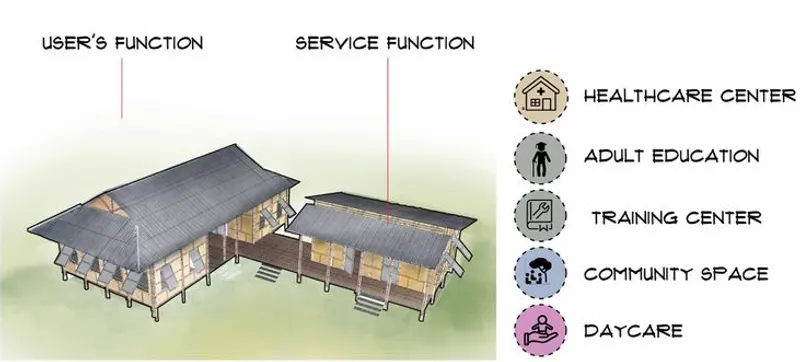
Key Design Features:
Modularity and Adaptability: The modular Dera units can be arranged linearly or in rectangular clusters depending on site conditions and community size. This flexibility allows for incremental growth and adaptation to changing family structures and seasonal needs.
Climate Responsiveness: The design incorporates passive cooling strategies through natural ventilation and shading, crucial in Bangladesh's hot and humid climate. Elevated platforms mitigate flood risks, while the use of locally sourced bamboo promotes sustainability and minimizes environmental impact.
Integration of Traditional Practices: The design retains the Dera's traditional homestead gardening practices by incorporating dedicated spaces for cultivation. The "Boats-Golu," a semi-outdoor kitchen area connected to the Dera, acknowledges the community's historical connection to the river and their culinary traditions.
Community-Centric Design: Communal spaces like the Chaunighar are strategically located within the Bahar clusters, fostering social interaction and preserving the community's strong social fabric.
Economic Empowerment: The design facilitates small-scale trading activities by incorporating designated shop modules within the Bahar layout. This supports the Bede's traditional livelihood and promotes economic self-sufficiency.
Addressing Challenges and Promoting Sustainability
The project acknowledges the Bede community's historical transition from nomadism to sedentism, addressing the unique challenges this presents. The modular design accommodates temporary expansions during Abas and provides secure docking facilities for boats during Porobas. Furthermore, the project promotes self-sustaining practices by incorporating medicinal herb cultivation areas within the Bahar clusters, leveraging the community's inherited knowledge of herbal medicine.
The use of locally sourced bamboo not only reduces construction costs but also minimizes the project's carbon footprint. Rainwater harvesting and greywater recycling systems further contribute to the project's sustainability goals.
Collaboration and Community Engagement
The project emphasizes community participation throughout the design and implementation process. Consultations with Bede community members ensured that the proposed housing solutions align with their cultural preferences and address their specific needs. This collaborative approach fosters a sense of ownership and pride within the community, crucial for the project's long-term success.
The "Adaptive Heritage Dwellings" project offers a compelling model for culturally sensitive and sustainable affordable housing. By blending traditional architectural elements with modern design principles, the project provides the Bede community with dignified, adaptable, and resilient housing solutions that respect their cultural heritage and empower them to thrive in a changing world. The project's emphasis on community engagement and sustainable practices further reinforces its potential as a replicable model for other marginalized communities facing similar housing challenges. It serves as a valuable example of how architecture can play a crucial role in social upliftment and cultural preservation.



Popular Articles
Popular articles from the community


Co-Life: Senior Housing Design That Reconnects Older Adults With the City
Co-Life reimagines senior housing design through healing gardens, shared streets, workshops, and a sustainable community across generations.

Co-life: Sustainable Architecture for Age-Friendly Community Living
Co-life reimagines sustainable architecture for seniors through courtyards, rammed earth, shared gardens, and spaces designed for belonging.

Lunar Spiral: Space Architecture Shaped by the Mathematics of the Universe
Lunar Spiral reimagines space architecture through Fibonacci geometry, lunar regolith, levitating habitats, and self-sustaining Moon living.

Riyadh For All: Intergenerational Urban Design for Active Aging in Rabat
Riyadh For All reimagines urban design in Rabat with intergenerational co-living, adaptive courtyards, and Moroccan cultural exchange today.
Similar Reads
You might also enjoy these articles

Day and Night Park: A Time-Based Urban Newsstand in Beijing
A temporary urban newsstand in Beijing blending travel, light, and reading through poetic colors, compact form, and community-focused design.

Modernist Patio Renovation in El Masnou, Barcelona by Oliver Segura Arquitectura + Cebrià Arquitectura
Modernist patio renovation blending tradition and innovation with a movable pool, leveled floors, and Catalan materials in El Masnou.

Alto Residencial Coop: Cooperative Housing Development in Santiago de Compostela by Carbajo Barrios Arquitectos
A linear cooperative housing complex blending white volumes and perforated metal façades, enhancing community living, natural light, privacy, and urban integration.
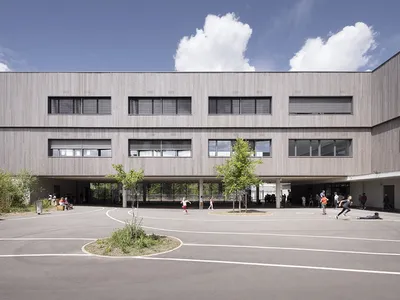
Vil Genis School by BPA ARCHITECTURE – Massy, France
Vil Genis School in Massy, France, features sustainable design, south-facing classrooms, community integration, accessible spaces, and modern educational architecture.


Explore Affordable Housing Competitions
Discover active competitions in this discipline



Challenge to reimagine the Iron Throne


Photograph architecture without architects


Illustrate the lost glory of Angkor Wat - Render Challenge


Design challenge to reuse E-waste
Comments (0)
Please login or sign up to add comments
No comments yet. Be the first to comment!