
Adaptive Reuse Architecture Reimagines the Oil Rig as a Floating Cultural and Ecological City
An abandoned oil rig transforms into a speculative marine city where adaptive reuse architecture reconnects industry, ecology, and time.

Editor’s Choice entry of Proximity Island 2019
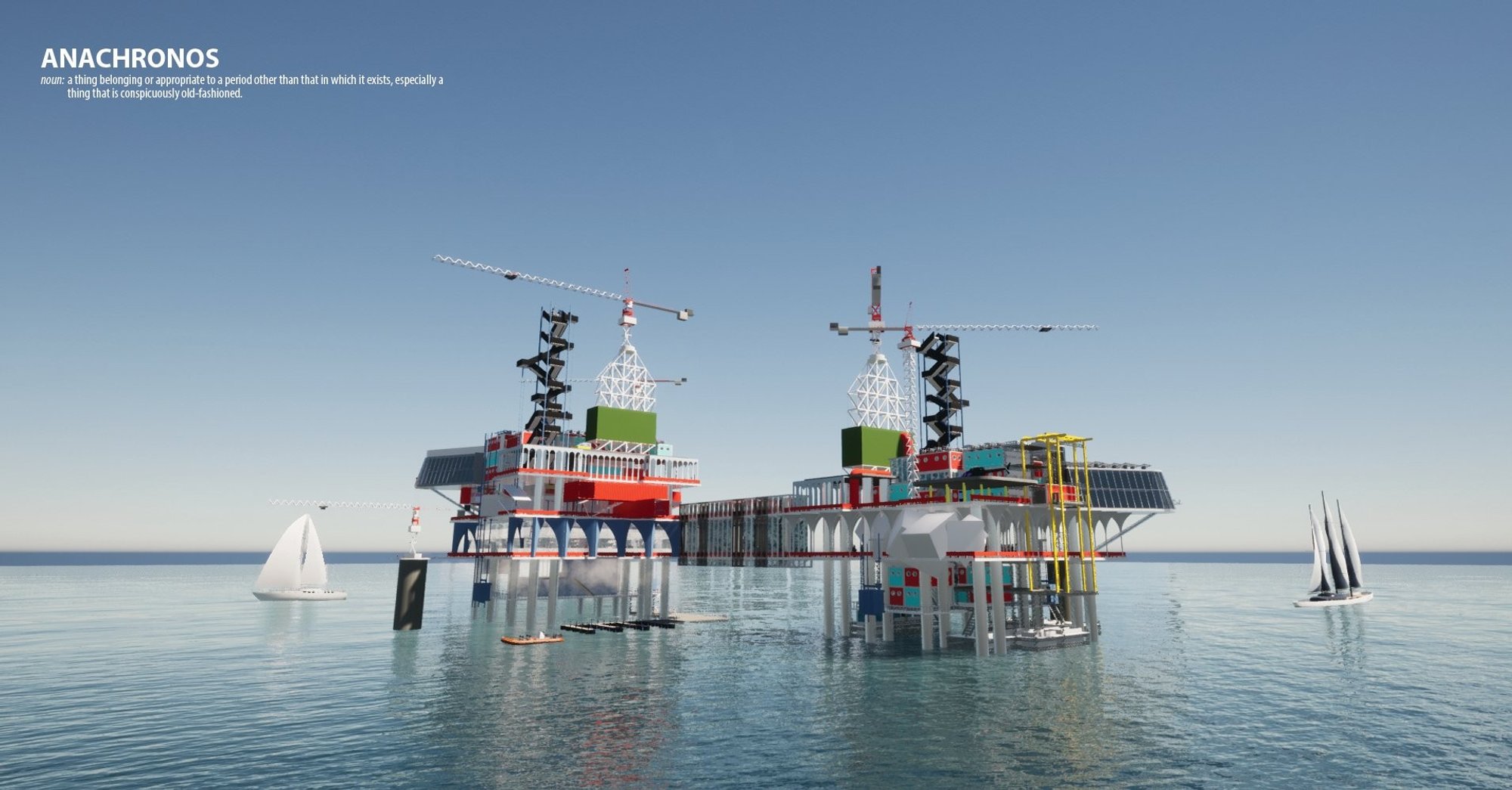
In the vast emptiness of the sea, offshore oil rigs exist as strange monuments suspended between utility and abandonment. Visible from the horizon yet detached from land, these industrial structures occupy a liminal territory between civilization and isolation. ANACHRONOS explores this condition through the lens of adaptive reuse architecture, transforming the obsolete oil rig into a speculative marine environment that merges culture, ecology, habitation, and memory.
Project by Kshir Bedhesi,Sumbul Pardesi
Derived from the Greek words Ana meaning “again” and Chronos meaning “time,” ANACHRONOS imagines architecture as a reconstruction of temporal layers. The proposal interprets the oil rig not as industrial debris, but as an artifact capable of evolving into a new civic and ecological infrastructure. Through adaptive reuse, the project reframes the rig as an inhabitable island where the past, present, and future coexist.
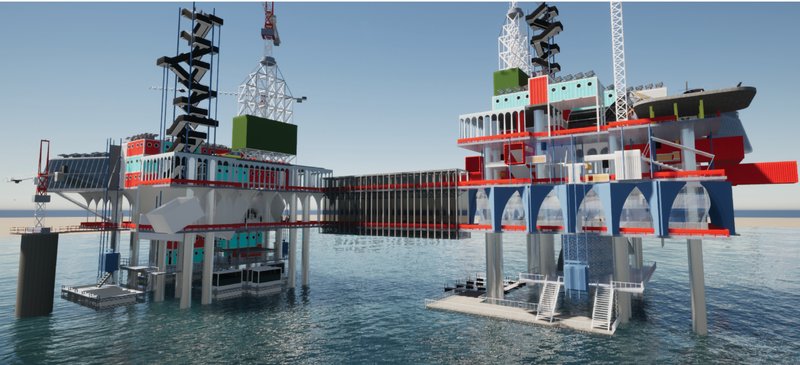
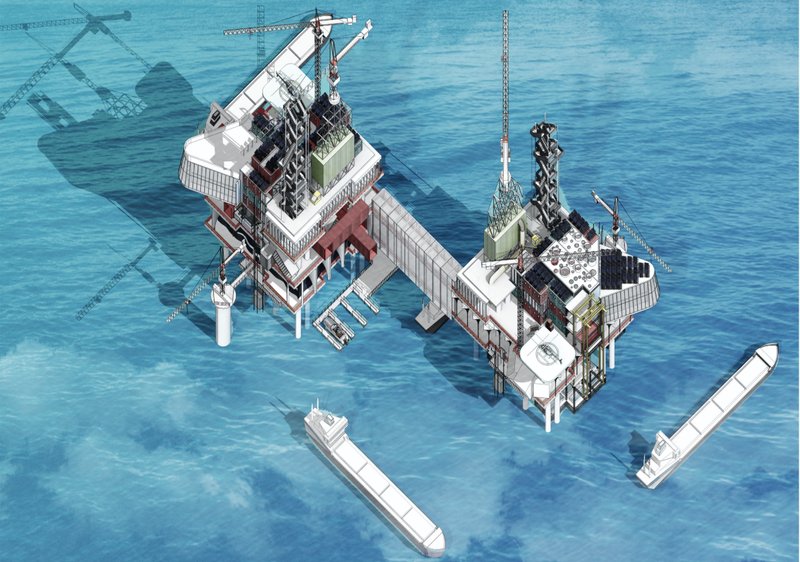
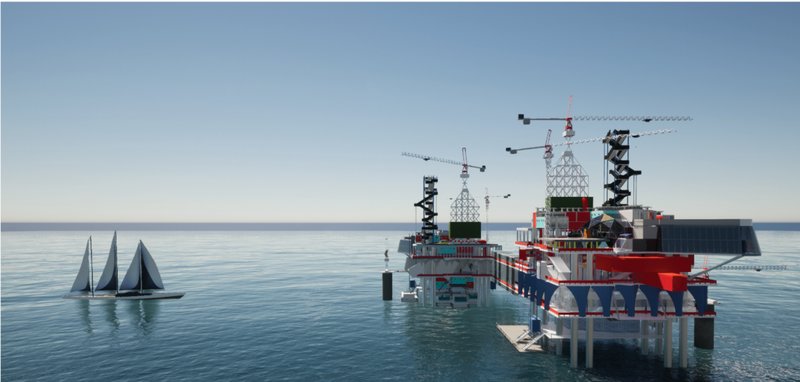
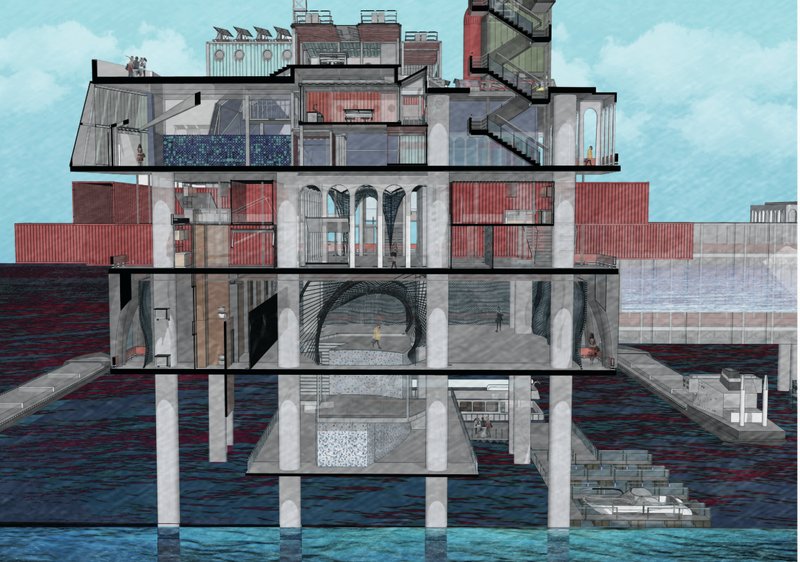
The design positions the oil rig as an architectural threshold between the mainland and the open sea. Existing structural systems are preserved and expanded through new interventions that introduce galleries, laboratories, residential programs, docking platforms, marine farming systems, and communal public spaces. Instead of erasing the industrial character of the rig, the project amplifies it, allowing traces of extraction and machinery to remain visible while integrating softer civic and ecological functions.
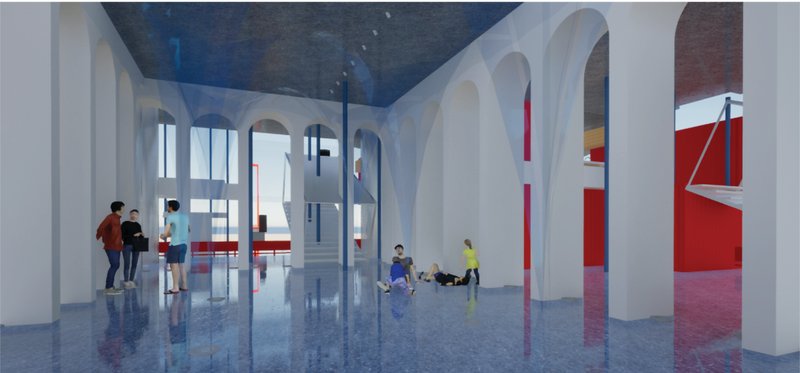
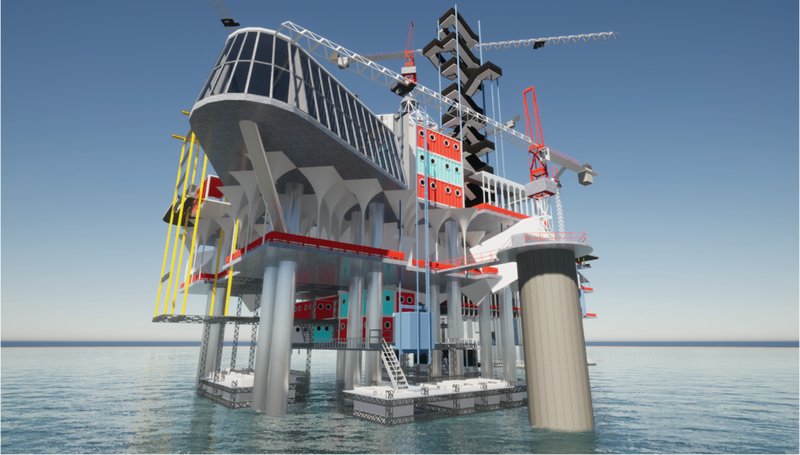
This tension between permanence and transformation defines the architectural language of ANACHRONOS. Heavy infrastructural frames coexist with lightweight insertions, translucent bridges, elevated courtyards, and vaulted interior spaces. Shipping containers are repurposed into modular living units and research facilities, while monumental arches reinterpret Mediterranean and maritime spatial traditions. The result is a hybrid architectural identity that exists between industrial infrastructure and speculative urbanism.
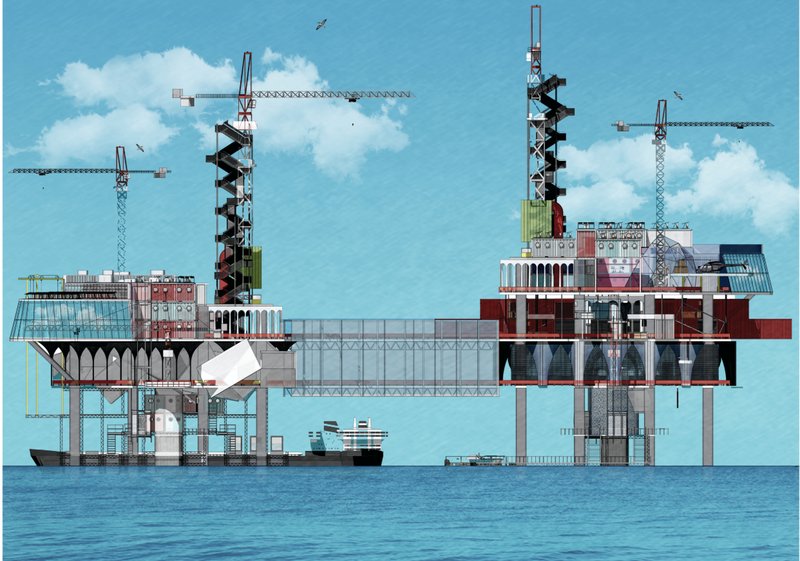
At the urban scale, the project operates as a floating micro-city. Two major offshore platforms are connected through an elevated circulation spine that enables movement between cultural, residential, and research zones. The bridge becomes more than infrastructure; it acts as a symbolic and physical connector between fragmented architectural timelines.
The circulation strategy intentionally reflects the unpredictability of cities. Vertical towers, suspended staircases, docks, ramps, and transitional voids create layered spatial experiences that encourage exploration. Visitors move through compressed corridors into expansive civic halls, descend beneath sea level into submerged environments, and emerge into panoramic decks overlooking the horizon. This choreography transforms the oil rig into a dynamic spatial narrative rather than a static monument.
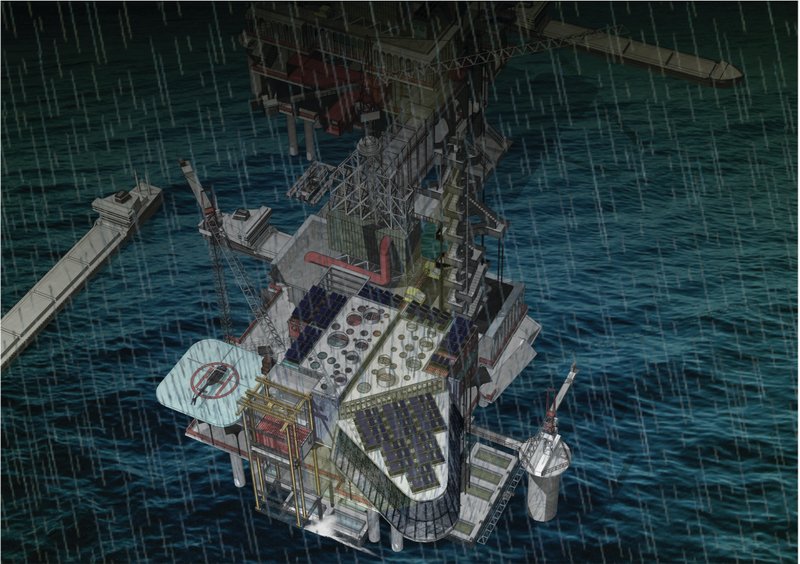
One of the most compelling aspects of ANACHRONOS is its integration of ecological systems within an industrial framework. The proposal introduces algae biofuel farming, marine cultivation zones, experimental water systems, and renewable energy infrastructure as part of the architectural composition. Solar arrays positioned on upper decks generate clean energy, while algae growth systems utilize conditions naturally created by the rig’s marine environment.
These interventions reposition the abandoned platform as an active ecological participant rather than an environmental burden. Water harvesting, marine biodiversity support systems, and experimental laboratories contribute to a new relationship between architecture and ocean ecosystems. The project proposes that future offshore architecture should not merely occupy the sea, but actively regenerate it.
The residential strategy further reinforces this idea of coexistence. Housing typologies are organized around internal courtyards inspired by Moroccan and Greek spatial traditions. These central voids introduce light, ventilation, and communal interaction into the dense industrial framework. Living spaces are intentionally compact and modular, encouraging collective experiences while preserving individual privacy.
The project also explores architecture as atmosphere. Interior visualizations reveal vast vaulted halls illuminated by reflections from the surrounding sea. Structural columns dissolve into cathedral-like spaces where industrial geometry merges with soft light and shadow. These moments transform the rig into an emotional and sensory environment, challenging perceptions of offshore infrastructure as purely mechanical or hostile.
At night and during storm conditions, the architecture acquires an entirely different identity. Rain, mist, and darkness amplify the monumentality of the structure, creating cinematic spatial experiences that evoke both isolation and wonder. The project’s speculative imagery emphasizes that architecture in extreme environments must respond not only to function, but also to mood, memory, and psychological experience.
ANACHRONOS ultimately proposes a new future for adaptive reuse architecture. Rather than demolishing obsolete offshore infrastructure, the project imagines how these structures can evolve into cultural and ecological catalysts. The abandoned oil rig becomes a platform for experimentation, education, tourism, habitation, and environmental regeneration.
As climate challenges and industrial obsolescence continue to reshape coastal territories, projects like ANACHRONOS suggest alternative futures for marine architecture. By transforming extraction infrastructure into spaces for collective life and ecological restoration, the proposal redefines what adaptive reuse architecture can achieve in the twenty-first century.
ANACHRONOS is not simply a redesign of an oil rig. It is a speculative vision of architecture suspended between memory and possibility, where time itself becomes a material for reconstruction.




Popular Articles
Popular articles from the community

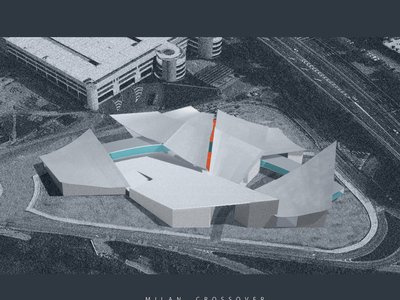
Milan Crossover: Sustainable Architecture for a New Fashion Culture in Milan
Milan Crossover transforms fashion culture through sustainable architecture, linking material libraries, remake studios, and public runways.

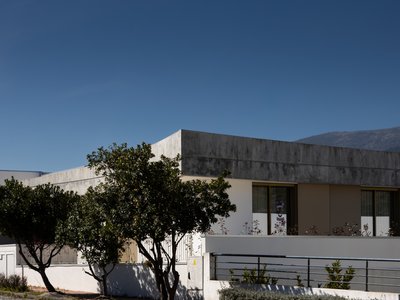
PLATAFORMArq Folds a Concrete Roof Over the Portuguese Mountains in House #474
A 220-square-meter residence in Teixoso, Portugal, wraps board-formed concrete into an angular canopy that frames the Serra da Estrela foothills.
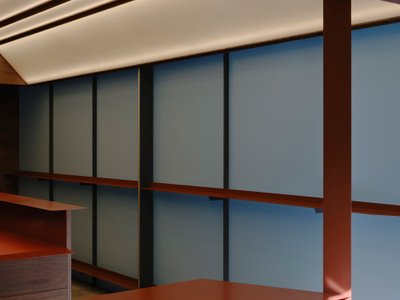
Kerry Kounnapis Packs 800 Daily Coffees into a 43-Square-Metre Melbourne Laneway Bar
Palace Coffee channels Pellegrini's and European standing bars through oxide-red steel and spotted gum timber in a Ridgway Place sliver.
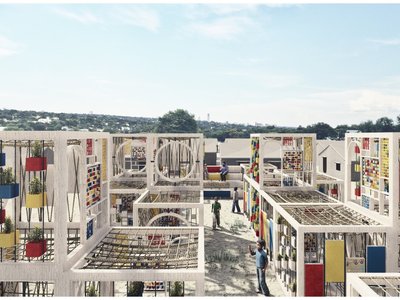
The Faith: Modular Architecture for Play, Learning, and Hope in Kutupalong Refugee Camp
A modular playground architecture project in Bangladesh where play, learning, safety, and hope rebuild childhood inside a refugee camp anew.


Similar Reads
You might also enjoy these articles
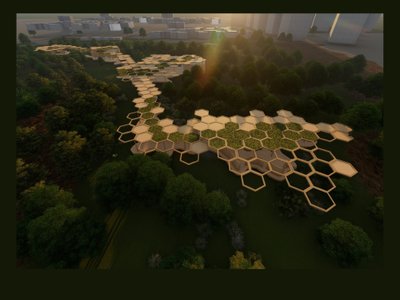
Eco Chapel: A Green Architecture Pavilion Designed in Symbiosis with the Forest
Eco Chapel uses green architecture to weave prayer, learning and reuse into a forest pavilion shaped by modular hexagonal canopies for life.
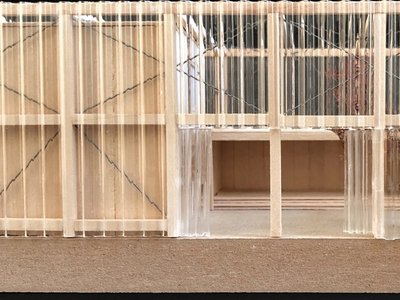
Kaffeebühnen: Coffee Shop Architecture Designed as a Civic Stage Between Vienna’s City and Park
Kaffeebühnen turns coffee shop architecture into a civic stage, linking Vienna’s park edge, urban life, warm timber yards, and coffee craft.
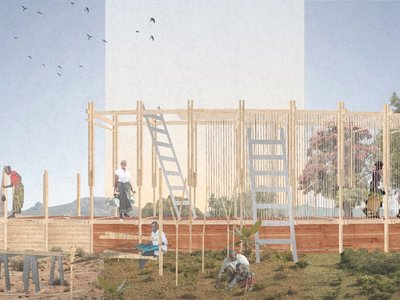
Healing Façade: Sustainable Architecture for Reforestation, Community, and Sacred Ecology in Ethiopia
Healing Façade reimagines sustainable architecture as a living wall that restores soil, catches water and renews Ethiopia's forest churches.


Urban Forest: A Vertical Ecosystem for 5,000 Workers in Singapore's Changi Business Park
Radially stacked pods and layered green decks turn a 7-acre plot into 47 acres of ecological workspace projected for 2040.

Explore Urban Design Competitions
Discover active competitions in this discipline




The International Standard for Design Portfolios


The Global Benchmark for Architecture Dissertation Awards


The Global Benchmark for Graduation Excellence


Challenge to reimagine the Iron Throne
Comments (0)
Please login or sign up to add comments
No comments yet. Be the first to comment!