
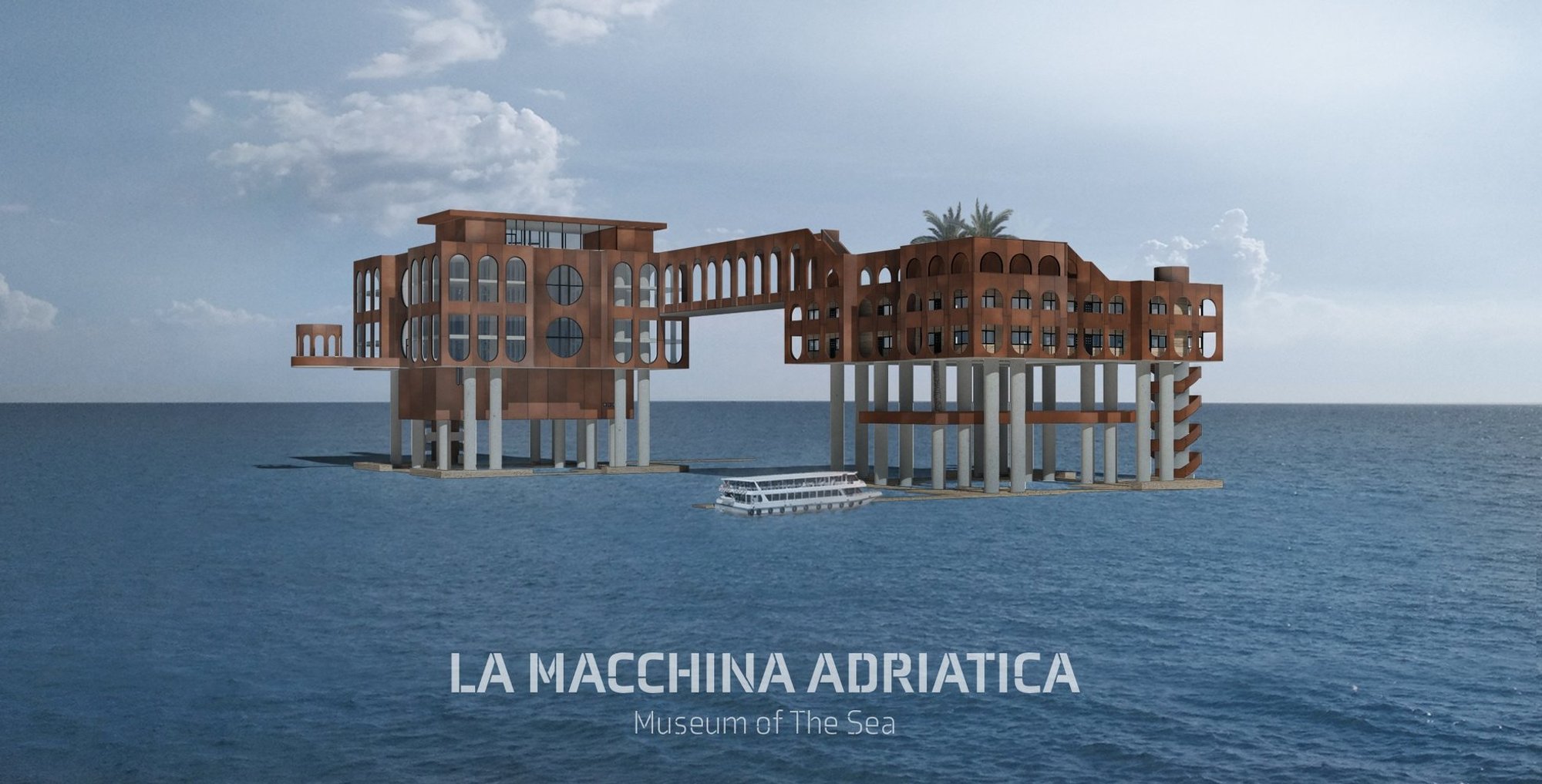
La Macchina Adriatica by Adriana Jul Camargo
An adaptive reuse architecture project transforming abandoned Adriatic oil rigs into a floating museum, research hub, and living sea observatory.

Shortlisted entry of Proximity Island 2019
As cities worldwide reconsider the future of industrial infrastructure, adaptive reuse architecture continues to emerge as one of the most transformative approaches in contemporary design. La Macchina Adriatica, designed byAdriana Jul Camargo, explores this architectural strategy through the radical reinvention of offshore oil platforms in the Adriatic Sea.
Conceived as a “habitable machine,” the project transforms an abandoned offshore oil rig into a floating museum, marine research center, and temporary residential complex for scientists studying the Adriatic ecosystem. Positioned approximately seven kilometers off the coast near Ravenna, Italy, the proposal imagines a new civic and environmental identity for industrial relics that once powered coastal economies.
Rather than demolishing obsolete oil infrastructure, La Macchina Adriatica proposes a future where these structures evolve into cultural and ecological landmarks. The project investigates how adaptive reuse architecture can merge environmental restoration, public engagement, and scientific research within a single maritime intervention.
Reimagining Offshore Infrastructure Through Adaptive Reuse Architecture
The Adriatic coastline contains dozens of offshore gas and oil platforms, many of which are approaching decommissioning. Traditionally viewed as industrial waste, these structures often face dismantling once extraction operations end. However, La Macchina Adriatica reframes these offshore platforms as opportunities for architectural experimentation.
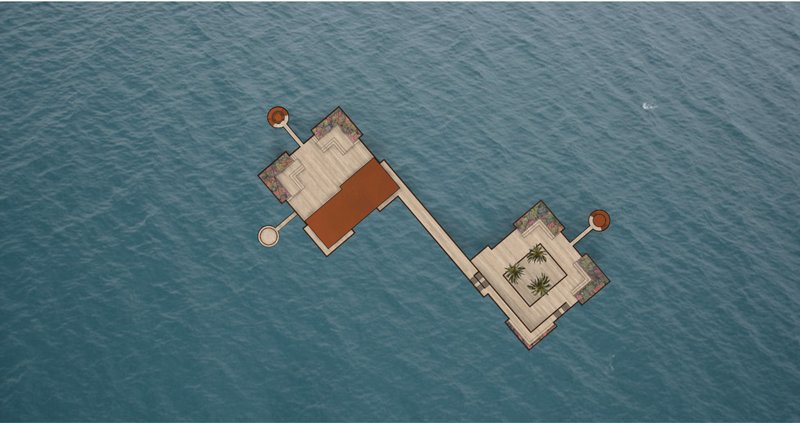
The proposal transforms two connected oil rigs into a multifunctional artificial island composed of research laboratories, exhibition spaces, accommodation units, public terraces, and landscape interventions. Instead of erasing the industrial past, the design embraces the mechanical language of the original structure.
The architecture deliberately preserves the visual identity of the rig while introducing a softer, inhabitable layer around it. Corten steel wraps the structure in a weathered skin that references both industrial machinery and maritime decay. The result is a floating architectural landmark that appears simultaneously monumental, infrastructural, and atmospheric.
This strategy aligns strongly with current discussions surrounding sustainable architecture and circular urbanism, where reuse and transformation become preferable alternatives to demolition and reconstruction.
Architecture Inspired by the Machine Aesthetic
One of the most distinctive qualities of the project is its conceptual treatment of the oil rig as a machine. Rather than disguising the industrial skeleton, the design amplifies it.
Large geometric openings, exposed circulation towers, elevated bridges, and repetitive structural rhythms establish a mechanical architectural language throughout the complex. The intervention maintains the existing concrete platform supports while introducing new corten steel volumes that appear assembled like components of a massive floating apparatus.
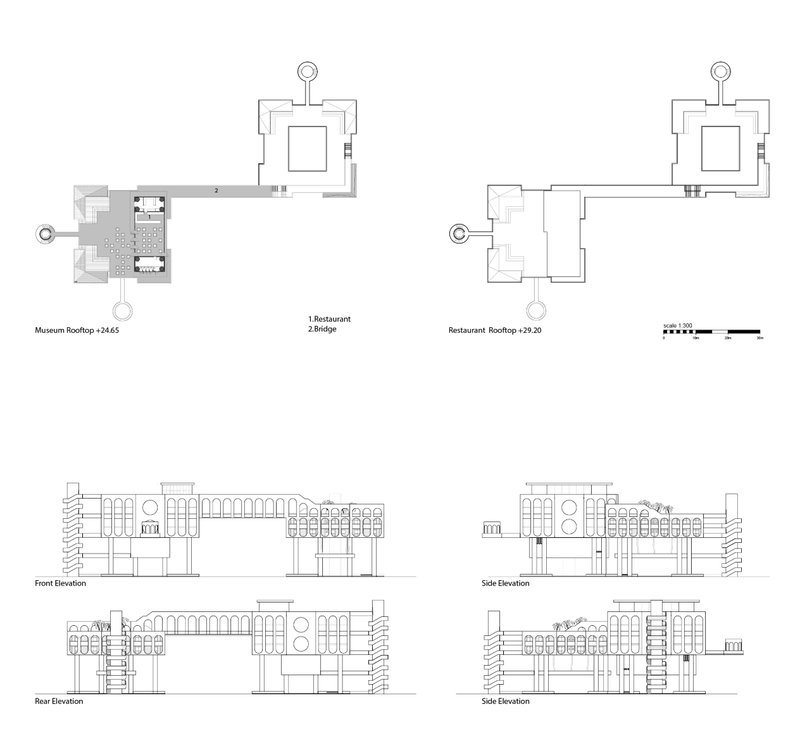
The museum and accommodation buildings are connected through elevated bridges enclosed by steel archways. This bridge becomes more than circulation infrastructure. It acts as a symbolic spine that visually unifies the entire complex across the open sea.
The proposal also introduces a duplicated upper-level bridge connecting rooftop spaces, reinforcing the idea of layered movement and interconnected public life above the water.
Through this architectural language, the project avoids becoming a generic waterfront development. Instead, it preserves the memory and identity of the offshore platform while giving it a completely new civic role.
A Floating Museum and Marine Research Facility
At its core, La Macchina Adriatica is designed as a hybrid institution combining scientific investigation with public cultural programming.
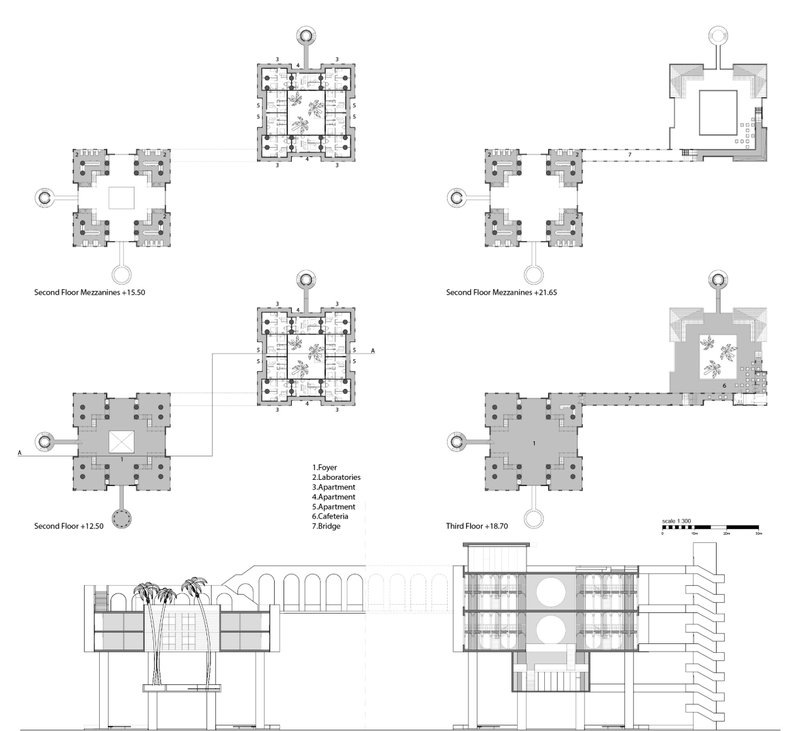
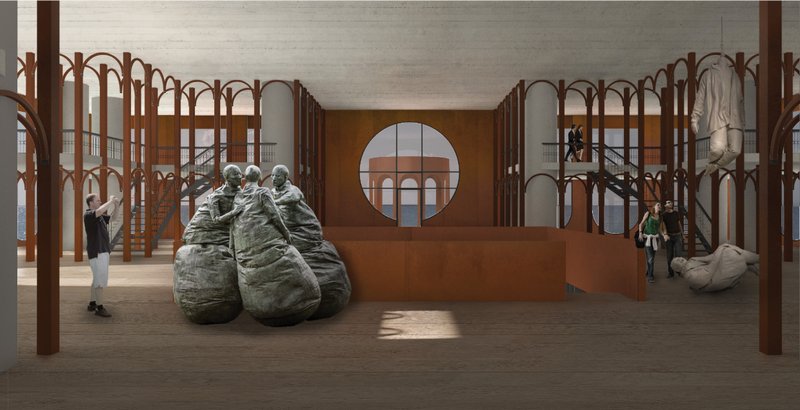
The museum occupies one of the primary platform structures. Large foyer-like spaces contain exhibition halls, laboratories, workshops, and mezzanine levels dedicated to marine research activities. These interior environments are organized around dramatic cross-shaped central voids that frame expansive views of the Adriatic Sea.
Circular openings and monumental arches create moments of visual connection between visitors, researchers, and the surrounding ocean landscape. The museum is not conceived as an isolated gallery, but rather as an immersive observational environment where science and architecture coexist.
The laboratories positioned along the mezzanine levels remain visually connected to the public exhibition spaces below. This strategy allows scientific activity to become part of the visitor experience, encouraging transparency and education around marine ecology and environmental research.
Temporary exhibitions, educational programs, and workshops further transform the offshore platform into a cultural destination that bridges tourism, science, and architecture.
Residential Spaces Designed Around the Sea
While the museum embraces monumentality and public interaction, the accommodation building adopts a more intimate architectural approach.
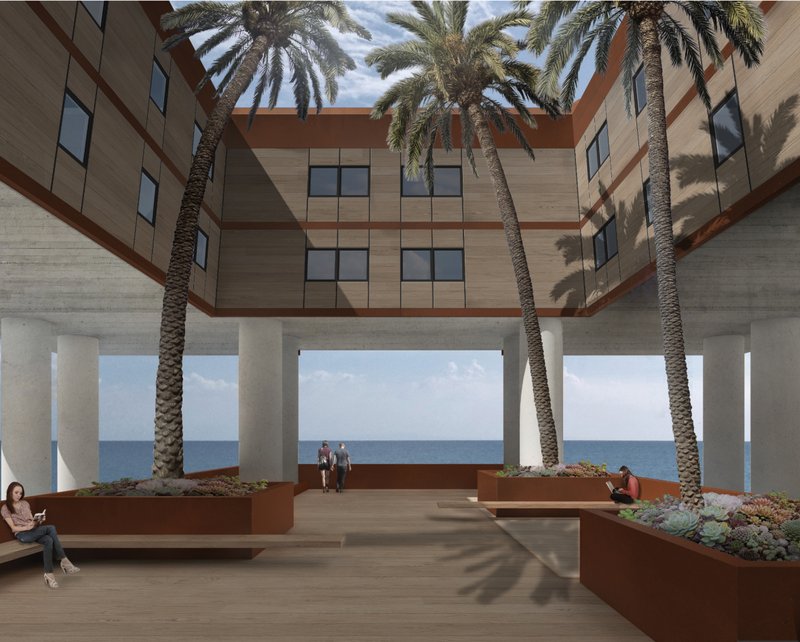
The residential complex contains temporary apartments for scientists and visiting researchers. Units are organized around a central patio filled with palm trees and vegetation, creating a protected interior oasis within the harsh marine environment.
This courtyard introduces natural ventilation, daylight, and social interaction into the building while softening the industrial character of the rig. The apartments themselves are compact and pragmatic, maximizing available space around the existing structural columns inherited from the offshore platform.
Rather than prioritizing luxury, the residential design focuses on collective living and shared experiences. Communal terraces, rooftop lounges, and outdoor decks encourage researchers to interact, relax, and observe the surrounding sea landscape.
The contrast between rigid industrial infrastructure and lush internal gardens creates one of the project’s strongest spatial experiences.
Landscape Architecture Above the Water
Vegetation plays a crucial role throughout La Macchina Adriatica. The project treats landscape architecture not as decoration, but as an active spatial and ecological system.
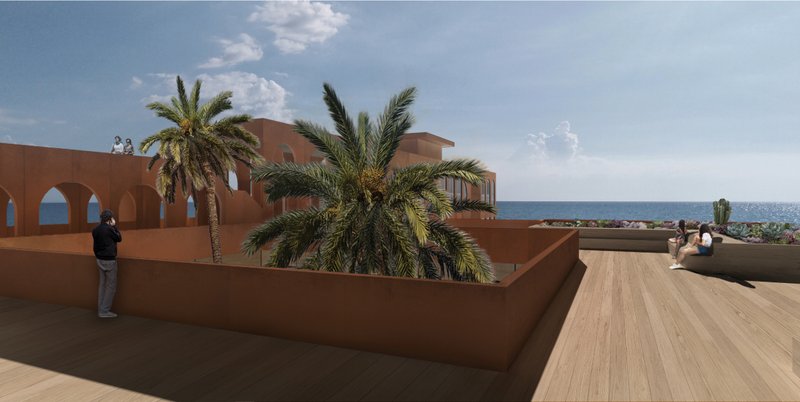
Palm trees emerge through elevated courtyards while succulent gardens occupy rooftop terraces and outdoor platforms. Existing crane supports are repurposed as landscape anchors, integrating greenery directly into the industrial framework.
This strategy transforms the oil rig into an artificial ecosystem suspended above the Adriatic Sea. The warm tones of corten steel contrast against the vegetation and blue water, creating a strong visual identity rooted in both industrial memory and environmental regeneration.
The rooftop levels operate as public plazas where visitors and researchers can gather, dine, and experience panoramic ocean views. Restaurants, cafeterias, and observation decks transform the isolated platform into a social destination rather than merely a technical facility.
Spatial Hierarchy and Levels of Intimacy
A carefully structured hierarchy of spaces defines the user experience across the project.
Public rooftop areas provide distant panoramic views of the sea and establish the most open social environments. Mid-level terraces and patios create transitional zones between public and private activities. Finally, lower docks and sea-level platforms allow direct interaction with the water itself.
This progression from distance to intimacy becomes one of the project’s central architectural themes. Visitors gradually move from monumental observation spaces toward immersive encounters with the sea.
The docks enclosed by water offer opportunities for marine sampling, scientific observation, and direct physical engagement with the Adriatic environment. These layered spatial experiences help transform the offshore platform from an isolated industrial object into a multidimensional architectural landscape.
Sustainable Architecture and Future Offshore Urbanism
Beyond its immediate program, La Macchina Adriatica proposes a broader urban and environmental vision for the future of offshore infrastructure.
The project imagines networks of repurposed oil platforms functioning as interconnected artificial islands along the Adriatic coast. Ferries and maritime transport systems could connect these floating institutions to mainland cities, creating entirely new forms of marine urbanism.
Because the museum spaces are intentionally flexible, the platform can evolve over time to accommodate changing cultural, scientific, or residential functions. Additional levels and annexes could expand the structure without compromising its original identity.
This adaptability reflects a growing architectural interest in long-term resilience and programmatic flexibility. Instead of creating static monuments, adaptive reuse architecture increasingly seeks to design systems capable of continuous transformation.
A New Identity for Industrial Heritage
La Macchina Adriatica demonstrates how adaptive reuse architecture can redefine obsolete industrial structures as cultural and ecological assets. By transforming an abandoned oil rig into a floating museum and research hub, the project creates a new relationship between architecture, infrastructure, and the sea.
The proposal preserves the memory of industrial extraction while replacing it with scientific exploration, public education, and environmental awareness. Through its powerful machine aesthetic, layered spatial organization, and integration of landscape, the project offers a compelling vision for the future reuse of offshore platforms.
More importantly, it challenges architecture to imagine new forms of inhabitation beyond conventional urban boundaries, where abandoned infrastructures become catalysts for ecological and cultural regeneration rather than symbols of industrial decline.



Popular Articles
Popular articles from the community

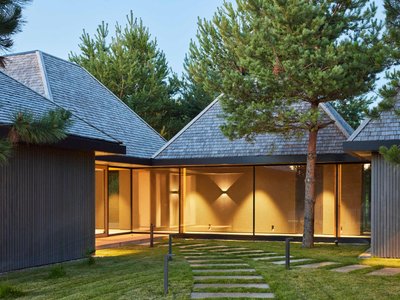
HEIMA Architects Scatters Four Oak-Shingled Pavilions Among the Pines of Northern Lithuania
A 150-square-meter guest house on a Lithuanian hilltop splits into four volumes to preserve every tree on the site.
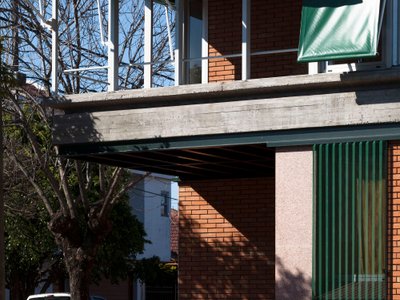
Francisco Cadau Converts a 1970s Corner House in Campana into Four Compact Dwellings
A light steel-and-timber upper volume lands on a brick base, turning a single Argentine home into a tectonic study in railroad vernacular.
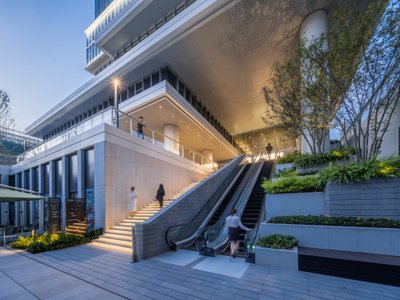
Superimpose Architecture Splits a Hangzhou Transit Hub into Valley and Cloud
A 72,000-square-meter mixed-use TOD complex near Alibaba's campus pairs human-scaled green terraces with serene tower volumes.
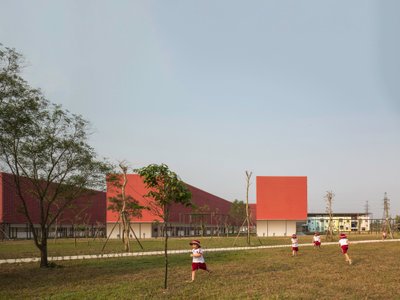
BHA Studio Wraps a 2,000-Student Campus in Terracotta Screens and Double-Layered Roofs in Central Vietnam
iSchool Quang Tri in Đông Hà uses perforated brick lattices and rainwater harvesting to keep 17,000 square meters cool and green.

Similar Reads
You might also enjoy these articles


Urban Forest: A Vertical Ecosystem for 5,000 Workers in Singapore's Changi Business Park
Radially stacked pods and layered green decks turn a 7-acre plot into 47 acres of ecological workspace projected for 2040.
interACT: A Wearable Transit Object That Turns Commuting Into Social Infrastructure
A backpack-mounted foldable device transforms walking, waiting, and riding into moments of shared comfort across Jakarta's transit network.
Lean On Barrier System: Where Traffic Safety Meets Chai Culture in Ahmedabad
A modular steel barrier doubles as informal seating and lean-on furniture at one of Ahmedabad's busiest intersections, keeping vendors in place.

The Black Bagh: A Living Monument Built from Water, Light, and Memory
On the banks of the Yamuna, two designers replace the myth of a marble mausoleum with a regenerative landscape of reflection and ritual.
Explore Conceptual Architecture Competitions
Discover active competitions in this discipline




The International Standard for Design Portfolios


The Global Benchmark for Architecture Dissertation Awards


The Global Benchmark for Graduation Excellence


Challenge to reimagine the Iron Throne
Comments (0)
Please login or sign up to add comments
No comments yet. Be the first to comment!