
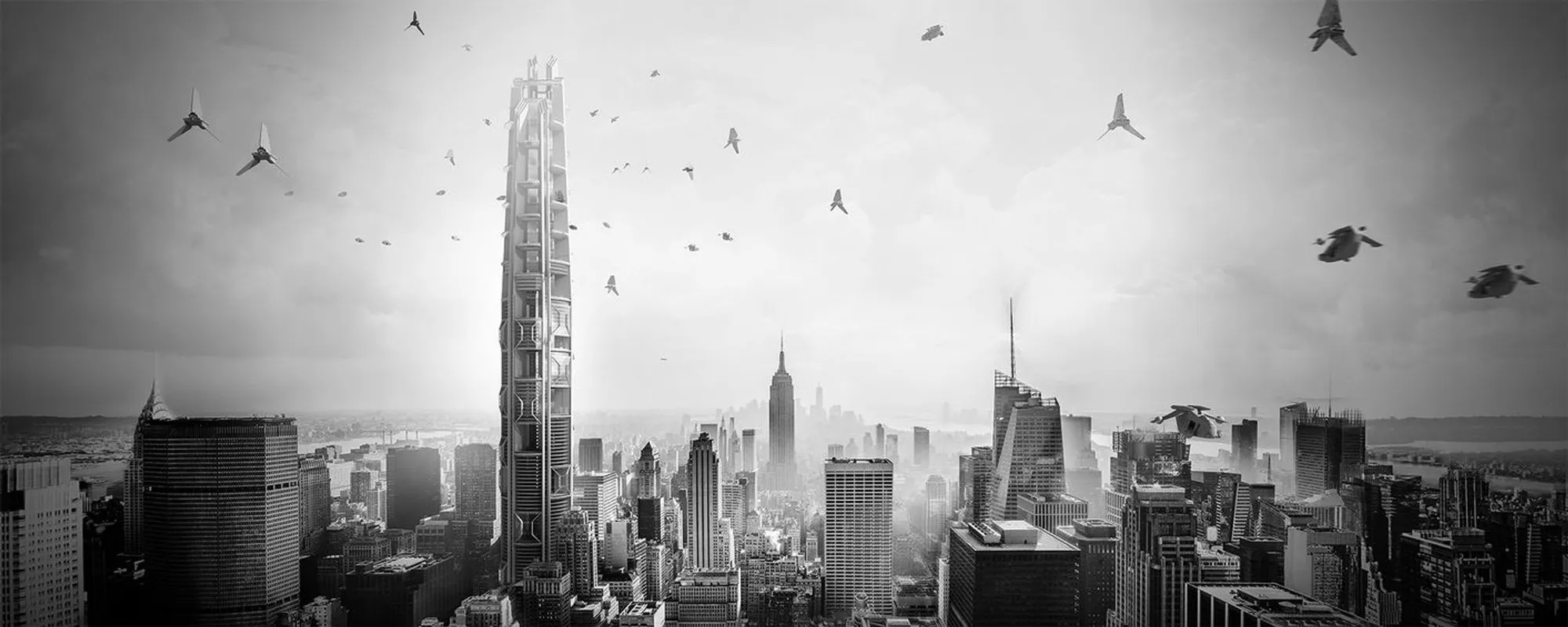
Aeroscraper: Revolutionizing Urban Air Mobility and Workspace Dynamics
This article delves into the Aeroscraper, a visionary skyscraper concept blending air travel with urban living for the future of New York City.


In the heart of New York Midtown, amidst the hustle and bustle of one of the most densely populated areas in the world, a new architectural marvel is rising. The Aeroscraper, a brainchild of visionary architect Xiaohan Wu, is not just a super-tall building; it’s a radical rethinking of what a skyscraper can be in the era of personal air travel. This mixed-use colossus is designed to accommodate the fast-evolving dynamics of work and life, where the lines between the two blur into a seamless continuum of productivity and accessibility. The Aeroscraper is more than just a structure; it's the embodiment of a new paradigm for office buildings and urban transportation.
The Vision of Aeroscraper
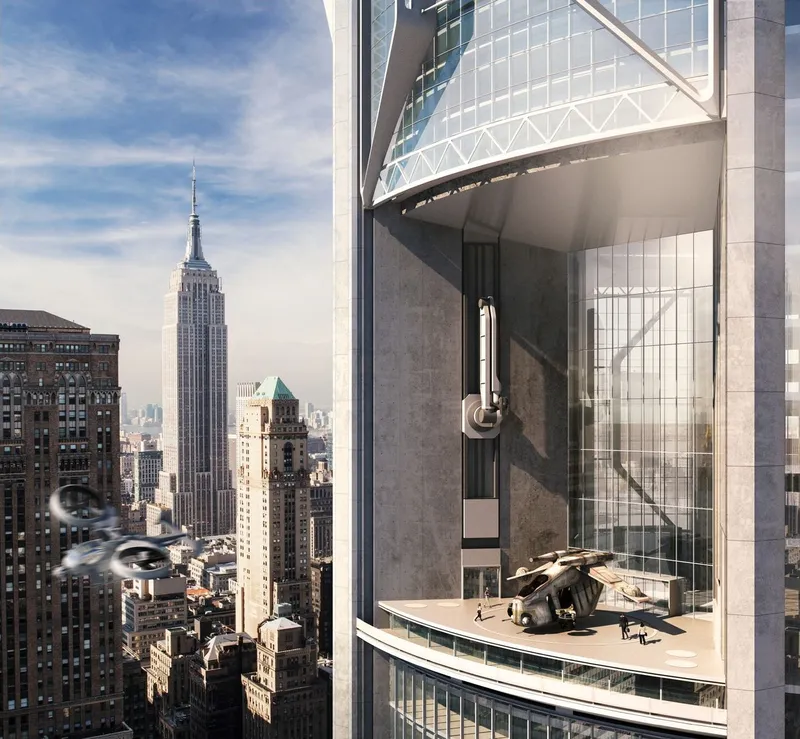
The Aeroscraper stands as a testament to the potential of architectural innovation to transform our lived experience in urban environments. It transcends traditional concepts of skyscrapers, which typically have a single ground entrance, and instead offers multiple ground floors. These are not just on the earth beneath our feet but are vertically stacked throughout the building, accessible by air and acting as new nodes of convergence for people and technology.

Redefining the Ground Level
Traditionally, a skyscraper's ground level is the hub of activity, a singular plane where all visitors converge. However, the Aeroscraper proposes a radical concept: the sky as the new ground. This design acknowledges the burgeoning reality of air travel as an integral part of city transit, with air taxis and autonomous flying vehicles becoming as common as cabs. Thus, the building transforms to meet the sky, offering multiple entry points for both people and aircraft.
A Multifaceted Transportation Hub
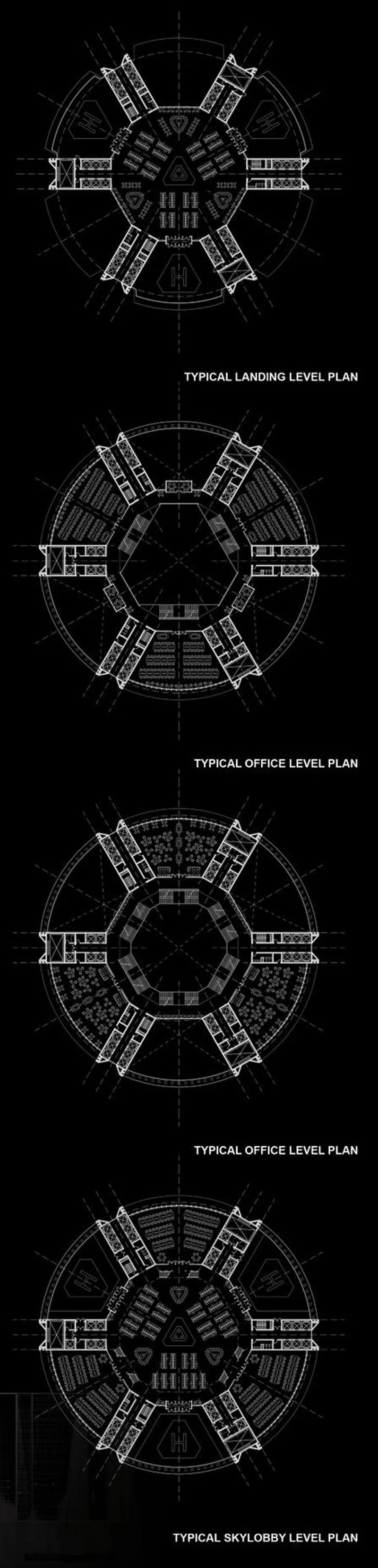
At its core, the Aeroscraper is a transportation nexus, marrying the convenience of air travel with the efficiency of urban connectivity. It features a central vertical fly hub, a sophisticated airlock system, and shuttle elevators to facilitate the swift movement of people and goods. Its proximity to Grand Central Terminal further cements its role as a critical juncture, bridging air, ground, and underground transportation networks.

The Work Space Revolution
Xiaohan Wu's Aeroscraper challenges the notion of a static workplace. With advancements in VR/MR and cloud computing, the need for a fixed work location is becoming obsolete. The Aeroscraper's design caters to this new dynamic, providing spaces where people can interact, collaborate, and connect instantly with the city. It aims to transform transitional spaces, such as airport lounges, into productive environments equipped with the infrastructure necessary for the modern mobile workforce.

Sustainable and Socially Conscious Design
The Aeroscraper is more than an office building; it's a vibrant community. The sky lobbies double as co-working spaces and social hubs, capable of transforming into event venues or tranquil sky gardens. The design takes into account the need for social interaction and the human touch that technology cannot replicate. It's a forward-thinking response to the evolving needs of a society on the move, making every transition and wait time an opportunity for productivity or relaxation.

The Aeroscraper is not just a building; it's a bold step into the future of urban living and working. It represents a shift in how we perceive vertical spaces, not just reaching up but reaching out to meet the needs of a society in constant motion. As we stand on the cusp of this new era, the Aeroscraper stands tall, a beacon of innovation, a symbol of the skyline of tomorrow. In Xiaohan Wu's Aeroscraper, we see not just a building, but the future of urban life itself - interconnected, efficient, and ever ascending.


Popular Articles
Popular articles from the community


Hill & Cross Opera: Sculptural Opera House Architecture Shaped by Tallinn’s Landscape and Identity
Hill & Cross Opera reimagines opera house architecture in Tallinn through its sculptural hill, civic plaza, glass wave and a luminous cross.

Riyadh For All: Intergenerational Urban Design for Active Aging in Rabat
Riyadh For All reimagines urban design in Rabat with intergenerational co-living, adaptive courtyards, and Moroccan cultural exchange today.

The Earth Pod: 3D Printed Homes for Resilient Refugee Communities
The Earth Pod reimagines refugee housing through 3D printed homes made from clay, combining resilience, self-sufficiency, and rapid shelter.

The Musturak Paradise: Senior Living Architecture for a Connected Future in Temara, Morocco
The Musturak Paradise reimagines senior living architecture in Temara via private homes, social spaces, culture, community, and shared care.


Similar Reads
You might also enjoy these articles

Day and Night Park: A Time-Based Urban Newsstand in Beijing
A temporary urban newsstand in Beijing blending travel, light, and reading through poetic colors, compact form, and community-focused design.

Modernist Patio Renovation in El Masnou, Barcelona by Oliver Segura Arquitectura + Cebrià Arquitectura
Modernist patio renovation blending tradition and innovation with a movable pool, leveled floors, and Catalan materials in El Masnou.

Alto Residencial Coop: Cooperative Housing Development in Santiago de Compostela by Carbajo Barrios Arquitectos
A linear cooperative housing complex blending white volumes and perforated metal façades, enhancing community living, natural light, privacy, and urban integration.
Vil Genis School by BPA ARCHITECTURE – Massy, France
Vil Genis School in Massy, France, features sustainable design, south-facing classrooms, community integration, accessible spaces, and modern educational architecture.


Explore Skyscraper Competitions
Discover active competitions in this discipline



Challenge to reimagine the Iron Throne


Photograph architecture without architects


Illustrate the lost glory of Angkor Wat - Render Challenge


Design challenge to reuse E-waste
Comments (0)
Please login or sign up to add comments
No comments yet. Be the first to comment!