

Al Naseej Textile Factory by Leopold Banchini Architects: Weaving Tradition, Architecture, and Community in Bahrain
The Al Naseej Textile Factory blends tradition and modern design, honoring Bahraini weaving heritage with sustainable architecture and community space.


The Al Naseej Textile Factory in Bani Jamra, Bahrain, designed by Leopold Banchini Architects, is more than just a factory, it is a cultural landmark that intertwines tradition, craft, and contemporary architectural design. Commissioned as part of the Bahrain Authority for Culture and Antiquities’ initiative to revive local industries and heritage, the project creates both a textile weaving facility and a social space for the artisans of the village.
Reinterpreting Tradition Through Architecture
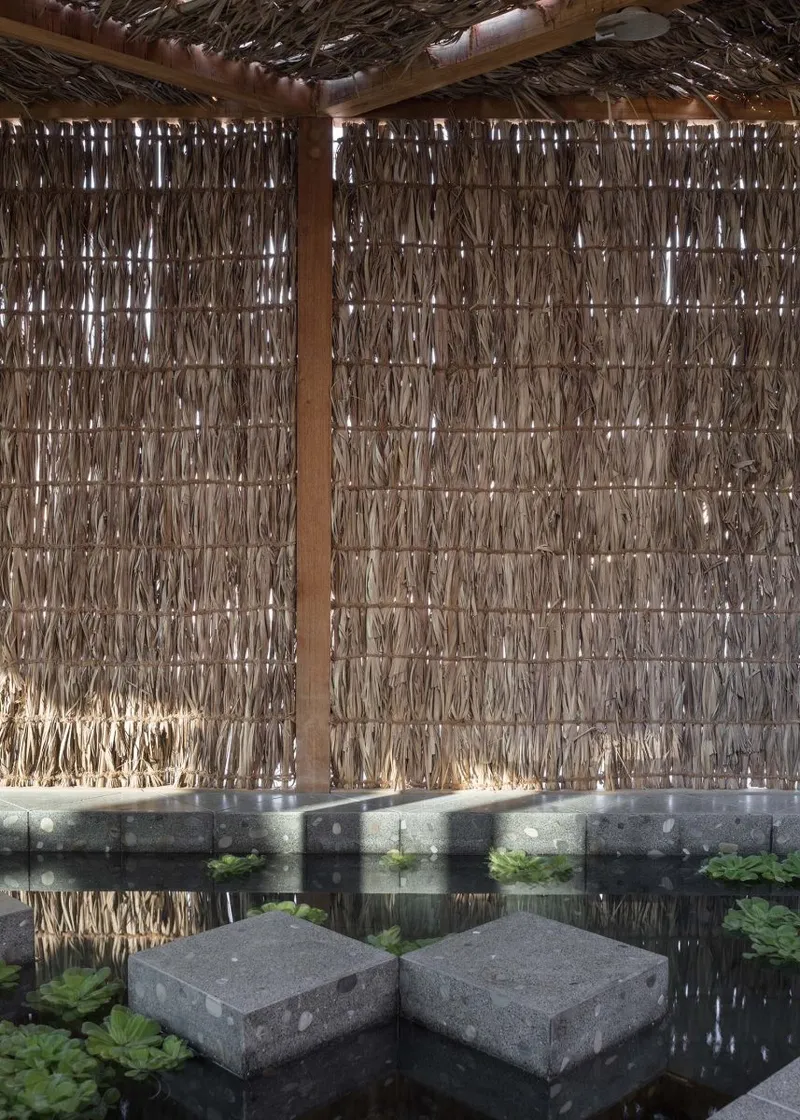
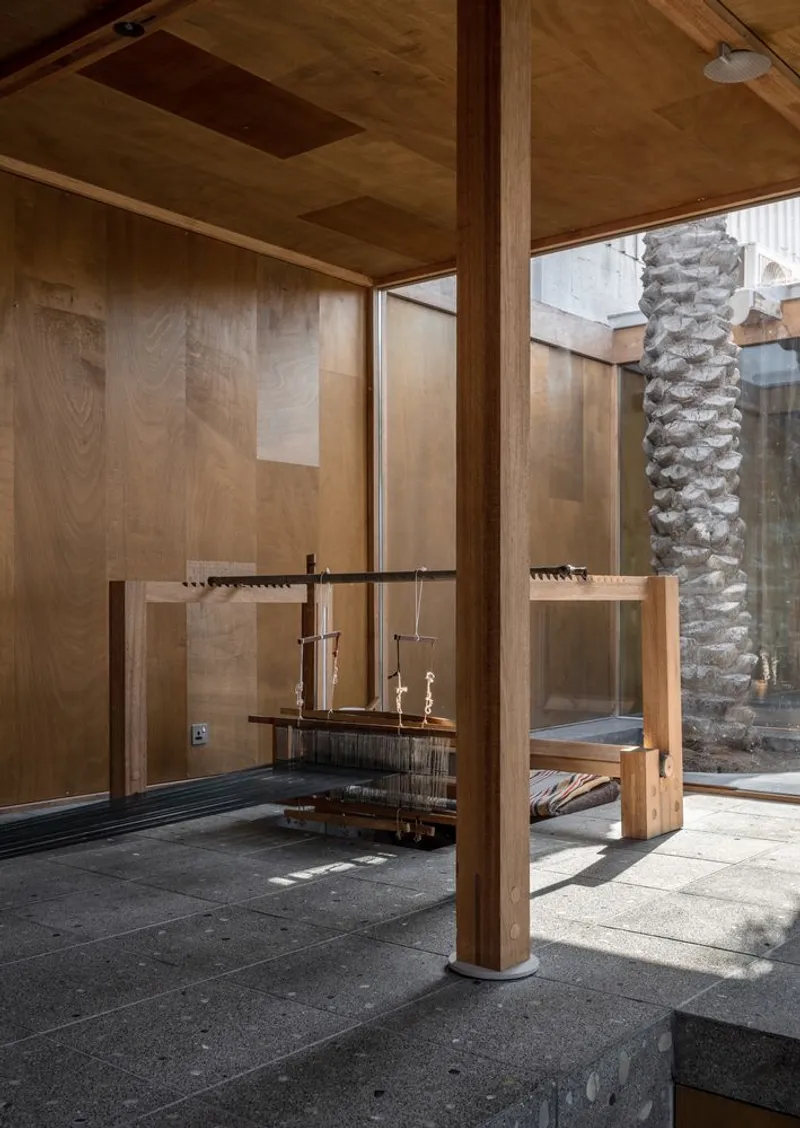
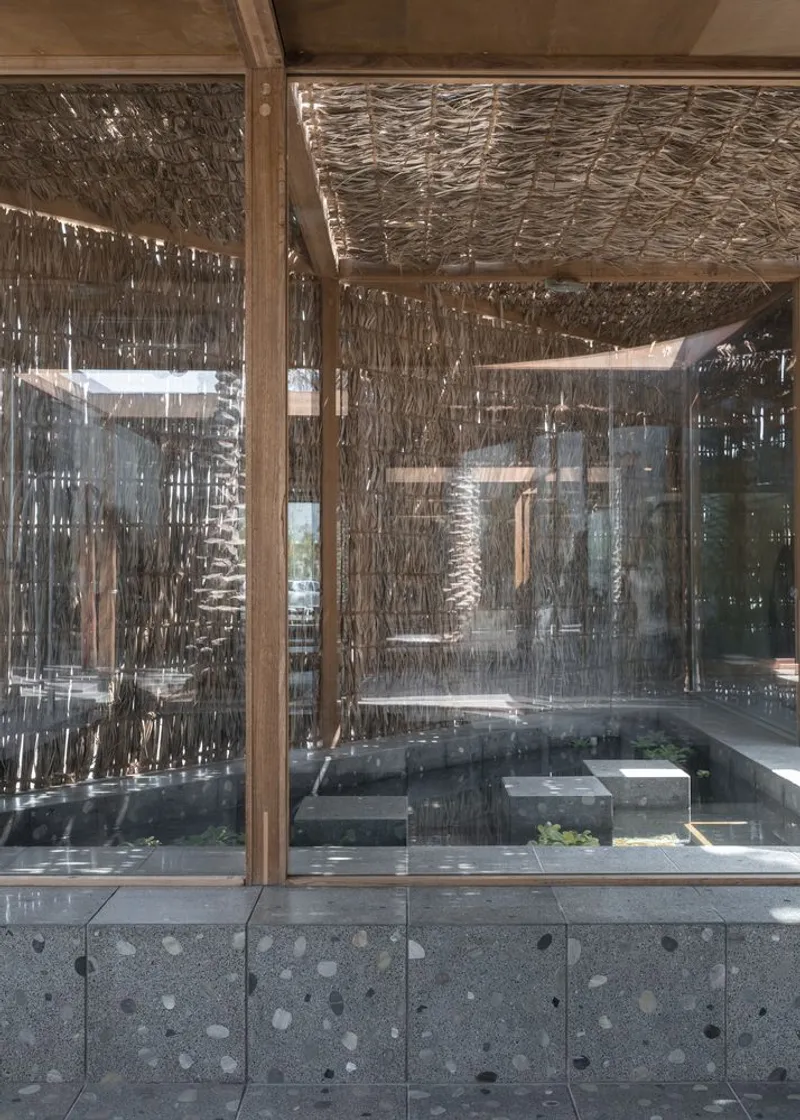
The architecture reflects the deep connection between craftsmanship and environment. Historically, Bahraini weavers worked under lightweight Arish structures, simple shelters made by weaving dry palm leaves into protective surfaces. They would dig pits in the ground to sit comfortably while weaving, transforming the earth itself into part of their loom. Inspired by this heritage, the architects reinterpreted these traditions into a modern yet rooted spatial design.
Spatial Concept: A Grid That Breathes
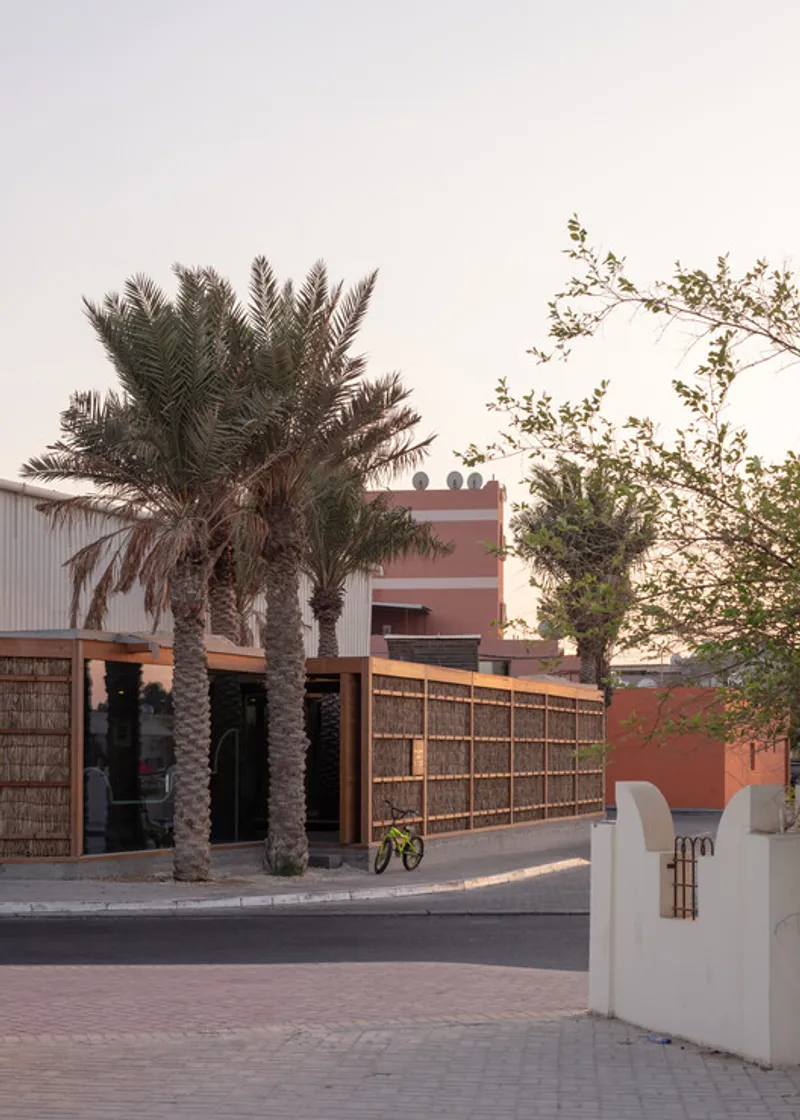
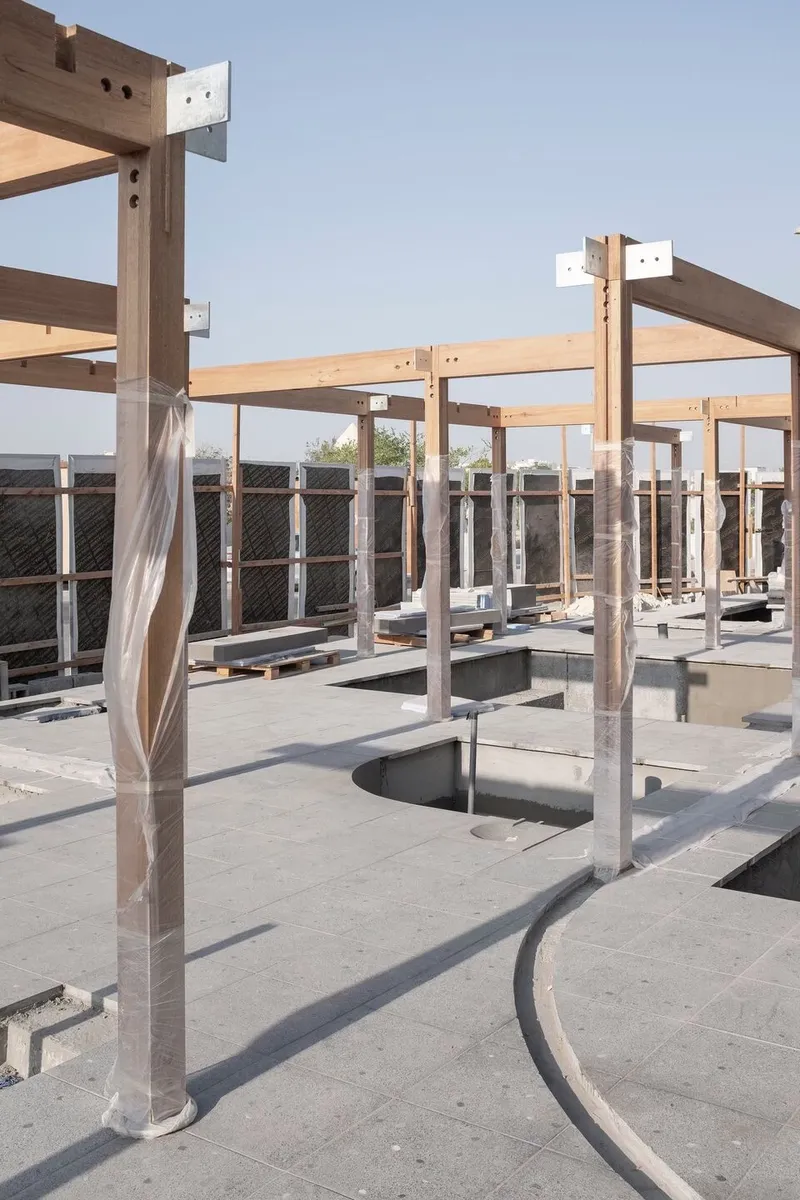
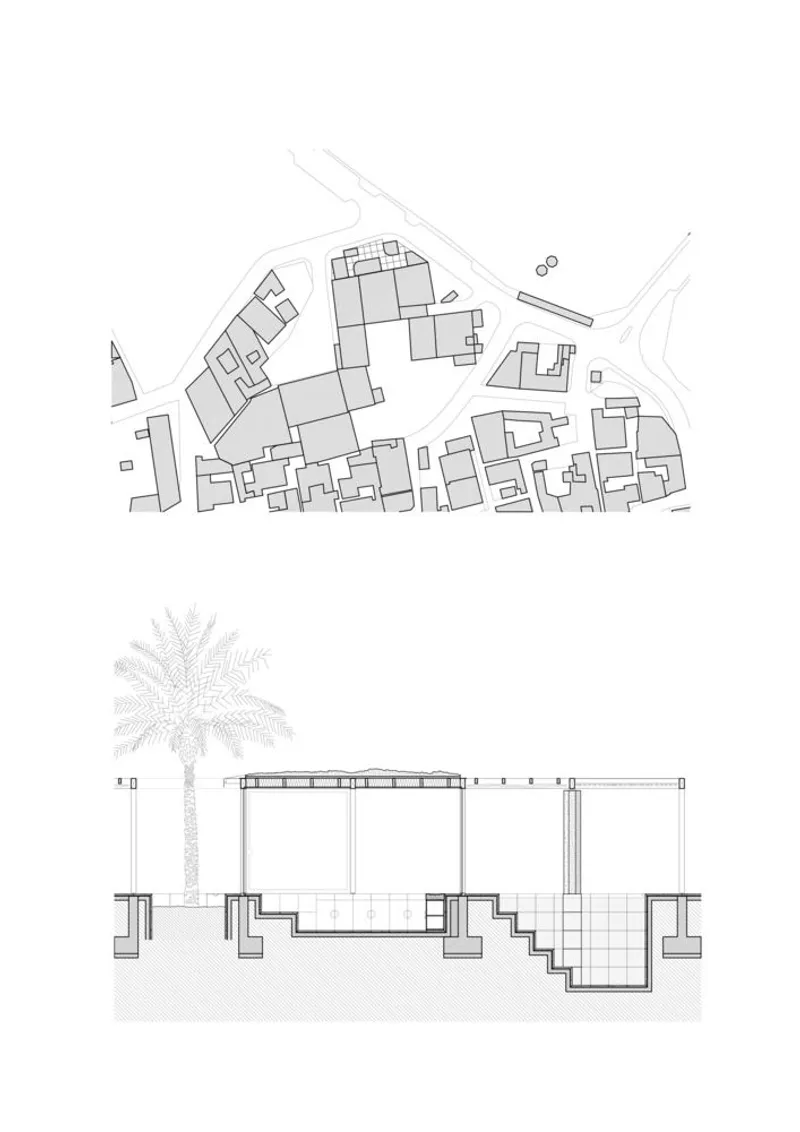
At first glance, the textile factory appears as a low-rise gridded elevation, a quiet structure that stretches along the street boundary. Its design takes inspiration from date palm plantations of northern Bahrain, where timber grids and irrigation channels create rhythm and order in the landscape.
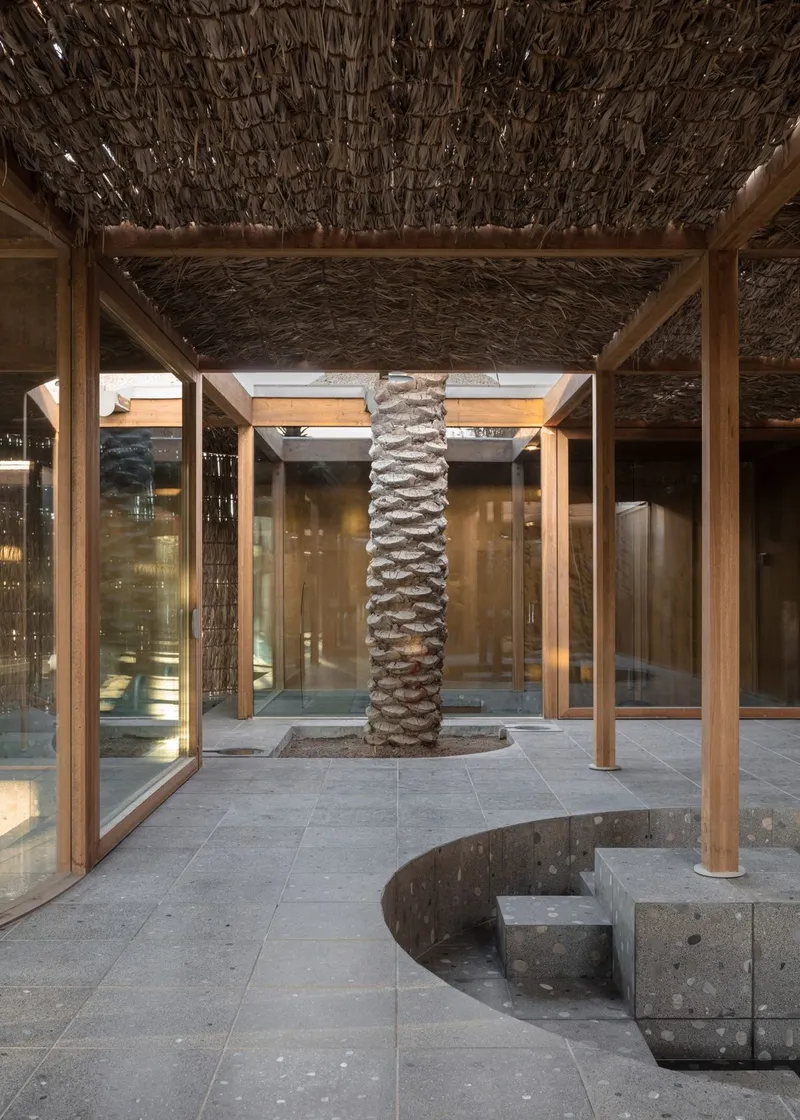
A tight grid of timber beams and columns organizes the space, creating a sense of continuity while allowing nature to intervene. Palm trees rise through openings in the horizontal roof plane, piercing the structure and becoming a living extension of the building.
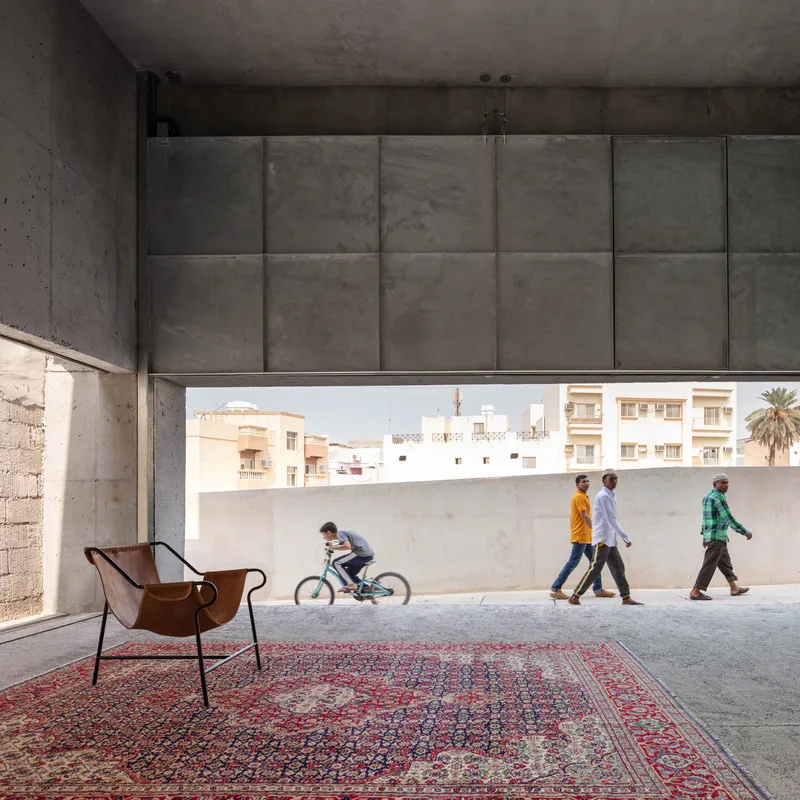
Inside, the design shifts from rigid geometry to sculpted voids. Excavated floor pits recreate the traditional weaving positions of artisans, giving the interior both functional and cultural depth. These sunken areas define workstations, social zones, and communal gathering points.
A Garden Within Walls
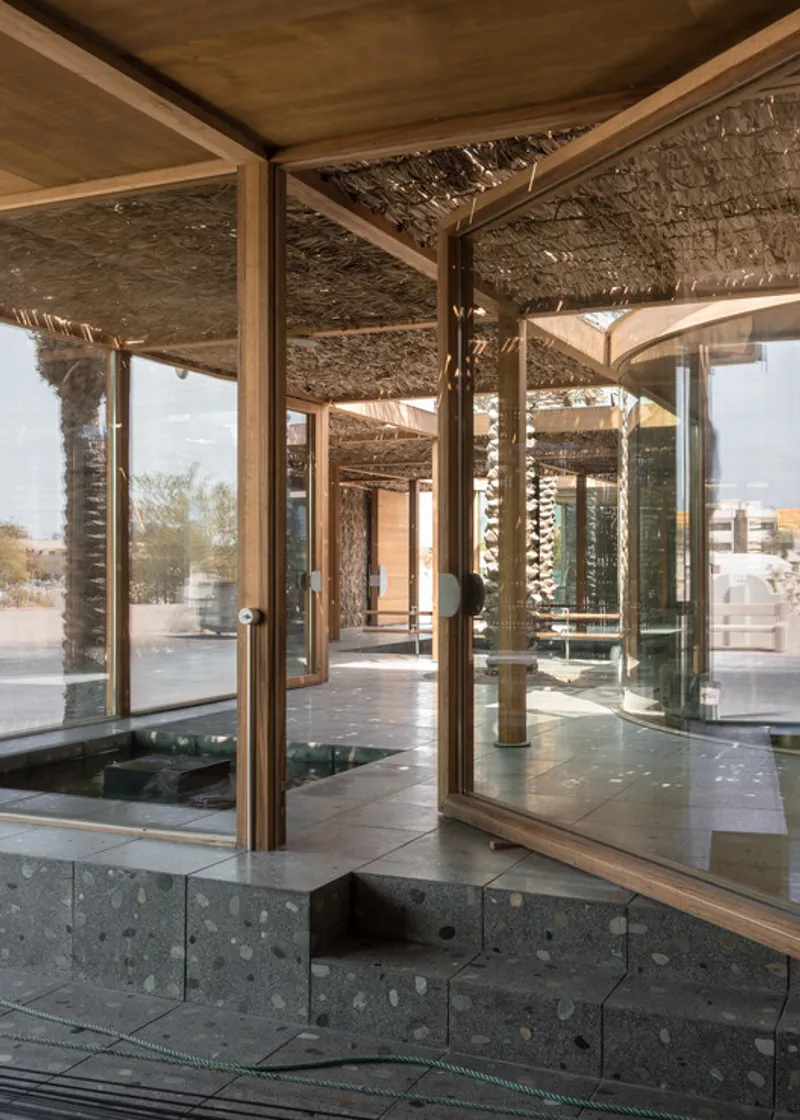
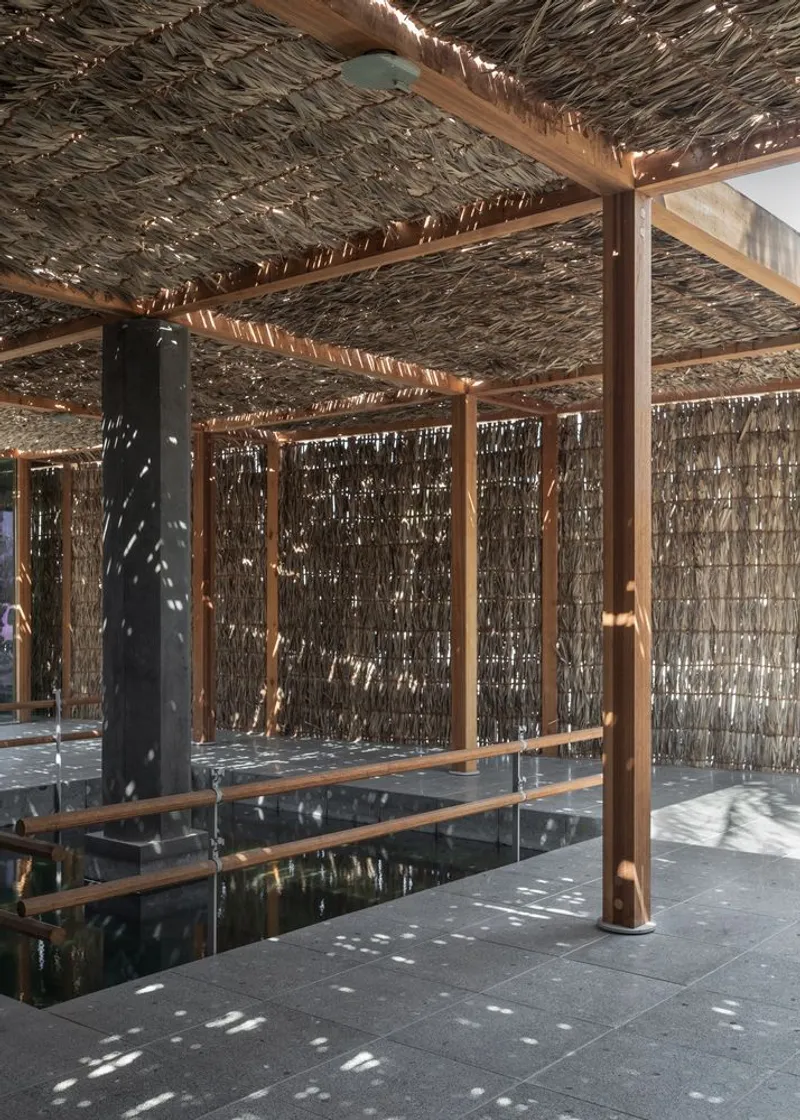
The Al Naseej Textile Factory is not merely an industrial building, it is also a garden and a social hub. Interspersed within the grid are date palms, water ponds, and fountains, softening the architectural rhythm and transforming the interior into a shaded, cool oasis.
This thoughtful integration of nature provides a passive cooling system, allowing airflow and moisture to naturally regulate temperature. Glass-enclosed areas, such as workshops or offices, dissolve visually into the shaded garden, reinforcing the idea of openness and transparency.

Materiality and Local Craft
In keeping with the project’s mission of cultural revival, the building is constructed using locally available materials. The reliance on timber, concrete, and traditional techniques emphasizes both sustainability and the celebration of regional craftsmanship.
The result is an architecture that feels both timeless and contextual, a building that breathes with its environment and honors the very crafts it houses. Much like a woven fabric, the structure brings together threads of tradition, modernity, and community.
A Living Heritage
The Al Naseej Textile Factory is not just a space for production, but a living monument to Bahrain’s weaving heritage. By blending function, memory, and landscape, the project exemplifies how contemporary architecture can protect and reinvigorate intangible cultural traditions.
Through its design, the factory acts as both a workplace and a community hub, creating opportunities for social interaction, cultural continuity, and sustainable craftsmanship.

All the photographs are works of Dylan Perrenoud


Popular Articles
Popular articles from the community

Faces of the Soviet Avant-Garde: Turning Moscow's Street Names into an Open-Air Museum
A network of sculptural installations across a Moscow residential district transforms forgotten architect names into spatial encounters with cultural memor

Cloaked Colonization: A Mobile Underwater Habitat That Moves Like a Fish
Micah Abaya's shortlisted EHC Pacific entry reimagines ocean settlement as a dispersed network of self-sustaining architectural organisms.

Manzana Morphosis: Stretching Barcelona's Grid into a Living Landscape for 2050
A radical reworking of the Eixample manzana turns density into a tool for generous public space, vertical ecology, and environmental performance.
Opera by the Sea Estonia: Three Shells Dissolving Architecture into Tallinn's Coastline
A winning opera house proposal replaces monumental form with interconnected shells that blur the boundary between building, park and Baltic Sea.

Similar Reads
You might also enjoy these articles


Hodi-Mandai Geram
Project Function: Preservation and revitalization of the Intangible heritage and socio-spatial identity of the Hodi by Housing, Cultural Memory Center, Sacred Grove, landscape, local tourism economy


Olio Towers: A Mid-Rise for Performers That Fuses Housing, Rehearsal, and Stage
Located blocks from Houston's Theater District, this modular tower stacks living units around a central performance atrium.

Oasis: Modular Green Housing Carved into Dhaka's Urban Fabric
A shortlisted Plugin Housing entry reclaims unauthorized settlements in Dhaka with stepped concrete volumes, green roofs, and ventilation-driven design.

Black Hole: A Floating Megastructure for the Post-Physical Era
Emiliano Mazzarotto envisions a spherical, self-scaling arena where e-sports, digital hotels, and holographic stadiums replace traditional public space.

Explore Architecture Competitions
Discover active competitions in this discipline

Challenge to reimagine the Iron Throne

Photograph architecture without architects

Illustrate the lost glory of Angkor Wat - Render Challenge

Design challenge to reuse E-waste
Comments (0)
Please login or sign up to add comments
No comments yet. Be the first to comment!