

Alfacs: A Living Mediterranean Resort Shaped by Time and Process
A gradually evolving Mediterranean resort blending landscape, sustainable materials, and communal spaces, designed as an adaptive architectural process rooted in place.


Located in Alcanar, on the edge of the Mediterranean Sea and near the Delta de l’Ebre Natural Park, Alfacs is not conceived as a single architectural project but as a long-term, evolving process. Designed and carefully transformed since 2016 by Bajet Giramé in collaboration with JAAS, this hospitality project redefines contemporary resort architecture through gradual intervention, adaptability, and deep respect for landscape and local identity.
Rather than pursuing a fixed master plan, the architects describe Alfacs as a continuous architectural metamorphosis. Each year, during a limited four-to-six-month construction window before the spring season, small but meaningful improvements are introduced. This incremental approach allows the resort to grow organically, responding to use, climate, and collective experience. The philosophy is clear: there is no final image, only a living system shaped by time, care, and repetition.
An Archipelago of Interventions Rooted in Landscape
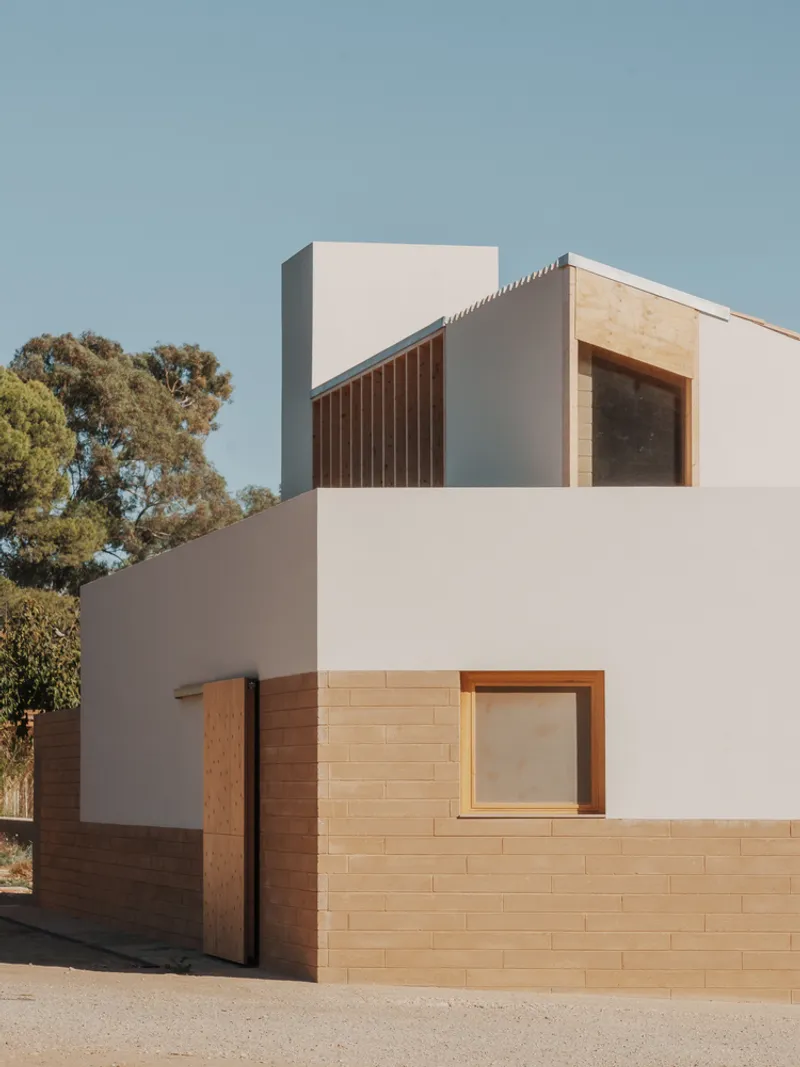
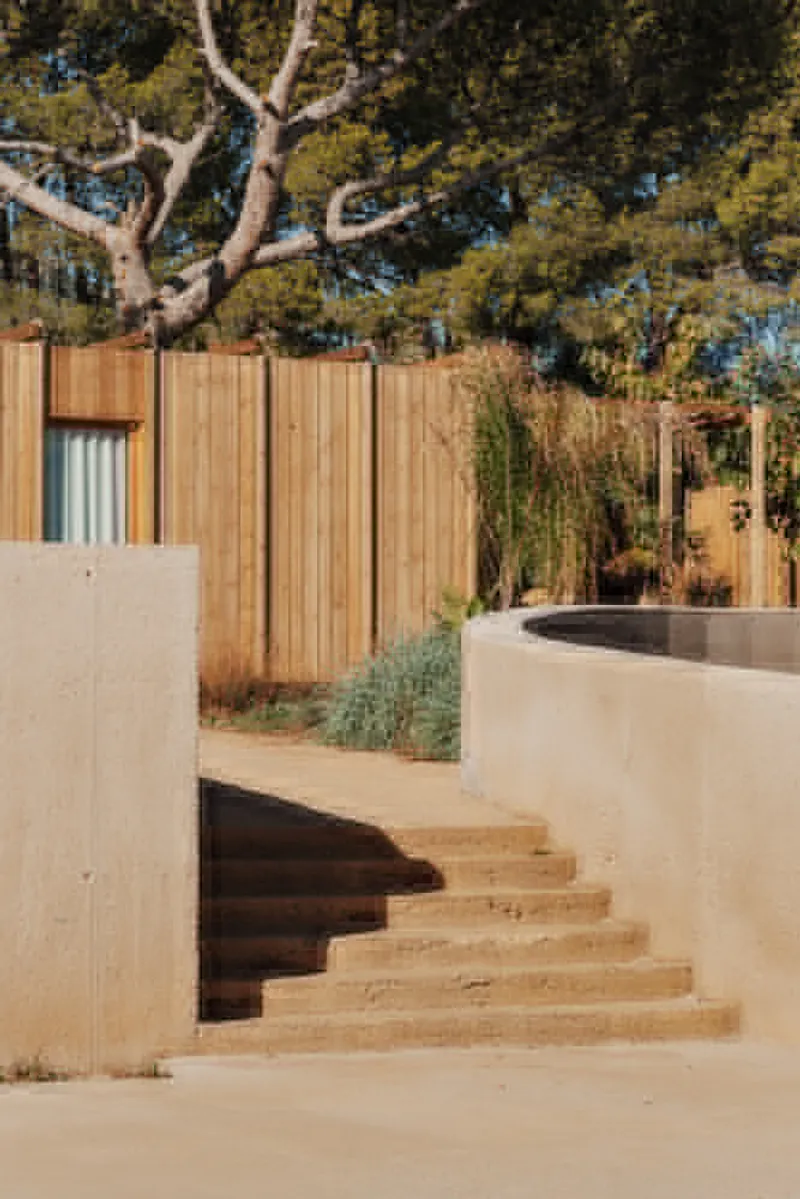
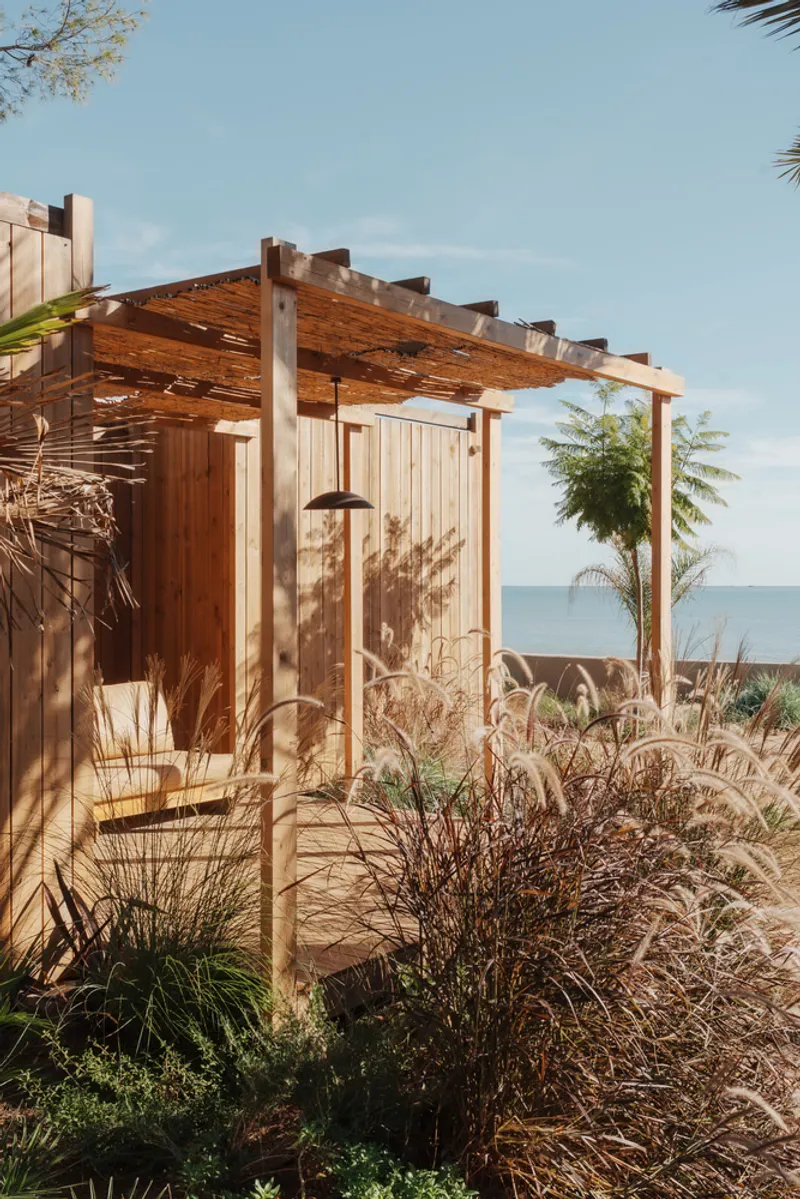
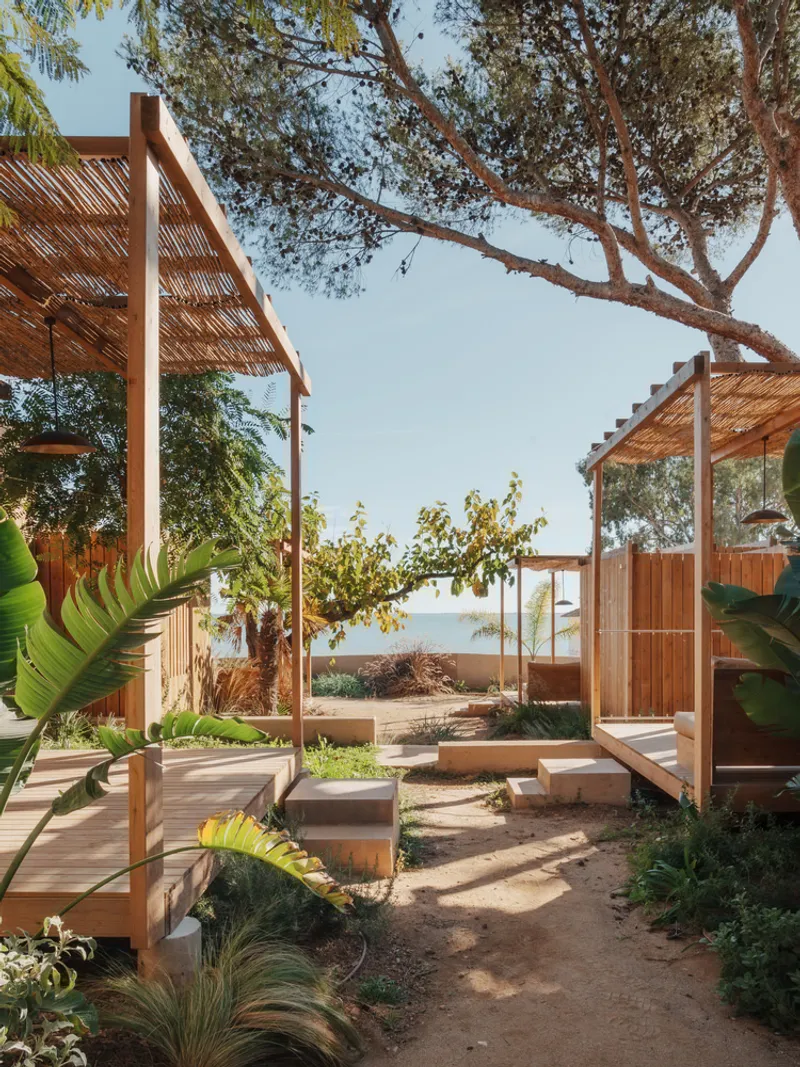
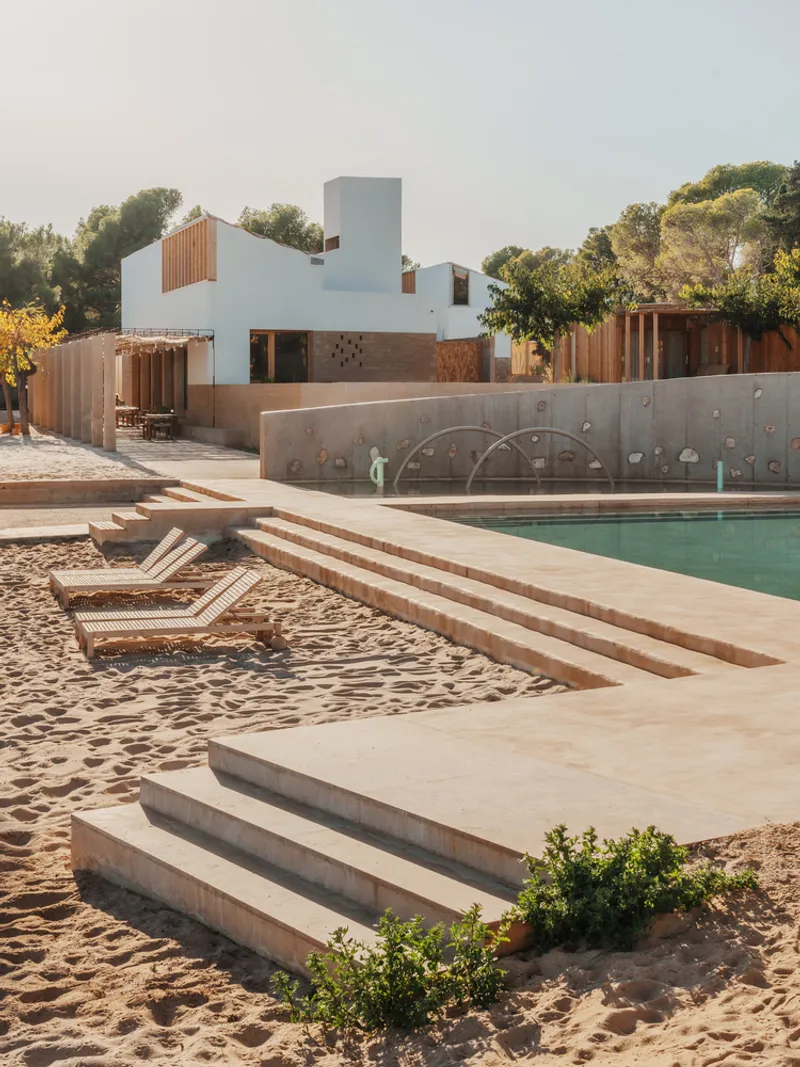
The architectural strategy unfolds as a “project of projects,” an archipelago of diverse yet interconnected interventions spread across the site. The process begins with the construction and rehabilitation of stepped terraces, walls, and platforms that act as quasi-permanent infrastructural supports. These elements accommodate lightweight and reversible architectures such as textile tents, pergolas, and wooden bungalows, allowing each space to be temporarily appropriated while remaining adaptable to future change.
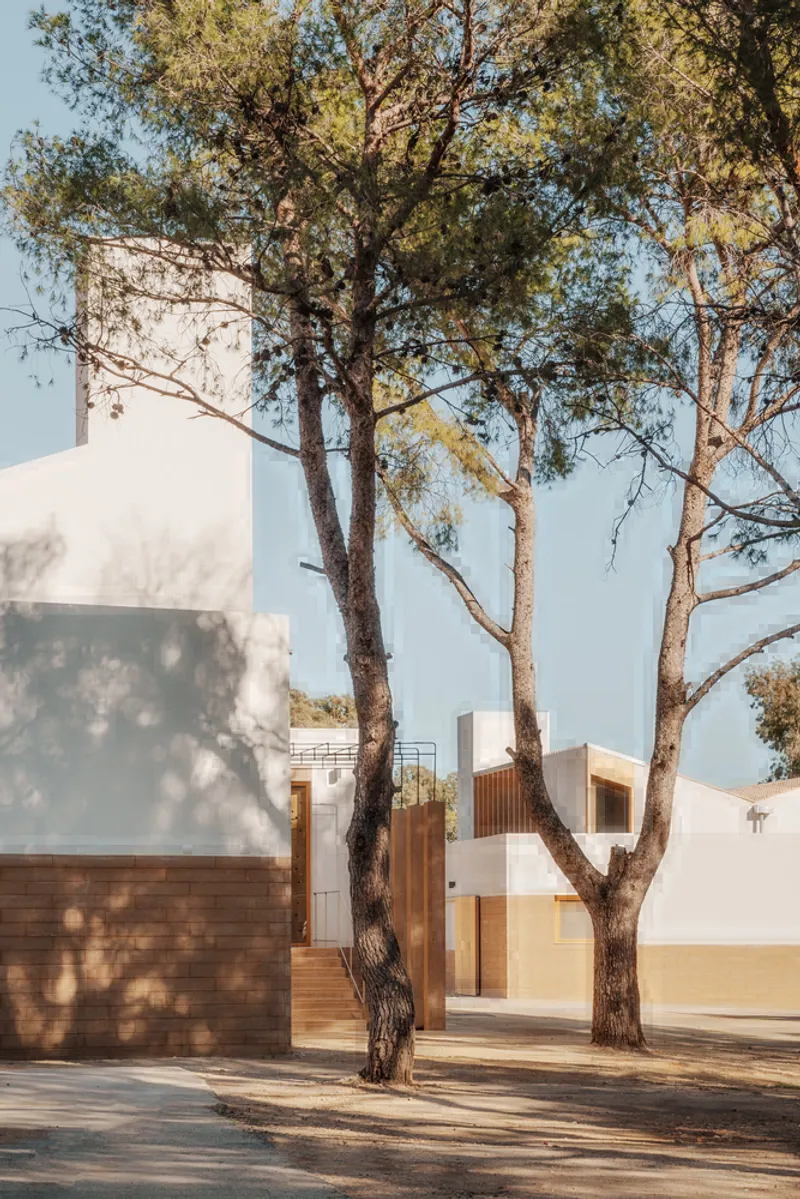
Conceived with a long-term vision, the transformation places the campsite at the center of a broader territorial strategy that embraces ethics, ecology, and local culture. In 2021, the renovation of the multi-service pavilions marked a decisive turning point. The reorientation of two existing buildings and the addition of a new pavilion created a central courtyard, establishing the foundations of Alfacs’ contemporary identity. This phase, recognized at the FAD Awards, distilled the principles that now guide the entire resort.
Material Dialogue and Mediterranean Sustainability
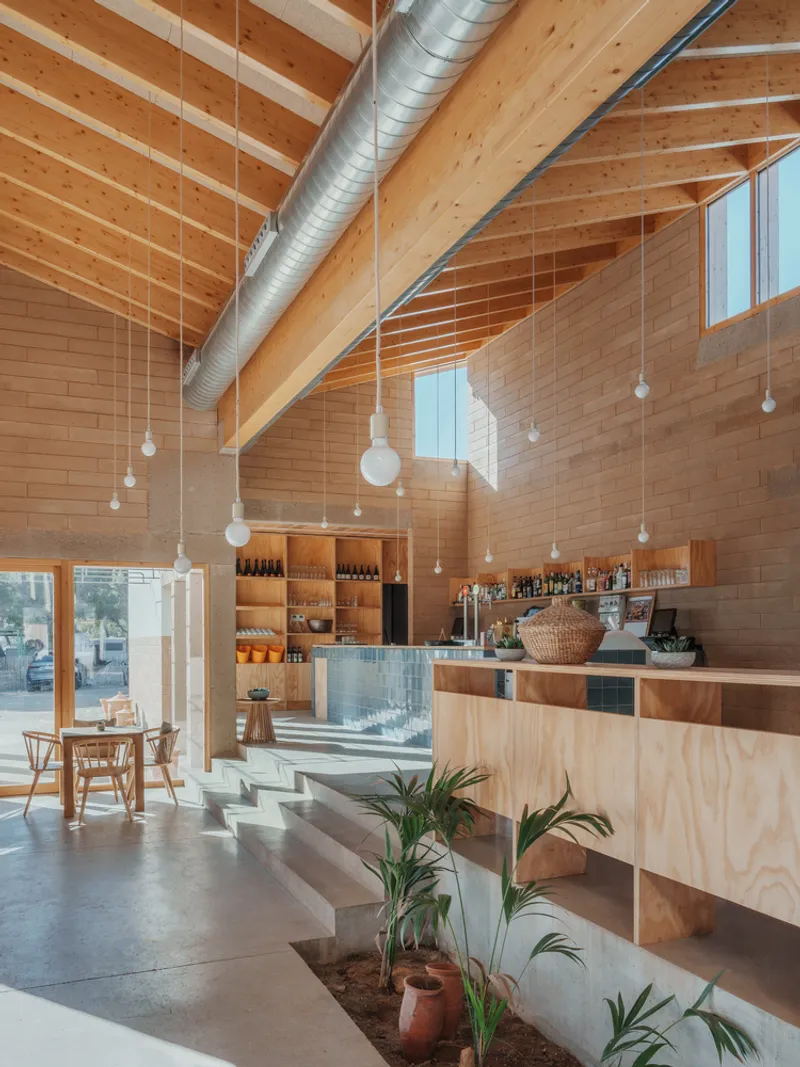
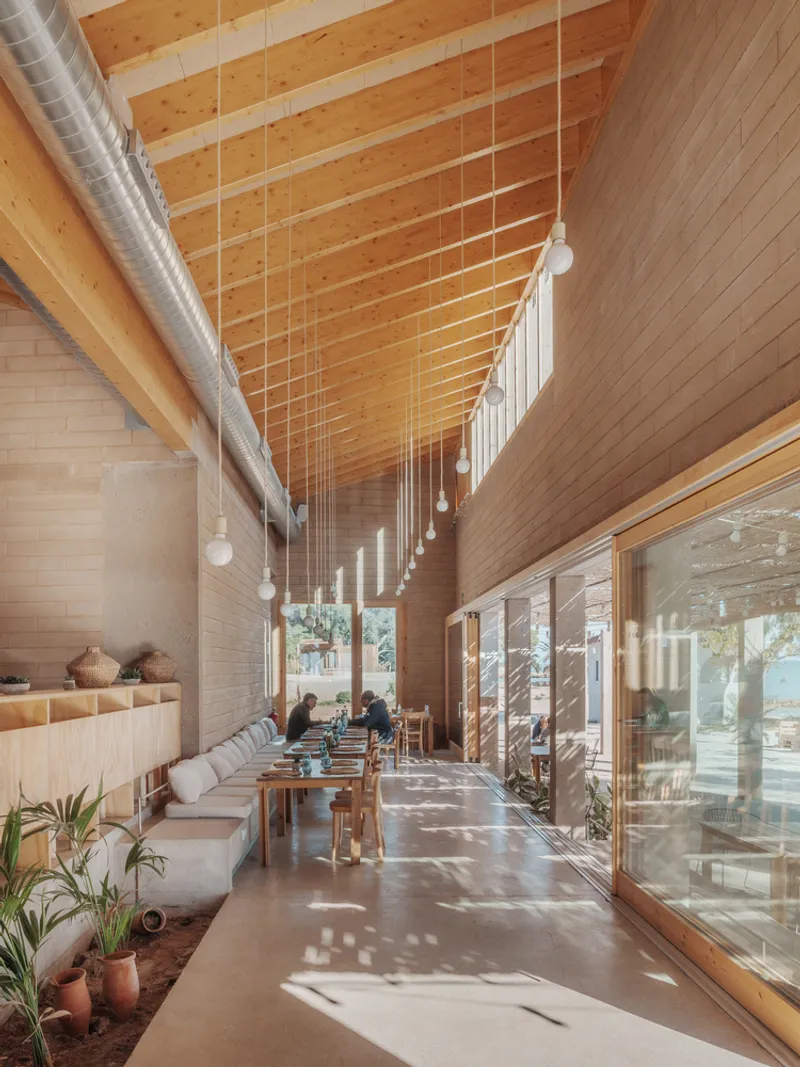
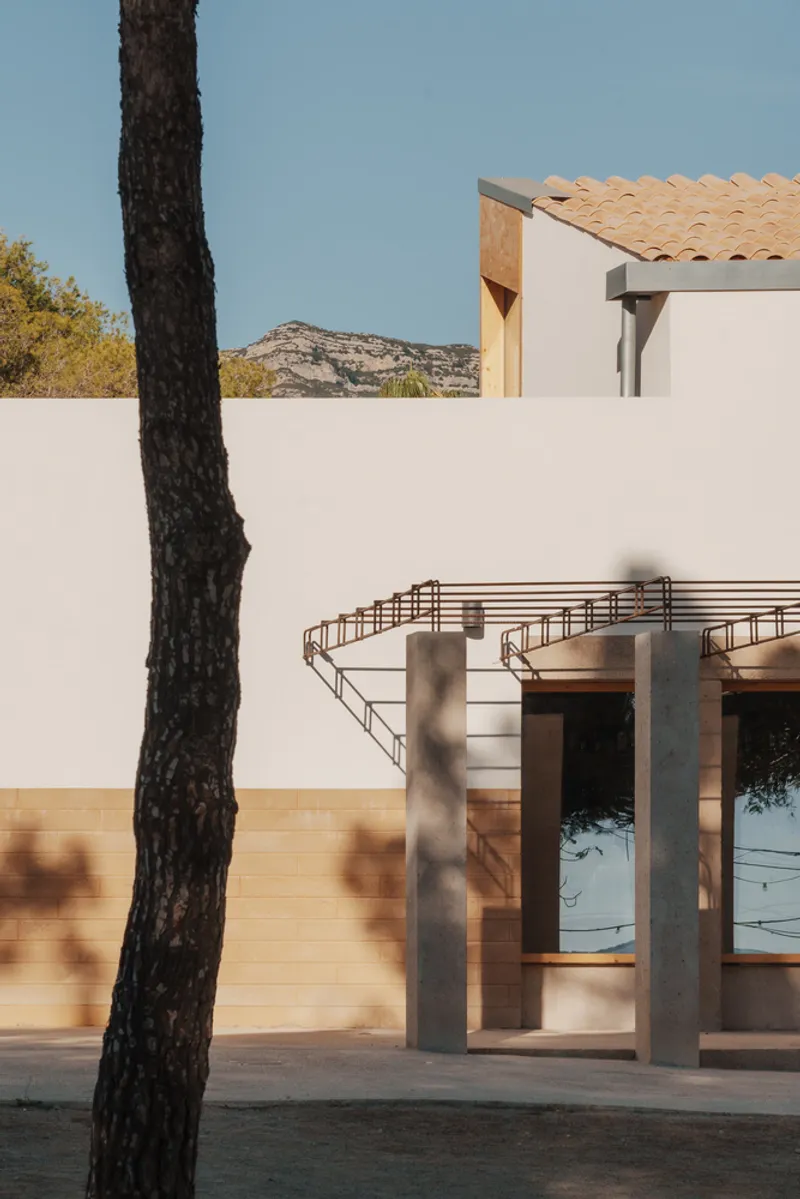
Materiality plays a crucial role in anchoring the architecture to its environment. The main communal buildings combine compacted earth, ceramic tiles, and wood, balancing durability with tactile warmth. Visible sloping tiled roofs shelter generous gathering spaces, reinforcing the social character of the resort. Vegetation is treated as a structural element rather than decoration, with mature pine trees, aromatic native gardens, reed and vine trellises, and shaded pergolas forming a continuous green framework.
Auxiliary pavilions are conceived as discreet infrastructural bays that dignify everyday activities such as laundry, dishwashing, and hygiene. Opening directly onto gardens and verandas, these spaces transform routine actions into shared, pleasurable experiences, reinforcing the communal spirit that defines Alfacs.
Blurred Boundaries Between Interior and Exterior
Graduality defines both the construction process and the spatial experience. New structures are anchored into the existing topography, creating a constant dialogue between artificial and natural elements. Visitors move fluidly between open communal areas and intimate, shaded corners designed for rest and contemplation.
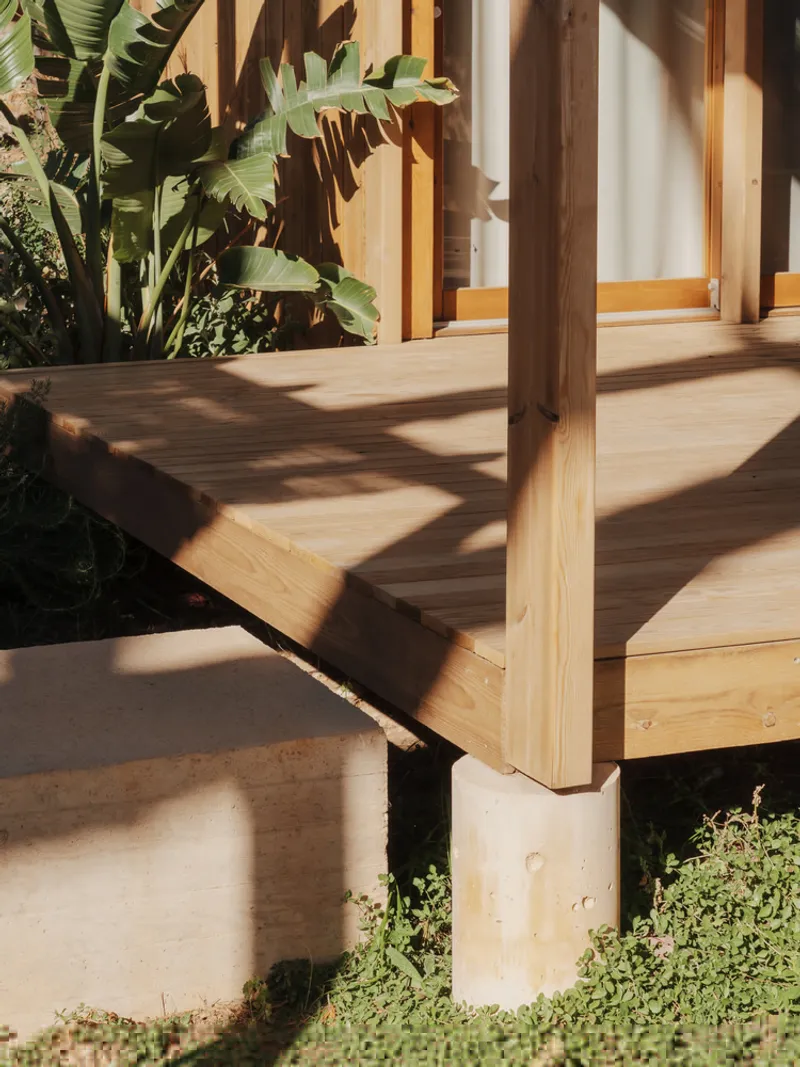
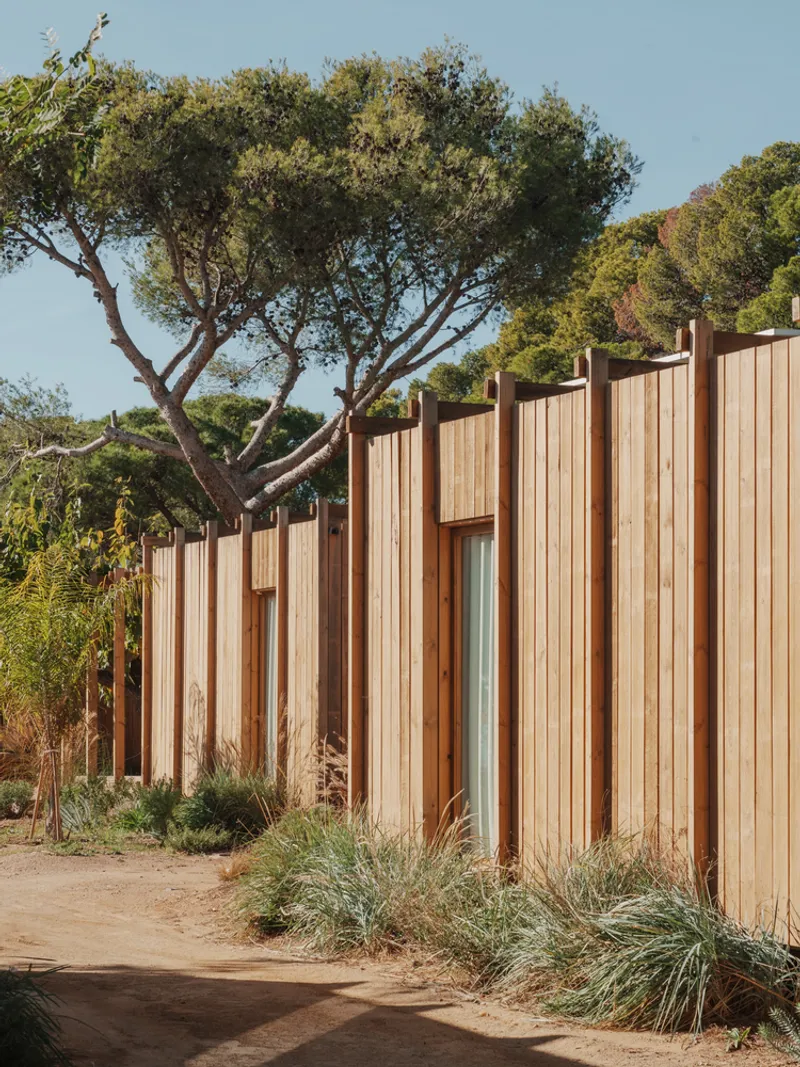
The wooden bungalow units exemplify this interior, exterior ambiguity. Elevated on concrete feet and integrated into the stepped terrain, each unit enjoys a private terrace with uninterrupted sea views. Their ventilated envelopes, made of sawn wooden planks attached to an external exoskeleton, serve simultaneously as porches and supports for photovoltaic panels. Modular construction allows for varied interior layouts, while visually dissolving the boundary between built form and landscape.
Recovering the Cove as a Collective Space
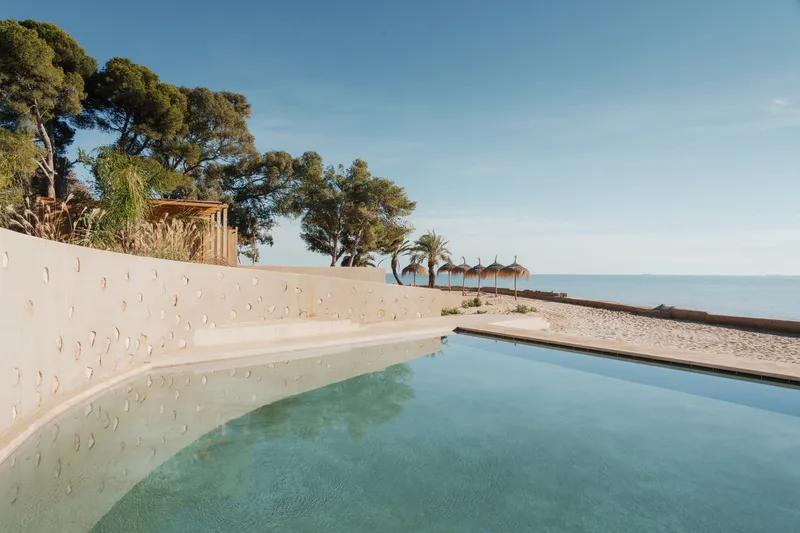
A key achievement of the project is the recovery of the site’s original topography. Once a small urbanized cove occupied by camping pitches over fifty years ago, the area has been reimagined as a shared Mediterranean landscape. The infilling with flinty sand and the construction of a protected pool against a large circular retaining wall respond to a collective desire for a sheltered beach-like space. This intervention restores the communal essence of the cove, reinforcing Alfacs as a place of shared enjoyment rather than isolated consumption.
A Model for Contemporary Hospitality Architecture
With a built area of approximately 8,000 square meters completed in phases up to 2023, Alfacs stands as a compelling example of sustainable hospitality architecture. By privileging process over object, landscape over monumentality, and community over spectacle, the project offers a resilient and ethical model for future coastal developments in sensitive environments.
All photographs are works of
Joan Guillamat


Popular Articles
Popular articles from the community


LT2A and OPEN Architectes Thread a Brick and Glass High School Through a Wooded Belgian Campus
In Braine-l'Alleud, a 3,000 m² wing for Collège Cardinal Mercier pairs pale brick with a glazed colonnade, deferring to a small chapel and a dense wood.

Juan García Correa, John González and Claudia Rueda Sink a Circular Amphitheater into a Manizales Engineering Building
On the La Nubia campus in Manizales, Colombia, the S1 Building folds labs and offices into a hillside of ramped lawns that double as a campus route.

David Ortega Stacks a Two-Story Mexico City Penthouse Around a Steel Stair and a Pergola-Shaded Roof Terrace
In Colonia Roma, a 300 m² penthouse uses oak joinery, a planted steel stair and a slatted roof pergola to make a new-build apartment feel like a house.

David Macias Steps a Doorless Stone and Plaster House Down a Tropical Colombian Hillside
In the humid hills of Colombia, Threshold House replaces the front door with an open void and terraces its 850 m² down the slope instead of fighting it.

Similar Reads
You might also enjoy these articles

Gil Mello Arquitetura Tilts a Single Roof Toward the Waterfalls on a Plateau Above Aiuruoca, Brazil
In Aiuruoca, Minas Gerais, a 200 m² house of local labor and reclaimed poles pairs a low valley veranda with a tall mountain one.

U.GA Architects Wraps an Oval Rooftop Pool in Curved Board-Formed Concrete on Busan's Jeollidan-gil
In Busan's Jeonpo-dong, a 454 m² mixed-use block stacks a neighborhood facility, guest rooms and an oval rooftop pool inside spiraling concrete walls.

Felipe Hess Arquitetos Turns a Blind Stone Wall to the Street and Opens a Brazilian House onto a Courtyard and Canal
A canal-front house in Brazil hides behind painted stone and planting, then opens to an olive-tree courtyard, a reed-ceilinged porch and a curving pool.
David Macias Steps a Doorless Stone and Plaster House Down a Tropical Colombian Hillside
In the humid hills of Colombia, Threshold House replaces the front door with an open void and terraces its 850 m² down the slope instead of fighting it.

Explore Hospitality Building Competitions
Discover active competitions in this discipline

Challenge to reimagine the Iron Throne

Photograph architecture without architects

Illustrate the lost glory of Angkor Wat - Render Challenge

Design challenge to reuse E-waste
Comments (0)
Please login or sign up to add comments
No comments yet. Be the first to comment!