
Álvaro Siza Returns to Renovate His Very First Building, 65 Years Later
The 1954 Casa d'Abreu Neto in Matosinhos receives a careful renovation guided by the hand that originally drew it.

There is something quietly extraordinary about an architect returning to their earliest work after more than six decades. On April 20, 2022, Álvaro Siza Vieira walked back into the Casa d'Abreu Neto in Matosinhos, a house he designed in 1954 while still a student. The building, completed in 1957, was the opening statement of what would become one of the most consequential careers in modern architecture. Now, at 90, Siza oversaw its renovation with the goal of reactivating the house as a living organism: capable of welcoming architectural tourism and cultural events without surrendering the identity he gave it as a young man.
The project sits on Avenida Dom Afonso Henriques, part of a family compound known as "As Quatro Casas," four dwellings built for the same family on a subdivided plot. Two are detached, two semi-detached, and together they form an urban gesture in their relationship to the avenue. The Casa d'Abreu Neto, at 260 square meters, carries the fingerprints of Siza's early influences: Portuguese vernacular architecture filtered through Fernando Távora's survey of popular building, alongside debts to Alvar Aalto, Le Corbusier, Gaudí, and the Bauhaus. What makes the renovation compelling is not spectacle but restraint. Siza did not redesign his youth. He repaired it.
A White Volume on the Avenue
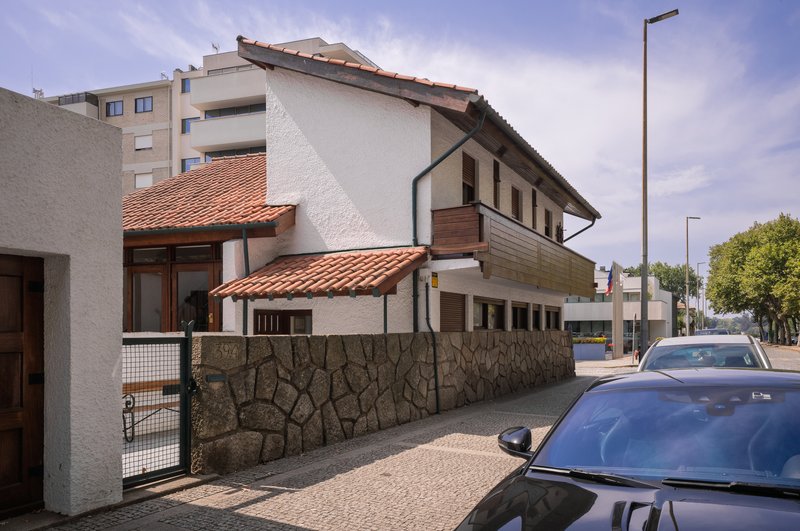
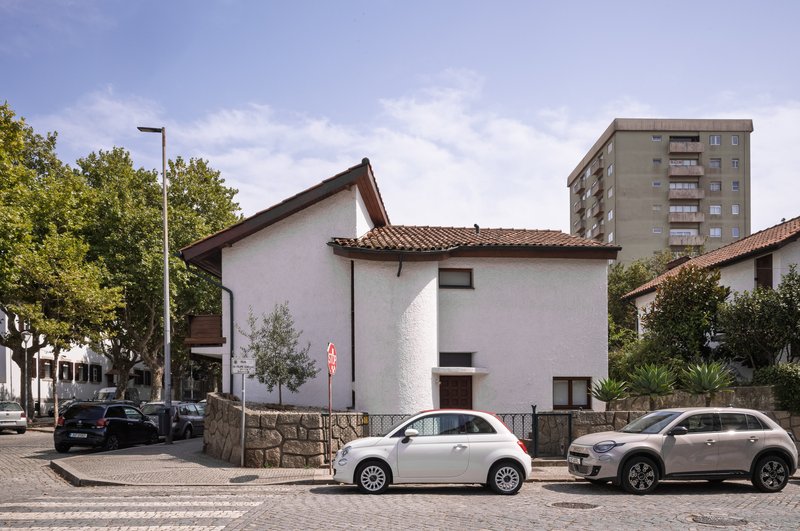
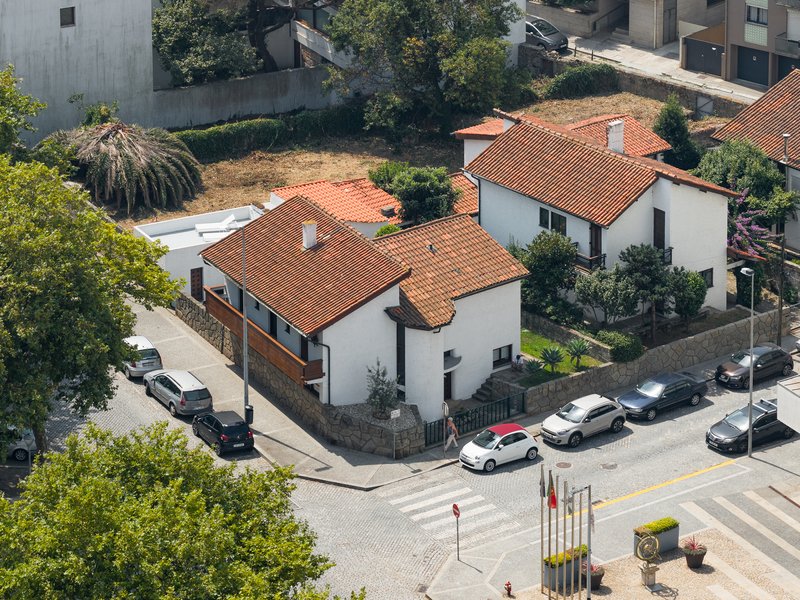
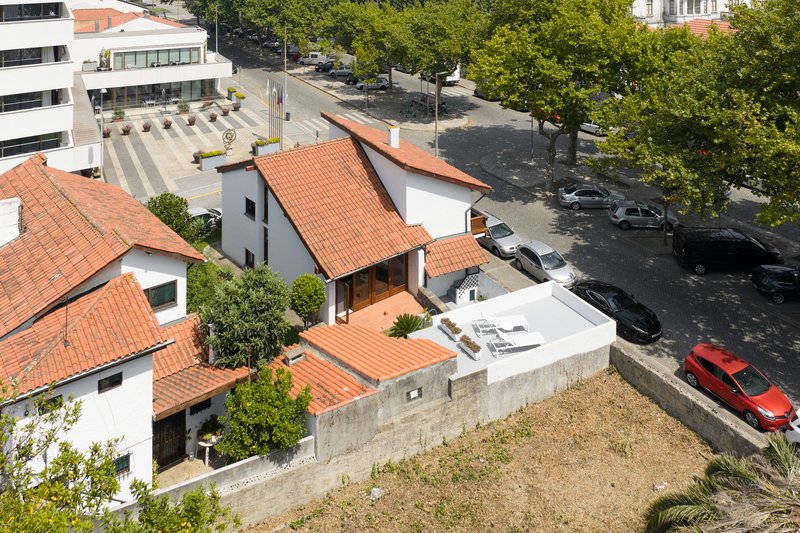
From the street, the house reads as a modest white stucco volume with terracotta tile roofs sitting above a rusticated stone base wall. It is unassuming in the best sense: the kind of building that rewards a second look rather than demanding a first. The aerial views reveal how the clustered rooflines negotiate a corner site, interlocking with the other houses of the family compound. Parked cars line the curb now, as they do throughout Matosinhos, and the house accepts its urban condition without complaint.
One of the renovation's most visible moves was the restoration of the original wooden shutters, which at some point had been replaced with PVC. It is a small correction that speaks volumes about the project's philosophy. The textured plasters that give the facades their particular grain were maintained, not smoothed over. Siza understood, perhaps better than anyone, that the character of this house lives in its surfaces.
Garden and Courtyard as Connective Tissue
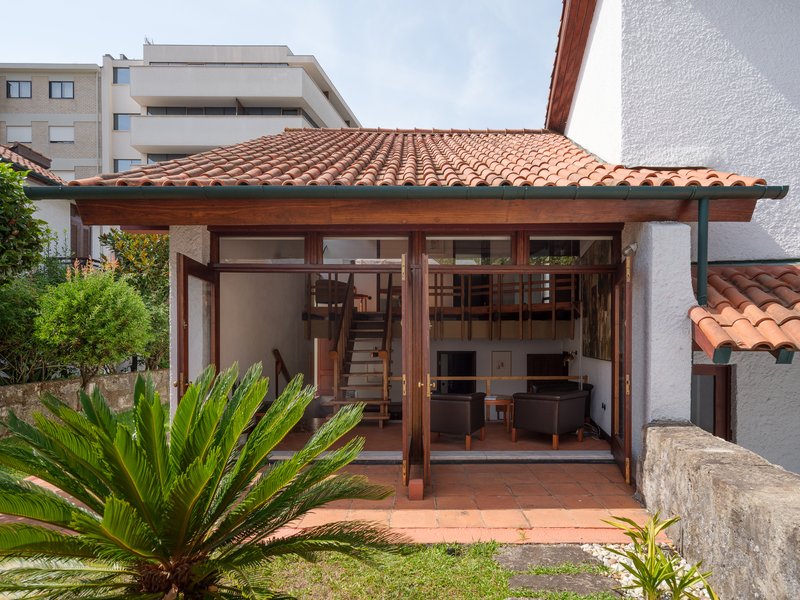
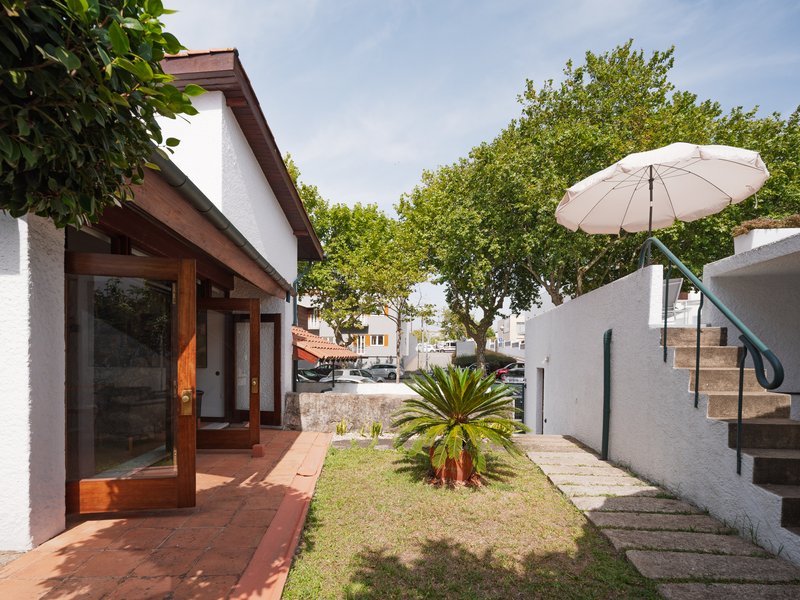
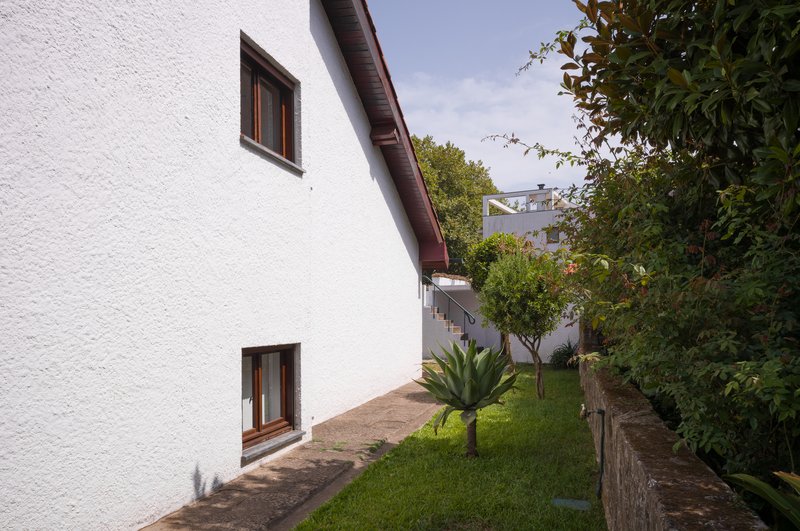
The relationship between interior and exterior was always central to the design. The garden-facing pavilion, with its timber-framed glass doors and terracotta tile roof framed by palm fronds, collapses the boundary between house and landscape. A stone paver pathway threads through courtyard plantings, past an agave plant anchoring a sloped garden path. The site works with different levels, organized clearly and functionally, and includes structures like a belvedere (erected for the practical needs of the lady of the house) and a former chicken coop that was converted into a laundry.
The garden matters here not as ornament but as program. Siza's early sensitivity to the relationship between building and ground, between the domestic and the coastal landscape of Matosinhos, is already fully formed in this project. The house emerges from its place, shaped by the proximity of the sea and the local culture of fishing and maritime identity.
Interior Circulation and the Split-Level Logic
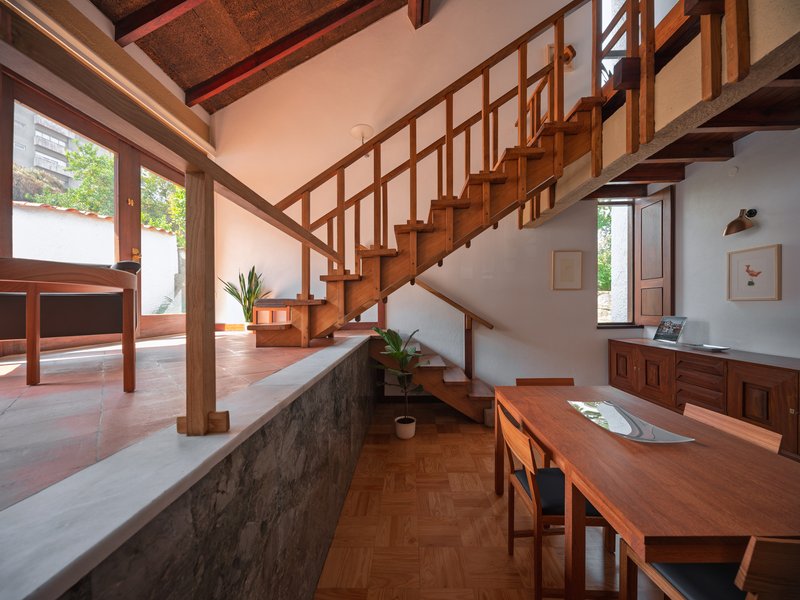
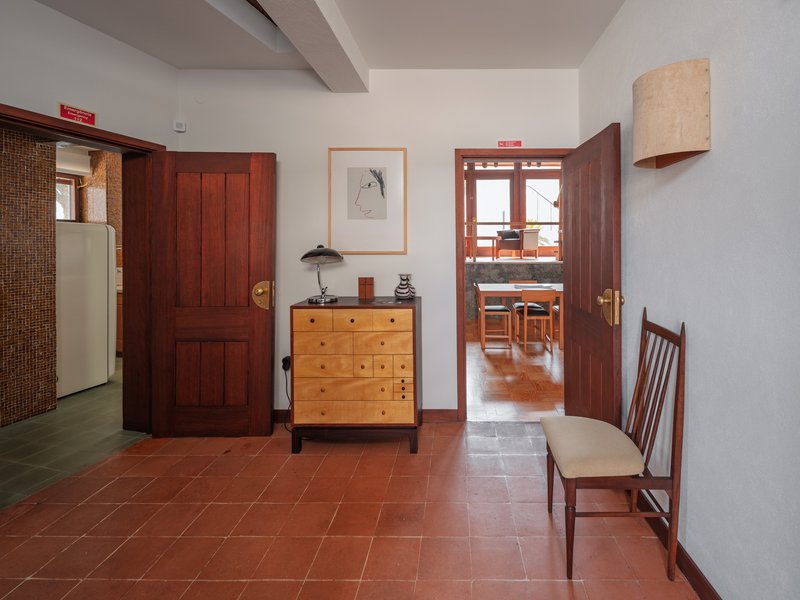
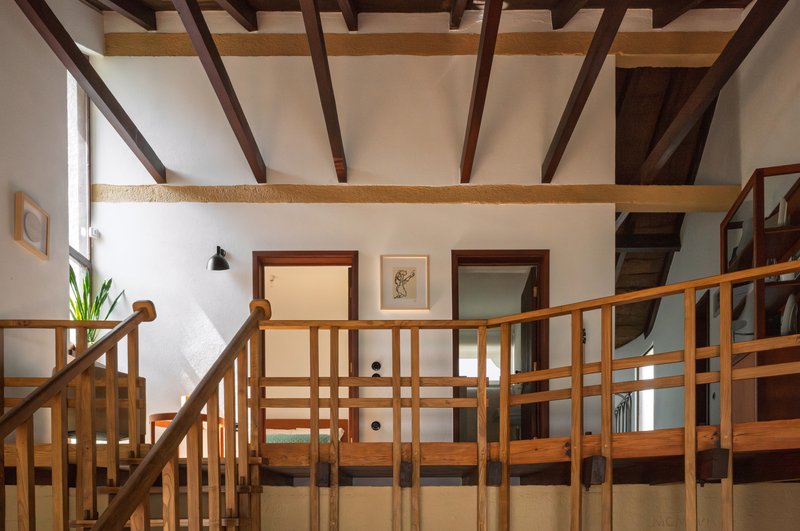
The program distributes across two floors connected by a pair of staircases, including a spiral stair whose iron handrail was repainted from black to grey during the renovation. The split-level interior, visible in the timber staircase with its grid railings descending toward herringbone wood flooring, reveals the sectional complexity Siza embedded in what appears from outside to be a simple volume. The entry hall, with its terracotta tile floor and dark timber doors, establishes a sequence of thresholds that unfold laterally into adjacent rooms.
Upper-level balconies with timber railings, exposed ceiling beams, and white plaster walls demonstrate a consistency of material language that the renovation preserved rather than updated. The ground floor accommodates an atrium, service areas, a social bathroom, two bedrooms, and living and dining rooms. Upstairs, the d'Abreu Neto Room, Boys' Room, and Fernando Room each open onto a balcony overlooking the avenue, while a guest room faces the garden and one of the neighboring Quatro Casas.
Living Rooms with Coastal Memory
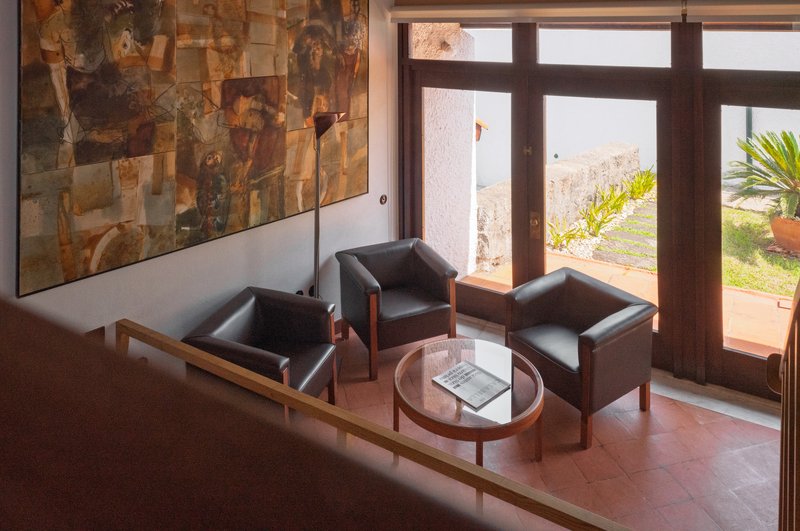
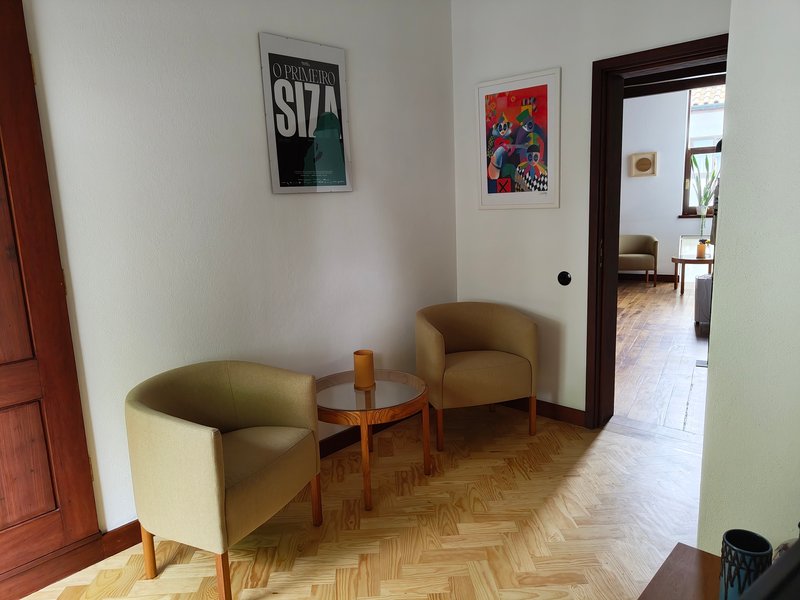
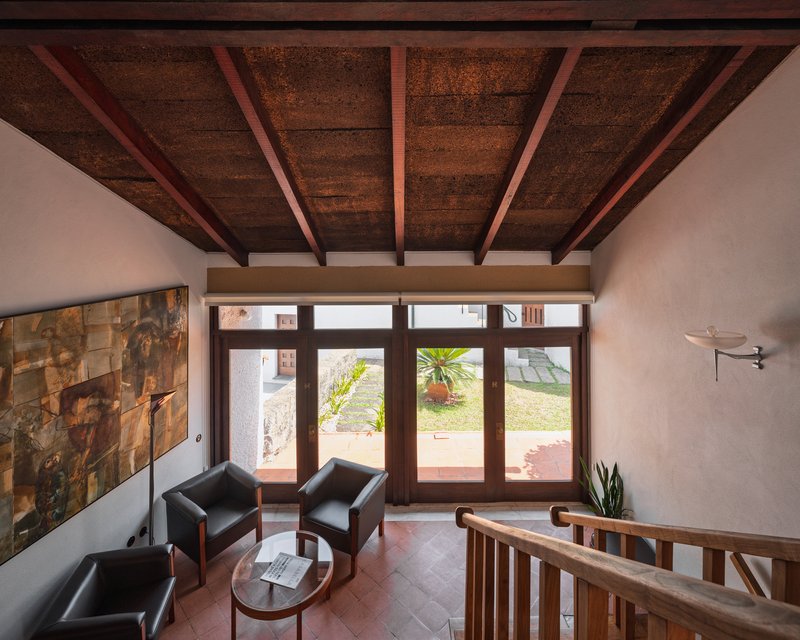
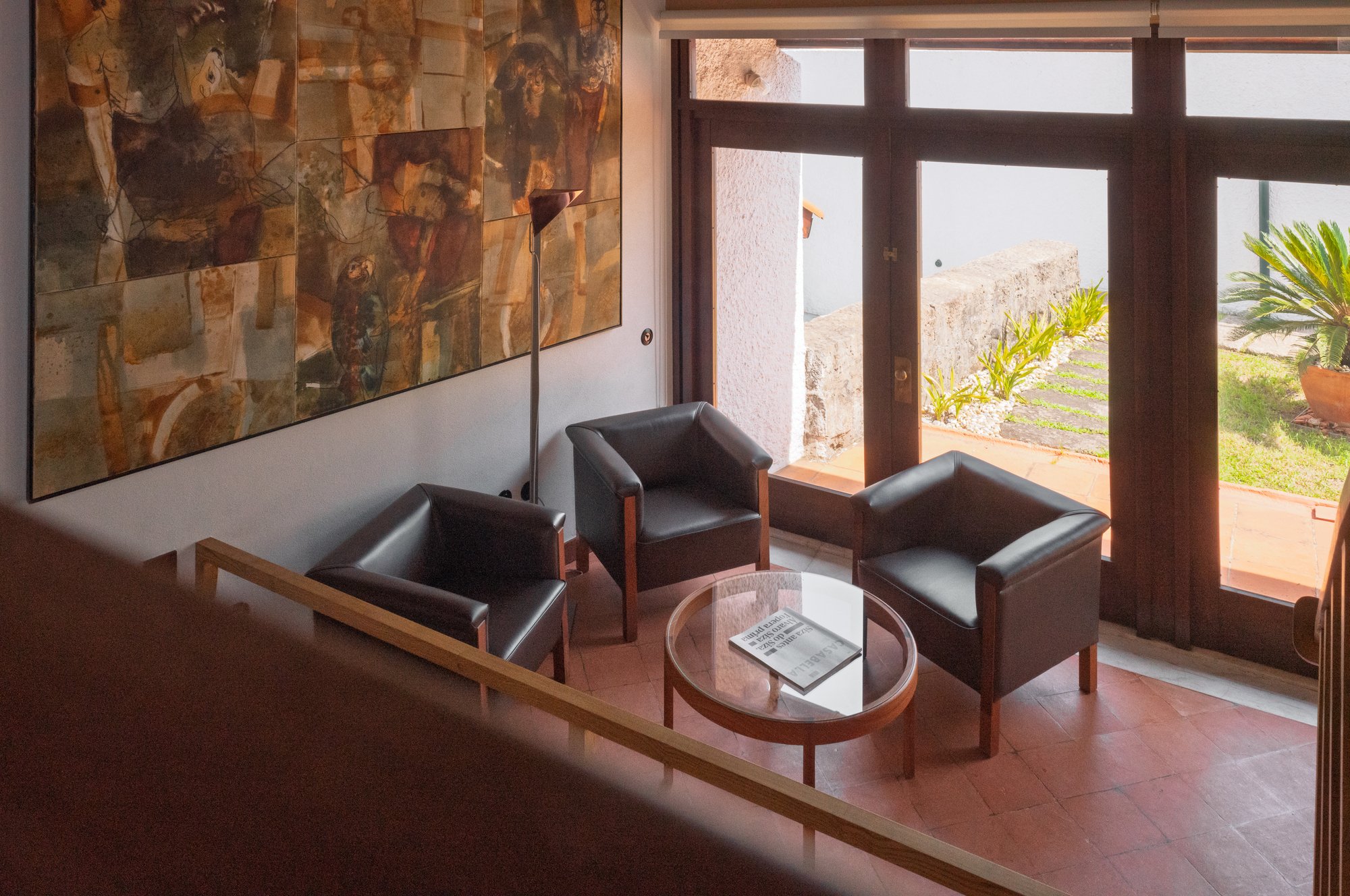
The living area is the heart of the house and the clearest expression of Siza's early talent for composing a room. Leather armchairs sit against a patchwork stone wall, while dark timber doors frame a coastal landscape beyond. The room is simultaneously grounded and open, anchored by heavy materials yet oriented toward light and distance. A helm rests on the balcony wall outside, a domestic artifact of Matosinhos' fishing heritage that doubles as a kind of found sculpture.
The upper-level sitting area, with exposed timber beams and cork ceiling panels, looks down over the garden. Cork, a quintessentially Portuguese material, is used here not as a sustainability gesture but as a practical ceiling finish with warmth and acoustic softness. The corridor, with its herringbone parquet and paired upholstered chairs framing a view through a doorway, shows Siza's instinct for choreographing domestic movement: every passage doubles as a pause.
The Kitchen as Craft Object
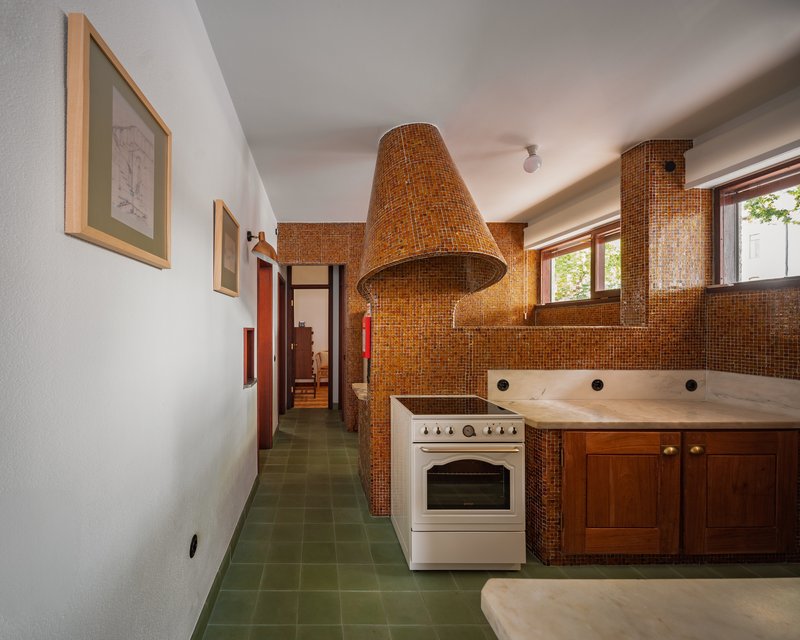
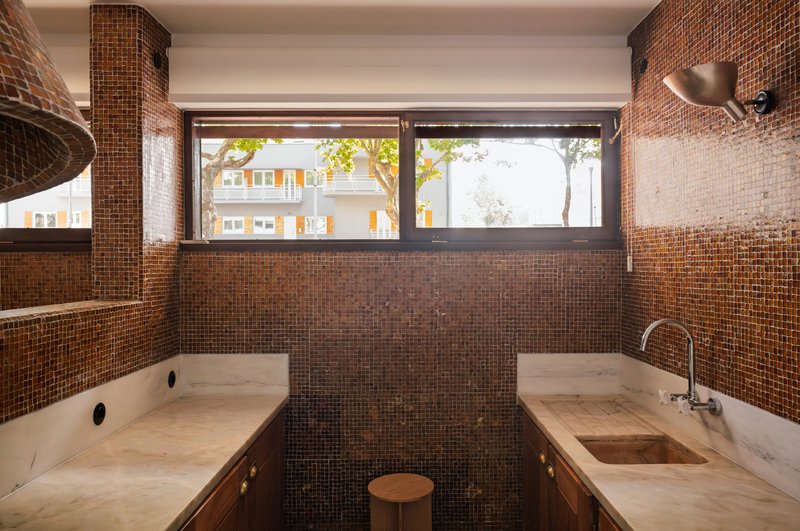
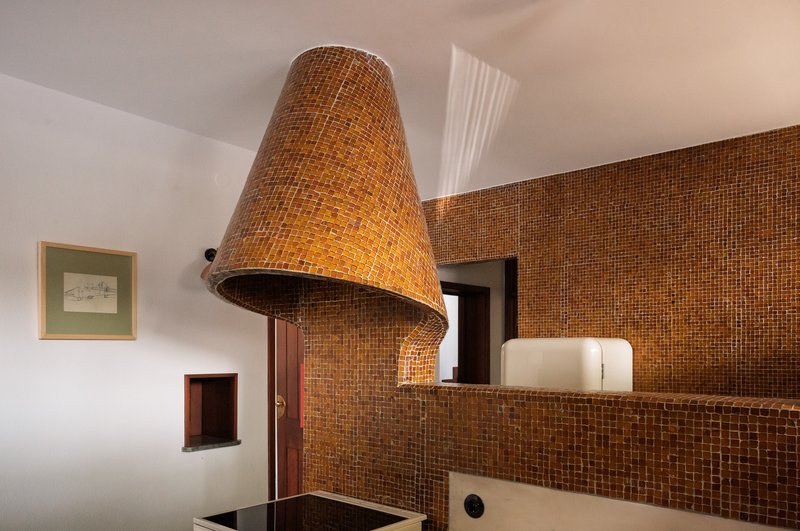
The kitchen may be the most visually striking room in the house. Amber and bronze mosaic tiles wrap the backsplash and range hood, which takes the form of a conical woven structure hovering above the cooktop. A skylight punches light directly onto the work surface. Ribbon windows run along the upper wall, framing trees outside and pulling the garden into the room. Custom-designed lamps and door handles were part of the original commission, evidence that even as a student Siza thought of architecture as a total discipline.
The renovation treated these surfaces with care. The glass mosaics and hydraulic tiles throughout the house were maintained using construction techniques that respect the original methods. There is no attempt to modernize the kitchen into a contemporary showpiece. It remains what it was: a room shaped by the specific tastes and rituals of a mid-century Portuguese household, now preserved as a document of its time.
Bedrooms and Private Rooms
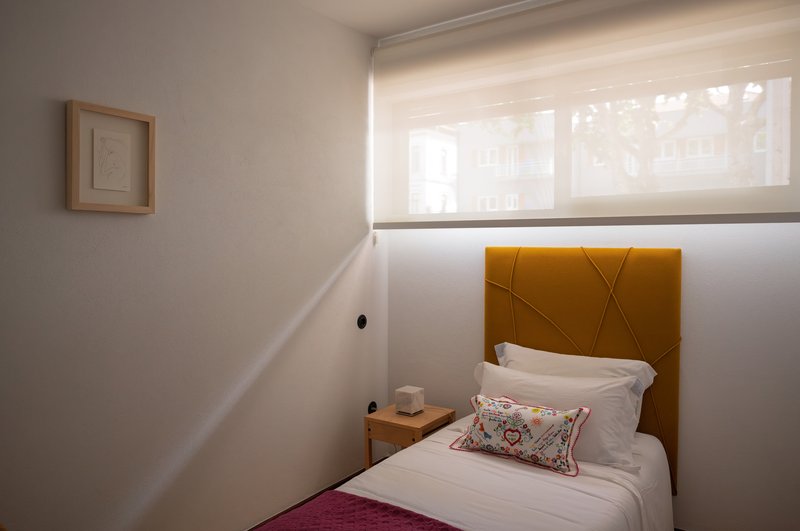
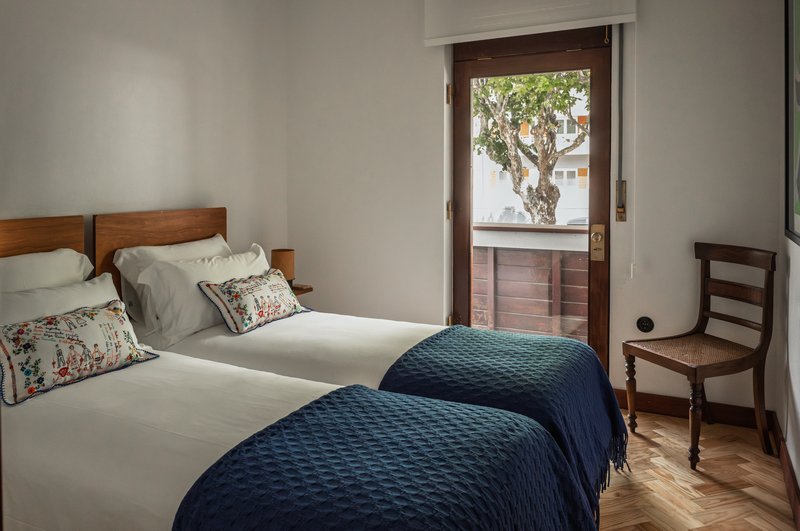
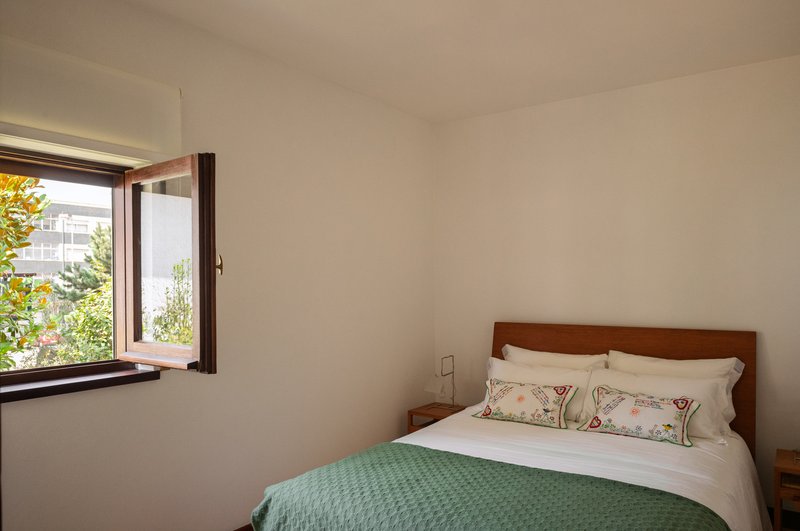
The bedrooms are modest in scale and generous in their relationship to the outside. A yellow upholstered headboard sits beneath a high window with a translucent roller shade, calibrating light without blocking it. Twin beds share a room with herringbone flooring and a window that frames a gnarled tree, the kind of incidental view that rewards living in a house over time. Another bedroom looks out toward neighboring buildings and greenery, a reminder that these rooms were designed for a family, not for publication.
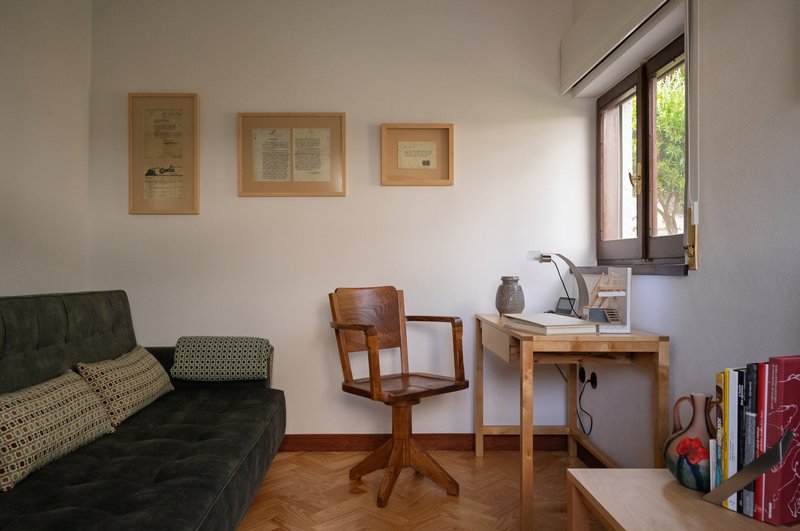
The workspace, with its three framed documents on white walls and the same herringbone parquet, suggests the small libraries and offices listed in the original program. Four bedrooms, two bathrooms, a small office, and two small libraries: the house is dense with program for its size, yet never feels compressed. Siza distributed the rooms across levels and orientations in a way that gives each one its own light and its own view.
Bathroom Details and Material Honesty
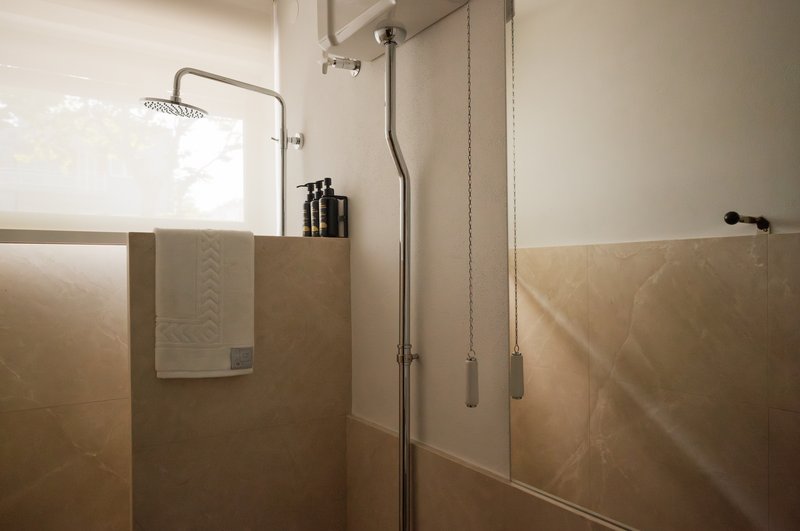
A shower enclosure finished in beige stone panels with exposed plumbing and chain-pull controls is a small revelation. There is no concealment here, no attempt to hide the mechanics of water delivery behind seamless surfaces. The plumbing is the architecture. Marble and exotic woods appear in these intimate rooms with the same directness they carry in the public spaces. The renovation respected these details, intervening minimally where the original fabric was intact.
Plans and Drawings
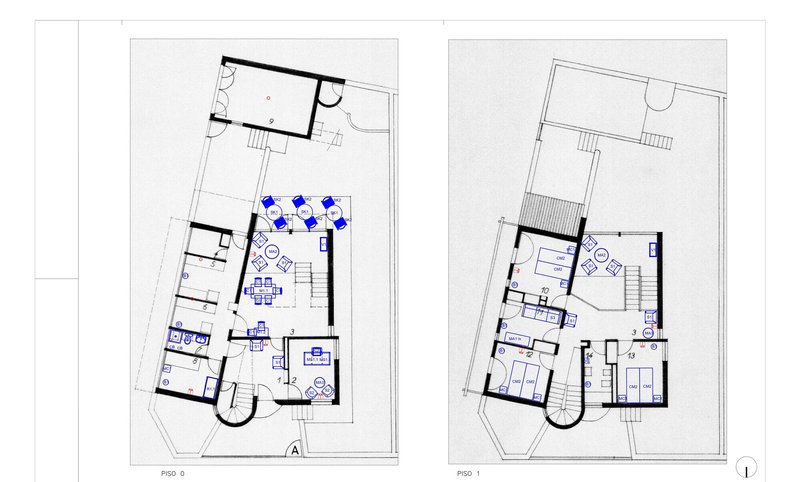
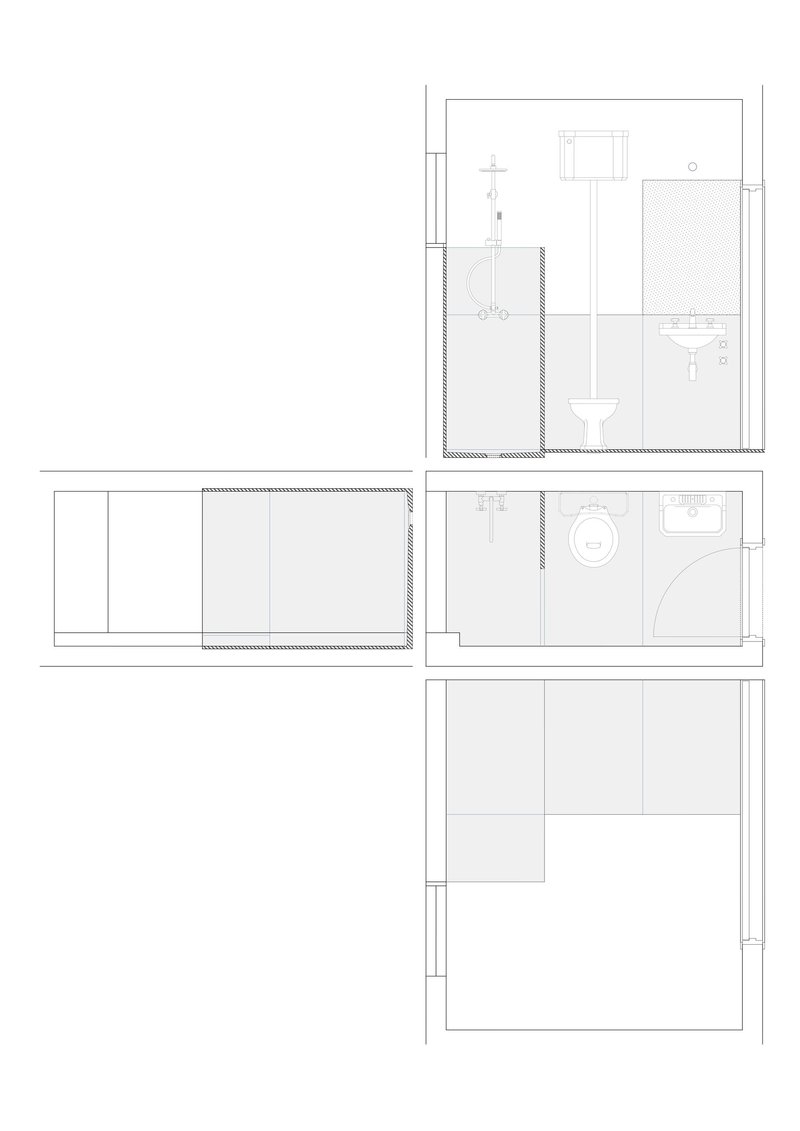
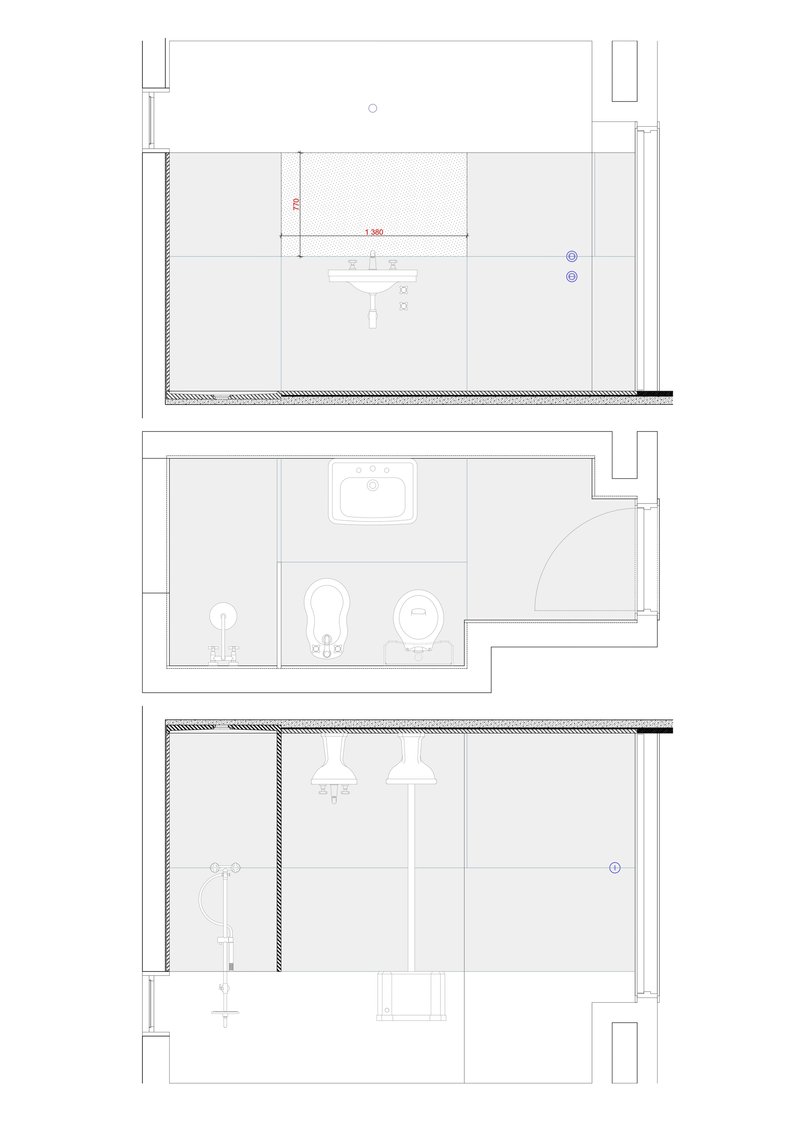
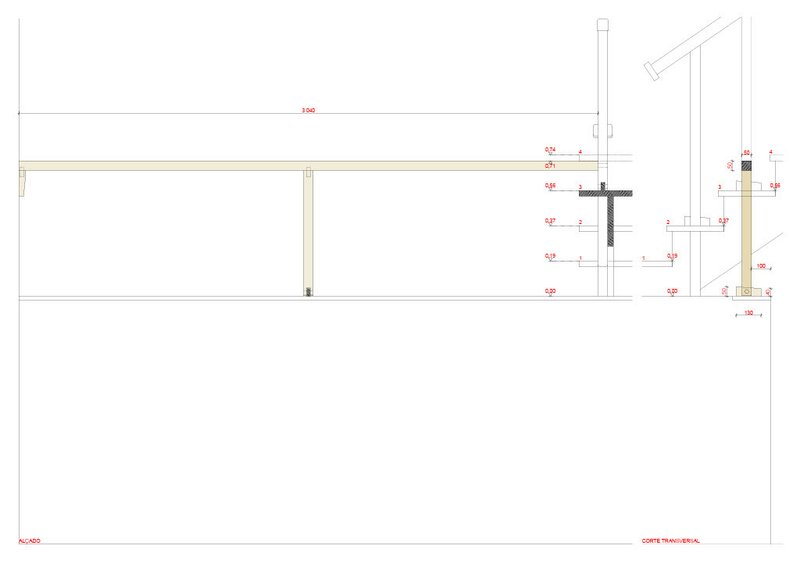
The floor plans reveal the two-level organization: ground floor rooms radiating from the entry atrium, first floor rooms arranged along the avenue-facing balcony. The section drawings are particularly instructive, showing how the spiral staircase threads through the levels and how the ceiling structure, with its timber beams, meets the wall assemblies. Detailed bathroom and kitchen sections with dimensional annotations document the specificity of the renovation work. These are not presentation drawings. They are working documents, and they carry the precision you would expect from a practice that has spent seven decades refining its craft.
Why This Project Matters
The Casa d'Abreu Neto matters twice. First, as a record of a 22-year-old student synthesizing Portuguese vernacular tradition, Scandinavian modernism, and Bauhaus functionalism into a domestic building of real coherence. The influences are visible but never dominant. The house already speaks in Siza's voice. Second, the renovation matters as a case study in what it means to return to early work with the accumulated wisdom of a lifetime and choose not to improve it. Siza repaired, restored, and reactivated. He did not redesign.
In a profession obsessed with novelty and transformation, this project argues for continuity. The aim was to prepare the house for a new public life, welcoming visitors and cultural events, without compromising its original identity. That required understanding the house not as a fixed artifact but as a living organism with its own rhythms and tolerances. It is the kind of work that only the original architect could do, and only after enough time had passed to see the building clearly. Sixty-five years, it turns out, was exactly the right interval.
Renovation Casa d'Abreu Neto, Siza's First Work, by Álvaro Siza Vieira. Matosinhos, Portugal. 260 m². Completed 2024 (original construction 1954–1957). Photography by Pedro Cardigo.
About the Studio
Share Your Own Work on uni.xyz
If projects like this are the kind of work you want to make, uni.xyz is a place to publish your own, find collaborators, and enter design competitions.




Popular Articles
Popular articles from the community

Indiesalon Carves a Plywood Cave into a Seoul Bistro's Second Floor
Munhwa Bistro's second Seongsu branch wraps diners in a laminated timber vault laced with colored light and mirror illusions.
BAUEN Builds Two Rammed Earth Volumes in Paraguay Inspired by the Ovenbird's Nest
In San Bernardino, a house of compacted earth channels the instinct of a constructive bird to shelter life from the Paraguayan summer.
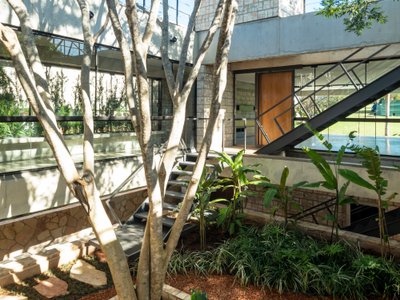
OMCM arquitectos Builds a Summer House in Paraguay from Quarry Waste Blocks and Three Sacred Trees
In the young hillside neighborhood of Altos, a 696-square-meter concrete volume hovers on six pillars around three preserved native Yvyraju trees.
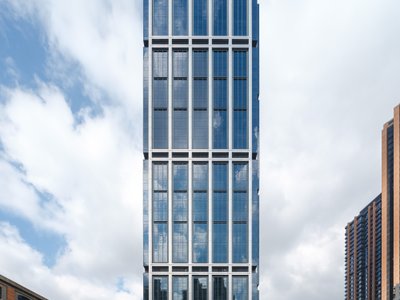
Foster + Partners Wraps a 200-Meter Shanghai Tower in Stainless Steel and Industrial Memory
The Suhe Centre Office Tower anchors a regenerated waterfront district in Shanghai with an all-steel structure that nods to local warehouse heritage.


Similar Reads
You might also enjoy these articles

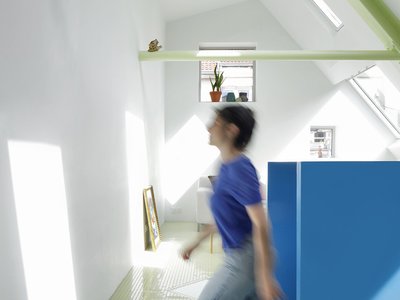
127af Flips a Tiny Bagnolet Rowhouse Upside Down with a Handcrafted Roof Extension
A 55-square-meter terraced house on the edge of Paris gains a luminous upper living floor through lightweight timber and steel.
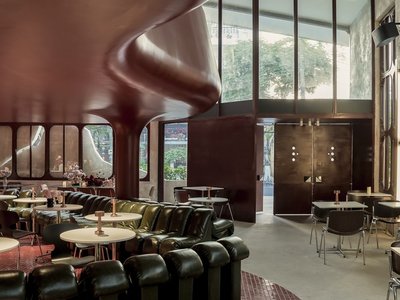
1.61 Design Workshop Wraps a 600-Square-Meter Café in Vietnam in Sculptural Burgundy Drama
Reden Café & Bistro pairs a helical staircase, mosaic floors, and deep red interiors to rethink Vietnamese hospitality space.

The Unbound Brain: A School Shaped by Cognitive Architecture
Cylindrical learning pods radiate like neurons from a central cortex, turning the floor plan into a spatial model of human thought.
Revival Vernacular Architecture: Rammed Earth Settlements for the Sahara
A modular desert community in Mauritania that fuses passive cooling techniques with earthen construction and local craftsmanship.


Explore Residential Building Competitions
Discover active competitions in this discipline




The Global Benchmark for Architecture Dissertation Awards


Challenge to design mud housing for contemporary communities


Challenge to design luxury tourism on rails


VR headsets Storefront design competition
Comments (0)
Please login or sign up to add comments
No comments yet. Be the first to comment!