
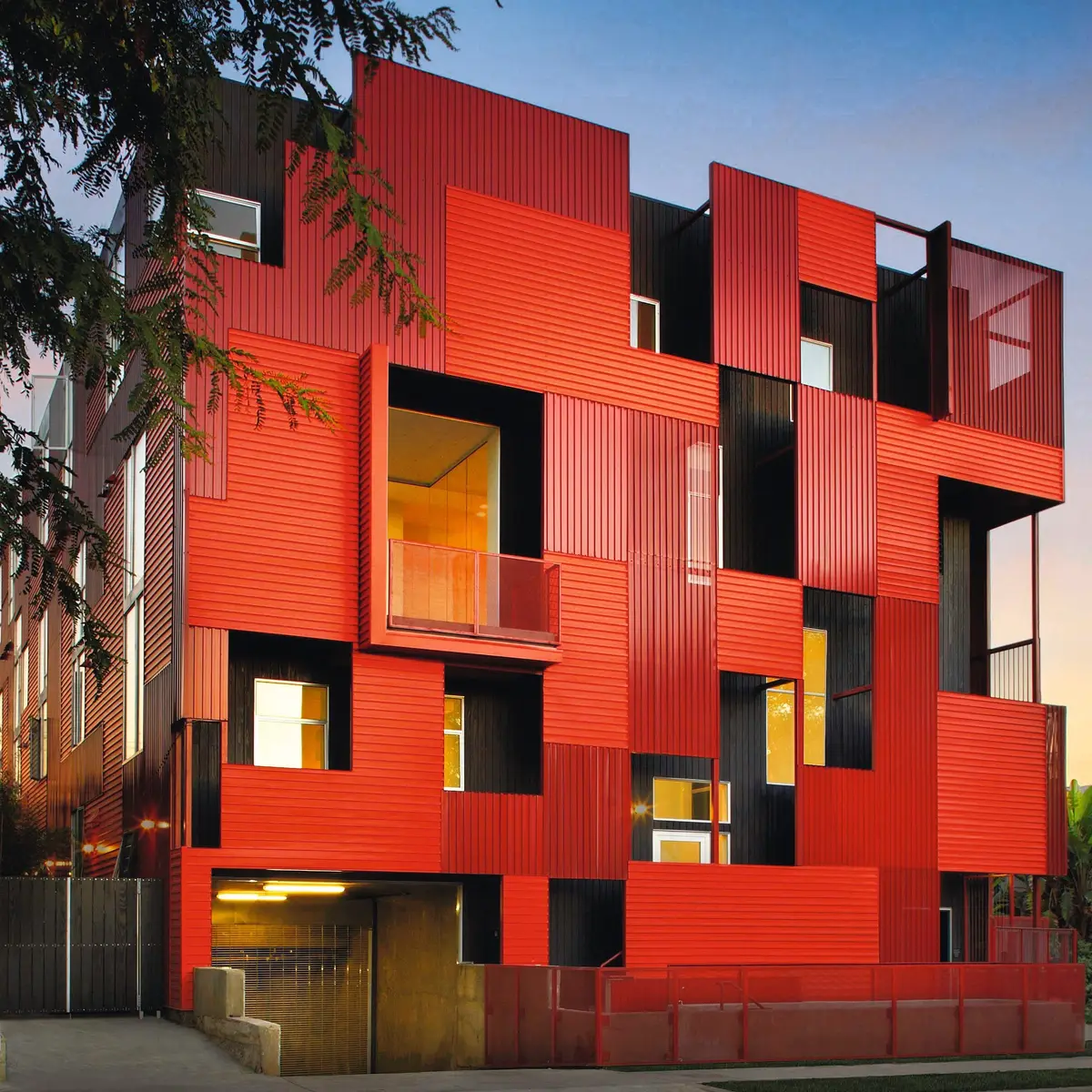
AN URBAN REFILL: ECHO-MORPHISM
While developing the metropolises, we forgot the one key actor about the urbanization discourse that is cities are should not only be considered as shelters for people, but they need to provide them places with different qualities to enhance one’s living standards.

BRIEF
All cities have different dynamics in terms of their urban plans, streets, and even the functions of each area. However, with the rapid change of cities like New York, some in-between spaces do not maintain a particular position thoroughly. Those areas started to be excluded from the town and turned into undesired areas that everyone avoided. While developing the metropolises, we forgot the one key actor about the urbanization discourse that is cities are should not only be considered as shelters for people, but they need to provide them places with different qualities to enhance one’s living standards. In the development process of the Echo-morphism, we search for new methods that can regain those abandoned in-between spaces to the city by using the reflections of each town and culture itself. Thus, the project aims to meet all sustainability levels starting from ecology to social sustainability. This development will be covered in the coming phases. A modular system is one of the best construction methods that can be applied in terms of sustainability due to its flexibility and material options. In our project, we combine these rich material options with the developed technology to increase the accessibility of the units.
1.PHILOSOPHY
The same packed building was placed around New York City. We want to raise awareness of these mostly ‘potato print’ structures by creating a transition from solid and heavy forms to light and liquid design with the light of Zygmunt Bauman’s book, Liquid Modernity.
‘In a liquid modern life there are no permanent bonds, and any that we take up for a time must be tied loosely so that they can be untied again, as quickly and as effortlessly as possible, when circumstances change - as they surely will in our liquid modern society, over and over again.’ (1)
2.MODULAR SYSTEM
When we think about a project that will be used temporarily, we decide that there is no need to keep the units in the same place. Moreover, the unit type and number can be changed according to the need. This transformable system may have resulted in more sunlight- due to the removal of unused modules, more practicality- change in the number of one and two-person modules, and more adaptation- due to the displacement of modules. Those modules are placed on a railing system to enable detachment and replacement.
3.ACCESSIBILITY
Although one perfectly fills and designed those undesired spaces, what was produced should be easily accessible by everyone for a project to meet its aims. We take several steps to provide this. Firstly, we designed a mobile app so that all users worldwide can access the Echo-morphism. Renting and reservation process can be done by using this app and perceiving others’ comments and reviews. Secondly, the visitors and even the passer-by can take direct information with the help of the information desk facing Bowery Street. The last issue that we considered is to follow universal design principles so that everyone can easily use Echo-morphosis. Circulation can be provided with stairs at different levels or via the central core, including elevators for people with disabilities. The access to the central core at each floor is designed to become barrier-free.
4.SUSTAINABILITY
4a.Ecology
We maintain an ecological approach from the starting point to the final step of this project. We have foreseen the use of recycled steel in the permanent structure. The units are produced from shipping containers with minor changes, such as the addition of the front windows and louvers on the roof. The dimensions of the steel frame are arranged accordingly to the sizes of the containers. Each container has a solar panel system on its top to produce its own energy.
4b.Social Sustainability
As mentioned in the accessibility part, The Echo-morphism aims to treat all the users in the same manner. Equity in the usage and other process is one of the critical elements that our team focused on. Moreover, implementing this concept to different spaces with changes according to the site information is another aspect of the project's social sustainability. Site pieces of information of the given area are strictly analysed, and the placement of functions is designed accordingly.
Context Relations & Site Analysis
Since only one side of the parcel faces the street, the information desk and the main access points are designed accordingly. The steel frame does not touch the surrounding buildings to keep their structural safety. Since three sides of the area are enclosed, the units are designed to take sunlight via the front or roof windows. Placement of the units will be done accordingly by an AI system. To benefit the sun at most levels, solar panels are placed on the upper part of each panel. At the façade of the containers, a colour palette created from the urban surrounding is implied to increase the urban harmony.
CONCLUSION:
Concerning the discussed issues above, the Echo-morphosis aims to become the urban reflectance on the undesired areas. The aim is to take maximum benefit of natural resources and spaces as well as follow universal design principles. We can describe our project as an alien that comes from the society and culture itself. The Echo-morphosis is a project which takes a position against the permanence concept in architecture discourse with its temporary uses and unit placement.

Popular Articles
Popular articles from the community


graciastudio Turns a Viewless Tijuana Lot Inward Around a Courtyard of Concrete, Timber and Trees
In Tijuana, Jorge Gracia's GA2 House stacks a timber-clad private floor over exposed concrete and replaces a missing view with a planted interior patio.

Juan García Correa, John González and Claudia Rueda Sink a Circular Amphitheater into a Manizales Engineering Building
On the La Nubia campus in Manizales, Colombia, the S1 Building folds labs and offices into a hillside of ramped lawns that double as a campus route.

LT2A and OPEN Architectes Thread a Brick and Glass High School Through a Wooded Belgian Campus
In Braine-l'Alleud, a 3,000 m² wing for Collège Cardinal Mercier pairs pale brick with a glazed colonnade, deferring to a small chapel and a dense wood.


Aquadapt: An Underwater Habitat That Rewrites Its Rooms by the Hour
Curved modules ring the seabed while one shell shifts from breakfast room to cinema, farm and football pitch as residents' needs change.

Similar Reads
You might also enjoy these articles

The Rhythm of Seasons
A Farmers' Market Connecting Nature and the City

More Than a Building-Designing a Living System
More Than a Building-Designing a Living System
Base Beyond
DESERT COMPOUND ARID: TOURISM OF ABSENCE AND ABUNDANCE

Comments (0)
Please login or sign up to add comments
No comments yet. Be the first to comment!