

Anne Frank Middle School Renovation by MARS Architectes: A Contextual Approach to 20th-Century Heritage Preservation
Anne Frank Middle School’s renovation by MARS Architectes preserves its heritage while enhancing sustainability, energy efficiency, and modern educational functionality.


Transforming an Iconic Educational Space in Antony, France
The Anne Frank Middle School in Antony, France, originally designed in the 1980s, recently underwent a transformative renovation led by MARS Architectes. This project not only revitalized the school's physical structure but also upheld its original philosophical stance as a critique of generic school designs prevalent in the late 20th century. By preserving the school's intangible heritage while adapting it to contemporary needs, this sustainable school renovation stands as a model for architectural evolution.


Reactivating the Critical Function of Architecture
The original school was designed as a manifesto challenging the standardized “Pailleron” school buildings of the 1970s and 1980s. This renovation by MARS Architectes sought to maintain that critical approach while updating the school to meet modern sustainability standards. The architects recognized that widespread thermal renovations often erase a building's identity, reducing it to a uniform aesthetic dictated by off-the-shelf solutions.


A Contextual and Dynamic Renovation Approach
MARS Architectes took a contextual renovation approach, where the architectural evolution of the school embraces its historical essence while adapting to contemporary needs. The project acknowledges that school architecture must remain responsive to changing educational and environmental demands.

Key aspects of this renovation include:
- Layered Architectural Interventions: Instead of imposing a complete overhaul, the renovation builds upon the existing structure, ensuring a seamless dialogue between past and present.
- Material Consciousness: The new thermal skin consists of a repeated industrial element—raw, hyper-symmetrical, and minimalist. This preserves the school’s original intent of critiquing generic architecture while meeting modern energy efficiency standards.
- Sustainability & Energy Performance: By addressing thermal performance without compromising architectural identity, this project serves as a prototype for sustainable educational building retrofits.


Preserving Identity Through Thoughtful Design
Rather than erasing history, the architects worked to rediscover the original spirit of the school. This meant carefully analyzing past modifications and restoring key design elements that had been altered over time. Every new intervention was assessed against the original architectural philosophy, ensuring continuity and coherence.


The Future of Educational Architecture
The Anne Frank Middle School Renovation exemplifies how heritage buildings can be adapted for modern use without losing their essence. As schools worldwide seek sustainable solutions that balance preservation with progress, this project provides a blueprint for the future of educational architecture.

All Photographs are works of Charly Broyez, Nicolas Grosmond


Popular Articles
Popular articles from the community

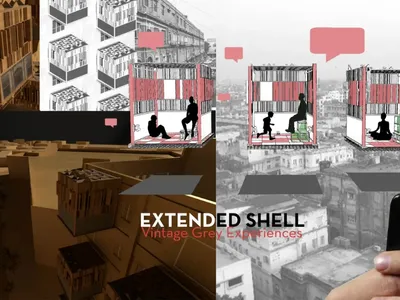
Extended Shell: Retrofitting Kolkata's Balconies as Living Urban Thresholds
A modular retrofit system recovers the social and environmental intelligence of Kolkata's historic verandas for contemporary Park Street residents.
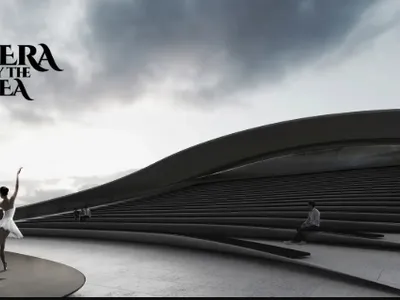
Opera by the Sea Estonia: Three Shells Dissolving Architecture into Tallinn's Coastline
A winning opera house proposal replaces monumental form with interconnected shells that blur the boundary between building, park and Baltic Sea.
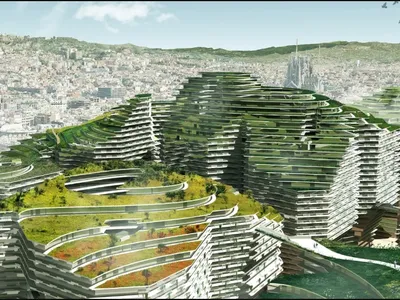
Manzana Morphosis: Stretching Barcelona's Grid into a Living Landscape for 2050
A radical reworking of the Eixample manzana turns density into a tool for generous public space, vertical ecology, and environmental performance.
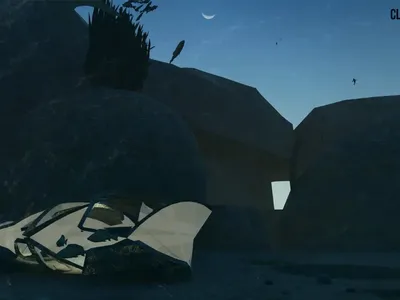
Cloaked Colonization: A Mobile Underwater Habitat That Moves Like a Fish
Micah Abaya's shortlisted EHC Pacific entry reimagines ocean settlement as a dispersed network of self-sustaining architectural organisms.

Similar Reads
You might also enjoy these articles

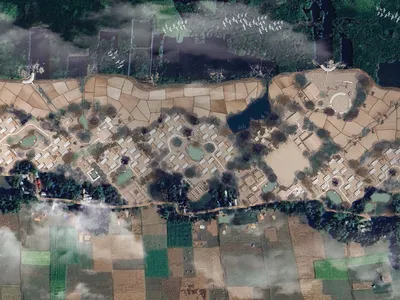
Hodi-Mandai Geram
Project Function: Preservation and revitalization of the Intangible heritage and socio-spatial identity of the Hodi by Housing, Cultural Memory Center, Sacred Grove, landscape, local tourism economy

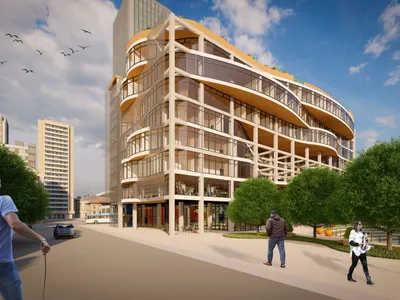
Olio Towers: A Mid-Rise for Performers That Fuses Housing, Rehearsal, and Stage
Located blocks from Houston's Theater District, this modular tower stacks living units around a central performance atrium.
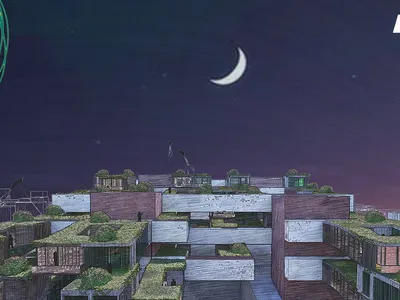
Oasis: Modular Green Housing Carved into Dhaka's Urban Fabric
A shortlisted Plugin Housing entry reclaims unauthorized settlements in Dhaka with stepped concrete volumes, green roofs, and ventilation-driven design.

Black Hole: A Floating Megastructure for the Post-Physical Era
Emiliano Mazzarotto envisions a spherical, self-scaling arena where e-sports, digital hotels, and holographic stadiums replace traditional public space.

Explore Educational Building Competitions
Discover active competitions in this discipline

Challenge to design public laboratory

Challenge to reimagine the Iron Throne

Photograph architecture without architects

Illustrate the lost glory of Angkor Wat - Render Challenge
Comments (0)
Please login or sign up to add comments
No comments yet. Be the first to comment!