
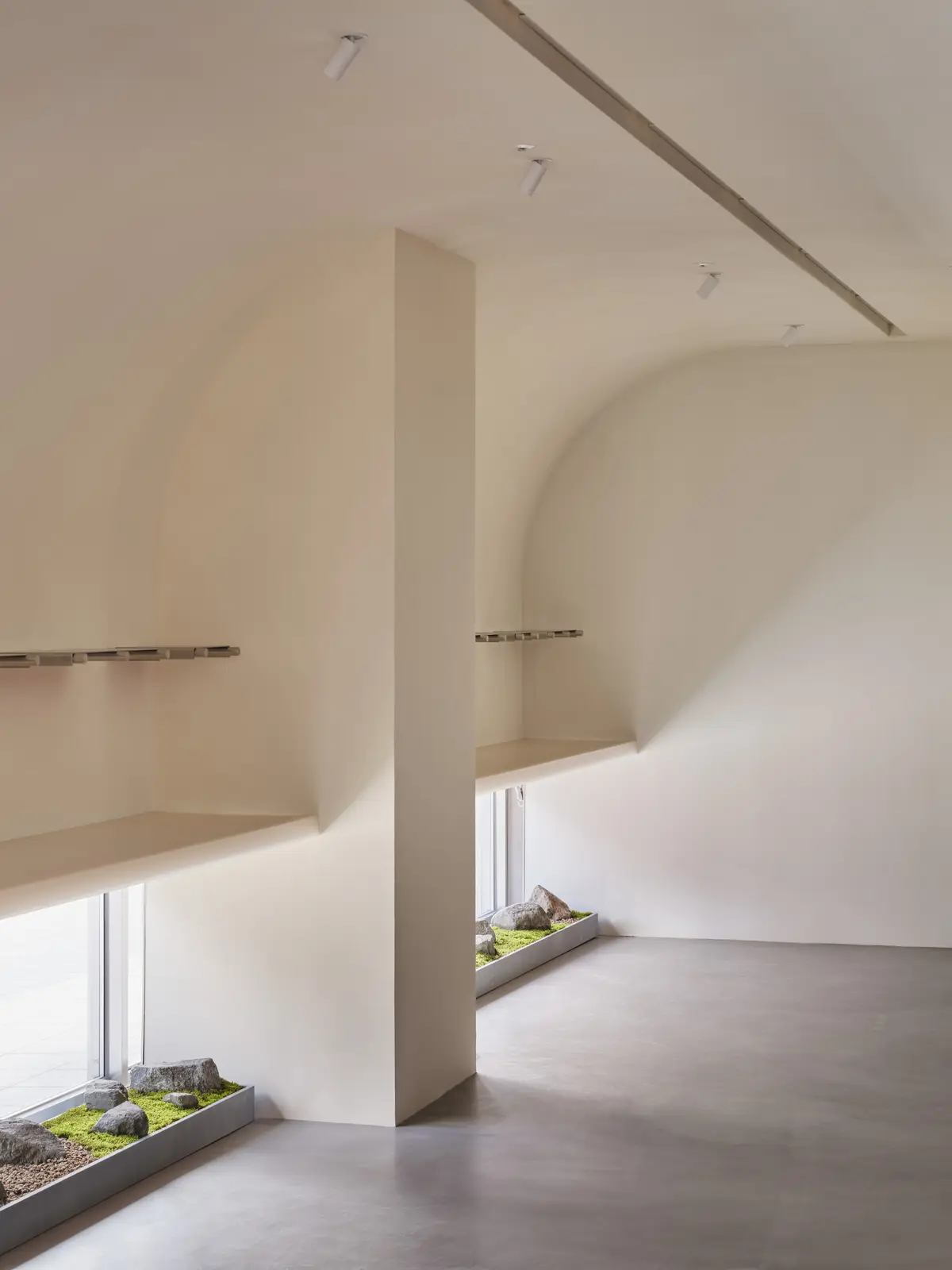
Another D Studio Transforms a Seoul Printing District Corner into a Sensory Refuge
Ouvrir Bakery Cafe channels the memory of a vanished copper hill in Euljiro's dense industrial alleyways through wood, stone, and ritual.


Euljiro is not a neighborhood that makes room for you. Packed since the 1960s with printing shops, paper suppliers, and small-scale manufacturing, the district's back alleys hum with the sounds of presses, hydraulics, and hurried footsteps. At its 1980s peak, roughly 1,500 businesses crowded into the printing quarter alone. Into this relentless density, Another D Studio has inserted Ouvrir Bakery Cafe: 360 square meters of deliberate stillness, a space that asks your senses to slow down and recalibrate.
The project's most compelling move is its origin story. Before the concrete and commerce, this stretch of Jung-gu was a low ocher hill called Gurigae, or copper hill, named for the way it turned bronze at sunset. Another D Studio took that vanished geology as a conceptual anchor, designing a space that restores the memory of soil and elevation to a place that long ago forgot both. The resulting interior is neither precious nor nostalgic. It is earthy, grounded, and quietly ritualistic, a bakery cafe that functions like a decompression chamber between the chaos of the street and the calm of bread and coffee.
The Street Threshold
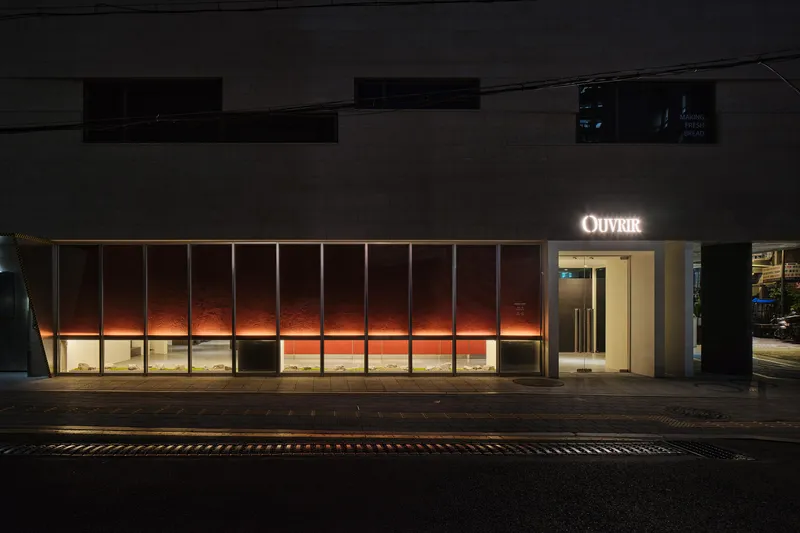
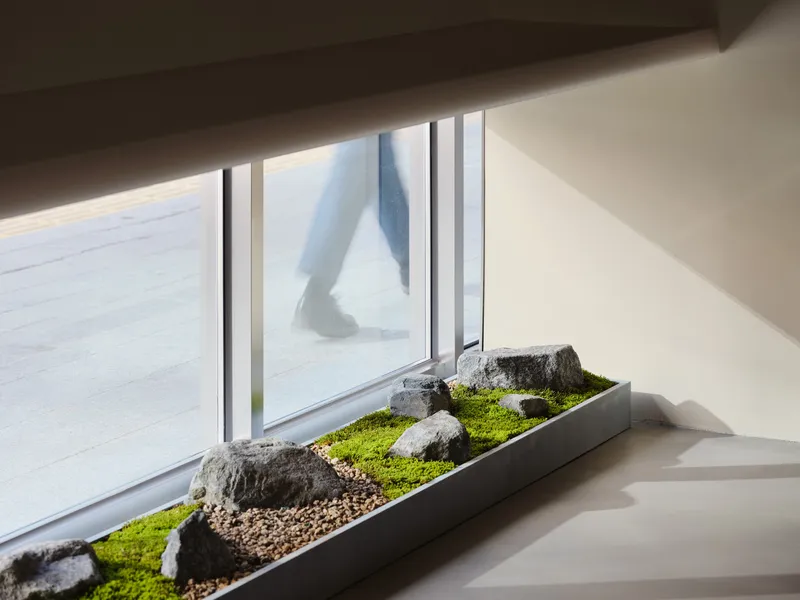
At night, Ouvrir announces itself through vertical glass panels that frame the deep red interior like a lantern set into the streetscape. The facade is restrained, almost secretive, offering just enough warmth to pull you off the sidewalk without competing with the visual noise of Euljiro's signage and shuttered storefronts. A window planter filled with moss and stones establishes the botanical language early, visible even to passersby walking through snow. The transition from outside to inside begins before you cross the threshold.
A Landscape Inside
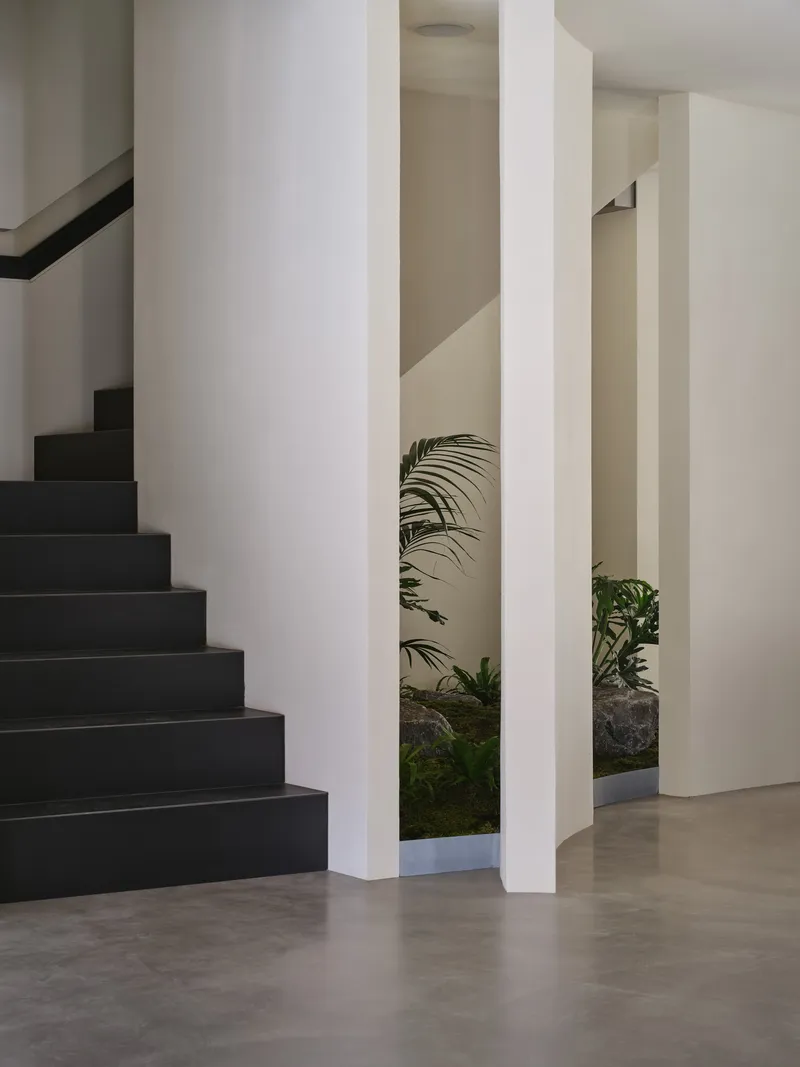
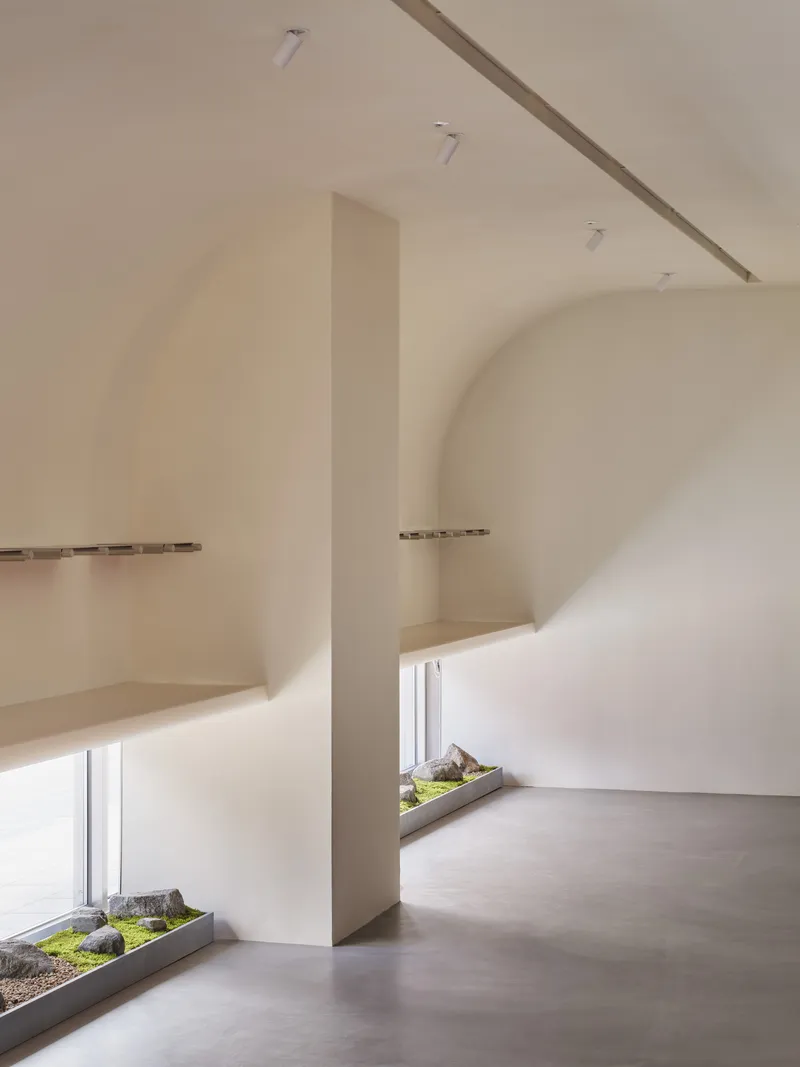
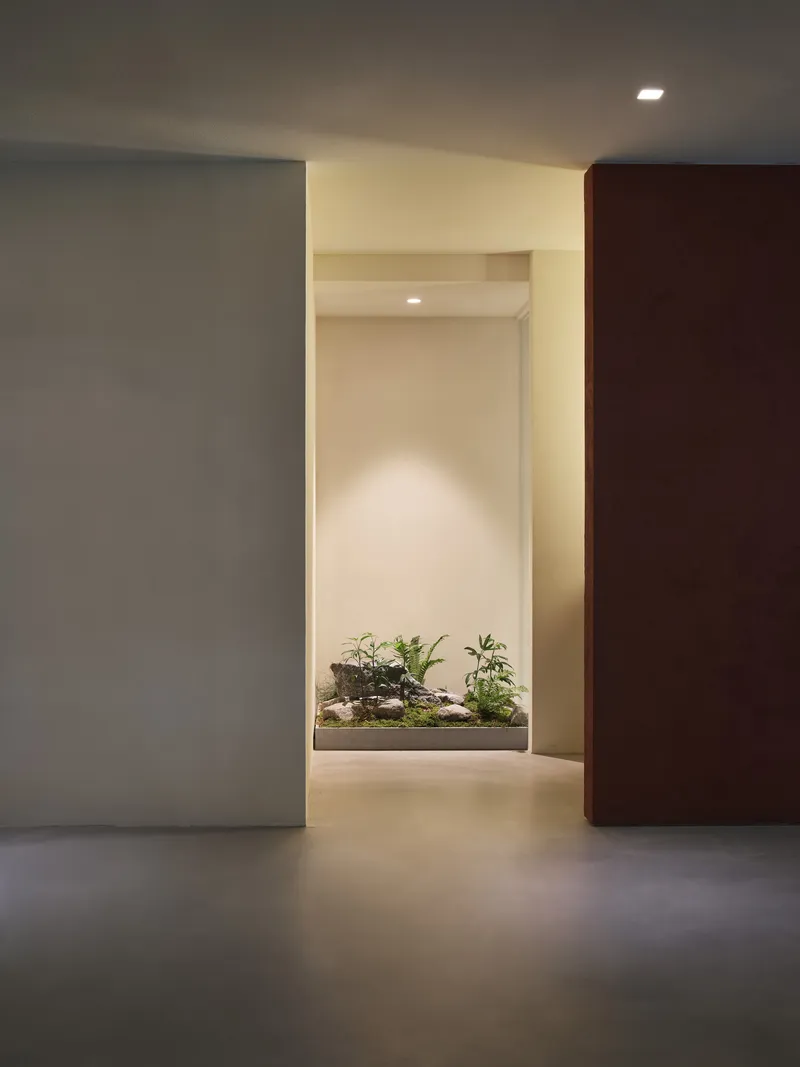
The interior courtyard is the spatial heart of the project. Framed by white columns and a black staircase, a planted zone of palms and bare trees introduces living material into the otherwise mineral palette. The gesture is not decorative. It is structural to the concept: if the site was once a hill, the planting is the hill's ghost, a vertical slice of landscape trapped in a commercial ground floor.
Elsewhere, low planters filled with moss, raw stone, and gravel punctuate the polished concrete floor beneath vaulted ceilings. These micro-landscapes operate at ankle height, pulling your gaze downward and forcing an awareness of the ground plane. A backlit planter niche at the end of a corridor turns a simple potted arrangement into something closer to a shrine. The effect is cumulative: you are never more than a few meters from living or geological material.
Red as Memory
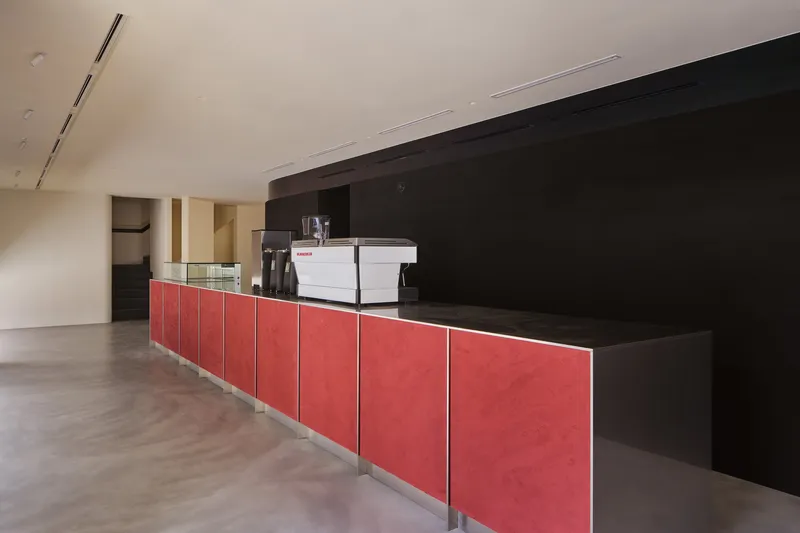
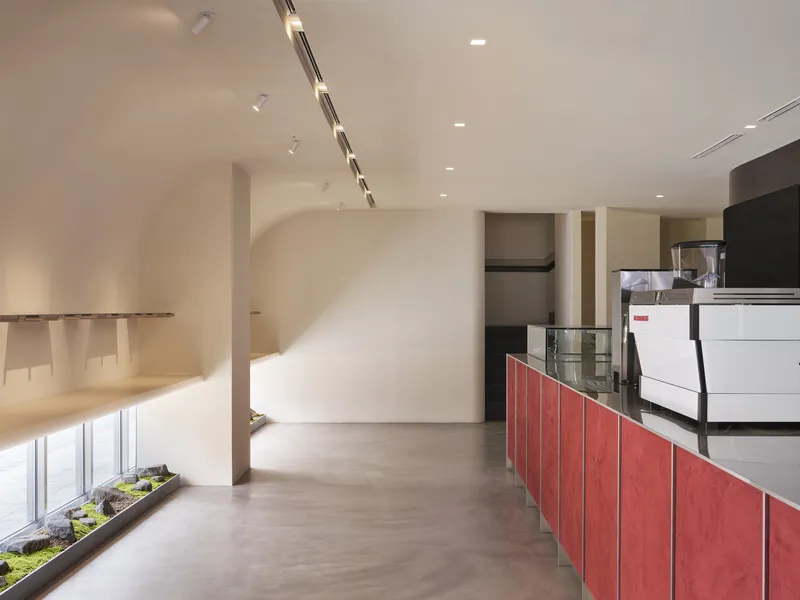
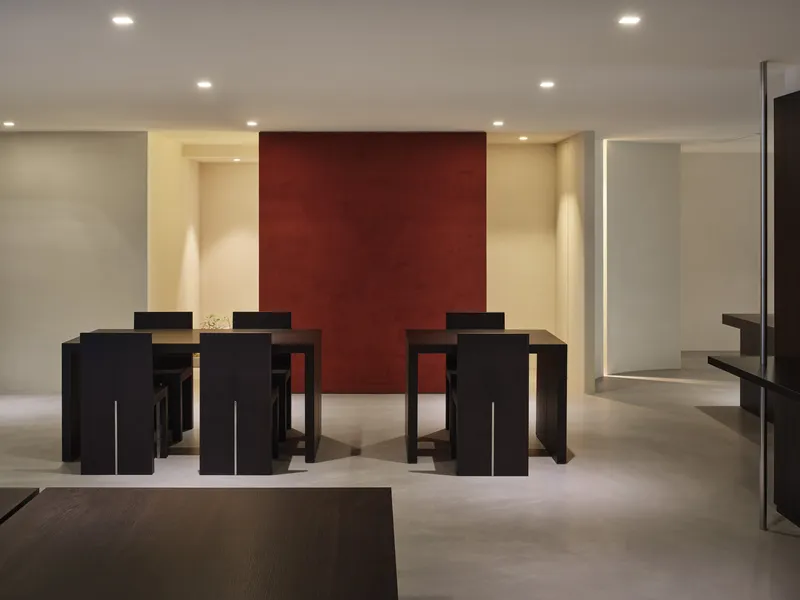
The deep red paneling that lines the service counter and punctuates the dining hall is the most direct reference to Gurigae's copper-hill mythology. It reads as oxide, as fired earth, as the color a hillside turns when the sun drops low. Against the black countertops and pale walls, these red surfaces operate like geological strata exposed in cross-section: a reminder that the ground beneath Euljiro's asphalt has a longer history than the printing presses above it.
From the curved mezzanine balcony, the red counter and espresso machine compose a scene that is equal parts bakery and gallery installation. The maroon basin visible in the lower level, sitting beneath a wall of glass blocks in a dark concrete chamber, extends the palette into something more contemplative, almost sacred. Red here is not accent. It is argument.
The Dining Hall as Collective Table
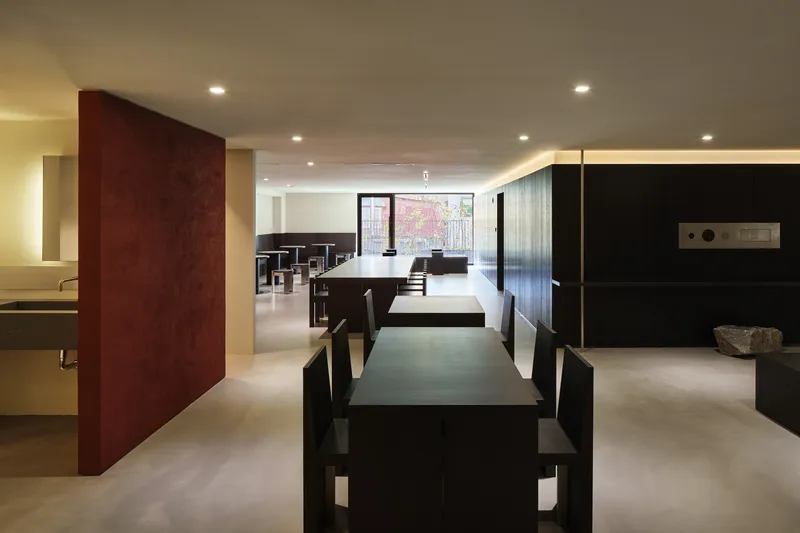
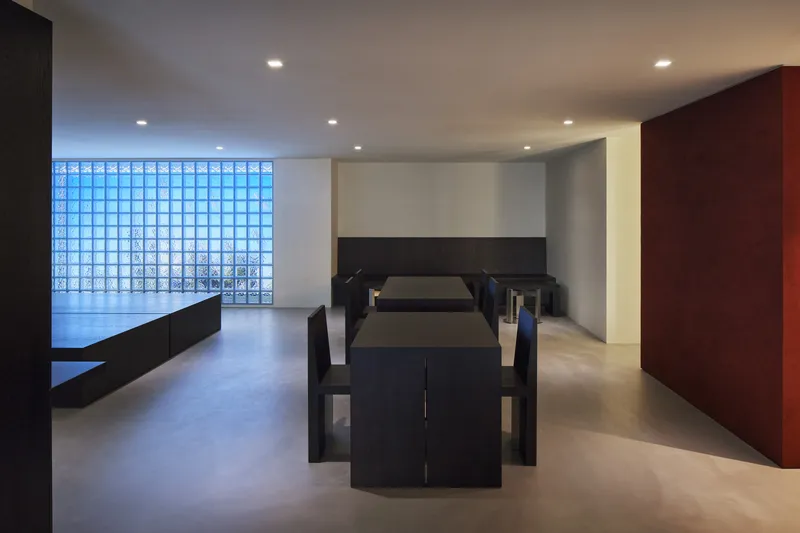
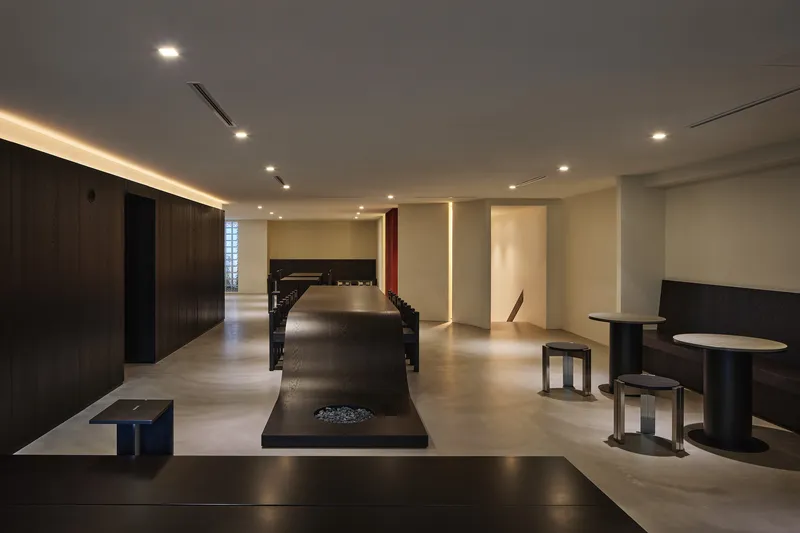
The main dining space is organized around long rows of dark timber tables, a format that encourages communal seating without forcing conversation. Overhead, a grid of translucent glass blocks filters daylight into a diffuse, even glow, eliminating harsh shadows and lending the room a quality closer to a refectory than a cafe. The long curving counter that runs the length of one wall acts as both furniture and architecture, its sculptural profile softening the otherwise linear geometry.
Another D Studio treats the furniture as continuous surface rather than individual objects. Tables extend, curve, and integrate planter cutouts, blurring the boundary between seating and landscape. The circular recess holding an incense stick above black stones on one timber surface is the most explicit expression of the sensory program: sight, hearing, smell, taste, and touch are all engaged, not through technology but through material and ritual.
Material Tension: Black, White, and Everything Between
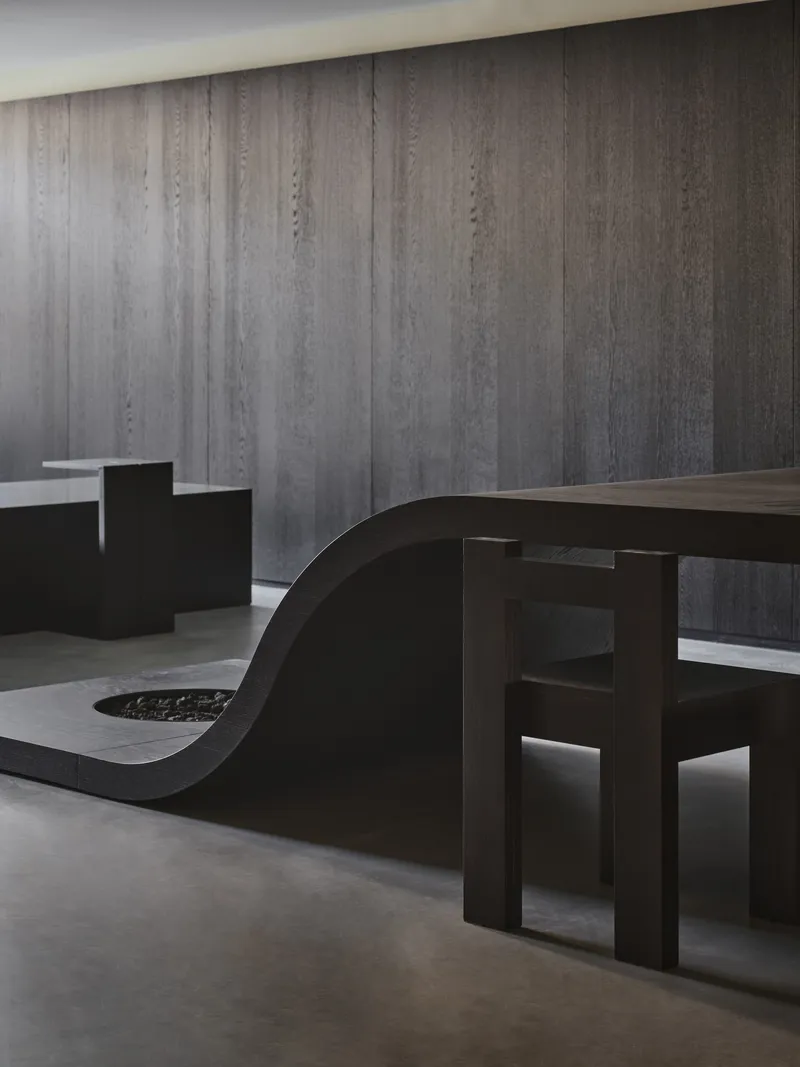
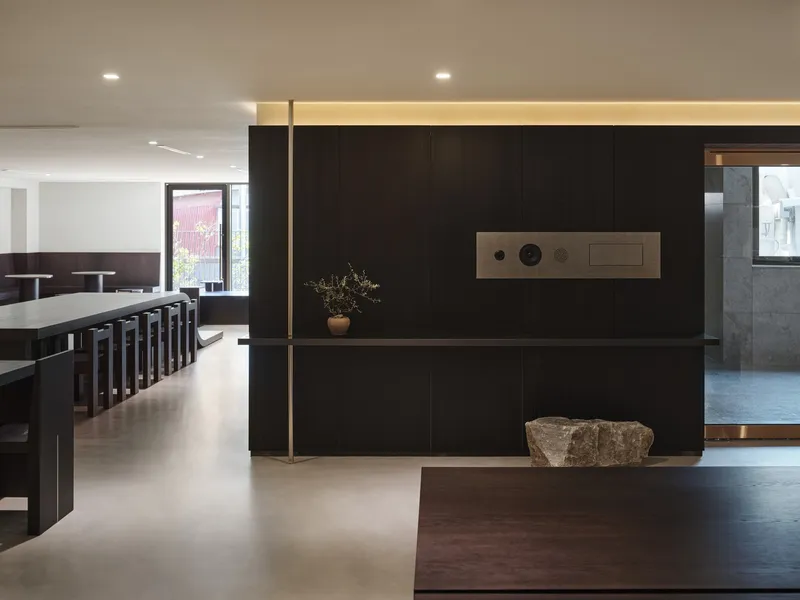
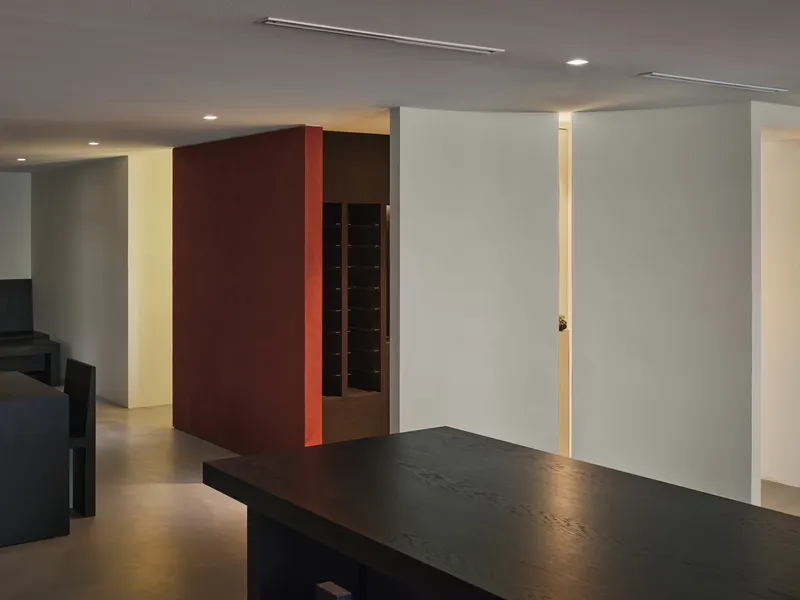
The material palette plays in extremes. Vertically ribbed concrete walls in raw grey sit next to sculptural black seating elements that look more like eroded stone than furniture. Black panel walls integrate controls and service infrastructure while a raw stone placed at the base refuses to let the space become too refined. White partitions with edge-lit vertical slots in the ceiling create precise, almost clinical frames that contrast sharply with the organic textures below.
The tension is productive. Another D Studio avoids the trap of industrial-chic homogeneity by keeping each material zone distinct and legible. Steel, wood, concrete, glass block, and stone each hold their own territory. The effect is less a designed interior than a curated collection of surfaces, each one tuned to a different sensory register.
Light, Glass, and the Translucent Wall
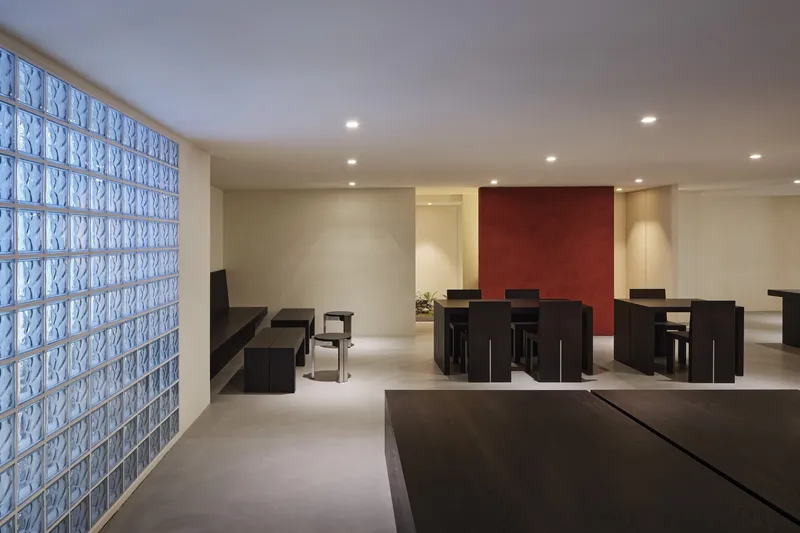
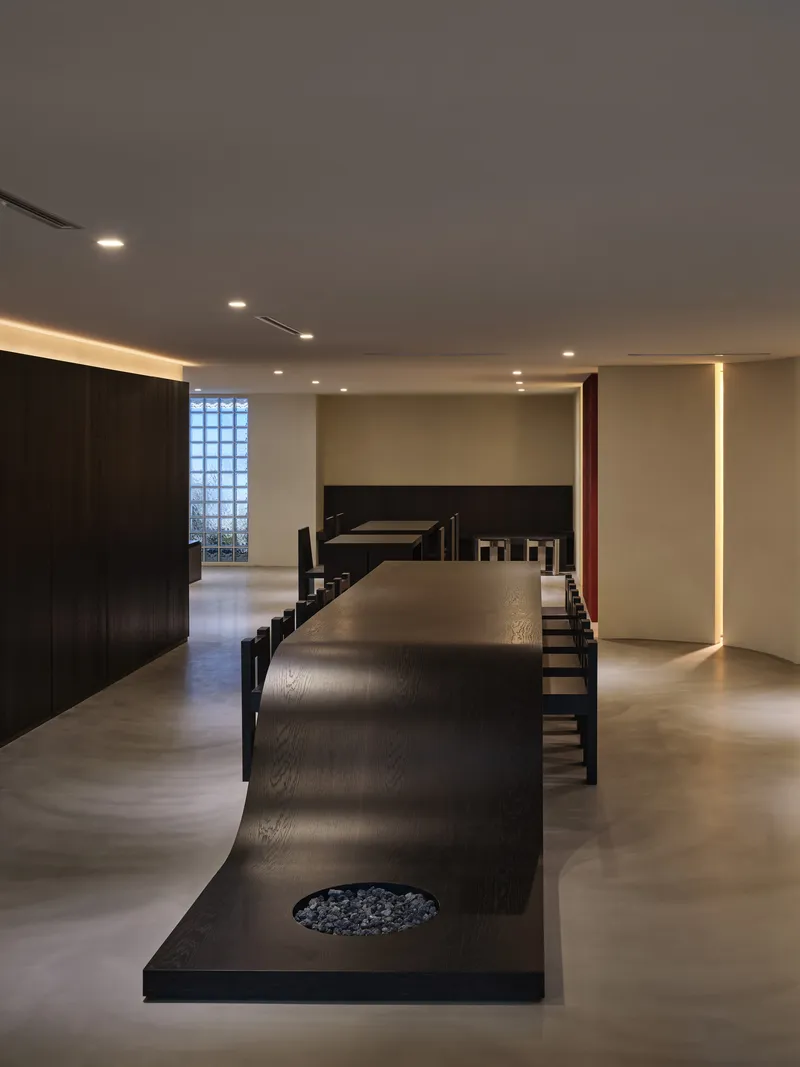
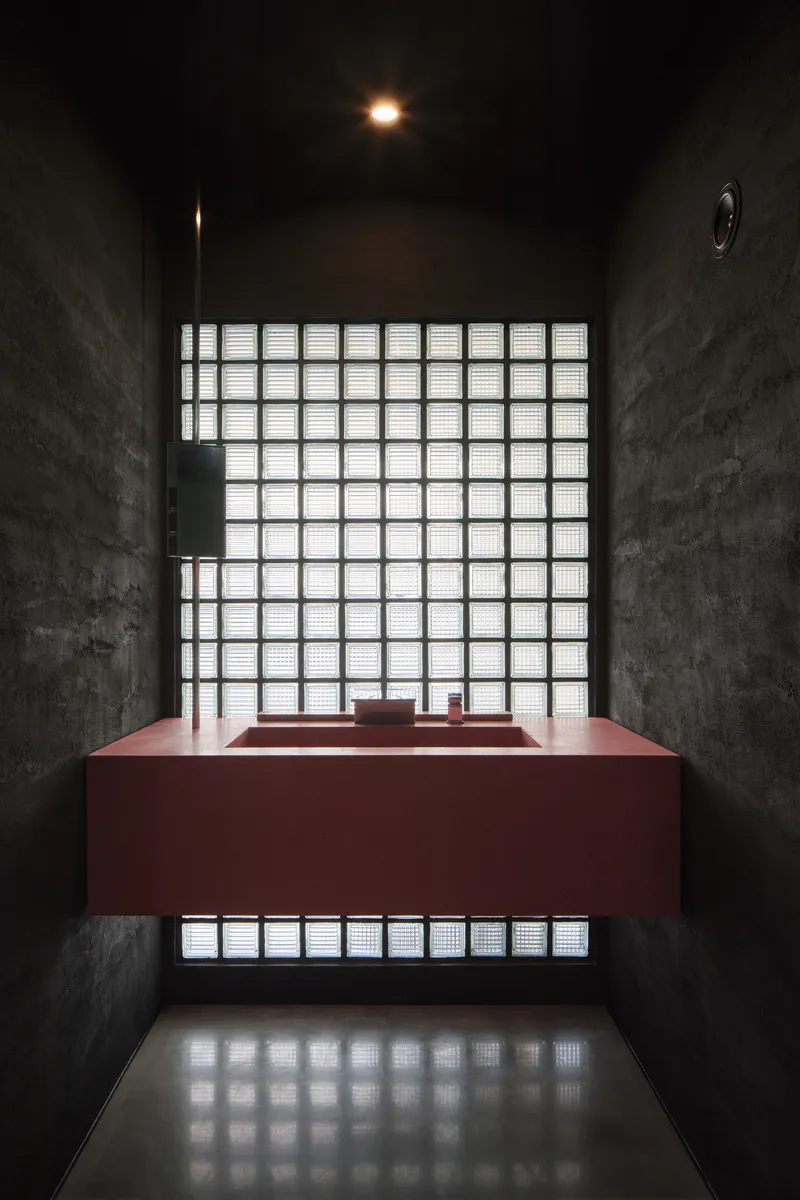
Glass blocks appear throughout the project as a recurring motif, sometimes as full walls defining the seating areas, sometimes as narrow strips washing light across a maroon basin. Their translucency is the key: they admit light while refusing transparency, maintaining the cafe's sense of interiority even in rooms that face the street. In a district where storefronts are often either wide open or shuttered tight, the glass block offers a third option, a permeable boundary that acknowledges the city without surrendering to it.
Cove lighting along curved ceilings and recessed linear fixtures reinforce the soft, even illumination that glass blocks initiate. The result is a space where time of day matters less than material quality, where the shift from morning to evening registers not as a change in brightness but as a subtle shift in warmth.
Seasonal Dialogue

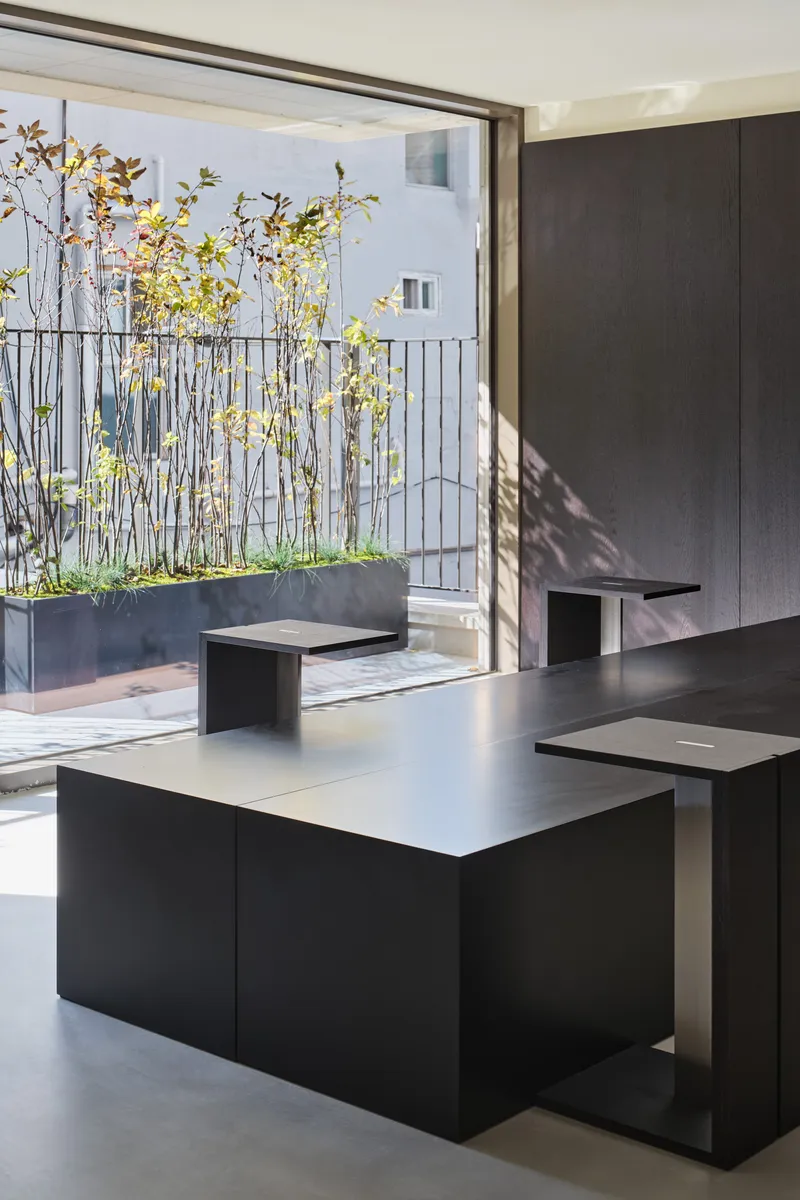
Two images frame the courtyard in winter and spring: bare branches against grey sky, then yellow foliage spilling over planted boxes toward a dark kitchen island. The seasonal shift exposes the project's long game. This is not a space designed for a single photoshoot. The planting choices, the window proportions, and the relationship between interior darkness and exterior brightness are calibrated to evolve. The cafe will look and feel different in July than in January, and that is the point. Another D Studio has built a space that breathes with the calendar, a counterpoint to the timeless fluorescent hum of the surrounding workshops.
Ritual and Rest
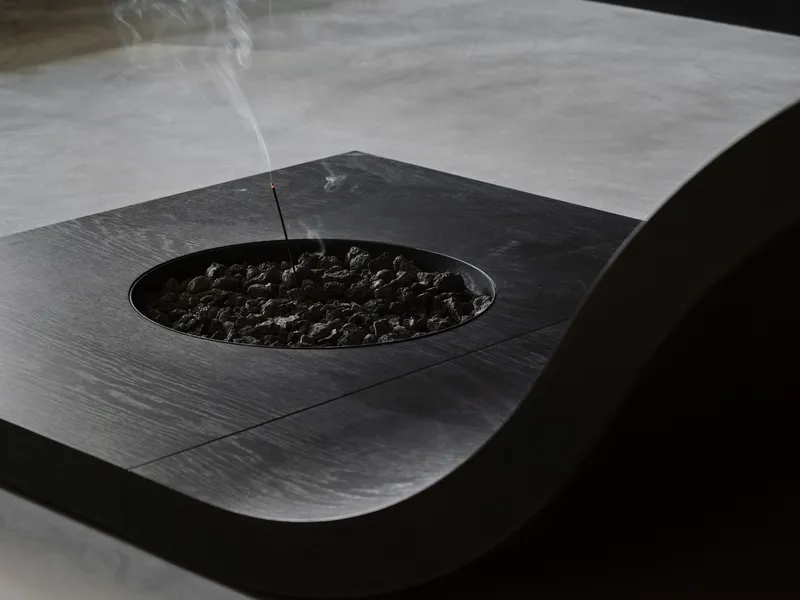
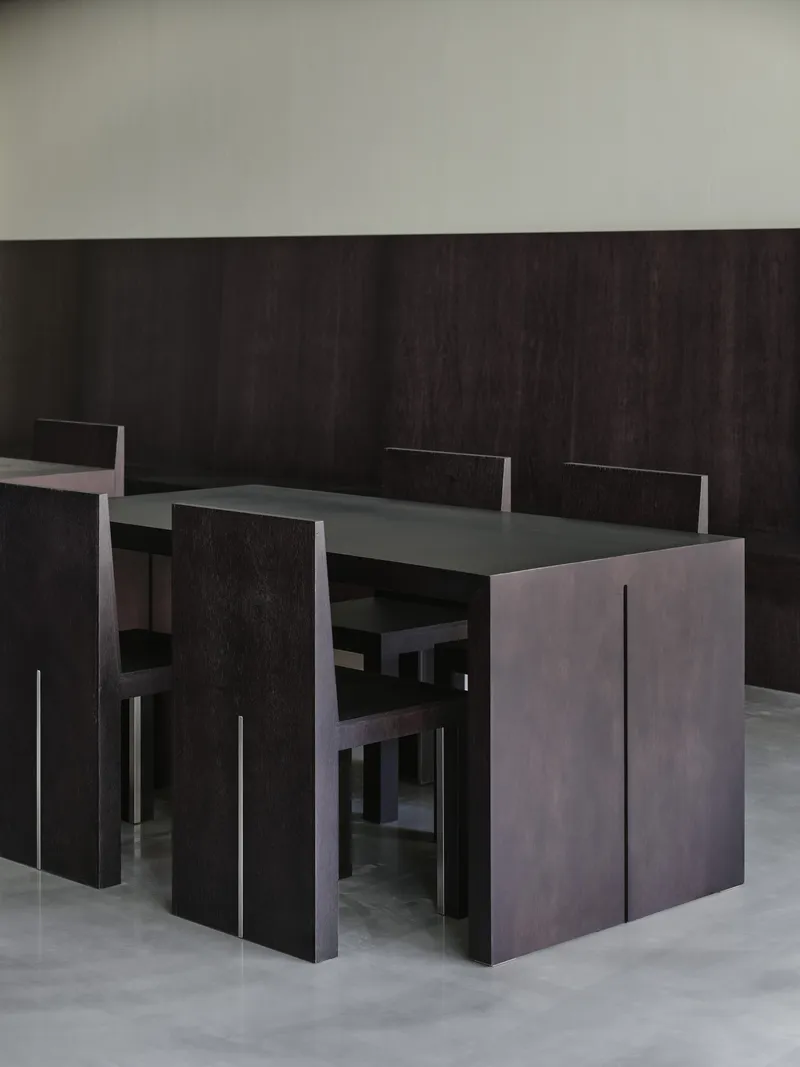
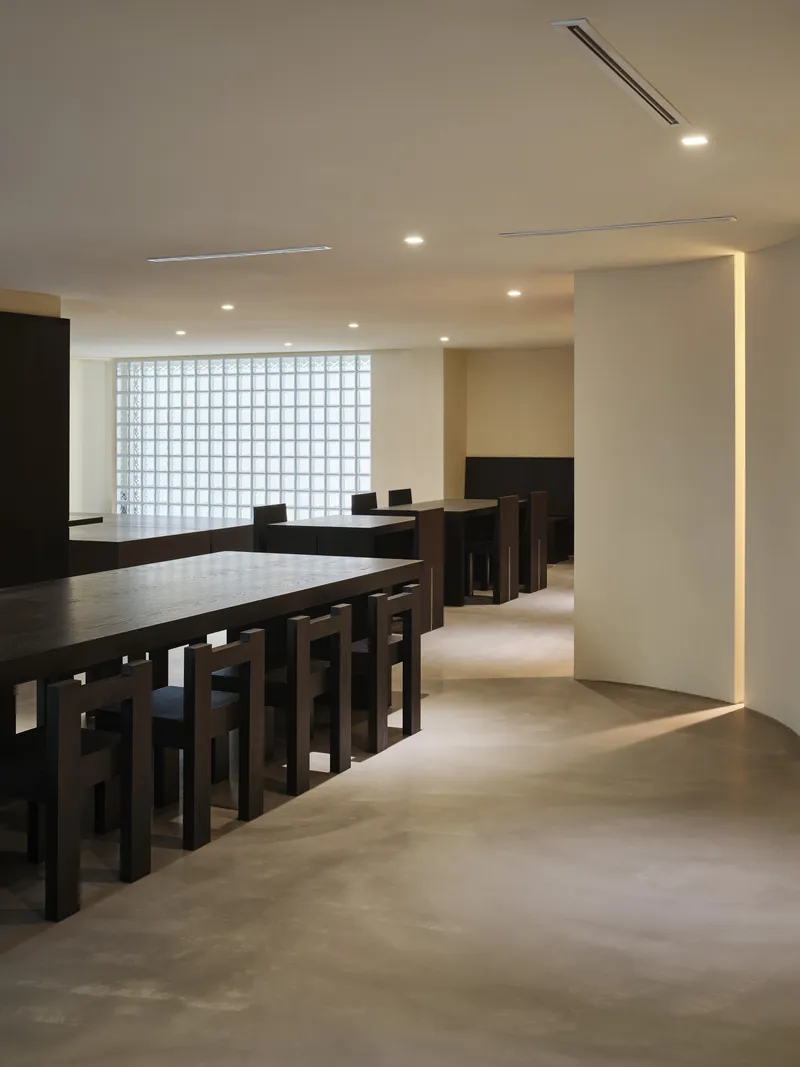
A single burning incense stick above a circle of black stones tells you everything about the project's ambitions. Ouvrir is designed to provide rest for the body's senses: a deliberate escape from the daily noise of machines and crowds. The dark timber surfaces absorb sound. The low seating encourages stillness. The illuminated vertical slots in white columns create focal points that reward attention rather than demanding it.
In a neighborhood where sensory overload is the default condition, this kind of calibrated quiet is not a luxury. It is a public service.
Why This Project Matters
Ouvrir Bakery Cafe is a case study in how interior architecture can carry cultural memory without resorting to pastiche. By grounding its design in the geological and sensory history of a specific site, Another D Studio avoids the generic minimalism that plagues so many contemporary cafe interiors. The copper hill is gone, but its color, its materiality, and its relationship to light survive in wood, steel, stone, and red oxide panels. The project proves that a commercial brief and a serious conceptual framework are not mutually exclusive.
More broadly, the project asks what role a cafe can play in a district defined by production. Euljiro's printing alleys are places of making, not lingering. By inserting a space that privileges sensory rest over efficiency, Another D Studio introduces a different kind of value into the urban fabric. Ouvrir does not gentrify the alley. It offers it a pause.
Ouvrir Bakery Cafe, designed by Another D Studio, Jung-gu, South Korea. 360 m², completed 2022.
About the Studio
Another D Studio
Share Your Own Work on uni.xyz
If projects like this are the kind of work you want to make, uni.xyz is a place to publish your own, find collaborators, and enter design competitions.


Popular Articles
Popular articles from the community


Jaramillo Van Sluys Arquitectura and Urbanismo Turn a Demolished Registry Lot in Quito into an Orchard Plaza
In Quito's Centro Histórico, a 2,800 m² plaza exposes the San Agustín convent wall and redraws its lost Augustinian orchard in volcanic stone.

David Macias Steps a Doorless Stone and Plaster House Down a Tropical Colombian Hillside
In the humid hills of Colombia, Threshold House replaces the front door with an open void and terraces its 850 m² down the slope instead of fighting it.

Juan García Correa, John González and Claudia Rueda Sink a Circular Amphitheater into a Manizales Engineering Building
On the La Nubia campus in Manizales, Colombia, the S1 Building folds labs and offices into a hillside of ramped lawns that double as a campus route.

Architekt Andreas Gruber Scatters 23 Dark Timber Chalets Across a South Tyrolean Forest Edge
In Molini di Tures, Amonti Chalets breaks a resort into a hamlet of gabled timber houses, with parking, storage and services pushed into the slope.

Similar Reads
You might also enjoy these articles


LAVA Architecten Gives Vocational Education a Sawtooth-Roofed Face on a Mechelen School Campus
In Mechelen, Belgium, a 2,053 m² STEM school on a 6×6 m grid turns workshops and classrooms into rooms that can be rearranged as teaching changes.

KEMA Studio Turns a Derelict Marvila Attic into a 60 m² Lighthouse Apartment Above Lisbon
In Lisbon's Marvila district, a rebuilt roof, four skylights and two plywood volumes turn an unlivable attic into a bright home facing the Tagus.

Pixel Gardens: One Repeated Module Stacked Into a Terraced Social Housing Tower for Famagusta
Salem Bader's shortlisted housing tower builds a vertical neighbourhood from one repeated module, offsetting units to carve terraces, light and air.

Bao Huynh Watercolor Atelier: A Serene Art Retreat in Hội An
Bao Huynh Watercolor Atelier in Hội An blends multifunctional art spaces, sustainable design, local materials, and family-friendly living in a serene environment.

Explore Coffee Shop Competitions
Discover active competitions in this discipline

Challenge to design luxury tourism on rails

VR headsets Storefront design competition

Designing a staircase for a client
Comments (0)
Please login or sign up to add comments
No comments yet. Be the first to comment!