

Another Seedbed: A New Paradigm in Hospitality and Domesticity
Another Seedbed reimagines industrial space, blending hospitality, performance, and artistic collaboration through adaptive reuse and modular architectural design.


Reimagining Industrial Spaces in Brooklyn
Nestled within a historic cast-iron building in Brooklyn, Another Seedbed is a striking example of adaptive reuse in architecture. Designed by Ignacio G. Galán, Jesse McCormick, and Future Projects, this transformation breathes new life into a former hat factory, merging its industrial heritage with contemporary hospitality, performance, and artistic engagement.
Unlike traditional loft renovations that conform to standardized domesticity, Another Seedbed challenges the norm by blurring the boundaries between living, working, and social interaction. Inspired by the artistic loft movements of New York City from the 1960s to the 1980s, this space fosters creative experimentation and alternative modes of inhabitation, countering the commodification of urban living spaces.


A Space That Redefines Hospitality
At its core, Another Seedbed is neither a private residence nor a commercial art gallery—it is a hybrid environment that thrives on social fluidity and artistic collaboration. The owner, having previously lived in an industrial space in Bushwick, conceptualized this project as a place where artists and creatives could come together, interact, and evolve organically.
Unlike conventional venues, this space does not advertise its performances, exhibitions, or gatherings. Instead, it operates through word-of-mouth, forming a tight-knit cultural network within the neighborhood. Some residents may remain unaware of its existence, while others become deeply involved, reinforcing a sense of community and creative engagement.


Architectural Strategies: Materiality & Spatial Adaptability
The spatial configuration of Another Seedbed is defined by modular flexibility and multi-sensory materiality. The project employs a mix of red-stained pine plywood, hand-troweled earthen clay plaster, colored MDF, and smoked polycarbonate with custom wood frames, creating an organic yet industrial aesthetic.
- Movable partitions and modular furniture enable spatial adaptability, allowing the space to shift from intimate gatherings to large-scale performances.
- The use of semi-transparent materials and layered textures enhances the interaction between light, shadow, and movement, creating an ever-changing environment.
- These architectural interventions choreograph the boundaries between public and private, fostering an inclusive and dynamic atmosphere for creative exchange.


Cultural and Architectural Impact
Another Seedbed is more than just a renovated industrial space—it is a statement on the future of urban habitation. It challenges the standardization of loft living and the growing commercialization of former industrial spaces by fostering spontaneous social interactions and artist-driven initiatives.
By seamlessly integrating domesticity, hospitality, and artistic production, this project serves as a prototype for alternative living spaces in dense urban environments. It reflects a larger global movement toward community-driven architecture, flexible housing models, and experimental urban reuse.
As cities continue to evolve, projects like Another Seedbed provide a compelling alternative to conventional development, offering a model for adaptive, artist-led spaces that prioritize creativity, cultural exchange, and communal living.


All Photographs are works of Imagen Subliminal (Miguel de Guzmán + Rocio Romero)


Popular Articles
Popular articles from the community


Juan García Correa, John González and Claudia Rueda Sink a Circular Amphitheater into a Manizales Engineering Building
On the La Nubia campus in Manizales, Colombia, the S1 Building folds labs and offices into a hillside of ramped lawns that double as a campus route.

LT2A and OPEN Architectes Thread a Brick and Glass High School Through a Wooded Belgian Campus
In Braine-l'Alleud, a 3,000 m² wing for Collège Cardinal Mercier pairs pale brick with a glazed colonnade, deferring to a small chapel and a dense wood.

David Macias Steps a Doorless Stone and Plaster House Down a Tropical Colombian Hillside
In the humid hills of Colombia, Threshold House replaces the front door with an open void and terraces its 850 m² down the slope instead of fighting it.

David Ortega Stacks a Two-Story Mexico City Penthouse Around a Steel Stair and a Pergola-Shaded Roof Terrace
In Colonia Roma, a 300 m² penthouse uses oak joinery, a planted steel stair and a slatted roof pergola to make a new-build apartment feel like a house.

Similar Reads
You might also enjoy these articles


Hodi-Mandai Geram
Project Function: Preservation and revitalization of the Intangible heritage and socio-spatial identity of the Hodi by Housing, Cultural Memory Center, Sacred Grove, landscape, local tourism economy

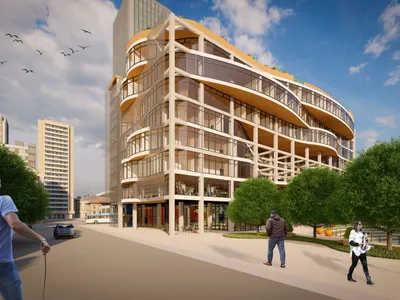
Olio Towers: A Mid-Rise for Performers That Fuses Housing, Rehearsal, and Stage
Located blocks from Houston's Theater District, this modular tower stacks living units around a central performance atrium.
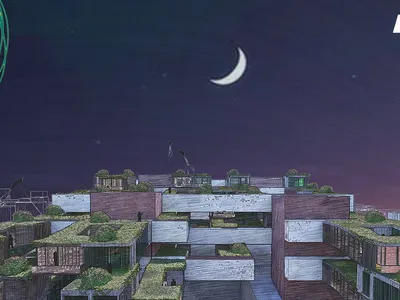
Oasis: Modular Green Housing Carved into Dhaka's Urban Fabric
A shortlisted Plugin Housing entry reclaims unauthorized settlements in Dhaka with stepped concrete volumes, green roofs, and ventilation-driven design.

Black Hole: A Floating Megastructure for the Post-Physical Era
Emiliano Mazzarotto envisions a spherical, self-scaling arena where e-sports, digital hotels, and holographic stadiums replace traditional public space.

Explore Reclaimed Space Competitions
Discover active competitions in this discipline

Challenge to reimagine the Iron Throne

Photograph architecture without architects

Illustrate the lost glory of Angkor Wat - Render Challenge

Design challenge to reuse E-waste
Comments (0)
Please login or sign up to add comments
No comments yet. Be the first to comment!