
Ápiron Builds a Yucatán Beach House from Stone, Concrete, and Woven Reeds
Tunich House in Telchac Puerto layers regional materials and passive ventilation across 370 square meters of Gulf-facing beachfront.


Beachfront houses on the Yucatán coast tend to fall into two camps: hermetic concrete boxes that ignore the climate or breezy palapa pavilions that ignore the street. Tunich House, designed by Ápiron and led by architect Antonio Irigoyen Capetillo, refuses both defaults. Sitting on a 20-meter-wide corner lot in Telchac Puerto, the 370-square-meter residence stacks a polished concrete volume on top of a regional Toh stone base, wraps its most exposed faces in bajareque lattice, and lifts itself off the terrain to let Gulf winds pass underneath. The result is a house that is simultaneously fortress and screen, heavy and permeable.
What makes this project worth studying is the disciplined hierarchy of materials doing climate work. Each layer of the envelope corresponds to a specific thermal or privacy problem. The stone base anchors the house to the ground and absorbs heat slowly. The concrete volume above stores coolness overnight. The bajareque, a traditional Yucatán technique of interwoven sticks and reeds, filters light and wind across large openings without surrendering views of the Gulf. Three distinct access points, on the south facade, the northern federal coastal zone, and the vehicle side, keep circulation from becoming a bottleneck on a lot that is wider than it is deep.
A Facade That Separates Road from Ocean
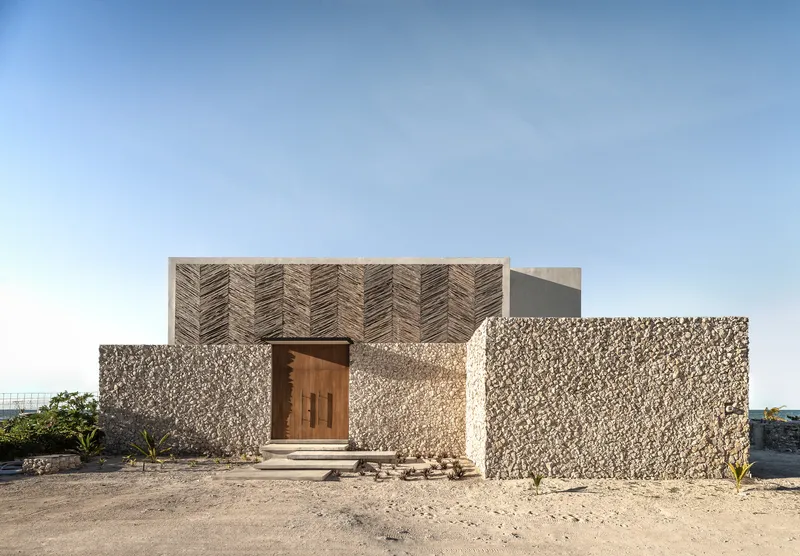
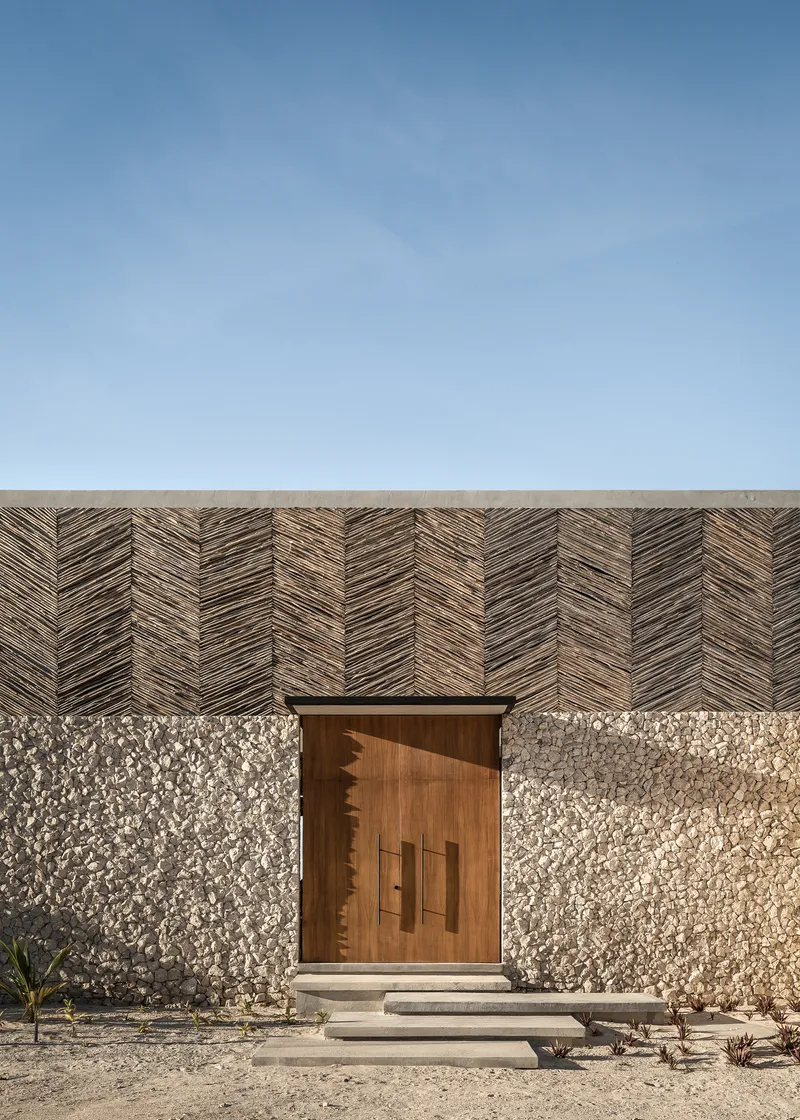
Seen from the street, Tunich House presents a deliberately closed face. Herringbone timber cladding caps textured stone aggregate walls, and a single timber pivot door marks the main entrance. The volumetric composition reads as a series of stacked solids, with the upper timber screens concealing bedrooms behind their weave while the stone base grounds the structure against coastal winds. Privacy from the adjoining road is a design driver, not an afterthought.
The corner condition is handled with care. Where the two street edges meet, the stone walls fold around planted beds that soften the boundary without perforating it. At twilight, the herringbone pattern catches low raking light and turns the facade into a textured relief, a far more interesting move than the flat white render that dominates so many Yucatán vacation homes.
Stone, Concrete, and Bajareque as Climate Instruments
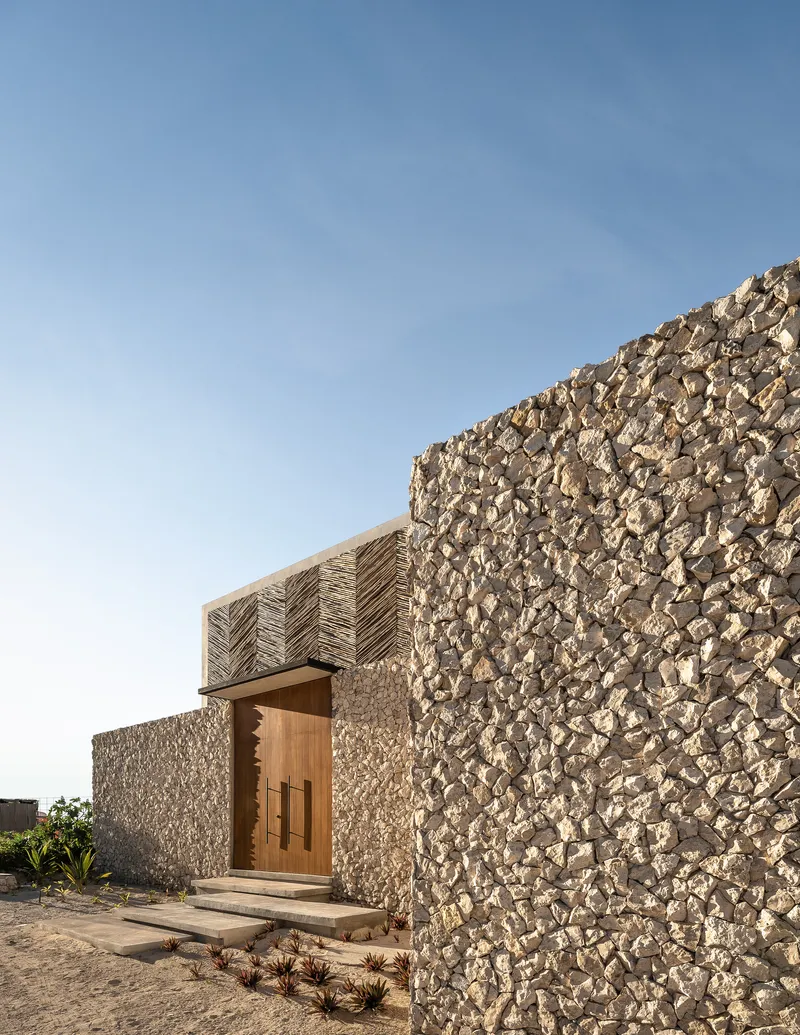
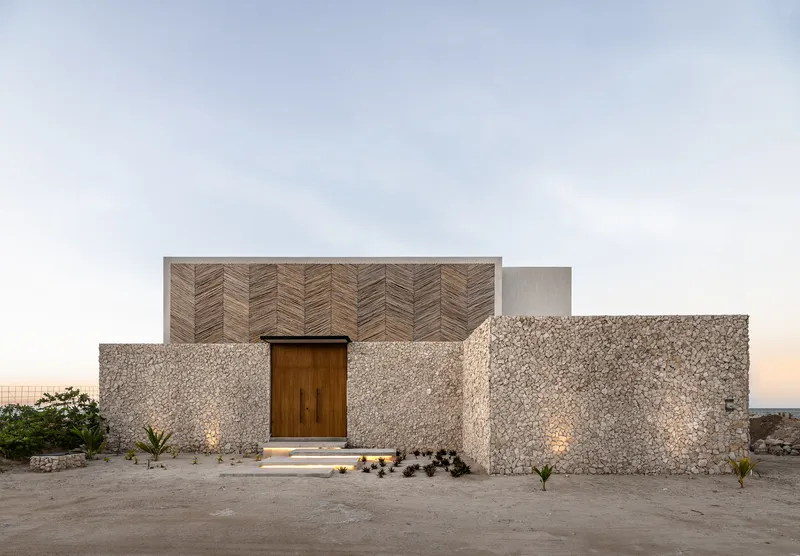
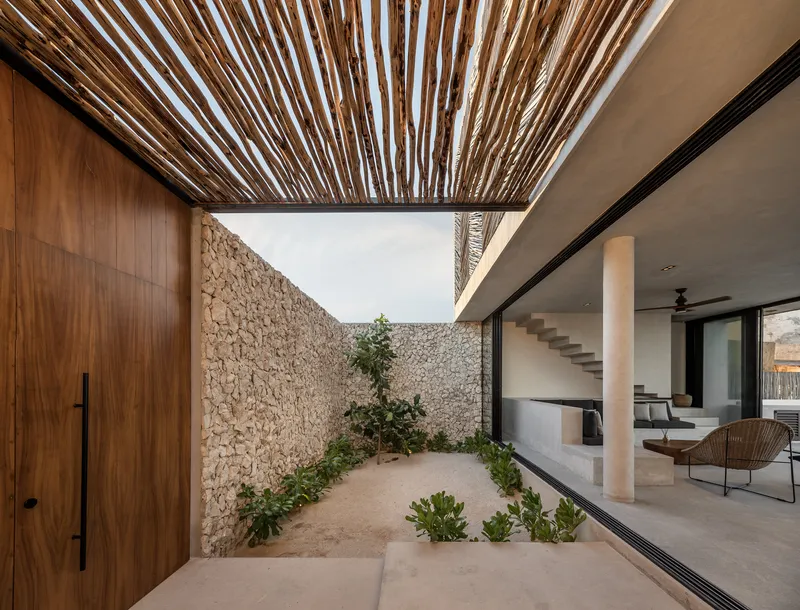
Ápiron's material palette is short but purposeful. Toh stone, quarried regionally, forms gabion walls and base volumes that work as thermal mass, absorbing daytime heat and releasing it slowly after sunset. Above, polished concrete provides a harder, more reflective surface that stays cooler under shade. Where large openings are needed, bajareque lattice steps in: a screen made of interwoven sticks and reeds that dates back centuries in Mexican construction. It allows airflow while breaking direct sun into dappled light.
The covered courtyard demonstrates how these three materials collaborate. Timber slat canopies span between stone walls, filtering overhead light onto planted beds below. Glazed living spaces open directly onto this intermediate zone, creating a gradient from full enclosure to full exposure. The courtyard acts as a thermal chimney, drawing warm air upward and pulling cooler air through the ground floor.
A Ground Floor That Opens in Every Direction
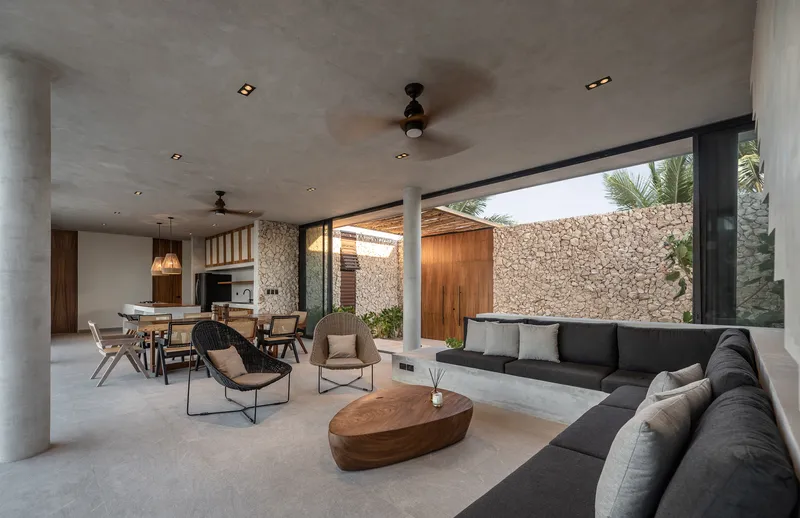
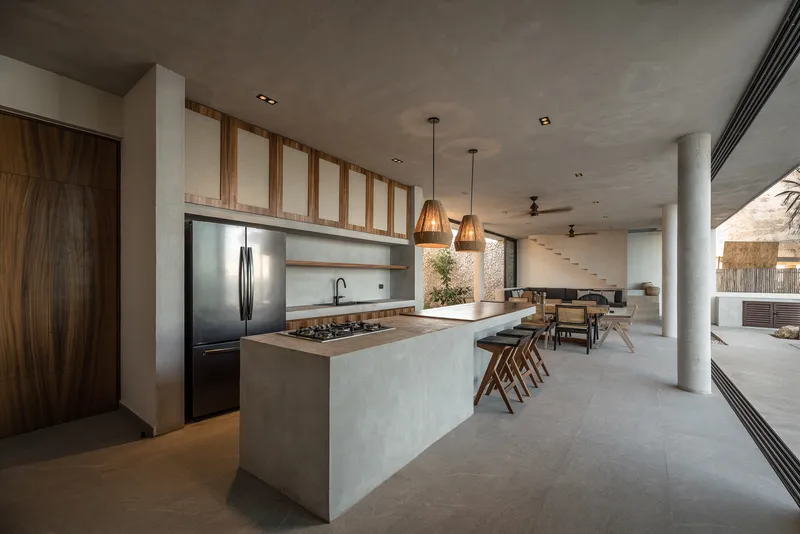
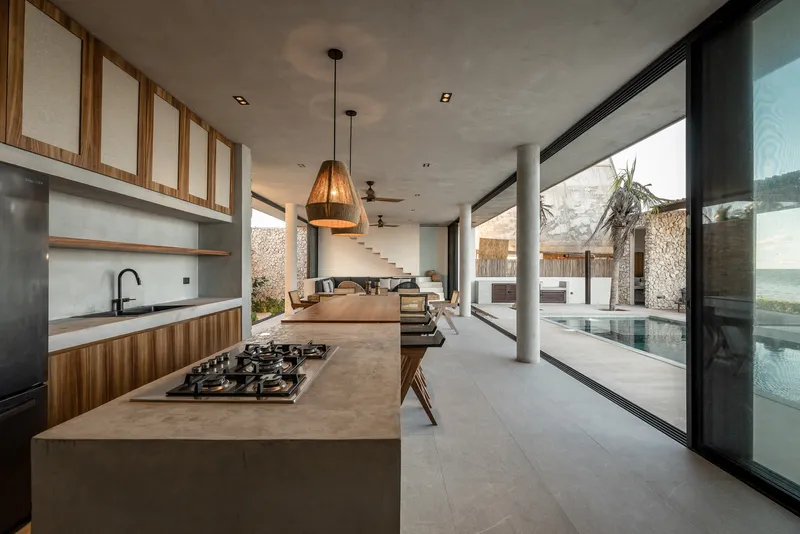
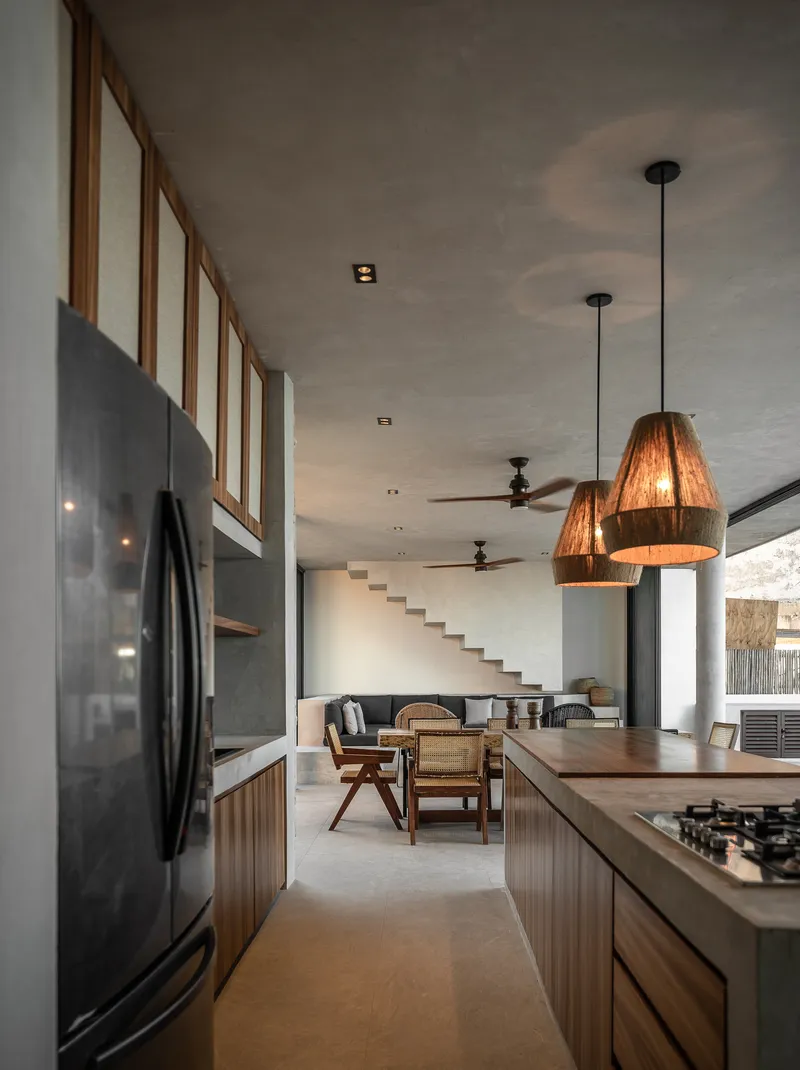
The social program occupies the entire ground level: kitchen, living room, and dining room merge into a single open volume articulated by concrete ceiling planes and changes in floor level. A sunken living area with built-in concrete seating creates an intimate zone within the larger open plan without erecting walls. The concrete island in the kitchen sits beneath clerestory windows and woven pendant lights, establishing a secondary axis that draws the eye through to the pool terrace beyond.
Floor-to-ceiling glazing on the ocean side dissolves the boundary between interior and pool deck. Gabion stone walls continue from inside to outside, reinforcing the sense that the courtyard and the living spaces are parts of the same room separated only by glass. It is a strategy that rewards the 24-meter width of the lot: cross-ventilation paths multiply as every room has at least two exposures.
Vertical Circulation and Interior Atmosphere
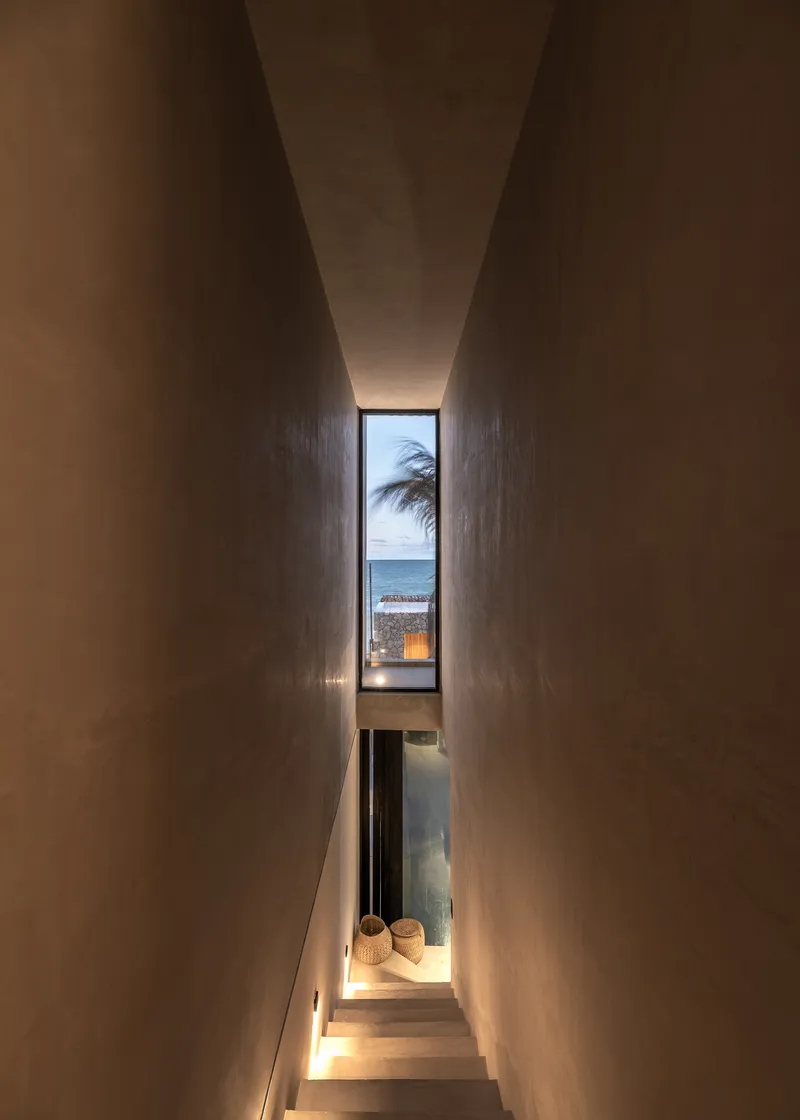
The staircase is one of the house's strongest moments. Floating concrete treads rise through a narrow slot framed by polished concrete walls, with a vertical window at the landing that captures a sliver of palm canopy and ocean horizon. The proportions are deliberately compressed, making the arrival at the upper bedrooms feel like a release. Light enters from above and from the side, so the stair is never dark.
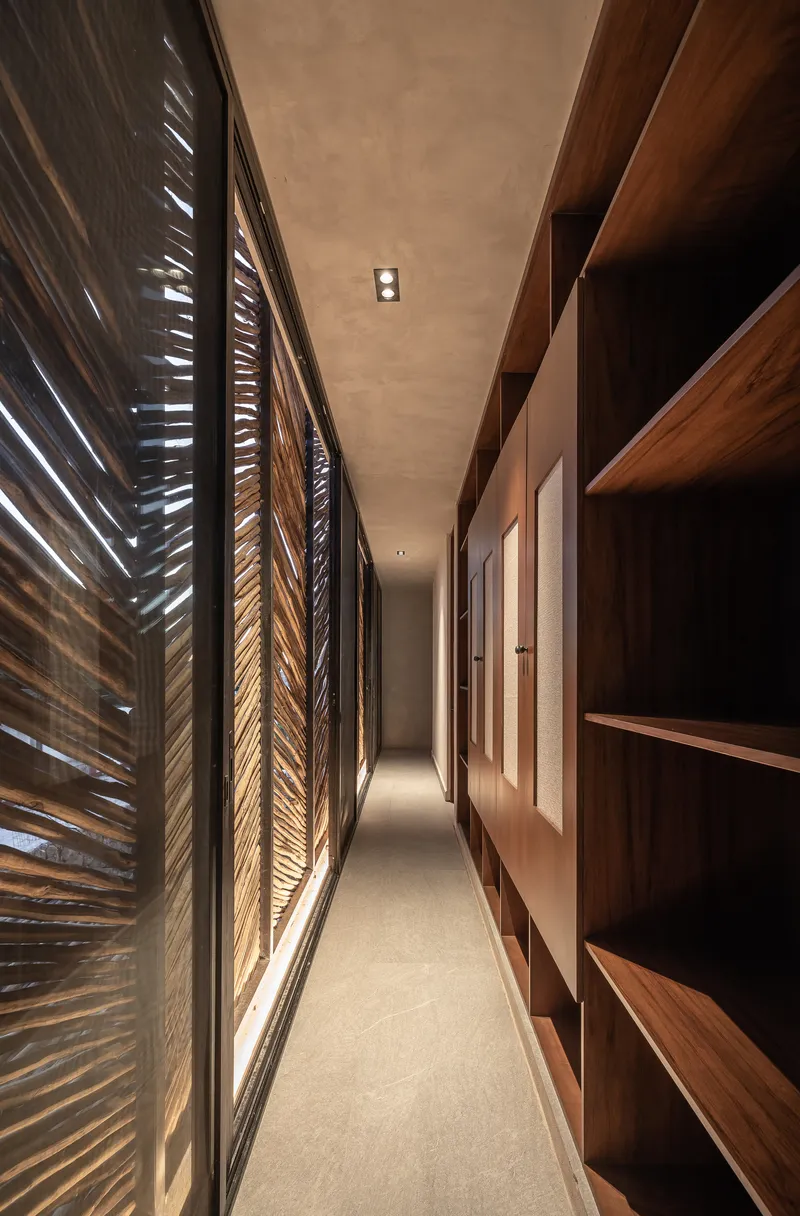
A narrow corridor on the upper level uses a slatted timber screen on one side and built-in shelving on the other. Warm downlighting washes both surfaces, producing a consistent amber glow that contrasts with the cooler tones of the concrete walls elsewhere. These transitional spaces earn their keep: they buffer the private bedrooms from the social volume below while managing sound and airflow.
Private Rooms That Face the Gulf
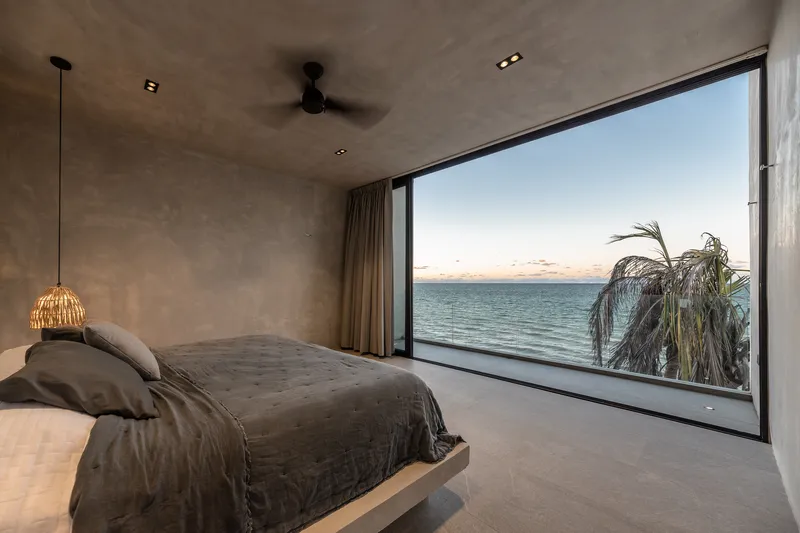
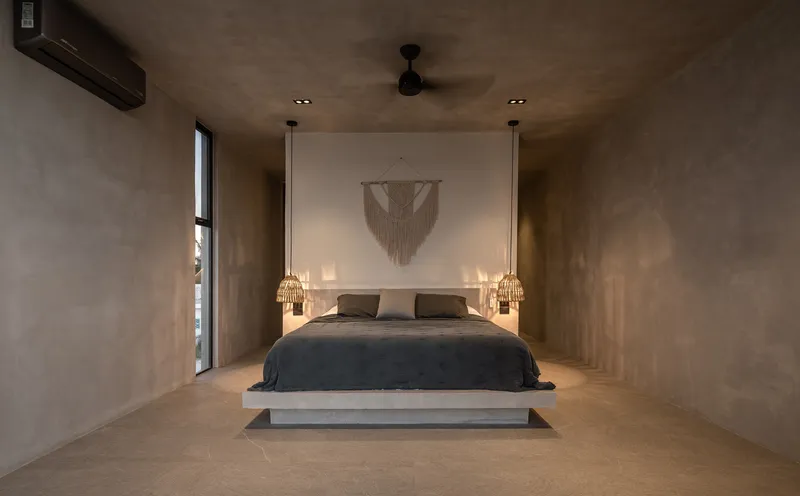
Three family bedrooms occupy the upper level, and each opens to the ocean through full-height glazing. One bedroom frames the Gulf and palm fronds at dusk through a single uninterrupted glass plane, treating the view as a painting rather than a panorama. Another uses a polished concrete platform bed with a recessed illuminated alcove behind the headboard, an integrated detail that eliminates the need for freestanding furniture.
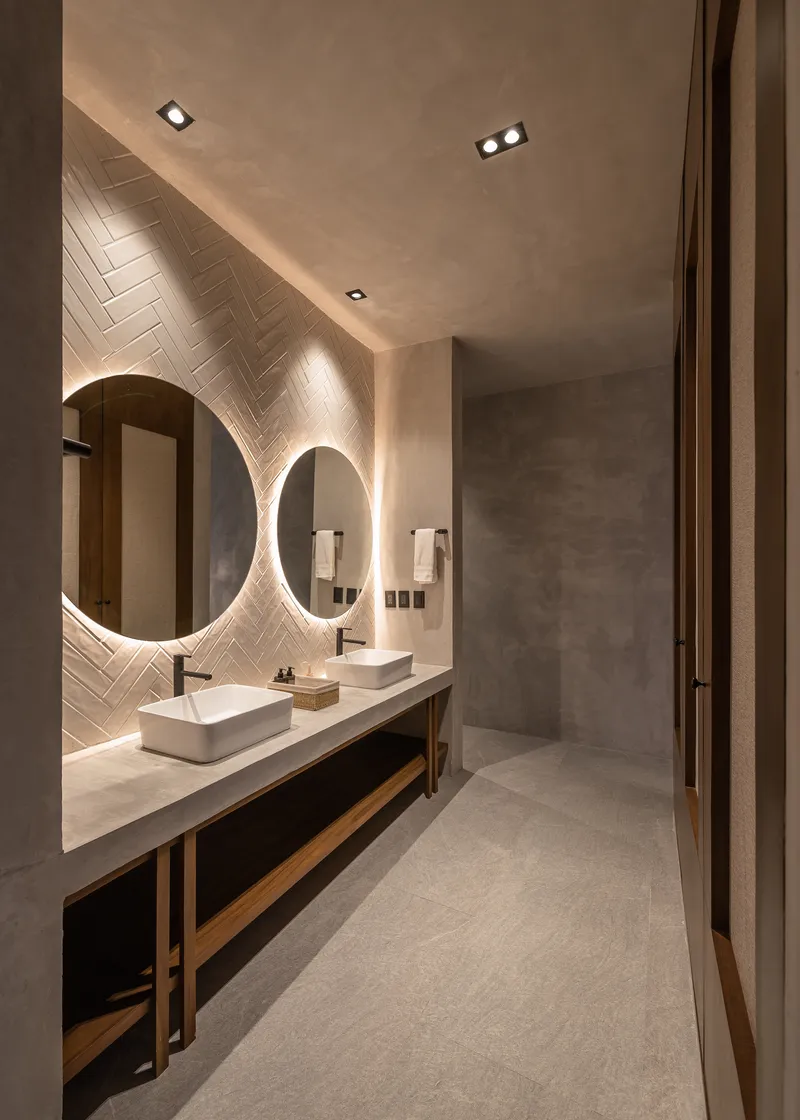
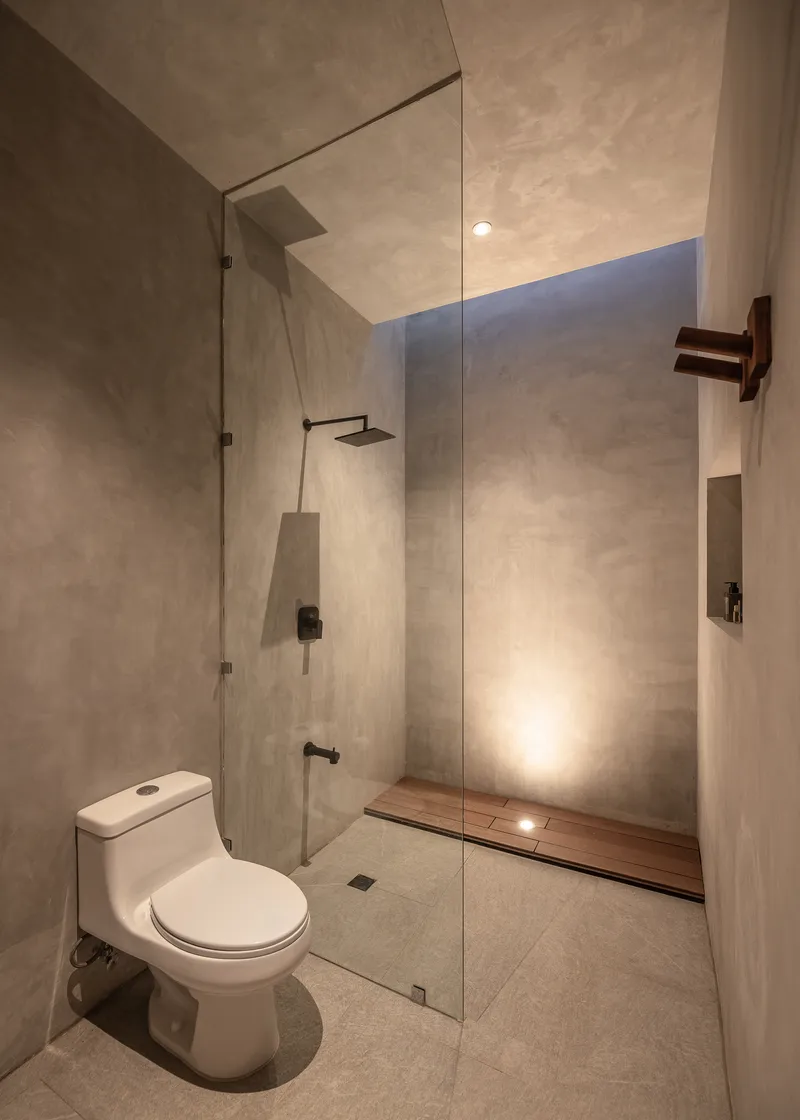
The bathrooms maintain the same material discipline. A backlit circular mirror set against herringbone tile, a glass-enclosed shower with a skylight slot above: these are restrained gestures that let the concrete and stone do the atmospheric work. There is no marble, no gratuitous luxury finish. The richness comes from the play of light across monolithic surfaces.
Pool Terrace and the Coastal Edge
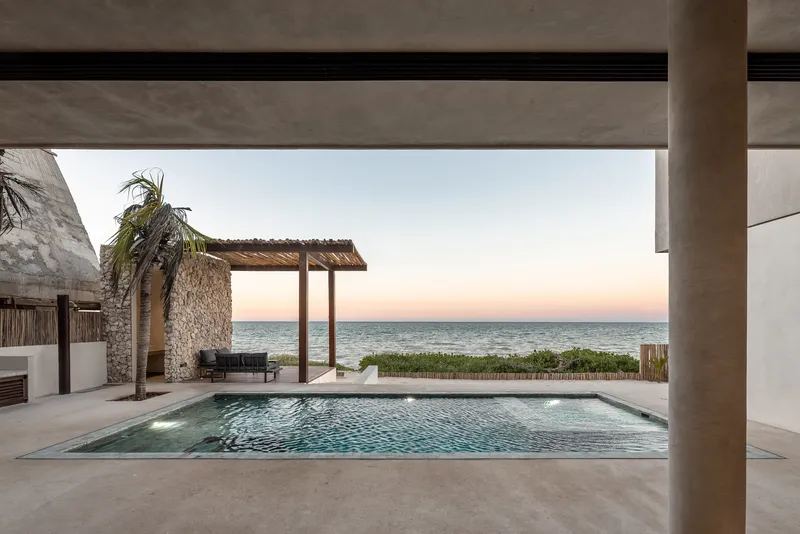
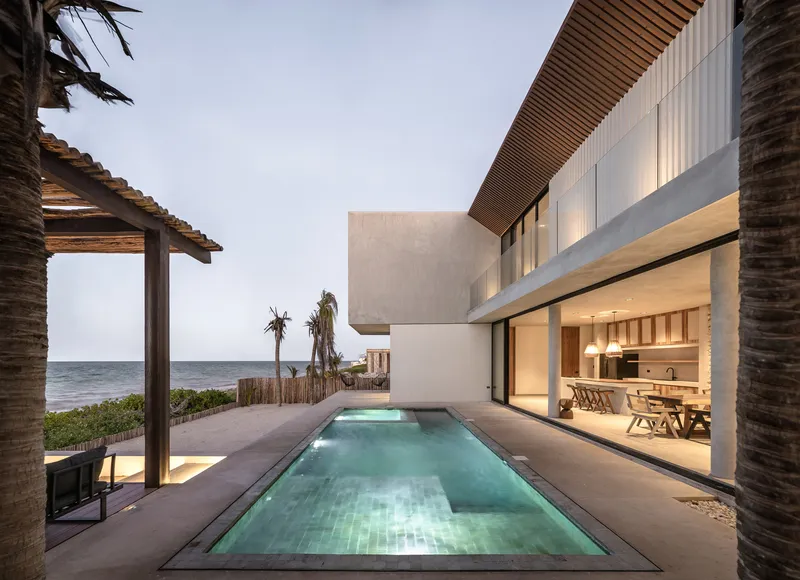
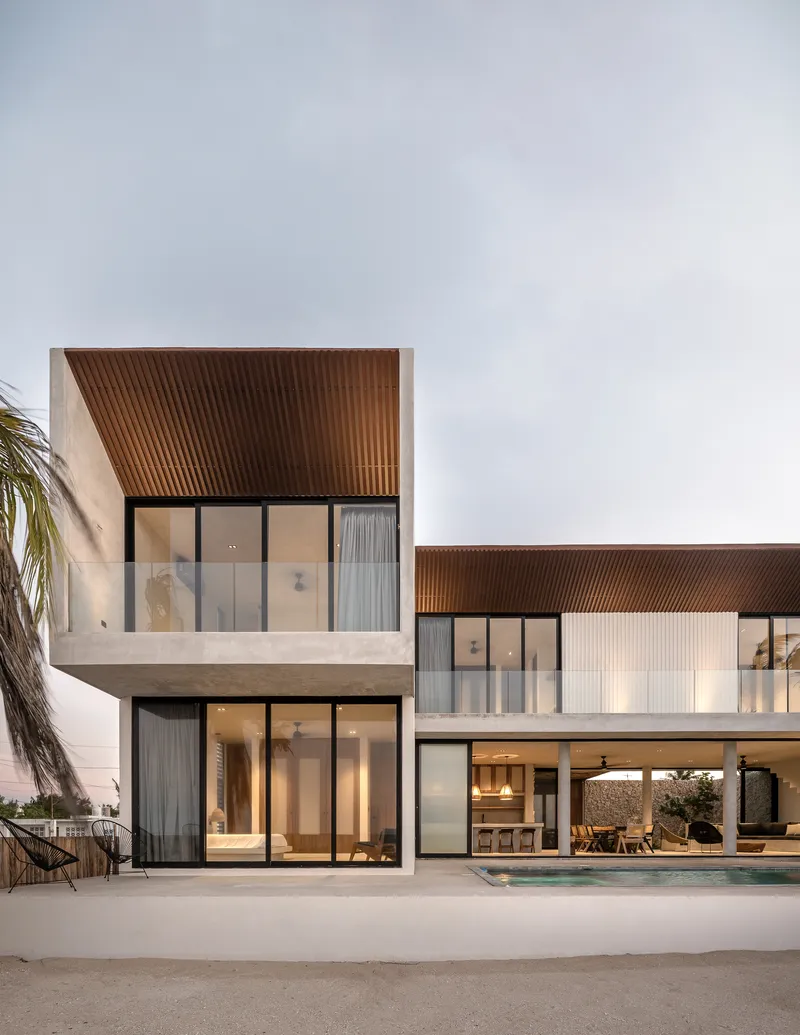
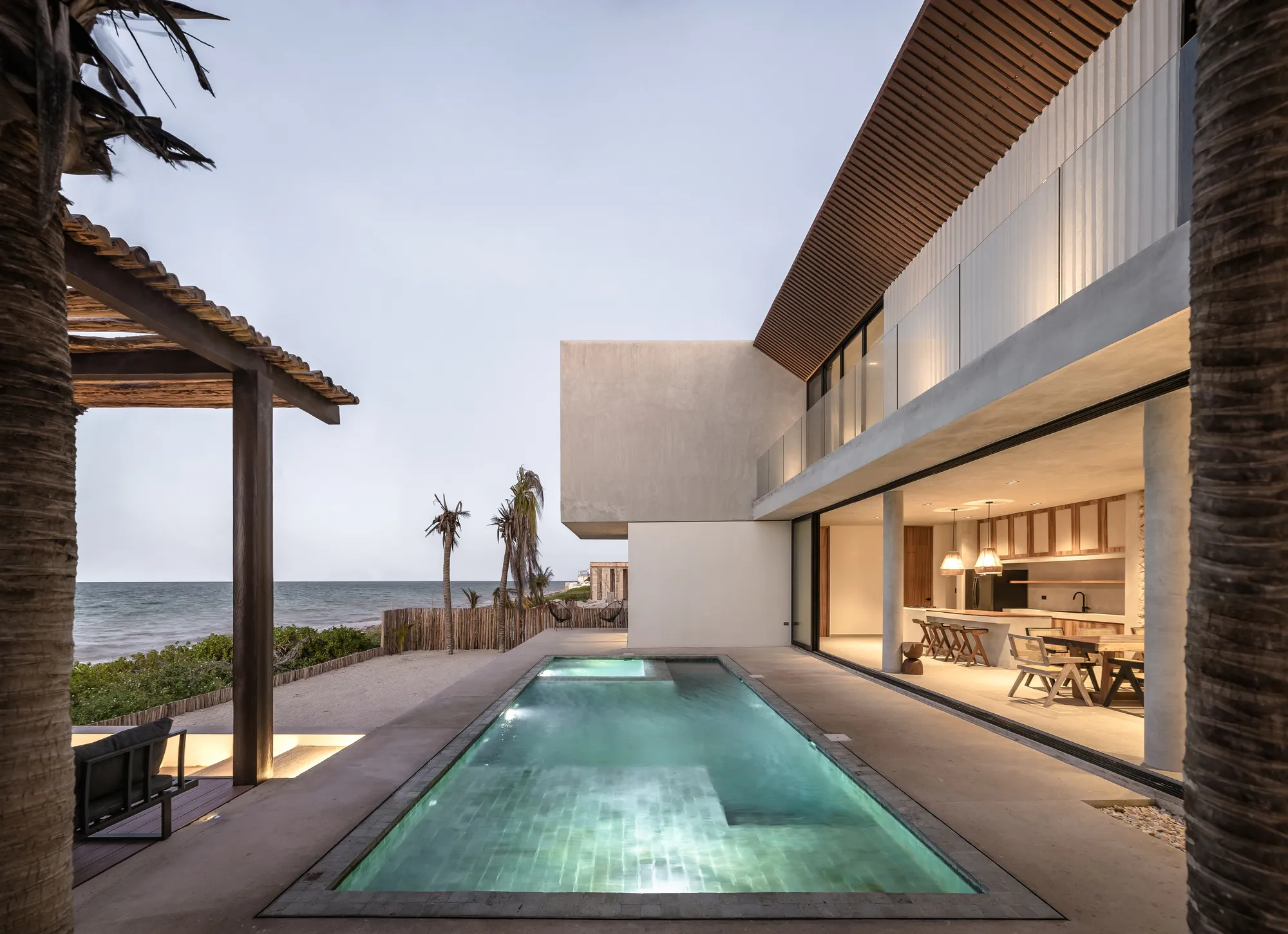
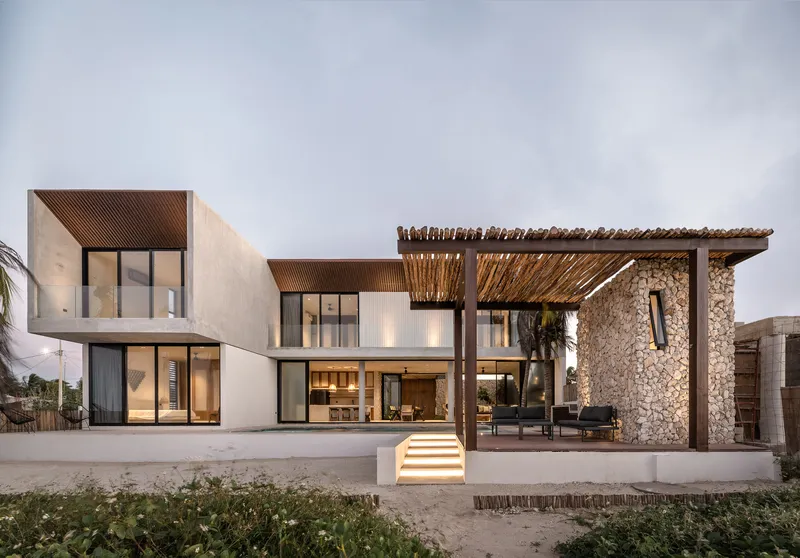
The ocean side of the house opens up completely. A pool terrace stretches between the main volume and a thatched palapa pavilion, framed by concrete beams that provide shade without blocking the horizon. At dusk, the cantilevered upper volume casts a deep shadow over the deck while the pool catches the last warm light. The palapa is a direct nod to vernacular coastal construction, an honest shelter that complements the heavier concrete behind it.
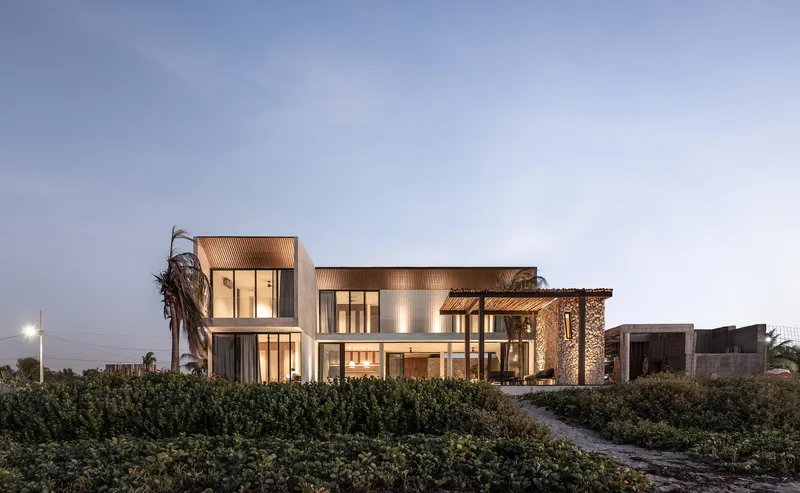
The two-story facade visible from the beach reads as white concrete volumes punctuated by ribbed timber soffits. It is a composition that acknowledges the Gulf as the primary audience: the facade that matters most is not the one facing the road. The house is raised from the natural terrain, allowing wind to circulate beneath the structure. On this coast, where humidity is relentless, that gap between earth and floor slab is worth more than any mechanical system.
Interior Details as Spatial Connectors
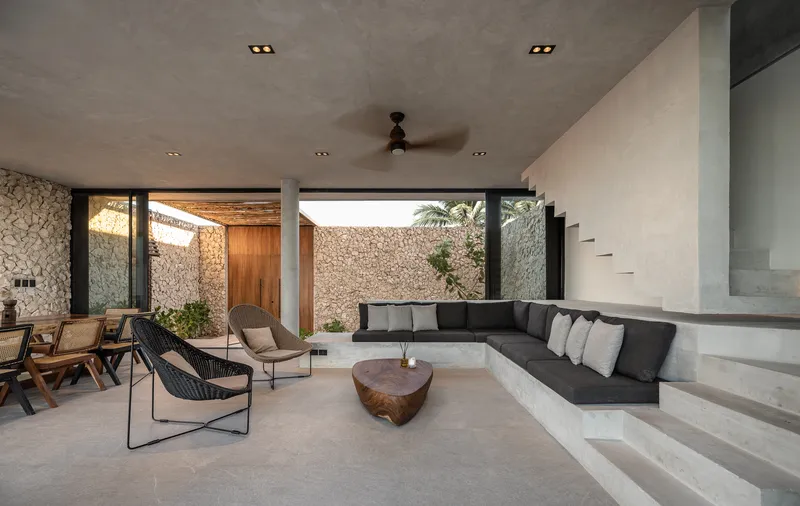
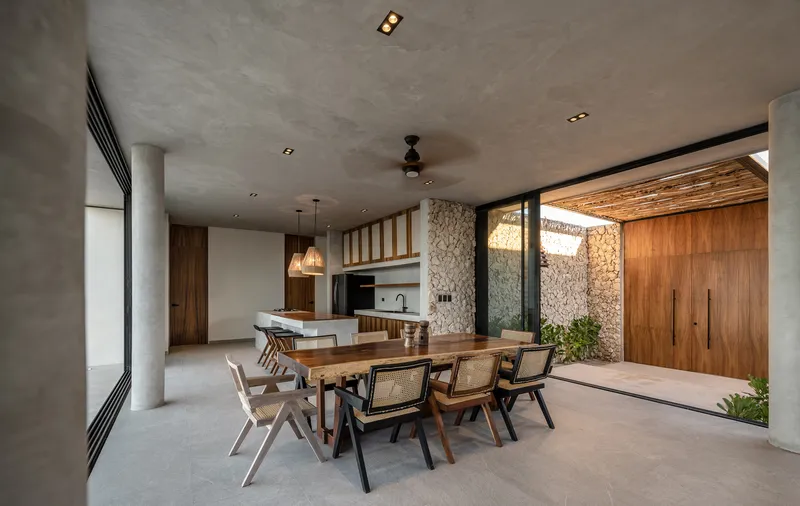
The sunken living room deserves a closer look. Built-in concrete benches wrap around three sides, creating a conversation pit that opens to a courtyard planted with palms. The gabion stone wall visible from inside continues the exterior material logic, so the distinction between indoor and outdoor space blurs at the threshold. Woven pendant lights suspended from the concrete ceiling in the dining area add a handmade counterpoint to the hard industrial surfaces.
Even the service spaces receive careful attention. The bathroom skylight slot, barely wider than a hand, draws a blade of light down the shower wall. It is a small detail, but it signals that Ápiron treated every room as a design problem, not just the ones visible from the pool.
Plans and Drawings
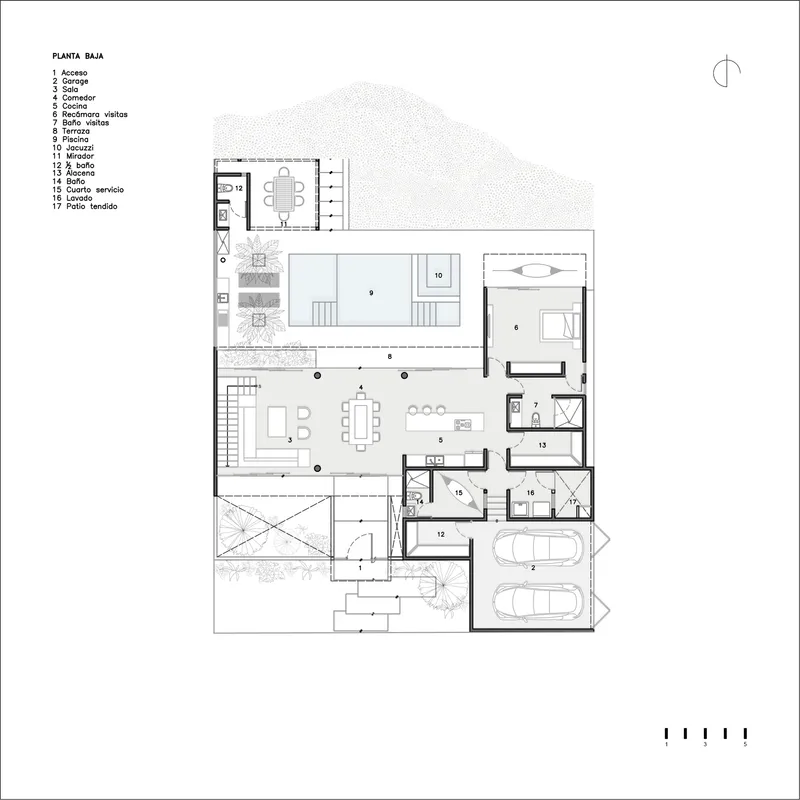
The ground floor plan reveals the spatial logic clearly. An L-shaped configuration wraps around a central courtyard, with the open-plan living and kitchen occupying the longer bar and a guest room and service areas filling the shorter one. The garage sits at the vehicle access point on the side of the property, keeping cars out of the primary visual axis.
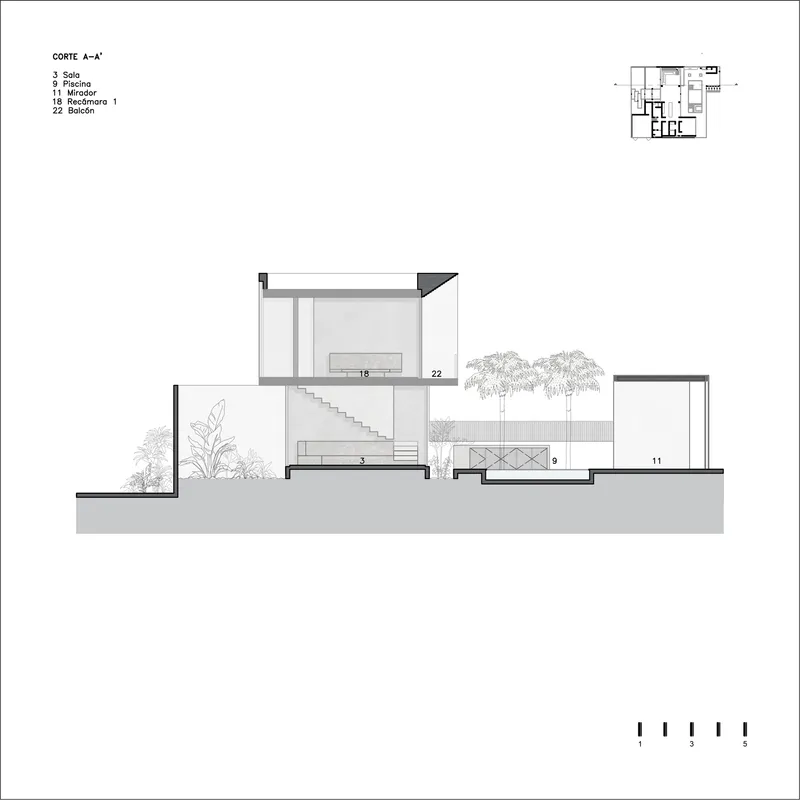
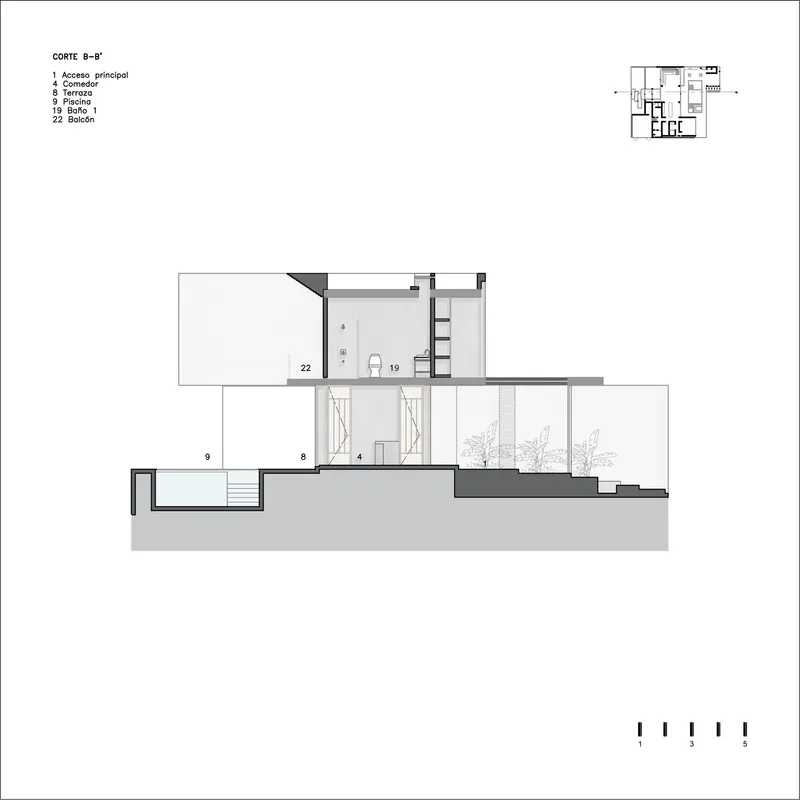
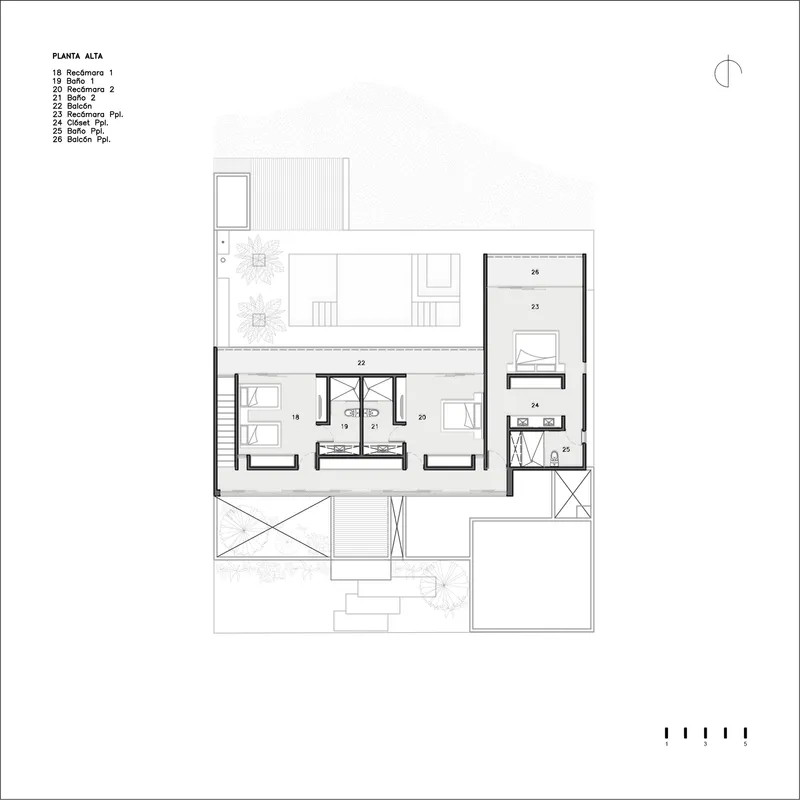
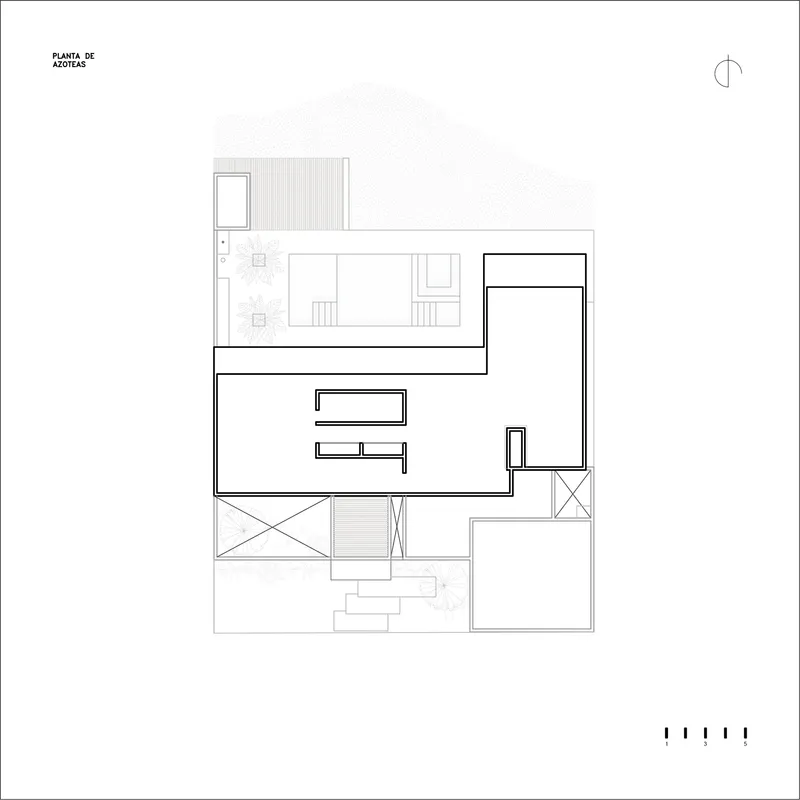
The upper floor plan stacks three bedrooms with balcony terraces facing the ocean, each with its own bathroom. The roof plan confirms the L-shape and shows the terrace occupying the void between the two bars. In section, the double-height courtyard with mature trees becomes legible: it is the thermal and spatial engine of the house, connecting levels visually while pulling air through the plan.
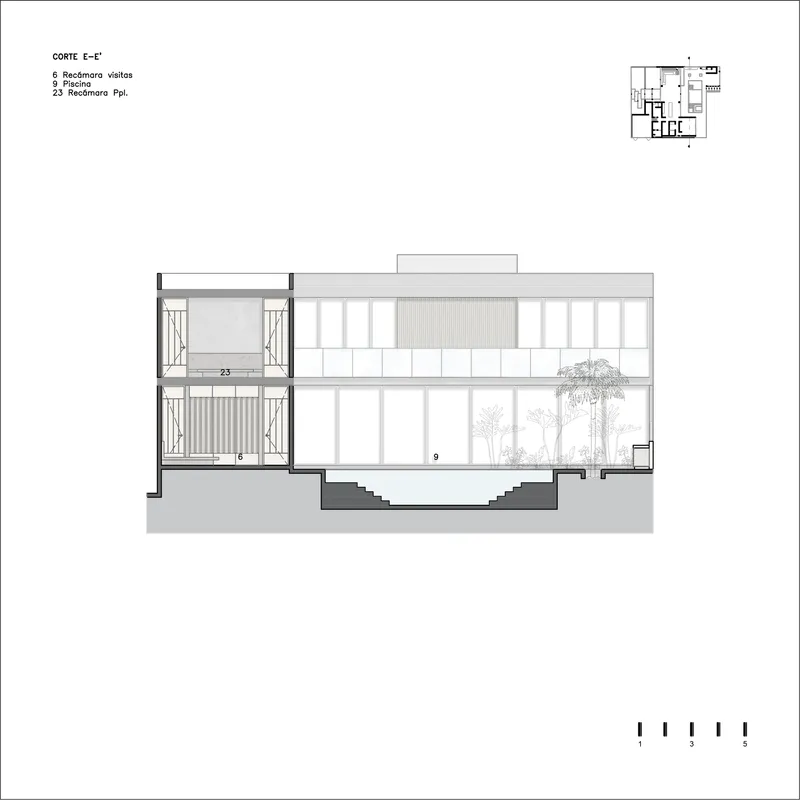
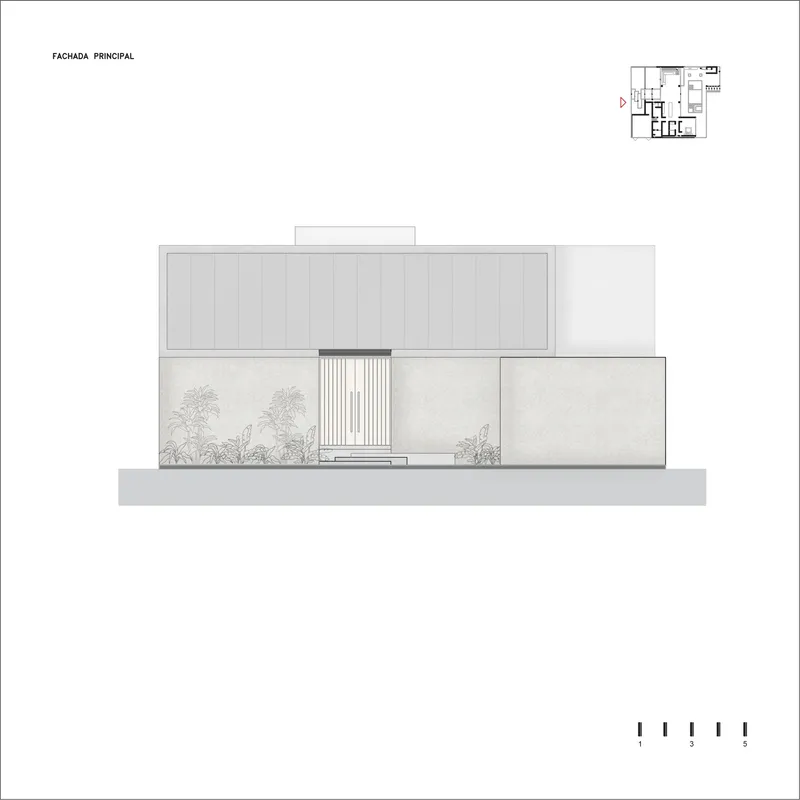
The section through the courtyard is perhaps the most revealing drawing. It shows how the sunken entry, the multilevel interior spaces, and the planted side terrace interlock. The stacked balconies flanking the double-height courtyard create a vertical social space that complements the horizontal openness of the ground floor. The principal facade elevation, with its vertical slat entrance flanked by planted beds, confirms the studied opacity of the street face.
Why This Project Matters
Tunich House matters because it demonstrates that passive climate strategy and architectural ambition are not competing goals. Every design decision, from raising the house off the terrain to wrapping openings in bajareque, solves a measurable environmental problem while also producing an architectural effect. This is not a house that performs sustainability as decoration. The materials are regional. The techniques are traditional. The spatial result is contemporary without trying to be.
It also offers a useful model for beachfront development on the Yucatán coast, where construction is accelerating faster than design culture can keep up. Ápiron shows that a 370-square-meter vacation house on a 20-meter lot can be both private and porous, both heavy and light, both rooted in local tradition and open to the Gulf. That is a harder trick than it looks, and the drawings and details here suggest it was achieved through discipline rather than budget.
Tunich House by Ápiron, led by Antonio Irigoyen Capetillo. Located in Telchac Puerto, Mexico. 370 m². Completed in 2022. Photography by Manolo Rodríguez Solís.
About the Studio
Share Your Own Work on uni.xyz
If projects like this are the kind of work you want to make, uni.xyz is a place to publish your own, find collaborators, and enter design competitions.




Popular Articles
Popular articles from the community


Co-life: Sustainable Architecture for Age-Friendly Community Living
Co-life reimagines sustainable architecture for seniors through courtyards, rammed earth, shared gardens, and spaces designed for belonging.

Riyadh For All: Intergenerational Urban Design for Active Aging in Rabat
Riyadh For All reimagines urban design in Rabat with intergenerational co-living, adaptive courtyards, and Moroccan cultural exchange today.

Hill & Cross Opera: Sculptural Opera House Architecture Shaped by Tallinn’s Landscape and Identity
Hill & Cross Opera reimagines opera house architecture in Tallinn through its sculptural hill, civic plaza, glass wave and a luminous cross.

Play: Fragments of Their World
Familiar architecture becomes modular playground design, creating safe spaces where displaced children can learn, connect, imagine and play.


Similar Reads
You might also enjoy these articles

Bao Huynh Watercolor Atelier: A Serene Art Retreat in Hội An
Bao Huynh Watercolor Atelier in Hội An blends multifunctional art spaces, sustainable design, local materials, and family-friendly living in a serene environment.

Atelier Macri Concept Store Interior Design by CASE-REAL
Atelier Macri store features a "ko" counter, walnut wood details, cork displays, blending retail, gallery, and seamless customer experiences.

Manuel Vargas Izquierdo Stadium and High-Performance Sports Center: Architectural Excellence in Jalpa de Méndez
The Manuel Vargas Izquierdo Stadium blends sustainable design, inclusive sports facilities, and cultural-inspired architecture, revitalizing Jalpa de Méndez’s public spaces.

KAKR Buluh Awar Hall: Revitalizing Community and Ecology Through Bamboo Architecture
Community built bamboo hall revitalizes Buluh Awar village, empowering youth, restoring ecology, celebrating vernacular craftsmanship through sustainable architecture and culture.




Comments (0)
Please login or sign up to add comments
No comments yet. Be the first to comment!