

Using Space Technology to colonize earth again after Apocalypse
Architecture of the Apocalypse - Result Story


EARTH is a doomed planet and if humans do not act fast, humanity faces going down with the ship, Professor Stephen Hawking warned in his last book.
Hawking predicted that the earth would turn into a giant ball of fire by 2600 and humans would need to colonize another planet or face extinction. However, many possible scenarios of anthropogenic extinction have been proposed; such as human global nuclear annihilation, biological warfare or the release of a pandemic-causing agent, overpopulation, ecological collapse, and climate change.
Whilst there is a notorious race that burst to colonize space and the celestial bodies in it. It is almost the same technology developed for that purpose that could save us here on earth after the apocalyptic event to survive through any dystopian future.
Life exists on Earth only because it balances unsteadily in a delicate and fragile way but precise. Our atmosphere, proximity to the sun, and countless other proper conditions not only permit living things to survive and evolve but also thrive.
Life on this planet likely won't cease until billions of years from now. But, depending on the scientists and astrophysics, it could also happen tomorrow or anytime in between.
At that time could space technology we develop to colonize other planets be useful to re-colonize earth again? It is dystopian but realistic that someday we will have to deal with our mother Earth as an extra-terrestrial planet.
The brief was to design a self-sufficient, closed-loop life support system that can support regenerative life for the minimum viable population (MVP). The MVP for this competition is 160 human beings on any location on earth after the extinction-level event where any location on earth will be an extremely harsh environment as any extraterrestrial planet.
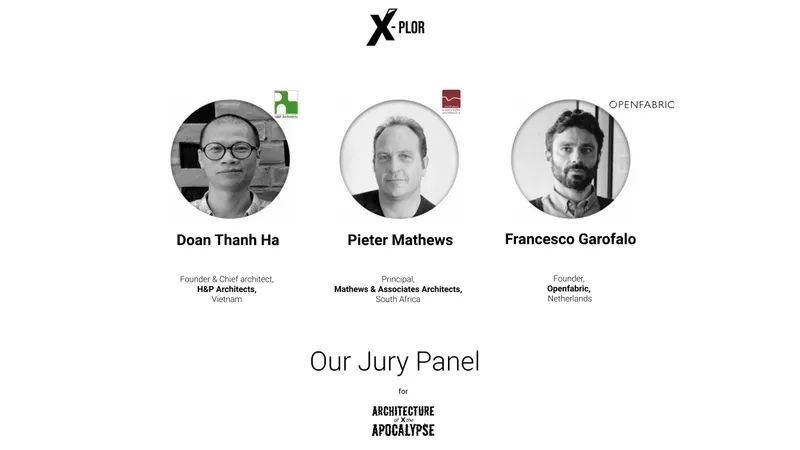
The jury for the competition consisted of esteemed designers, professionals, and academicians from around the world. The Lead Jurors for the competitions were as follows:
Doan Thanh Ha, Founder & Chief architect, H&P Architects, Vietnam
Pieter Mathews, Principal, Mathews & Associates Architects, South Africa
Francesco Garofalo, Founder, Openfabric, Netherlands
Some of the Best of competition projects are:
Winning Project: STELLAR-1
By: Wunghee Lee, Matthew Bong & Do Yeun Kim
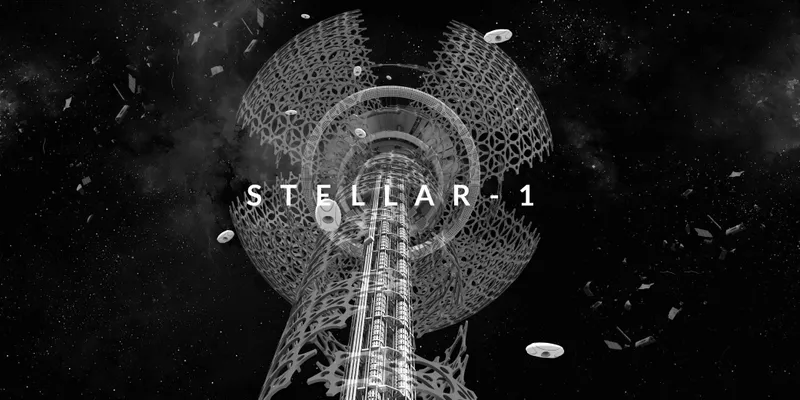
Description: A Temporal Space Colonization
------------------
Runner - Up: Architecture of the Apocalypse: Neo-Covenant
By: Yuwei Shen, MU ZHAOALEX, Shuai Zou & 雅杰 陈
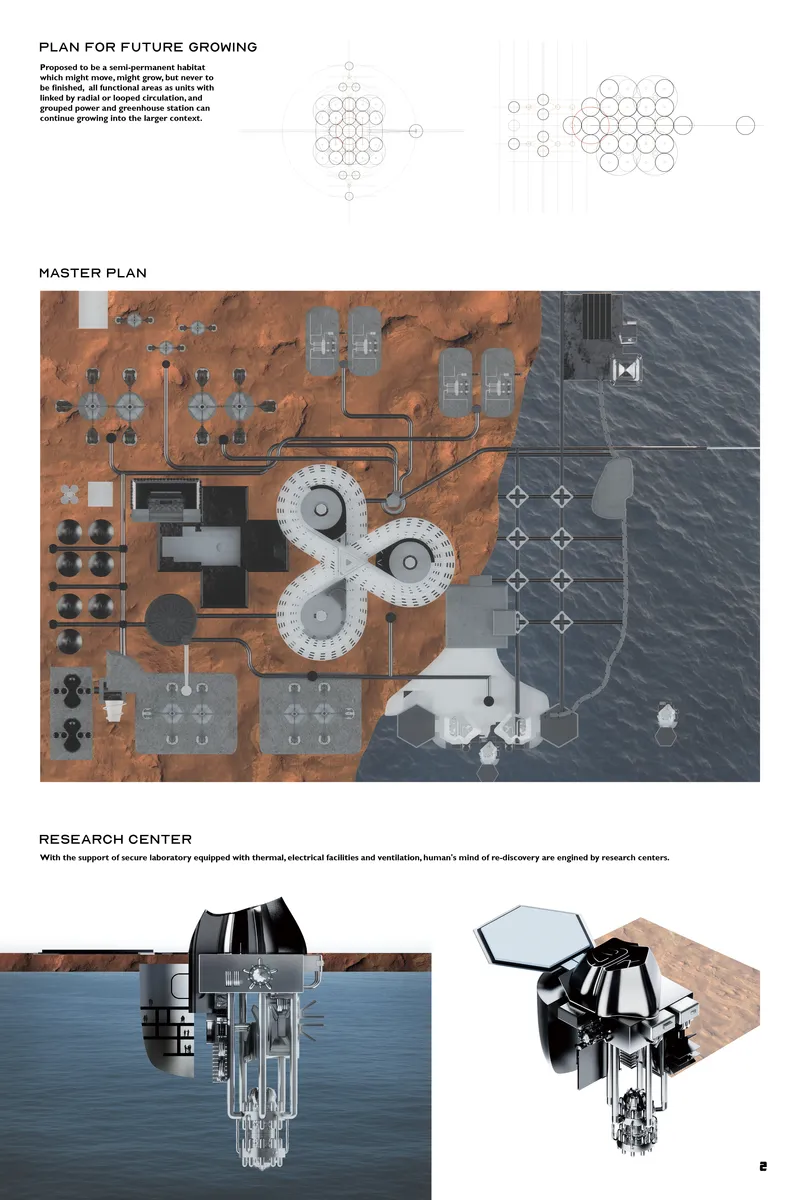
Description: Self-sufficient and circulating habitat programmed with laboratories and archives, power and purification system, and housing paired with a greenhouse to support re-discovery as extinction survivors go back to the earth
-----------------------
People’s Choice: Architecture of the Apocalypse
By: Veronika Zapyantseva & Таня Веллер
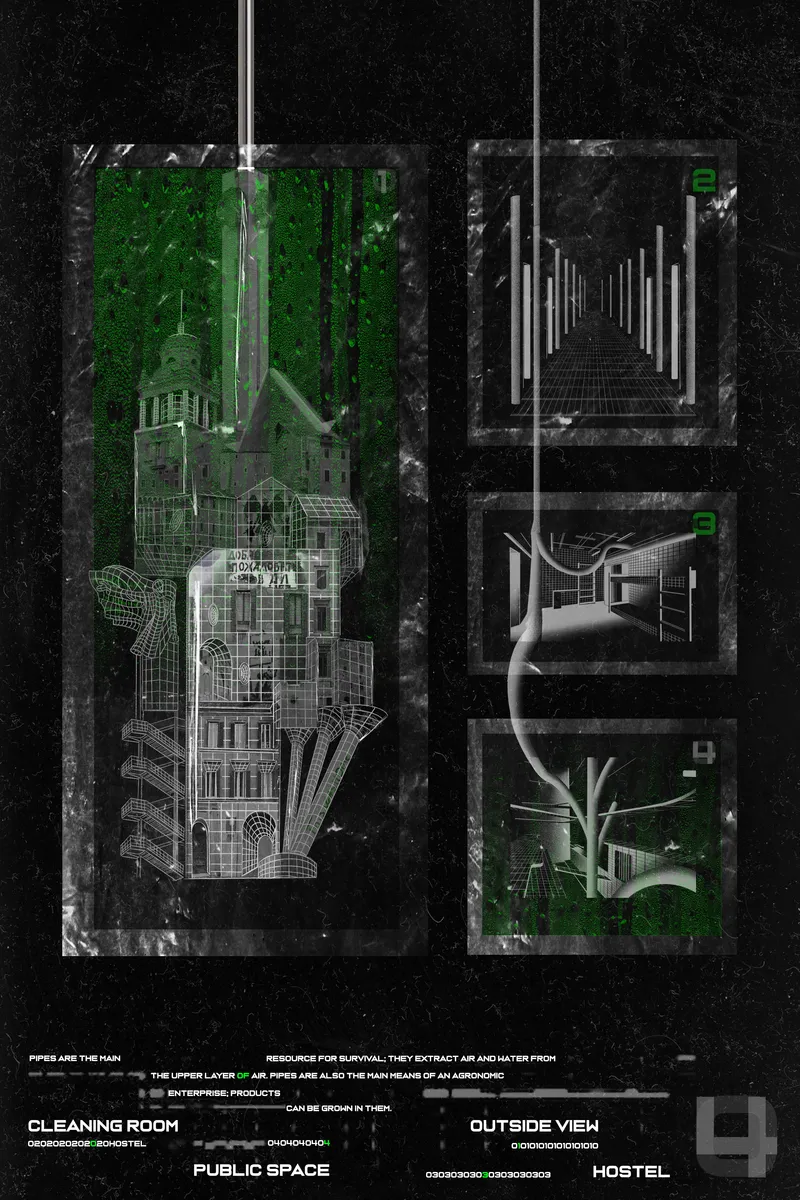
Description: Babylon 20.20 - a constant movement upward abroad of smog. So the structure of the "anthill" appeared in the new alternative houses of the post-apocalypse. People stopped seeing the true forms of each other, and everything that surrounds them. Everyone needed shelter and protection and began to equip their homes from the wreckage and parts of old buildings.
--------------------
Editor’s Choice: Moscow Metro Shelter
By: Daria Taraskina, Maria Baeva & Natalia Gushchina
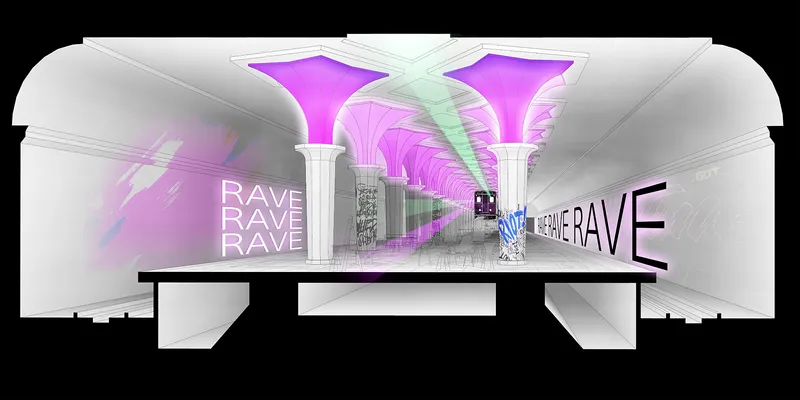
Description: The meaning of our project is to find normality in a completely new world. Our aim is to show the transformation of everyday life, not a dystopia. In this new world, people will look for comfort and we believe that they will be able to adapt to these conditions.
--------------------
Editor’s Choice: Pie in the Sky
By: Habiba Mukhtar
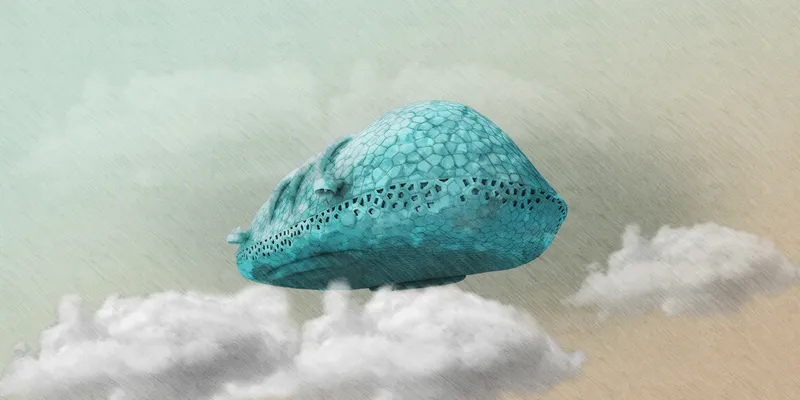
Description: I'll farm where the weather is good
--------------------
Editor’s Choice: theCLX(160)
By: WITCHAYA JINGJIT
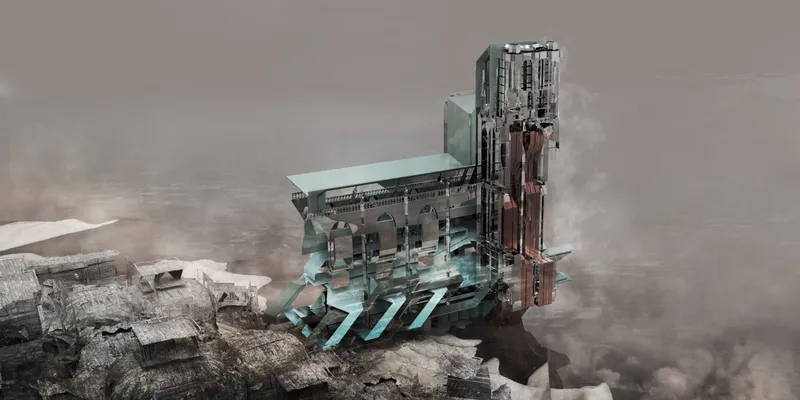
Description: When the time comes, human beings will turn to respect and take the power of nature for survival. A new aspect of architecture will be the driving tool for humanity to continue the race because "architecture is not just a building", but it is mechanisms of technology that mimic the ability of nature to serve the well-being of human life.
--------------------
Editor’s Choice: APOCALYPSE BIO-JELLYFISH
By: Xiong Yaru
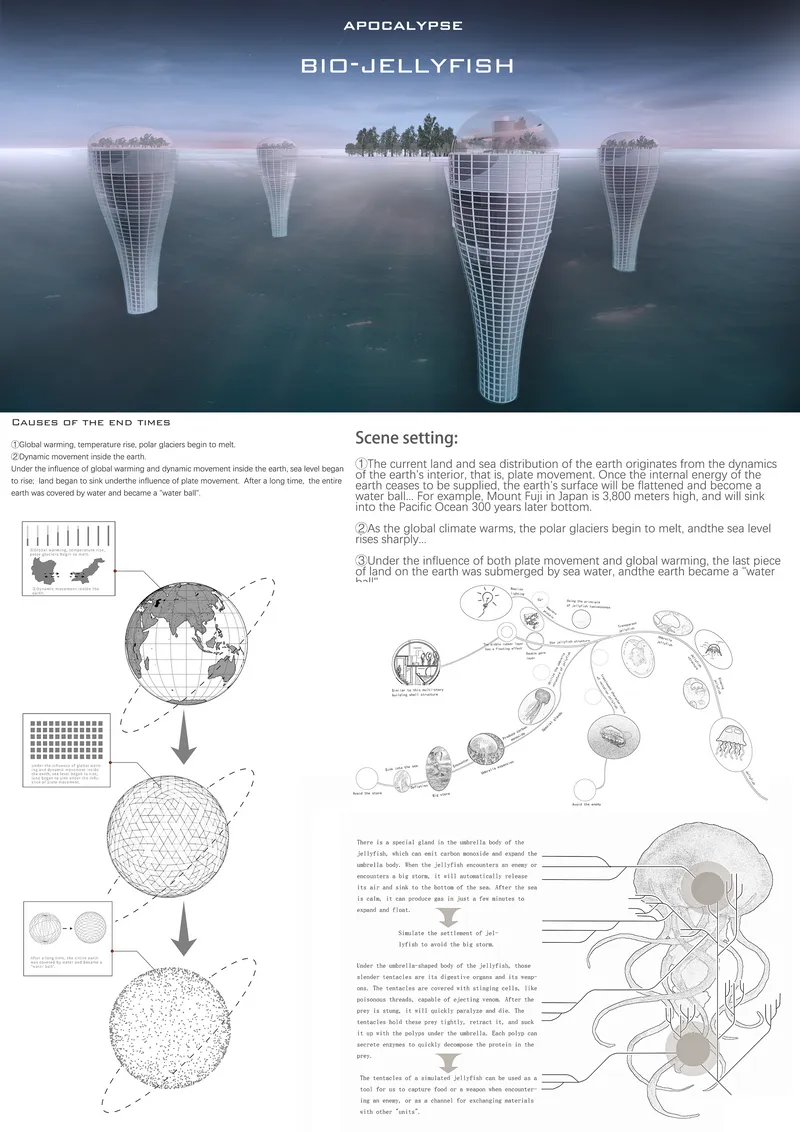
Description: We set the doomsday scenario as a "water polo". In such a scenario, we made a series of imaginations about doomsday and made this design in conjunction with bionic research on jellyfish. And a series of explorations and designs have been launched for the various problems faced by mankind in such a doomsday environment...
--------------------
Editor’s Choice: Recolonizing Home
By: Adriana Mantke & Sophia Patricia Simone
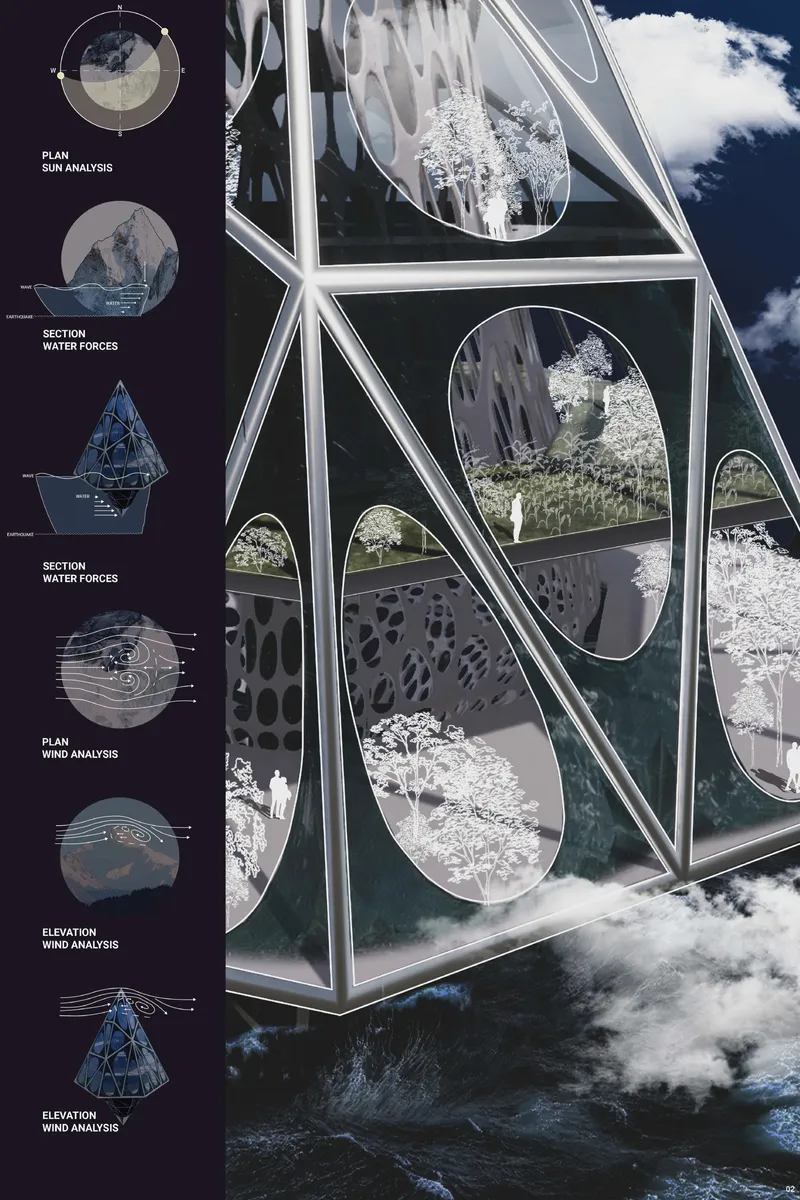
Description: Climate change has caused the sea level to rise 25,000 feet higher than the pre-apocalypse. The only areas not underwater are the mountain peaks. Life has rejuvenated upon the Himalayas Mountains. With the use of NASA's Environmental Control + Life Support System combined with desalination of surrounding waters, life continues at 27,940 feet above sea level.
--------------------
Editor’s Choice: The Ocean Hive
By: Mohamed Abdellatif, Ahmed Hashem, Eda nur Subaşı & Melike İnce
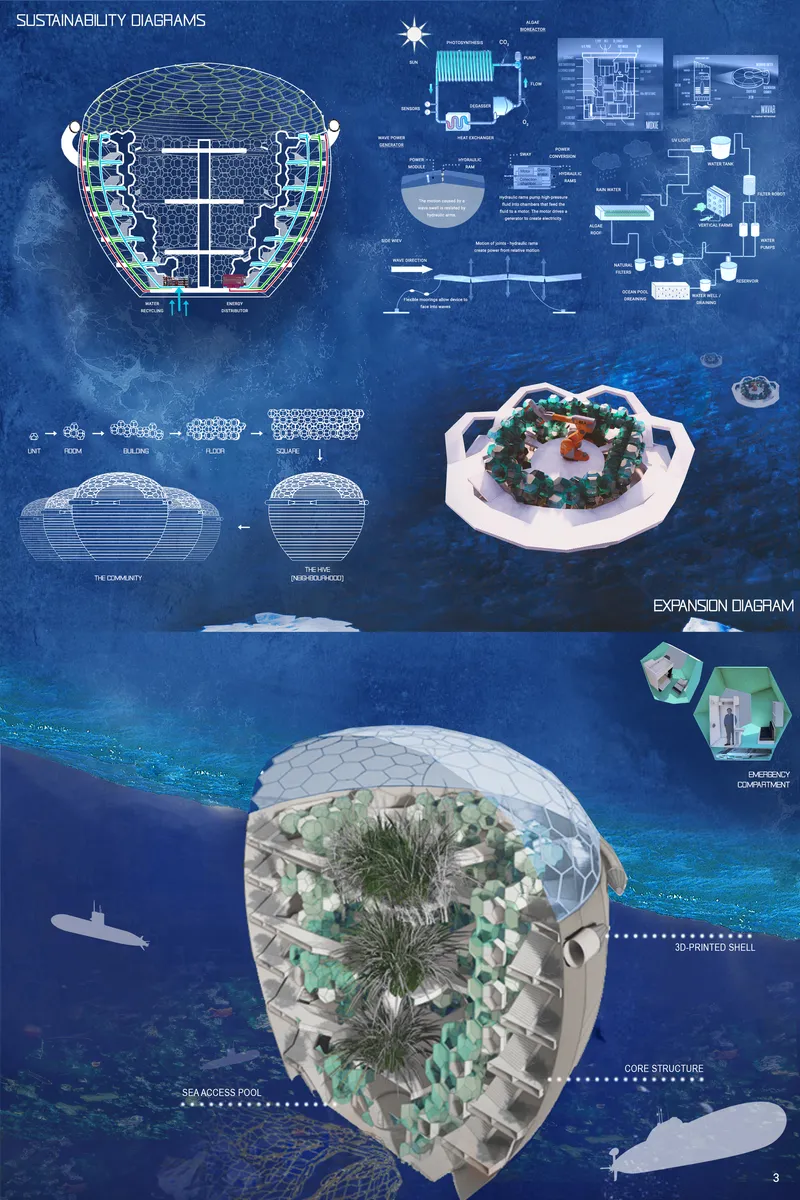
Description: The base of The Ocean Hive starts with just 20 units. It starts to expand as it collects garbage from the ocean, processes it with the heat of the sun, uses it for 3d-print. According to the colony’s needs, it has the capacity to grow as much as the physical conditions allow. The gathering of units with emergency compartments below them makes up a Hive.
--------------------
Organizer’s Choice: Life Support Tendrils
By: Arthur Harris
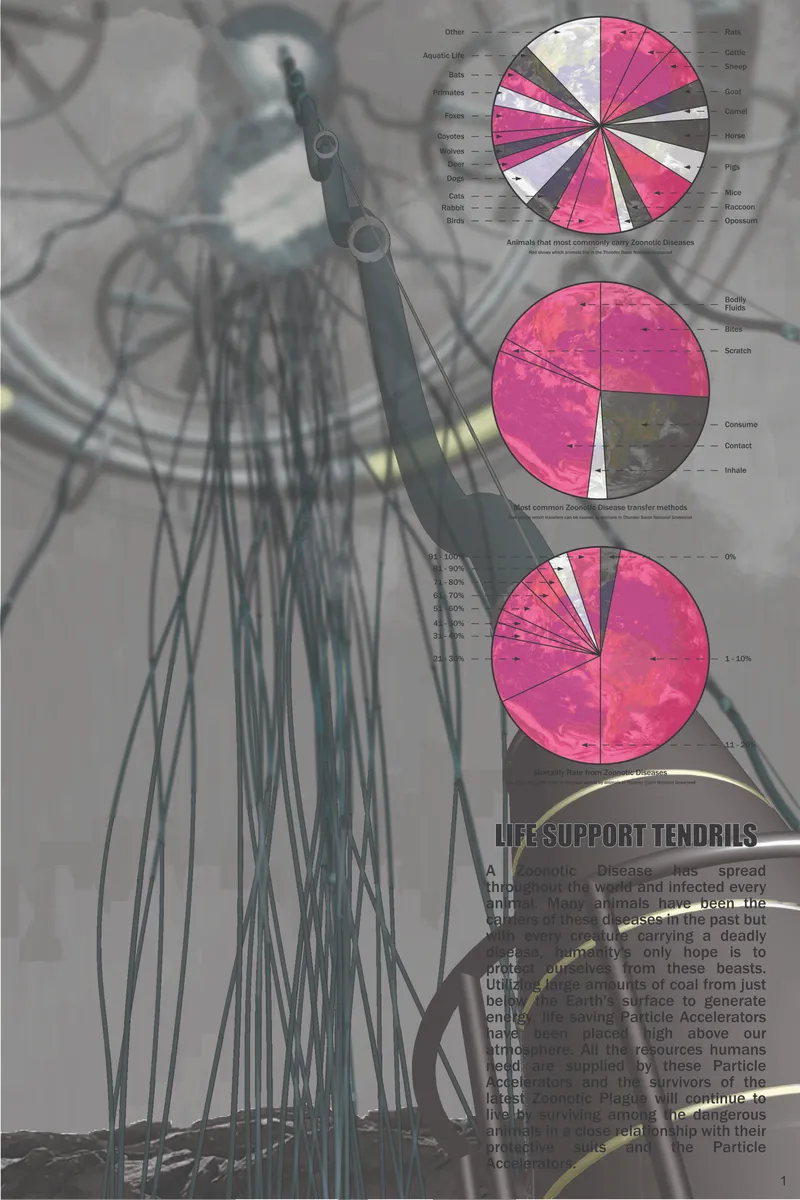
Description: Life support system utilizes coal gathering to power particle accelerators. These accelerators then recycle carbon dioxide into breathable oxygen as well as create water and powder protein for user consumption through a coal gasification process.
Discover the design brief here: https://uni.xyz/competitions/architecture-of-the-apocalypse/info/about
Discover the full results here: https://uni.xyz/competitions/architecture-of-the-apocalypse/entries
Follow us on social media: Facebook | Instagram | LinkedIn | Twitter | Youtube
Discover other design competitions to participate here: https://uni.xyz/competitions


Popular Articles
Popular articles from the community

Faces of the Soviet Avant-Garde: Turning Moscow's Street Names into an Open-Air Museum
A network of sculptural installations across a Moscow residential district transforms forgotten architect names into spatial encounters with cultural memor

Manzana Morphosis: Stretching Barcelona's Grid into a Living Landscape for 2050
A radical reworking of the Eixample manzana turns density into a tool for generous public space, vertical ecology, and environmental performance.
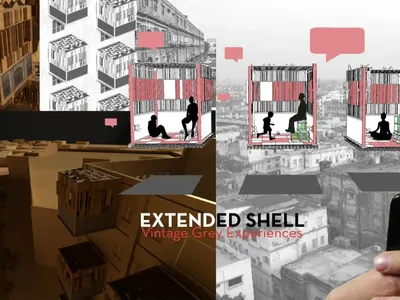
Extended Shell: Retrofitting Kolkata's Balconies as Living Urban Thresholds
A modular retrofit system recovers the social and environmental intelligence of Kolkata's historic verandas for contemporary Park Street residents.

Singing Woman: An Opera House That Performs Before the Curtain Rises
Ovidiu Cristian Pavel's conceptual opera house translates Estonia's choral identity into a sculpted waterfront landmark facing the Baltic Sea.

Similar Reads
You might also enjoy these articles

Play: Fragments of Their World: Remembered Architecture Rebuilt as a Modular Playground for Refugee Camps
Tom Gardner abstracts domes, arches and towers from the homelands of displaced families into a kit of child-scaled play parts for camp settlements.
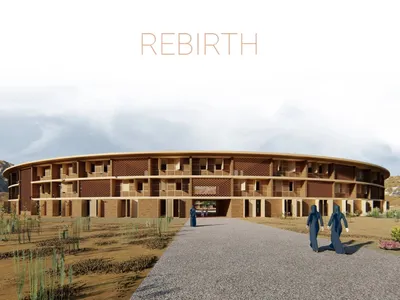
REBIRTH: A Circular Settlement Where Afghan Widows and Their Children Rebuild Life Together
A shortlisted Resile entry turns the circle into a protective ring of timber and brick, gathering homes, classrooms and gardens around a shared landscape.
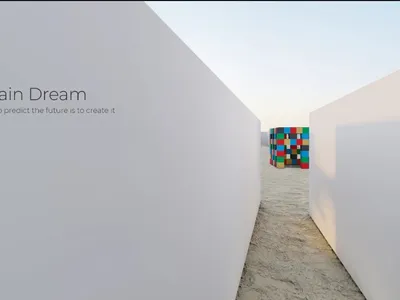
The Main Dream: A Recycled Plastic Kit That Lets Refugee Children Build Their Own Playground
Thirty-centimetre interlocking cubes that connect on three axes turn play into construction, letting children author the spaces they occupy.

Lunar Spiral: A Fibonacci-Driven Moon Settlement Rising from Shackleton Crater
Golden-spiral geometry organises buried infrastructure and orbiting habitable spheres into a lunar base designed to grow as life on the Moon expands.

Comments (0)
Please login or sign up to add comments
No comments yet. Be the first to comment!