
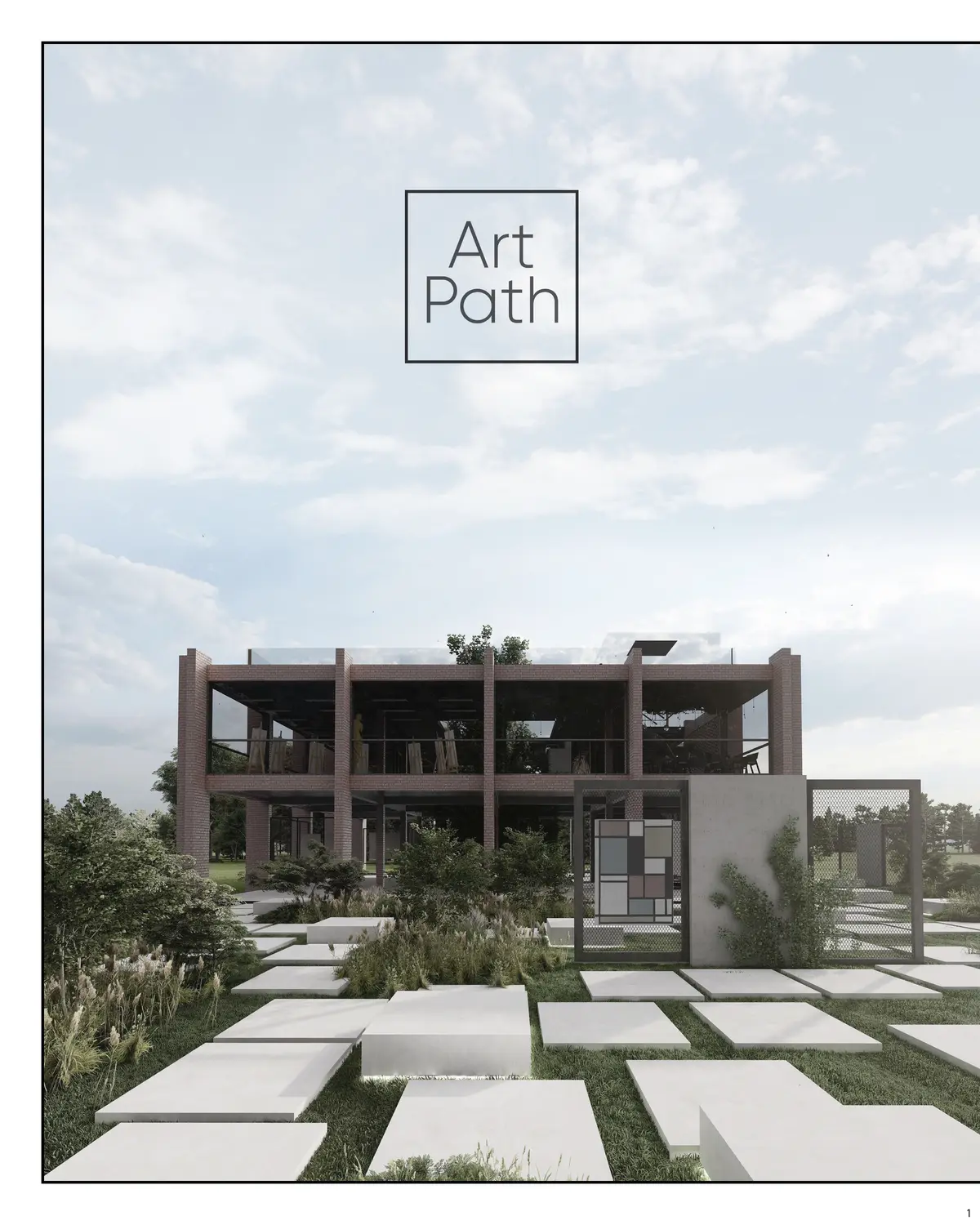
Art Path
The Art Path project was created as a result of inspiration by orthographic quarters in Chicago. Order and rhythm initiated the study of the possibility of dividing division and finding a reference to division in space. In the designated condensation, a module of 5.1 m is designated, which covers the entire area of the plot. The resulting delimitation of the location of the building and the space of the garden. It should be open space, which can be modular and easy to transform. The initial idea of the building was started with the first covered open space, classroom and exhibition space. A lot of effort and time was spent trying to create the most modular space. Ability to block the ability to restrict access to or approach to Chicago residents to determine needs as well as to meet access requirements for display space restriction or sales space selection. As a result, a three-story building was created (two overground and one underground storey) with a green glass courtyard. The ground floor area is a fully open, covered space that is an integral part of the garden. There are many possibilities of closing the solid by using sliding modular walls hidden in the columns. There is also a glass staircase with an elevator on the ground floor. The underground space consists of toilets and storage areas for storing, among others easel. The area of the first floor is fully dedicated to the needs of the school. The spaces of classrooms, administration rooms and a café have been designated. From this floor, we can also enter the green roof of the building. This space is also intended for art classes, as well as open to artists who want to be inspired by the surrounding greenery. Each room can be transformed into an open, covered terrace. Thanks to the horizontal division of the window space, the lower - fixed - part of the window becomes a balustrade, and the upper - sliding - slides into one module, the room creates a coherent space with the outside. We are still inside the building, but we feel connected to the greenery around us. The glazed green courtyard runs through all above-ground storeys and serves as a skylight. Thanks to this, we have contact with greenery all the time, even inside. And the daylight introduced into the interior illuminates it and allows you to work longer in natural light. The modular wall system has also been used in the garden. Six permanent walls were created, which act as an exhibition space, and also lead the viewer into the garden, encouraging them to explore more works of art. Each wall has the option of putting out two additional walls. If necessary, we can pull one or two walls apart. This arrangement gives us semi-closed spaces where you can separate yourself from the rest and be alone among the greenery, as well as use this space as an external classroom. A path that mirrors the grid pattern, but with a less structured rhythm, plays a large role in the garden. It is breaking the order, it gives an artistic expression. Some of the path elements are made of seats. The whole thing is integrated into the spreading greenery, which also divides the garden into individual spaces, creating interiors. The building is finished in a loft style, the walls are clad with red brick, the frames of the modular walls are made of black metal, covered with a fence mesh. The space allows for running a school, but also provides space for residents where they can learn about art, meet new artists, and spend time at interesting exhibitions and vernissages. Art Path can become a cultural center, where various events, concerts, shows, and summer cinema will be organized. Spending free time among greenery and works of art, will move the senses of Chicago residents and provide a break from the hustle and bustle and work.


Popular Articles
Popular articles from the community


Charlene Koetz Arquitetura Lifts a Glass House on Piers Above a Mossy Forest Slope in Gramado
In Vila Prinstrop, Brazil, a 455 m² house pairs black-framed glazing with board-formed concrete, rough stone and a forest it barely disturbs.

Madras Spaces Turns a Tight Rural Plot near Tiruchirappalli into an Inward-Looking Courtyard House
A 92 m² farmhouse in V. Thuraiyur, Tamil Nadu, built from load-bearing brick and reclaimed tile, that hides its openness behind a perforated wall.

Minqa Atelier Steps a 53 m² Teak Refuge Down a Forested Slope in Ecuador's Chocó
In Pedro Vicente Maldonado, Ecuador, stepped teak platforms on river-stone gabions let a small forest house follow the hillside instead of flattening it.


Vietnam S: Rhymes of the River Built From Upturned Boat Hulls and a Shared Rooftop
Timber-ribbed, hull-shaped pavilions gather around a water courtyard, turning a street market into an authentic, dynamic place to chill out.

Similar Reads
You might also enjoy these articles

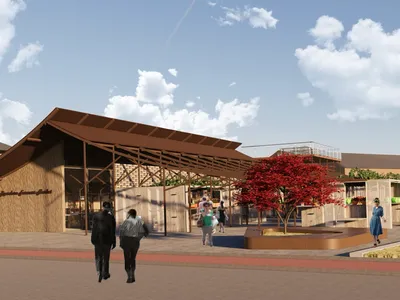
The Rhythm of Seasons
A Farmers' Market Connecting Nature and the City

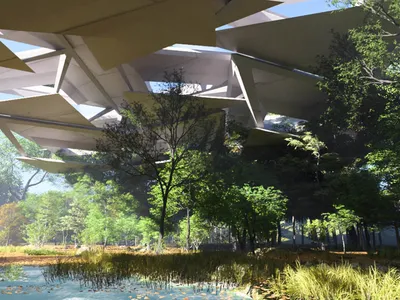


More Than a Building-Designing a Living System
More Than a Building-Designing a Living System
Base Beyond
DESERT COMPOUND ARID: TOURISM OF ABSENCE AND ABUNDANCE

Explore Architectural Promenade Competitions
Discover active competitions in this discipline


Submit a world, not a render

Studio work deserves a jury

The International Standard for Design Portfolios

The Global Benchmark for Architecture Dissertation Awards
Comments (0)
Please login or sign up to add comments
No comments yet. Be the first to comment!