
ATZ Canteen: An Industrial Interior Design That Redefines Workplace Architecture
A refined industrial interior design that transforms a workplace canteen into a calm, functional, and socially engaging architectural space.


The ATZ Canteen, designed by Paulo Martins, emerges as a compelling example of industrial interior design that bridges the gap between functionality and human-centered spatial experience. Shortlisted under Commercial ‘20, the project reinterprets the conventional workplace canteen as a refined architectural environment that prioritizes comfort, social interaction, and spatial clarity.
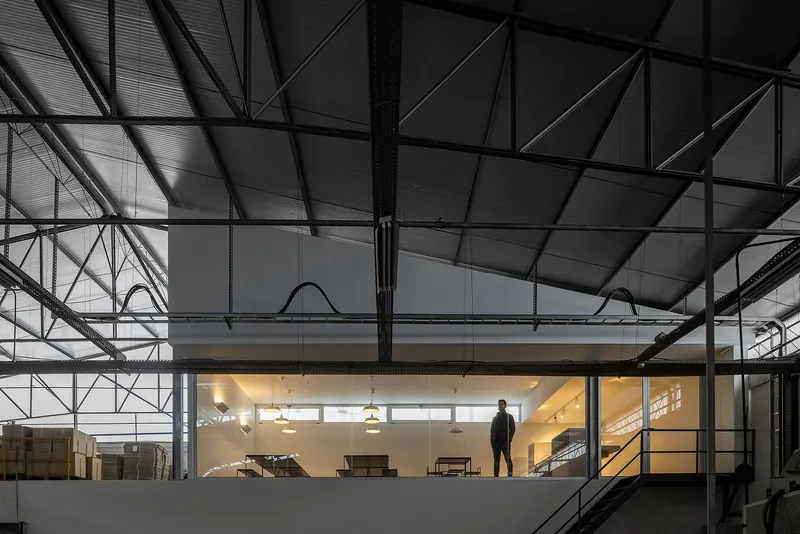
Located within an industrial setting, the canteen is conceived not merely as a utilitarian facility but as a deliberate pause within the rhythm of production. It acts as a meeting point, a social condenser, and a place for employees to disconnect from the mechanical intensity of the factory floor while still remaining visually and contextually connected to it.
Spatial Strategy: Open Plan with Defined Zones
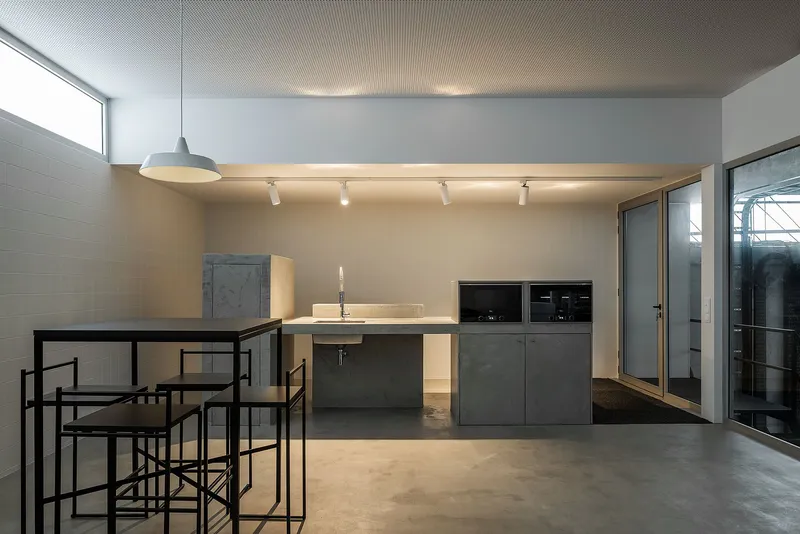
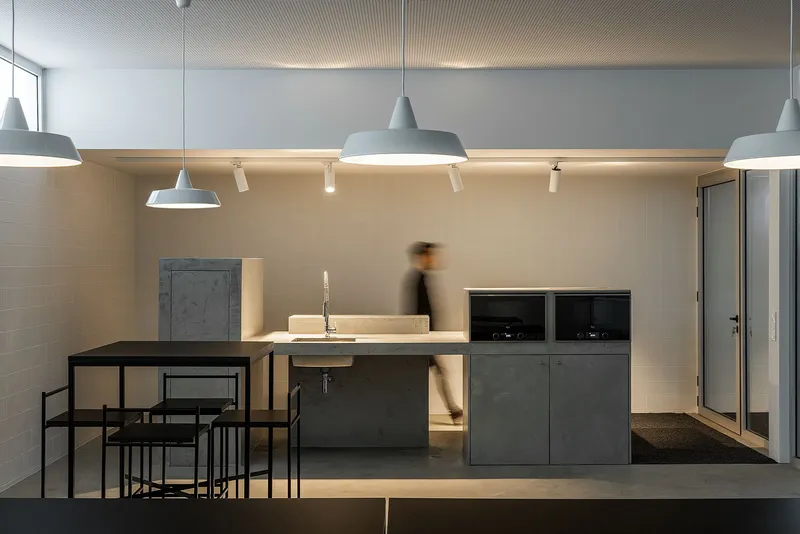
The project adopts an open-plan configuration, a key principle in contemporary industrial interior design, allowing fluid movement and visual continuity across the space. Despite its openness, the interior is carefully organized into two primary zones. The entrance area is defined by a lower ceiling height, creating a sense of compression and transition. This zone houses a multifunctional kitchen element that acts as both a service core and a spatial anchor.
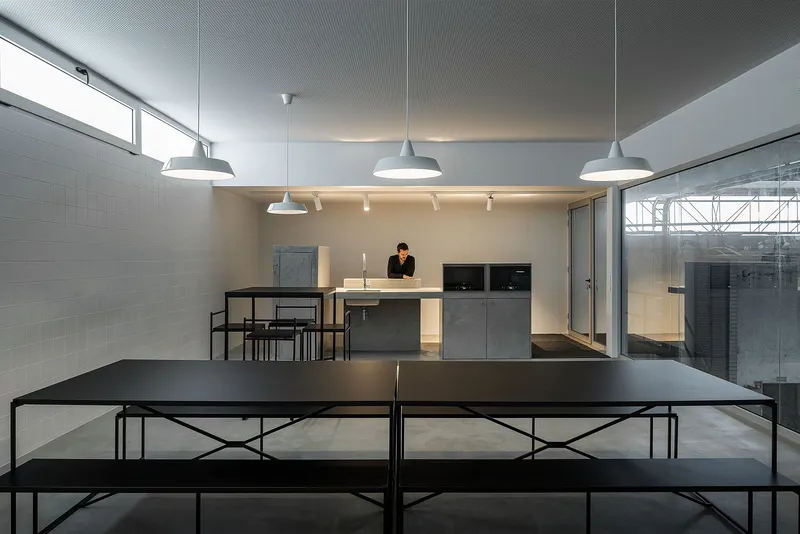
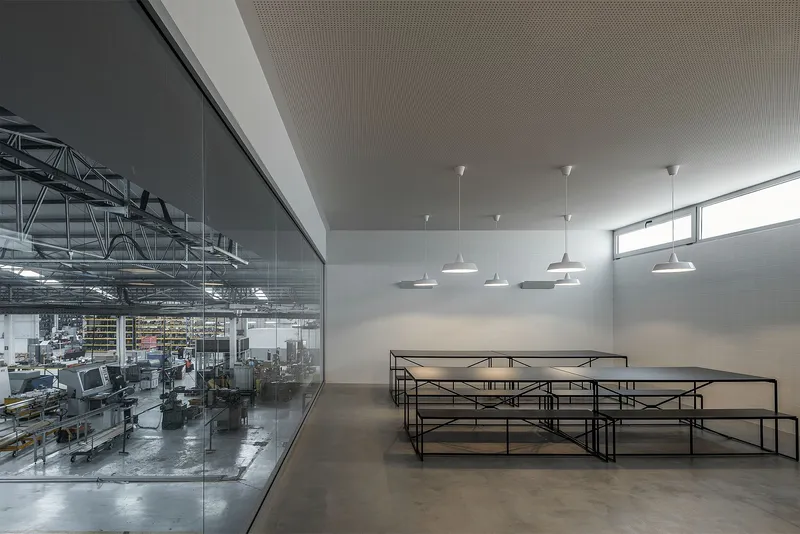
Beyond this threshold, the space expands into the main dining area, where the ceiling height increases and the visual field opens up. This progression from compressed to expansive space enhances the user’s spatial experience, reinforcing the idea of moving from work to relaxation.
The Central Element: A Multifunctional Architectural Object
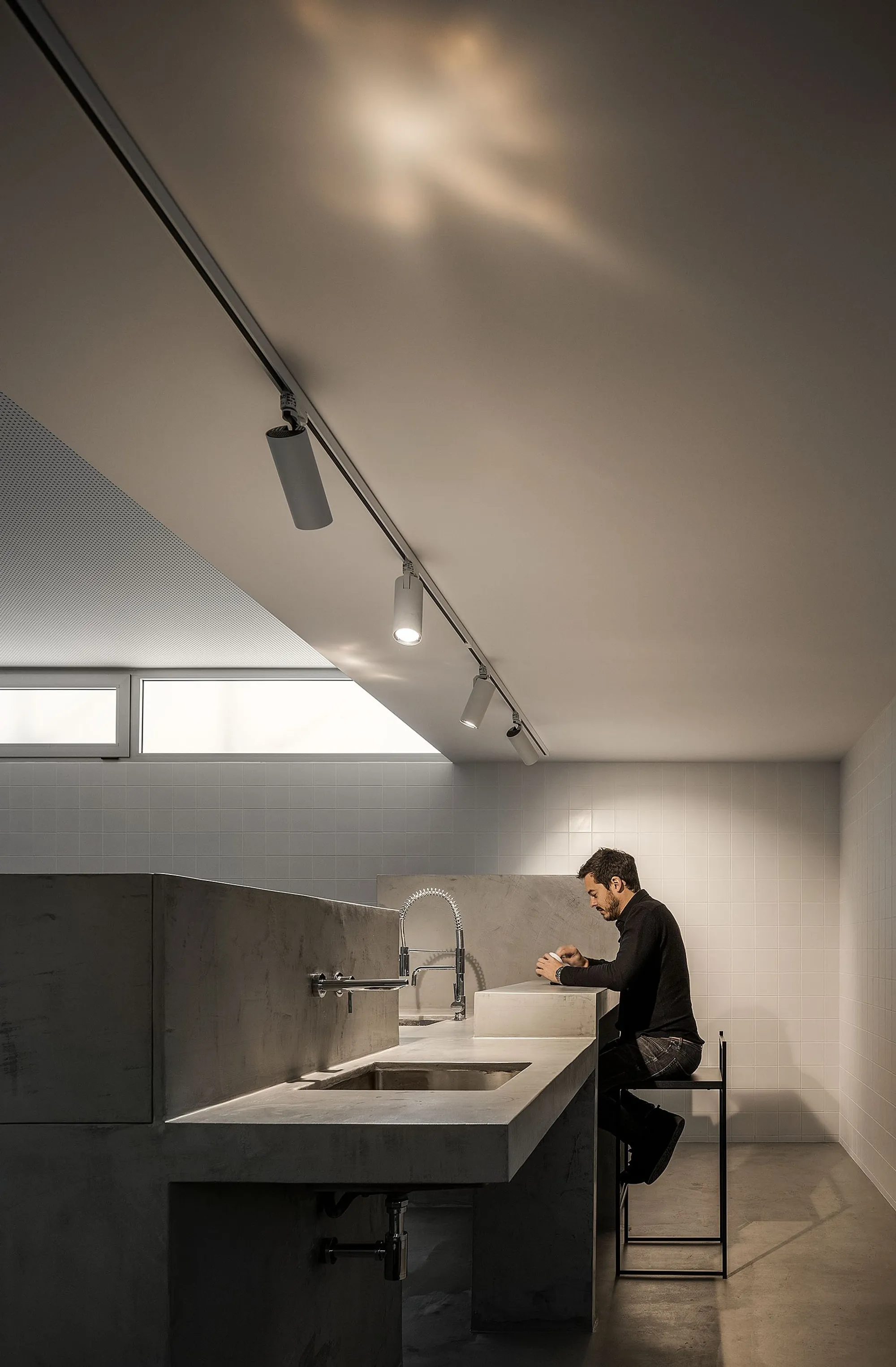
At the heart of the design lies a monolithic kitchen unit that rises directly from the floor. This element is not simply furniture but an architectural intervention that consolidates multiple functions into a single tectonic form. It integrates essential amenities such as a washbasin, storage, appliances, and a high counter for informal use.
This approach reflects a key characteristic of industrial interior design: the reduction of complexity through consolidation. By embedding technical functions into a single volume, the design achieves both visual clarity and operational efficiency.
Materiality: Raw, Honest, and Controlled
Material selection plays a critical role in defining the project’s identity. The use of microcement for the flooring and central unit establishes a continuous, seamless surface that reinforces the industrial character of the space. Ceramic tiles on the walls introduce a subtle texture while maintaining durability and ease of maintenance.
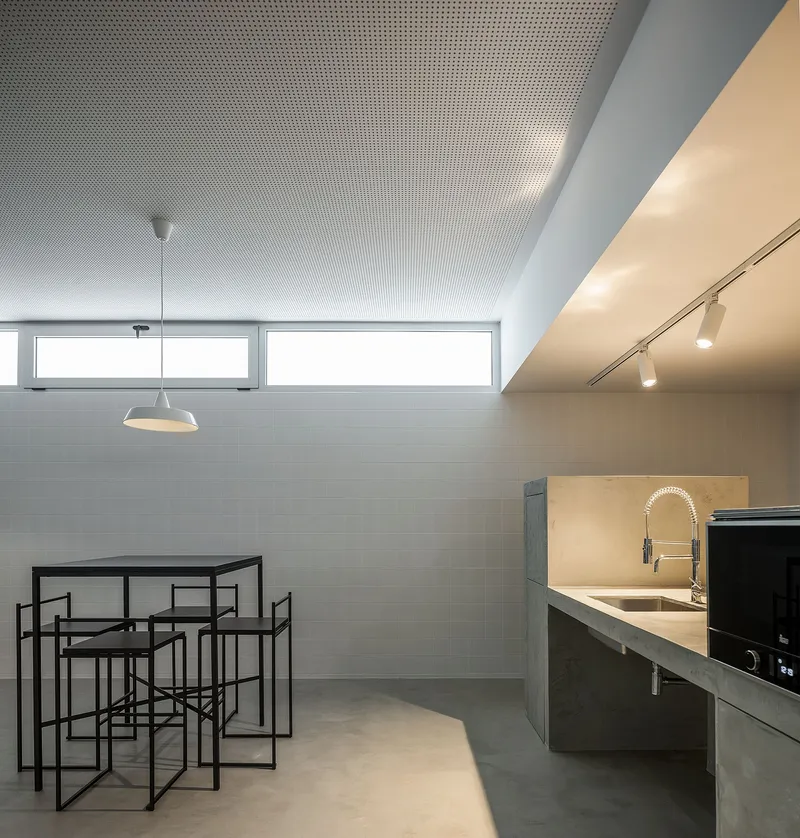
The ceiling, treated with acoustic plasterboard, balances the rawness of the industrial palette with functional performance. This ensures that the space remains comfortable despite its hard surfaces and open configuration.
The restrained material palette reflects a disciplined design approach, where each element is chosen for both its aesthetic and technical contribution. The result is a space that feels cohesive, calm, and deliberately understated.
Light and Atmosphere: Precision Over Excess
Lighting in the ATZ Canteen is carefully orchestrated to enhance both functionality and ambiance. Suspended fixtures and track lighting systems provide targeted illumination, emphasizing key areas such as the kitchen unit and dining tables.
Natural light enters through horizontal openings, creating a soft, diffused glow that complements the artificial lighting. This layered lighting strategy aligns with contemporary industrial interior design principles, where light is used not just for visibility but as a spatial tool to define mood and hierarchy.
Visual Connectivity with the Industrial Context
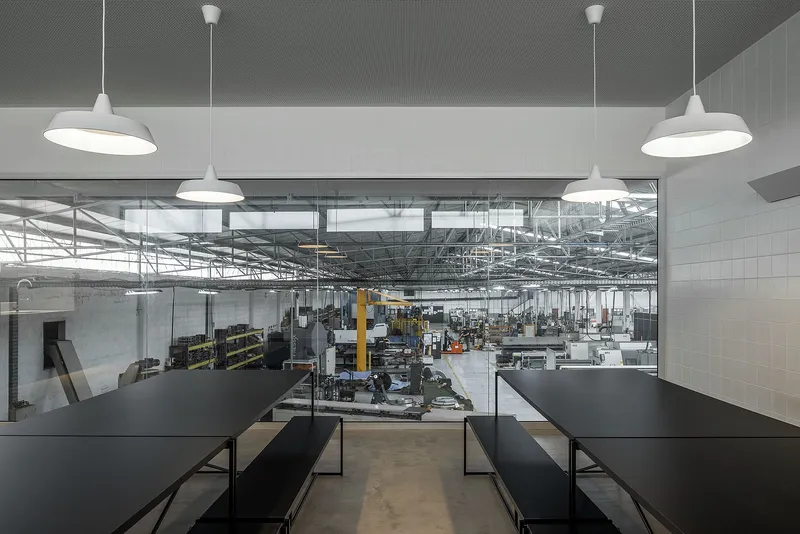
One of the most striking aspects of the project is its visual relationship with the factory environment. A large glass partition establishes a direct connection between the canteen and the production area. This transparency maintains a sense of continuity, allowing users to remain aware of the broader industrial context while enjoying a moment of respite.
This gesture reinforces the identity of the space as part of a larger system rather than an isolated environment. It reflects a thoughtful integration of architecture and industry, where boundaries are softened but not erased.
Furniture and Spatial Rhythm
The furniture selection further enhances the project’s industrial language. Minimal steel-framed tables and chairs create a lightweight visual presence, ensuring that the architectural elements remain dominant. Their repetitive arrangement establishes a clear spatial rhythm, contributing to the overall order and legibility of the interior.
The simplicity of the furniture aligns with the broader design strategy, avoiding unnecessary ornamentation and focusing instead on proportion, alignment, and functionality.
A Contemporary Approach to Workplace Design
The ATZ Canteen exemplifies how industrial interior design can be applied to create meaningful workplace environments. By prioritizing spatial clarity, material honesty, and user experience, the project transforms a routine program into a carefully considered architectural intervention.
Paulo Martins successfully redefines the canteen as more than a place to eat. It becomes a space for interaction, reflection, and temporary escape, all while maintaining a strong connection to its industrial surroundings.
In doing so, the project sets a benchmark for contemporary workplace architecture, demonstrating that even the most utilitarian spaces can achieve a high level of design sophistication when approached with precision and intent.




Popular Articles
Popular articles from the community


The Ocean Hive: Sustainable Architecture for a Self-Sufficient Civilization at Sea
The Ocean Hive imagines sustainable architecture at sea, where modular habitats, algae, wave power and ocean waste sustain a growing colony.

Co-Life: Senior Housing Design That Reconnects Older Adults With the City
Co-Life reimagines senior housing design through healing gardens, shared streets, workshops, and a sustainable community across generations.

Play: Fragments of Their World
Familiar architecture becomes modular playground design, creating safe spaces where displaced children can learn, connect, imagine and play.

Hill & Cross Opera: Sculptural Opera House Architecture Shaped by Tallinn’s Landscape and Identity
Hill & Cross Opera reimagines opera house architecture in Tallinn through its sculptural hill, civic plaza, glass wave and a luminous cross.

Similar Reads
You might also enjoy these articles

Eco Chapel: A Green Architecture Pavilion Designed in Symbiosis with the Forest
Eco Chapel uses green architecture to weave prayer, learning and reuse into a forest pavilion shaped by modular hexagonal canopies for life.
Kaffeebühnen: Coffee Shop Architecture Designed as a Civic Stage Between Vienna’s City and Park
Kaffeebühnen turns coffee shop architecture into a civic stage, linking Vienna’s park edge, urban life, warm timber yards, and coffee craft.
Healing Façade: Sustainable Architecture for Reforestation, Community, and Sacred Ecology in Ethiopia
Healing Façade reimagines sustainable architecture as a living wall that restores soil, catches water and renews Ethiopia's forest churches.


Urban Forest: A Vertical Ecosystem for 5,000 Workers in Singapore's Changi Business Park
Radially stacked pods and layered green decks turn a 7-acre plot into 47 acres of ecological workspace projected for 2040.

Explore Architecture Competitions
Discover active competitions in this discipline


Challenge to design luxury tourism on rails


Challenge to reimagine the Iron Throne


Photograph architecture without architects


VR headsets Storefront design competition
Comments (0)
Please login or sign up to add comments
No comments yet. Be the first to comment!