
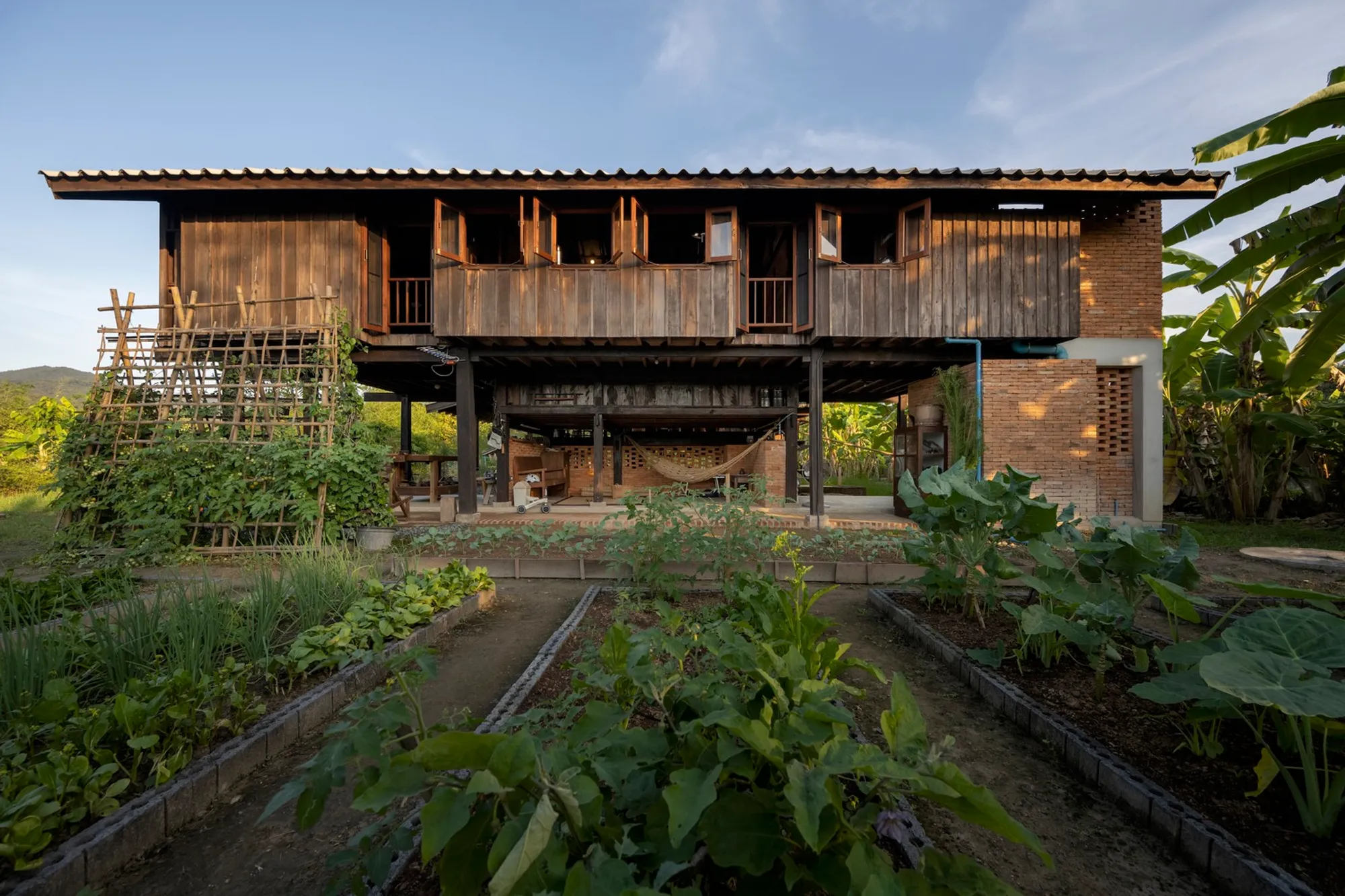
Baan Tita House by Yangnar Studio: A Contemporary Interpretation of Northern Thailand’s Vernacular Architecture
Baan Tita House blends Thai vernacular architecture, local craftsmanship, sustainable wood construction, and climate-responsive design to create a functional family home.


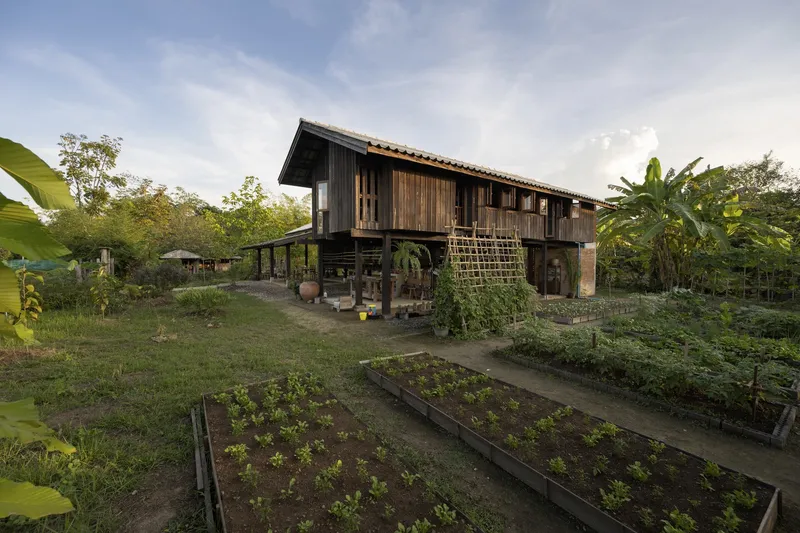
Baan Tita House, designed by Yangnar Studio, is a thoughtful residential project located in San Kamphaeng, Thailand. Completed in 2021, the house covers an area of 150 square meters and reflects a deep respect for Northern Thailand’s vernacular architecture, local craftsmanship, and traditional building methods. The project demonstrates how contemporary residential architecture can evolve through local knowledge, sustainable materials, and community-driven construction techniques.
Yangnar Studio is known for its approach that merges architectural design with hands-on craftsmanship. Rather than separating architects and builders, the studio works closely with local craftsmen, allowing traditional skills and construction wisdom to influence the design process. Baan Tita House embodies this philosophy by combining indigenous building practices with practical spatial solutions that respond to climate, lifestyle, and available resources.
The project was led by architect Dechophon Rattanasatchatham, with structural engineering and interior design also handled by Yangnar Studio. Photography for the project was captured by Rungkit Charoenwat, documenting the house’s subtle material textures and spatial transitions.
Architecture Rooted in Local Context
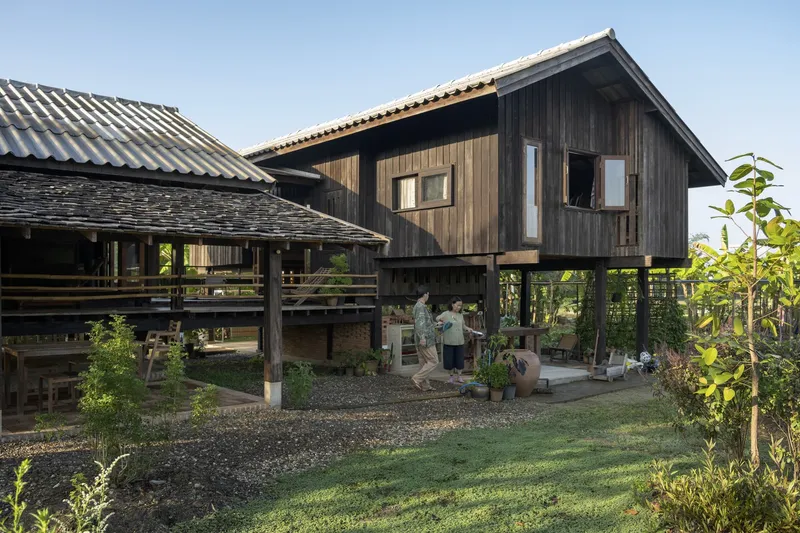
The design of Baan Tita House begins with a careful study of place, culture, and traditional Northern Thai houses. Instead of imposing a modern architectural form, the architects developed the house through local construction techniques, natural materials, and the wisdom of regional craftsmanship.
The project reflects an architectural philosophy where the user becomes central to the design process. Observing how people define and inhabit a “house” influenced the design strategy, allowing the architecture to grow naturally from daily activities, family interactions, and environmental conditions.
By respecting local construction traditions, Yangnar Studio created a home that feels deeply connected to its surroundings while still offering a contemporary living experience.
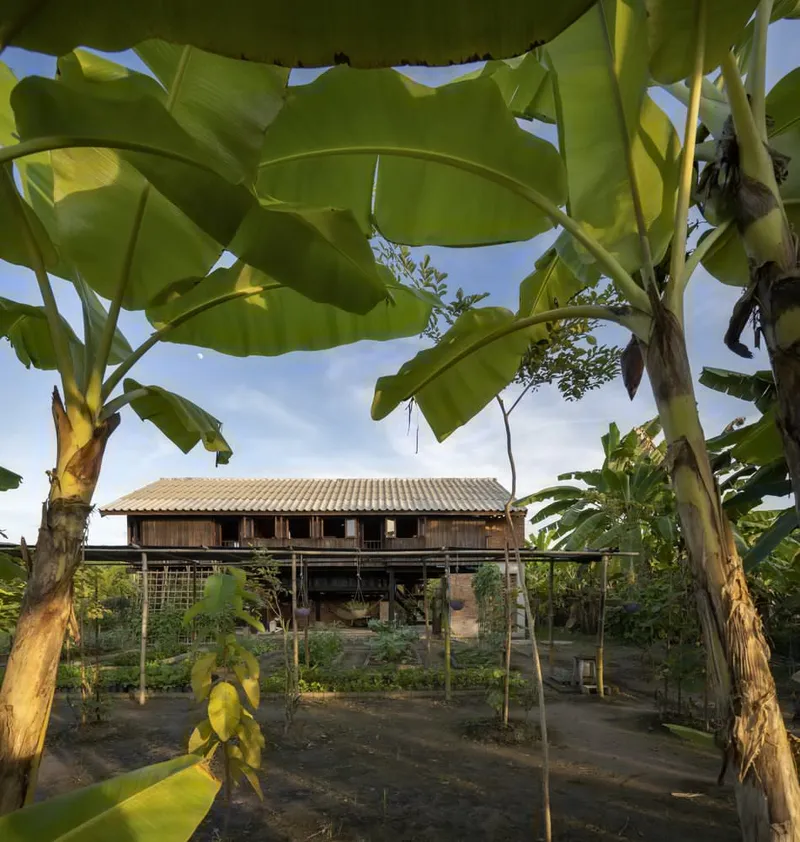
Spatial Organization and Multi-Level Living
One of the defining characteristics of Baan Tita House is its three-level spatial organization, which creates subtle transitions between public and private areas.
Reception Level, Community and Interaction
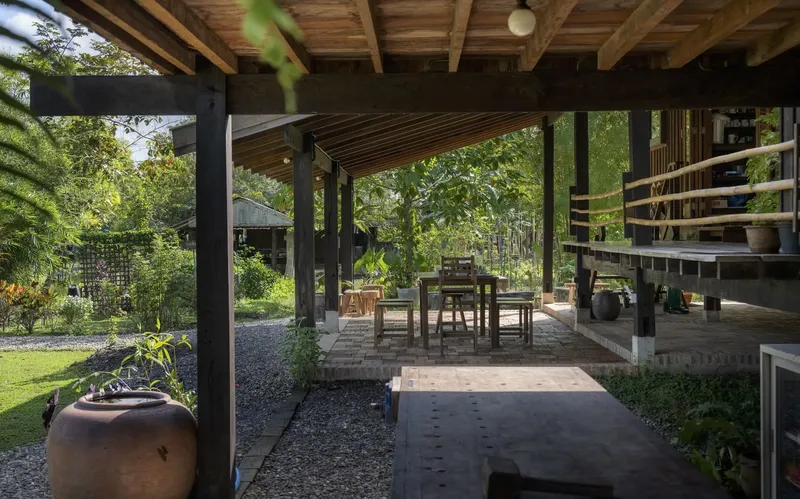
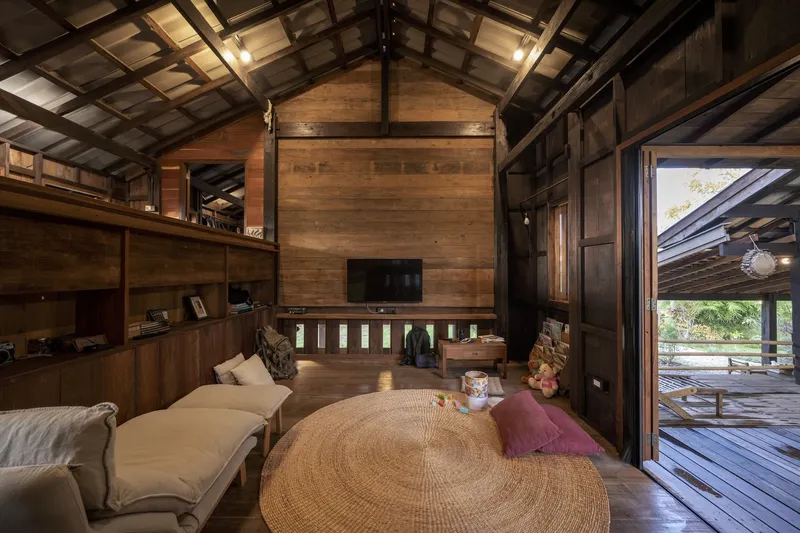
The lowest level of the house serves as the reception and social area, designed to welcome visitors while maintaining strong connections with the surrounding landscape. This level encourages casual interactions between family members and guests, reflecting the social culture of Thai households.
This area also connects directly to the central balcony known locally as “Chan.” The balcony becomes a shared transition space that supports everyday activities such as sitting, resting, or informal gatherings.
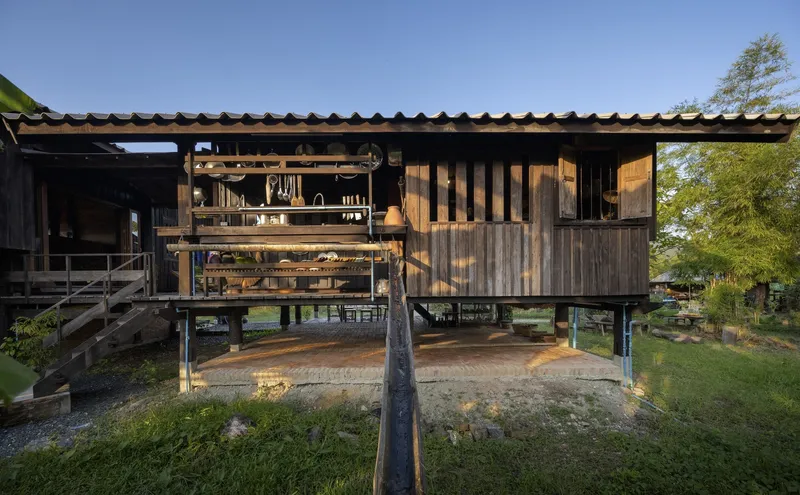
Intermediate Level, Kitchen and Living Platform
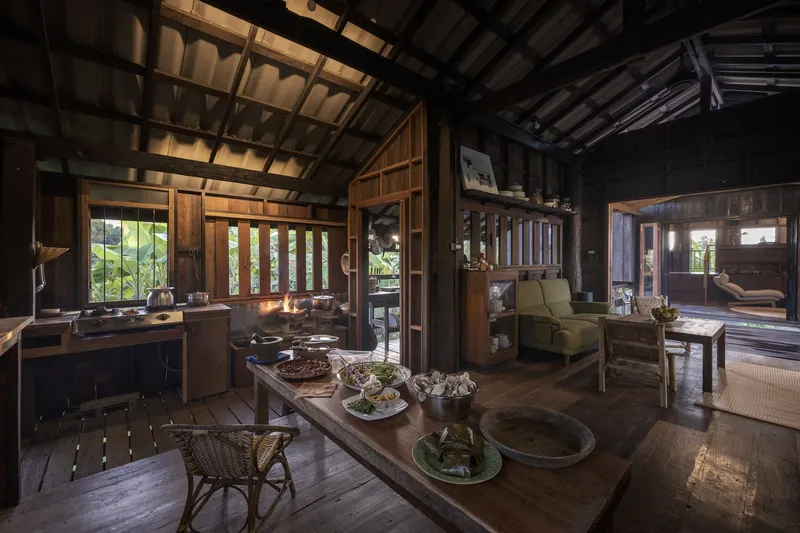
The second level, known as “Thurn,” is slightly elevated above the balcony and houses the kitchen and shared living functions. The raised platform helps create a sense of separation without isolating spaces, encouraging a fluid connection between indoor and outdoor areas.
Upper Level, Private Spaces
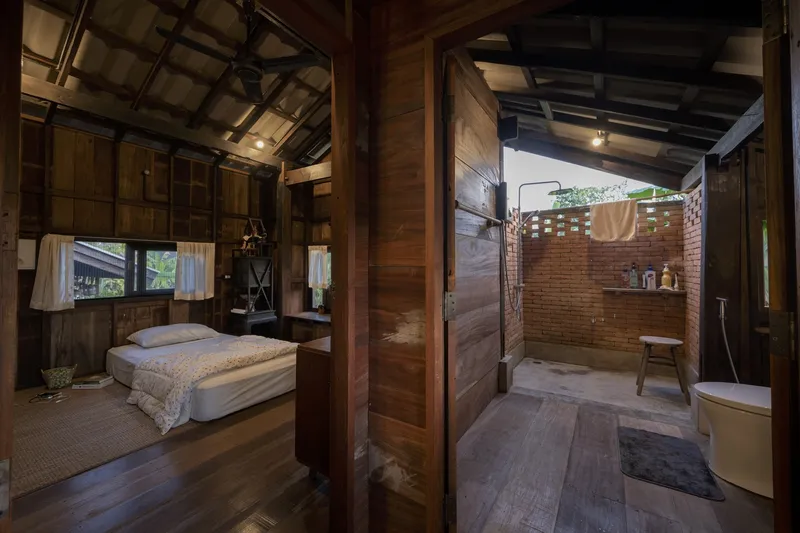
The highest level contains the bedrooms and working areas, providing privacy and quietness for personal activities. The gradual elevation from public to private zones creates a natural spatial hierarchy, allowing occupants to move through the house with a clear sense of progression.
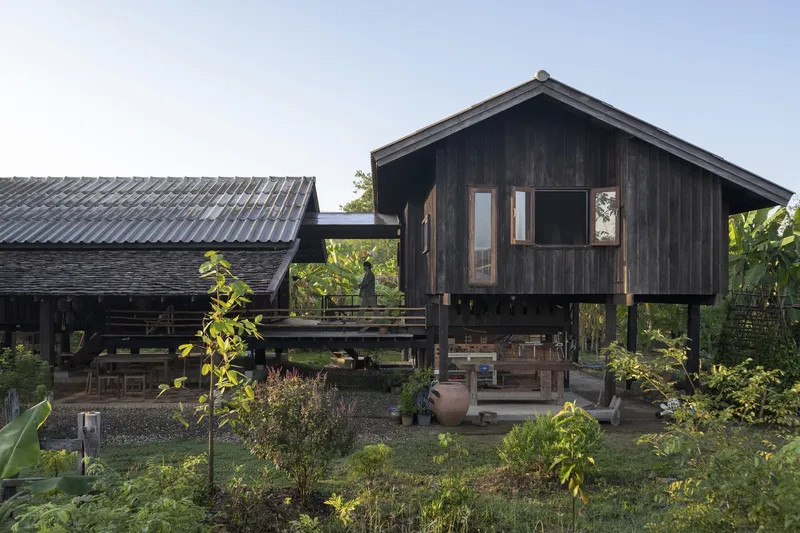
Functional Basement and Agricultural Heritage
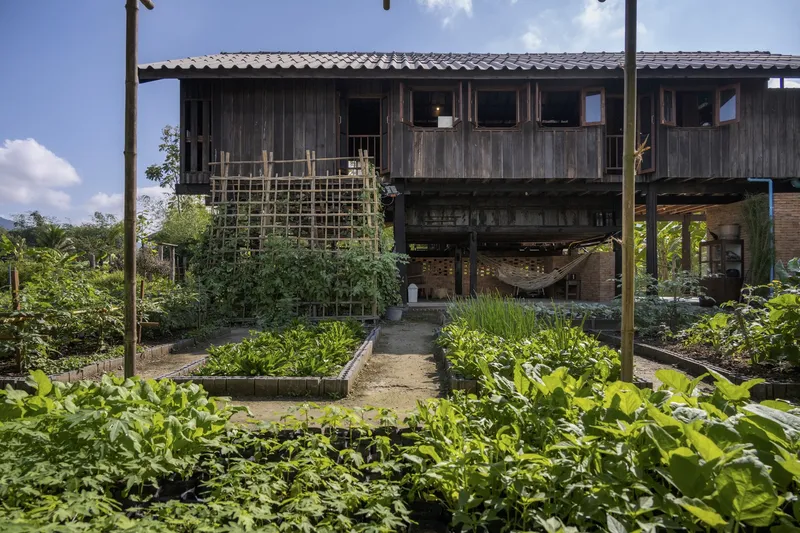
The house also integrates traditional stilt construction, a common feature in rural Thai homes. The varying height of the basement creates multiple functional uses.
Lower areas beneath the house are used for agricultural crop storage, while higher sections accommodate a woodworking workshop for the family. This multifunctional approach reflects a lifestyle where home, work, and agriculture coexist, emphasizing practicality and self-sufficiency.
The Central Connecting Balcony
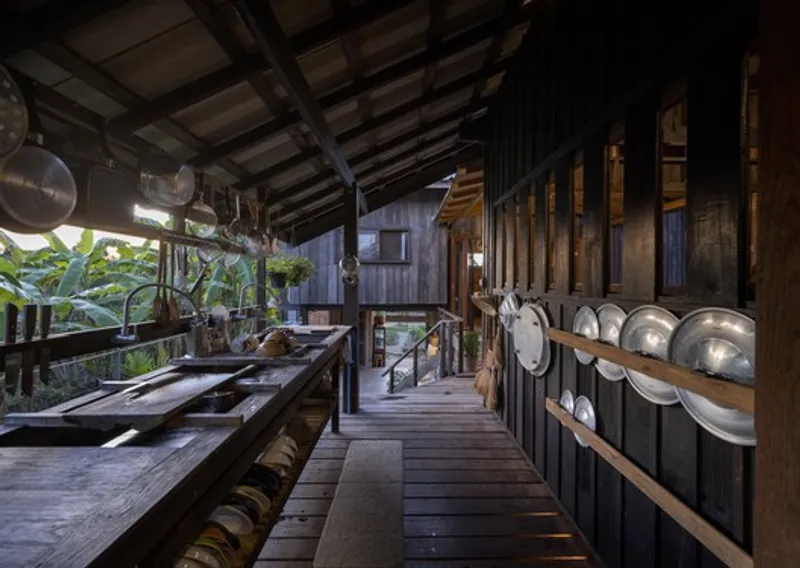
Unlike typical houses where balconies are simply extensions of interior spaces, the central connecting balcony in Baan Tita House functions as the heart of the home.
This wooden balcony connects major functional areas of the house and becomes a multi-purpose gathering space. The floor is constructed with small gaps between wooden planks, allowing sunlight, rain, and airflow to pass through naturally.
Positioned at a comfortable height, the balcony creates a subtle transition between spaces without disrupting the continuity of movement throughout the house.
This design element enhances natural ventilation, passive cooling, and outdoor engagement, which are essential aspects of traditional tropical architecture.
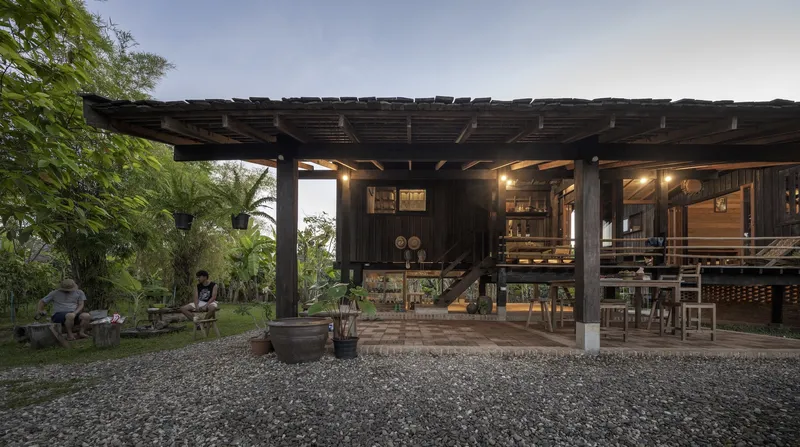
Traditional Craftsmanship and Material Integrity
Baan Tita House celebrates authentic craftsmanship techniques, especially in the use of traditional wooden joinery. Instead of relying on modern decorative elements, the house reveals the natural beauty of structural details, allowing construction methods themselves to become architectural features.
Wood is the primary building material, chosen for its availability, sustainability, and cultural relevance. Both reclaimed wood and reused wooden shingles were incorporated into the design, particularly in the living room and roofing elements.
This respectful reuse of materials demonstrates a sustainable architectural mindset, where materials are valued for their history and natural character.
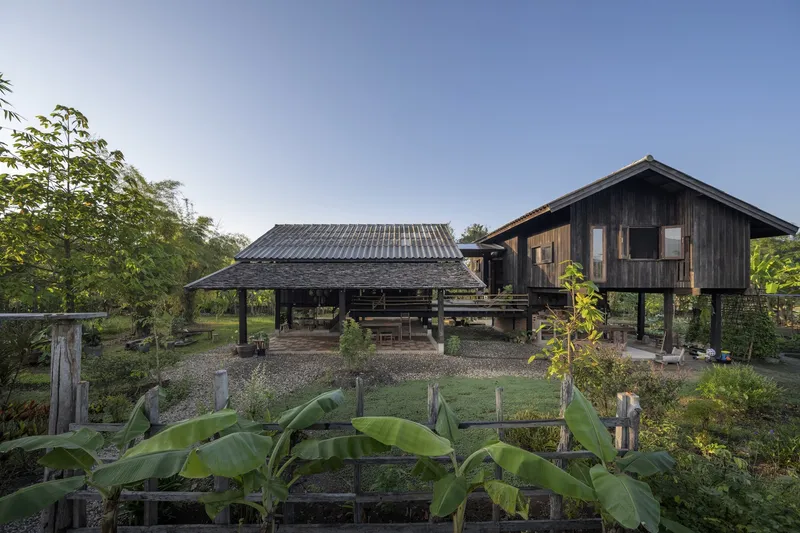
Adaptive Walls and Natural Ventilation
The walls of Baan Tita House are carefully designed to respond to climate conditions and airflow patterns.
Some walls are pushed inward or outward to create dynamic spatial rhythms, while others incorporate the traditional “Fa-Lhai” sliding wall system. This system allows panels to slide and adjust depending on wind direction, helping regulate airflow throughout the house.
Additional screened panels improve ventilation while protecting against mosquitoes, ensuring comfort without relying heavily on mechanical systems.
This passive design approach enhances energy efficiency and indoor comfort, making the house well-suited for Thailand’s tropical climate.
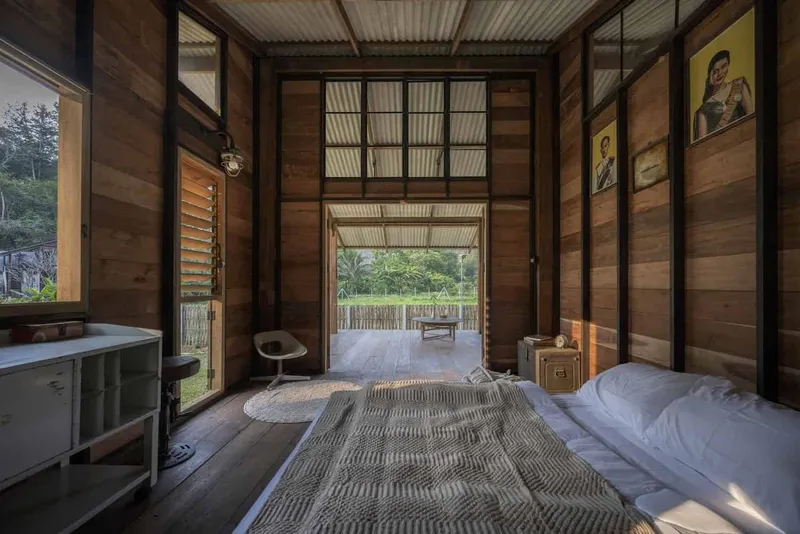
Architecture Guided by Practical Wisdom
Every design decision in Baan Tita House is rooted in practical reasoning and local wisdom. The arrangement of spaces responds carefully to sun orientation, wind flow, rainfall patterns, material durability, and daily human interaction.
Rather than focusing solely on visual expression, the architecture prioritizes functionality, climate responsiveness, and cultural continuity.
Through this thoughtful approach, Yangnar Studio created a house that blends simplicity, craftsmanship, and environmental awareness, resulting in a home that naturally integrates with the lifestyle of its inhabitants.
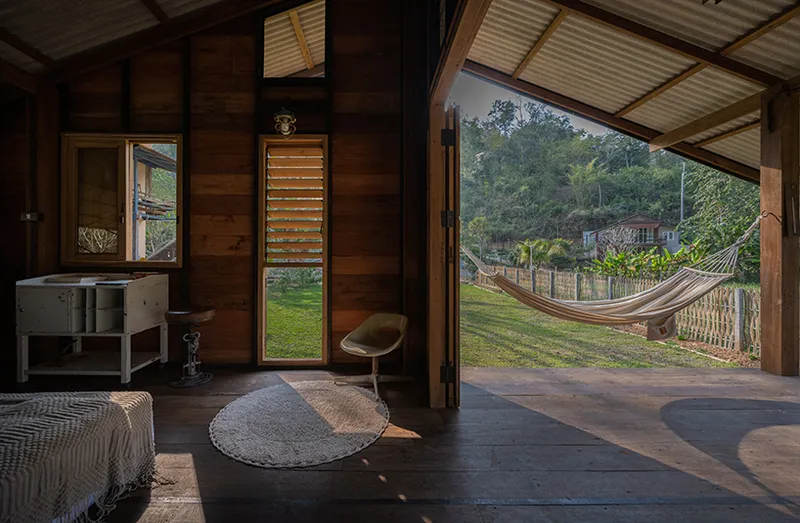
A Model for Contemporary Vernacular Architecture
Baan Tita House demonstrates how traditional knowledge and modern architectural thinking can coexist. By respecting local techniques and materials while adapting them to contemporary living needs, Yangnar Studio offers a compelling model for sustainable residential design in Southeast Asia.
The project highlights the importance of craftsmanship, community collaboration, and climate-responsive design, proving that architecture rooted in tradition can remain highly relevant in the modern world.
All photographs are works of
Rungkit Charoenwat




Popular Articles
Popular articles from the community


The Ocean Hive: Sustainable Architecture for a Self-Sufficient Civilization at Sea
The Ocean Hive imagines sustainable architecture at sea, where modular habitats, algae, wave power and ocean waste sustain a growing colony.

The Musturak Paradise: Senior Living Architecture for a Connected Future in Temara, Morocco
The Musturak Paradise reimagines senior living architecture in Temara via private homes, social spaces, culture, community, and shared care.

The Earth Pod: 3D Printed Homes for Resilient Refugee Communities
The Earth Pod reimagines refugee housing through 3D printed homes made from clay, combining resilience, self-sufficiency, and rapid shelter.

Conexión: Biophilic Design Reimagines High-Rise Living in Hong Kong
Conexión reimagines high-rise living in Hong Kong through biophilic design, green facades, shared spaces, daylight, water and nature within.


Similar Reads
You might also enjoy these articles

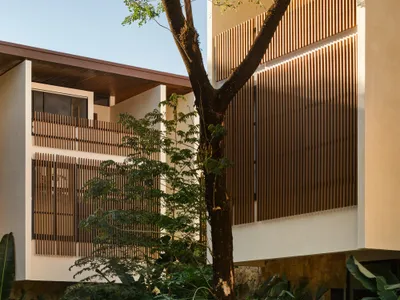
FAMM Arquitectura Organizes Ten Villas Around Courtyards and Jungle in Nosara, Costa Rica
El Molino pairs two elongated volumes with deep overhangs and timber louvers to build a compact coastal community five minutes from the beach.
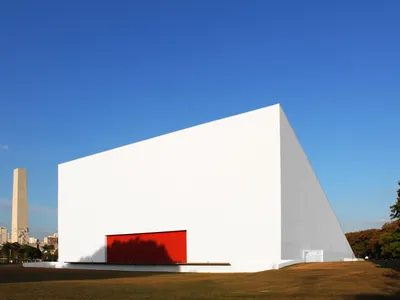
Oscar Niemeyer's Ibirapuera Park Pavilions Define São Paulo's Cultural Identity in Concrete and Curve
A constellation of modernist volumes set within São Paulo's most important urban park, conceived for the city's 400th anniversary in 1954.

How Henri Picq's 1889 Paris Pavilion Traveled 11,000 Kilometers to Become Santiago's Artequín Museum
A prefabricated iron and glass pavilion built for the Paris Universal Exposition found a second life as a children's art museum in Chile.
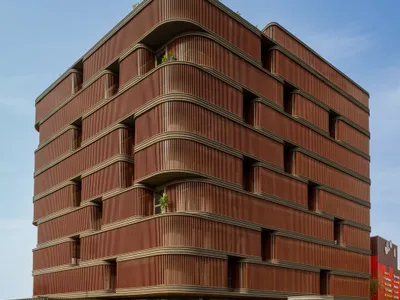
Sanjay Puri Architects Wraps a Jaipur Office Tower in Capsule-Shaped Green Buffers
A nine-level climate-responsive workplace near Jaipur Airport uses stacked planter terraces and aluminium screens to fight 40°C heat.


Explore Architecture Competitions
Discover active competitions in this discipline



Challenge to reimagine the Iron Throne


Photograph architecture without architects


Illustrate the lost glory of Angkor Wat - Render Challenge


Design challenge to reuse E-waste
Comments (0)
Please login or sign up to add comments
No comments yet. Be the first to comment!