
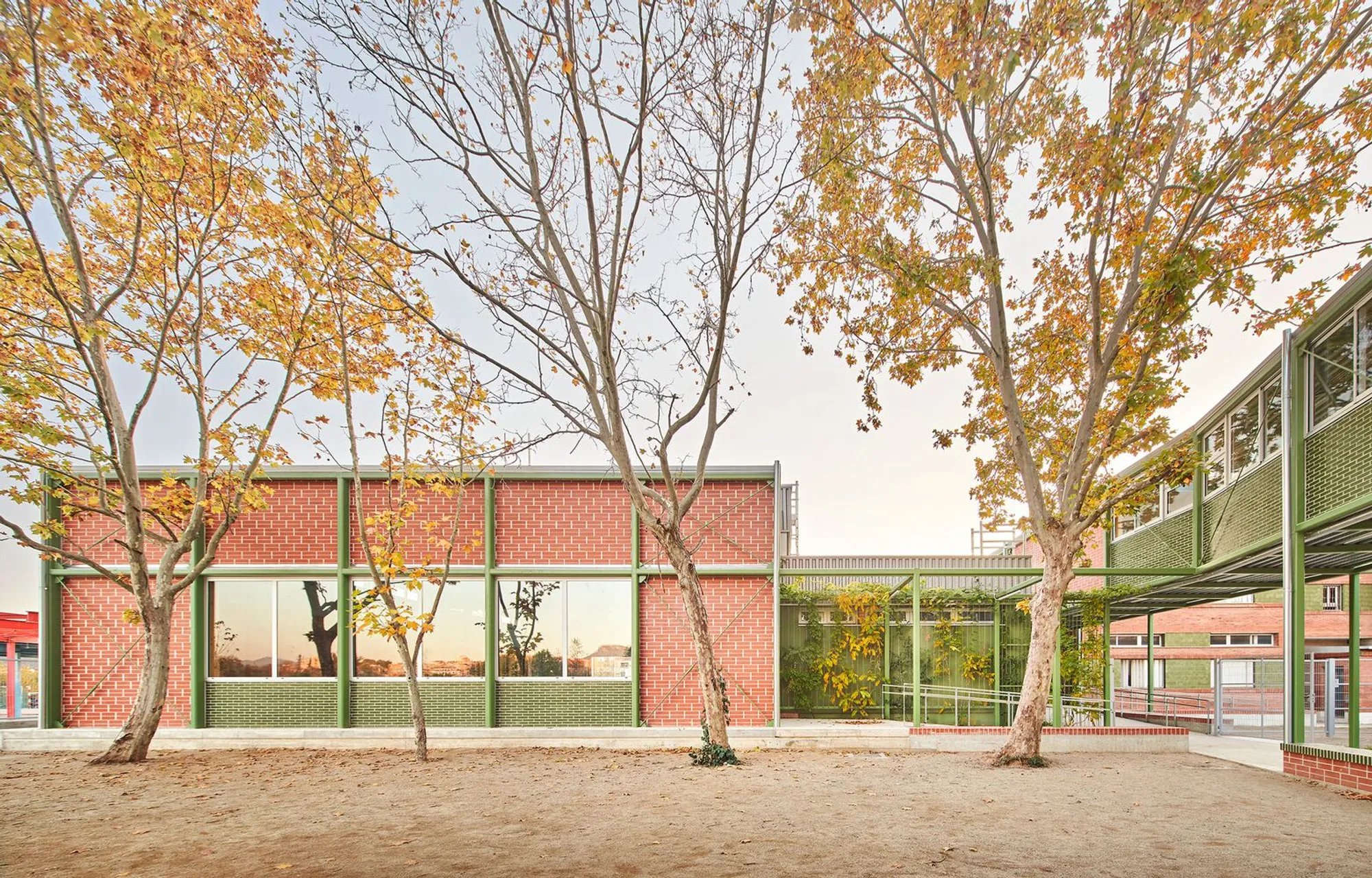
Badia i Margarit Institute by GATPA: A Contemporary Educational Hub in Igualada, Spain
Badia i Margarit Institute by GATPA in Igualada features sustainable prefabricated concrete, courtyards, steel connections, optimized playground, blending modern design with heritage.


Located in the historic town of Igualada, Catalonia, the Badia i Margarit Institute, designed by GATPA Architects, exemplifies modern educational architecture that seamlessly integrates with its urban and natural context. Completed in 2021, the project addresses the growing needs of the high school while respecting the heritage and landscape of the region.
Igualada, a small inland city with a slightly colder and more humid climate than coastal Catalonia, holds a rich industrial history. In the 19th century, the textile and tannery industries flourished along the Anoia River, driving economic prosperity and population growth. Though much of this industry declined in the late 20th century, the cultural and historical fabric of the city remains influential. The site also holds architectural significance, being close to the resting place of renowned architect Enric Miralles.
The existing school complex required expansion for its high school section, alongside refurbishment of the gymnasium and several classrooms. To address these challenges, the Catalan government organized a two-phase public architectural competition, which GATPA won, setting the stage for a sensitive yet innovative design intervention.
Design Concept and Site Strategy
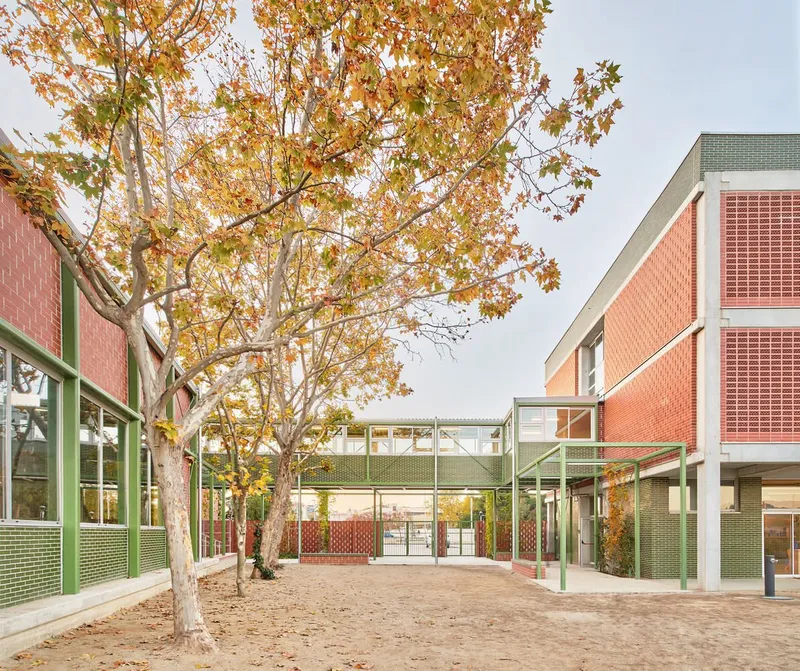
The available site is a narrow, elongated stretch of land running east-west along the Riera d’Òdena, adjacent to the gymnasium but largely isolated from the main school complex. The topography includes a steep slope, while an old river pathway provides both historical context and potential circulation routes.
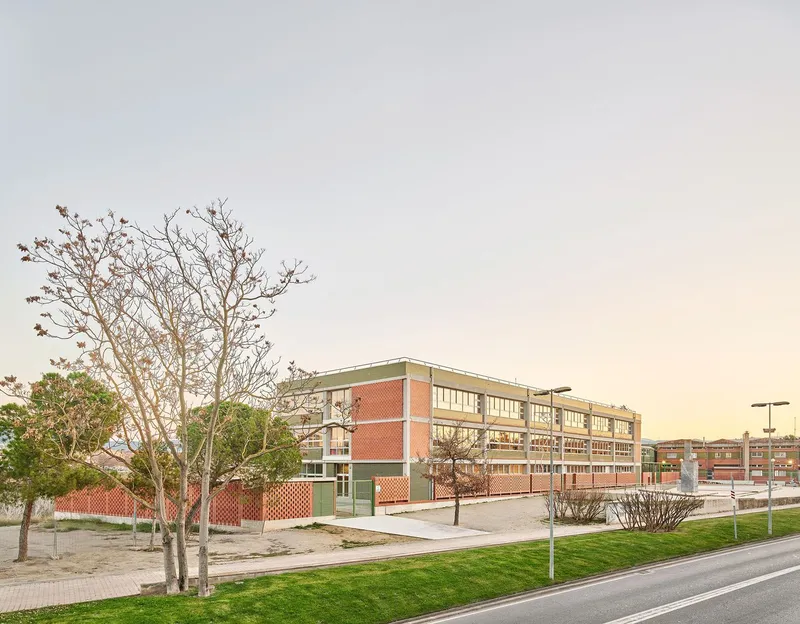
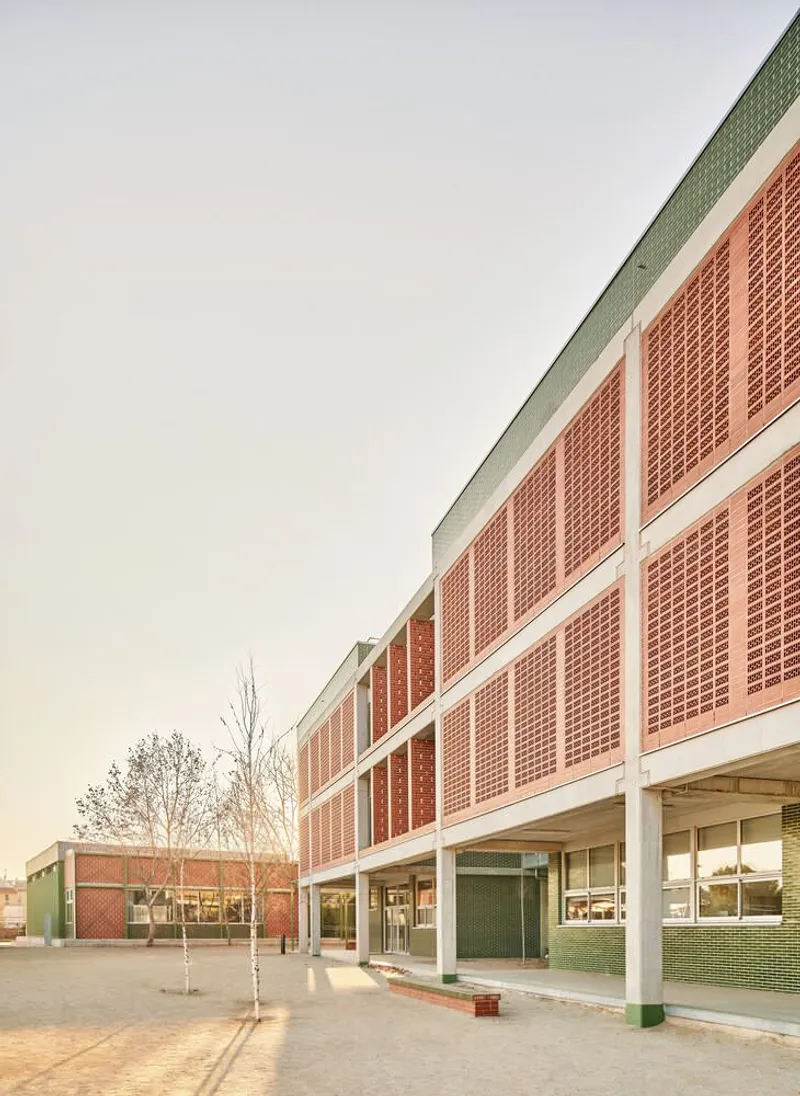
The design strategy focused on maximizing outdoor playground space while ensuring optimal orientation and connectivity between the new and old buildings. The resulting solution is a long, narrow rectangular prism positioned along the public square to the west, opening the eastern side for playgrounds and recreational areas.
Architectural Features and Materials
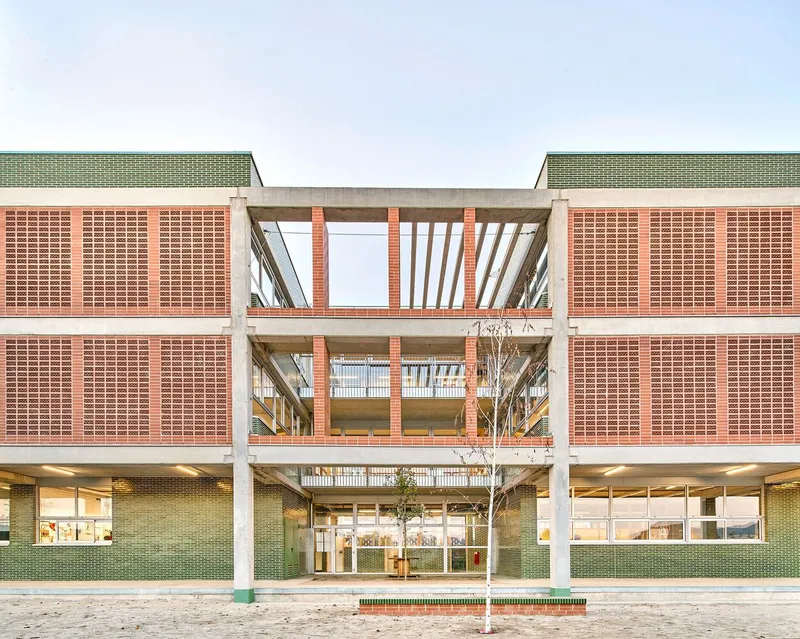
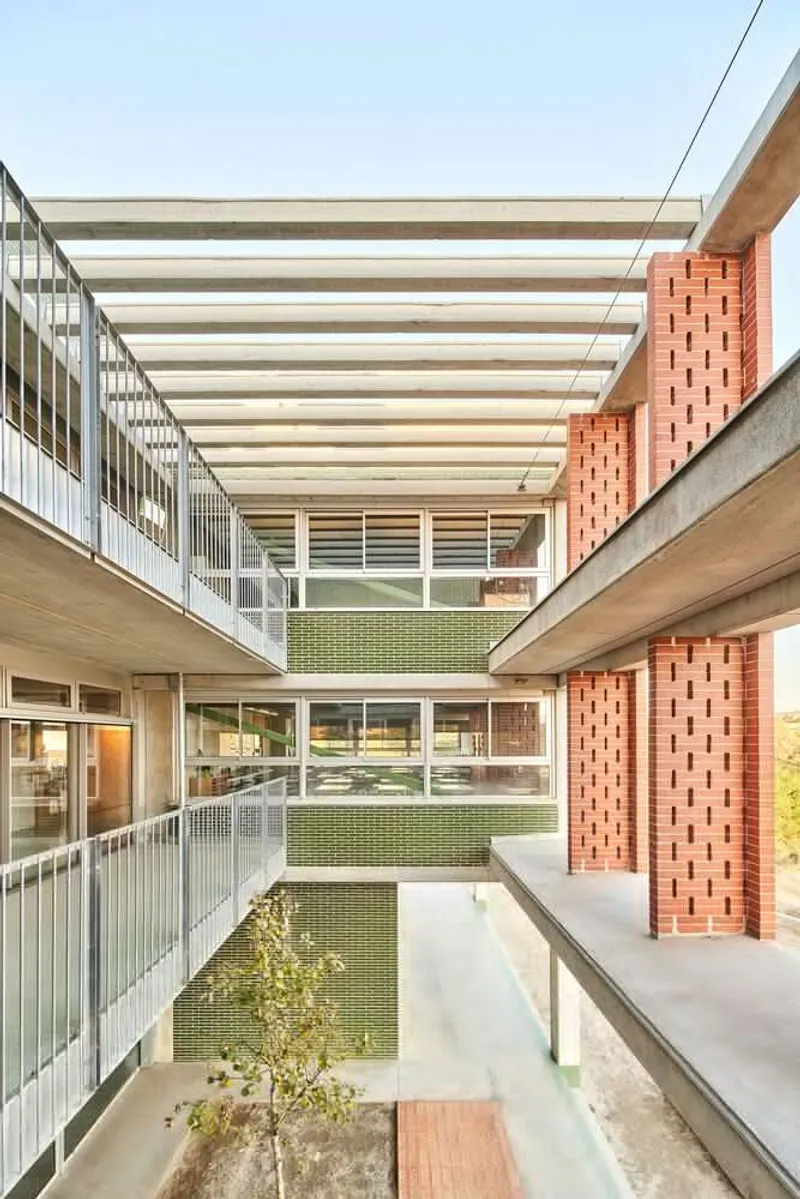
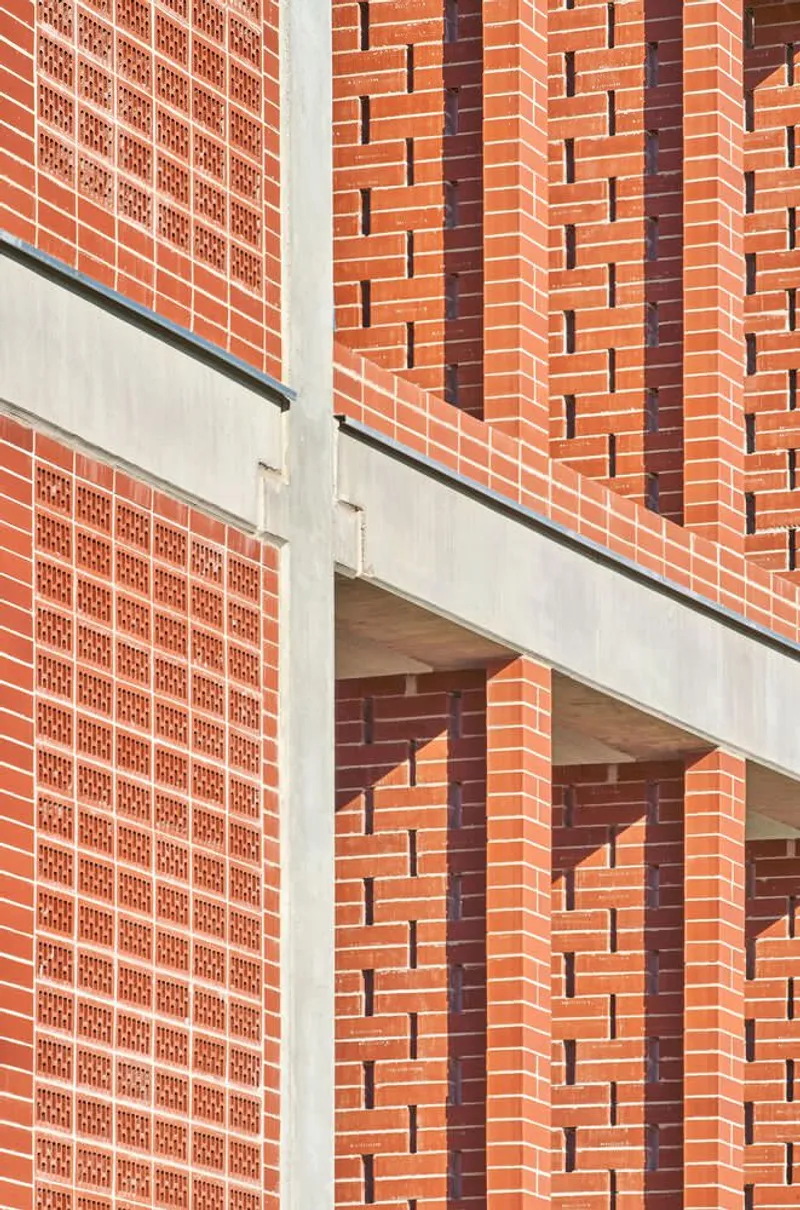
The new building employs prefabricated concrete structures, produced just 70 kilometers away, allowing for efficient construction. Termoarcilla walls provide versatile facade solutions, creating membranes with varying porosities tailored to orientation and programmatic needs—ranging from fully ventilated facades to latticed structures.
Two strategically placed internal courtyards enhance natural light penetration and classroom orientation, fostering an optimal learning environment. A light steel bridge connects the new high school to the refurbished gymnasium and existing school on the first-floor level, while the space beneath serves as a welcoming porch and main gateway to the campus.
The design balances functionality, aesthetics, and context, resulting in a contemporary educational facility that respects Igualada’s industrial heritage while addressing modern pedagogical needs.
Sustainability and Innovation
The use of locally produced materials, passive solar orientation, and adaptive reuse of existing structures underscores the institute’s commitment to sustainable design practices. The courtyards and ventilated walls reduce energy demand, while the seamless connection between old and new buildings ensures long-term adaptability.


Popular Articles
Popular articles from the community


Co-life: Sustainable Architecture for Age-Friendly Community Living
Co-life reimagines sustainable architecture for seniors through courtyards, rammed earth, shared gardens, and spaces designed for belonging.

The Ocean Hive: Sustainable Architecture for a Self-Sufficient Civilization at Sea
The Ocean Hive imagines sustainable architecture at sea, where modular habitats, algae, wave power and ocean waste sustain a growing colony.

The Earth Pod: 3D Printed Homes for Resilient Refugee Communities
The Earth Pod reimagines refugee housing through 3D printed homes made from clay, combining resilience, self-sufficiency, and rapid shelter.

Lunar Spiral: Space Architecture Shaped by the Mathematics of the Universe
Lunar Spiral reimagines space architecture through Fibonacci geometry, lunar regolith, levitating habitats, and self-sustaining Moon living.

Similar Reads
You might also enjoy these articles


Hodi-Mandai Geram
Project Function: Preservation and revitalization of the Intangible heritage and socio-spatial identity of the Hodi by Housing, Cultural Memory Center, Sacred Grove, landscape, local tourism economy


Olio Towers: A Mid-Rise for Performers That Fuses Housing, Rehearsal, and Stage
Located blocks from Houston's Theater District, this modular tower stacks living units around a central performance atrium.

Oasis: Modular Green Housing Carved into Dhaka's Urban Fabric
A shortlisted Plugin Housing entry reclaims unauthorized settlements in Dhaka with stepped concrete volumes, green roofs, and ventilation-driven design.

Black Hole: A Floating Megastructure for the Post-Physical Era
Emiliano Mazzarotto envisions a spherical, self-scaling arena where e-sports, digital hotels, and holographic stadiums replace traditional public space.


Explore Educational Building Competitions
Discover active competitions in this discipline



Challenge to design public laboratory


Challenge to reimagine the Iron Throne


Photograph architecture without architects


Illustrate the lost glory of Angkor Wat - Render Challenge
Comments (0)
Please login or sign up to add comments
No comments yet. Be the first to comment!