
Balcony House in Medellín by Bassico Arquitectos: A Contemporary Residence Framing the Mountain Landscape
A contemporary hillside home in Medellín designed as a continuous balcony, maximizing views, natural light, ventilation, and strong landscape integration.


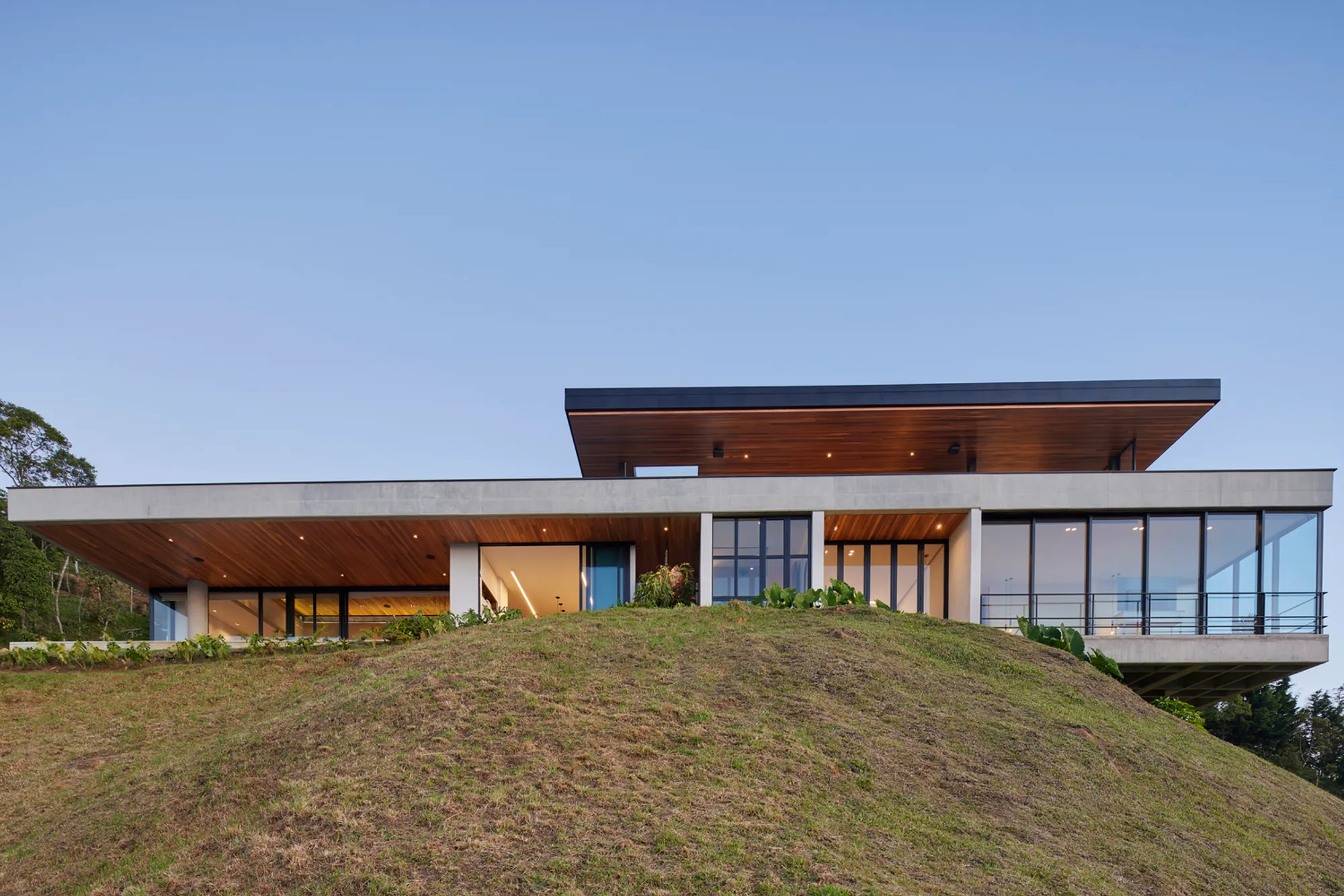
Balcony House, designed by Bassico Arquitectos, is a striking example of contemporary residential architecture in Medellín, Colombia. Positioned along the eastern mountain range, the project redefines the relationship between architecture and landscape, functioning as a spatial device that frames and enhances views of the valley below. With a built area of approximately 8,633 square feet and completed in 2022, the house exemplifies modern design principles rooted in site responsiveness, environmental integration, and spatial fluidity.
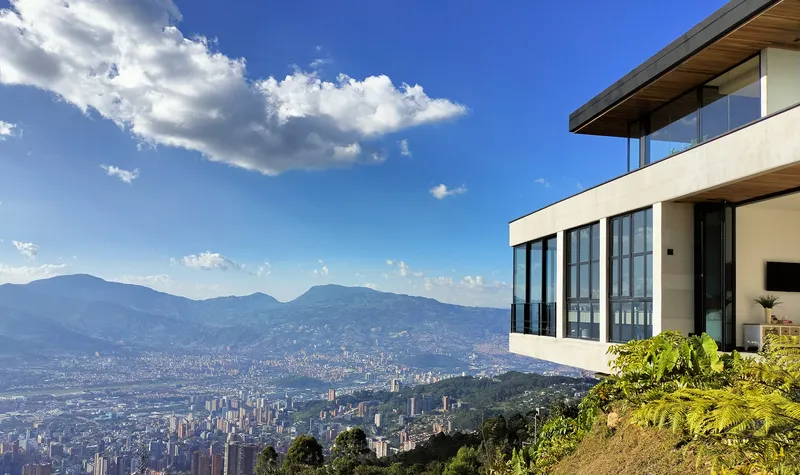
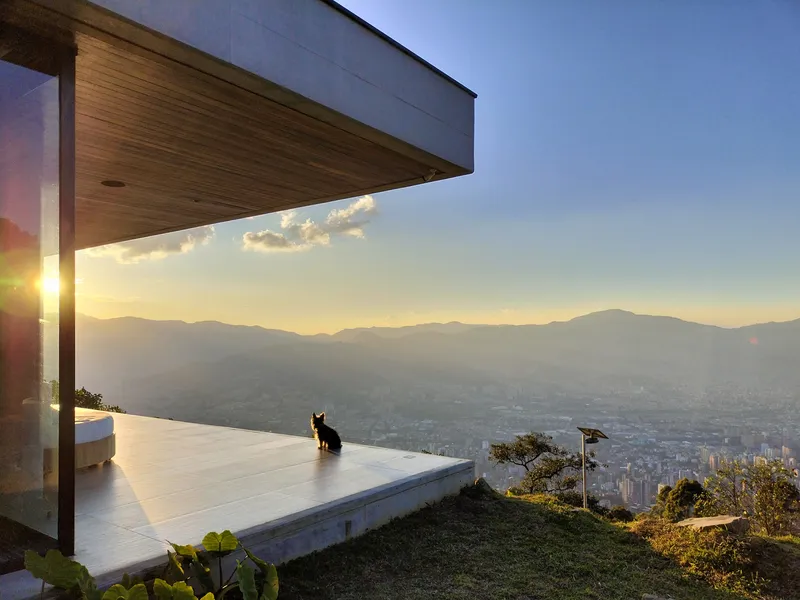
The concept behind Balcony House revolves around observation and contemplation. Rather than imposing itself on the terrain, the structure appears to cling to the mountain, simultaneously embedding into and projecting outward from the slope. This duality creates a dynamic architectural expression, one that is both grounded and elevated. The home is conceived as a continuous balcony, offering uninterrupted visual connections to the surrounding valley, distant cityscape, and ever-changing natural environment.
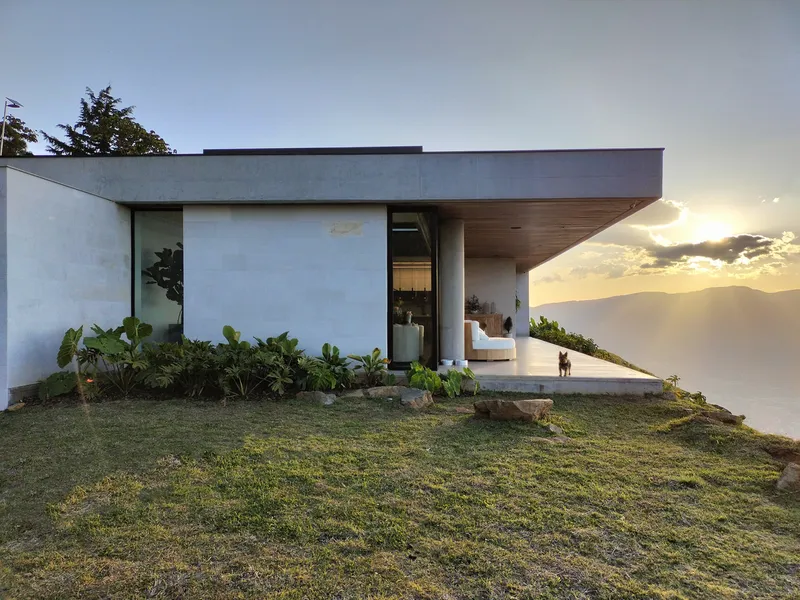
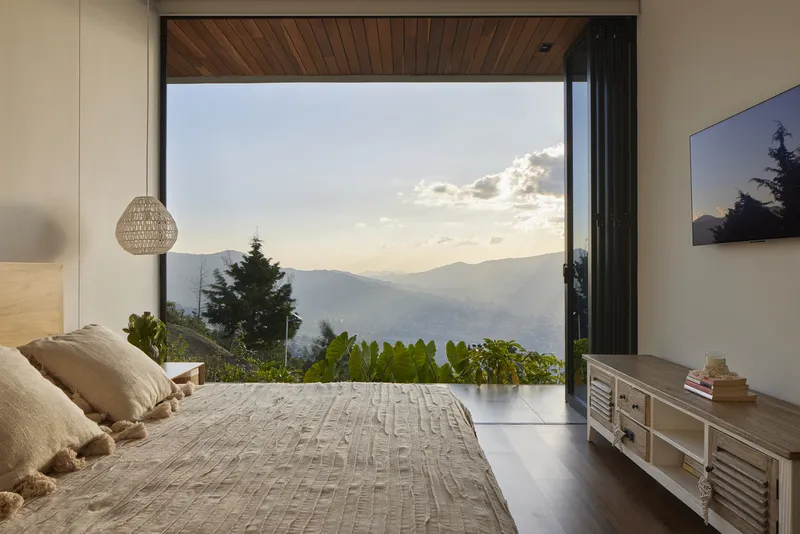
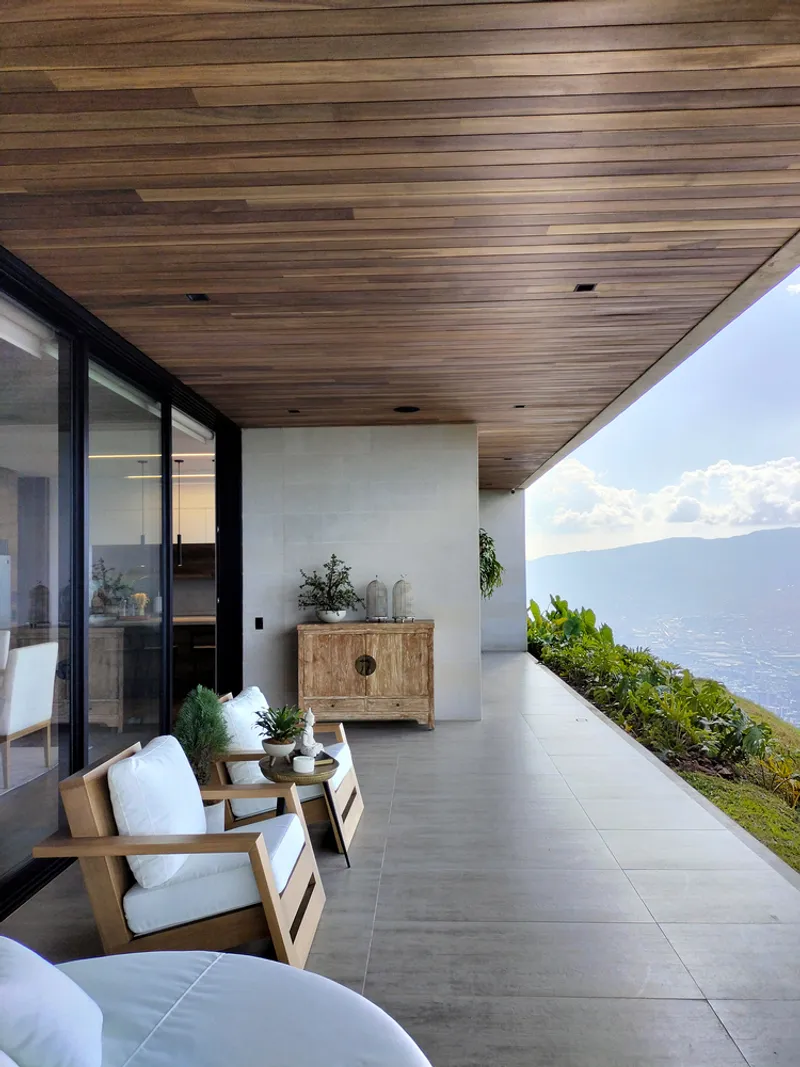
A defining feature of the design is the use of two robust horizontal slabs that frame the panoramic horizon. These slabs act as architectural boundaries, organizing the main living spaces along the periphery while directing views outward toward the mountains. This strategic arrangement ensures that every primary space remains visually connected to the landscape, reinforcing the house’s central idea of constant engagement with nature.
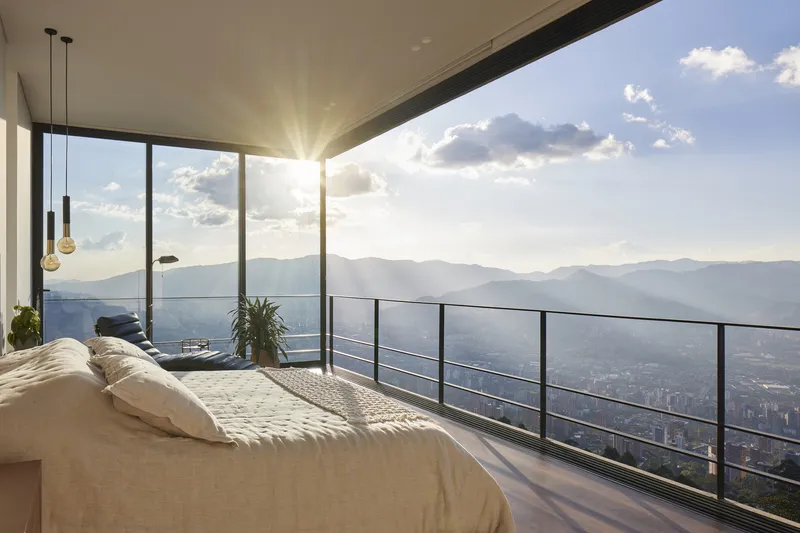
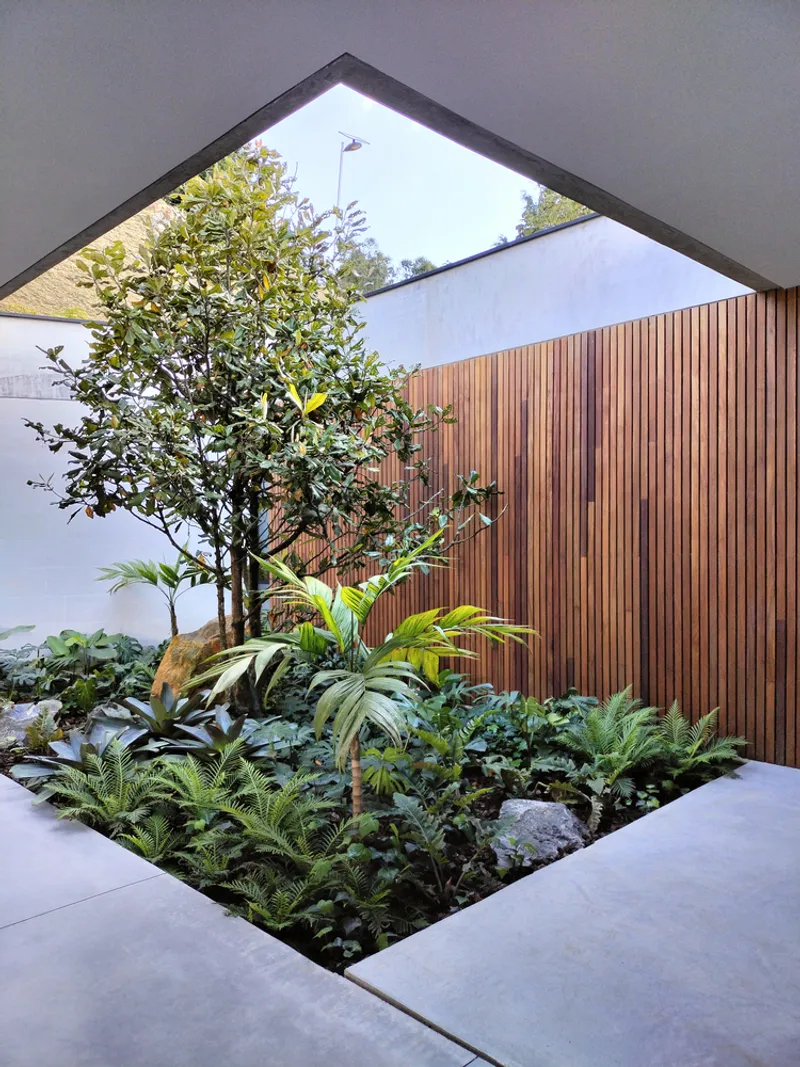
Interspersed within these slabs are courtyards of varying sizes, which puncture the structure to introduce natural light, cross ventilation, and spatial diversity. These courtyards not only enhance environmental performance but also create moments of intimacy within the larger open plan. Secondary spaces benefit from these voids, gaining access to daylight and airflow while maintaining privacy and functionality.
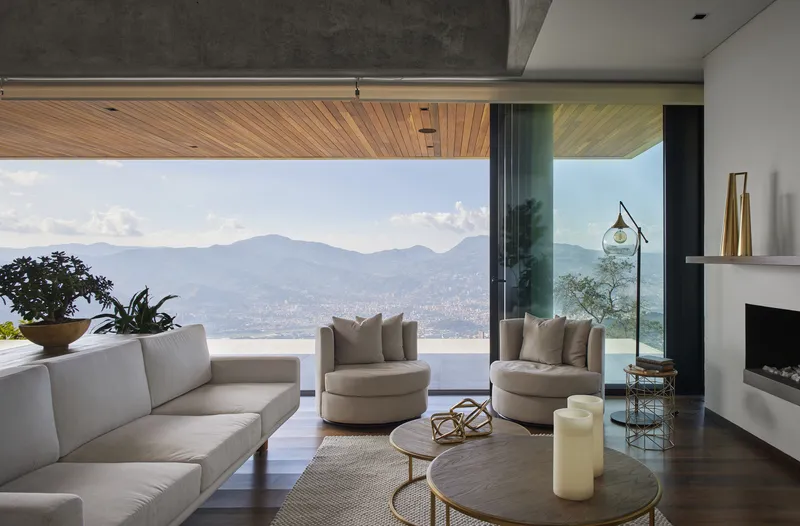
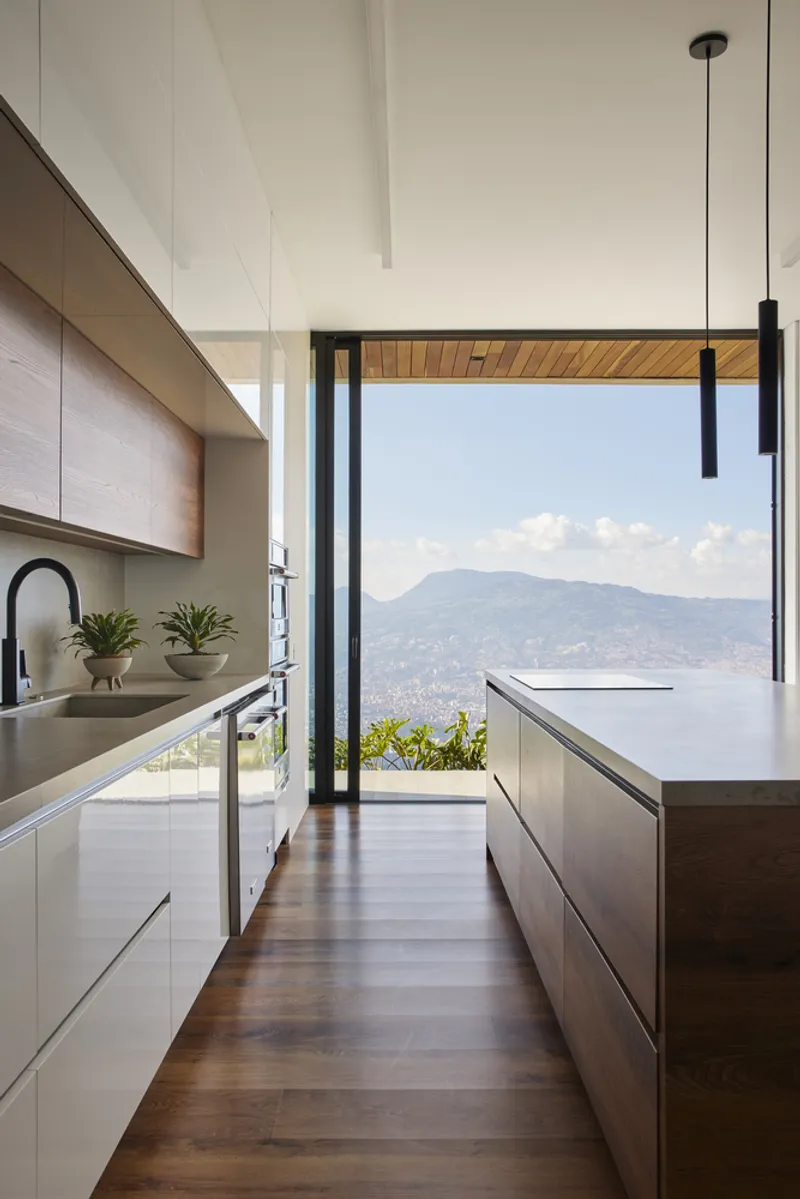
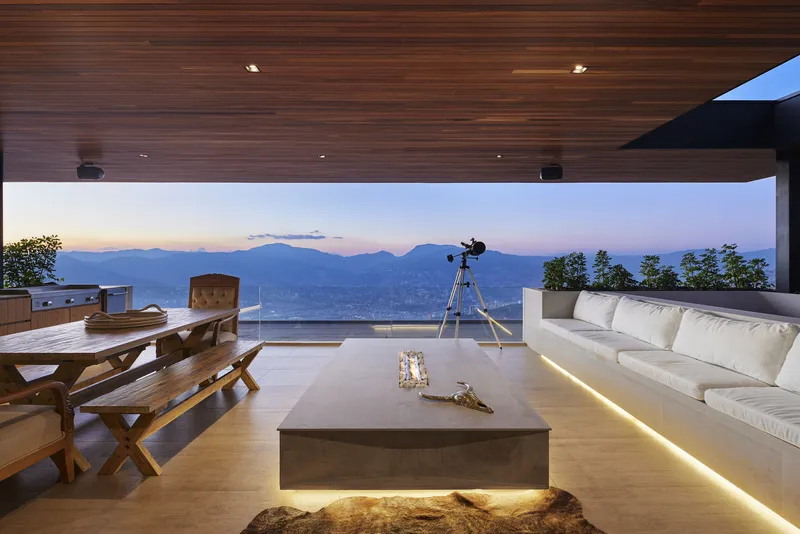
Materiality plays a crucial role in reinforcing the architectural narrative. The use of natural and durable materials such as red cedar wood and concrete contributes to a balanced aesthetic that is both warm and robust. These materials respond well to the local climate while emphasizing the tactile and visual contrast between the built form and its natural surroundings.
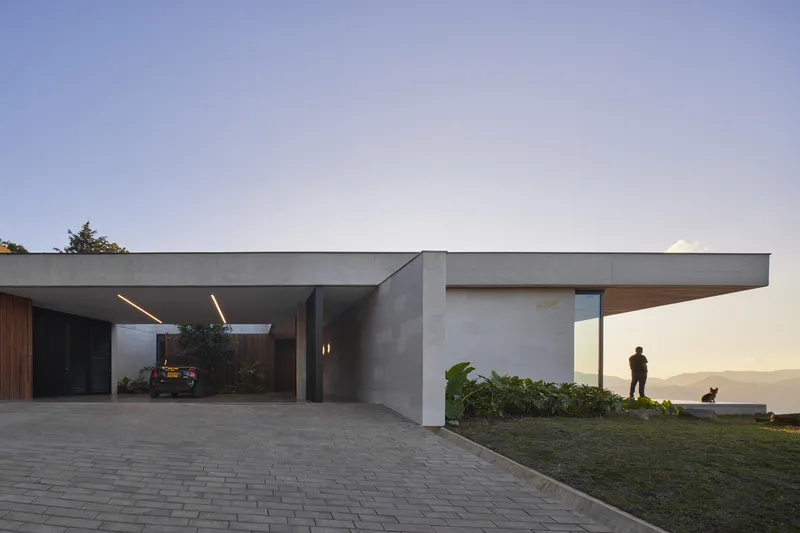
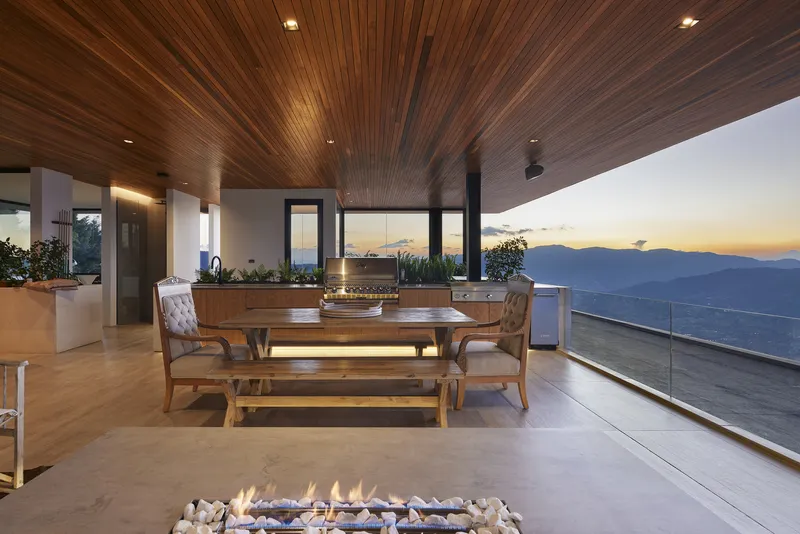
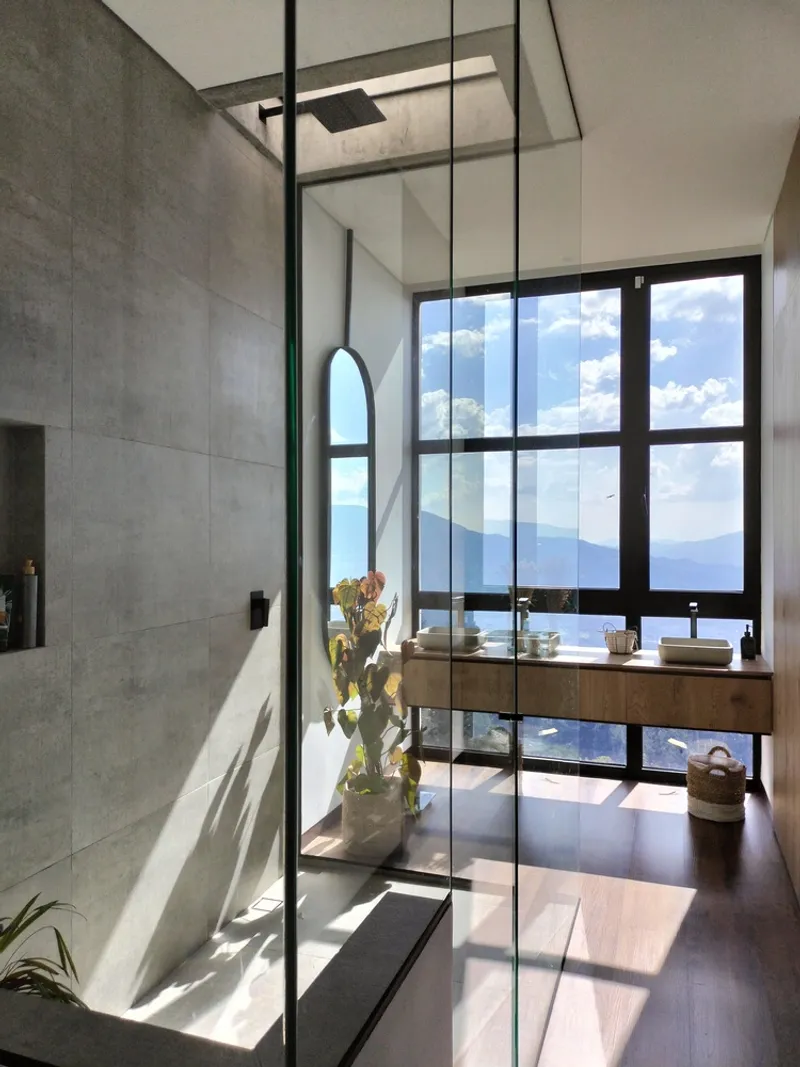
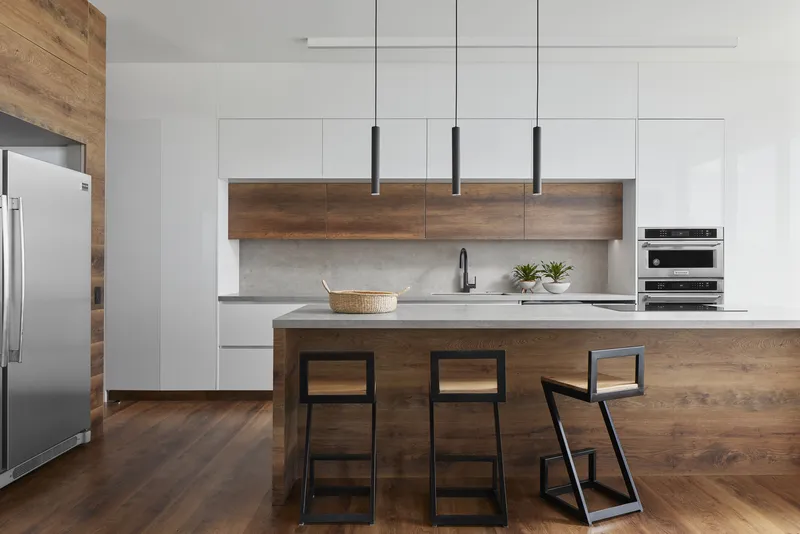
Internally, the house embraces openness and continuity. Living, dining, and kitchen areas flow seamlessly, extending outward toward terraces and outdoor platforms. Large openings and expansive glazing dissolve the boundary between interior and exterior, allowing the landscape to become an integral part of daily living. Bedrooms and more private areas maintain this connection while offering controlled views and comfort.
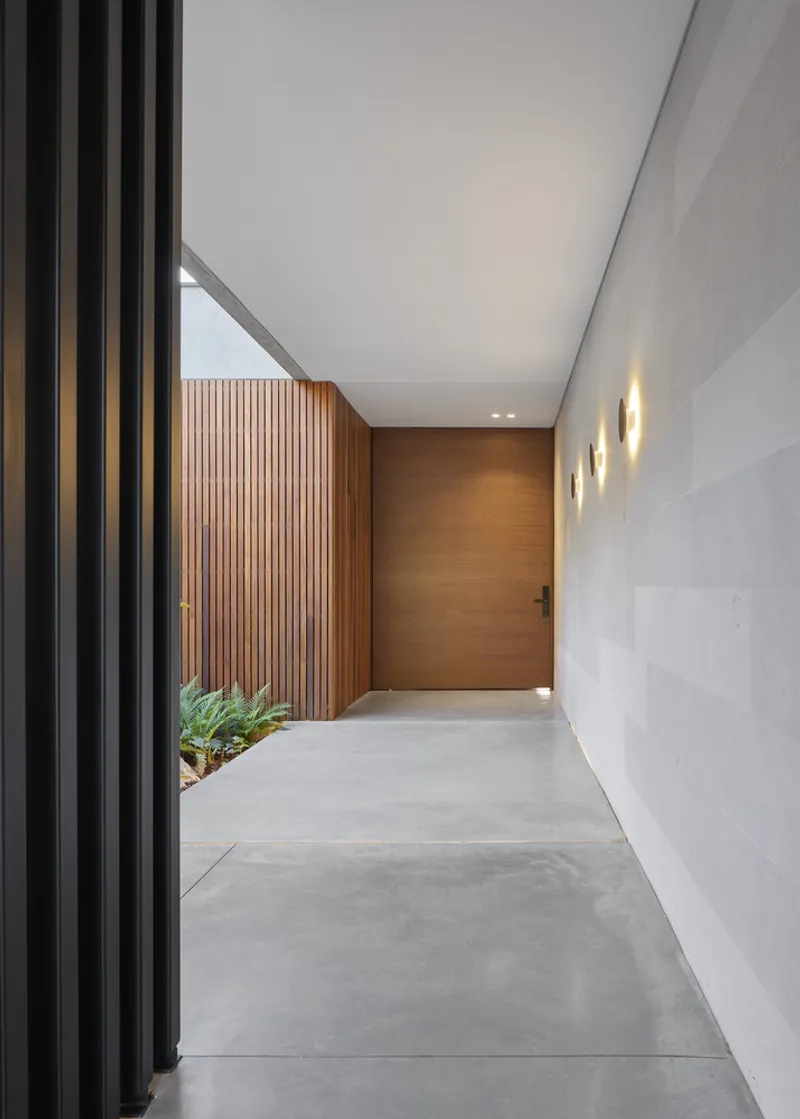
Ultimately, Balcony House is not just a residence but an architectural experience shaped by its environment. It captures the essence of modern hillside living by merging structure, landscape, and lifestyle into a cohesive whole. Through its thoughtful design strategies, the project highlights how contemporary architecture can create meaningful connections between people and place while responding sensitively to context and climate.
All photographs are works of
Carlos Vélez



Popular Articles
Popular articles from the community


Hill & Cross Opera: Sculptural Opera House Architecture Shaped by Tallinn’s Landscape and Identity
Hill & Cross Opera reimagines opera house architecture in Tallinn through its sculptural hill, civic plaza, glass wave and a luminous cross.

Co-Life: Senior Housing Design That Reconnects Older Adults With the City
Co-Life reimagines senior housing design through healing gardens, shared streets, workshops, and a sustainable community across generations.

The Ocean Hive: Sustainable Architecture for a Self-Sufficient Civilization at Sea
The Ocean Hive imagines sustainable architecture at sea, where modular habitats, algae, wave power and ocean waste sustain a growing colony.

Lunar Spiral: Space Architecture Shaped by the Mathematics of the Universe
Lunar Spiral reimagines space architecture through Fibonacci geometry, lunar regolith, levitating habitats, and self-sustaining Moon living.


Similar Reads
You might also enjoy these articles


FAMM Arquitectura Organizes Ten Villas Around Courtyards and Jungle in Nosara, Costa Rica
El Molino pairs two elongated volumes with deep overhangs and timber louvers to build a compact coastal community five minutes from the beach.

Oscar Niemeyer's Ibirapuera Park Pavilions Define São Paulo's Cultural Identity in Concrete and Curve
A constellation of modernist volumes set within São Paulo's most important urban park, conceived for the city's 400th anniversary in 1954.
How Henri Picq's 1889 Paris Pavilion Traveled 11,000 Kilometers to Become Santiago's Artequín Museum
A prefabricated iron and glass pavilion built for the Paris Universal Exposition found a second life as a children's art museum in Chile.

Sanjay Puri Architects Wraps a Jaipur Office Tower in Capsule-Shaped Green Buffers
A nine-level climate-responsive workplace near Jaipur Airport uses stacked planter terraces and aluminium screens to fight 40°C heat.


Explore Architecture Competitions
Discover active competitions in this discipline



Challenge to reimagine the Iron Throne


Photograph architecture without architects


Illustrate the lost glory of Angkor Wat - Render Challenge


Design challenge to reuse E-waste
Comments (0)
Please login or sign up to add comments
No comments yet. Be the first to comment!