

Batel Store by Estúdio 41: A Transparent Urban Retrofit in Curitiba’s Batel District
A contemporary commercial retrofit in Curitiba, blending transparency, flexibility, and urban integration with a striking dual-envelope façade design.


Located in the vibrant Batel neighborhood of Curitiba, Brazil, the Batel Store by Estúdio 41 is a compelling example of commercial retrofit architecture that redefines the relationship between private interior spaces and the surrounding urban fabric. Designed by lead architect Emerson Vidigal, the 399-square-meter project was completed in 2023 and captures the studio’s minimalist yet contextual approach to design.
Revitalizing an Urban Corner Through Adaptive Reuse
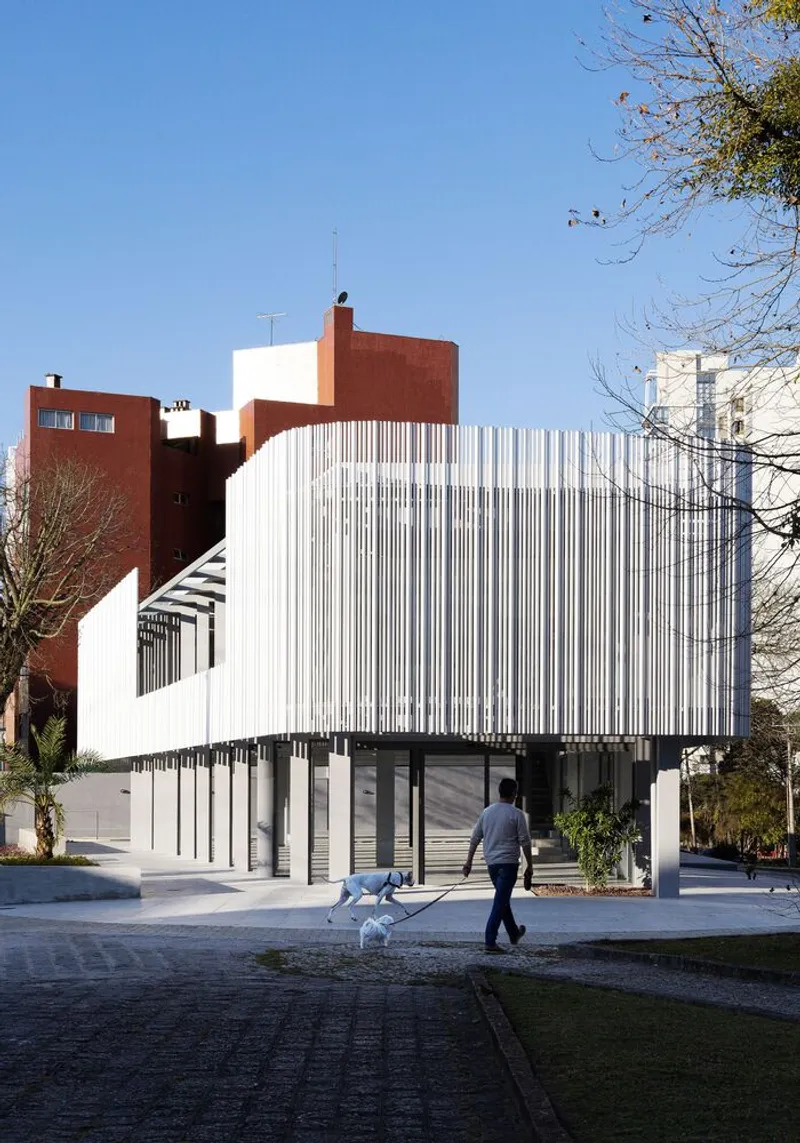
Situated on an acute triangular plot, the Batel Store project emerged from spatial constraints that initially made new construction on the site unfeasible. The lot’s unusual geometry, combined with strict local building setbacks, left limited usable area for new development — particularly for accommodating features like underground parking. This challenge led the architectural team and client to pursue a retrofit strategy, transforming an existing building from the 1990s into a flexible commercial hub.
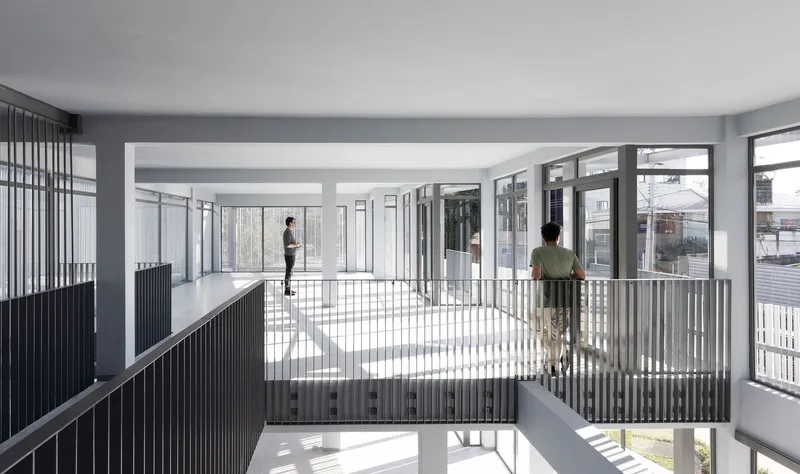
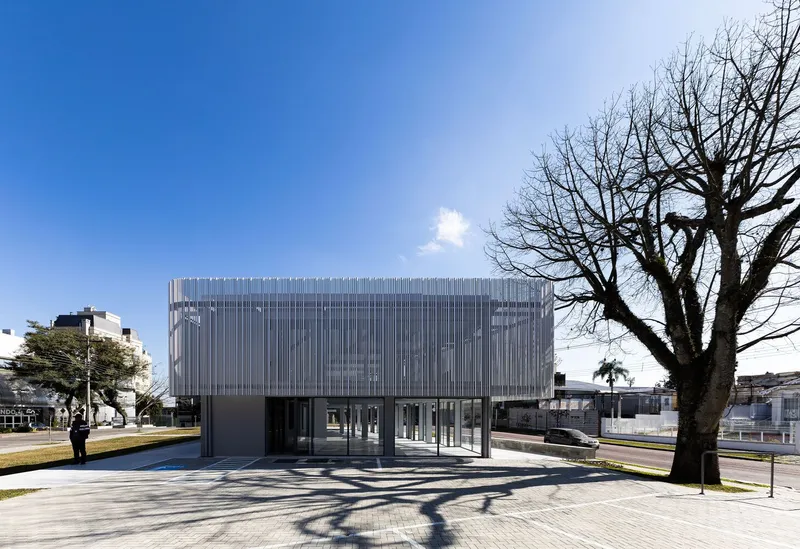
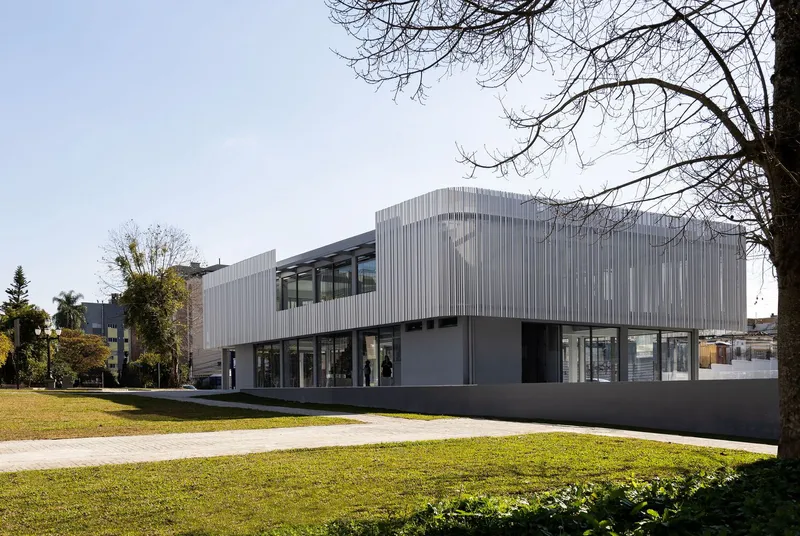
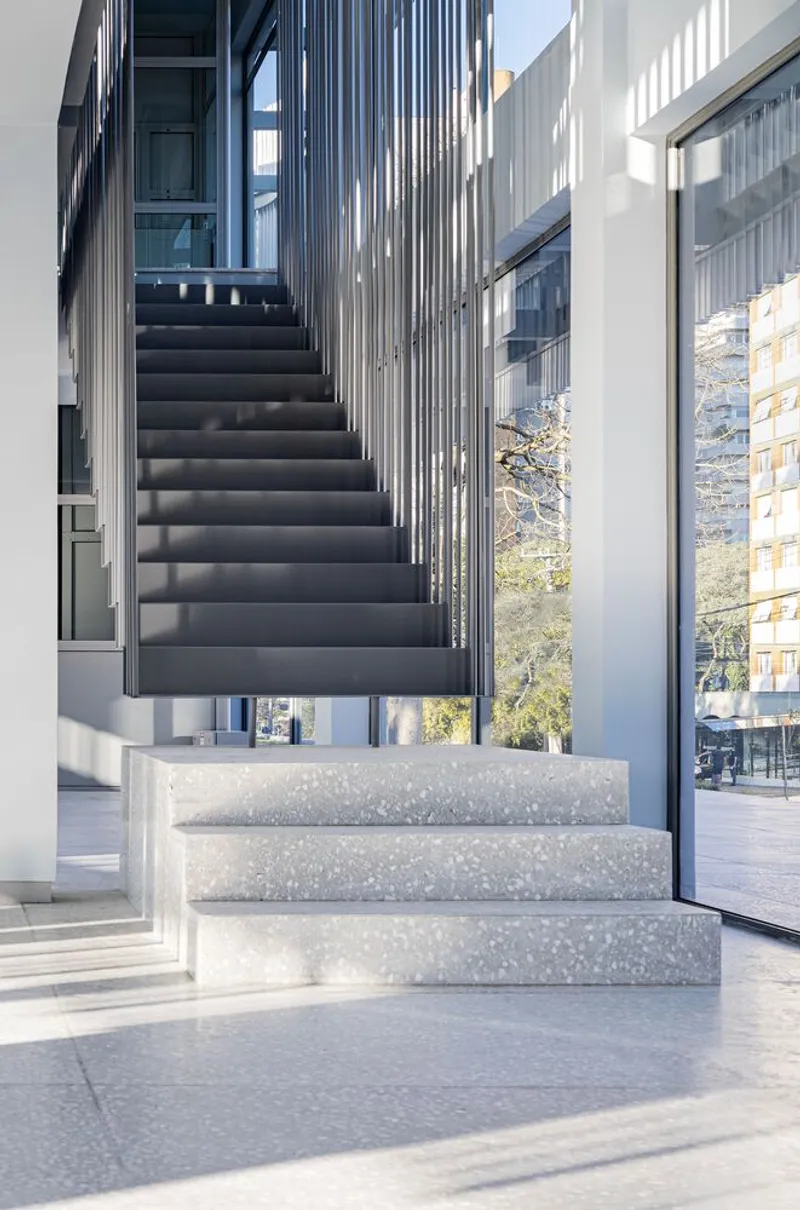
Rather than demolishing and rebuilding, Estúdio 41 opted to preserve the original structural framework and create a contemporary commercial space that activates the street and fosters visual connections with the city. One of the project’s defining elements is its active ground-floor façade, which offers transparency and permeability between the interior and exterior. Large glass panels on the street level dissolve boundaries, welcoming pedestrian movement and aligning with the rhythms of the adjacent public square.
Layered Façade Design with Functional and Aesthetic Impact
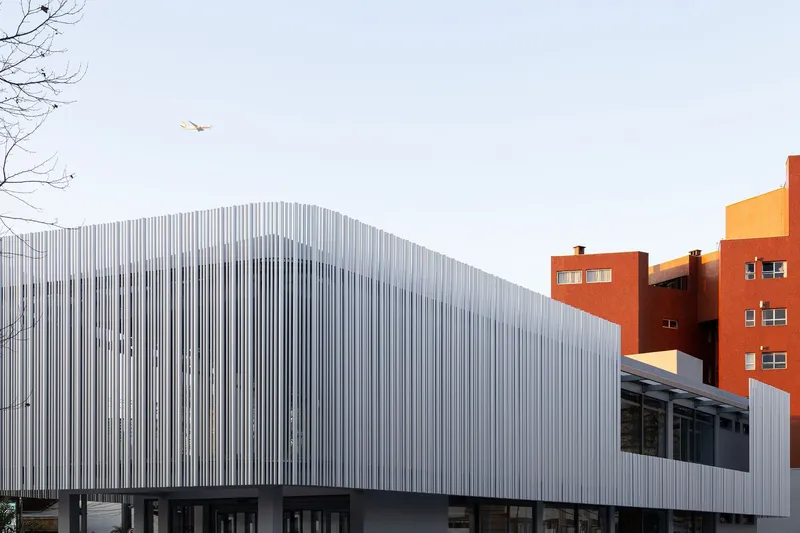
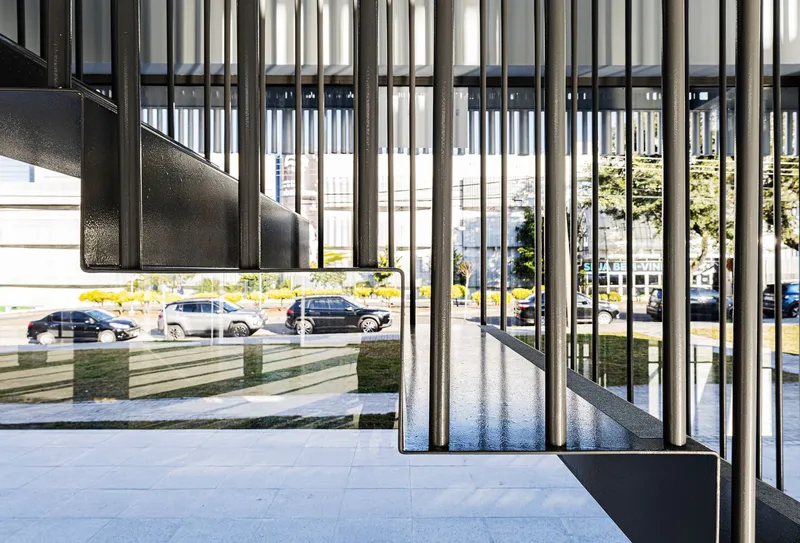
The architectural identity of the Batel Store is conveyed through a dual-envelope façade system. On the ground floor, full-height glass showcases create openness and provide visibility for retail or commercial activities, inviting the public into the space. Above, the upper-level façade is enveloped in a brise-soleil made from anodized aluminum tubes, which serves both a functional and symbolic role.
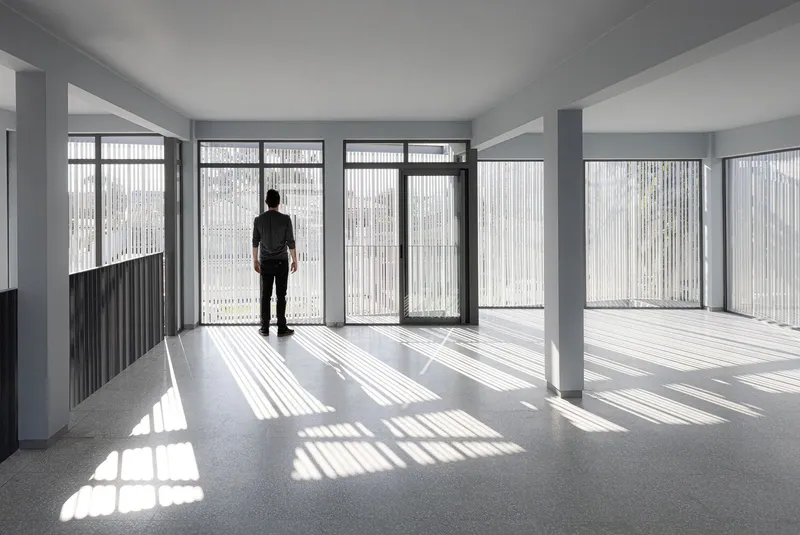
This solar shading system is not only a key element in regulating light and thermal comfort for the interior, but also becomes a signature design feature, offering depth, rhythm, and material richness to the façade. The varied spacing and diameters of the aluminum tubes react dynamically to sunlight throughout the day, generating ever-changing shadow patterns that enhance the building’s presence in the urban landscape.
Flexible Program for Evolving Urban Needs
A central feature of the Batel Store project is its adaptable commercial layout. The design supports multiple configurations and uses — from boutique retail and cafes to office spaces or showrooms — reflecting a contemporary approach to mixed-use urban environments.
This flexibility allows the building to respond to changing economic and social contexts, promoting a multifunctional relationship with the city. More than just a store, the space integrates with the pedestrian flows of the surrounding neighborhood and adjacent square, blurring the lines between commerce, community, and public life.
Architecture that Engages with the City
By preserving existing structures and introducing tailor-made architectural elements, Estúdio 41 has crafted a project that exemplifies sustainable urban redevelopment. The Batel Store acts as a connector — between old and new, between indoors and outdoors, and between individual users and the broader community.
In doing so, the project highlights the potential of architectural retrofits to not only conserve resources but also to reinvigorate underutilized urban spaces. It stands as a model for context-sensitive design, balancing innovation with respect for existing urban morphology.
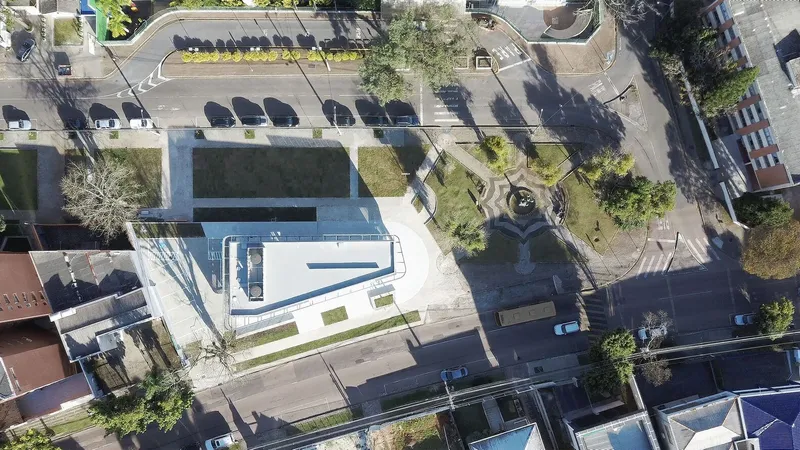
All Photographs are works of Eron Costin


Popular Articles
Popular articles from the community


Architekt Andreas Gruber Scatters 23 Dark Timber Chalets Across a South Tyrolean Forest Edge
In Molini di Tures, Amonti Chalets breaks a resort into a hamlet of gabled timber houses, with parking, storage and services pushed into the slope.

LT2A and OPEN Architectes Thread a Brick and Glass High School Through a Wooded Belgian Campus
In Braine-l'Alleud, a 3,000 m² wing for Collège Cardinal Mercier pairs pale brick with a glazed colonnade, deferring to a small chapel and a dense wood.

Juan García Correa, John González and Claudia Rueda Sink a Circular Amphitheater into a Manizales Engineering Building
On the La Nubia campus in Manizales, Colombia, the S1 Building folds labs and offices into a hillside of ramped lawns that double as a campus route.

GROUP A Strips a 1969 Rotterdam Harbor Headquarters to Its Frame and Wraps It in Timber Louvers
In Rotterdam's M4H harbor district, Ferro Offices reuses a 1969 frame, adds one timber storey and reaches BREEAM-NL Outstanding.

Similar Reads
You might also enjoy these articles


Hodi-Mandai Geram
Project Function: Preservation and revitalization of the Intangible heritage and socio-spatial identity of the Hodi by Housing, Cultural Memory Center, Sacred Grove, landscape, local tourism economy


Olio Towers: A Mid-Rise for Performers That Fuses Housing, Rehearsal, and Stage
Located blocks from Houston's Theater District, this modular tower stacks living units around a central performance atrium.

Oasis: Modular Green Housing Carved into Dhaka's Urban Fabric
A shortlisted Plugin Housing entry reclaims unauthorized settlements in Dhaka with stepped concrete volumes, green roofs, and ventilation-driven design.

Black Hole: A Floating Megastructure for the Post-Physical Era
Emiliano Mazzarotto envisions a spherical, self-scaling arena where e-sports, digital hotels, and holographic stadiums replace traditional public space.

Explore Urban Design Competitions
Discover active competitions in this discipline

Design challenge to equip cities with modern furniture

Challenge to reimagine the Iron Throne

Photograph architecture without architects

Illustrate the lost glory of Angkor Wat - Render Challenge
Comments (0)
Please login or sign up to add comments
No comments yet. Be the first to comment!