
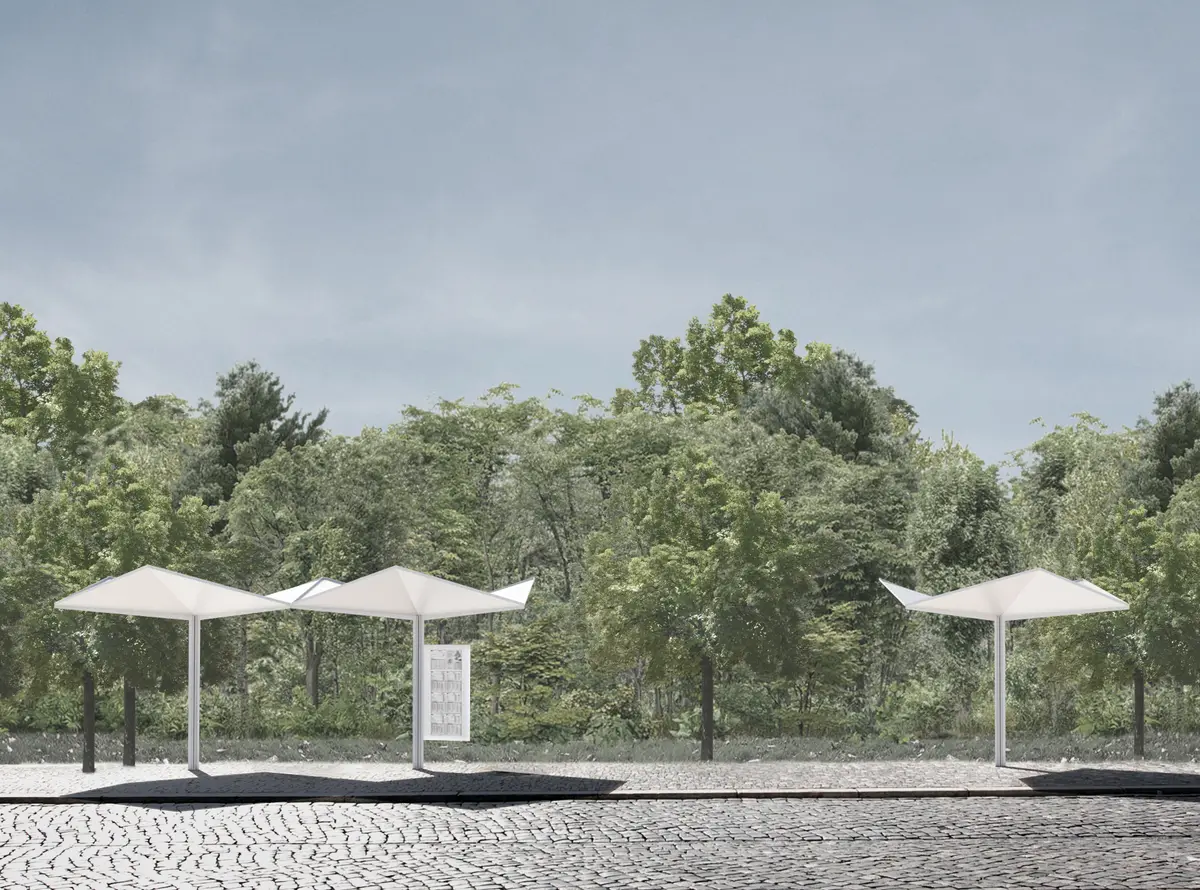
Baus-Stop
A Bauhaus design busstop

The busstop is designed for the Bauhaus site but at the same time it is a prototype.
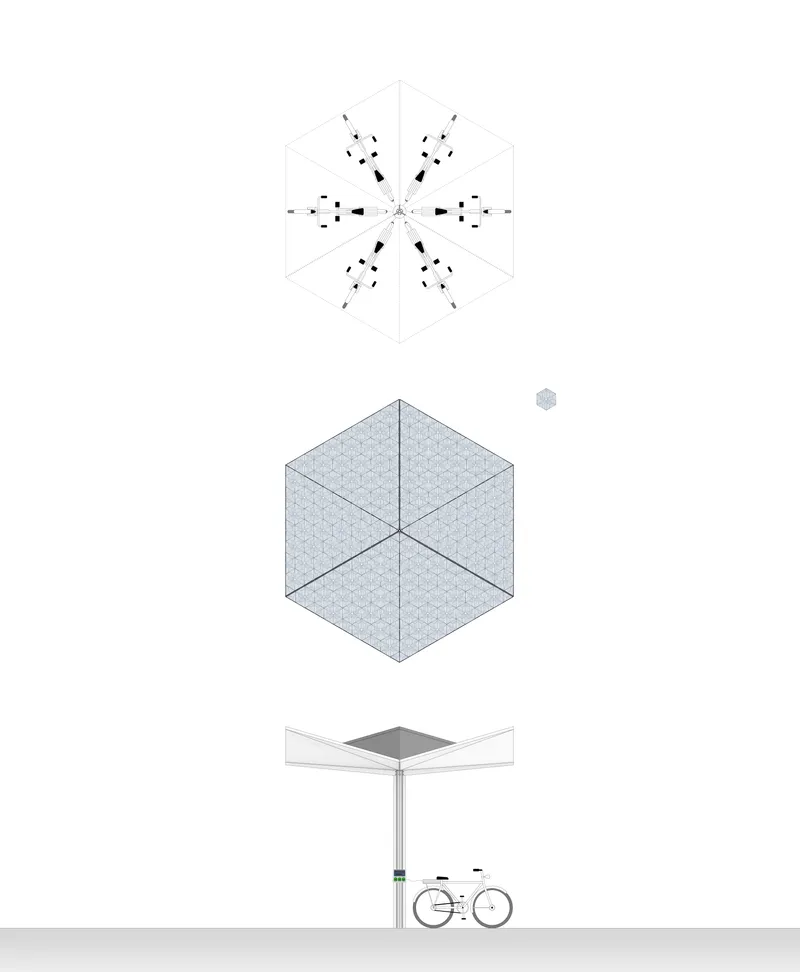
Form follows function and every part of the structure has its purpose. The design reflects the true nature of the material. Sheets of steal are prefolded to make for stability and shape. Six equivalent parts are attached to each other with screws. Their shape and geometry is the same. By turning one part upwards and the next one downwards, the geometry of the assembled structure forms an umbrella-like roof for the busstop.
To serve and shield passengers waiting for busses from opposite directions it is also possible to add and join one roof unit to the next as a pair or even in groups of three or more. Further appliances like waste bin, benches or signs may be attached to the foot of the structure which consists of three of the same steel profiles. The rain that collects on the roof is drained in the centre.
All parts may be attached and assembled using simple screws. By assembling various standard parts from sheets of steel which are folded for stability to steel profiles a geometric umbrella-like strukture evolves from 3 x 6 prefabricated parts. So the prefabricated parts are delivered to the site, attached to each other and then the busstop is quickly completed.
Forming a roof together the structure offers protection from rain and sun. It can also be made to serve as a power hub for recharable eletromobility and other devices by collecting solar energy. This universal expression of design and function from prefabricated parts not only incoporates the bauhaus design idea - it is also sustainable. Placing the lighting at the foot of the structure allows it to glow at night creating a magical atmosphere in groups of supersized lamp shades.


Popular Articles
Popular articles from the community


REAL Architects and Challenge Design Plant a Timber Gridshell Seed at the Heart of Shanghai's West Bund
On Shanghai's Xuhui Waterfront, a 230 m² glazed timber lattice dome anchors a terraced garden and lets its structure do all the talking.

Cambra Buró Sets a Kuwaiti Coastal Villa on a Sculpted Travertine Plinth and Lets the Upper House Float
In Abu Al Hasaniya, Kuwait, a 3,000 sqm seaside villa pairs a heavy stone base with clay, cork and walnut to work with the Gulf climate.

Diogo Aguiar Studio Strings Eight Identical Timber Modules Across a Hillside Above Porto
In the Serras do Porto, a prefabricated timber house of identical sloping modules reads as a small mountain range and lets its program grow.


Ayodele: Earth-Built Housing That Pushes Back Against Accra's Concrete and Asphalt
A modular earth-built housing block for central Accra stacks family units around shared courtyards, craft studios and planted roofs.

Similar Reads
You might also enjoy these articles

The Rhythm of Seasons
A Farmers' Market Connecting Nature and the City


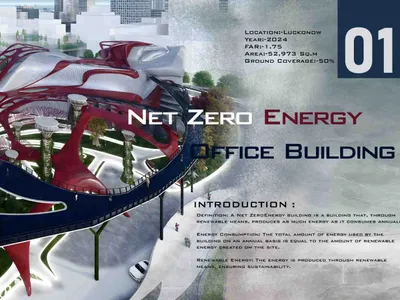
More Than a Building-Designing a Living System
More Than a Building-Designing a Living System
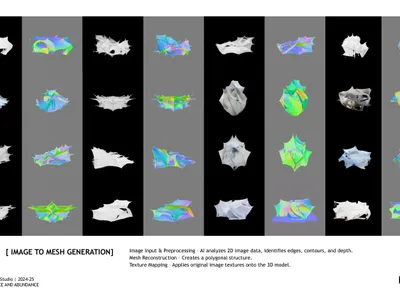
Base Beyond
DESERT COMPOUND ARID: TOURISM OF ABSENCE AND ABUNDANCE

Explore New Bauhaus Competitions
Discover active competitions in this discipline


The Global Benchmark for Architecture Dissertation Awards

The Global Benchmark for Graduation Excellence

Challenge to design a portable theatre

Challenge to design a portable music platform
Comments (0)
Please login or sign up to add comments
No comments yet. Be the first to comment!