
BHA Studio Threads Four Generations Through a Narrow Garden House in Hue's Ancient Quarter
On a 5-by-25-meter lot in Kim Long, a 210-square-meter house channels Hue's garden house tradition into a modern multigenerational home.

Kim Long is one of those neighborhoods that carries more cultural weight than its modest streets suggest. Sitting along the Perfume River in Hue, Vietnam's ancient imperial capital, the district is known for its garden houses: hybrid domestic landscapes where architecture and planting merge into a single organism. When BHA studio, led by Nguyen Xuan Minh, was asked to design a house for a four-generation family on a plot just five meters wide and twenty-five meters deep, the brief was as much about continuity with that tradition as it was about shelter.
What makes the Kim Long House genuinely interesting is not that it fits a lot onto a tight lot. Plenty of houses do that. It is that BHA studio treats the narrow section as a positive constraint, using it to generate a sequence of courtyards, voids, and split levels that keep every room in visual and climatic contact with greenery. The result is a house that breathes like its garden house ancestors while accommodating the realities of a contemporary multigenerational household on a budget.
A Facade That Signals Openness on a Quiet Street
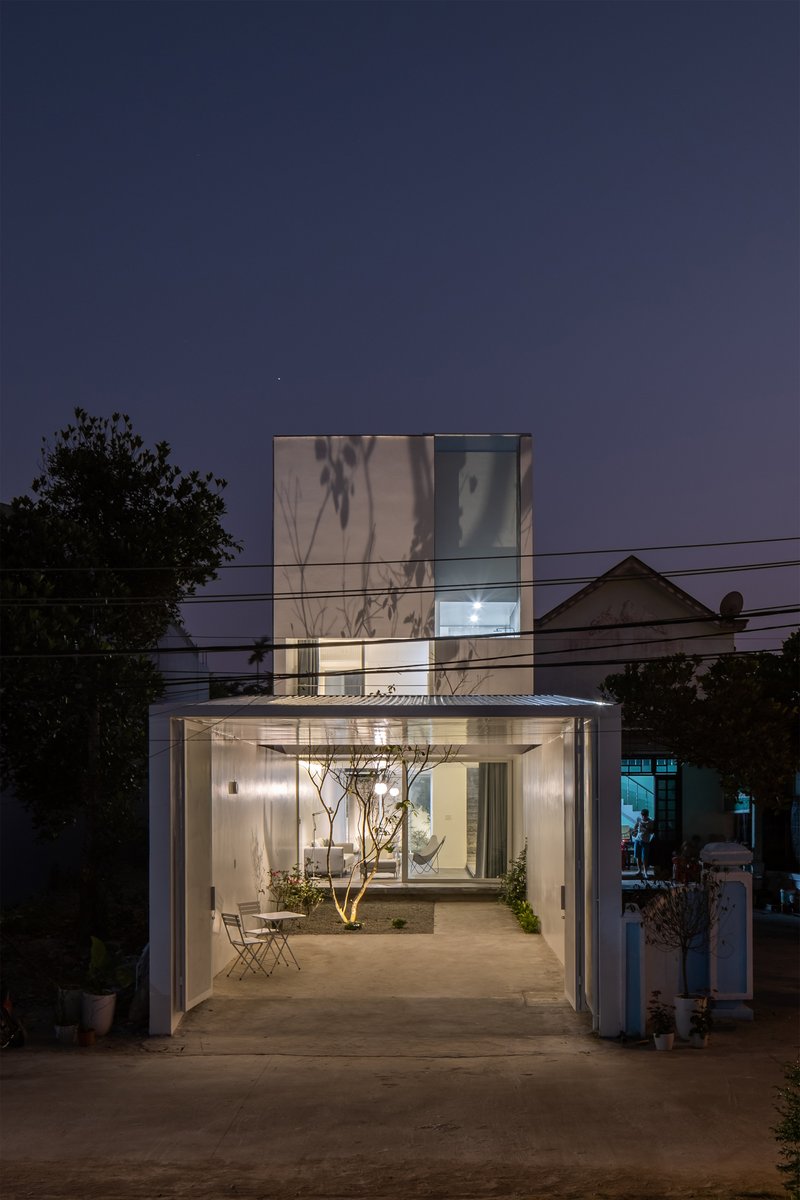
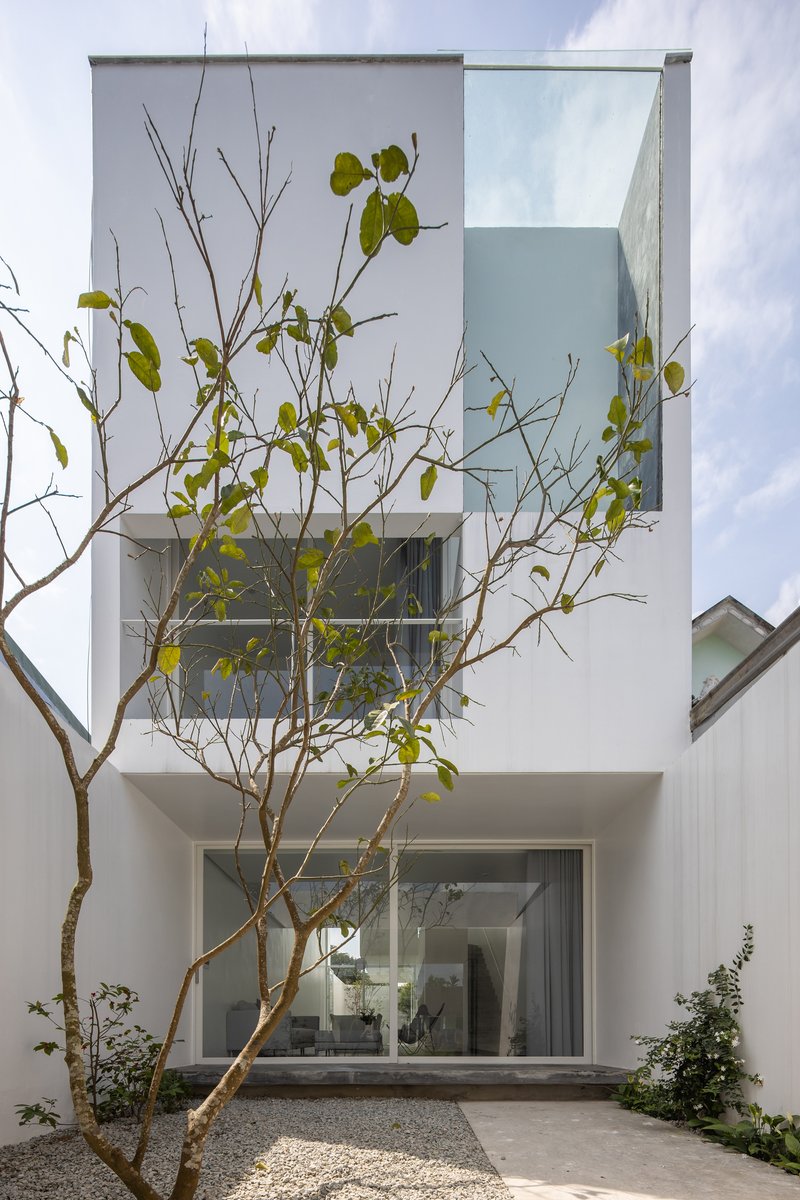
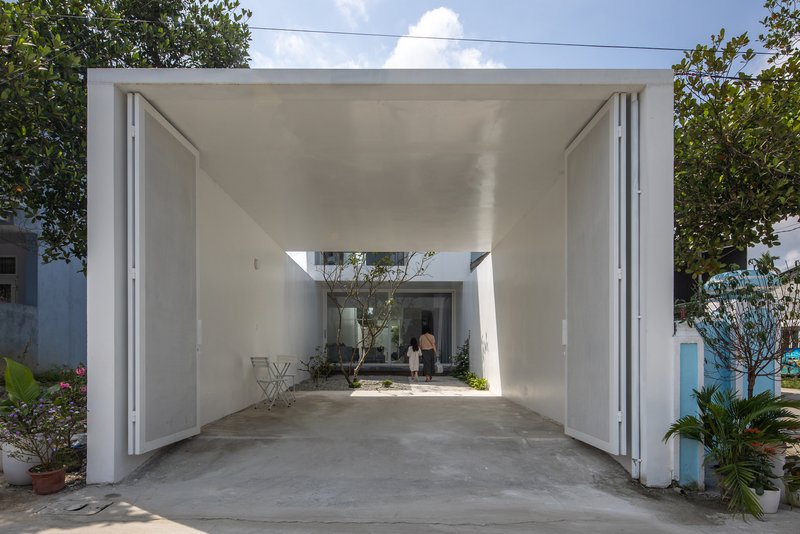
From the street, the house reads as a stack of transparent and translucent layers. At twilight, the ground floor opens completely, revealing the depth of the plan beyond the carport. Translucent glass panels glow softly, hinting at domestic life without exposing it. Above, balconies with sliding glass doors and planted ledges establish a rhythm of solid, void, and green that recalls the layered enclosures of traditional Hue compounds.
The covered carport doubles as a threshold: open white doors frame a view straight through to the interior courtyard, collapsing the distance between public street and private garden in a single glance. It is a generous urban gesture for a house this narrow.
Courtyards as the House's Lungs
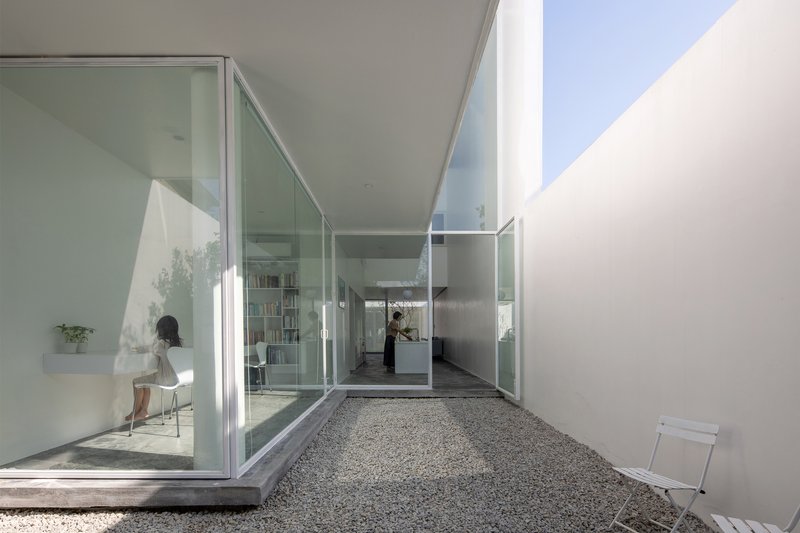
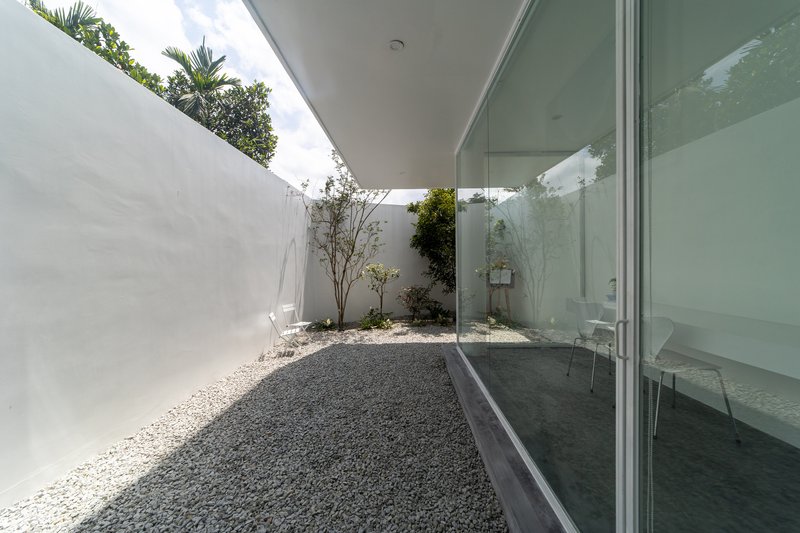
Hue's climate is punishingly humid, and the traditional garden house solved this by maximizing airflow between planted zones and inhabited rooms. BHA studio applies the same logic here through a series of gravel-floored courtyards threaded along the length of the lot. Each one is framed by floor-to-ceiling glass walls, turning the courtyard into a shared visual and thermal asset for every adjacent room.
A single tree anchored in gravel becomes a focal point, its canopy reflected in the glazed walls. These are not decorative light wells. They are working components of the ventilation strategy, pulling air through the house and up through the sloped roof system. The gravel keeps maintenance low and allows rainwater to percolate, a pragmatic choice for a low-cost project.
A Central Living Space That Pulls the Family Together
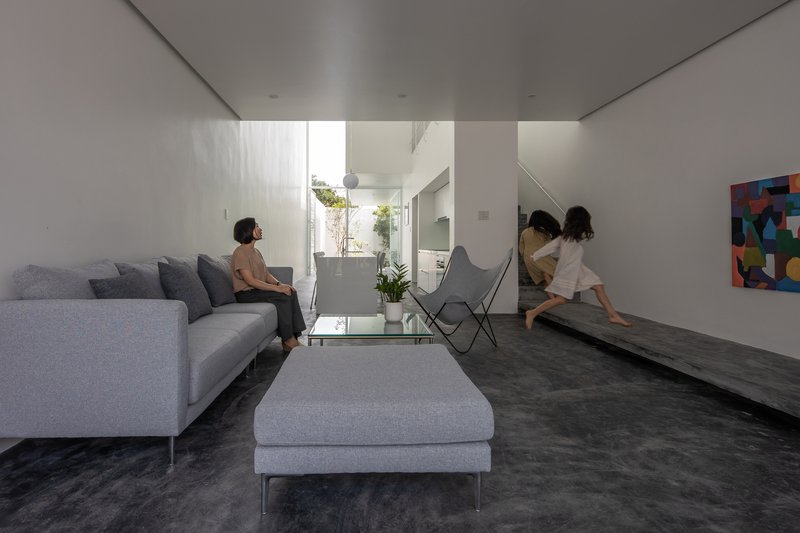
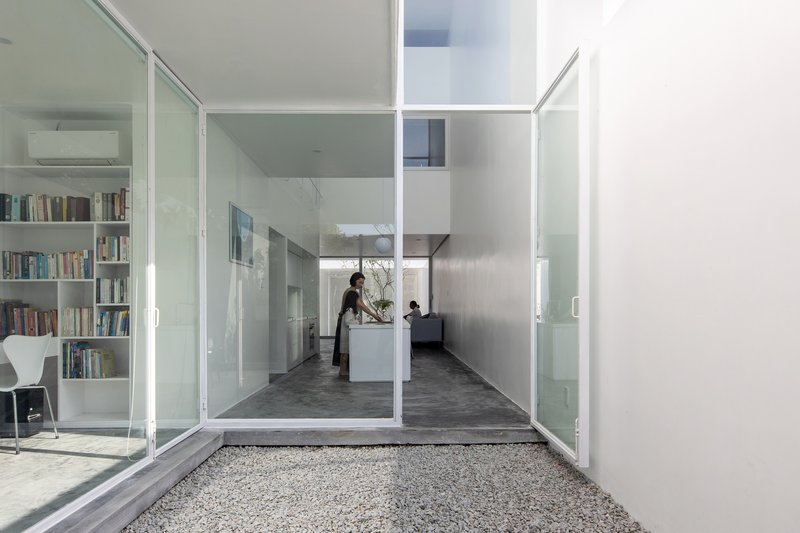
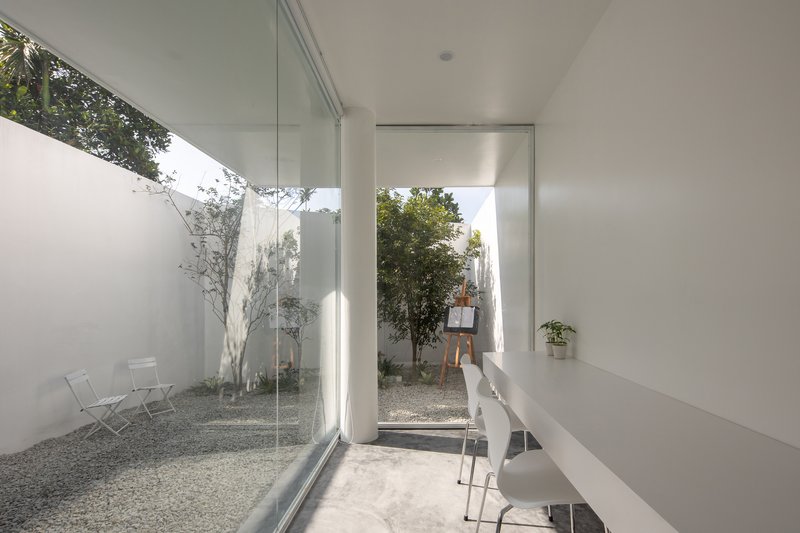
The heart of the plan is a large, double-height living area positioned at the center of the house. BHA studio describes all rooms as serving the same purpose: encouraging family connection. In practice, this means the study area and kitchen open directly onto courtyard space, and the living room sits beneath a generous skylight void that floods the ground floor with diffused light.
Bookshelves line the walls adjacent to sliding glass doors, and twin gravel courtyards with planted trees are visible through glass partitions. For a four-generation household, this central zone functions as a commons, a place where grandparents reading and children playing can coexist without walls between them.
Vertical Connections and Split Levels
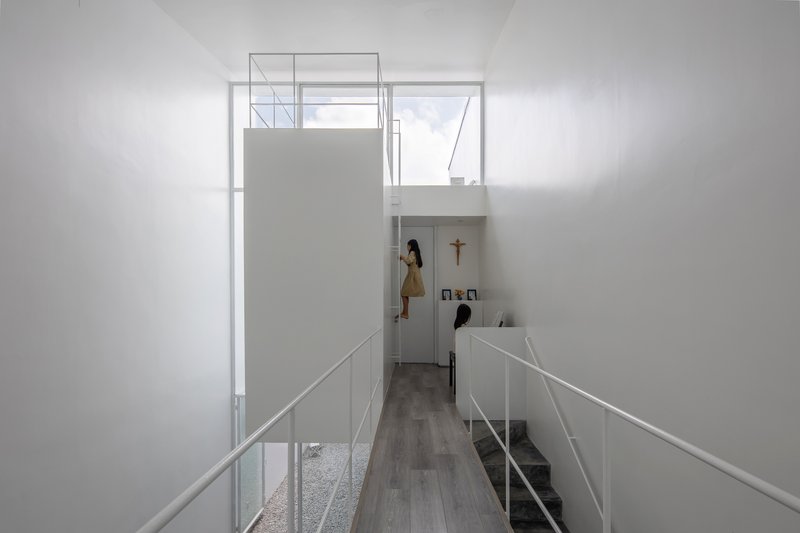
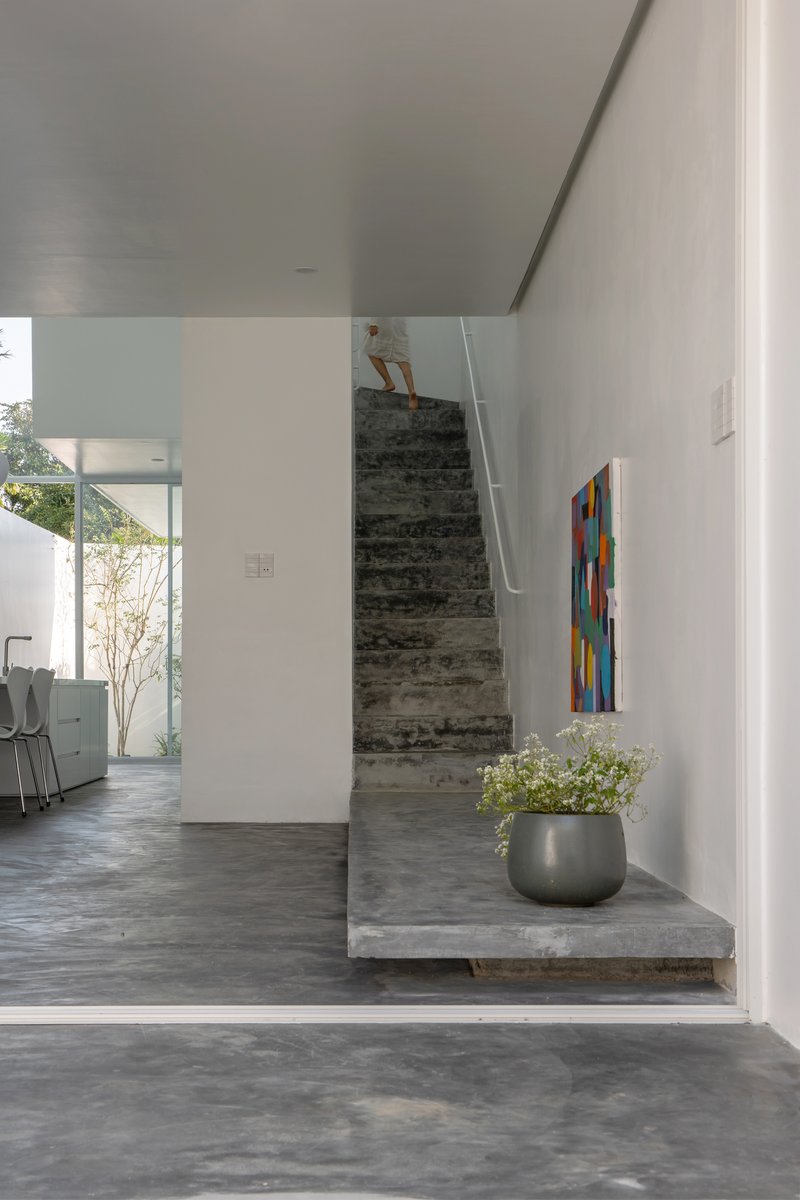
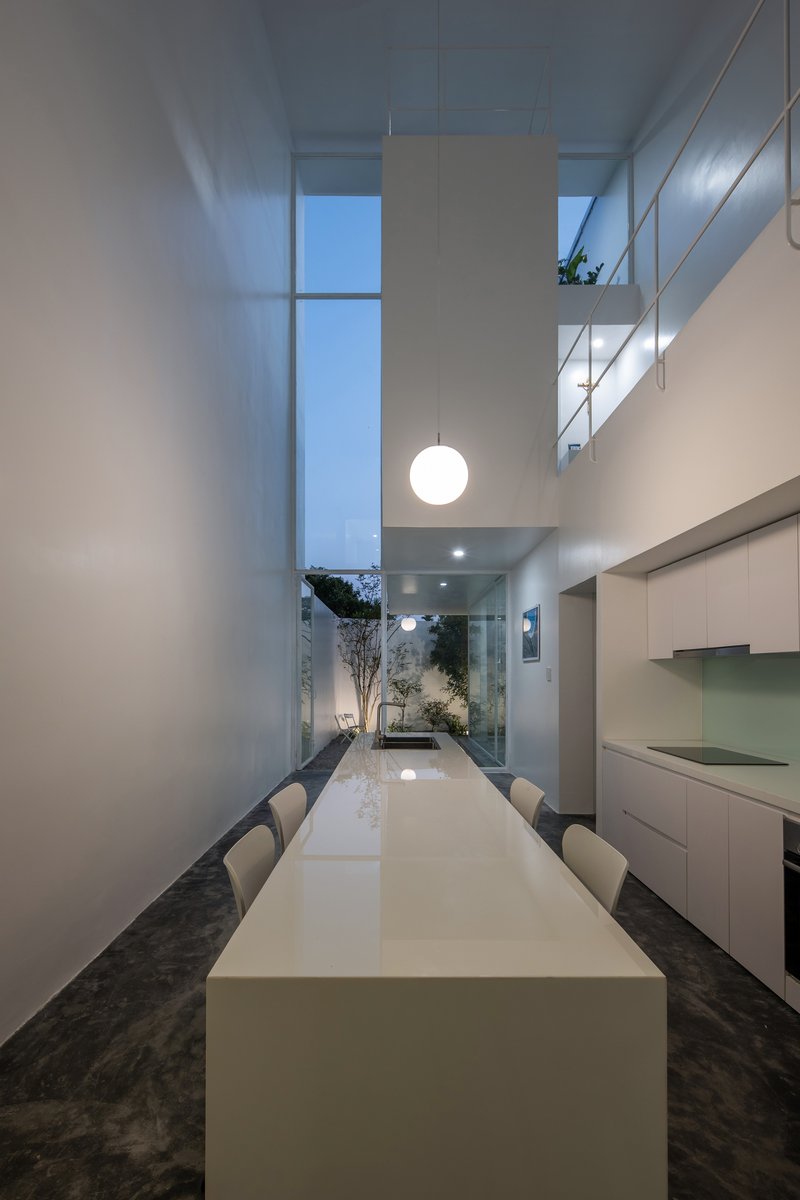
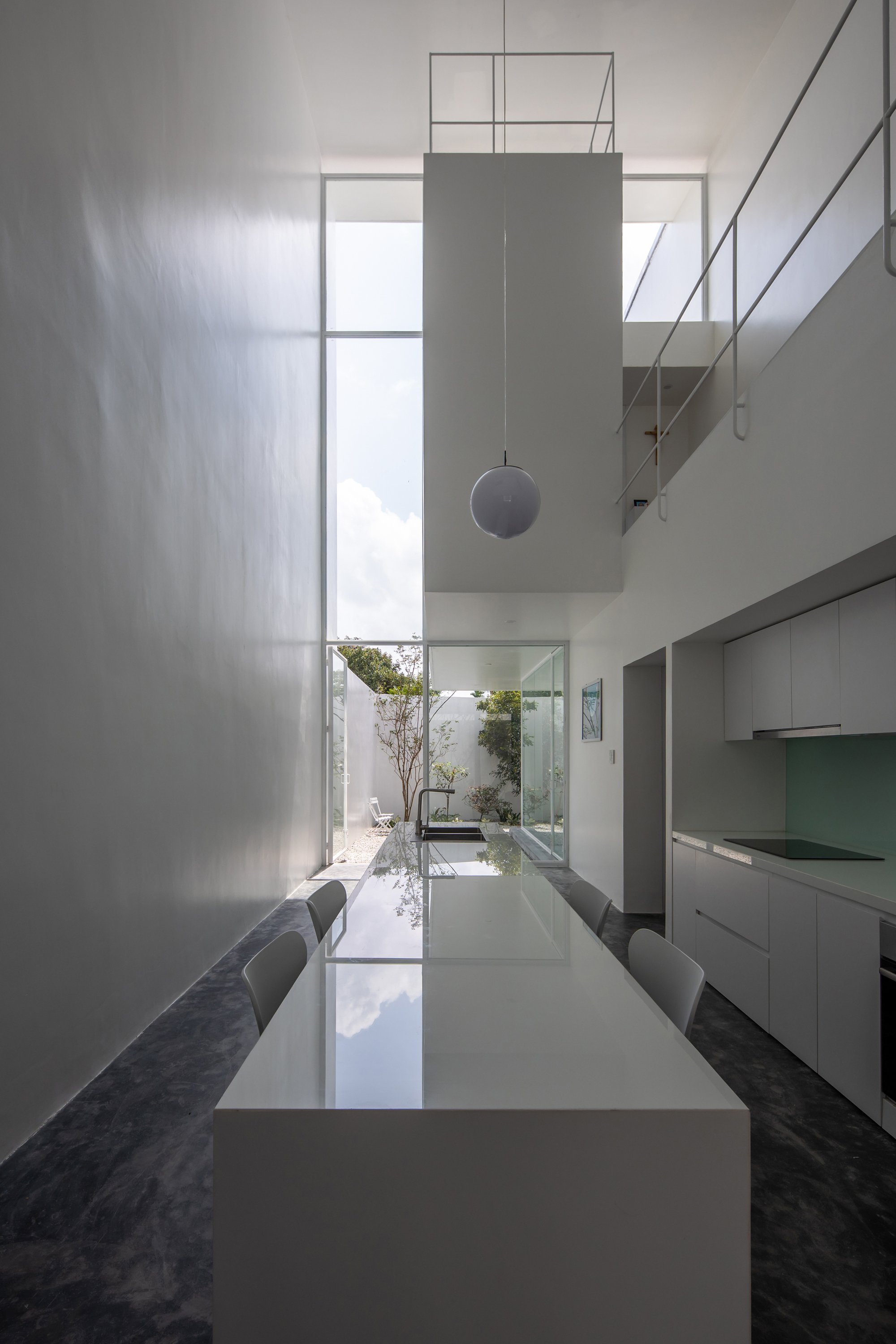
The section is where BHA studio's ambition becomes clearest. A board-formed concrete staircase rises from the living area, its rough texture a deliberate counterpoint to the smooth glass and white plaster that dominate the palette. Above, an upper-level walkway bridges across the double-height dining space, creating a moment of visual overlap between floors. A suspended globe pendant anchors the vertical void, giving the dining table a sense of occasion.
Modules set at different levels allow the upper terraces to interact with the rooms below. The skylight at the top of the void is not just a light source; it drives the chimney effect that keeps air moving upward and out through the sloped roof. Structure and climate strategy are indistinguishable here.
Private Rooms Turned Toward the Garden
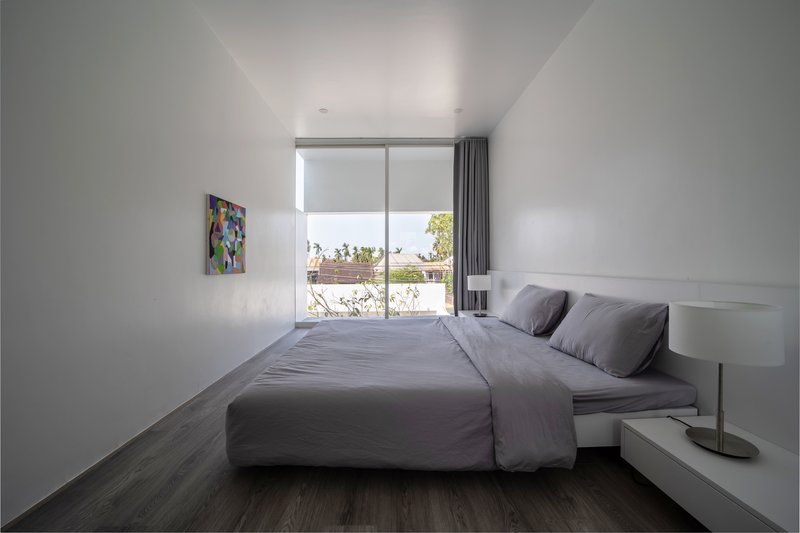
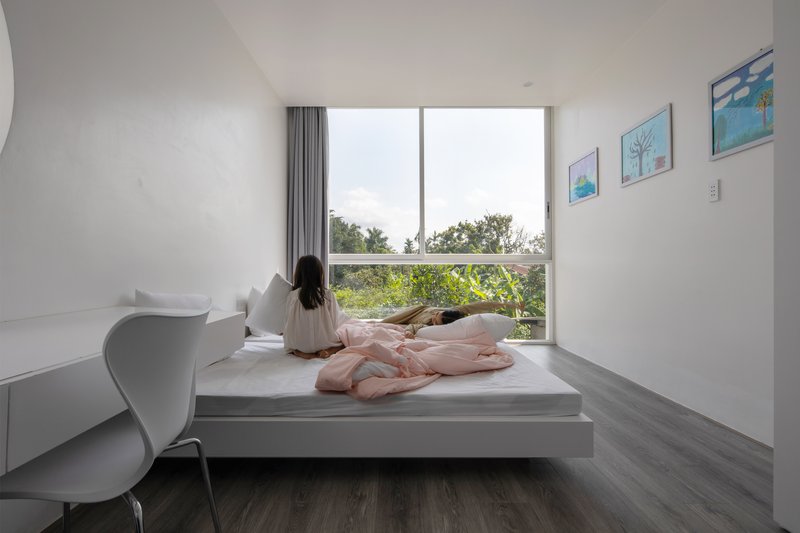
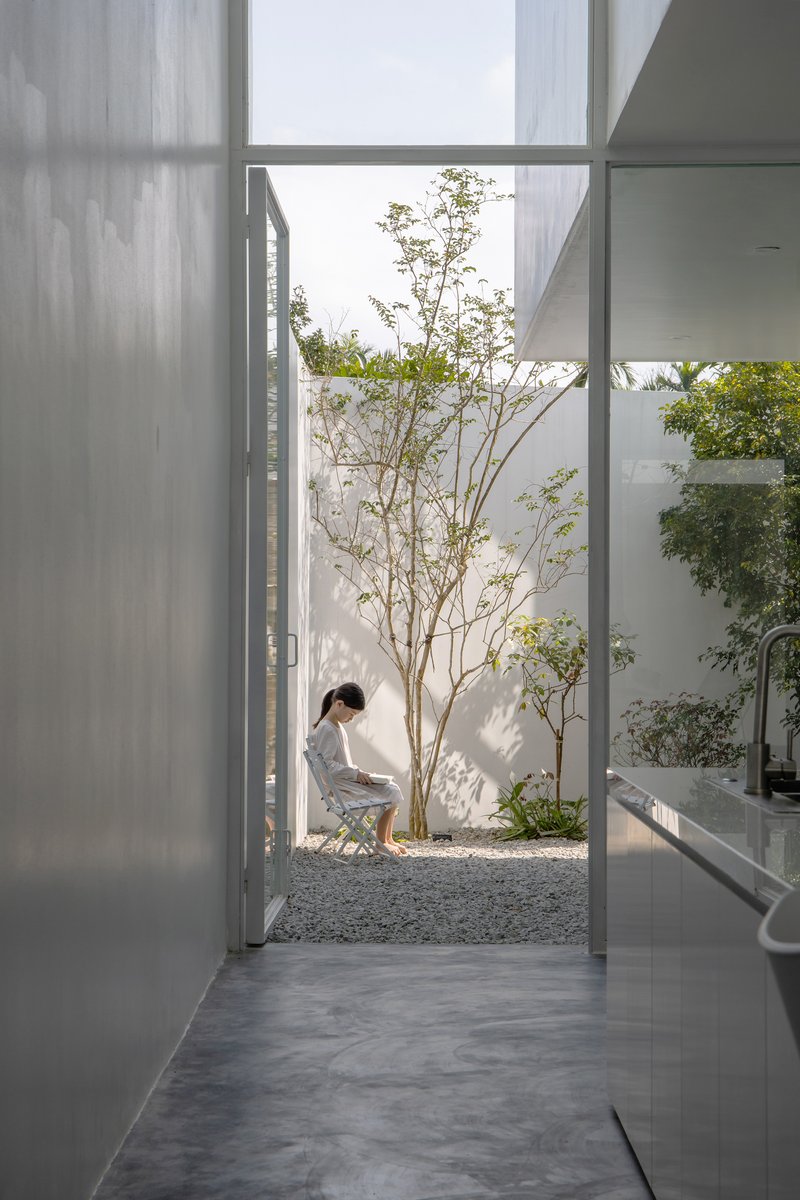
Even the most private rooms in the house maintain a line of sight to greenery. The bedroom opens through a full-height window onto courtyard planting, and a window seat nook positions a reader directly in front of trees and daylight. A bathroom view, screened by sheer curtains, looks out onto the gravel courtyard where someone sits casually. Privacy and garden contact are not opposed here; they are negotiated through layering.
Grey timber flooring in the bedrooms provides warmth underfoot, while the horizontal window frames optimize both natural light and cross-ventilation. These are not luxury gestures. They are low-cost decisions that work hard in Hue's climate.
Upper Terraces and the View Beyond
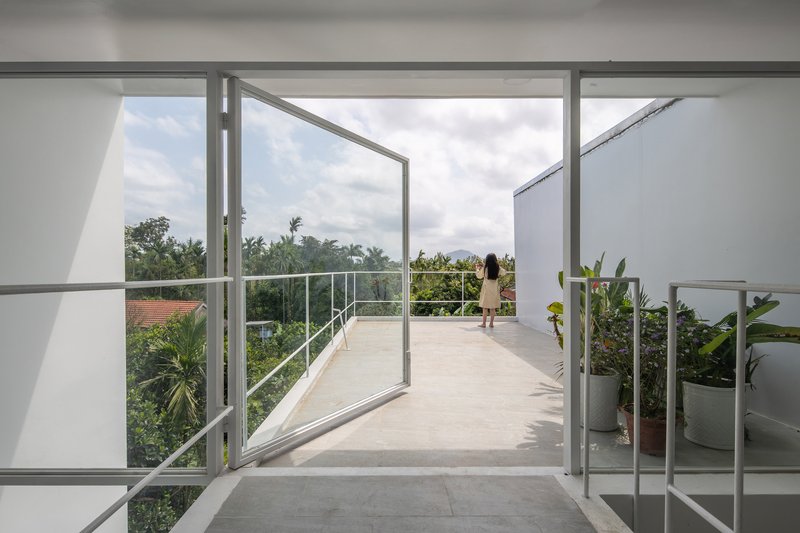
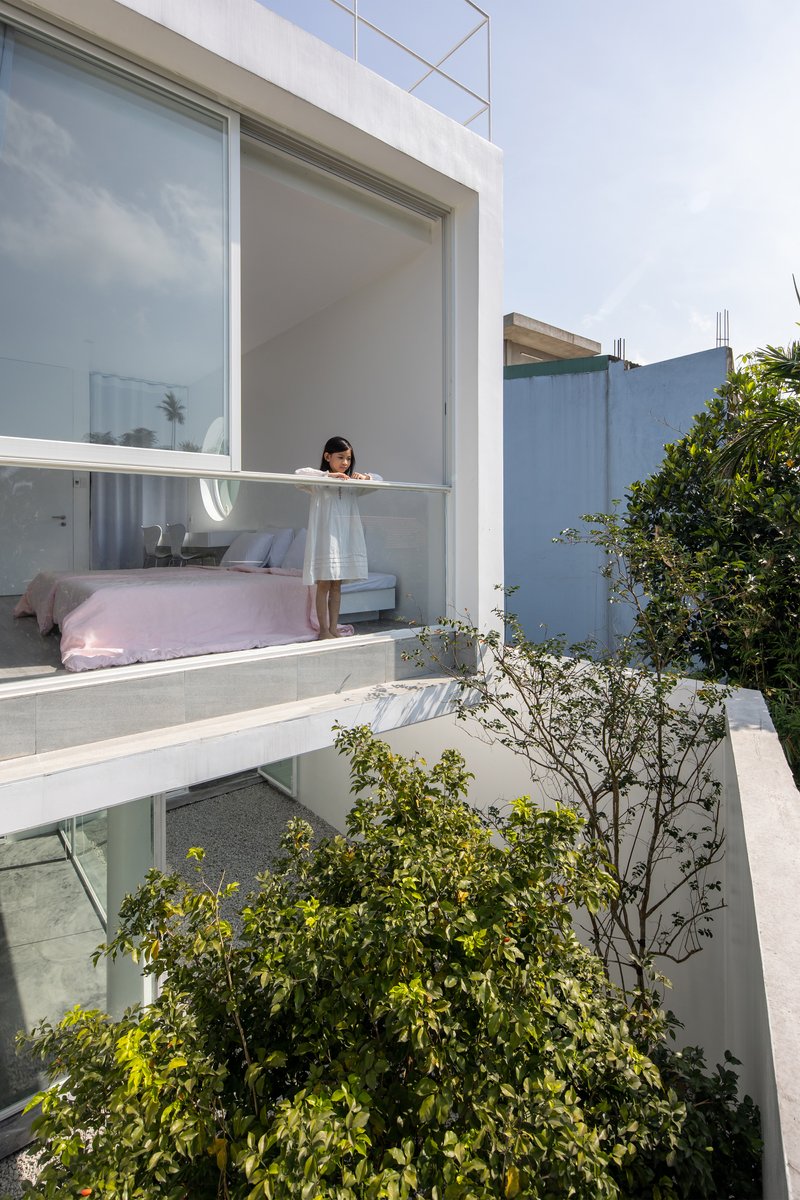
The roof terrace rewards the climb. Steel-framed doors swing open to reveal the distant mountains and thick vegetation that surround Hue, connecting the domestic interior to the broader landscape. Below, stacked balconies with planted ledges step down toward the street, their sliding glass doors providing each level with its own outdoor room.
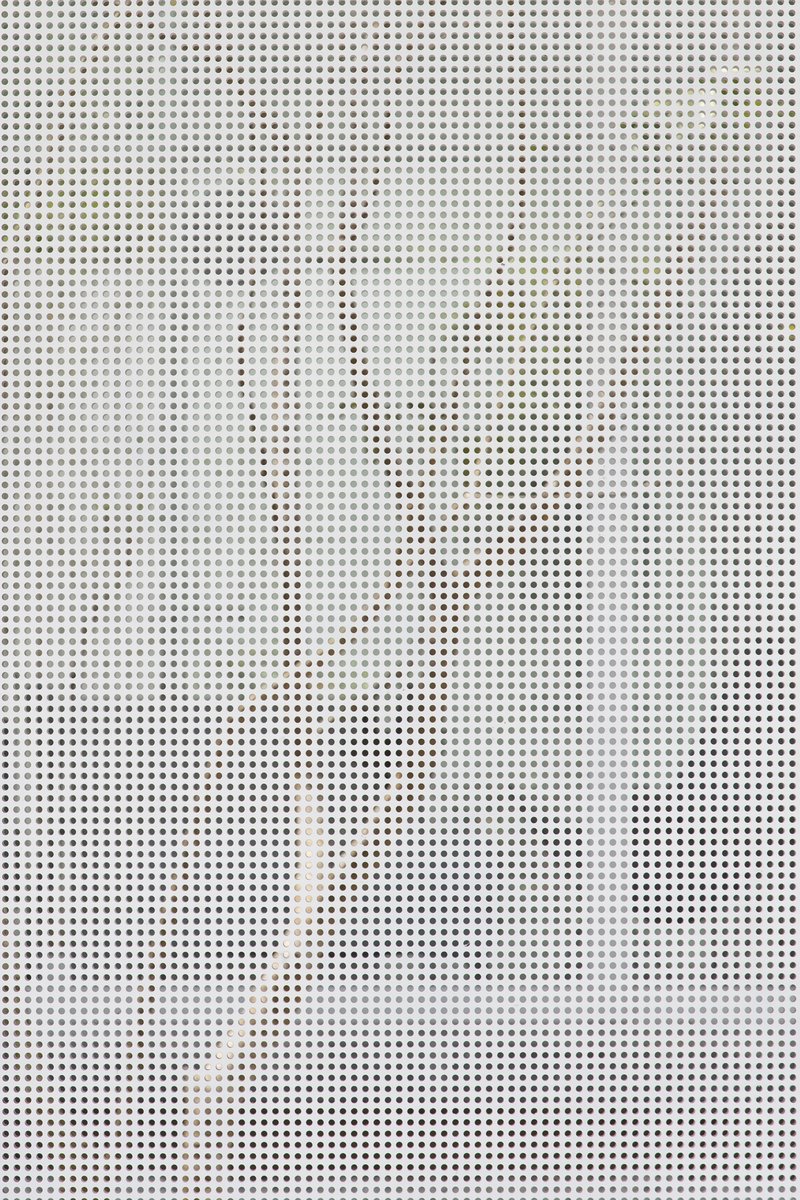
A perforated white metal screen on one elevation catches tree shadows across its surface, producing a constantly shifting pattern that links the house to the movement of its own garden. It is a detail that costs almost nothing and delivers a great deal.
The Kitchen and Dining as Shared Ground
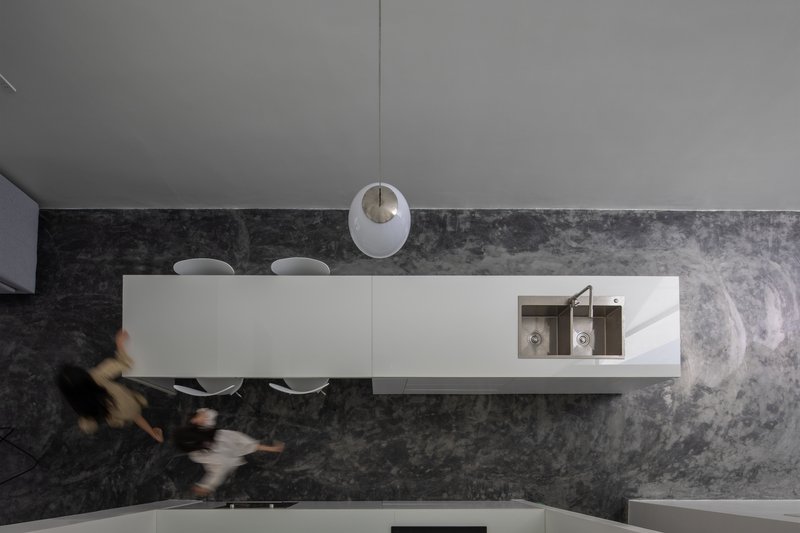
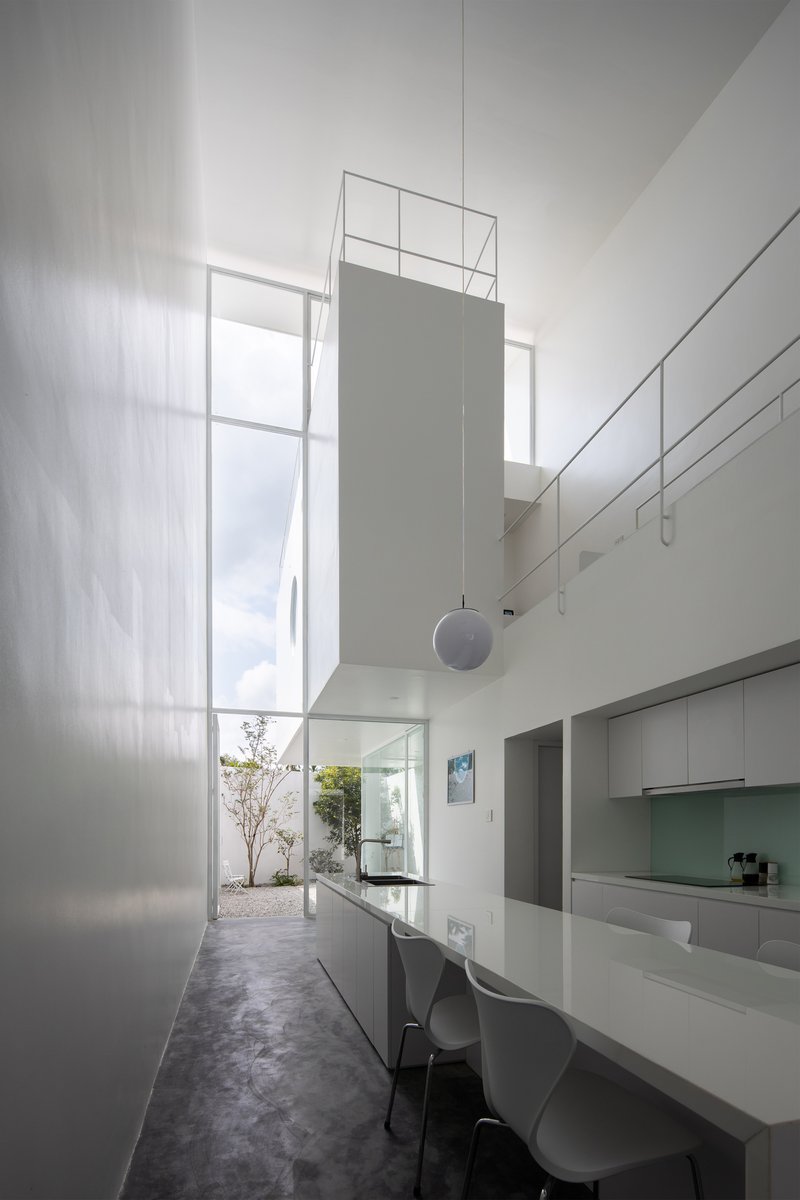
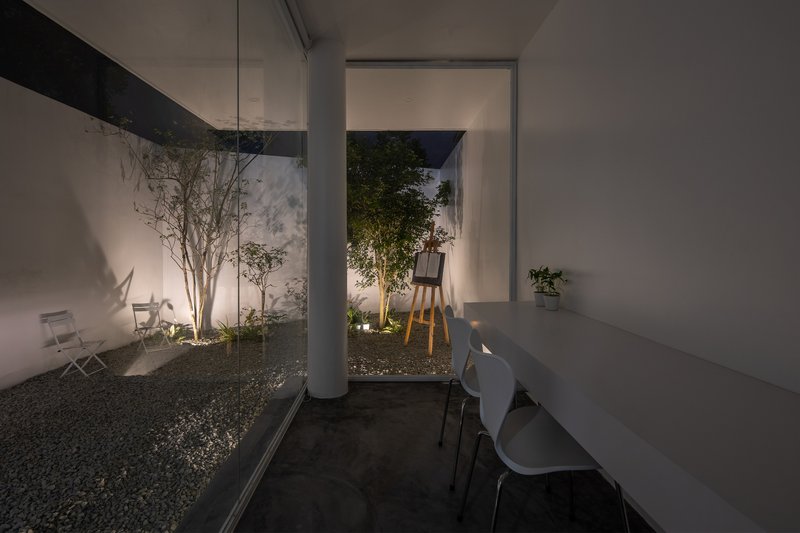
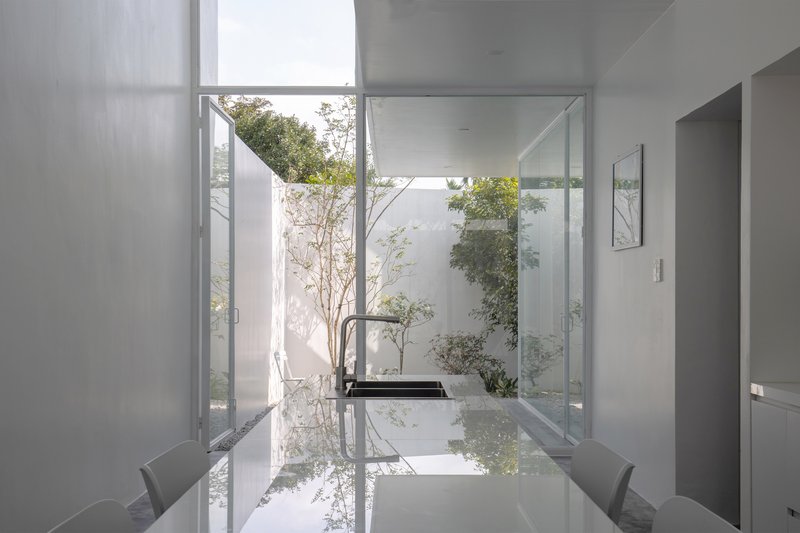
An overhead view of the kitchen island reveals a polished stone countertop and two figures passing through, the kind of candid moment that speaks to how the house actually works. The kitchen opens directly into the courtyard, blurring the line between cooking and outdoor life. Adjacent, the dining area sits under a high ceiling lit by tall translucent wall panels that soften the Hue sun into an even, warm wash.
At dusk, the view through glass walls to the planted courtyard transforms the dining space into something closer to an enclosed garden pavilion. The south atrium's huge glass wall delivers a panoramic connection to the backyard garden and, beyond it, the neighboring garden. This visual porosity is the house's most direct inheritance from the traditional Hue garden house.
Plans and Drawings
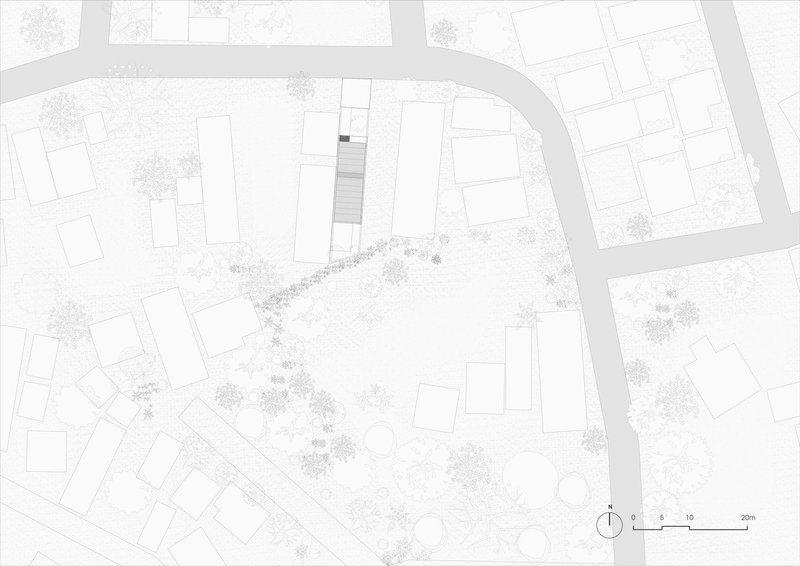
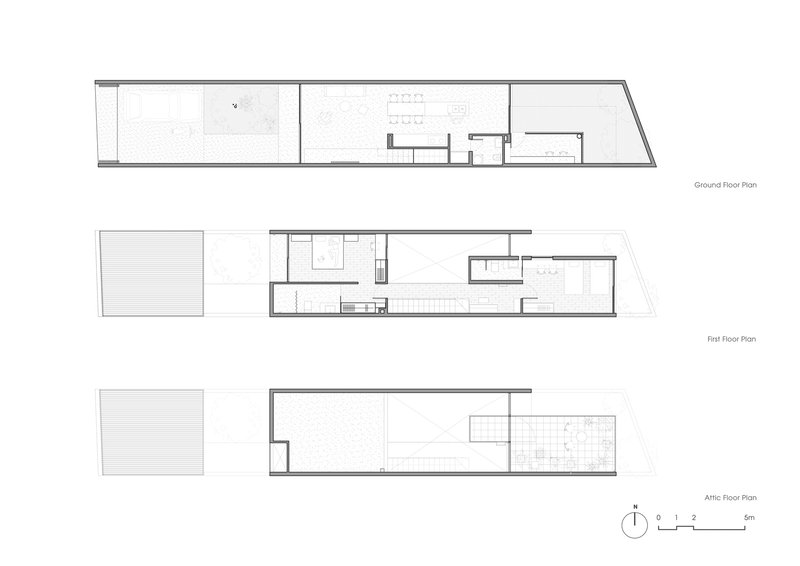
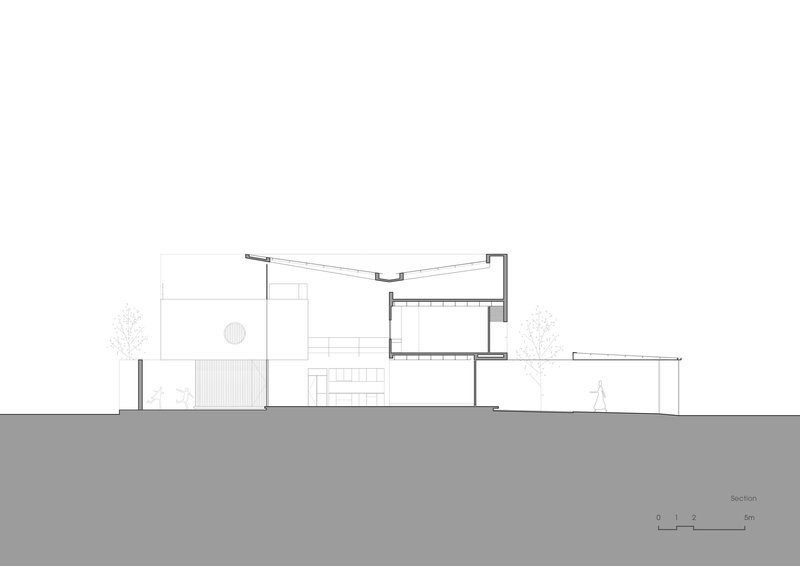
The site plan confirms the challenge: a slender rectangle wedged between neighboring residential parcels, its short end facing the street. The floor plans across three levels show how BHA studio distributes living, sleeping, and service spaces along the lot's length, with courtyards acting as spatial joints between zones. The section drawing reveals the sloped roof, the double-height void at the center, and the relationship between interior stairs and flanking trees. Together, these drawings make clear that the house's apparent simplicity is the product of careful calibration.
Why This Project Matters
The Kim Long House is a reminder that tradition is not a style to be copied but a set of spatial strategies to be reinterpreted. BHA studio does not reproduce the ornamental language of Hue's garden houses. Instead, it extracts their core logic: the interweaving of planted space and domestic space, the reliance on natural ventilation over mechanical systems, the willingness to let a garden do as much architectural work as a wall. On a five-meter-wide lot with a modest budget, these strategies prove more relevant than ever.
For a four-generation household, the house also makes an argument about how families can share space without losing individuality. Every room has its own relationship to a courtyard, its own calibration of light and air, yet all rooms converge on a shared center. In a moment when multigenerational living is increasingly discussed as a response to housing costs and aging populations, the Kim Long House offers a concrete, built example of how it can be done with grace and economy.
Kim Long House by BHA studio (lead architect: Nguyen Xuan Minh), Hue, Vietnam. 210 m², completed 2021. Photography by Hoang Le.
About the Studio
Share Your Own Work on uni.xyz
If projects like this are the kind of work you want to make, uni.xyz is a place to publish your own, find collaborators, and enter design competitions.




Popular Articles
Popular articles from the community

CRACK: Winery Architecture Carved Into the Landscape
CRACK reimagines winery architecture as a buried path through vineyard terrain, linking production, tasting, lodging, landscape and culture.
IKC de Geluksvogel: Sustainable School Architecture Designed for Free Movement and Digital Learning
IKC de Geluksvogel turns sustainable school architecture into a flexible Maastricht campus for digital learning, nature, and free movement.

Kerry Kounnapis Packs 800 Daily Coffees into a 43-Square-Metre Melbourne Laneway Bar
Palace Coffee channels Pellegrini's and European standing bars through oxide-red steel and spotted gum timber in a Ridgway Place sliver.
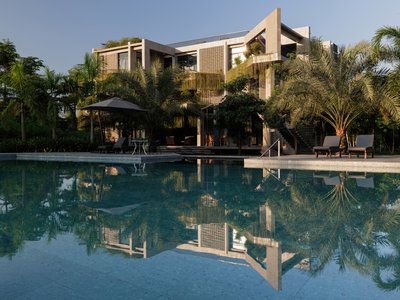
Reincarnation Weaves a Three-Story Retreat into the Green Landscape of Rural Bangladesh
Ara Manor in Narsingdi dissolves the line between domestic architecture and its lush surroundings through screens, courtyards, and planted rooftops.


Similar Reads
You might also enjoy these articles
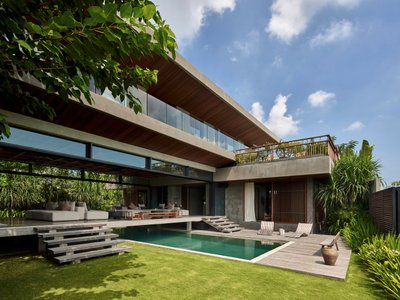
Freebird Residence by Alexis Dornier: A Tropical Modernist Sanctuary in Bali
Floating living pavilion above pool anchors H-shaped tropical villa, blending Japanese minimalism, sustainable strategies, lush landscape, and sculptural interiors.
127af Flips a Tiny Bagnolet Rowhouse Upside Down with a Handcrafted Roof Extension
A 55-square-meter terraced house on the edge of Paris gains a luminous upper living floor through lightweight timber and steel.
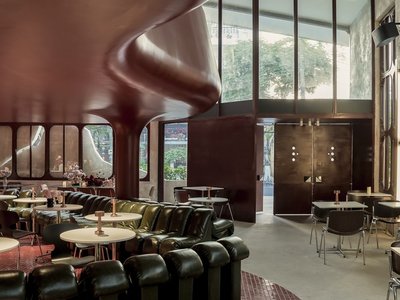
1.61 Design Workshop Wraps a 600-Square-Meter Café in Vietnam in Sculptural Burgundy Drama
Reden Café & Bistro pairs a helical staircase, mosaic floors, and deep red interiors to rethink Vietnamese hospitality space.

The Unbound Brain: A School Shaped by Cognitive Architecture
Cylindrical learning pods radiate like neurons from a central cortex, turning the floor plan into a spatial model of human thought.


Explore Transportation Competitions
Discover active competitions in this discipline




The Global Benchmark for Architecture Dissertation Awards


Challenge to design mud housing for contemporary communities
Comments (0)
Please login or sign up to add comments
No comments yet. Be the first to comment!