
Bill ’67 and Peter ’71 Alfond Coastal Research Center – Sustainable Research Architecture by Flansburgh Architects
A sustainable coastal research center blending nature, education, and architecture with passive cooling, immersive boardwalks, and eco-friendly systems supporting experiential environmental learning.


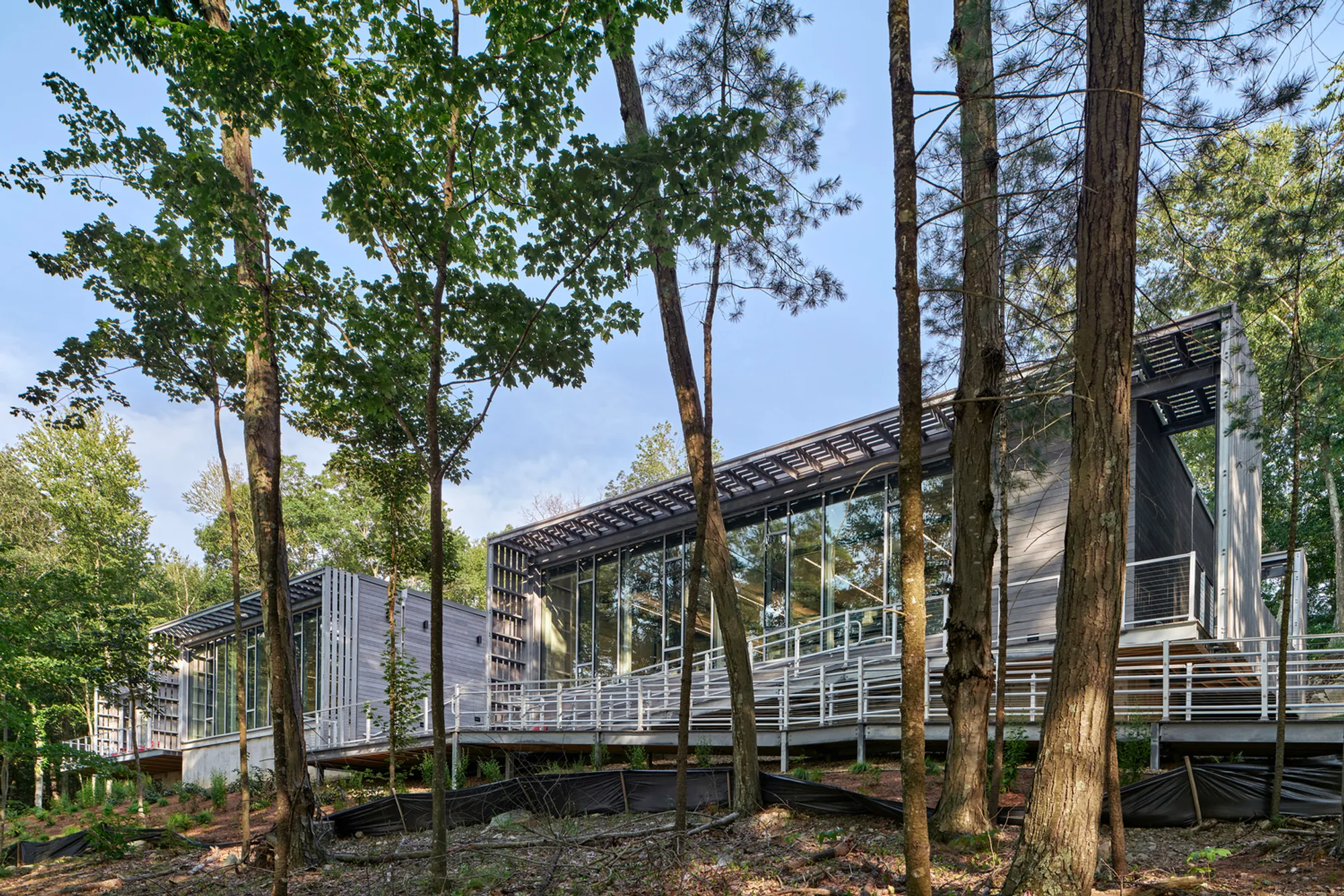
The Bill ’67 and Peter ’71 Alfond Coastal Research Center by Flansburgh Architects stands as a landmark example of sustainable coastal architecture in Newbury, Massachusetts. Designed to strengthen environmental awareness and support the school’s mission in interdisciplinary marine studies, the 9,350 ft² facility anchors itself along the ecologically sensitive Parker River marsh. Completed in 2022, the project blends research, education, and conservation into one resilient architectural experience.
A Research Center Rooted in Place
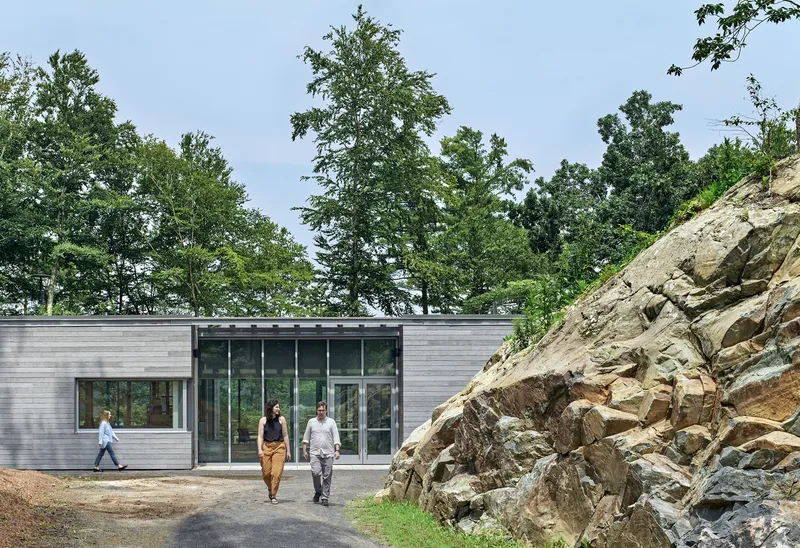
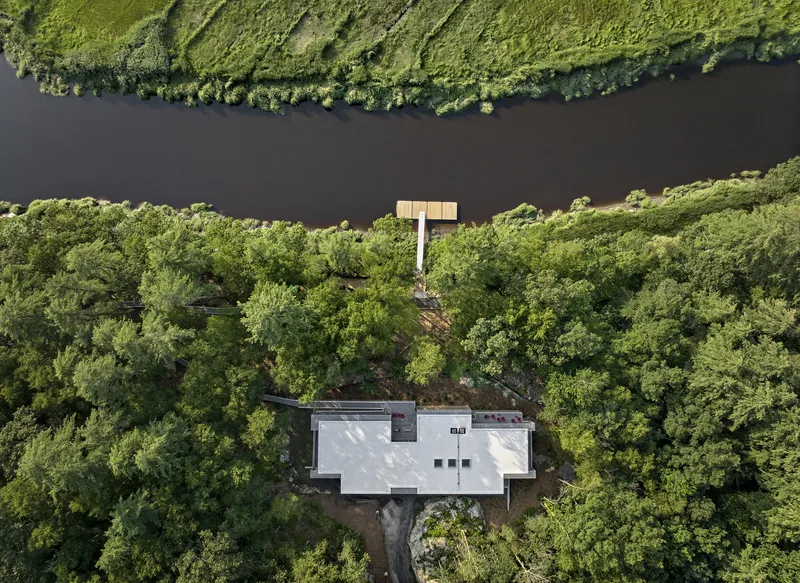
Situated on the edge of the Parker River marsh—a thriving ecological system—the Coastal Research Center is conceived as a building that learns from and gives back to its environment. The location was carefully selected to maximize proximity to the water while ensuring long-term ecological protection. Set 100 feet from the marsh and nestled between two existing rock formations, the placement minimizes disruption and enhances environmental performance.
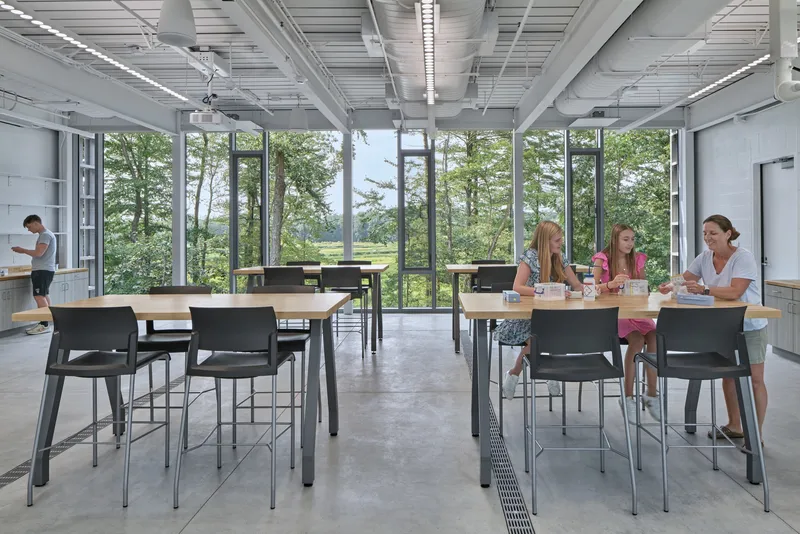
The long, linear form of the building faces the river, capturing prevailing breezes for passive cooling. Operable windows create natural cross-ventilation, significantly reducing the facility’s mechanical cooling demands. Extensive glazing along the riverfront immerses occupants in continuous views of the water, reinforcing the Center’s mission of connecting people to coastal ecosystems.

Materiality and Sustainable Expression
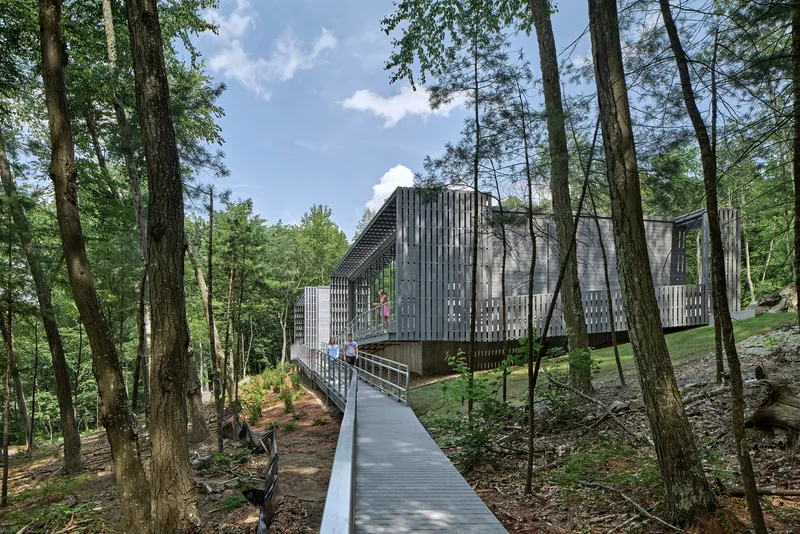
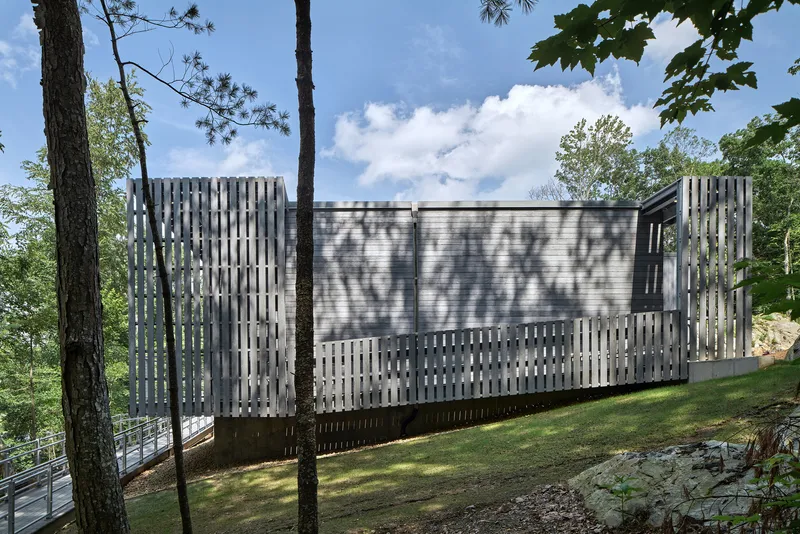
The exterior is clad in sustainable wood siding that harmonizes with the surrounding forest. This material choice not only reduces environmental impact but also allows the building to visually merge with its woodland setting. The restrained palette and low-profile composition echo the natural quietness of the site, ensuring the architecture enhances rather than interrupts the landscape.
Green spaces surrounding the facility are intentionally left unmanicured, preserving native growth and supporting wildlife habitats. All existing deciduous trees were retained, providing natural shading and lowering energy loads through passive cooling strategies.
Spaces Crafted for Learning and Collaboration
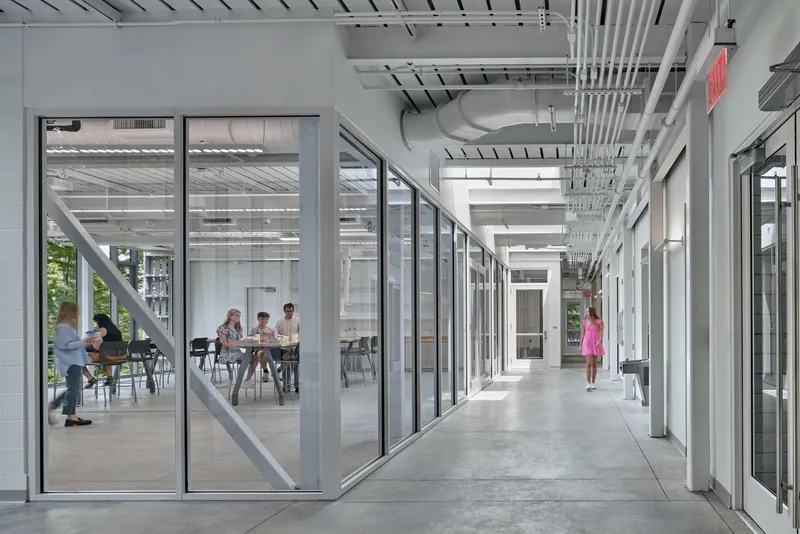
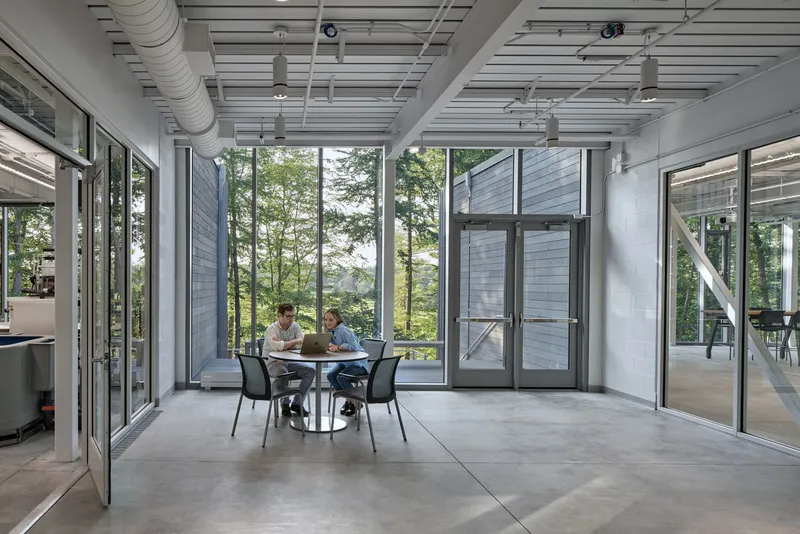
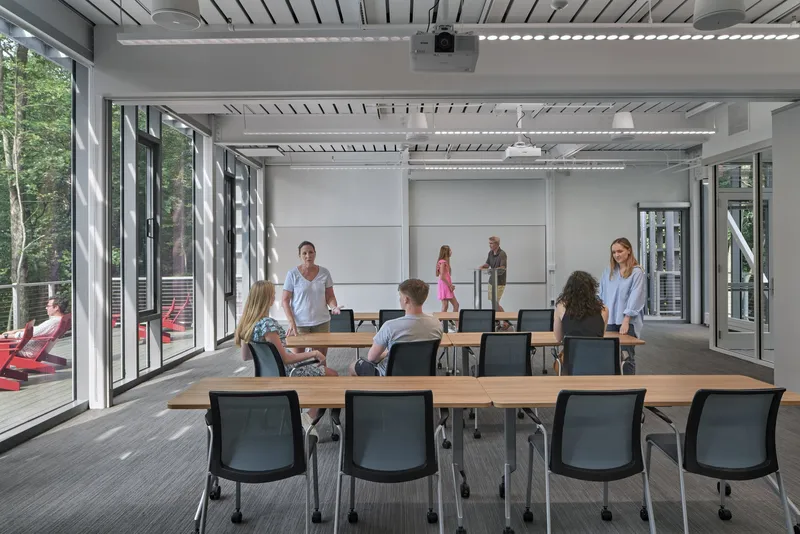
Designed as a hub for students, faculty, researchers, and the wider community, the Center promotes hands-on, cross-disciplinary learning. Transparent classrooms bring daylight deep into the building and visually connect different research areas, encouraging interaction among various fields of study.
A dedicated on-site apartment supports visiting marine scientists and researchers, fostering long-term academic collaboration. Outdoor teaching areas extend the learning environment directly into nature, giving students immediate access to the ecosystems they study.

Immersive Access to the Coastal Environment
One of the project’s defining features is its inclusive approach to environmental access. A 500-foot elevated ramp winds through the woods, creating an immersive entry sequence that welcomes visitors of all ages and abilities. This low-impact structure allows users to engage with the natural landscape without disturbing sensitive habitats.
To reach the water safely and sustainably, a steel-and-wood boardwalk cantilevers above the marsh’s delicate edge, minimizing ground disturbance. The pathway leads to a floating dock that provides direct interaction with the tidal environment, supporting both research and outdoor education.
Visible Environmental Systems as Teaching Tools
The Coastal Research Center integrates ecosystem technologies as visible learning components. Bio-infiltration basins, bioswales, and aquatic life support tanks create a functioning microcosm of the water cycle. By revealing these systems instead of concealing them, the architecture becomes an educational tool—demonstrating water quality management, filtration processes, and the essential role of water in sustaining life.
Flansburgh Architects’ design for the Bill ’67 and Peter ’71 Alfond Coastal Research Center exemplifies how architecture can merge environmental stewardship, educational purpose, and experiential design. Through its sensitive site placement, sustainable materiality, and a deep commitment to ecological learning, the Center sets a new benchmark for coastal research facilities and resilient academic architecture.
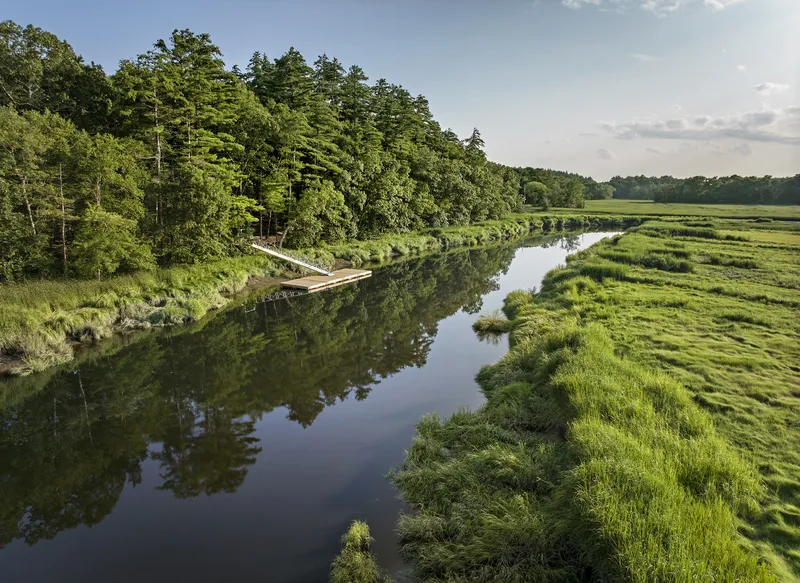

All photographs are works of Robert Benson




Popular Articles
Popular articles from the community


Riyadh For All: Intergenerational Urban Design for Active Aging in Rabat
Riyadh For All reimagines urban design in Rabat with intergenerational co-living, adaptive courtyards, and Moroccan cultural exchange today.
AL-JANNAH: Sustainable Architecture and Permaculture for Afghan Widows
AL-JANNAH uses sustainable architecture and permaculture to create resilient oasis of housing, learning, work and renewal for Afghan widows.

Hill & Cross Opera: Sculptural Opera House Architecture Shaped by Tallinn’s Landscape and Identity
Hill & Cross Opera reimagines opera house architecture in Tallinn through its sculptural hill, civic plaza, glass wave and a luminous cross.

Conexión: Biophilic Design Reimagines High-Rise Living in Hong Kong
Conexión reimagines high-rise living in Hong Kong through biophilic design, green facades, shared spaces, daylight, water and nature within.


Similar Reads
You might also enjoy these articles


Hodi-Mandai Geram
Project Function: Preservation and revitalization of the Intangible heritage and socio-spatial identity of the Hodi by Housing, Cultural Memory Center, Sacred Grove, landscape, local tourism economy


Olio Towers: A Mid-Rise for Performers That Fuses Housing, Rehearsal, and Stage
Located blocks from Houston's Theater District, this modular tower stacks living units around a central performance atrium.

Oasis: Modular Green Housing Carved into Dhaka's Urban Fabric
A shortlisted Plugin Housing entry reclaims unauthorized settlements in Dhaka with stepped concrete volumes, green roofs, and ventilation-driven design.

Black Hole: A Floating Megastructure for the Post-Physical Era
Emiliano Mazzarotto envisions a spherical, self-scaling arena where e-sports, digital hotels, and holographic stadiums replace traditional public space.


Explore Sustainable Design Competitions
Discover active competitions in this discipline



Challenge to reimagine the Iron Throne


Photograph architecture without architects


Illustrate the lost glory of Angkor Wat - Render Challenge


Design challenge to reuse E-waste
Comments (0)
Please login or sign up to add comments
No comments yet. Be the first to comment!