

Biosphere X: A Radical Vision of Sustainable Architecture Preserving Earth’s Ecosystems
A vertical biosphere in the desert reimagines sustainable architecture as a living memorial, preserving ecosystems while warning humanity of climate collapse.

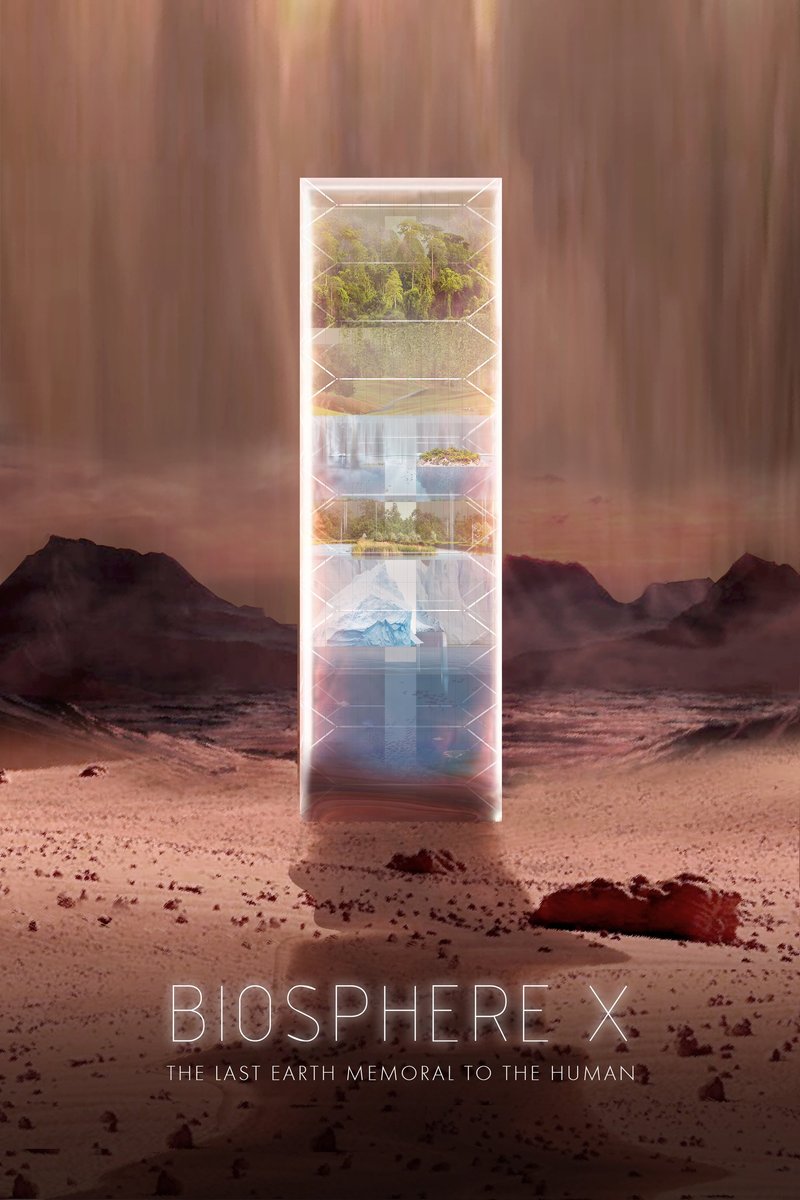
In an era defined by ecological crisis, sustainable architecture has emerged as one of the most critical disciplines shaping the future of our planet. Biosphere X, designed by Yibo Gao, Lu Xu, and Wang Xinqiang, positions itself not merely as a structure, but as a powerful architectural manifesto. Conceived as “the last monument to humanity,” the project encapsulates Earth’s ecosystems within a controlled vertical environment, presenting both a preservation strategy and a stark warning.
Shortlisted entry of Hourglass
Concept: Architecture as a Living Memorial
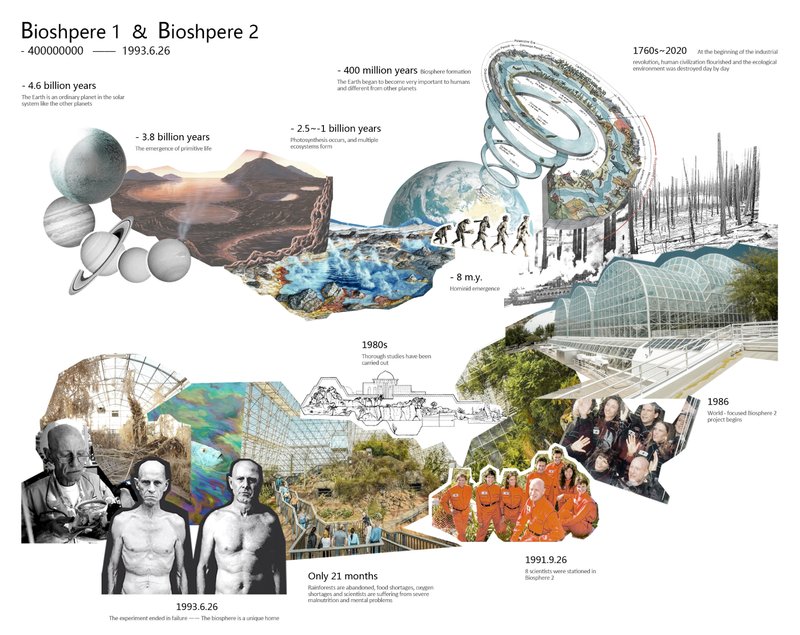
At its core, Biosphere X is an experimental model of sustainable architecture that transforms the idea of a memorial into an active ecological system. Instead of commemorating the past, the project projects a future where the biosphere itself becomes fragile and rare.
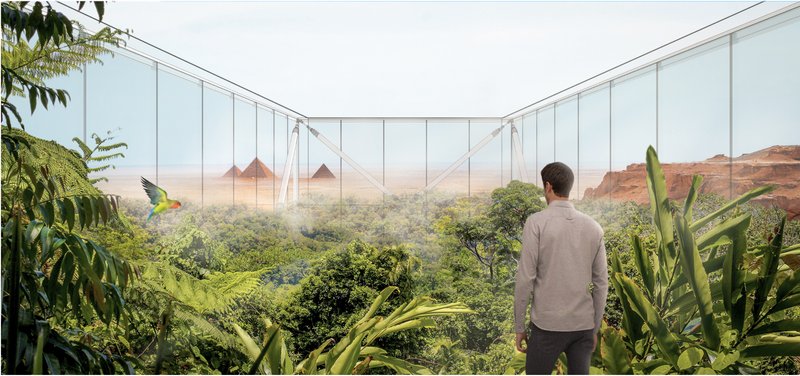
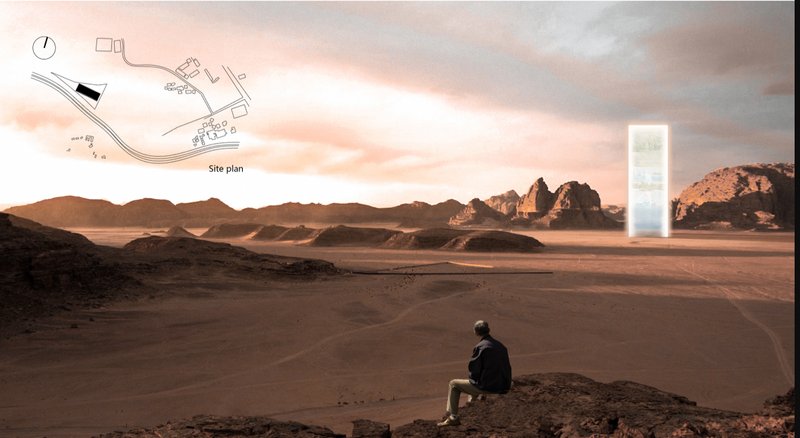
The design establishes an idealized biosphere within a transparent vertical structure placed in a harsh desert context. This contrast is intentional. Visitors are confronted with two realities: the thriving ecosystems inside and the degraded environment outside. The architecture does not dominate but frames the environment, acting as a vessel for life rather than a monument of mass.
The concept reinforces a simple but urgent message: protecting the Earth means protecting the biosphere. By presenting a “correct” ecological sample, the project allows visitors to understand how far current conditions deviate from natural balance.
Spatial Strategy: Layered Ecosystems in Vertical Form
The architectural organization of Biosphere X is defined by a stacked system of ecological zones, each representing a critical component of Earth’s biosphere. These include soil horizons, marine systems, glacial environments, wetlands, grasslands, rainforests, and atmospheric layers.
Each layer operates as a self-regulating ecosystem while contributing to a larger closed-loop system. The verticality of the structure compresses planetary diversity into a single spatial experience, enabling visitors to move through multiple climatic and ecological conditions within a controlled environment.
The design integrates circulation pathways that allow observation without disruption, reinforcing the role of architecture as mediator rather than occupier.
Environmental Systems and Technological Integration
A key aspect of the project lies in its environmental control systems. The biosphere is not static; it is dynamically maintained through artificial circulation mechanisms that regulate temperature, humidity, and chemical balance.
Specialized equipment floors monitor ecological parameters and ensure system stability. Chemical reaction tanks and atmospheric control systems simulate natural cycles, maintaining equilibrium across the layered environments.
This approach positions the project at the intersection of sustainable architecture and environmental engineering, where built form and ecological processes operate as a single system.
Experience and Perception: Confronting Climate Reality
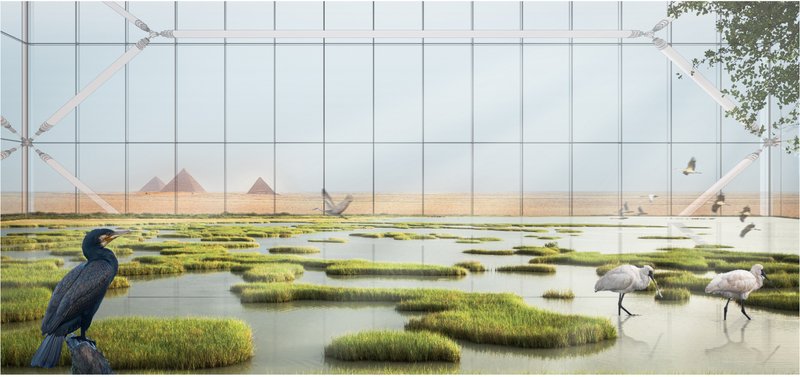
The experiential quality of Biosphere X is central to its impact. Visitors encounter lush vegetation, wetlands, and marine life within a transparent enclosure, while the surrounding desert remains barren and desolate.
This juxtaposition creates a powerful psychological effect. The richness of nature becomes more apparent when framed against absence. The project does not rely on didactic explanation; instead, it communicates through spatial contrast and sensory immersion.
By comparing the idealized biosphere with the real world, the architecture exposes the abnormality of current environmental conditions. It transforms awareness into a visceral experience.
Timelessness and Longevity
Designed as a structure that could endure for generations, Biosphere X incorporates principles of long-term ecological stability. The internal regulation systems are based on biosphere circulation models capable of maintaining equilibrium over extended periods.
Rather than a static monument, the project functions as a continuously evolving system. Its longevity is tied not only to material durability but to its capacity to sustain life.
Global Relevance
The project speaks to a global audience by addressing a universal condition. Climate change is not localized; it affects the entire biosphere. Biosphere X reflects this by presenting the biosphere as a singular, interconnected entity.
The monument serves as a constant reminder of what the Earth should be. It challenges visitors to reconsider their relationship with the environment and recognize the urgency of collective action.
Jury Insights
Jonas Prismontas, Juror“Seems like this would require a lot of maintenance, but of course it would be very exciting to visit a monument like that!”
Yuriko Yagi, Juror“When I see the visualizations looking at the desert of the site through the rich nature inside the building, I understand this idea was simple yet powerful. I felt that the richness of nature, which we are losing nowadays, was combined with the surrounding context of the desert and it is created with contrast.
I feel that the proposal has the power to make you imagine many things, such as: the beauty of nature, the transience, the dystopian future that one day this building will be the only one left with a rich of nature.
The idea of minimizing the architecture itself and putting an emphasis on the earth's environment is great.”
Biosphere X redefines sustainable architecture by shifting its role from minimizing harm to actively preserving life. It is both a sanctuary and a warning, a structure that encapsulates the fragility and resilience of the Earth’s ecosystems.
In compressing the biosphere into a single architectural form, the project forces a confrontation with reality. It asks a fundamental question: if this becomes the last refuge of nature, what does that say about the world outside?





Popular Articles
Popular articles from the community

Bernardes Arquitetura Stretches a Timber Roof Along a Reservoir's Edge in Minas Gerais
Dam House in Itaúna lets a sweeping wooden canopy dissolve the boundary between hillside terrain and open water.
YOAP Architects Round a Corner in Yeongcheon with a Cylindrical Community Hub
A 197-square-meter brick and ribbed-clad tower turns a forgotten alley corner in South Korea into a public garden with a low threshold.
Fausto Terán and Toro Fuse Japanese Craft with Mexican Tradition in a Lakeside Retreat
Nakamura House pairs Shou-Sugi-Ban charred pine with handmade clay tile at the foot of Atlangatepec Lagoon in Mexico.
RDTH architekti Rips Out Nearly Every Wall in a Prague Apartment and Replaces Them with Furniture
A 101-square-meter post-war flat in Prague trades rigid partitions for a single rotated furniture block, curtains, and glass concrete.
Similar Reads
You might also enjoy these articles


Urban Forest: A Vertical Ecosystem for 5,000 Workers in Singapore's Changi Business Park
Radially stacked pods and layered green decks turn a 7-acre plot into 47 acres of ecological workspace projected for 2040.
interACT: A Wearable Transit Object That Turns Commuting Into Social Infrastructure
A backpack-mounted foldable device transforms walking, waiting, and riding into moments of shared comfort across Jakarta's transit network.
Lean On Barrier System: Where Traffic Safety Meets Chai Culture in Ahmedabad
A modular steel barrier doubles as informal seating and lean-on furniture at one of Ahmedabad's busiest intersections, keeping vendors in place.

The Black Bagh: A Living Monument Built from Water, Light, and Memory
On the banks of the Yamuna, two designers replace the myth of a marble mausoleum with a regenerative landscape of reflection and ritual.

Explore Conceptual Architecture Competitions
Discover active competitions in this discipline




The International Standard for Design Portfolios


The Global Benchmark for Architecture Dissertation Awards


The Global Benchmark for Graduation Excellence


Challenge to reimagine the Iron Throne
Comments (0)
Please login or sign up to add comments
No comments yet. Be the first to comment!