
Blue Bottle Coffee West Bund: A Harmonious Blend of Industrial Heritage and Modern Design
Blue Bottle Coffee at West Bund blends industrial heritage with modern design, featuring timber canvases, concrete elements, river views, and warm inviting interiors.


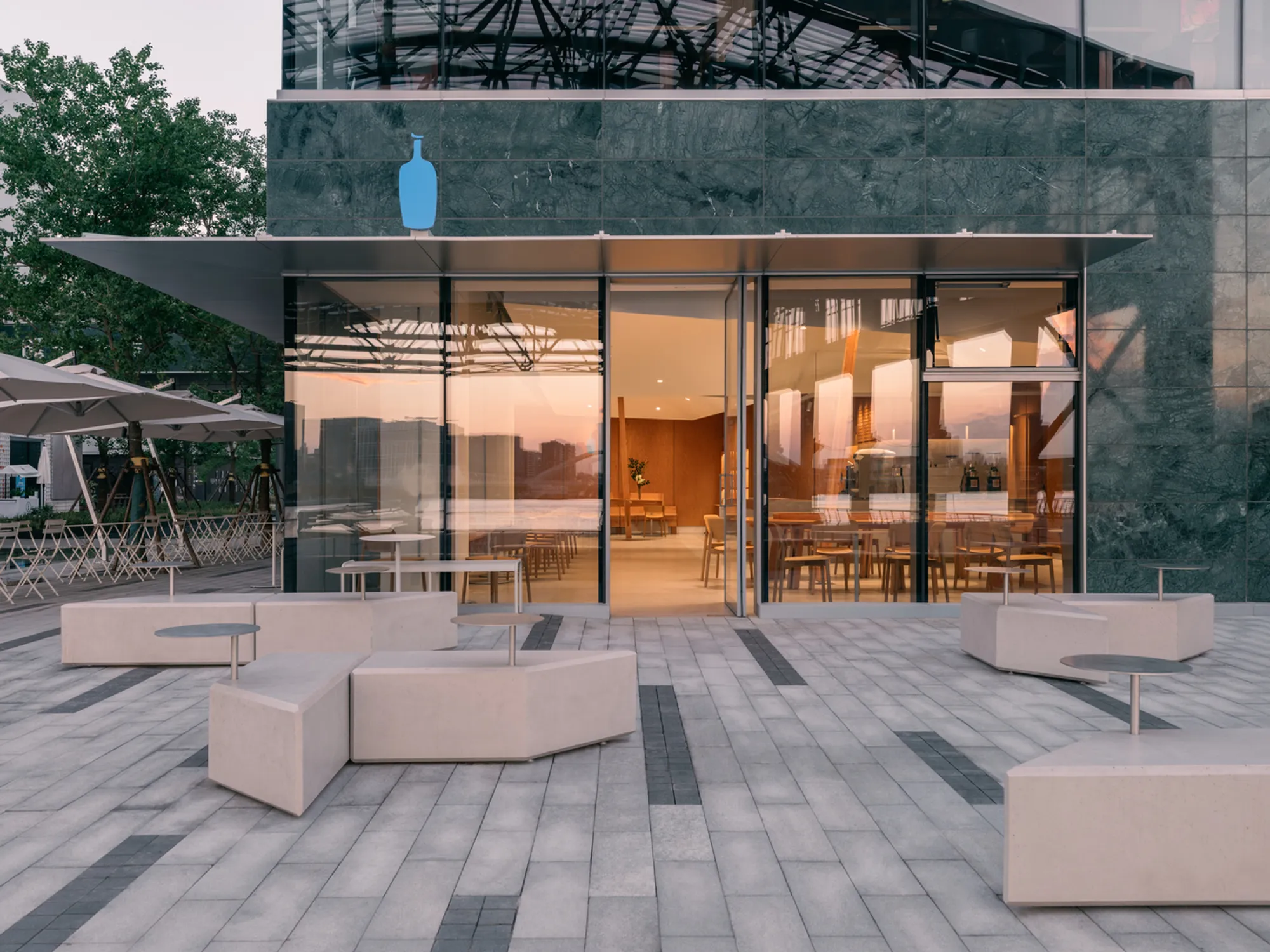
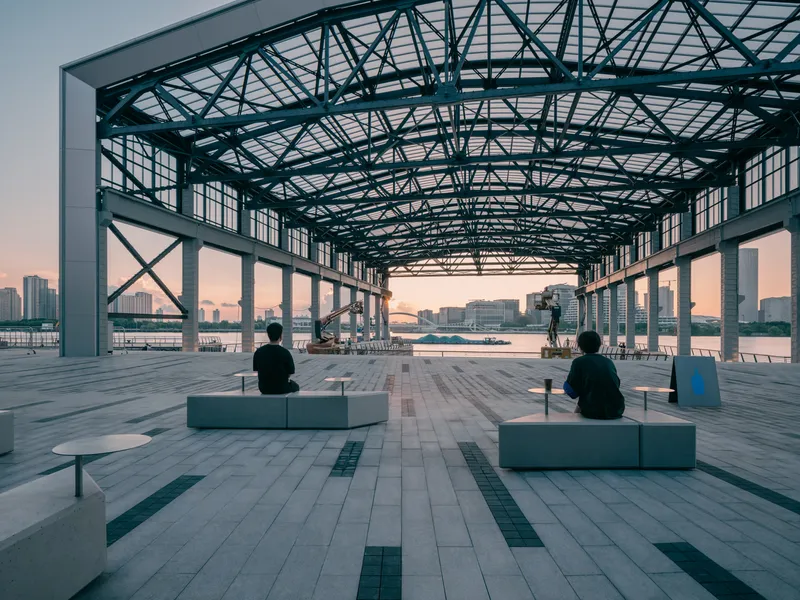
Nestled along Shanghai’s revitalized West Bund, Blue Bottle Coffee, designed by atelier tao+c, transforms a historic industrial site into a contemporary coffee experience. The 180 m² café occupies a space once home to the Shanghai Cement Factory (1920–2009), with a view overlooking a shipyard—a nod to the area’s industrial past. Following extensive urban renewal along the Huangpu River, the West Bund has emerged as a vibrant destination for cultural activities, outdoor gatherings, and riverside leisure, attracting locals and tourists alike.
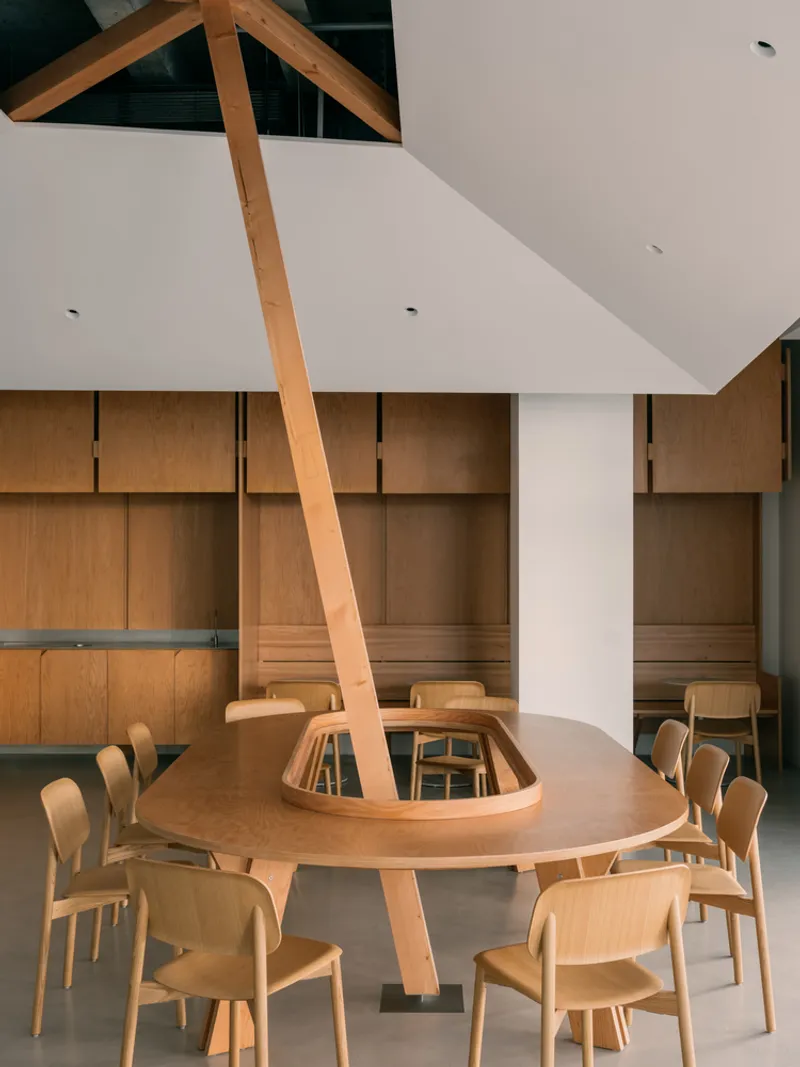
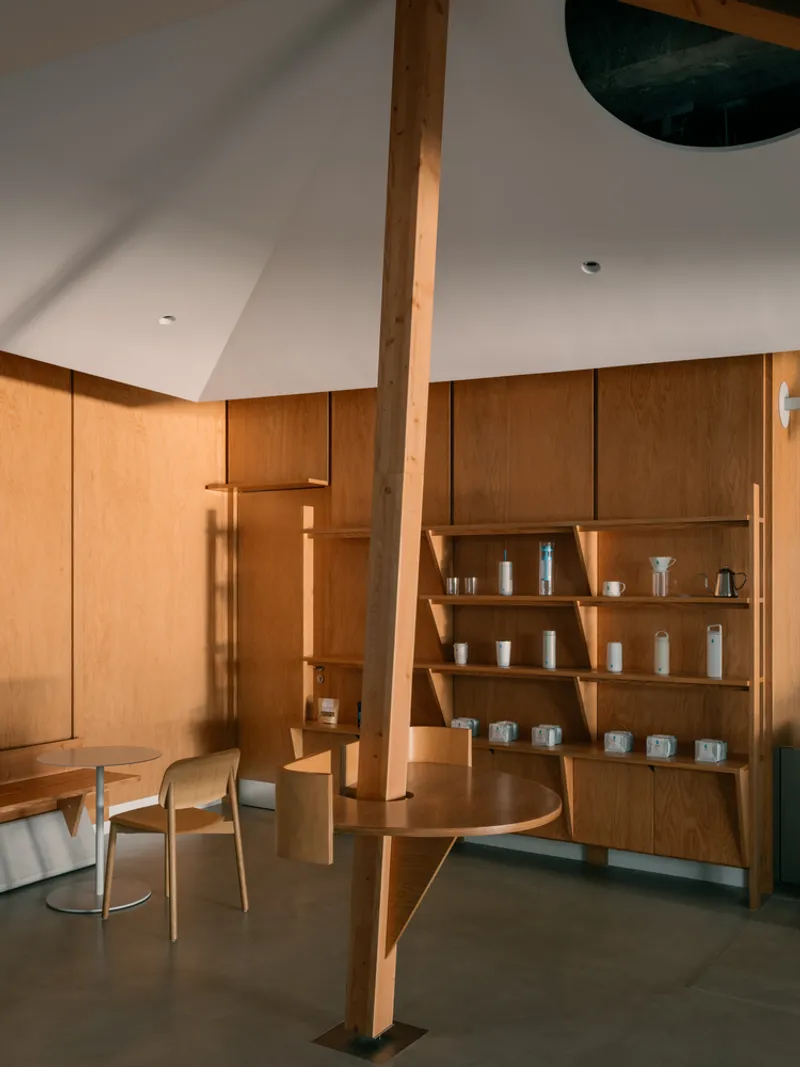
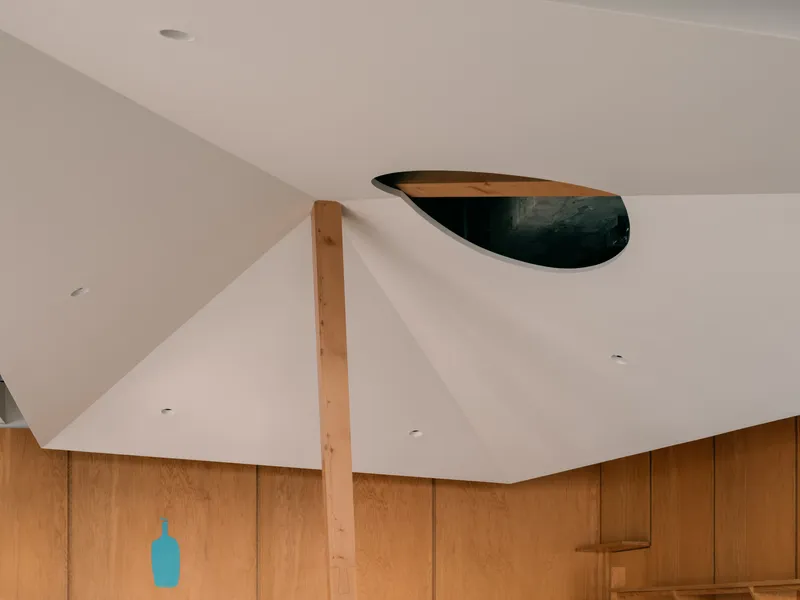
At Blue Bottle Coffee, architecture and nature coexist seamlessly. The café is defined by two signature “canvases” that invite the riverbank scenery into the interior. These slanted timber structures create a shelter-like ambiance, subtly dividing the rectangular space into two distinct zones while maintaining a sense of openness. Their corners rise and fall like they are lifted by the river breeze, offering glimpses of the Huangpu River and the historic shipyard.
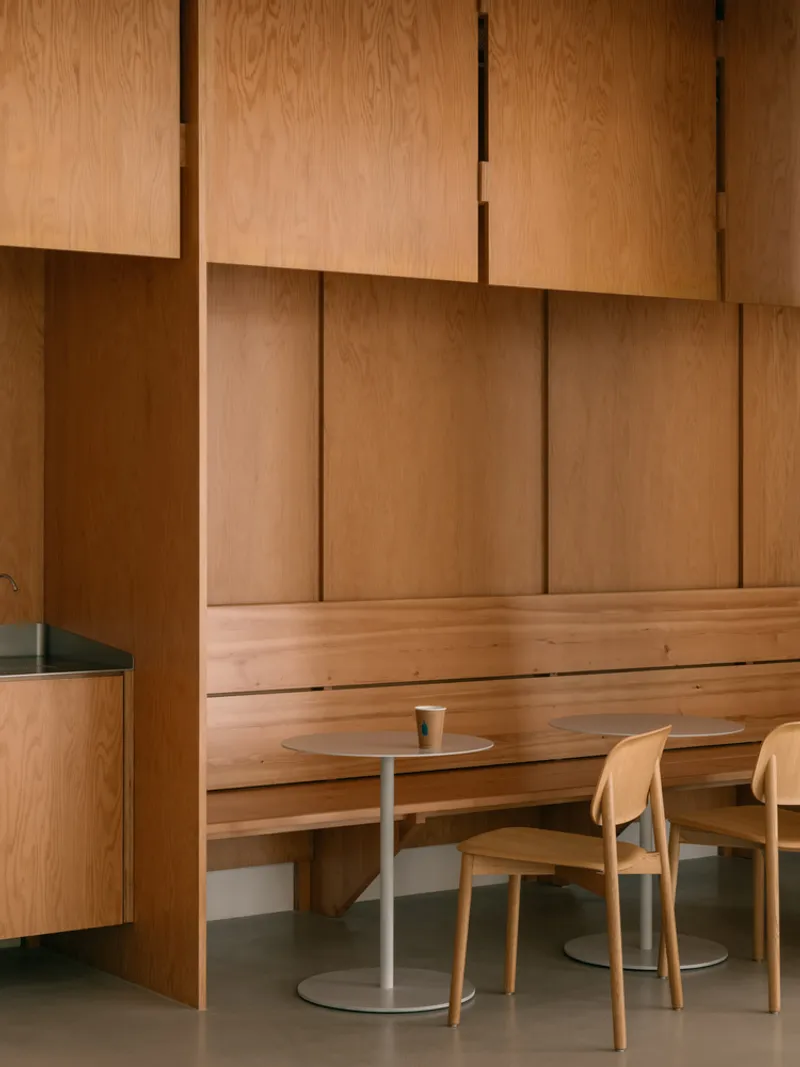
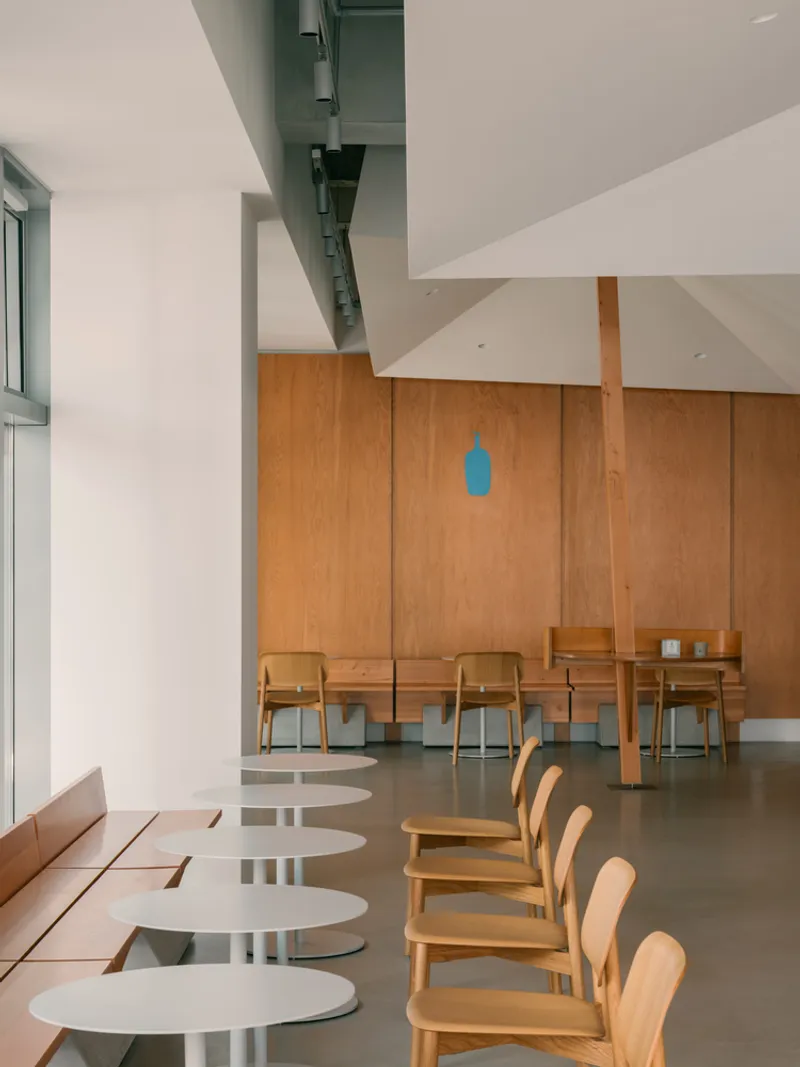
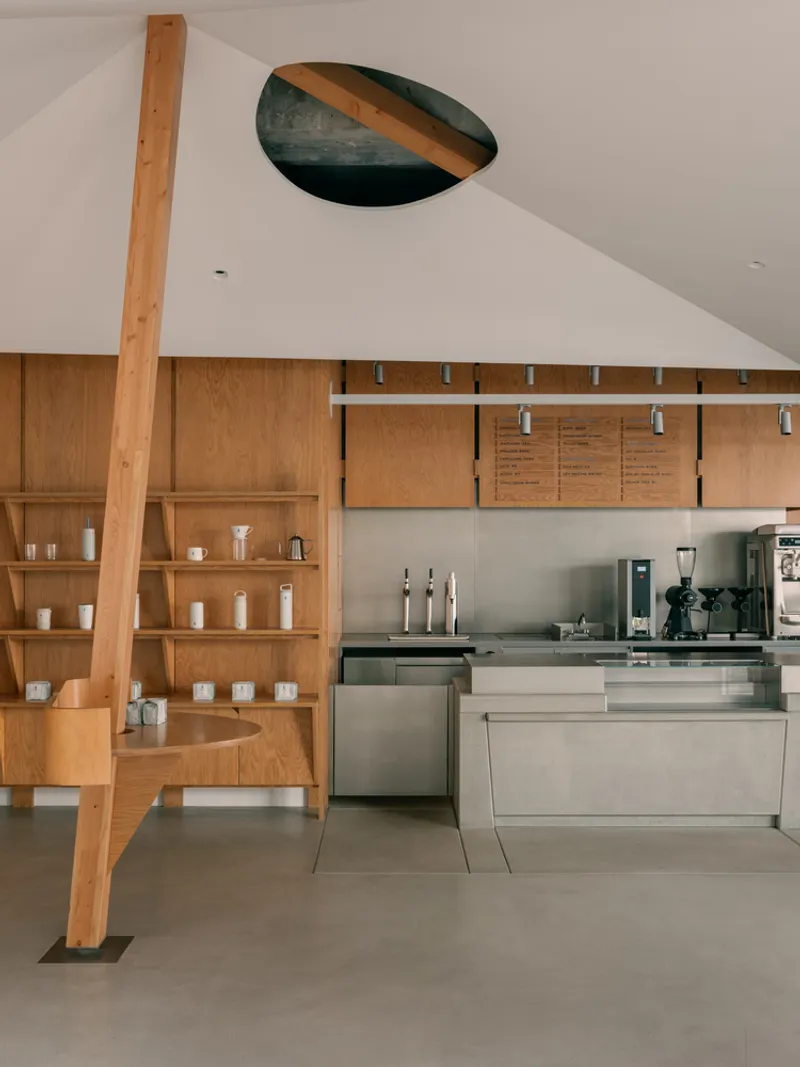
Beyond aesthetics, the canvases serve a practical function by housing mechanical and electrical systems. Openings within the wooden frames accommodate air conditioning returns and integrated lighting, illuminating tables with warm, inviting tones. The interior features a Douglas fir laminated wood panel system that acts as both a display wall and a subtle division between the café area and kitchen. The carefully curated material palette unites the seating, menu boards, kitchen entrances, and bar counter into a cohesive spatial experience.
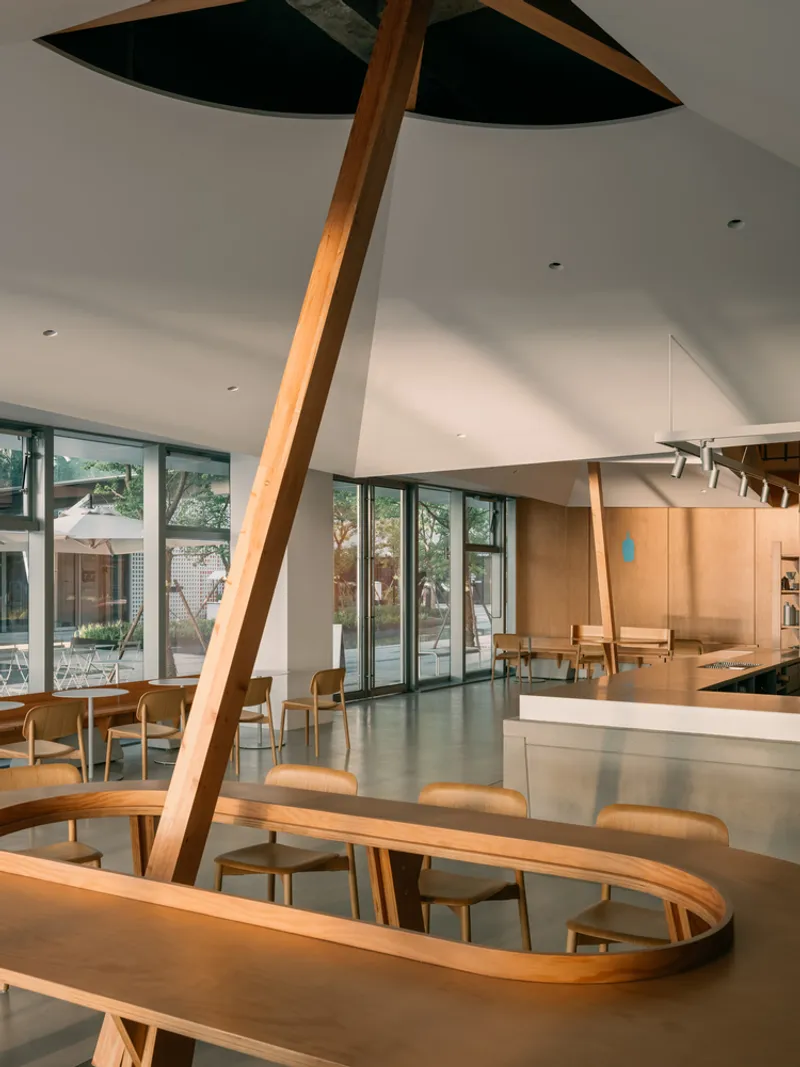
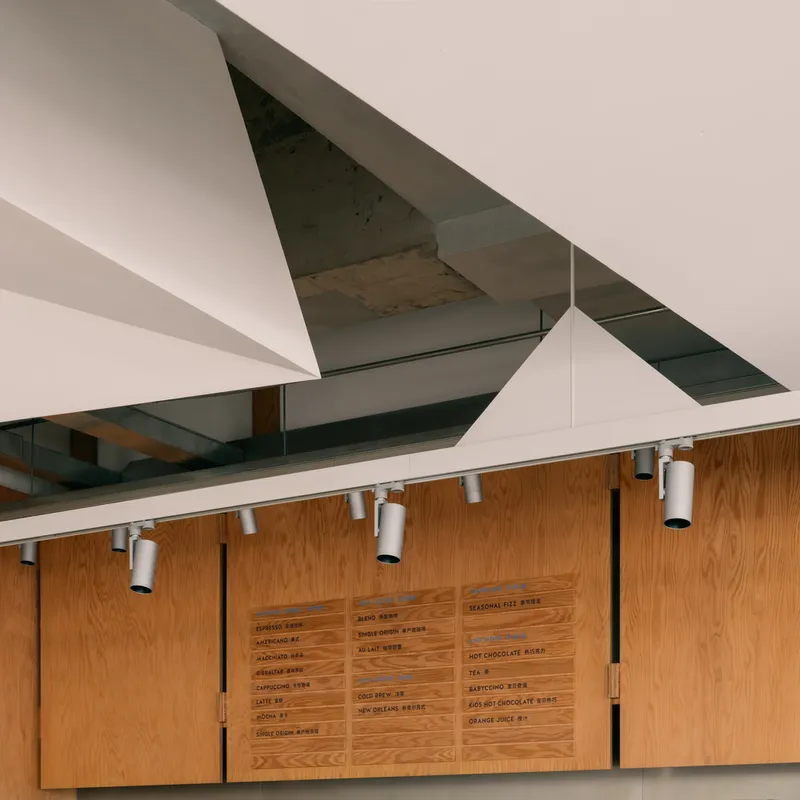
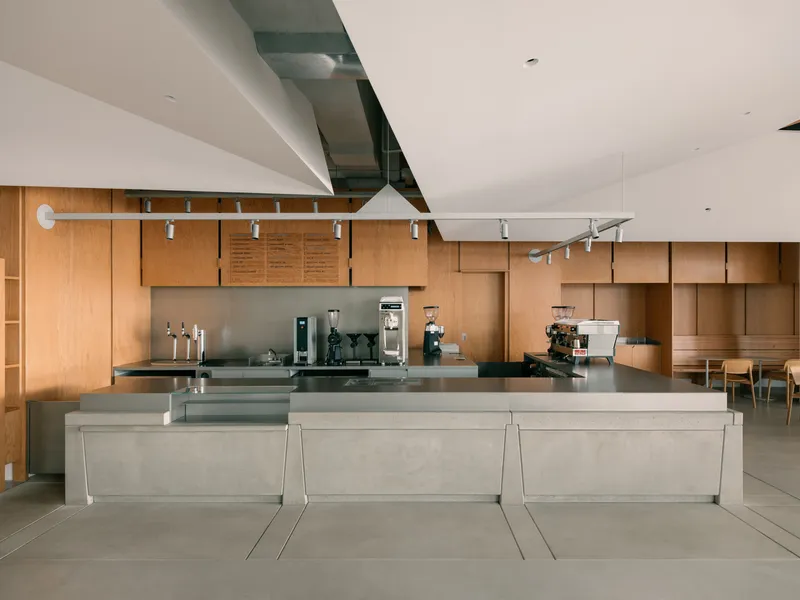
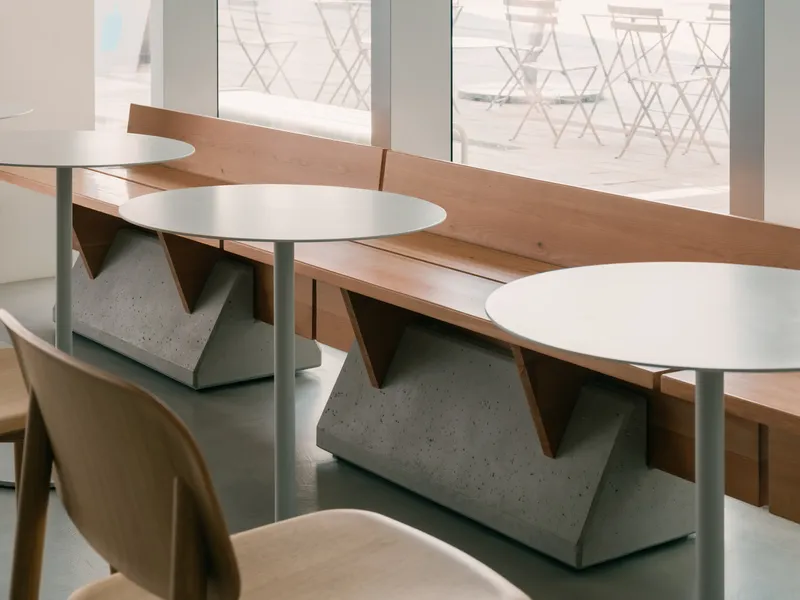
The café’s industrial roots are celebrated through prefabricated concrete elements. The coffee bar and seating benches combine concrete bases with pinewood boards, blending off-site fabrication with on-site assembly. This design approach reflects a modern reinterpretation of industrial materials, creating a casual yet methodical atmosphere that resonates with urban life.
Even the exterior design continues the narrative. Outdoor stools, crafted from a single module, are strategically positioned to face the shipyard, allowing patrons to enjoy coffee while observing the ongoing river freight activity. Every aspect of the design thoughtfully engages with the site’s history, the riverfront context, and the contemporary urban fabric of Shanghai.
All photographs are works of Wen Studio




Popular Articles
Popular articles from the community


Co-Life: Senior Housing Design That Reconnects Older Adults With the City
Co-Life reimagines senior housing design through healing gardens, shared streets, workshops, and a sustainable community across generations.

Riyadh For All: Intergenerational Urban Design for Active Aging in Rabat
Riyadh For All reimagines urban design in Rabat with intergenerational co-living, adaptive courtyards, and Moroccan cultural exchange today.

The Earth Pod: 3D Printed Homes for Resilient Refugee Communities
The Earth Pod reimagines refugee housing through 3D printed homes made from clay, combining resilience, self-sufficiency, and rapid shelter.

Co-life: Sustainable Architecture for Age-Friendly Community Living
Co-life reimagines sustainable architecture for seniors through courtyards, rammed earth, shared gardens, and spaces designed for belonging.

Similar Reads
You might also enjoy these articles


Hodi-Mandai Geram
Project Function: Preservation and revitalization of the Intangible heritage and socio-spatial identity of the Hodi by Housing, Cultural Memory Center, Sacred Grove, landscape, local tourism economy


Olio Towers: A Mid-Rise for Performers That Fuses Housing, Rehearsal, and Stage
Located blocks from Houston's Theater District, this modular tower stacks living units around a central performance atrium.

Oasis: Modular Green Housing Carved into Dhaka's Urban Fabric
A shortlisted Plugin Housing entry reclaims unauthorized settlements in Dhaka with stepped concrete volumes, green roofs, and ventilation-driven design.

Black Hole: A Floating Megastructure for the Post-Physical Era
Emiliano Mazzarotto envisions a spherical, self-scaling arena where e-sports, digital hotels, and holographic stadiums replace traditional public space.

Explore Sustainable Design Competitions
Discover active competitions in this discipline



Challenge to reimagine the Iron Throne


Photograph architecture without architects


Illustrate the lost glory of Angkor Wat - Render Challenge


Design challenge to reuse E-waste
Comments (0)
Please login or sign up to add comments
No comments yet. Be the first to comment!