

Blurring 2 Attics Renovation by Bajet Giramé: A Contemporary Loft Transformation in Barcelona
Bajet Giramé’s Blurring 2 Attics renovation in Barcelona merges two lofts with open-plan living, raw materials, flexible thresholds, and custom plywood structures.


The Blurring 2 Attics Renovation byBajet Giramé reimagines the possibilities of shared living and working spaces within an industrial building in Barcelona, Spain. Designed by lead architects Maria Giramé and Pau Bajet, this innovative renovation project transforms two attic premises into a flexible and interconnected residential environment. Covering an area of 410 square meters, the project explores the concept of spatial fluidity, where traditional architectural boundaries between work, leisure, and domestic life are intentionally blurred.
Located in the dynamic neighborhood of Poblenou, a district known for its industrial heritage and contemporary creative culture, the renovation reflects a modern interpretation of the loft living typology. The project embraces openness, adaptability, and layered materiality while fostering a sense of intimacy and communal living between two friends who inhabit the space.
Industrial Heritage and the Open Plan Concept
The renovation celebrates the structural and spatial characteristics of a 1970 industrial building spanning over 50,000 square meters. Rather than imposing rigid spatial divisions, the architects embraced the building’s open-plan layout, allowing the design to evolve through a system of layered architectural elements.
The concept is rooted in the loft paradigm, where space is appropriated freely and continuously redefined by its occupants. Instead of clear separations between living, working, and social areas, the project introduces overlapping spatial zones that adapt to multiple uses.
Within this framework, private spaces coexist with shared environments, creating a dynamic balance between individual intimacy and collective interaction. Transitional areas act as thresholds, regulating both social relationships and climatic exchanges between interior and exterior environments.
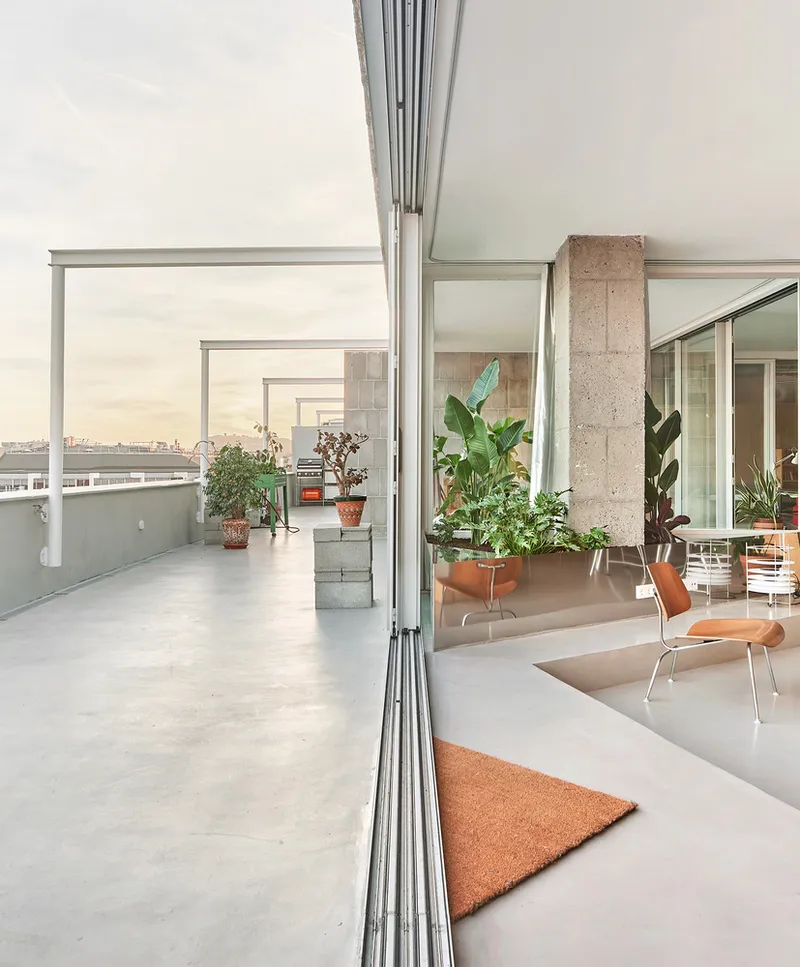
Blurring Boundaries Through Thresholds and Transparency
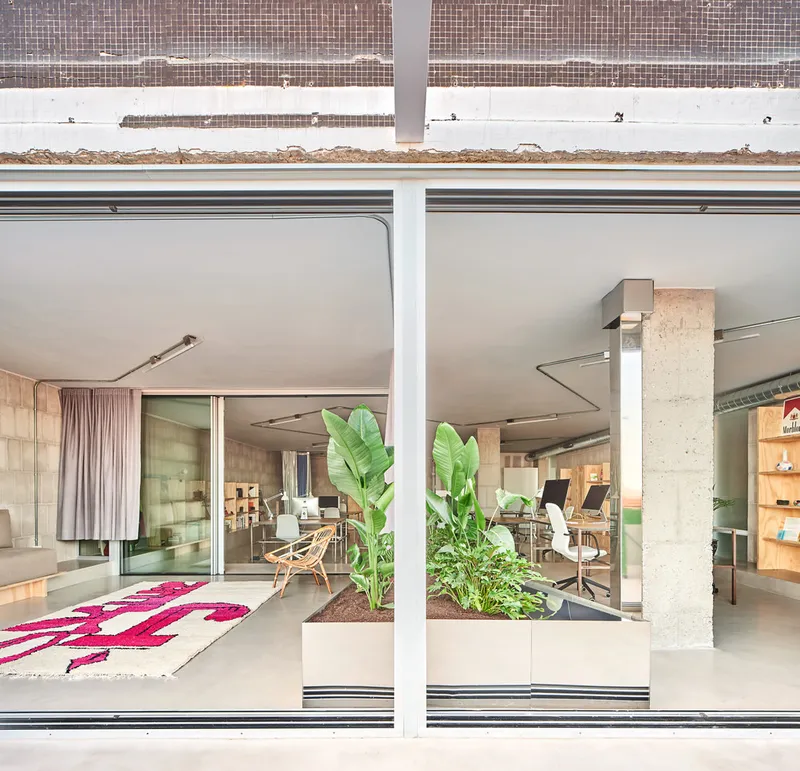
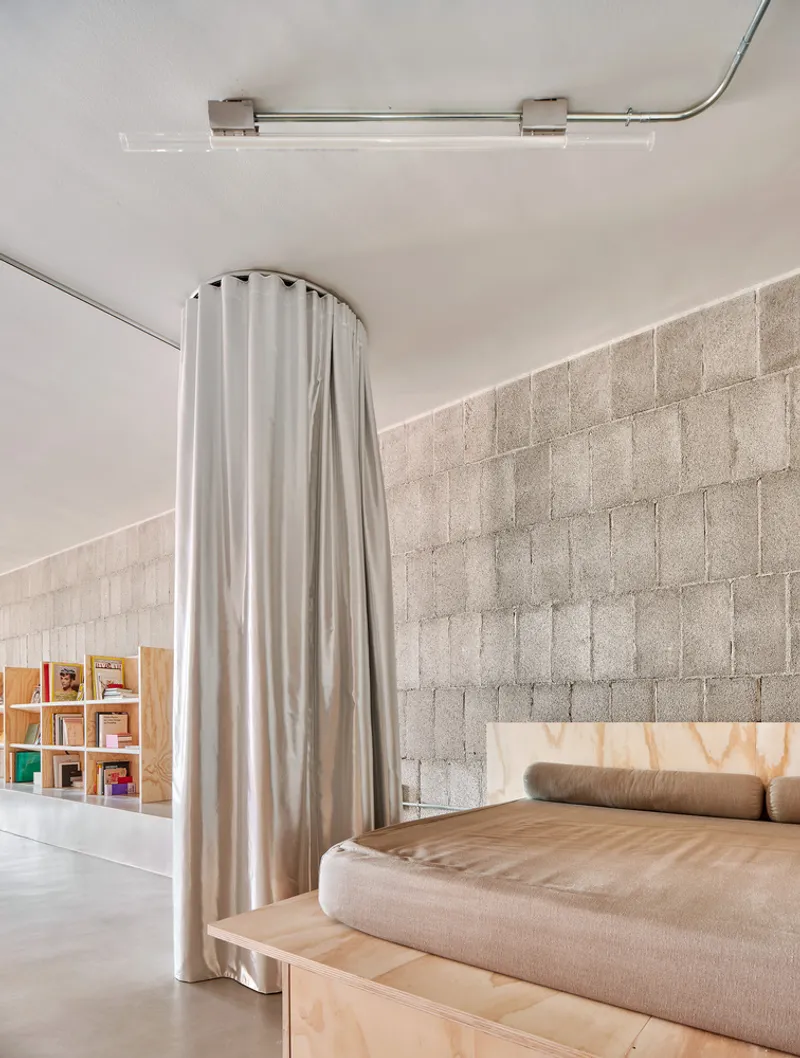
A defining aspect of the renovation is the way it dissolves conventional boundaries. Rather than solid walls, the architects introduced a series of subtle architectural devices such as translucent partitions, curtains, reflective surfaces, and openings that allow visual and spatial continuity.
These transitional elements create a soft architecture of thresholds, where movement between spaces is gradual rather than abrupt. The design encourages fluid circulation and interaction while maintaining areas of privacy when needed.
Each of the two attic units is enclosed within a thermal envelope made of concrete blocks, characterized by a distinctive texture that resembles textile patterns. This tactile materiality reinforces the idea of architecture as a layered and evolving system.
At certain points, the boundaries remain intentionally unfinished or partially open, allowing the two premises to remain visually and spatially connected while still maintaining their autonomy.
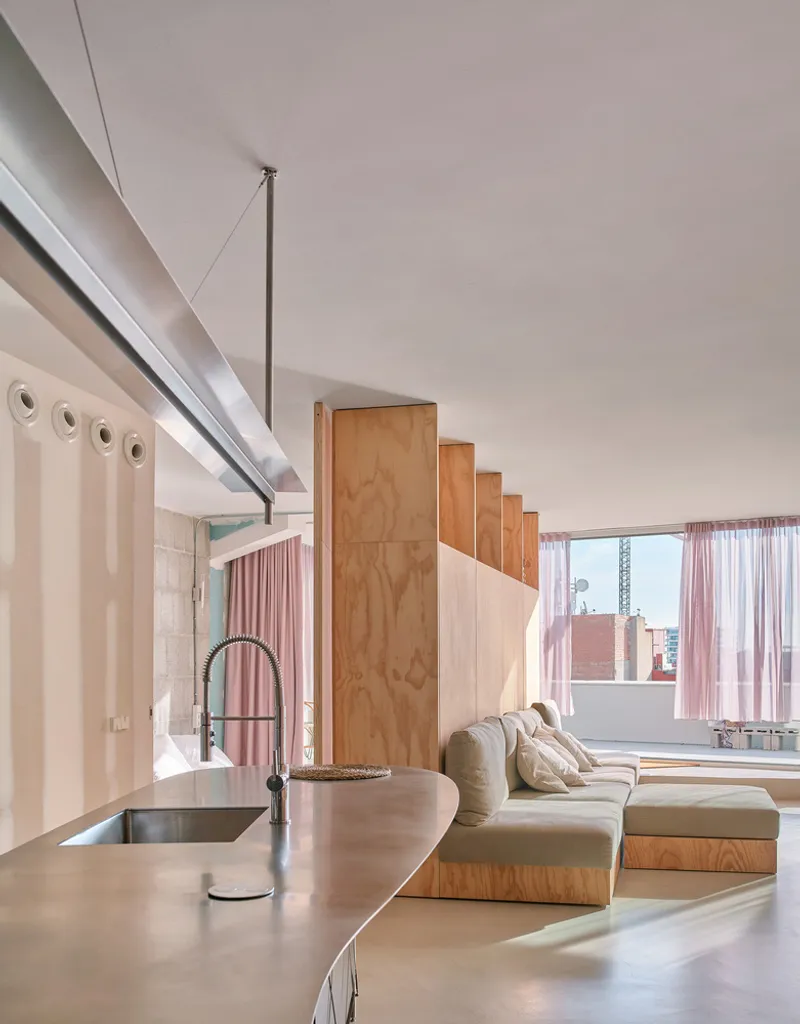
A Living Landscape of Raw Materials
The architectural intervention celebrates the raw expression of materials, allowing each element to maintain its individual identity. Instead of concealing construction techniques, the design highlights the honesty of materials and structural components.
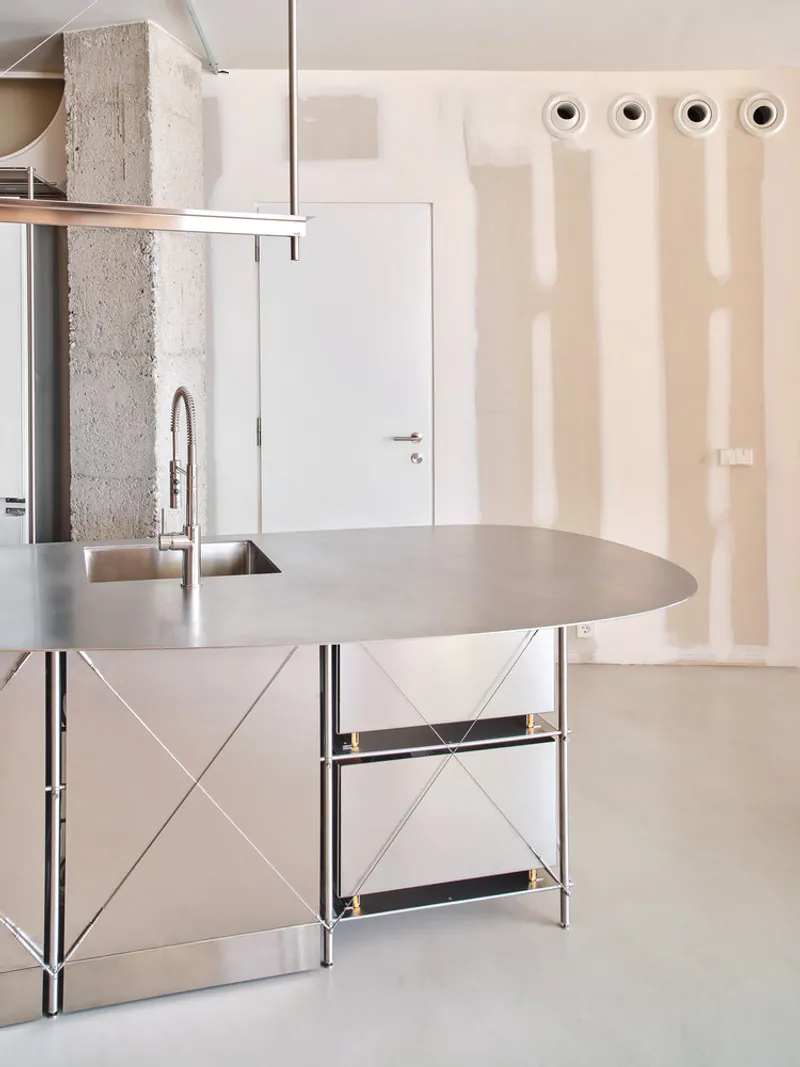
Concrete blocks, plywood, stainless steel, and gypsum board are presented in their natural state, creating a layered composition that evolves over time. Each material possesses its own temporal and spatial autonomy, enabling the living environment to adapt and transform with use.
This approach reflects a philosophy of open-ended architecture, where the space is not finalized but continues to evolve with its inhabitants.
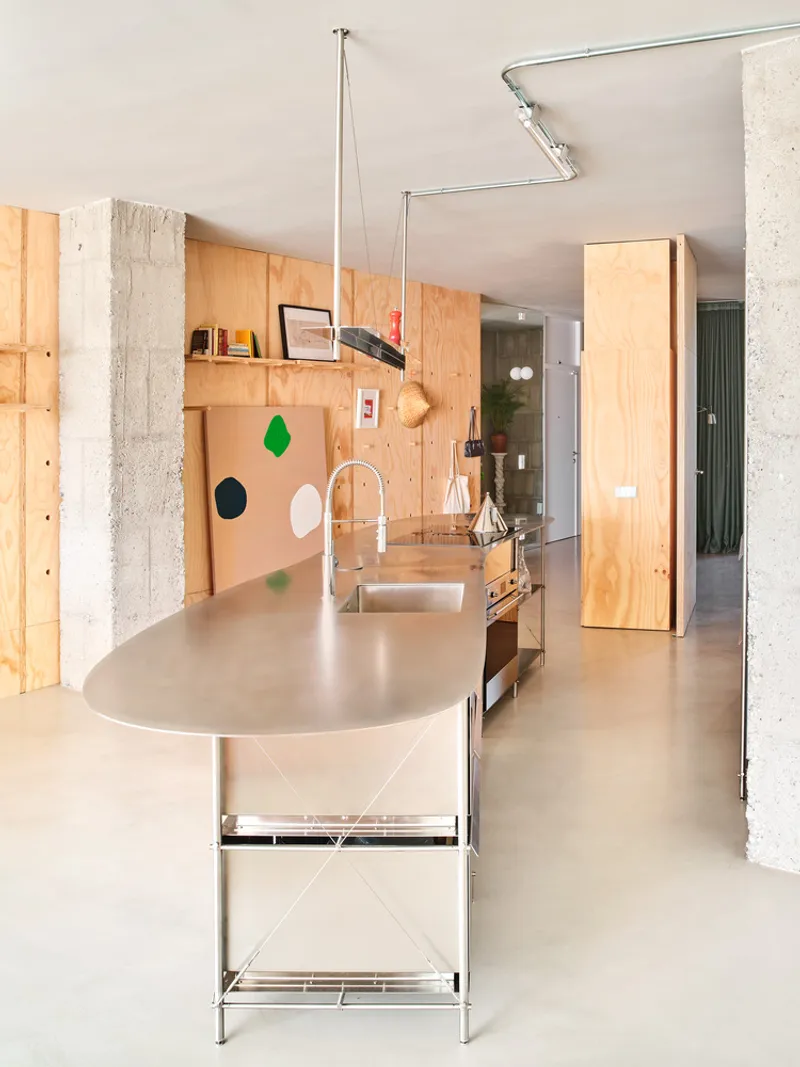
Custom Plywood Furniture as Micro-Architecture
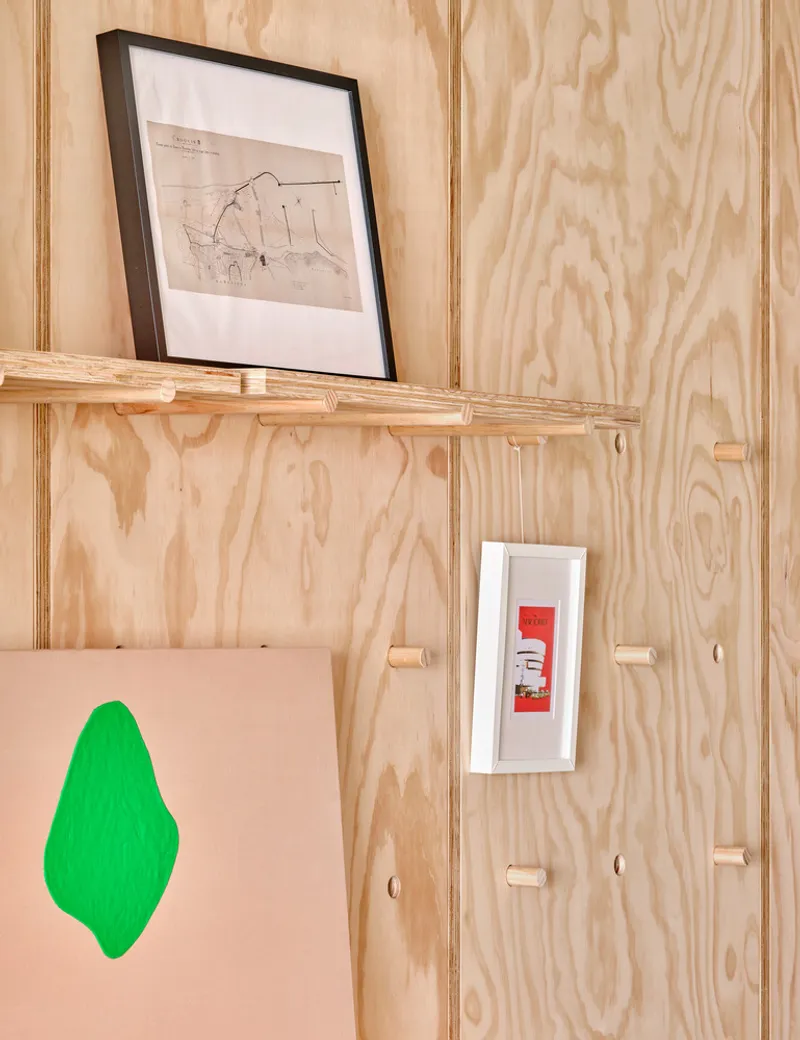
One of the most distinctive design strategies in the project is the use of custom-designed plywood furniture elements. Produced through CNC digital fabrication, these pieces are assembled through interlocking joints without excessive hardware.
Rather than functioning as simple furniture, these elements behave like small architectural structures within the interior. They define different spatial zones while maintaining the overall openness of the loft.
These plywood modules accommodate various functions, including:
Workspaces for creative and professional activities Storage systems integrated into the spatial composition Resting areas and informal living spaces
By acting as micro-buildings, these structures help organize the open interior while preserving flexibility.
Stainless Steel Structures for Functional Zones
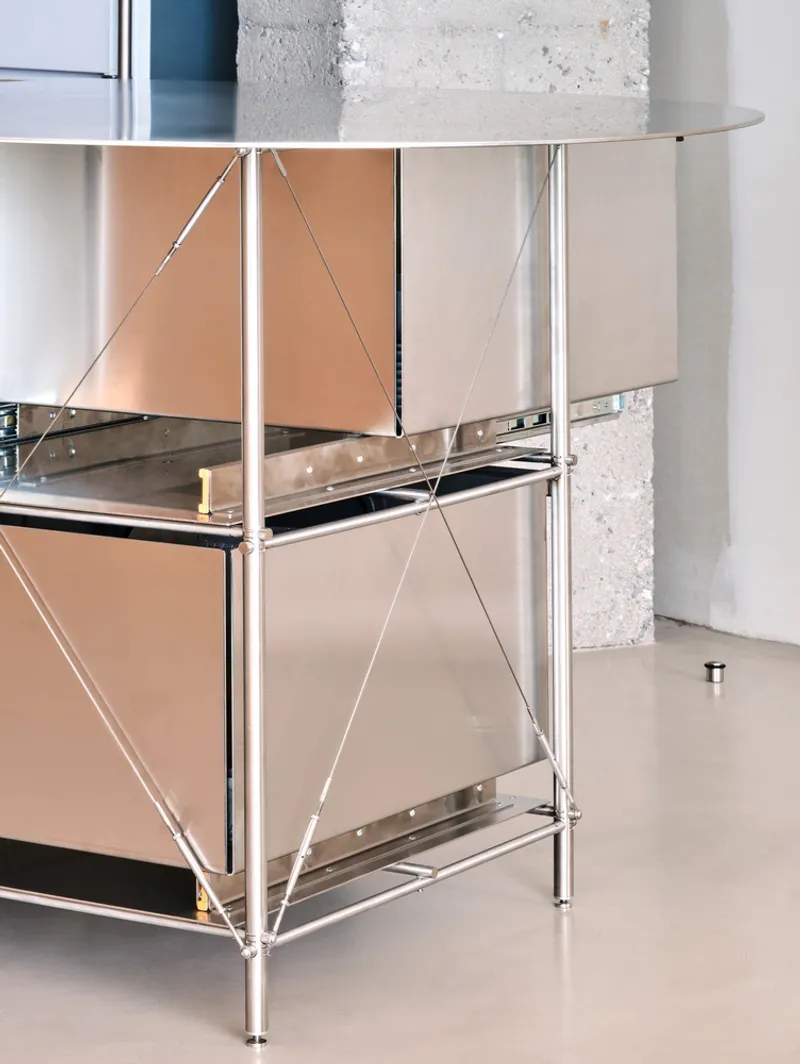
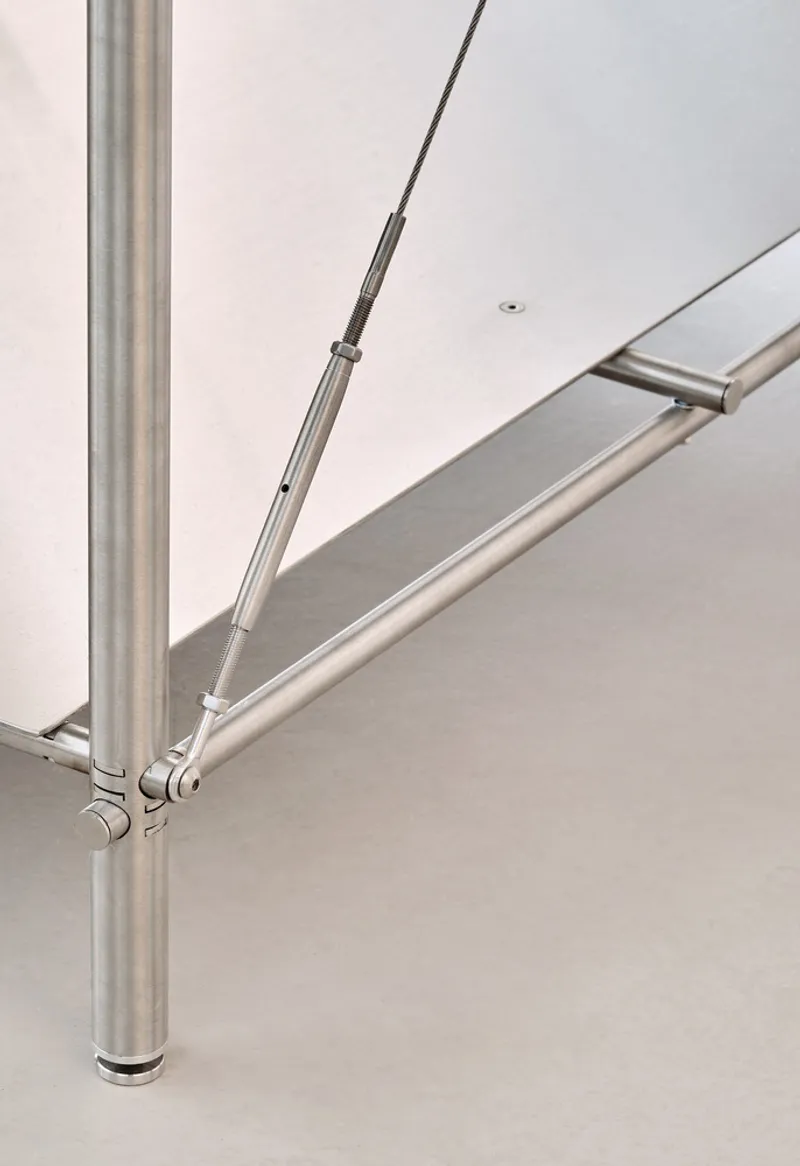
Complementing the warmth of the plywood elements is a family of lightweight stainless steel structures. Produced through laser-cut fabrication techniques, these structures are assembled using joints and tabs that highlight their precise industrial craftsmanship.
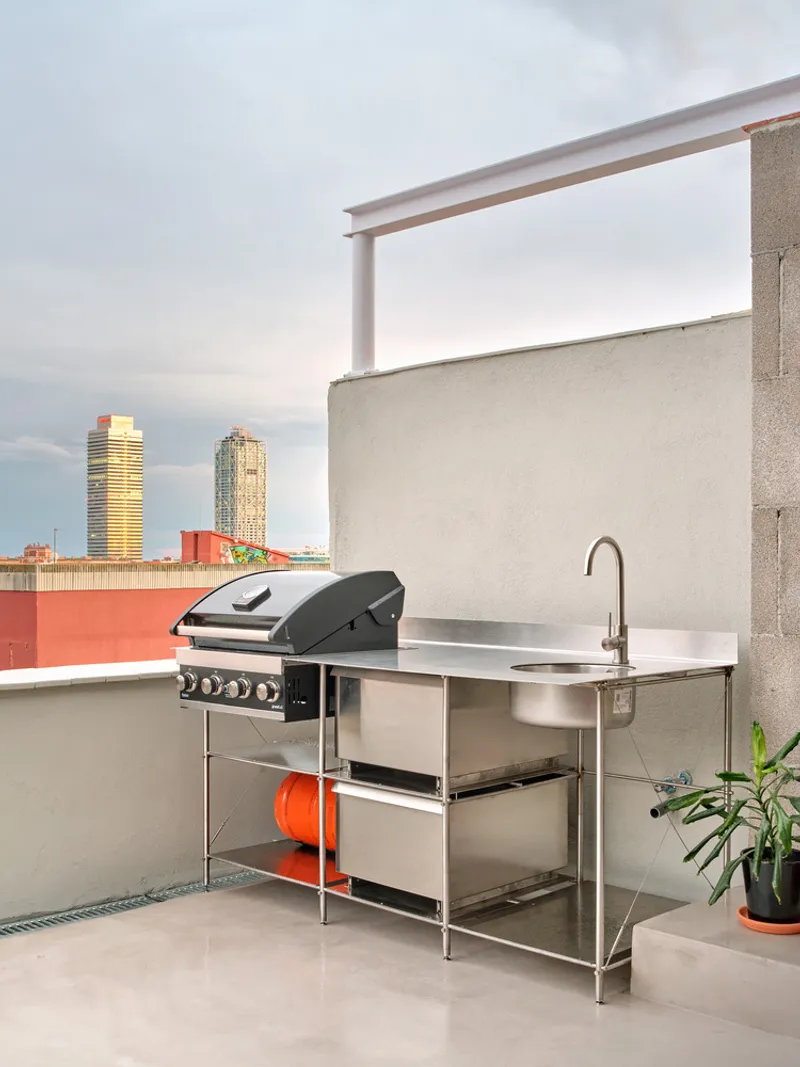
These metallic frameworks appear almost weightless, positioned delicately within the space and supporting kitchen and washing functions. Their reflective surfaces contribute to the visual layering of the interior, enhancing light distribution and spatial perception.
The contrast between warm plywood textures and cool stainless steel surfaces reinforces the project’s material richness.
Compact Service Cores and Spatial Diversity
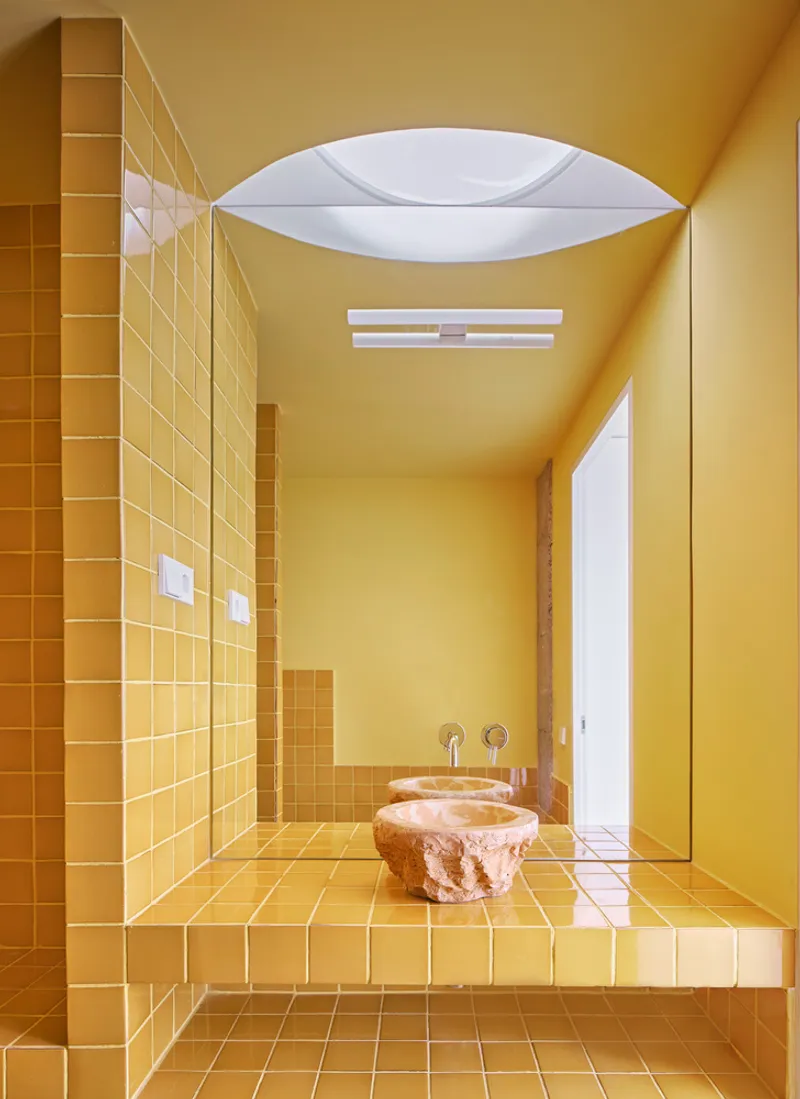
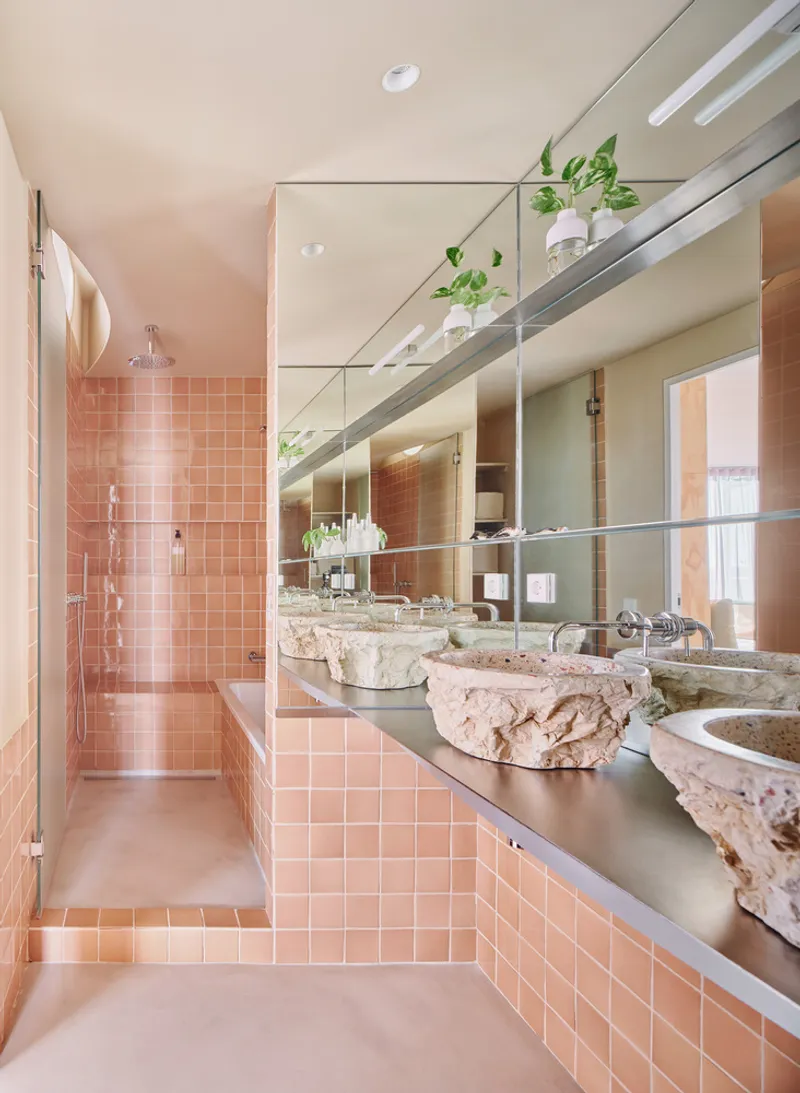
In a pragmatic design move, essential service areas such as bathrooms and technical installations are concentrated within compact gypsum board volumes. These volumes act as internal cores within the larger open space.
Inside these enclosed areas, the design introduces distinct spatial and chromatic atmospheres, creating moments of contrast within the otherwise continuous interior landscape. The service cores provide necessary privacy while preserving the overall openness of the loft environment.
Orientation and Connection to the City
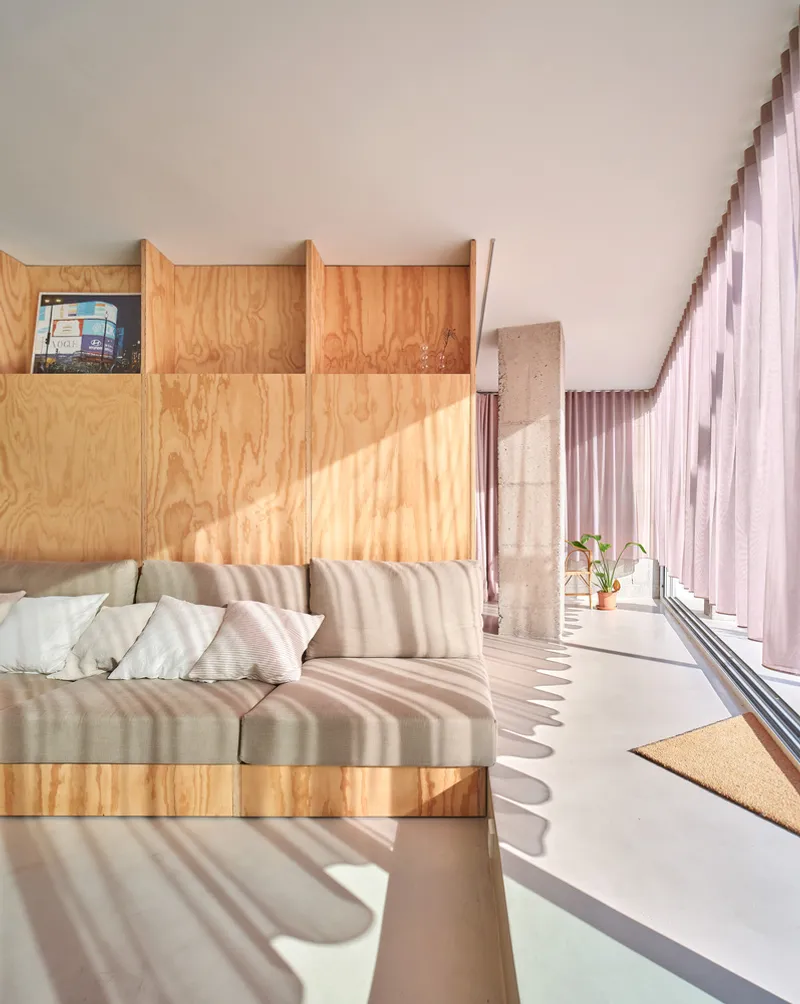
The building’s typology directs visual attention toward a single frontal facade that faces the favorable maritime orientation of Barcelona. This orientation allows the interiors to benefit from natural light and a visual connection to the surrounding urban environment.
Architectural devices positioned along this facade explore the intersection between traditional construction techniques and digital fabrication processes, demonstrating how contemporary technology can reinterpret industrial heritage.
Each corner of the interior becomes a carefully designed micro-environment, responding to light, use, and movement.
A New Model of Shared Living
The Blurring 2 Attics Renovation represents more than a simple residential transformation. It proposes a new model of collaborative living, where architecture supports both independence and community.
By dissolving traditional spatial hierarchies and embracing flexibility, the project reflects changing lifestyles in contemporary cities. Workspaces, domestic areas, and social environments coexist seamlessly, creating a living environment that adapts to evolving needs.
Through its thoughtful layering of materials, thresholds, and custom-built elements, the renovation transforms a former industrial attic into a dynamic architectural landscape that encourages interaction, creativity, and adaptability.
All photographs are works of
José Hevia


Popular Articles
Popular articles from the community


Faces of the Soviet Avant-Garde: Turning Moscow's Street Names into an Open-Air Museum
A network of sculptural installations across a Moscow residential district transforms forgotten architect names into spatial encounters with cultural memor

Opera by the Sea Estonia: Three Shells Dissolving Architecture into Tallinn's Coastline
A winning opera house proposal replaces monumental form with interconnected shells that blur the boundary between building, park and Baltic Sea.

Singing Woman: An Opera House That Performs Before the Curtain Rises
Ovidiu Cristian Pavel's conceptual opera house translates Estonia's choral identity into a sculpted waterfront landmark facing the Baltic Sea.

Cloaked Colonization: A Mobile Underwater Habitat That Moves Like a Fish
Micah Abaya's shortlisted EHC Pacific entry reimagines ocean settlement as a dispersed network of self-sustaining architectural organisms.

Similar Reads
You might also enjoy these articles

FAMM Arquitectura Organizes Ten Villas Around Courtyards and Jungle in Nosara, Costa Rica
El Molino pairs two elongated volumes with deep overhangs and timber louvers to build a compact coastal community five minutes from the beach.
Oscar Niemeyer's Ibirapuera Park Pavilions Define São Paulo's Cultural Identity in Concrete and Curve
A constellation of modernist volumes set within São Paulo's most important urban park, conceived for the city's 400th anniversary in 1954.
Sanjay Puri Architects Wraps a Jaipur Office Tower in Capsule-Shaped Green Buffers
A nine-level climate-responsive workplace near Jaipur Airport uses stacked planter terraces and aluminium screens to fight 40°C heat.
RHO Converts a Berlin Spree-Side Industrial Courtyard into Enkime's 1,000 m² Agency Headquarters
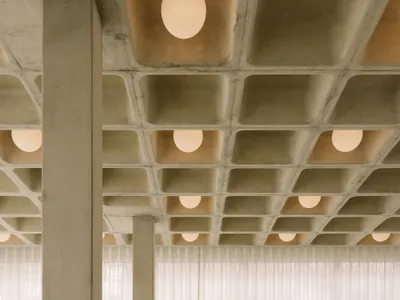
A social media agency's new home in Charlottenburg trades glossy branding for concrete waffle ceilings, glazed tile, and sheer curtains.

Explore Blurring the boundaries Competitions
Discover active competitions in this discipline

Challenge to design mud housing for contemporary communities

Challenge to reimagine the Iron Throne

Photograph architecture without architects

Illustrate the lost glory of Angkor Wat - Render Challenge
Comments (0)
Please login or sign up to add comments
No comments yet. Be the first to comment!