

Bota Dürnten School Building by Lukas Raeber Architects
Bota Dürnten School unifies multiple campuses into a sustainable timber and concrete structure, fostering flexibility, community, and modern educational spaces.


Located in the serene landscape of Dürnten, Switzerland, the Bota Dürnten School Building by Lukas Raeber Architects represents a sensitive architectural response to contemporary educational needs. Completed in 2025, the project unifies previously scattered school facilities into a cohesive campus that promotes collaboration, accessibility, and community engagement.


A Unified Educational Campus
The site previously consisted of two primary school buildings and smaller auxiliary structures surrounding an undefined open area. Through the reoccupation of this central space, Lukas Raeber Architects reimagined the site as a single, integrated school campus—bringing together three kindergartens and ten regular classrooms across the Bogenacker and Tannenbühl locations. This centralization enhances both spatial clarity and the sense of belonging within the educational environment.

Architectural Composition and Design Concept
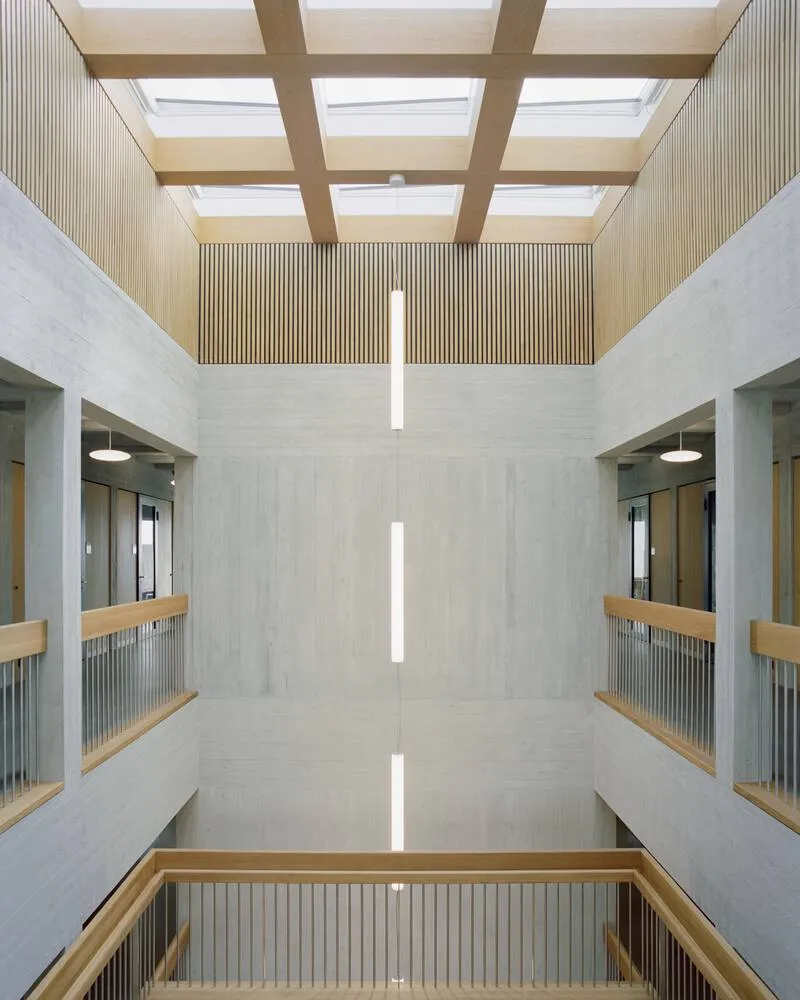
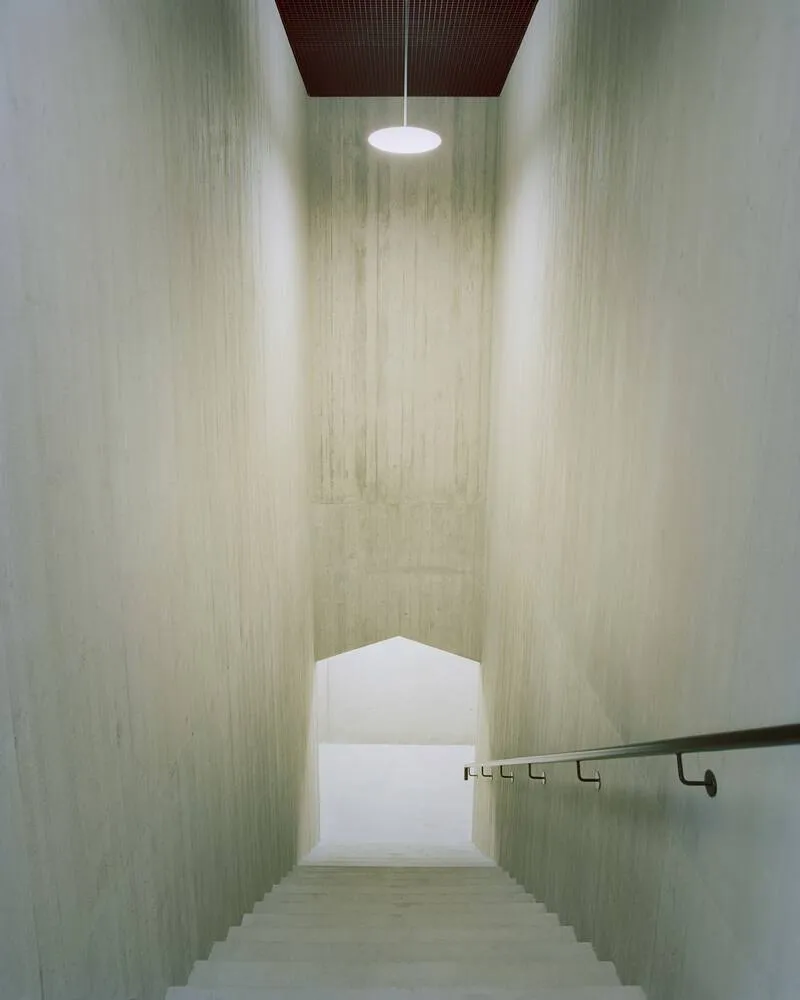
At the heart of the new campus stands a contemporary schoolhouse organized around three distinct “naves.” The central nave—constructed from exposed concrete—forms the access and service zone, featuring a generous entrance hall and an open staircase that acts as a social and circulation hub. This robust concrete core symbolizes permanence and order, grounding the composition both physically and functionally.
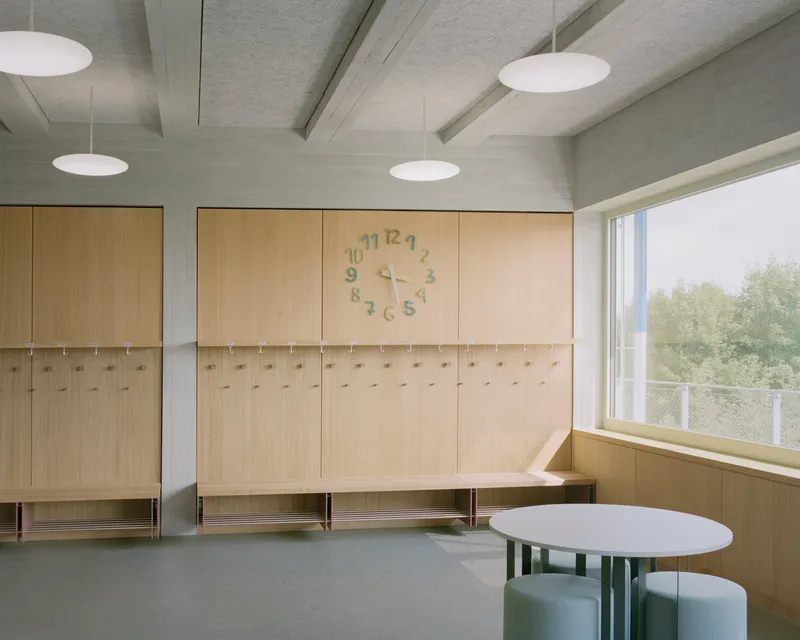
Flanking this central structure are two lateral “side naves” built using sustainable timber construction. These timber wings house flexible classroom spaces and support areas that can adapt to evolving educational requirements. The use of continuous wooden frames and panels not only provides a warm and tactile interior atmosphere but also ensures visual unity across the entire building. The rhythm of the wood structure, combined with ample daylight and spatial transparency, encourages a calm and focused learning environment.

Materiality and Sustainability
The building’s weathered timber façade ties the three volumes together, lending the project a natural, timeless appearance that harmonizes with the surrounding landscape. A continuous metal escape balcony runs along the exterior, introducing a subtle industrial contrast while enhancing functionality and safety.
In line with the studio’s commitment to sustainability, the Bota Dürnten School Building was designed for future expansion. Its modular structure and adaptable spatial configuration ensure that the building can accommodate changes in educational models or student population growth without major structural interventions.


A Contemporary Vision for Learning Environments
Through its blend of exposed concrete, timber craftsmanship, and spatial flexibility, Lukas Raeber Architects have created an architectural environment that embodies the principles of sustainability, adaptability, and community. The Bota Dürnten School Building serves as a prototype for modern educational architecture—a place where materials, light, and form converge to support holistic learning and social interaction.

All Photographs are works of Willem Pab


Popular Articles
Popular articles from the community


David Ortega Stacks a Two-Story Mexico City Penthouse Around a Steel Stair and a Pergola-Shaded Roof Terrace
In Colonia Roma, a 300 m² penthouse uses oak joinery, a planted steel stair and a slatted roof pergola to make a new-build apartment feel like a house.

Cube Design Draws an Ecological Corridor Between Two Shenzhen Hills with the Nankai Building
Beside Shenzhen's container docks, the Nankai Building pairs stacked balconies with a climbing green screen to connect two hillsides across its height.

Juan García Correa, John González and Claudia Rueda Sink a Circular Amphitheater into a Manizales Engineering Building
On the La Nubia campus in Manizales, Colombia, the S1 Building folds labs and offices into a hillside of ramped lawns that double as a campus route.

Jaramillo Van Sluys Arquitectura and Urbanismo Turn a Demolished Registry Lot in Quito into an Orchard Plaza
In Quito's Centro Histórico, a 2,800 m² plaza exposes the San Agustín convent wall and redraws its lost Augustinian orchard in volcanic stone.

Similar Reads
You might also enjoy these articles


Hodi-Mandai Geram
Project Function: Preservation and revitalization of the Intangible heritage and socio-spatial identity of the Hodi by Housing, Cultural Memory Center, Sacred Grove, landscape, local tourism economy


Olio Towers: A Mid-Rise for Performers That Fuses Housing, Rehearsal, and Stage
Located blocks from Houston's Theater District, this modular tower stacks living units around a central performance atrium.

Oasis: Modular Green Housing Carved into Dhaka's Urban Fabric
A shortlisted Plugin Housing entry reclaims unauthorized settlements in Dhaka with stepped concrete volumes, green roofs, and ventilation-driven design.

Black Hole: A Floating Megastructure for the Post-Physical Era
Emiliano Mazzarotto envisions a spherical, self-scaling arena where e-sports, digital hotels, and holographic stadiums replace traditional public space.

Explore Educational Building Competitions
Discover active competitions in this discipline

Challenge to design public laboratory

Challenge to reimagine the Iron Throne

Photograph architecture without architects

Illustrate the lost glory of Angkor Wat - Render Challenge
Comments (0)
Please login or sign up to add comments
No comments yet. Be the first to comment!