
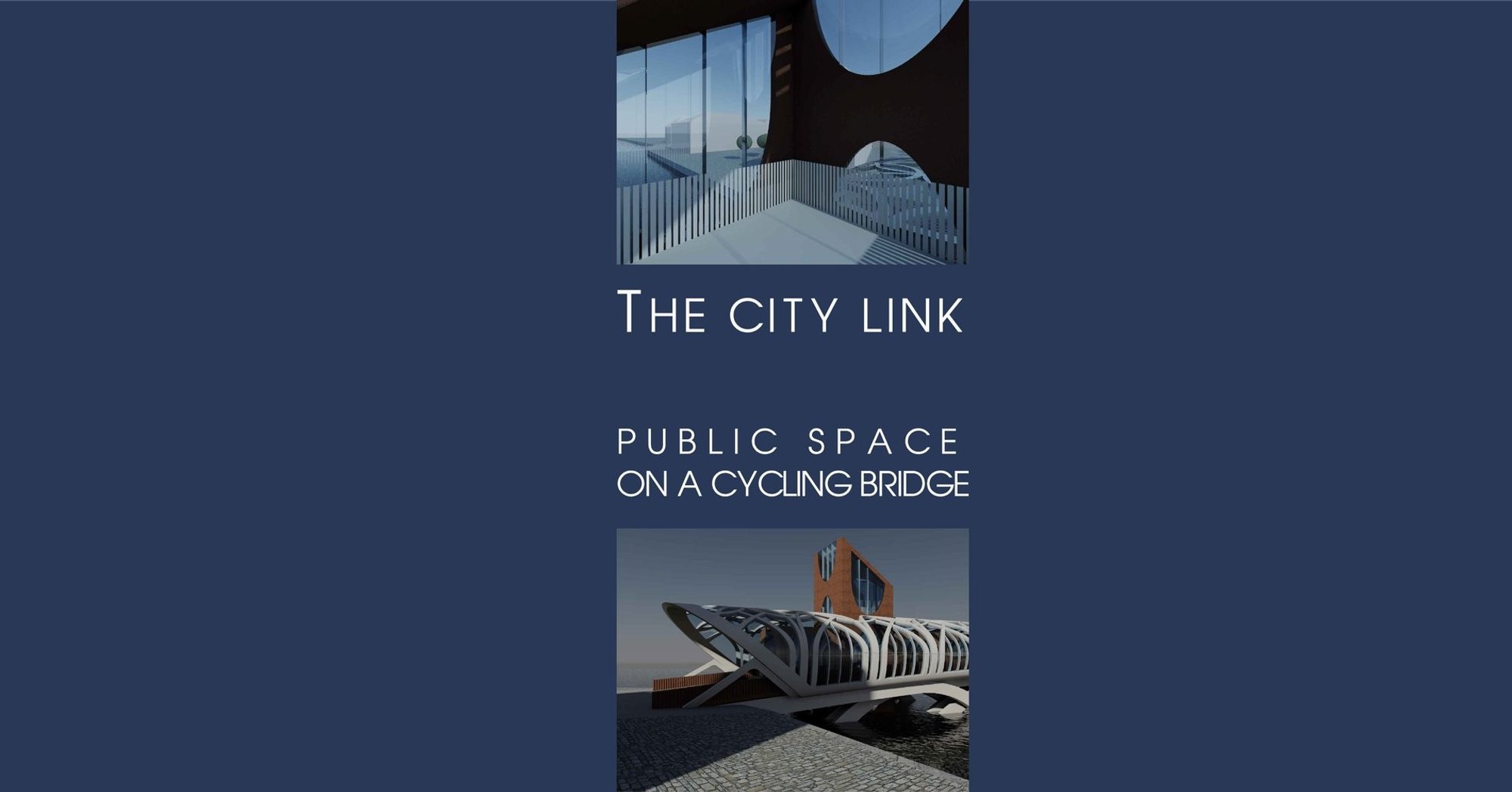
Bridge Across the Port of Copenhagen
A sustainable urban bridge in Copenhagen redefining public space through cycling, culture, and contemporary architectural innovation

Project by ΓΕΩΡΓΙΟΣ ΠΑΠΑΓΕΩΡΓΙΟΥ
In the evolving discourse of sustainable urban bridge architecture, The City Link across the Port of Copenhagen emerges as a visionary response to mobility, public space, and cultural continuity. More than a crossing, this telescopic bridge redefines what infrastructure can be, transforming a cycling route into a vibrant covered "agora" suspended above water.
Connecting Kings New Square to Eigtveds Pakhus, the project Bridge across the Port of Copenhagen integrates historic European bridge-building traditions with contemporary architectural language. The result is a landmark urban bridge that operates simultaneously as transportation infrastructure, semi-outdoor marketplace, cultural corridor, and civic gathering space.
Sustainable Urban Bridge Architecture as Public Space
At its core, The City Link is an exploration of how sustainable urban bridge architecture can foster environmentally responsible mobility while enriching civic life. Copenhagen’s deep-rooted cycling culture forms the conceptual foundation of the design. The bicycle remains one of the simplest and most sustainable machines ever invented, closely aligned with the human scale and natural movement.
Rather than treating the bridge as a mere passage, the proposal expands its role into a public platform. The design introduces indoor and outdoor zones that create a pleasant microclimate, protect users from harsh weather conditions, and encourage lingering rather than rushing through.
This architectural strategy transforms transit into experience.
A Telescopic Bridge with a Covered Agora
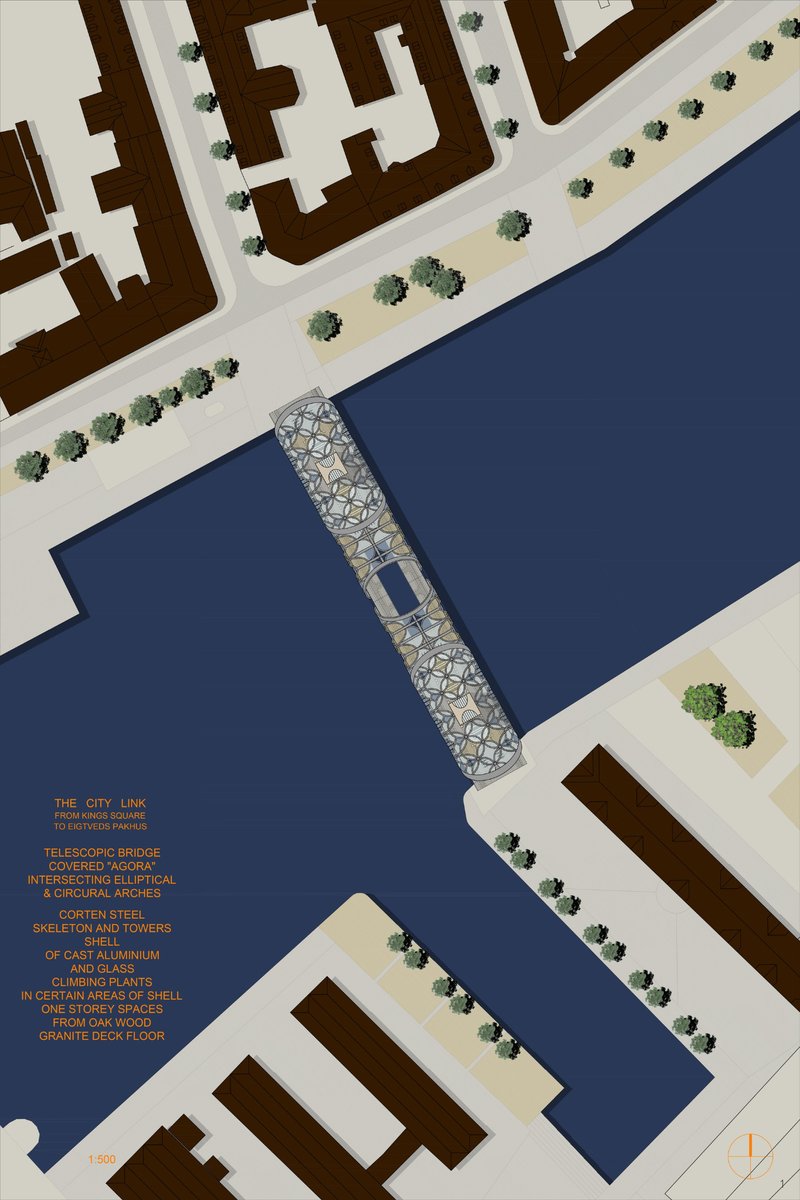
The bridge is conceived as a telescopic structure divided into three primary longitudinal and crosswise sections. It functions as a semi-outdoor "market" with:
- Entry squares at both ends
- Circumferential corridors for pedestrians and cyclists
- Flowing interior spaces
- A central atrium that reconnects users with sky and water
The center of the bridge acts as an environmental interface, an atrium that opens views above and below water level, reinforcing awareness of the harbor ecosystem.
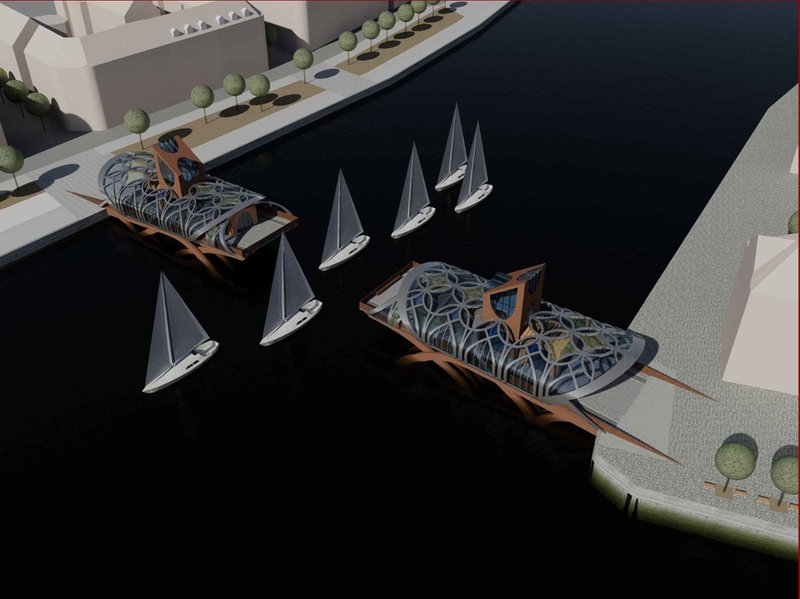
To ensure safety and fluid circulation, the proposal suggests separated traffic lanes for bicycles, each operating one-way. Long, slender deck corridors along both sides can slide into the docks, allowing ships to pass without interrupting the structural integrity of the stationary towers.
This dynamic telescopic mechanism enhances both maritime functionality and architectural adaptability.
Architectural Form: Intersecting Elliptical and Circular Arches
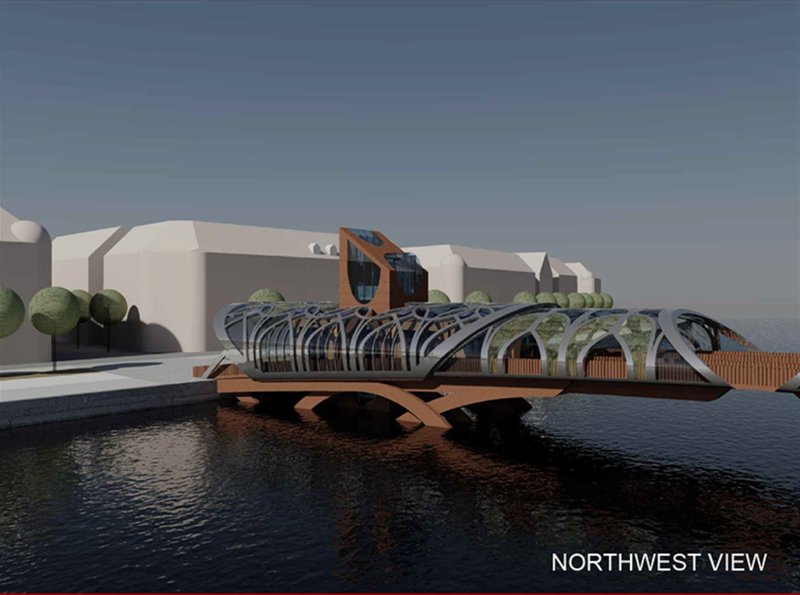
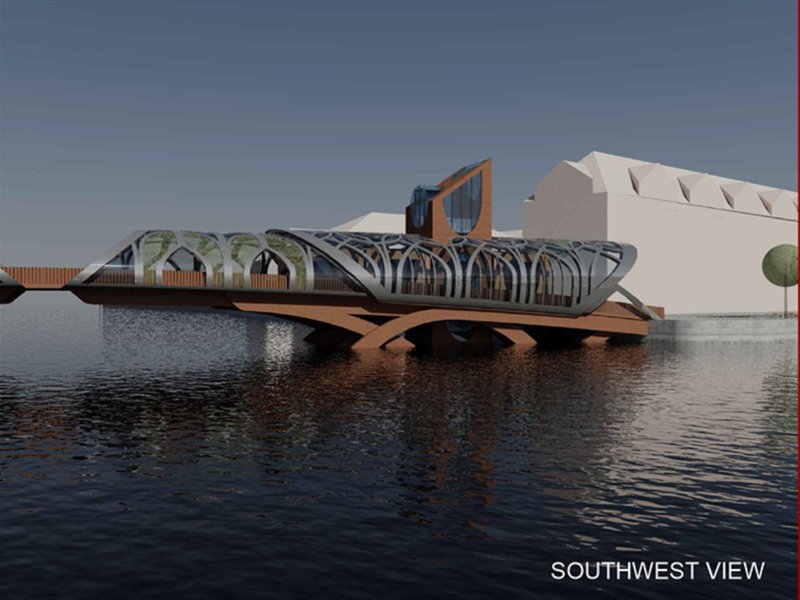
The architectural identity of the bridge is defined by intersecting elliptical and circular arches forming a sculptural skeletal shell. The rhythmic geometry references historic European arcades and bridges while embracing contemporary parametric articulation.
Two ideogrammatic towers anchor the structure on either side, acting as vertical landmarks within Copenhagen’s harbor skyline. Their expressive forms merge industrial aesthetics with symbolic urban presence.
The covered shell integrates:
- Corten steel skeleton and towers
- Cast aluminum and glass cladding
- Granite deck floors
- Local oak wood interior elements
- Seasonal climbing plants filtering light and weather
Material dualities reflect contextual contrasts: corten steel referencing land and harbor industry, white steel evoking sea and ice, and natural wood grounding the experience in Nordic tradition.
Over and Underwater Spatial Experience
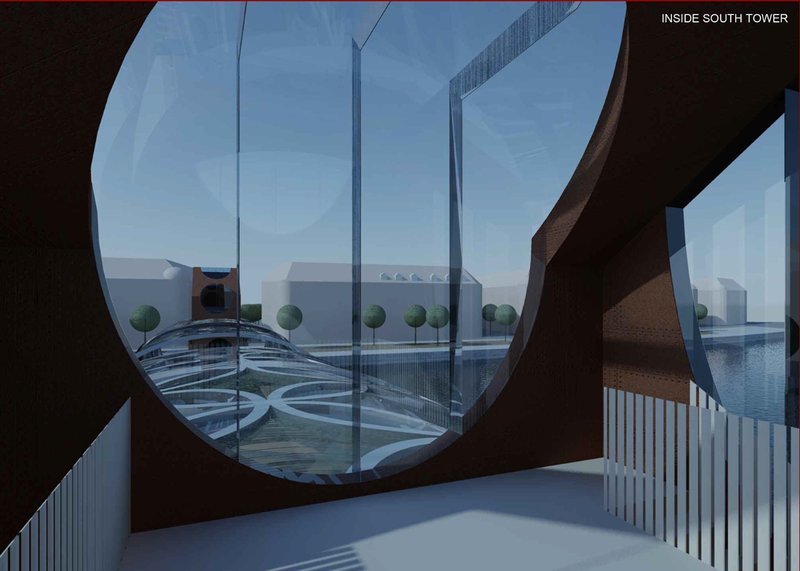
A defining feature of this sustainable urban bridge architecture is its dual perspective, over and underwater views integrated into the section design. The flowing dock floor spaces create a visual dialogue between city and harbor, reinforcing the ecological awareness embedded in the proposal.
The sectional strategy reveals one-story spaces embedded within the structural shell, offering intimate rooms along the deck. These spaces function independently when necessary, ensuring autonomous operation of stationary segments even when the telescopic portions retract.
This flexibility strengthens resilience and usability throughout seasons.
Climate-Responsive and Human-Scale Design
Good urban design fosters sustainable modes of transportation while preserving the human scale. The City Link achieves aesthetic adequacy without sacrificing environmental responsibility. Seasonal climbing plants integrated into portions of the shell serve as natural filters for sun, wind, and time, allowing the structure to age gracefully.
The bridge becomes both machine and organism.
It adapts, filters, shelters, and connects.
A Contemporary Landmark for Copenhagen
How does infrastructure become a landmark?
Through form, proportion, materiality, and civic generosity.
The City Link aspires to landmark status not through monumentality alone, but through experiential richness. The intersecting arches, telescopic decks, and covered agora collectively create a spatial narrative that is both historic and forward-looking.
By merging sustainable urban bridge architecture with cultural programming and cycling infrastructure, the project proposes a new typology: the bridge as destination.
In doing so, it repositions infrastructure as a catalyst for social interaction, environmental awareness, and urban identity.
Redefining Urban Connectivity
The City Link demonstrates how sustainable urban bridge architecture can transcend its utilitarian origins. It becomes:
- A cycling super-connector
- A semi-outdoor marketplace
- A climatic filter
- A maritime-responsive mechanism
- A contemporary architectural landmark
Across the Port of Copenhagen, this telescopic bridge and covered agora present a compelling vision for future cities: where mobility, culture, ecology, and architectural innovation intersect seamlessly above water.



Popular Articles
Popular articles from the community

YOAP Architects Round a Corner in Yeongcheon with a Cylindrical Community Hub
A 197-square-meter brick and ribbed-clad tower turns a forgotten alley corner in South Korea into a public garden with a low threshold.
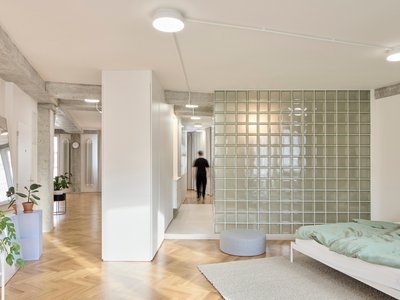
RDTH architekti Rips Out Nearly Every Wall in a Prague Apartment and Replaces Them with Furniture
A 101-square-meter post-war flat in Prague trades rigid partitions for a single rotated furniture block, curtains, and glass concrete.
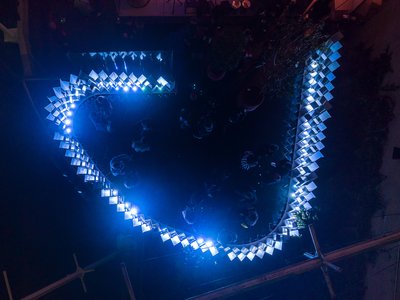
Rojkind Arquitectos and Think Parametric Build a Glueless Pavilion from 67 Interlocking Panels
A serpentine fiber-cement installation in Chapultepec Park celebrates a decade of architectural media in Mexico City.
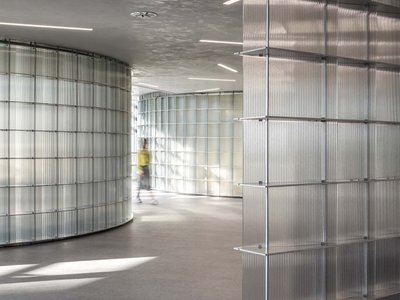
HCCH Studio Wraps a Shanghai High-Rise Office in Curved Walls of Translucent Glass
A 1,000 square meter fit-out in Lujiazui replaces the typical tech-office palette with layered glass, micro-cement, and quiet rigor.

Similar Reads
You might also enjoy these articles


Urban Forest: A Vertical Ecosystem for 5,000 Workers in Singapore's Changi Business Park
Radially stacked pods and layered green decks turn a 7-acre plot into 47 acres of ecological workspace projected for 2040.
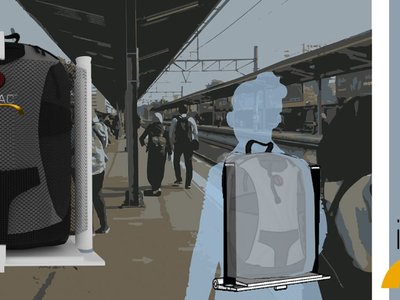
interACT: A Wearable Transit Object That Turns Commuting Into Social Infrastructure
A backpack-mounted foldable device transforms walking, waiting, and riding into moments of shared comfort across Jakarta's transit network.
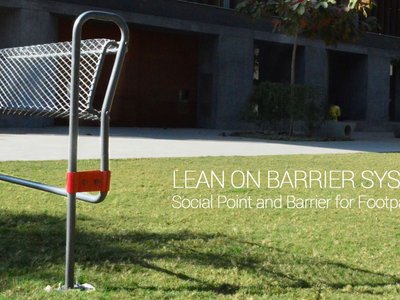
Lean On Barrier System: Where Traffic Safety Meets Chai Culture in Ahmedabad
A modular steel barrier doubles as informal seating and lean-on furniture at one of Ahmedabad's busiest intersections, keeping vendors in place.

The Black Bagh: A Living Monument Built from Water, Light, and Memory
On the banks of the Yamuna, two designers replace the myth of a marble mausoleum with a regenerative landscape of reflection and ritual.






Comments (0)
Please login or sign up to add comments
No comments yet. Be the first to comment!