
Bridge-Toilet by FMD: A Public Utility That Connects Infrastructure, Culture, and Ecology
A multifunctional rural bridge-toilet integrating sanitation, storage, and sightseeing, blending sustainable design with bamboo culture in Sichuan, China.

Redefining Rural Infrastructure through Architecture
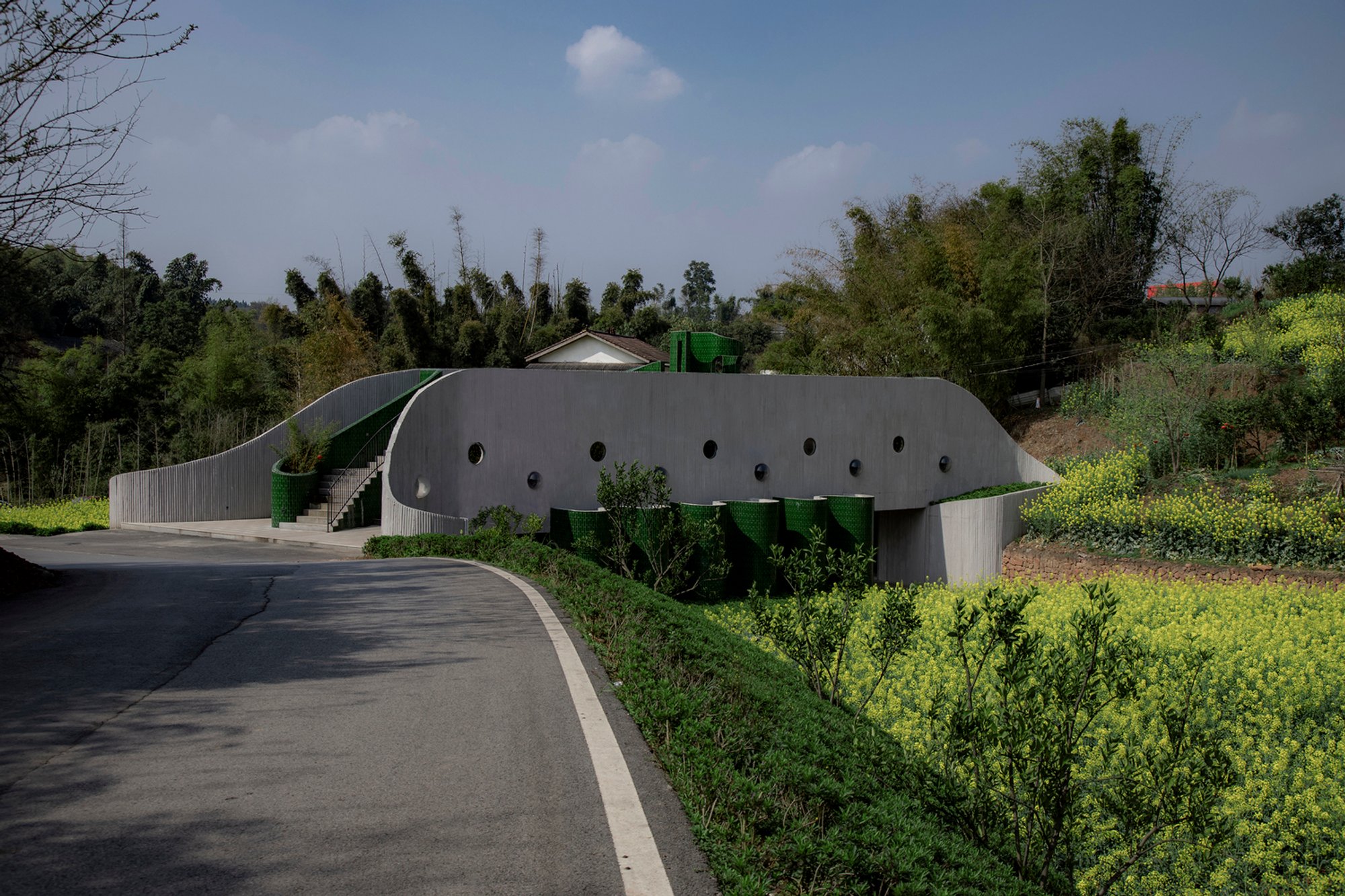
Situated at the entrance of Gaoqiao Village in Yibin, Sichuan, the Bridge-Toilet project by FMD reimagines what a rural public utility can be. This multifunctional structure is not merely a toilet but a pedestrian bridge, a tool storage space, and a sightseeing platform—all seamlessly integrated into the cultural and agricultural fabric of the community. Set within the verdant landscape of the Yichangxing Hundred Mile Green Bamboo Corridor, the project responds to the village’s identity as a model for rural revitalization through bamboo culture.
A Hybrid of Public Utility and Agricultural Support
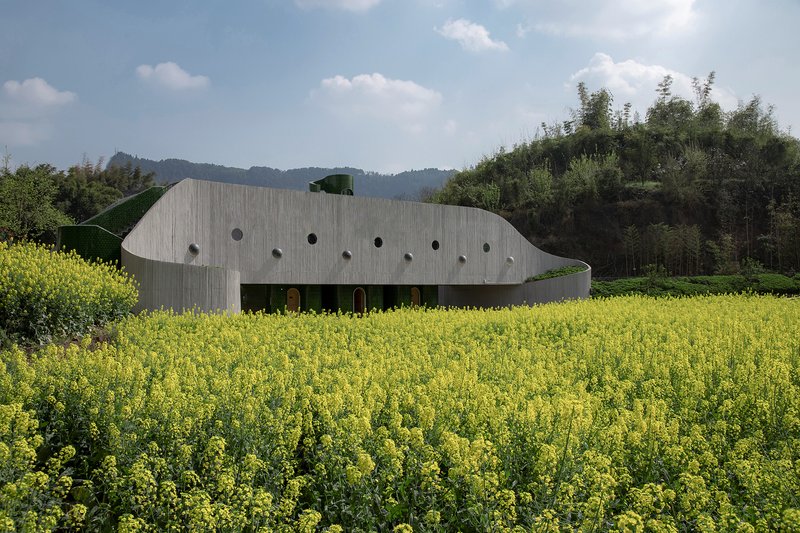
The Bridge-Toilet is designed as an agricultural-supporting complex, blending sanitary infrastructure with rest areas and storage facilities for farming tools. Unlike conventional rural public toilets that are often overlooked, this structure supports both physiological and practical needs—serving villagers and tourists alike. It emphasizes the integration of appropriate ecological technologies, furthering the sustainability goals of the community.
Site-Specific and Contextual Design
Nestled within farmlands and bounded by roads at varying elevations, the site posed both a challenge and an opportunity. The structure bridges a 4-meter height difference between pathways on either side of the field, acting as a connective spine in the village’s pedestrian circulation system. The building’s folded geometric form emerges from the site’s topography and circulation patterns, symbolizing connection and support.
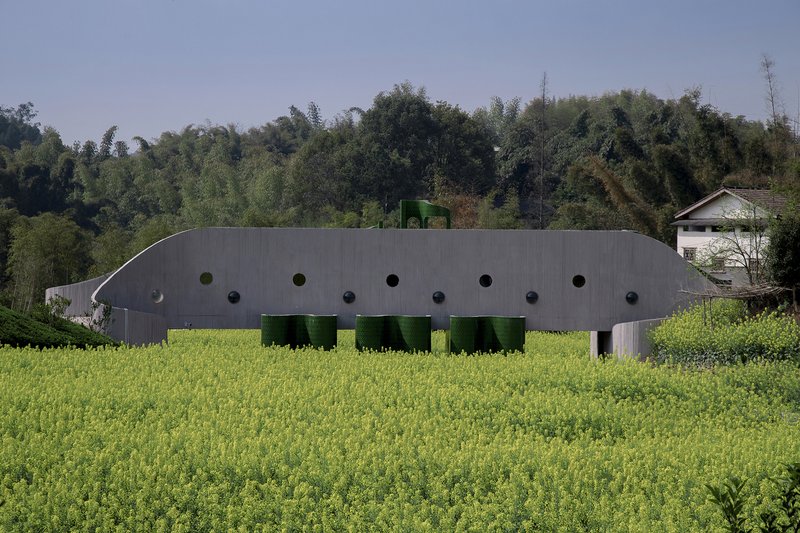
Architectural Strategy: Folding Forms and Layered Functions
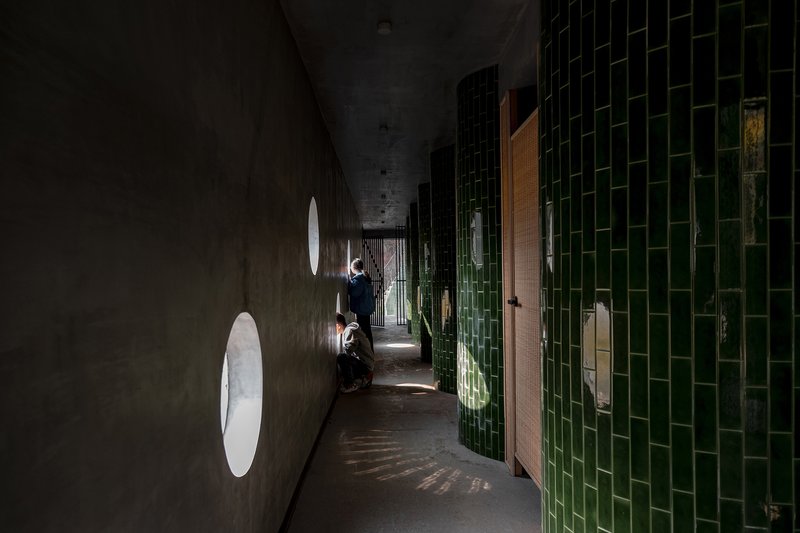
The design strategy employs a three-dimensional folded wall system to create a self-supporting structural frame. On the bridge level, gendered restrooms are arranged in alternating segments along a continuous folding wall—efficiently organizing space while ensuring clear pedestrian flow. The rhythm of solid and void introduces a dynamic spatial experience, creating visual permeability and light play.
The lower level houses a family bathroom, accessible toilet, and agricultural tool storage, making it a multifunctional node in the rural landscape. Access to the rooftop is provided through stairs at multiple elevations, where visitors can enjoy panoramic views from the viewing platform—a thoughtful gesture that enhances the building’s relationship with its surroundings.
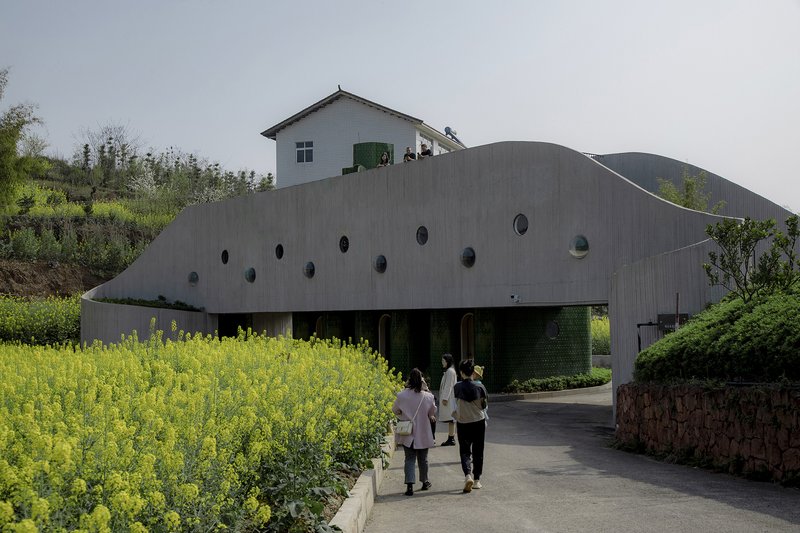
Material Expression and Local Craftsmanship
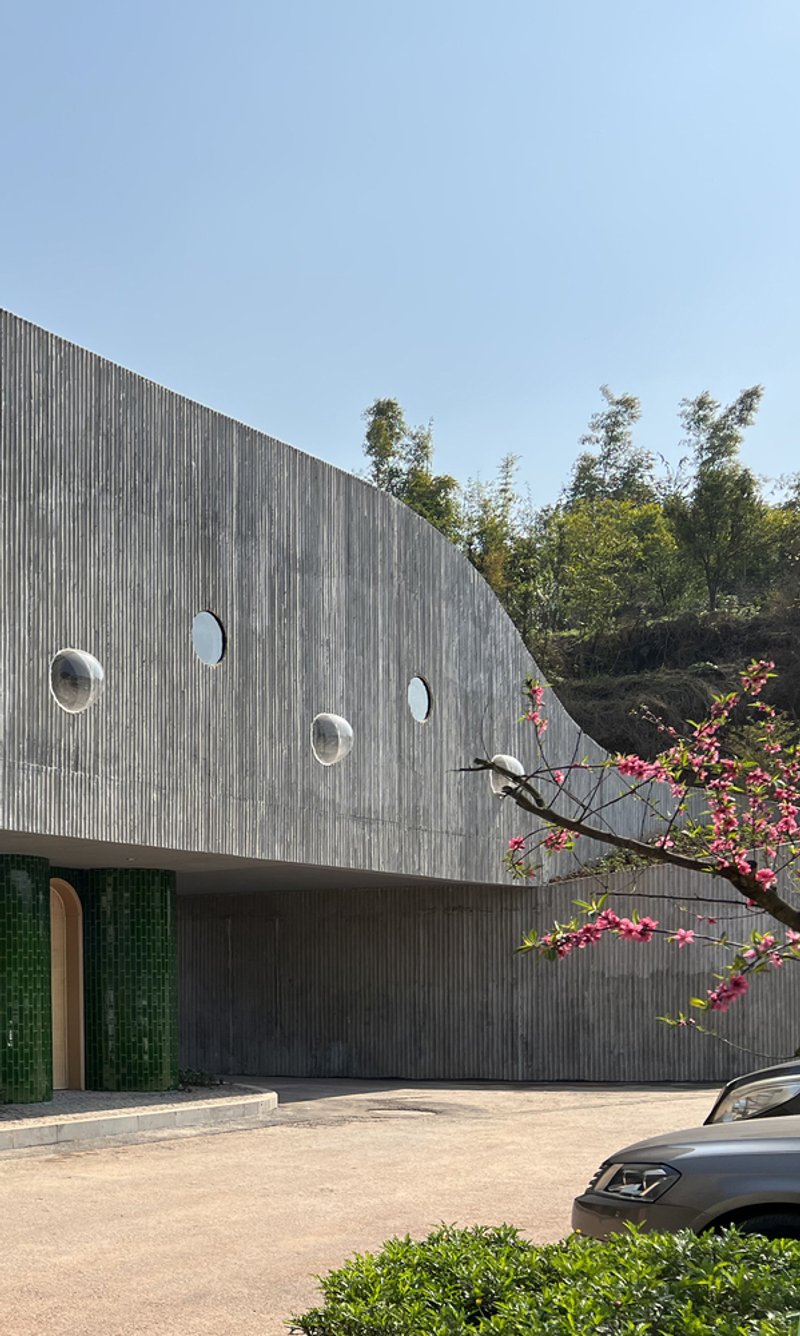
The project champions the use of local materials and labor. The outer facade is constructed from rough bamboo formwork concrete, paying homage to the region’s bamboo heritage. In contrast, the interior surfaces are clad with locally produced green tiles, creating a sensory dichotomy between rugged exteriors and refined interiors. The inclusion of circular porthole windows at varying heights provides interactive, child-friendly moments while illuminating the interiors naturally.
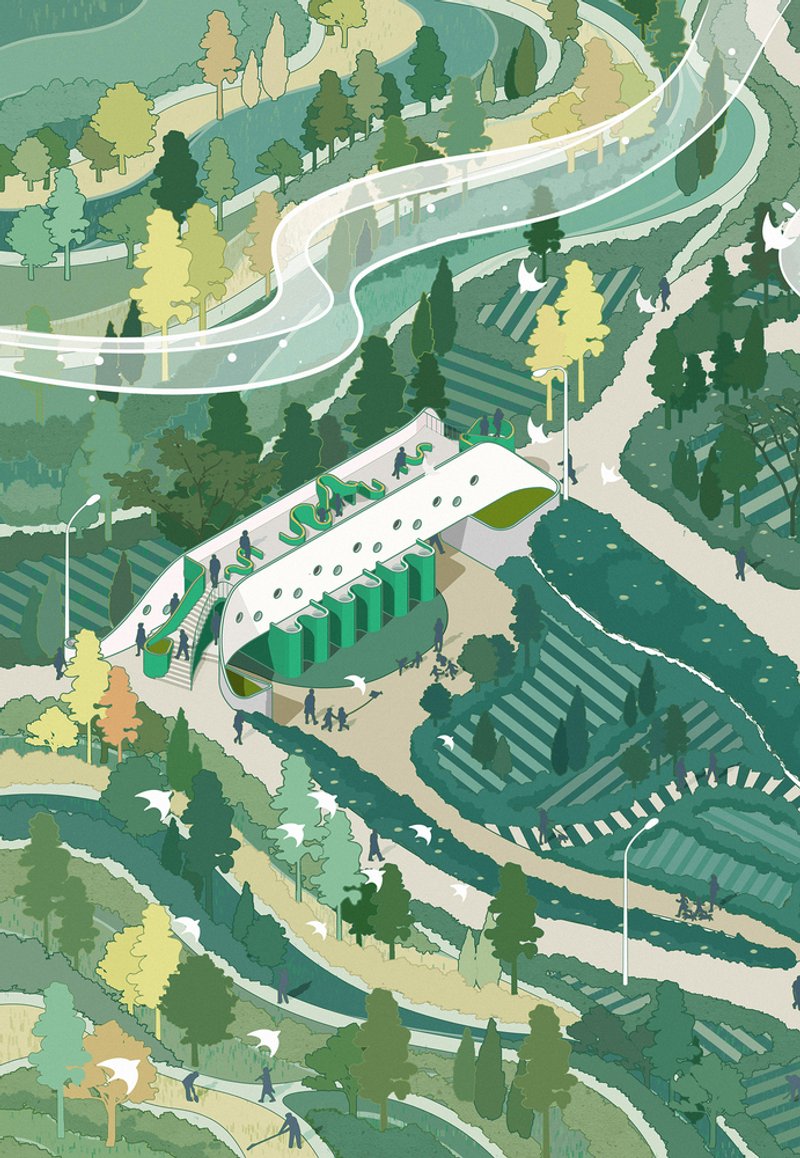
Sustainable Rural Revitalization
Built in collaboration with local craftsmen and bamboo workers, the Bridge-Toilet stands as a testament to how architecture can drive rural development. It’s not just a public amenity—it’s a catalyst for cultural continuity, environmental stewardship, and socio-economic engagement.
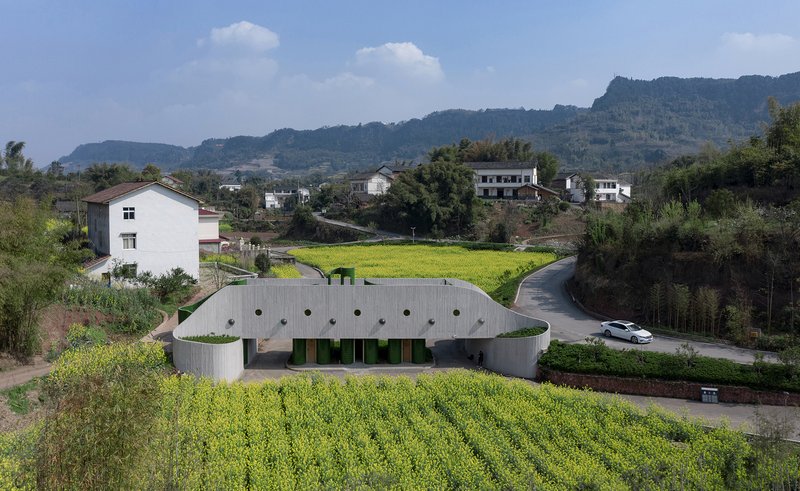
All Photographs are works of Yuanrong Zhang, Maozhu Li




Popular Articles
Popular articles from the community

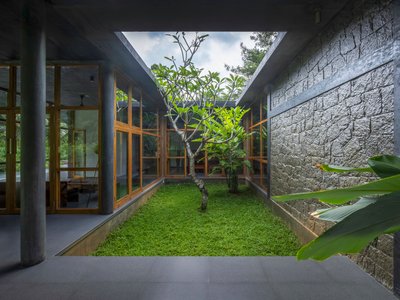
3dor Concepts Wraps a Kerala Home in Mirrored Concrete Arcs Around a Courtyard Tree
In the Western Ghats foothills of Thamarassery, a 270 m² single-story house uses two curved volumes to frame nature as its center.
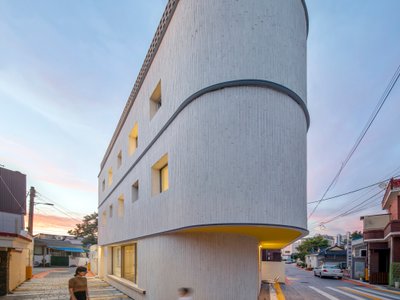
YOAP Architects Round a Corner in Yeongcheon with a Cylindrical Community Hub
A 197-square-meter brick and ribbed-clad tower turns a forgotten alley corner in South Korea into a public garden with a low threshold.
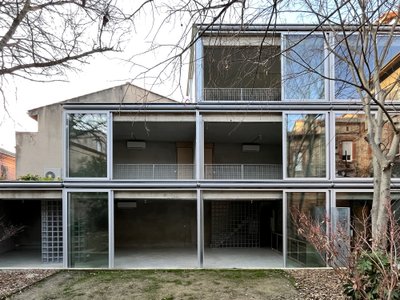
BAST Slots a Four-Story Glass House into a Narrow Gap Between Toulouse Townhouses
In the dense Bonnefoy district, a stepped infill building merges home and office while preserving a majestic hackberry tree.
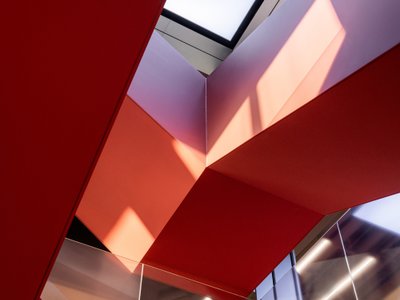
Ippolito Fleitz Group Identity Architects Turn Eight Floors in Shanghai into a Vertical Creative City
Publicis Groupe's new headquarters in Xintiandi reimagines the office as a courtyard-driven urban landscape stacked across eight floors.


Similar Reads
You might also enjoy these articles

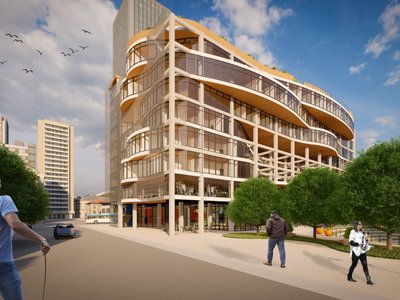
Olio Towers: A Mid-Rise for Performers That Fuses Housing, Rehearsal, and Stage
Located blocks from Houston's Theater District, this modular tower stacks living units around a central performance atrium.
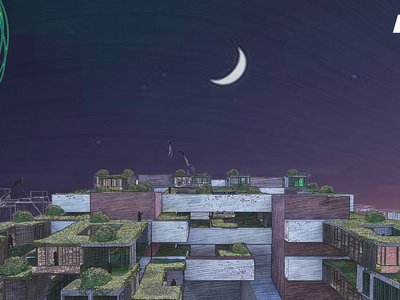
Oasis: Modular Green Housing Carved into Dhaka's Urban Fabric
A shortlisted Plugin Housing entry reclaims unauthorized settlements in Dhaka with stepped concrete volumes, green roofs, and ventilation-driven design.

Black Hole: A Floating Megastructure for the Post-Physical Era
Emiliano Mazzarotto envisions a spherical, self-scaling arena where e-sports, digital hotels, and holographic stadiums replace traditional public space.
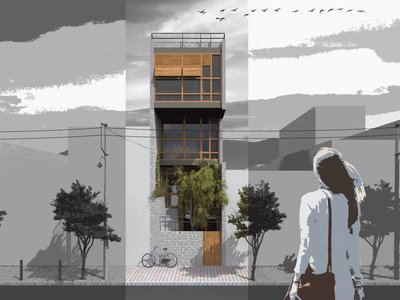
Compact & Sustainable Living in Piraeus: A Four-Level Family Home Built Around Light and Air
A narrow townhouse in one of Greece's densest port cities uses a central atrium and passive strategies to house three generations under one roof.

Explore Architecture Competitions
Discover active competitions in this discipline




The International Standard for Design Portfolios


The Global Benchmark for Architecture Dissertation Awards


The Global Benchmark for Graduation Excellence

Challenge to re-imagine a department store in present times
Comments (0)
Please login or sign up to add comments
No comments yet. Be the first to comment!