
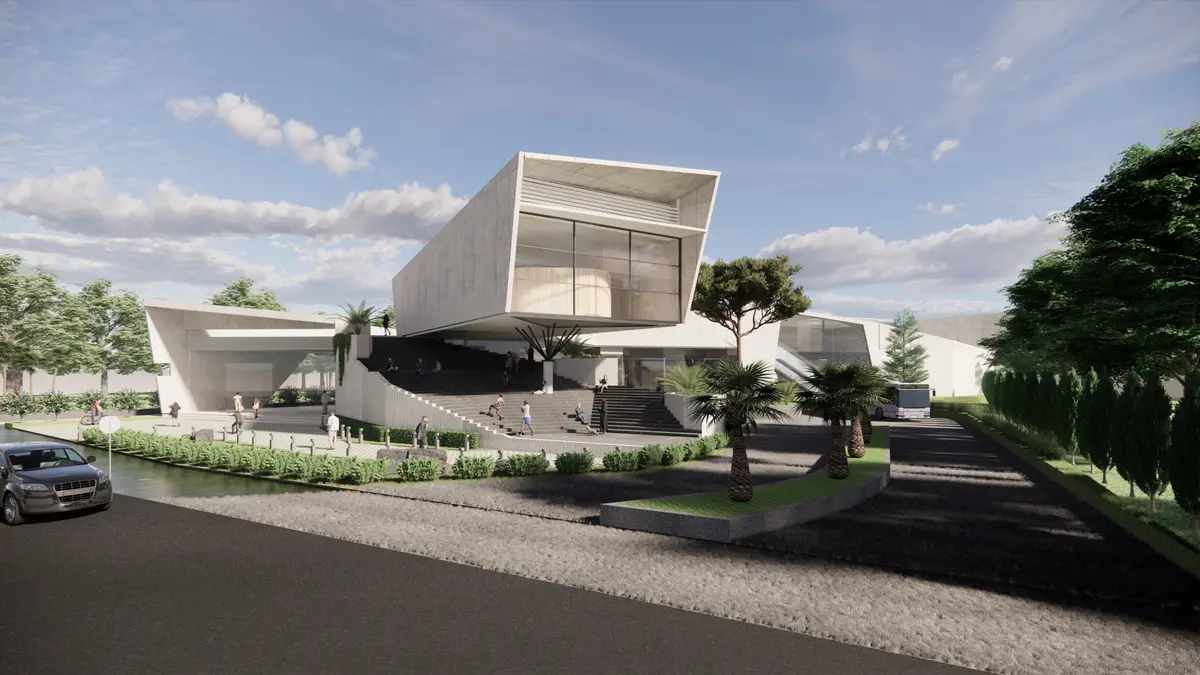
BRIDGING THE GAP:
A TRANSFORMATIVE APPROACH TO ERNAKULAM’S WATERFRONT AND TRANSPORT NEXUS

Introduction:
Nestled along the serene Arabian Sea, Kochi's waterfront has long been a symbol of the city's historical richness and cultural diversity. However, with rapid urbanization and neglect, this once vibrant area has faced challenges of decay and underutilization. This architectural thesis endeavors to propose a transformative vision for Kochi's Marine Drive Walkway, KSRTC Stand, and Boat Jetty, aiming to reinvigorate these spaces into hubs of sustainable urban living and community engagement.
Chapter 1: Context and Challenges
The thesis begins by delving into the historical significance of Kochi's waterfront and the factors contributing to its current state of disrepair. Urban sprawl, traffic congestion, environmental degradation, and a lack of pedestrian-friendly infrastructure are identified as primary challenges. These issues have stifled the potential of these waterfront areas to serve as catalysts for community interaction and economic growth.
Chapter 2: Vision and Design Principles
Drawing upon principles of sustainable urban design and community-centered development, the thesis proposes a holistic vision for the revitalization of Marine Drive Walkway, KSRTC Stand, and Boat Jetty. The design emphasizes the integration of green spaces, pedestrian-friendly pathways, and mixed-use development that harmonizes with the natural beauty of the waterfront. Key design elements include:
- Green Corridors and Public Spaces: Introducing lush greenery and recreational areas that promote wellness and environmental sustainability.
- Mixed-Use Development:Incorporating residential, commercial, and cultural spaces to foster a vibrant 24/7 community.
- Waterfront Access and Mobility:Enhancing connectivity with safe pedestrian walkways, cycling lanes, and efficient public transit options to reduce dependency on private vehicles.
Chapter 3: Implementation Strategies
This chapter explores practical strategies for the phased implementation of the proposed revitalization plan. It emphasizes the importance of stakeholder engagement, public-private partnerships, and adaptive reuse of existing infrastructure to minimize costs and maximize community benefit. Case studies of successful urban renewal projects from around the world provide valuable insights into best practices and potential pitfalls.
Chapter 4: Community Engagement and Cultural Integration
Recognizing the cultural richness of Kochi, this chapter highlights the significance of community engagement in shaping the revitalization process. Collaborative workshops, public forums, and art installations are proposed as tools to empower local residents and stakeholders to actively participate in the transformation of their waterfront. Cultural programming and events celebrate Kochi's heritage while fostering a sense of pride and ownership among the community.
Conclusion:
In conclusion, this thesis aims to contribute to the discourse on sustainable urban renewal by proposing a transformative vision for Kochi's waterfront. By reimagining Marine Drive Walkway, KSRTC Stand, and Boat Jetty as vibrant, people-centric spaces, the thesis seeks to enhance the quality of urban living, promote economic vitality, and preserve the cultural identity of Kochi for future generations. Through thoughtful design, strategic planning, and community empowerment, this project aspires to serve as a model for cities seeking to revitalize neglected waterfronts into thriving hubs of sustainable development and civic pride.


Popular Articles
Popular articles from the community


U.GA Architects Wraps an Oval Rooftop Pool in Curved Board-Formed Concrete on Busan's Jeollidan-gil
In Busan's Jeonpo-dong, a 454 m² mixed-use block stacks a neighborhood facility, guest rooms and an oval rooftop pool inside spiraling concrete walls.

LT2A and OPEN Architectes Thread a Brick and Glass High School Through a Wooded Belgian Campus
In Braine-l'Alleud, a 3,000 m² wing for Collège Cardinal Mercier pairs pale brick with a glazed colonnade, deferring to a small chapel and a dense wood.

David Macias Steps a Doorless Stone and Plaster House Down a Tropical Colombian Hillside
In the humid hills of Colombia, Threshold House replaces the front door with an open void and terraces its 850 m² down the slope instead of fighting it.

Juan García Correa, John González and Claudia Rueda Sink a Circular Amphitheater into a Manizales Engineering Building
On the La Nubia campus in Manizales, Colombia, the S1 Building folds labs and offices into a hillside of ramped lawns that double as a campus route.

Similar Reads
You might also enjoy these articles


Vereda Arquitetos Renovates a 40-Square-Meter Apartment Inside Niemeyer's Copan Building
A compact unit in São Paulo's most iconic residential tower gets a material overhaul that pairs exposed concrete with bold blue Formica.

Shakur's House: Exposed Brick as an Interior Organiser in a 168 m² Mashhad Residence
Brick moves indoors in this Mashhad residence, where masonry walls, glass partitions and teal planes sequence a compact home without closing it off.

Day and Night Park: A Time-Based Urban Newsstand in Beijing
A temporary urban newsstand in Beijing blending travel, light, and reading through poetic colors, compact form, and community-focused design.

Modernist Patio Renovation in El Masnou, Barcelona by Oliver Segura Arquitectura + Cebrià Arquitectura
Modernist patio renovation blending tradition and innovation with a movable pool, leveled floors, and Catalan materials in El Masnou.

Explore Architecture Competitions
Discover active competitions in this discipline


Challenge to design locus for the upliftment of human rights

Challenge to reimagine the Iron Throne

Photograph architecture without architects

Illustrate the lost glory of Angkor Wat - Render Challenge
Comments (0)
Please login or sign up to add comments
No comments yet. Be the first to comment!