
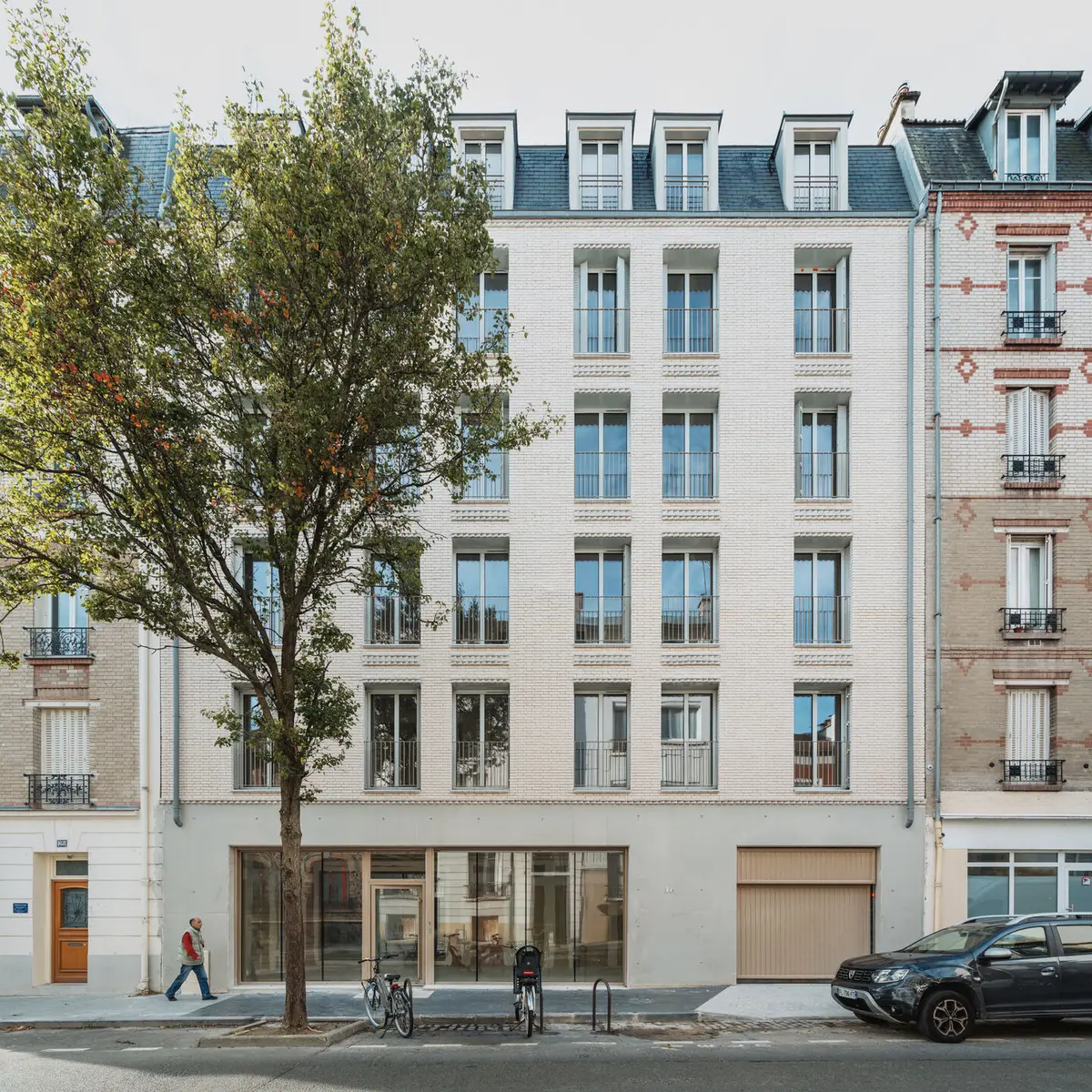
Bridging Urban Heritage and Contemporary Living: 24 Social Housing Units, Vincennes by Prinvault Architectes
A social housing project in Vincennes combining contextual brick façades with contemporary interiors, reinforcing urban continuity and residential quality.


Delivered in 2025, the project 24 Social Housing Units by Prinvault Architectes contributes to the ongoing transformation of Vincennes’ dense urban fabric while reinforcing its architectural continuity. Commissioned by LogiRep (Polylogis Group), the development provides 24 social housing units alongside a retail space, aligning with the city’s long-term objective to increase its social housing stock, from 5% in 2002 to 12% in 2025.
Social Housing as Urban Continuity
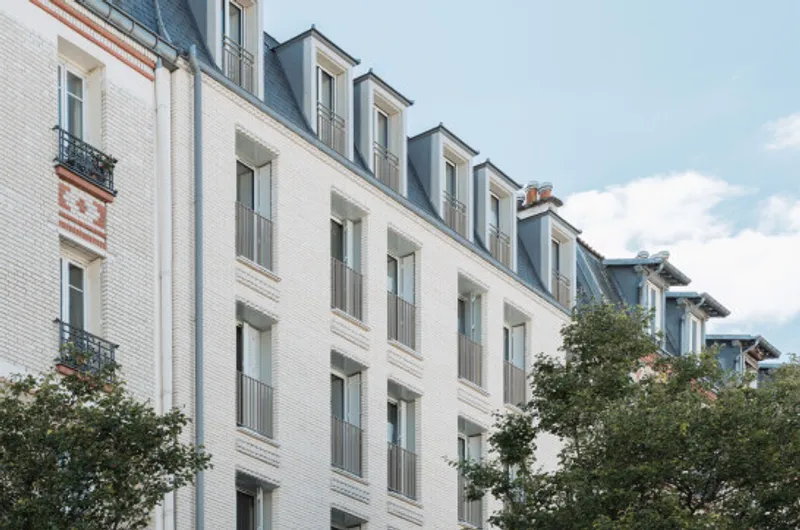
Set within an early 20th-century context characterized by a mix of recessed single-family homes and five-story apartment buildings, the project negotiates between historical presence and contemporary needs.
Responding to a Complex Urban Context
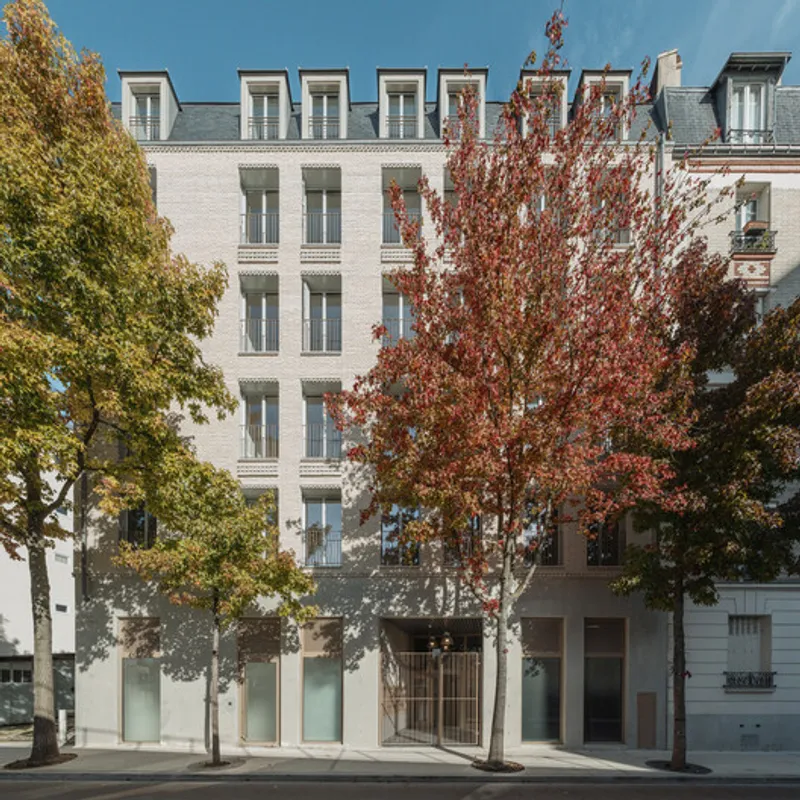
The site stretches between Diderot and Jarry streets, requiring careful alignment to maintain the existing street rhythm and strengthen urban continuity. One of the principal challenges was achieving this alignment while preserving a building depth that would allow generous, well-lit, and functional dwellings.
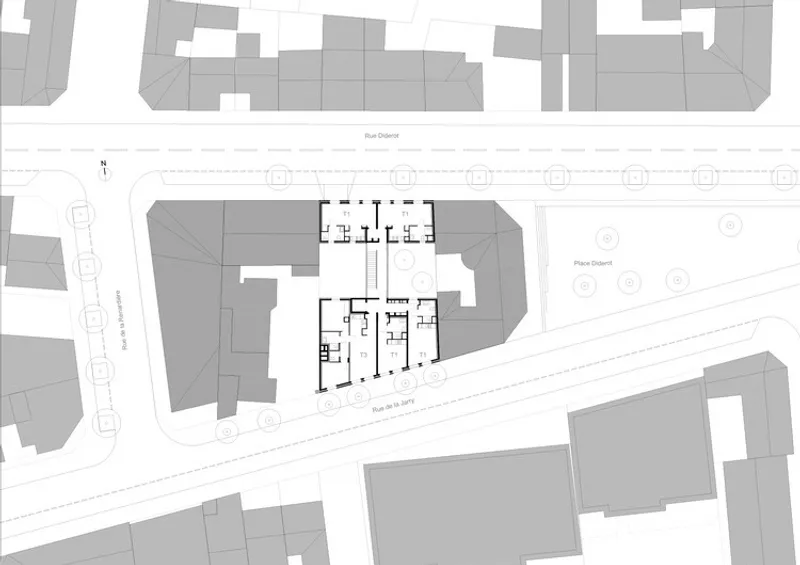
Rather than treating the plot as a singular mass, the architects divided the program into two distinct volumes, ensuring both contextual sensitivity and residential quality.
Two Volumes, One Cohesive System
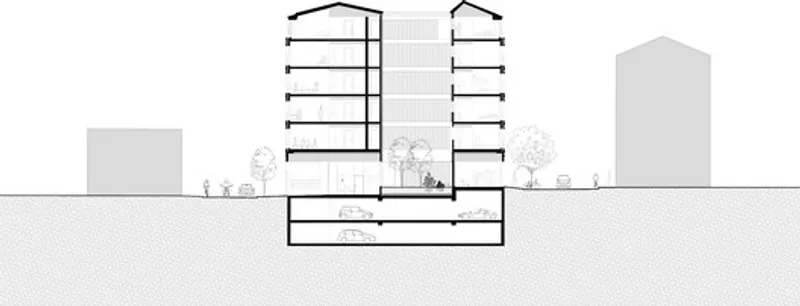
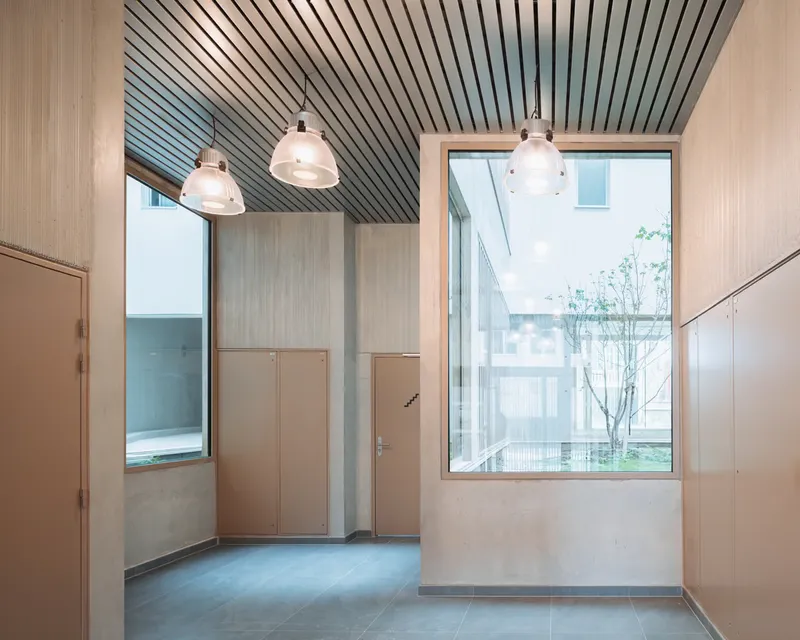
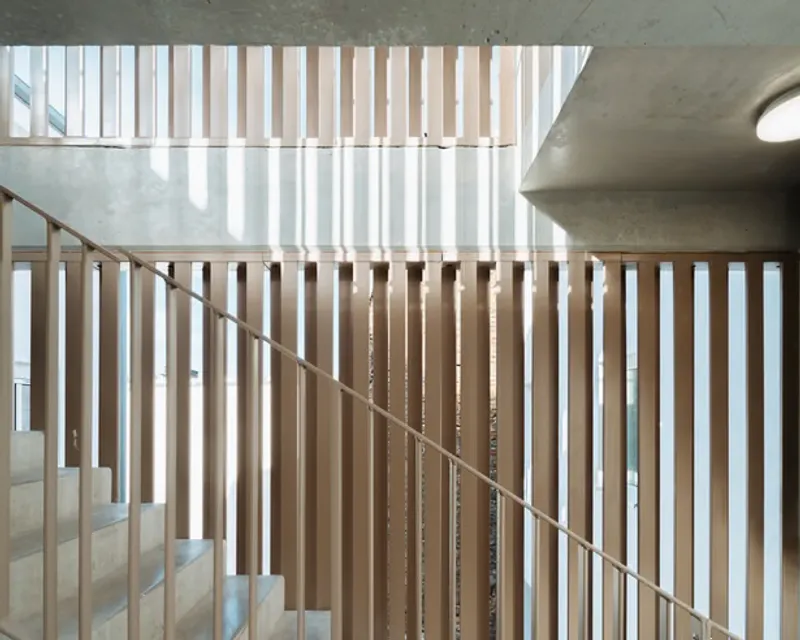
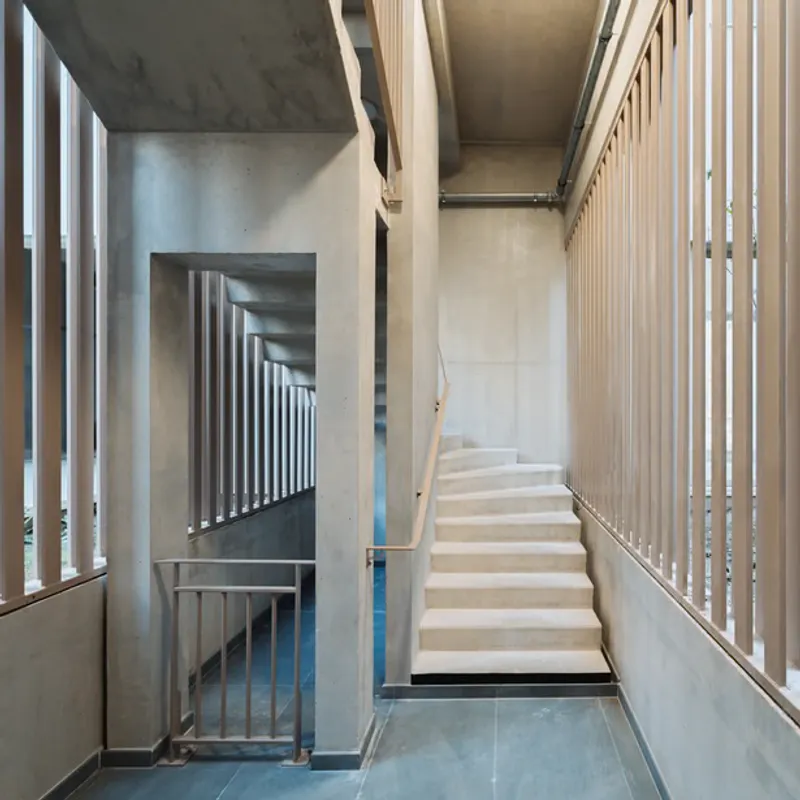
The project is organized into two built entities connected by a central footbridge and staircase. This configuration creates a spatial dialogue between the two volumes while allowing light, air, and visual connections to pass through the heart of the development.
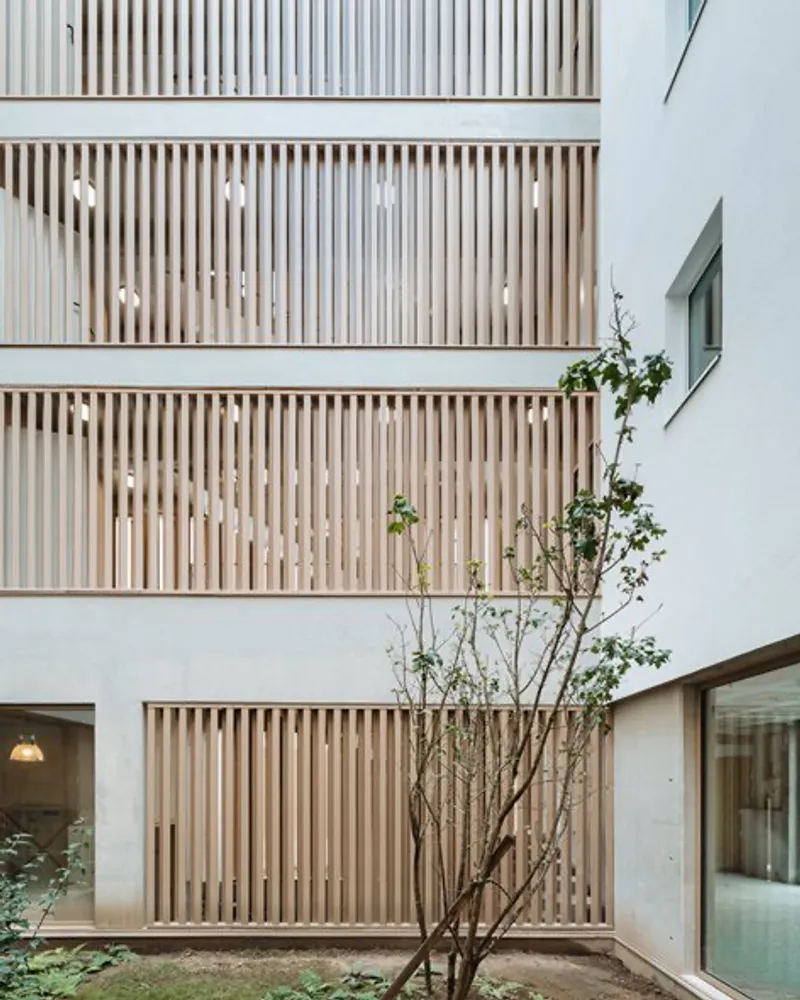
This central circulation element becomes both a functional connector and an architectural mediator, enabling contrasting interior and exterior expressions while maintaining a coherent whole.
Brick as a Language of Belonging
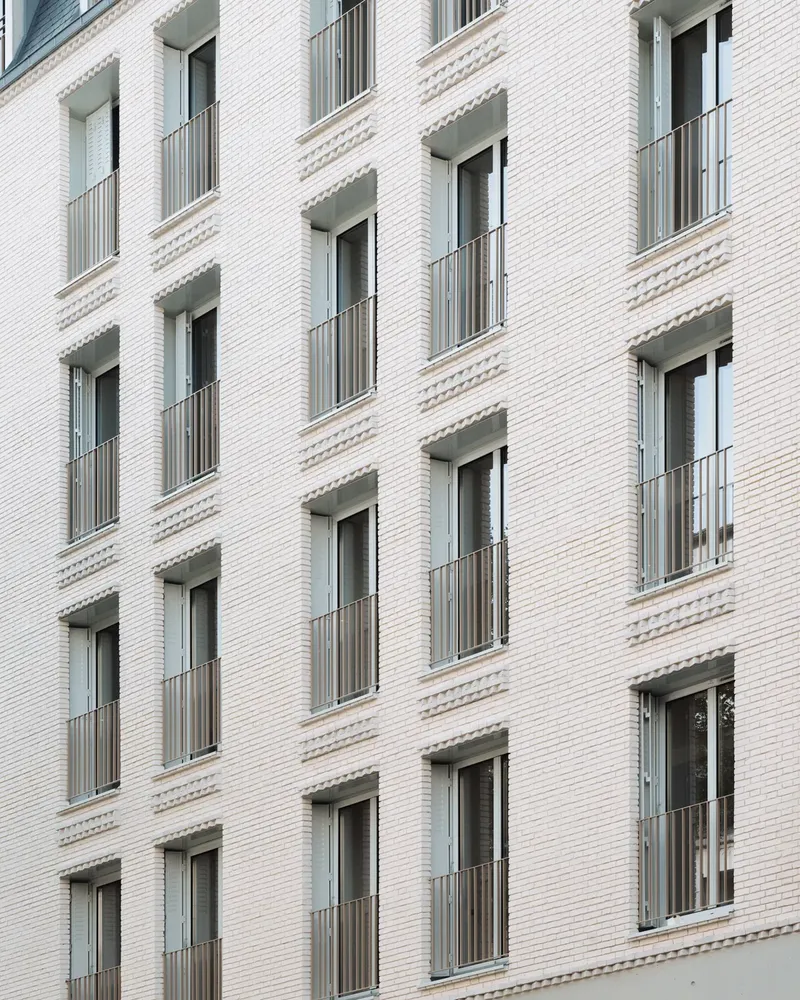
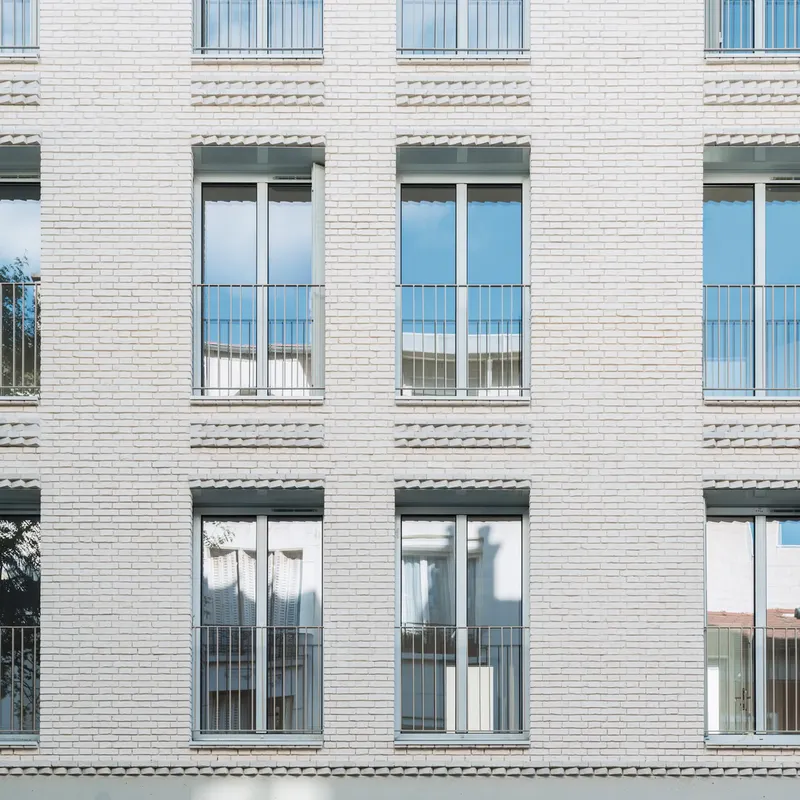
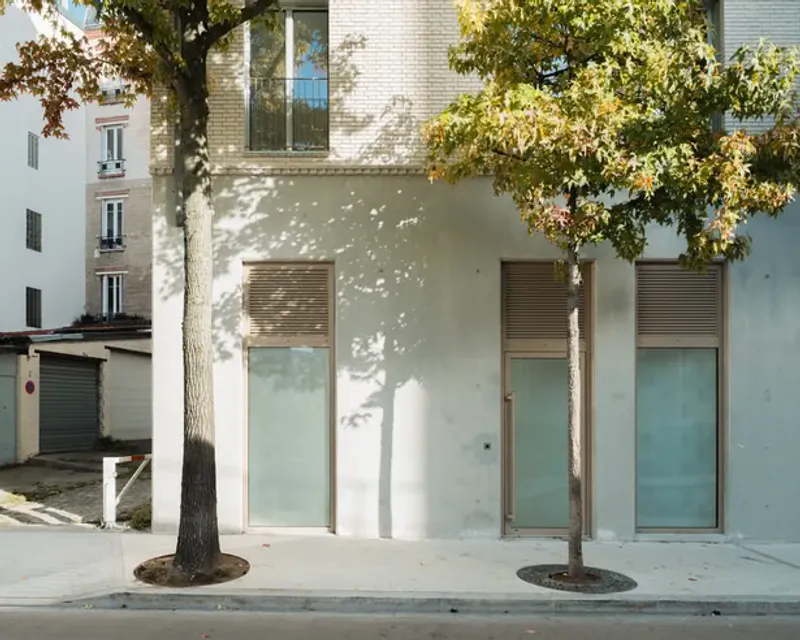
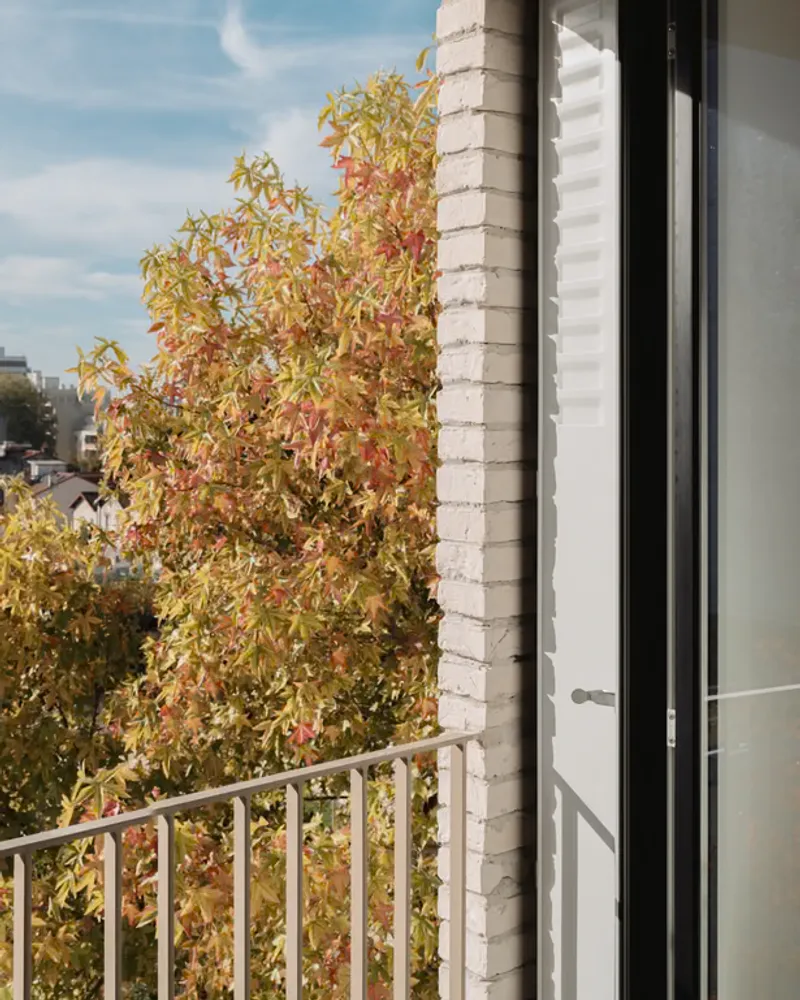
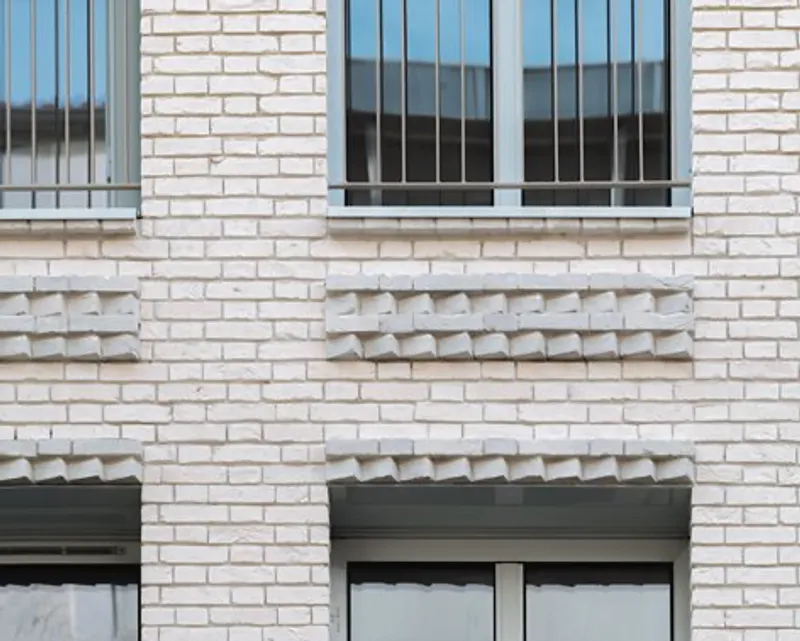
On the street-facing façades, brick is used as the primary material, anchoring the project within Vincennes’ architectural heritage. The façades feature a distinctive “gear-tooth” pattern, created through alternating diagonal headers and straight stretchers. This subtle articulation gives depth and rhythm to the elevations, enriching the streetscape without resorting to formal pastiche.
Through this careful reinterpretation of traditional masonry, the building integrates seamlessly into its surroundings, reinforcing a sense of continuity and belonging.
Contemporary Interiors and Light-Filled Living
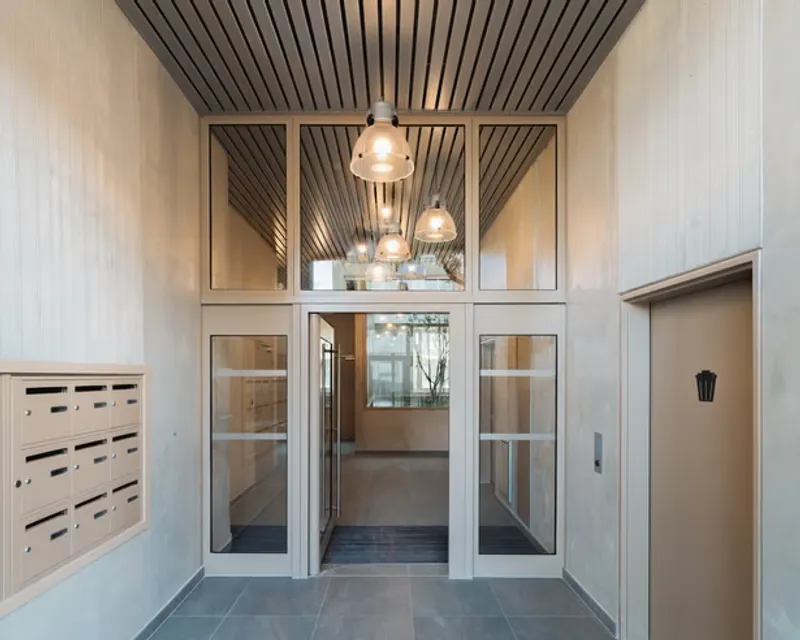
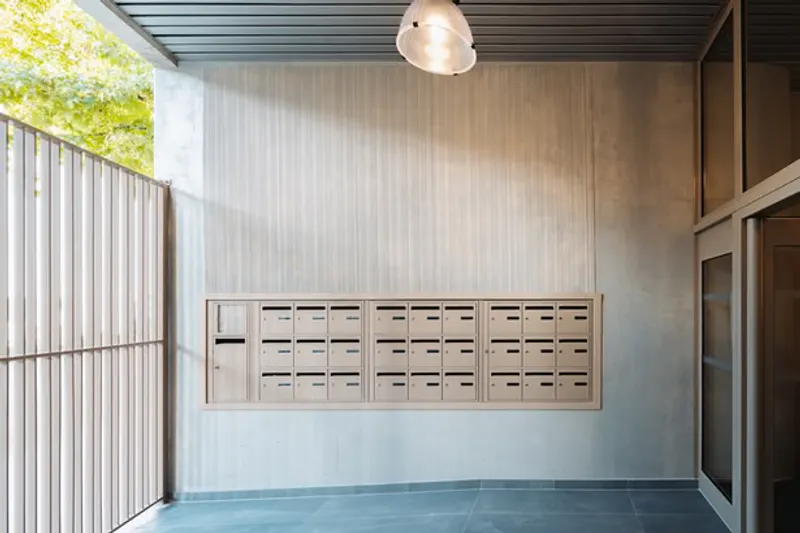
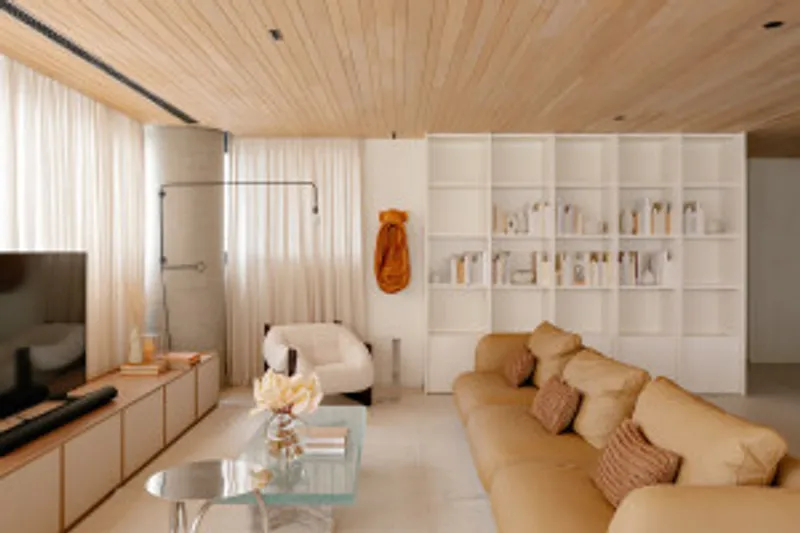
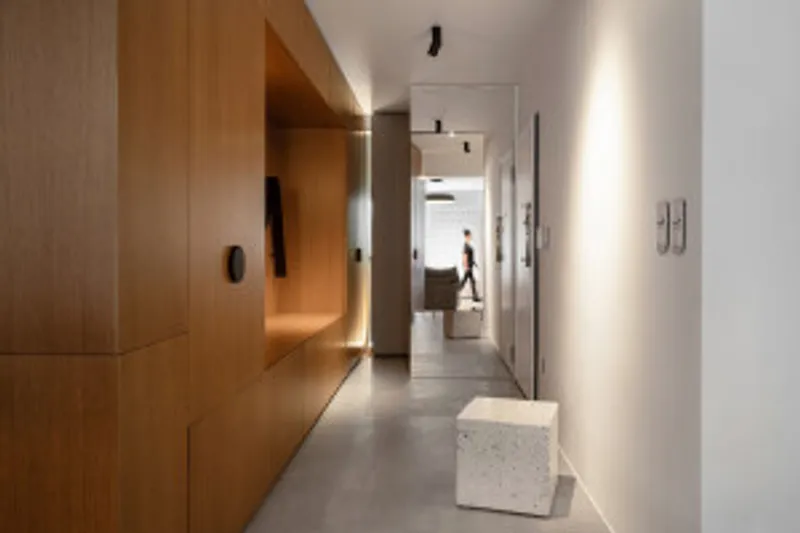
In contrast to the contextual solidity of the exterior, the interior spaces adopt a distinctly contemporary language. Bright living areas are finished with stained patterned concrete and complemented by metal screens, creating a refined yet robust domestic atmosphere.
The housing mix, 18 one-bedroom units and 6 three-bedroom units, responds to diverse household needs. Generous glazing ensures ample natural light, while thoughtful layouts prioritize comfort, usability, and long-term livability.
Balancing Density and Quality
With a total floor area of 1,140 m², the project demonstrates how density can coexist with quality in social housing. The careful modulation of volumes, circulation, and material expression allows the building to meet regulatory and urban constraints without compromising residential dignity.
The inclusion of a retail space at ground level further strengthens the project’s relationship with the street, activating the urban edge and contributing to daily neighborhood life.
Social Housing as Architectural Responsibility
Rather than treating social housing as a purely functional exercise, Prinvault Architectes approach the project as an opportunity to reinforce urban identity, architectural continuity, and social value. By bridging past and present through material language and spatial organization, the project affirms the role of architecture in shaping inclusive, well-integrated urban environments.
All the Photographs are works of Nicolas Trouillard


Popular Articles
Popular articles from the community


David Ortega Stacks a Two-Story Mexico City Penthouse Around a Steel Stair and a Pergola-Shaded Roof Terrace
In Colonia Roma, a 300 m² penthouse uses oak joinery, a planted steel stair and a slatted roof pergola to make a new-build apartment feel like a house.

David Macias Steps a Doorless Stone and Plaster House Down a Tropical Colombian Hillside
In the humid hills of Colombia, Threshold House replaces the front door with an open void and terraces its 850 m² down the slope instead of fighting it.

GROUP A Strips a 1969 Rotterdam Harbor Headquarters to Its Frame and Wraps It in Timber Louvers
In Rotterdam's M4H harbor district, Ferro Offices reuses a 1969 frame, adds one timber storey and reaches BREEAM-NL Outstanding.

Architekt Andreas Gruber Scatters 23 Dark Timber Chalets Across a South Tyrolean Forest Edge
In Molini di Tures, Amonti Chalets breaks a resort into a hamlet of gabled timber houses, with parking, storage and services pushed into the slope.

Similar Reads
You might also enjoy these articles


Hodi-Mandai Geram
Project Function: Preservation and revitalization of the Intangible heritage and socio-spatial identity of the Hodi by Housing, Cultural Memory Center, Sacred Grove, landscape, local tourism economy


Olio Towers: A Mid-Rise for Performers That Fuses Housing, Rehearsal, and Stage
Located blocks from Houston's Theater District, this modular tower stacks living units around a central performance atrium.

Oasis: Modular Green Housing Carved into Dhaka's Urban Fabric
A shortlisted Plugin Housing entry reclaims unauthorized settlements in Dhaka with stepped concrete volumes, green roofs, and ventilation-driven design.

Black Hole: A Floating Megastructure for the Post-Physical Era
Emiliano Mazzarotto envisions a spherical, self-scaling arena where e-sports, digital hotels, and holographic stadiums replace traditional public space.

Explore Social Housing Competitions
Discover active competitions in this discipline

Challenge to reimagine the Iron Throne

Photograph architecture without architects

Illustrate the lost glory of Angkor Wat - Render Challenge

Design challenge to reuse E-waste
Comments (0)
Please login or sign up to add comments
No comments yet. Be the first to comment!