

Brussels Dual Residence by Atelier Tom Vanhee
Historic Brussels townhouse renovated into independent dwelling and studio, preserving heritage details while enhancing daylight, garden connection, and energy performance.


Completed in 2024, Brussels Dual Residence is a refined townhouse renovation and adaptive reuse project that carefully balances historic preservation with contemporary living. Designed by Atelier Tom Vanhee, the 347 m² transformation reconfigures a traditional Brussels townhouse into two independent yet connected units: a private dwelling and a self-contained studio.
Located in the heart of Brussels, this residential refurbishment demonstrates how heritage architecture can be sensitively adapted to meet modern needs: while enhancing energy performance, spatial openness, and connection to outdoor space.
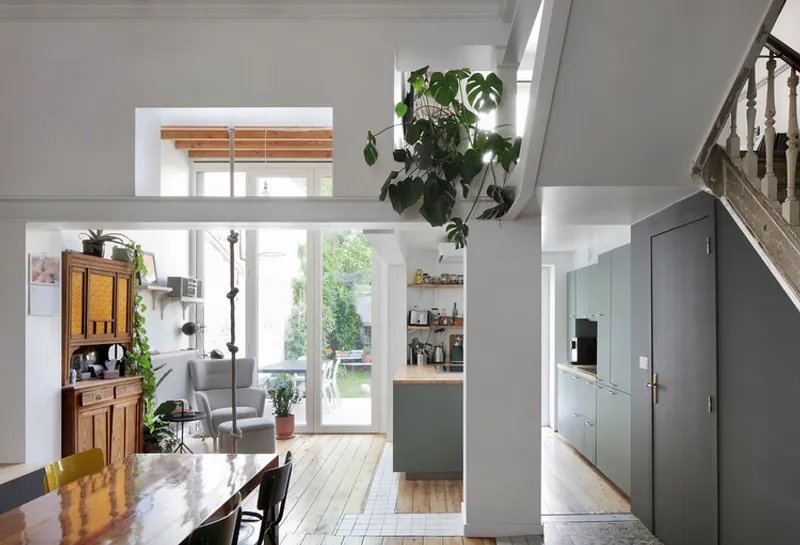
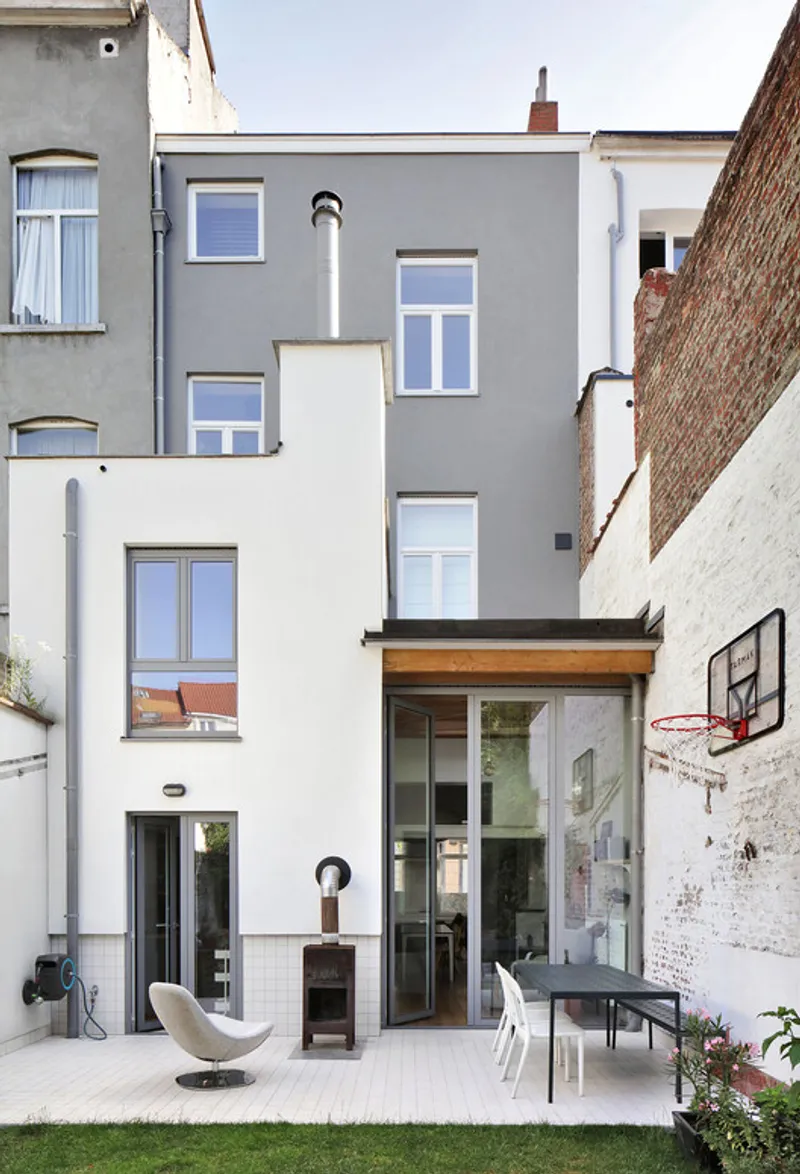
Reinterpreting the Brussels Townhouse Typology
The existing building consists of three main stories, an attic, a basement, and a rear extension with an intermediate level. The ground floor connects directly to a walled urban garden, a characteristic feature of Brussels residential architecture.
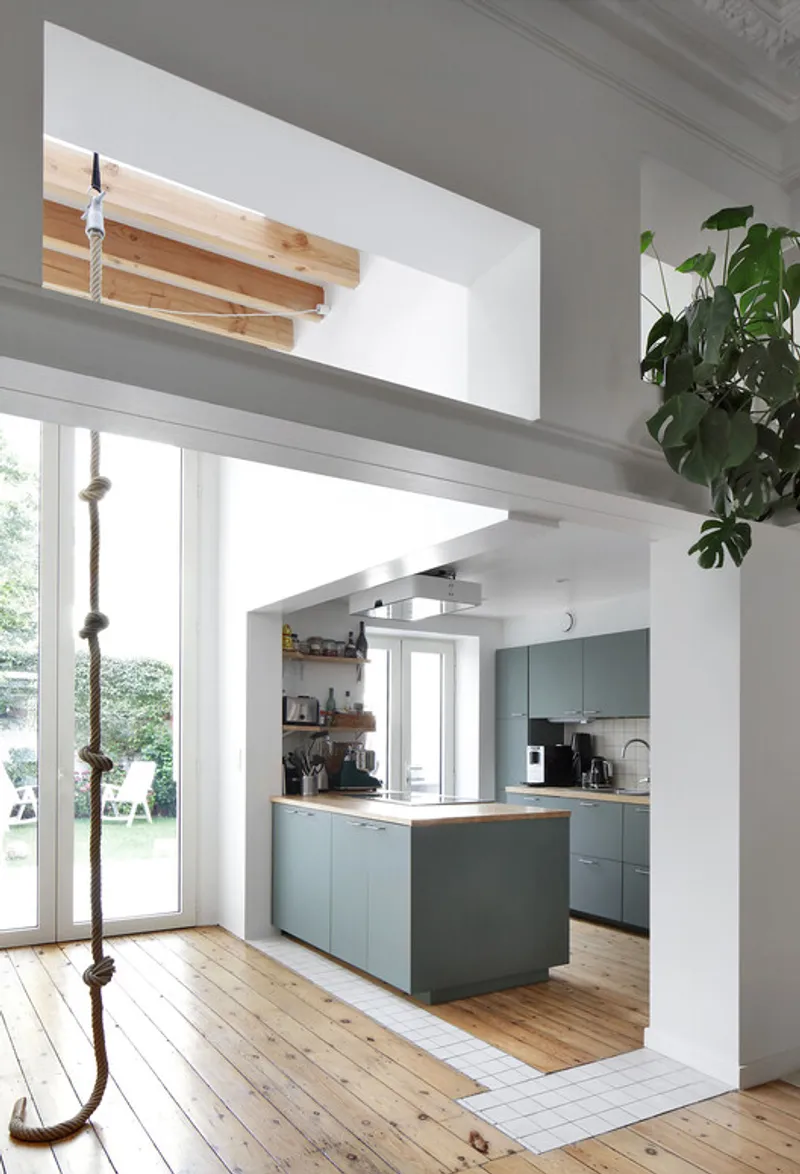
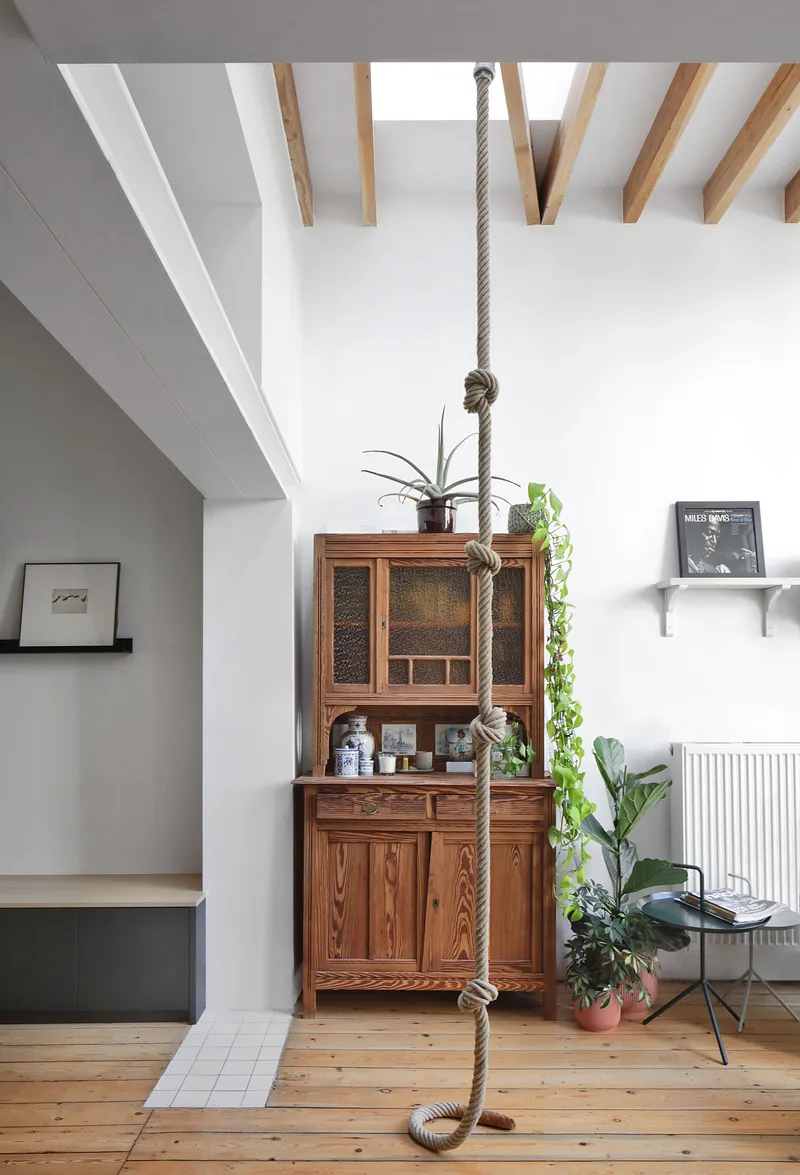
From the outset, the design strategy prioritized the preservation of original architectural elements. Interior joinery, ceiling mouldings, and wooden plank floors remain defining features throughout the house. Rather than replacing these historical details, the renovation integrates them into a new spatial narrative, reinforcing the building’s identity while upgrading its functionality.
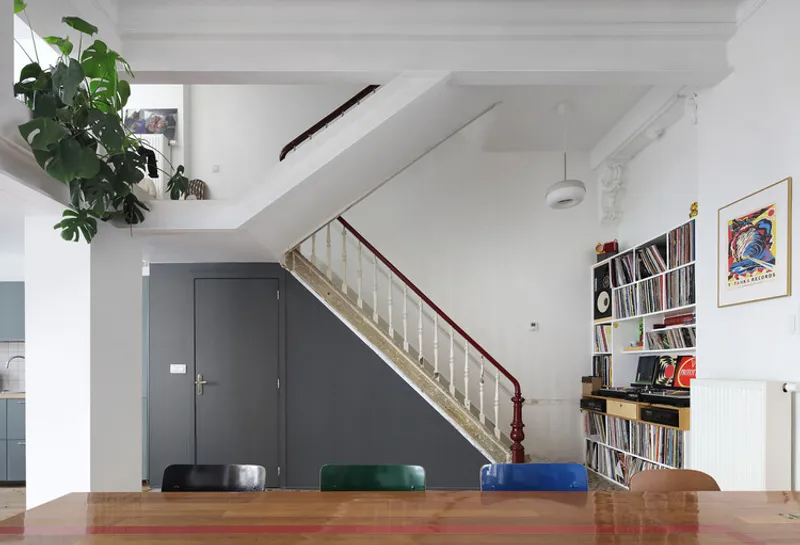
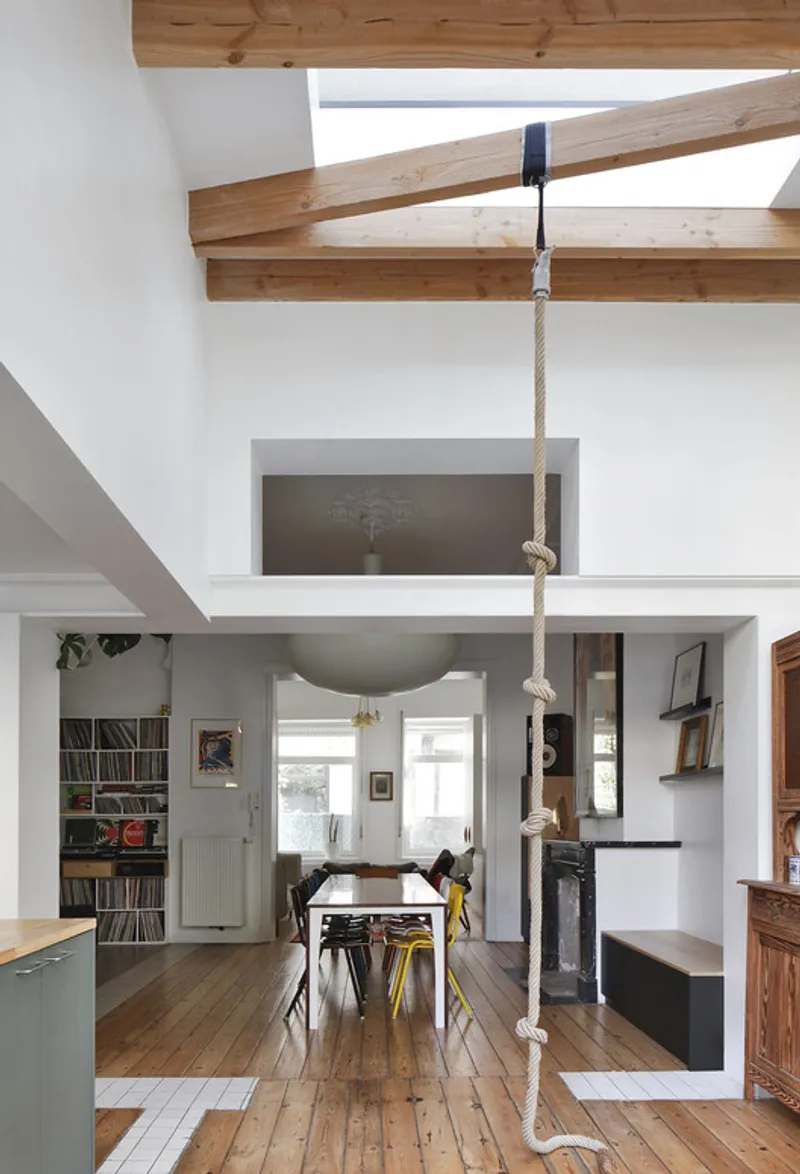
Dual Living Concept: Independent Yet Connected
A key objective of the project was to divide the townhouse into two autonomous units:
- The main dwelling, occupying the ground floor and upper second and third floors
- The studio, located on the first floor
Both units share a common entrance hall, yet operate independently. A newly inserted staircase provides direct access to the studio, optimizing circulation and ensuring privacy for both occupants. The original access door was repositioned to improve efficiency and spatial clarity, while dedicated bicycle storage was incorporated near the entrance, reflecting contemporary urban living in Brussels.
The existing central staircase remains the primary circulation spine, connecting all levels, including the basement and intermediate floor. This retention preserves the architectural rhythm of the house while supporting its updated layout.
Enhancing Spatial Openness and Daylight
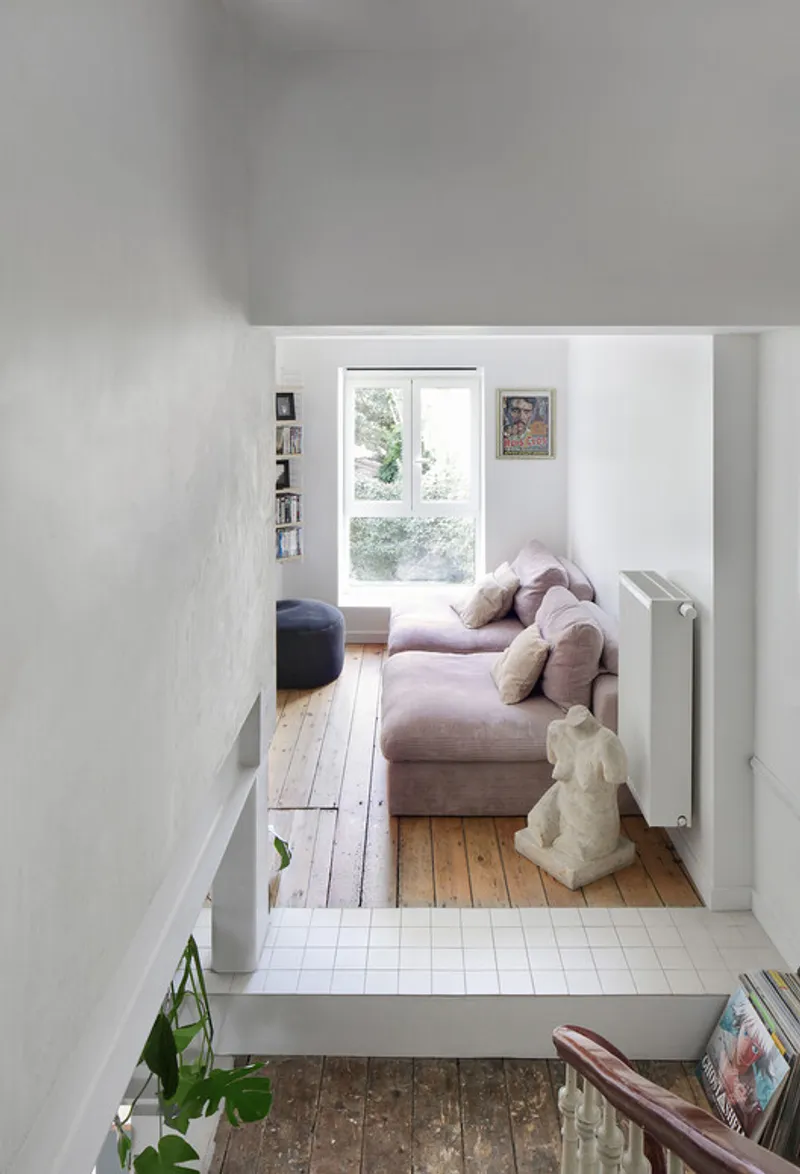
Within the dwelling, the ground floor was reconfigured to create a more fluid and visually connected living space. A wall between the central room and the stair hall was removed, and new openings were introduced toward the garden and TV room at the intermediate level.
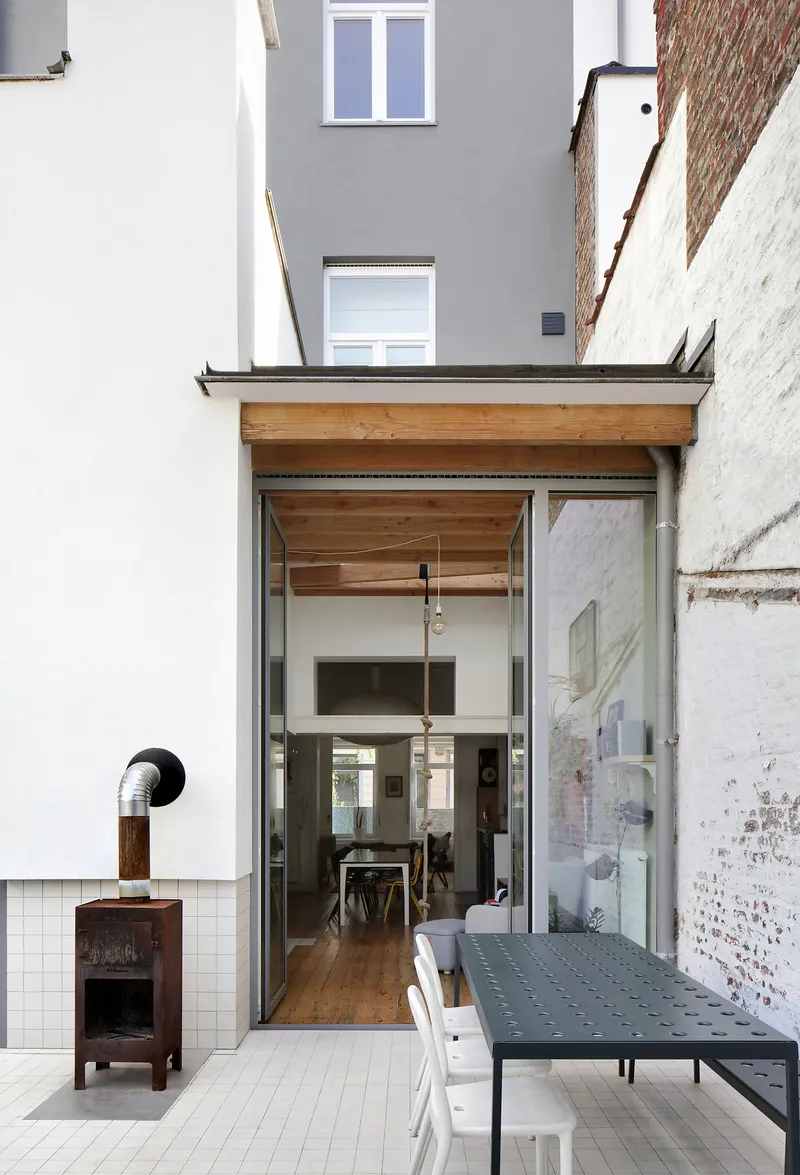
These structural interventions result in a continuous, three-dimensional living environment with varied atmospheres and improved daylight penetration. The extended kitchen window, reaching down to ground level, strengthens the visual and physical connection to the garden, transforming the rear façade into a luminous threshold between interior and exterior.
The studio benefits from high ceilings, abundant natural light, and a front-facing balcony. Existing mouldings and wooden floors were preserved, maintaining the character of the original townhouse while allowing flexibility in layout.
Energy-Efficient Renovation and Sustainable Upgrades
Beyond spatial transformation, the project incorporates significant energy-efficiency improvements:
- Insulation of flat roofs and the pitched roof
- High-performance glazing at the rear façade
- Replacement of exterior joinery (except the front door) with improved insulating systems
- Installation of solar panels on the pitched roof
The garden façade features a highly insulated glazed wall with large opening doors, enhancing thermal performance while maximizing daylight and garden views. These upgrades position the project as a model for sustainable townhouse renovation in Belgium.

Material Continuity and Contemporary Interventions
The rear extension is finished in white decorative plaster with grey window frames, while the upper rear façade of the main house adopts grey plaster with white frames. Exposed traces of removed walls are deliberately left visible and finished with white tiles, creating a subtle dialogue between old and new.
This careful material articulation highlights the building’s transformation without erasing its history. The terrace and newly introduced sanitary spaces follow the same tile language, ensuring visual coherence across interventions.

A Contemporary Model for Urban Residential Refurbishment
Brussels Dual Residence exemplifies how historic townhouses can be adapted to contemporary lifestyles through thoughtful architectural strategy. By merging preservation, spatial reorganization, and sustainable upgrades, Atelier Tom Vanhee delivers a flexible dual-living solution tailored to modern urban demands.
The project stands as a compelling example of residential architecture in Brussels: where heritage, functionality, and environmental performance coexist harmoniously within a single, reimagined townhouse.

All the photographs are works of
Filip Dujardin


Popular Articles
Popular articles from the community


Cube Design Draws an Ecological Corridor Between Two Shenzhen Hills with the Nankai Building
Beside Shenzhen's container docks, the Nankai Building pairs stacked balconies with a climbing green screen to connect two hillsides across its height.


Singing Woman: An Opera House That Performs Before the Curtain Rises
Ovidiu Cristian Pavel's conceptual opera house translates Estonia's choral identity into a sculpted waterfront landmark facing the Baltic Sea.

The Amber Palace Opera: A Geological Fiction Surfaces on Tallinn's Baltic Waterfront
Pierre Brillard reimagines a Baltic legend as a public landscape, opera house, and waterfront promenade rooted in Tallinn's coastal identity.

ETEH Reworks the Shared Spaces of São Domingos School in Brazil Around Timber, Color and Hanging Plants
At São Domingos School in Brazil, 436 m² of hall, refectory and library are recast with timber joinery, a yellow and blue code and trailing greenery.

Similar Reads
You might also enjoy these articles
Cube Design Draws an Ecological Corridor Between Two Shenzhen Hills with the Nankai Building
Beside Shenzhen's container docks, the Nankai Building pairs stacked balconies with a climbing green screen to connect two hillsides across its height.

Praksis A and Studio Sted Bend a Red Timber Cabin Across the Granite of Norway's Southern Coast
On the southern Norwegian coast, a 105 m² cabin follows the rock on slender posts, pairing red cladding outside with pine, brick and plywood within.

David Ortega Stacks a Two-Story Mexico City Penthouse Around a Steel Stair and a Pergola-Shaded Roof Terrace
In Colonia Roma, a 300 m² penthouse uses oak joinery, a planted steel stair and a slatted roof pergola to make a new-build apartment feel like a house.

PARALELA and LB2 Thread a Public Walkway Through the Base of a Las Condes Residential Tower
In Las Condes, Santiago, the Hamlet Building gives its fenceless ground floor to a 70-metre wooded passage linking two streets and the metro.

Explore Residential Building Competitions
Discover active competitions in this discipline

Challenge to design mud housing for contemporary communities

Challenge to reimagine the Iron Throne

Photograph architecture without architects

Illustrate the lost glory of Angkor Wat - Render Challenge
Comments (0)
Please login or sign up to add comments
No comments yet. Be the first to comment!