
BS Hof House: A Beautiful Fusion of Farmhouse Renovation and Modern Extension
A farmhouse renovation in Nova Ponente that introduces a modern extension, balancing heritage preservation with contemporary design elements.


Introduction to BS Hof House Renovation
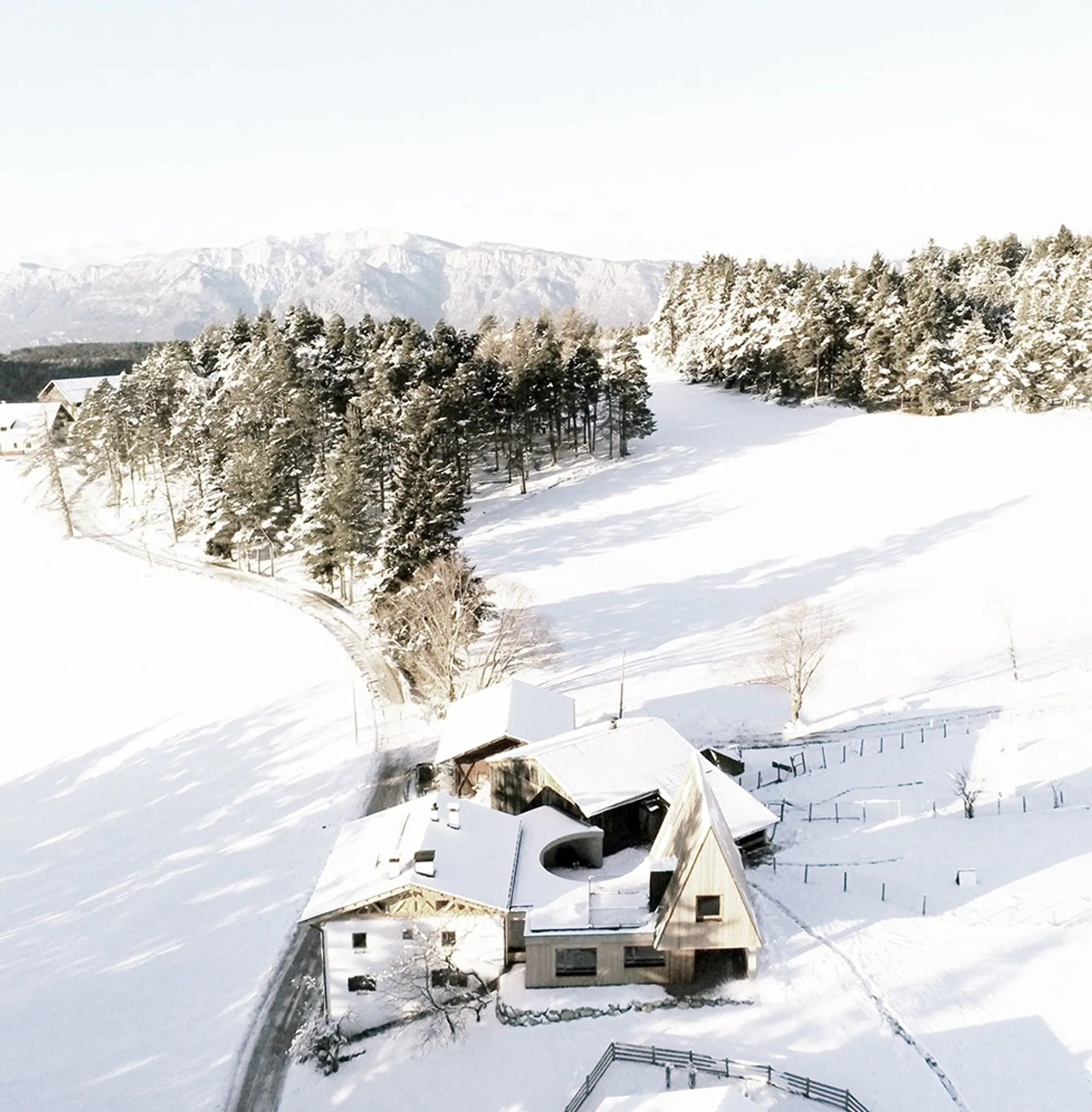
The BS Hof House in Nova Ponente, Italy, is a remarkable example of how a traditional farmhouse renovation can harmoniously blend with a modern extension. Designed by Alpina Architects, this project preserves the historical integrity of the original farmhouse while introducing contemporary elements that cater to the needs of its current inhabitants. Situated in a scenic Alpine region at an altitude of 1,300 meters above sea level, this renovation project balances respect for tradition with a forward-thinking design.
The Historical Context of BS Hof
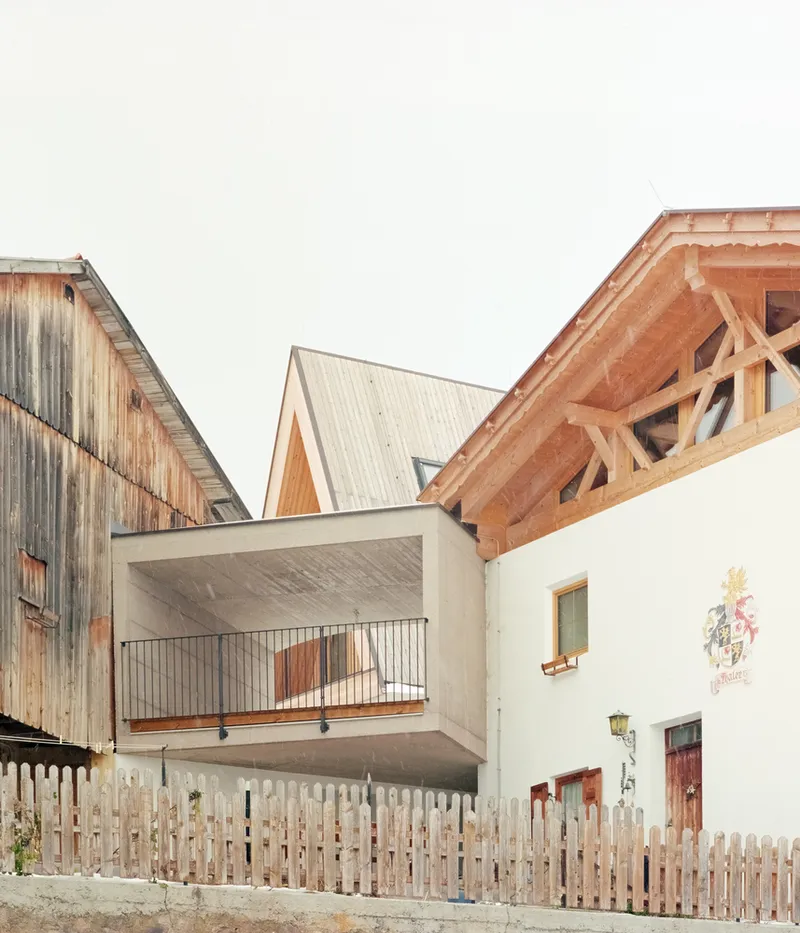
BS Hof, built in 1850, was initially a simple farmstead where the original family lived closely with nature and their animals. Over time, the farmstead grew with the addition of structures like barns and stables, forming a small, cohesive cluster of buildings. The main house, constructed from stone and plastered, contrasts with the wooden secondary structures, creating a clear visual distinction between the different components of the farmstead.
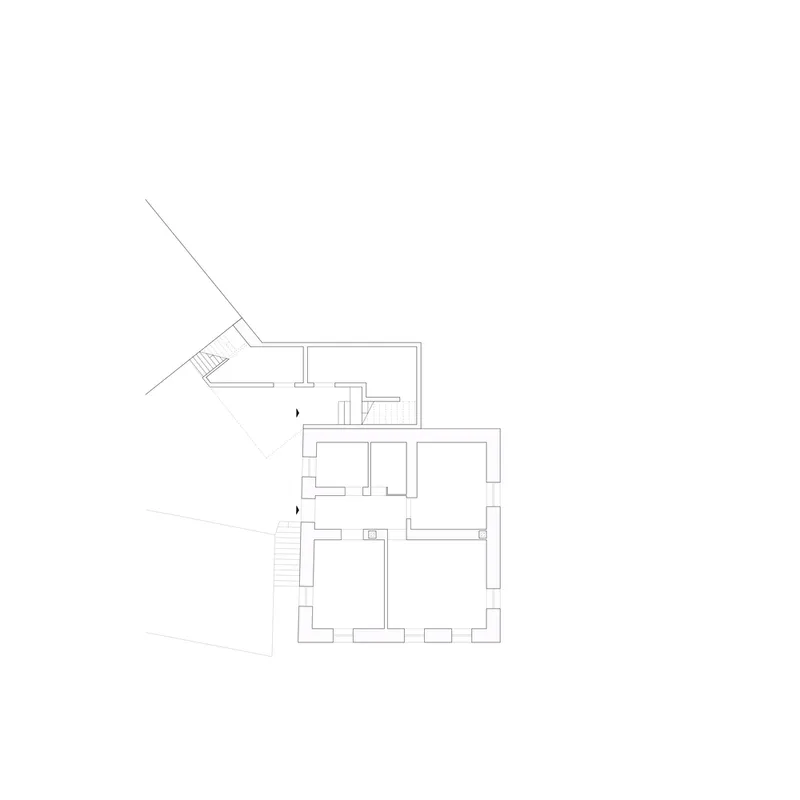
The house is spread over three levels, with the ground floor housing the cellars, the first floor dedicated to living spaces such as the stube (traditional South Tyrolean living room) and kitchen, and the upper floor containing the sleeping quarters. The BS Hof House was central to the family’s daily life for many years, which inspired the desire to adapt the house for the next generation while maintaining the connection to the land.
The Need for a Modern Extension
As the family grew, so did the need for a separate living space for the farmer’s daughter. The initial plan was to divide the house into two distinct sections, but after careful consideration, Alpina Architects envisioned a design that would not disrupt the farmhouse’s proportions. The goal was to create a modern extension that blended seamlessly with the historical structure while offering a space for the next generation to live independently yet remain connected to the family farm.
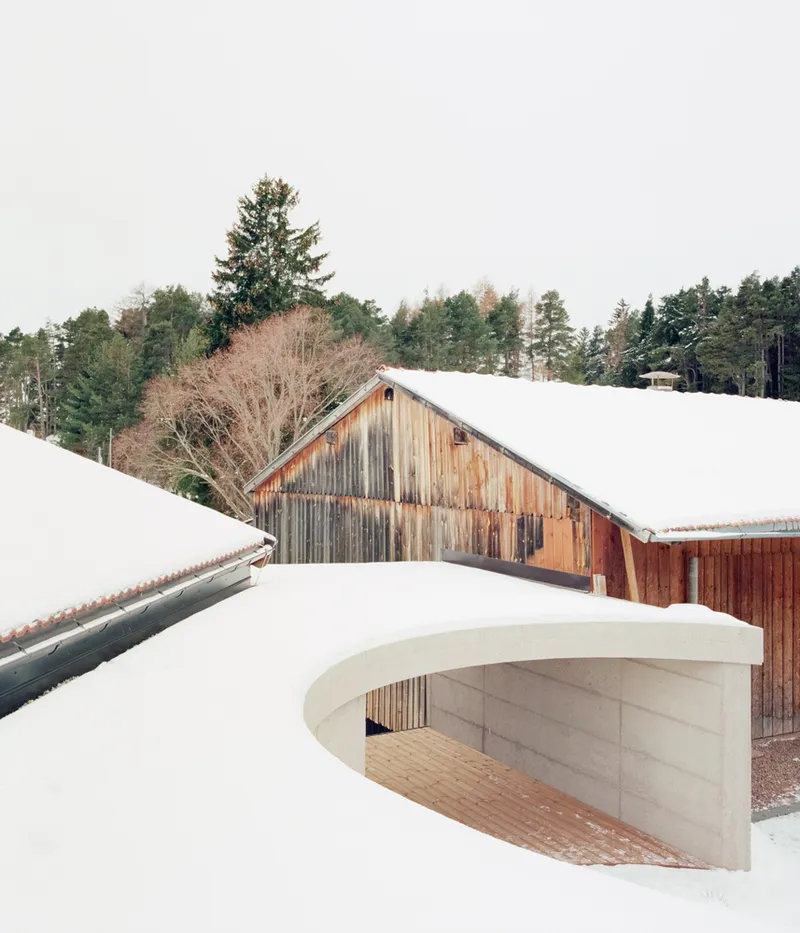
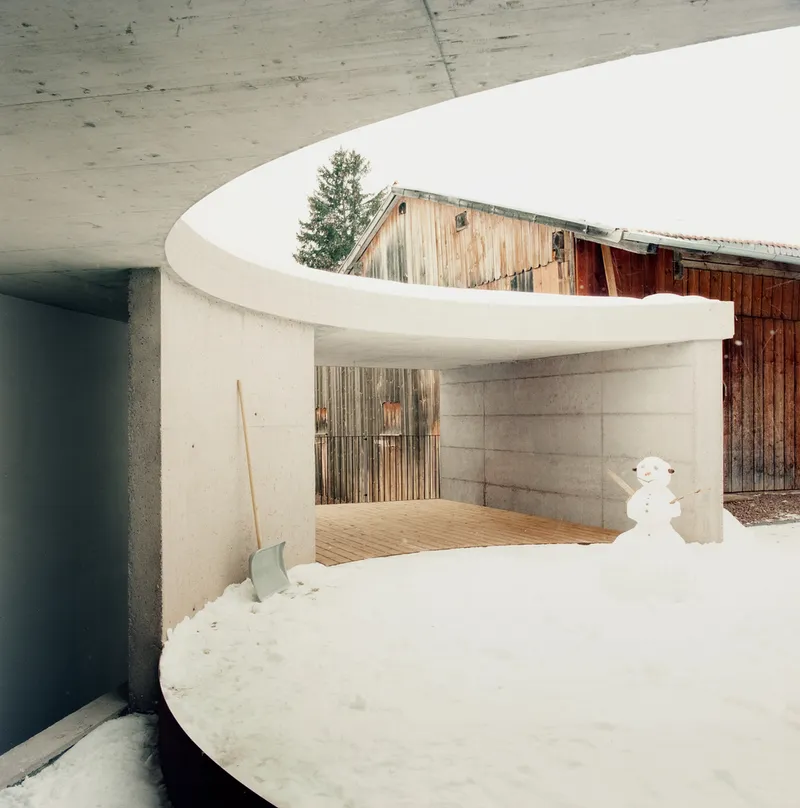
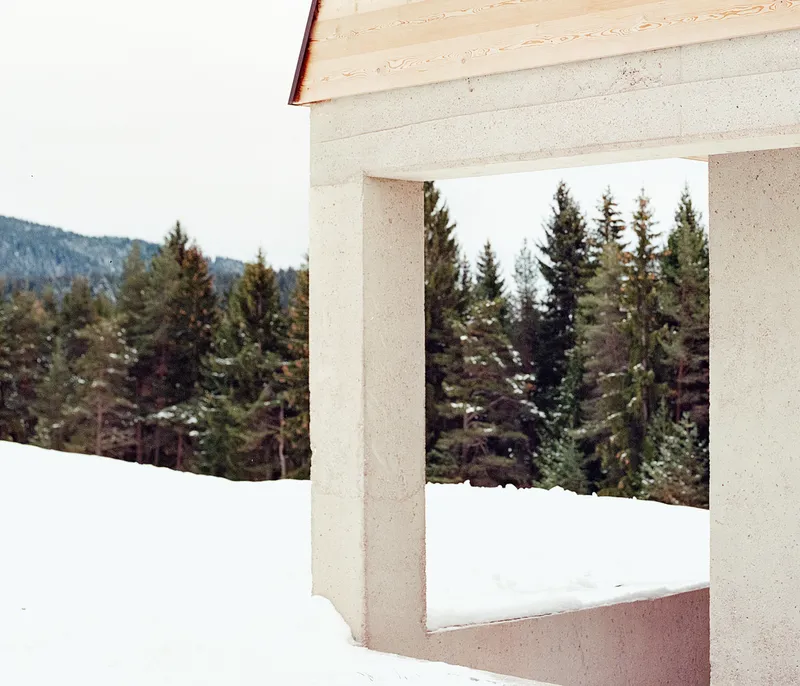
A New Volume for the Modern Extension
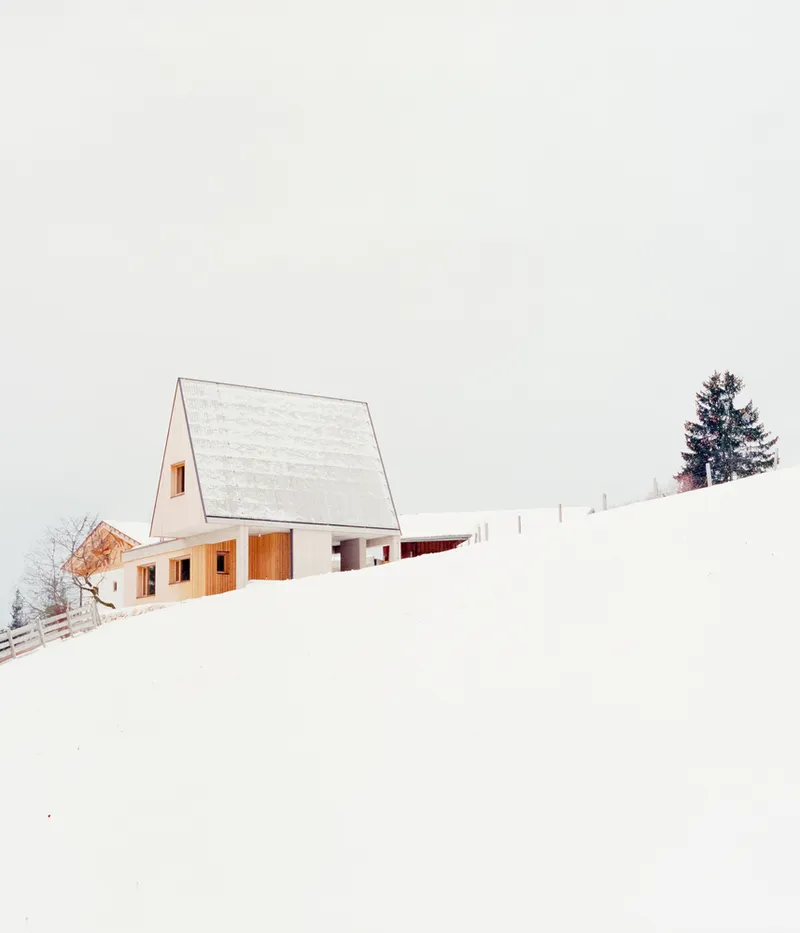
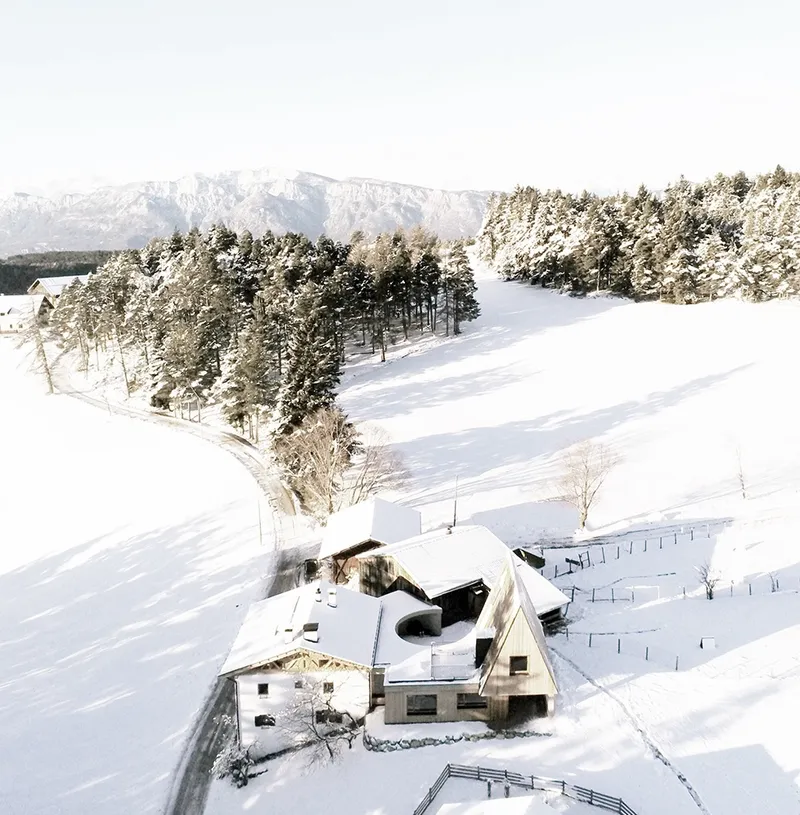
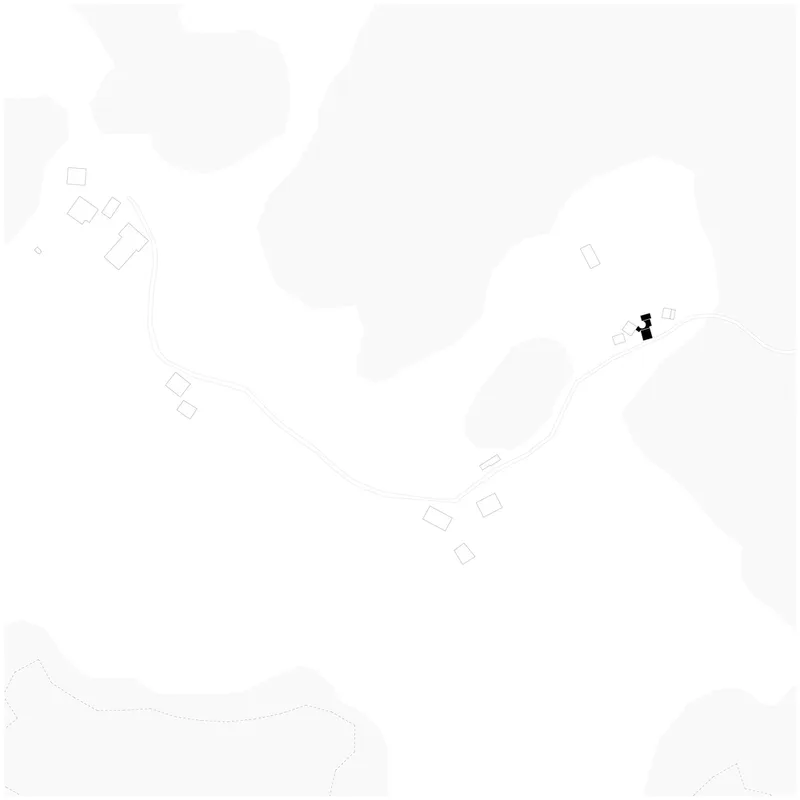
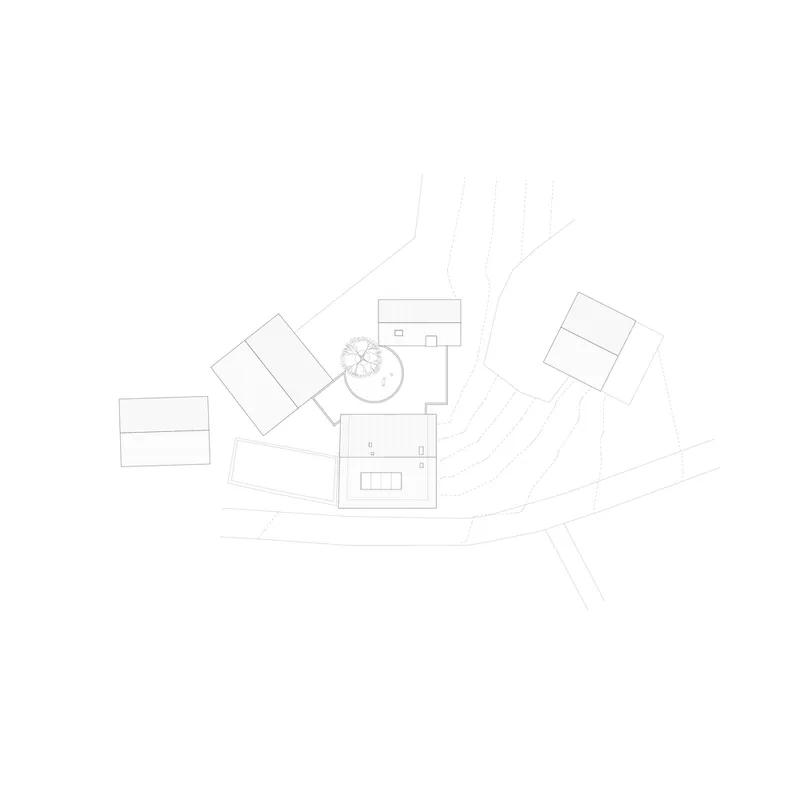
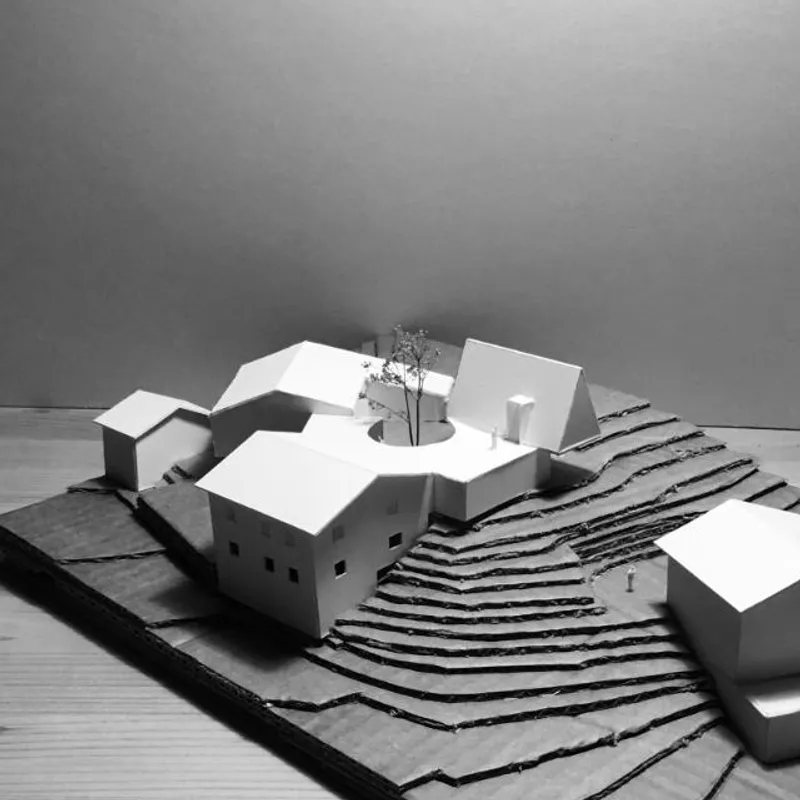
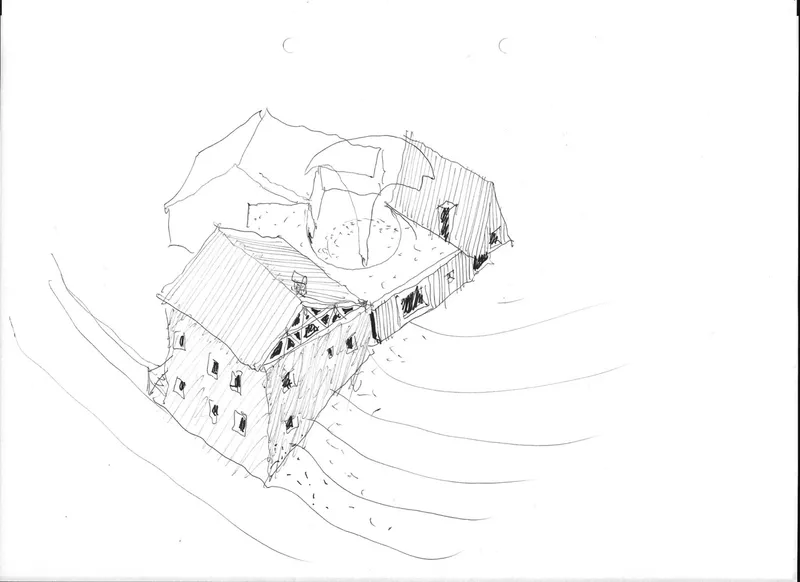
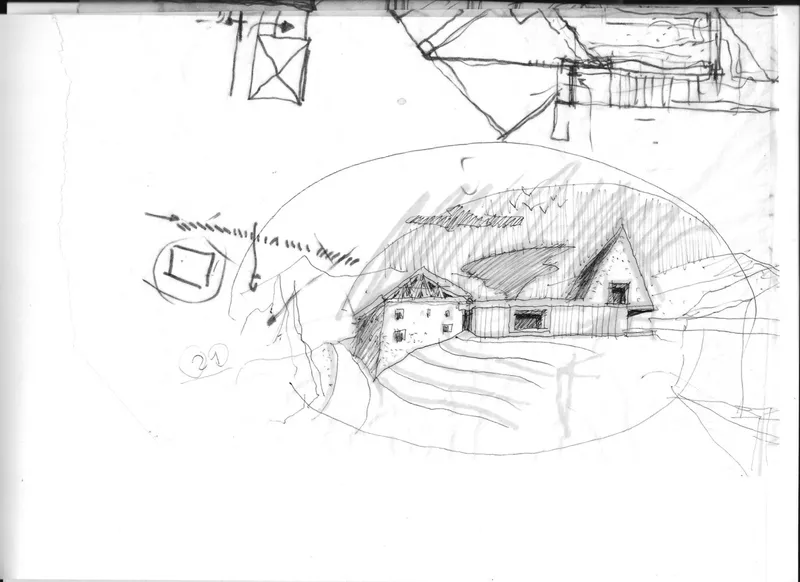
The design approach for the farmhouse renovation was grounded in careful analysis of the existing structure, its surrounding environment, and the deep connection to the landscape. Rather than building upwards and altering the farmhouse’s original proportions, the architects decided to expand horizontally, following the natural slope of the terrain. This allowed the addition of a new volume that extends northward, creating a careful balance of integration and separation between the old and new sections.
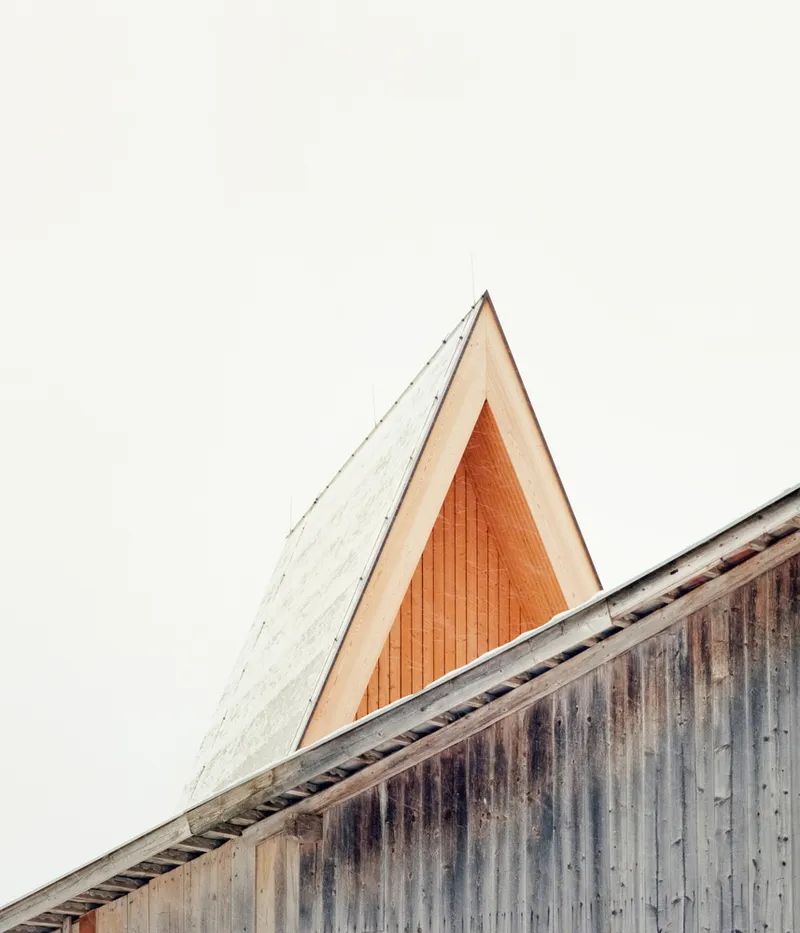

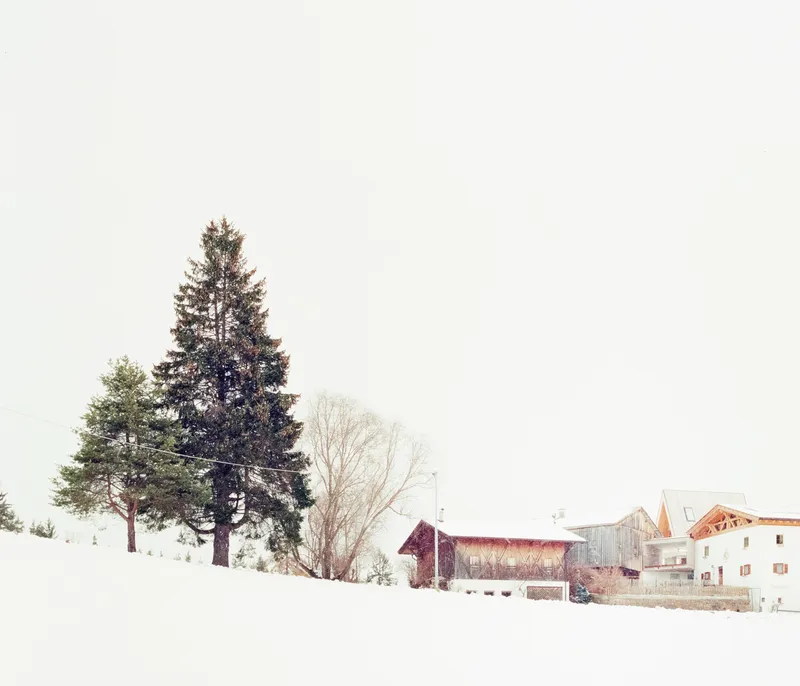
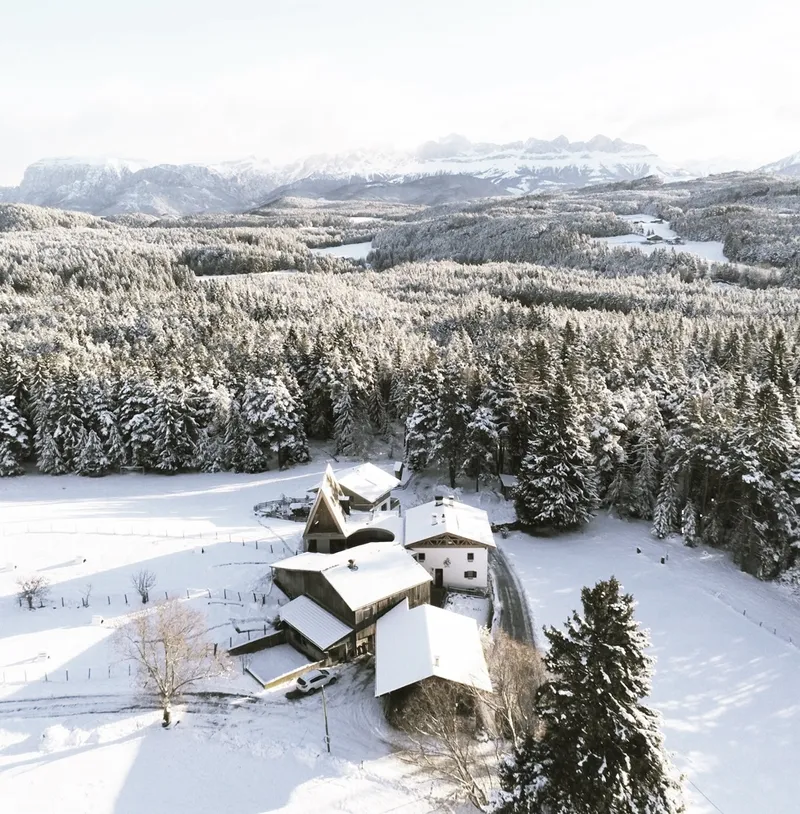
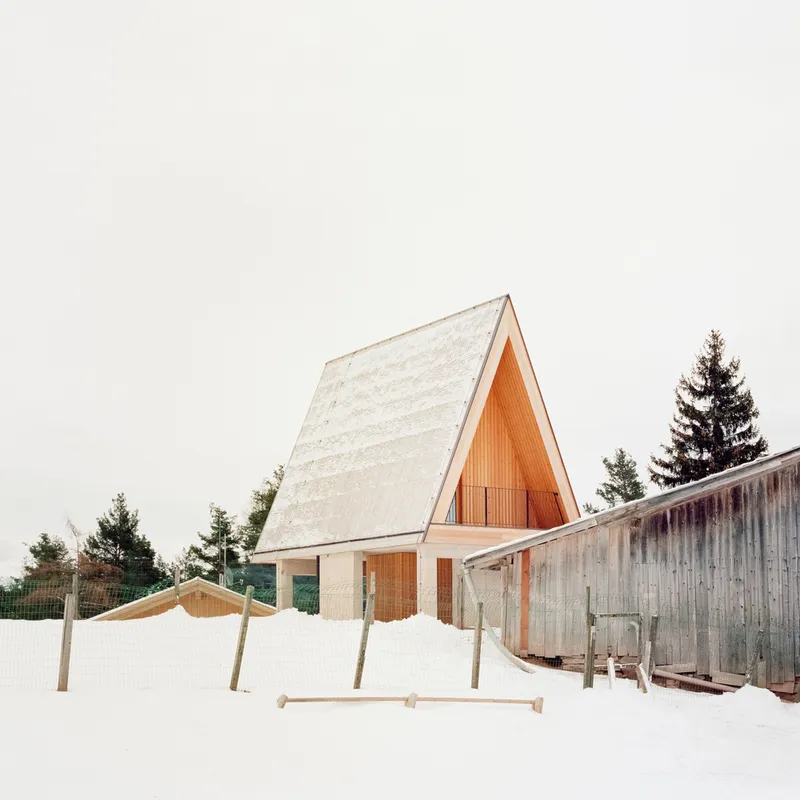
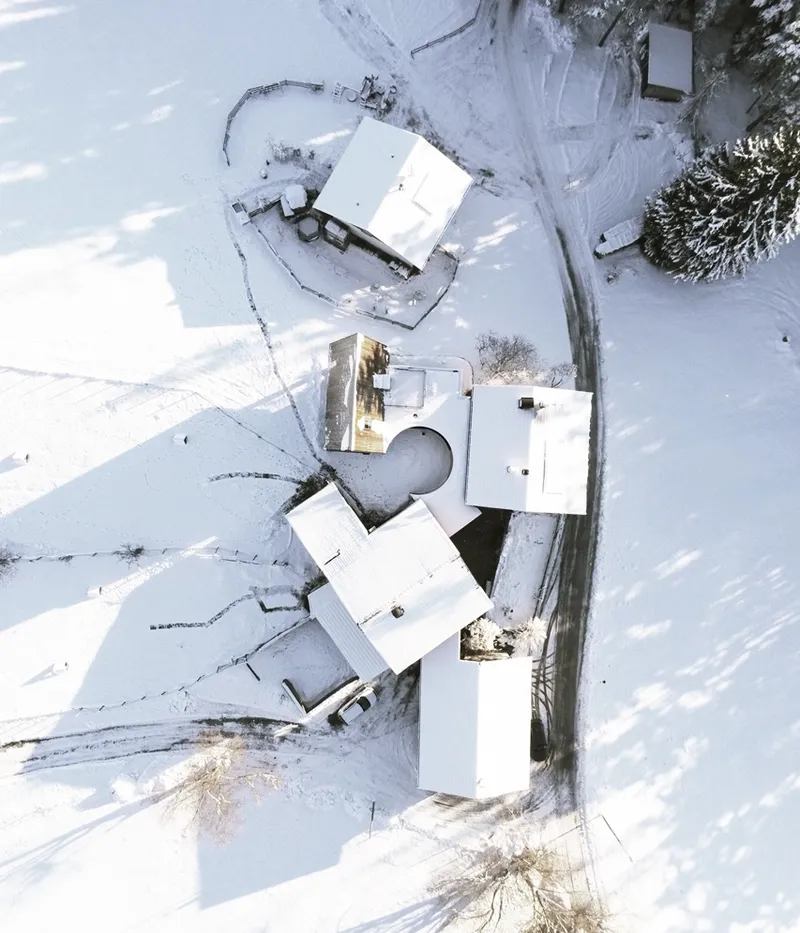
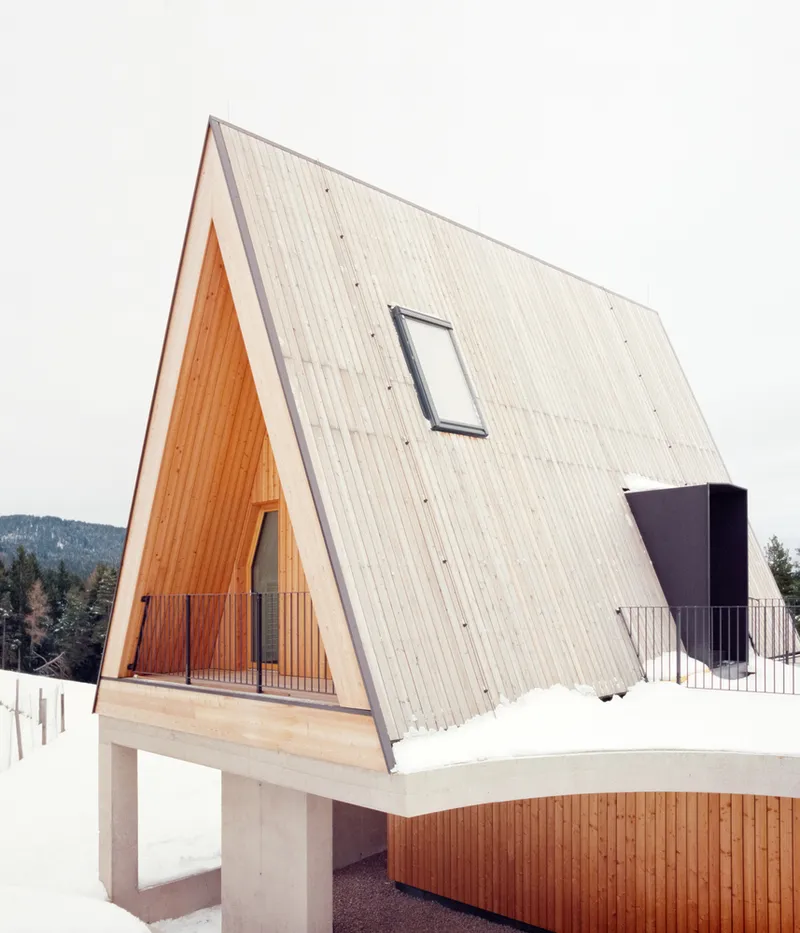
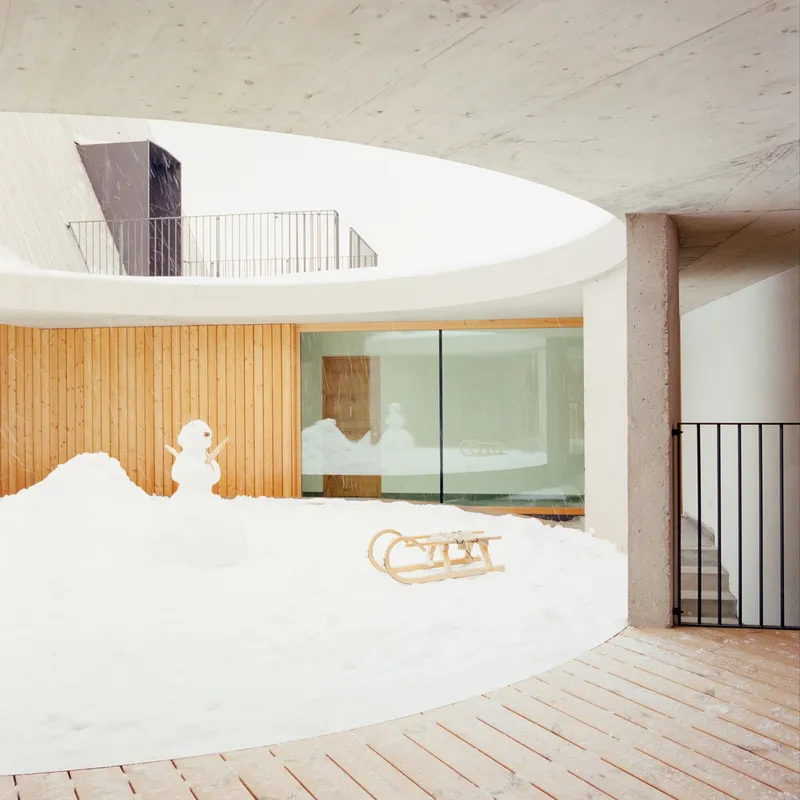
The new volume features a triangular form, resembling the traditional shape of a hut, providing a strong contrast to the existing structure while maintaining a visual connection to the farmstead’s roots. A circular patio was introduced as a transitional space between the two structures, serving as a central gathering area that draws the surrounding natural beauty into the heart of the design.
A Seamless Integration of Old and New
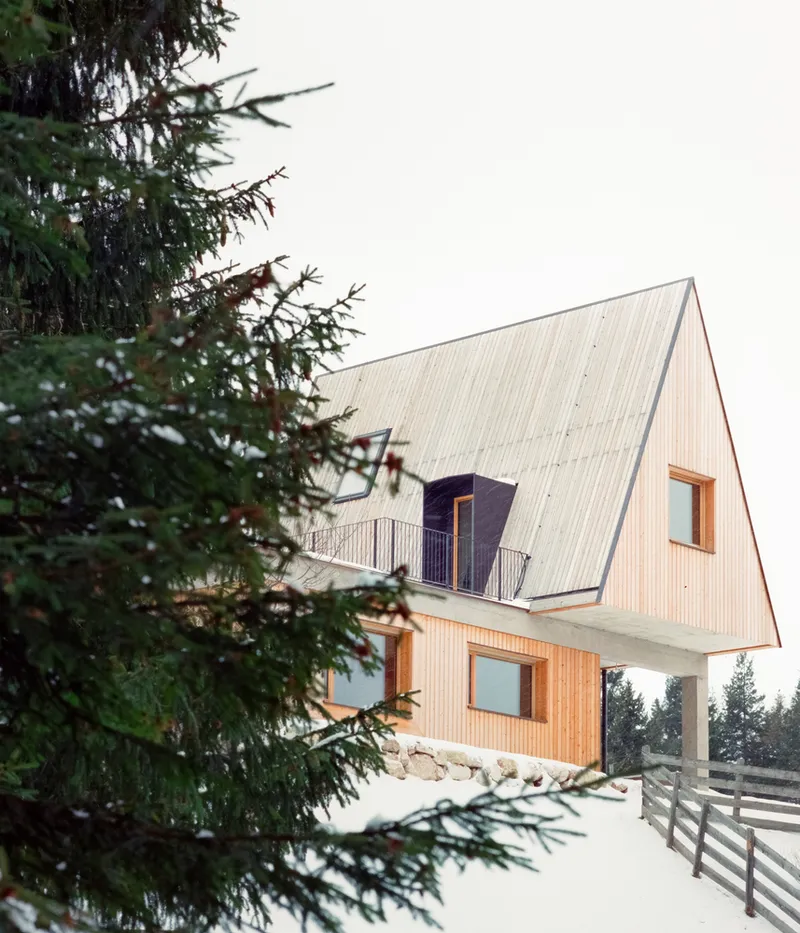
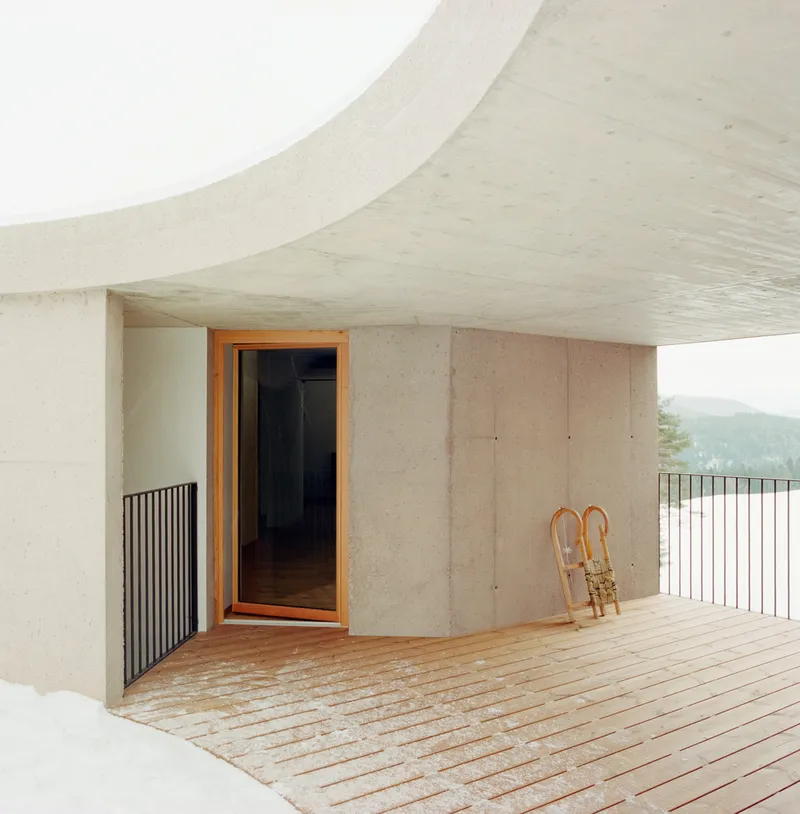
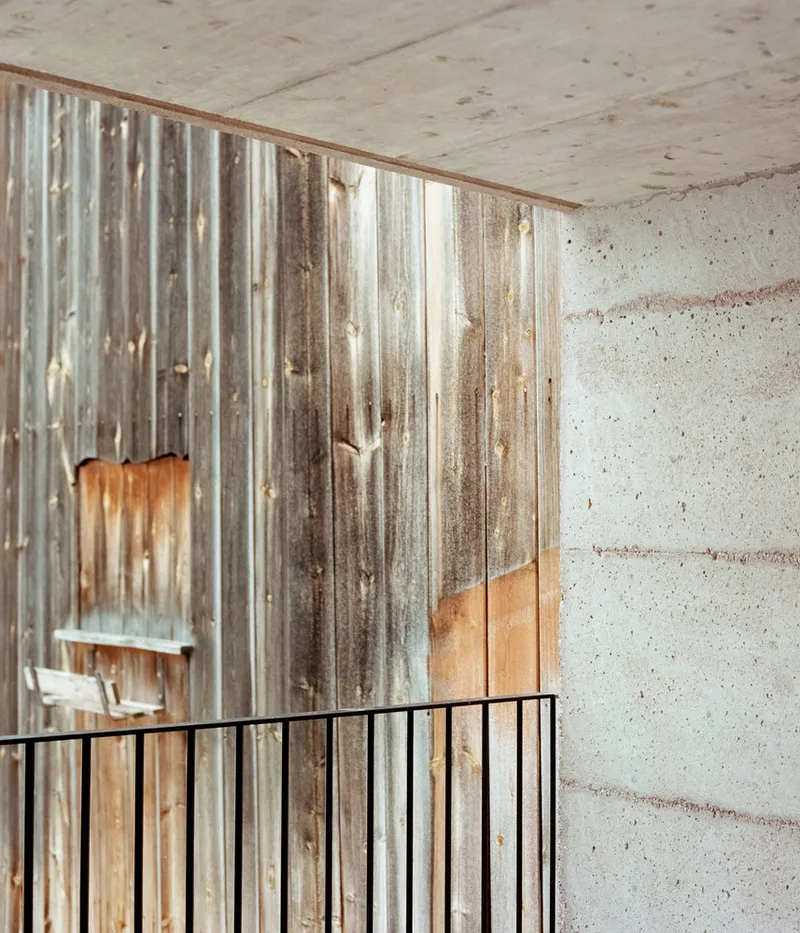
The integration of the old farmhouse and the new extension is evident through the careful use of materials and architectural gestures. The extension features a timber-clad exterior, using untreated larch slats that will weather over time, blending with the natural surroundings. The base of the extension is crafted from exposed sandblasted concrete, giving it a raw, textured appearance that contrasts with the warmth of the wood.
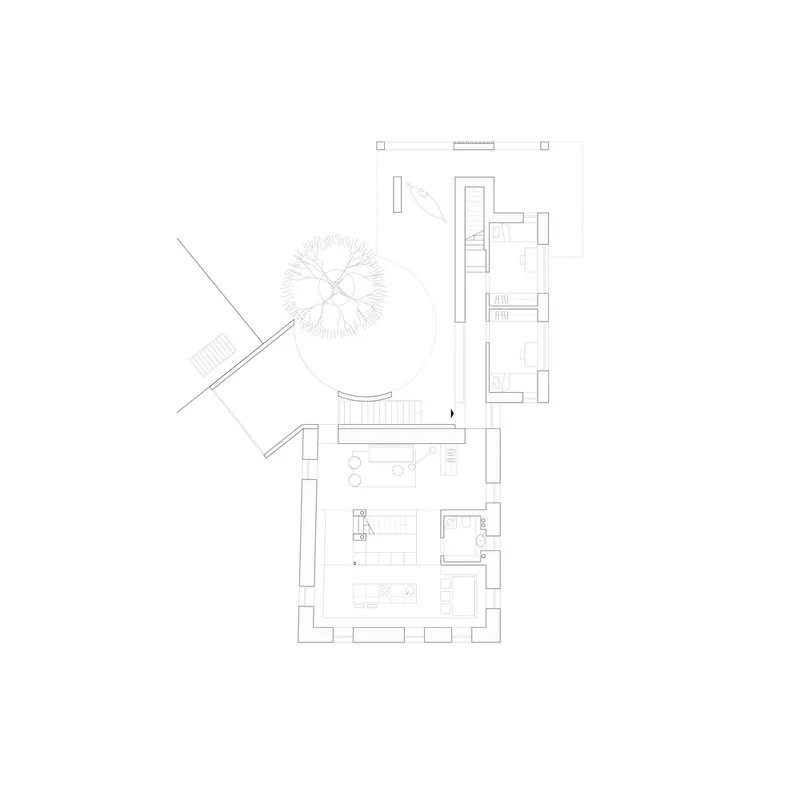
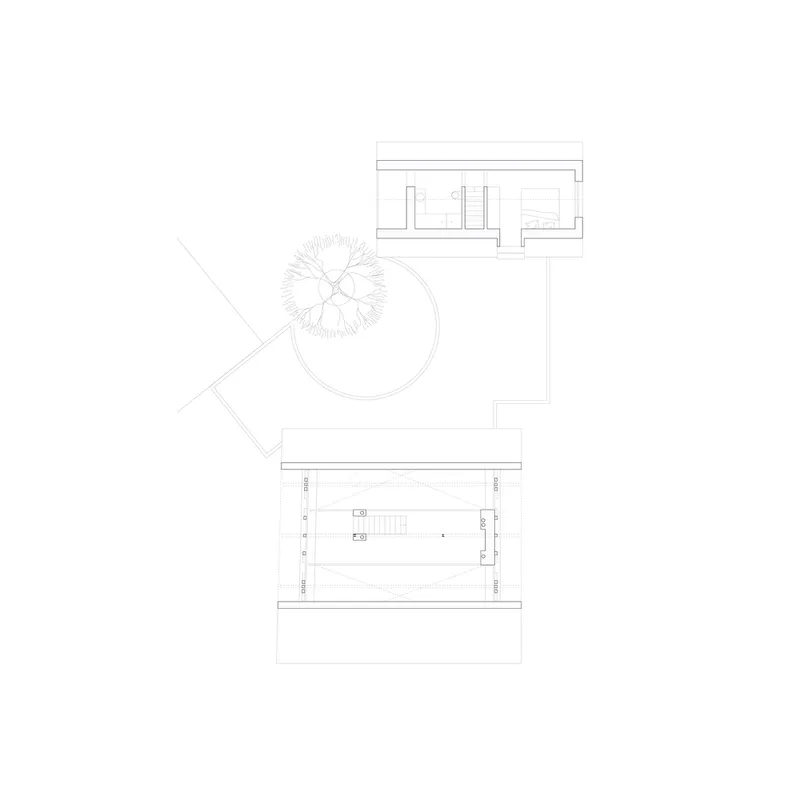
Internally, the design preserves the existing openings of the farmhouse and transforms the former sleeping quarters into living spaces. The new central core houses essential elements like the stove, kitchen, pantry, and stairs, while the new living spaces are separated from the old farmhouse by the circular patio.
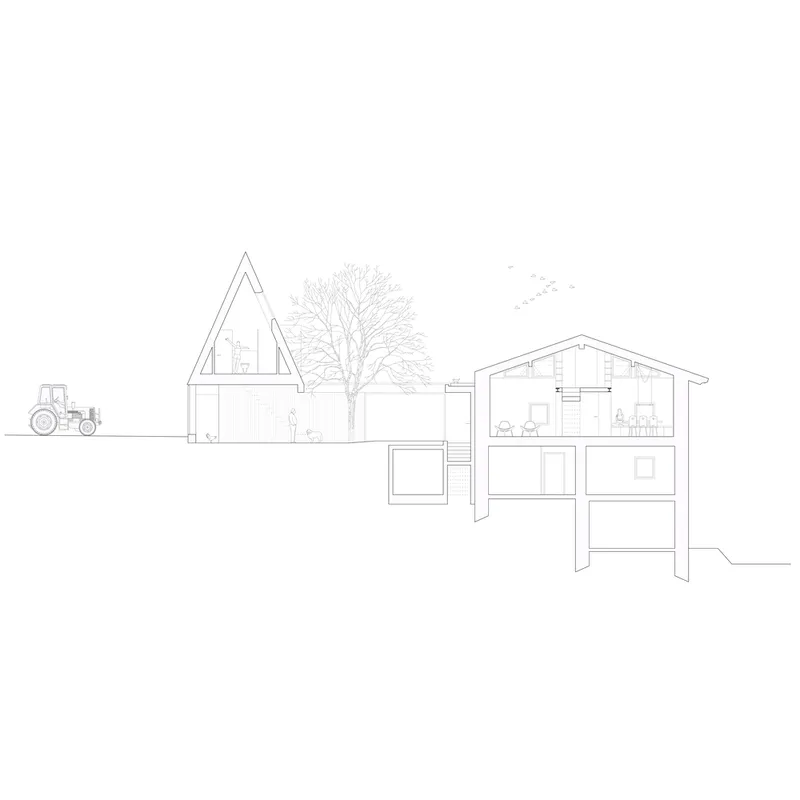
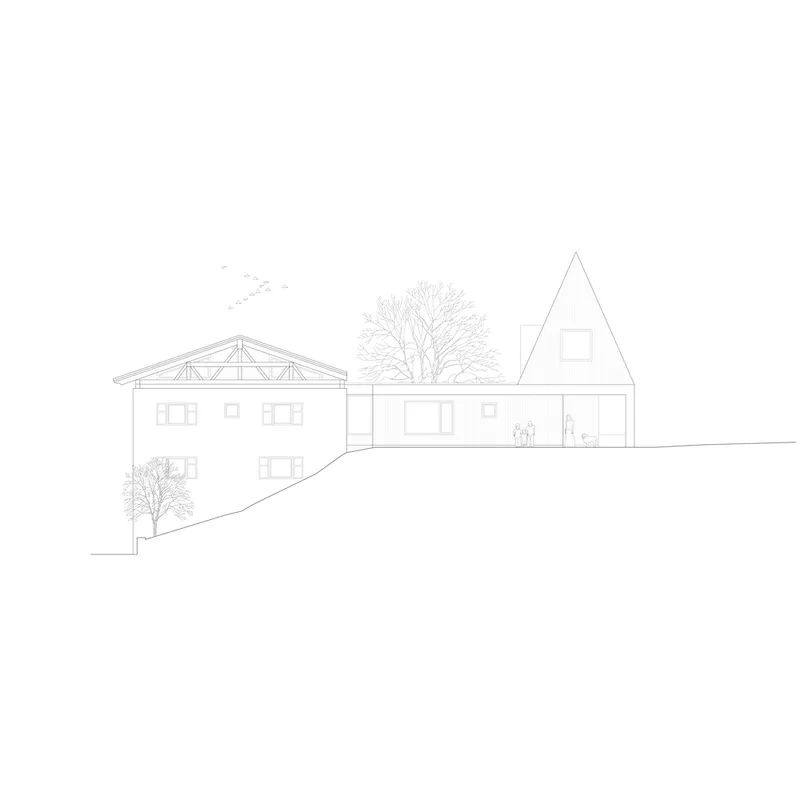
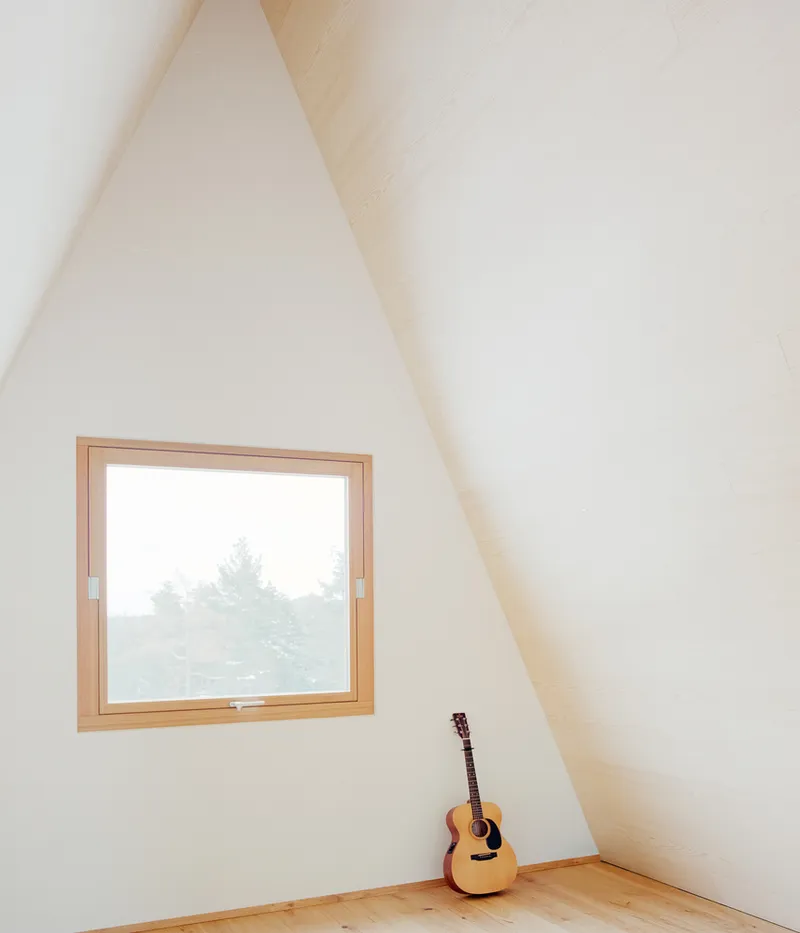
The upper levels of the new extension house the most private areas, including two bedrooms and a master suite. The master bedroom, housed in the uppermost level, is designed with a wooden interior, evoking the feeling of a cozy cabin.
The Role of the Circular Patio
The circular patio is the focal point of the design, symbolizing the connection between the old and new volumes. It acts as both a functional space and a visual anchor that ties the entire project together. This open-air space is framed by the surrounding landscape, offering panoramic views of the Alps. The patio leads to a concrete viewing frame, a terrace that serves as a privileged vantage point, providing an immersive experience in the natural environment.
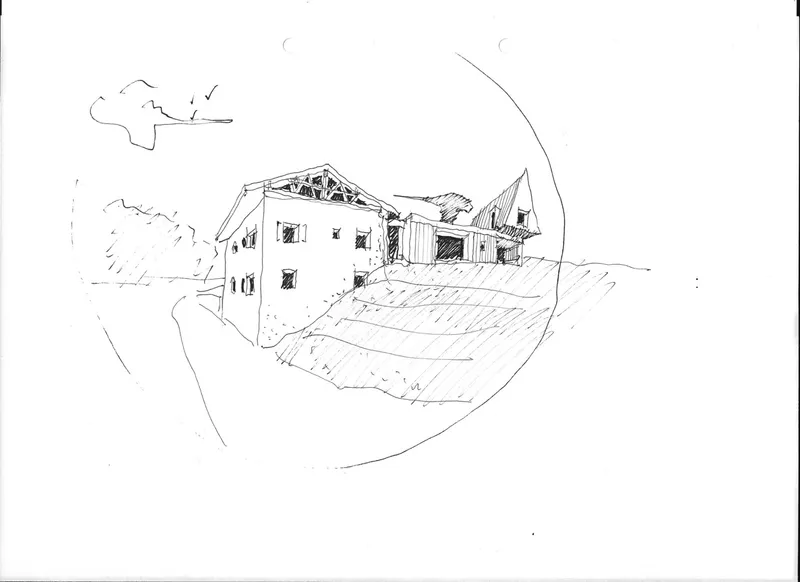
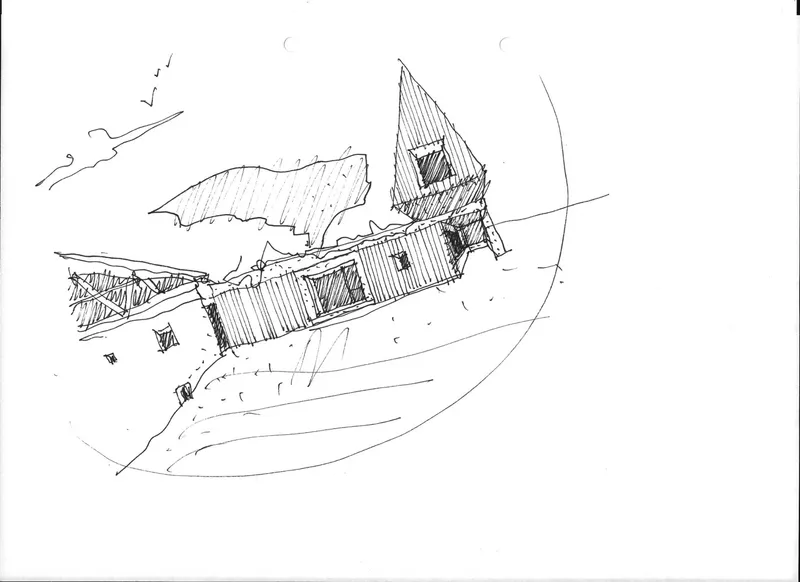
The careful placement of the patio, the extension’s unique architectural form, and the materials used all come together to create a harmonious relationship between the farmhouse and its modern addition. This farmhouse renovation with modern extension brings new life to a historical structure while preserving its timeless connection to nature.
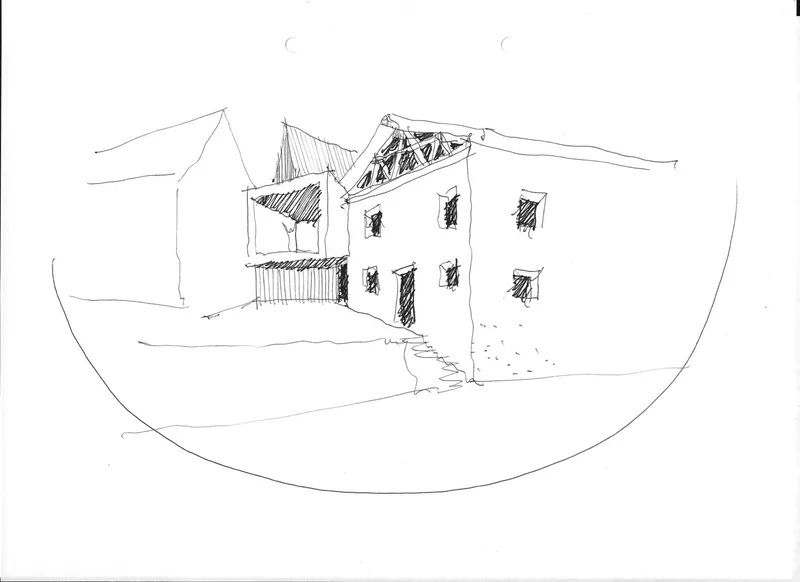
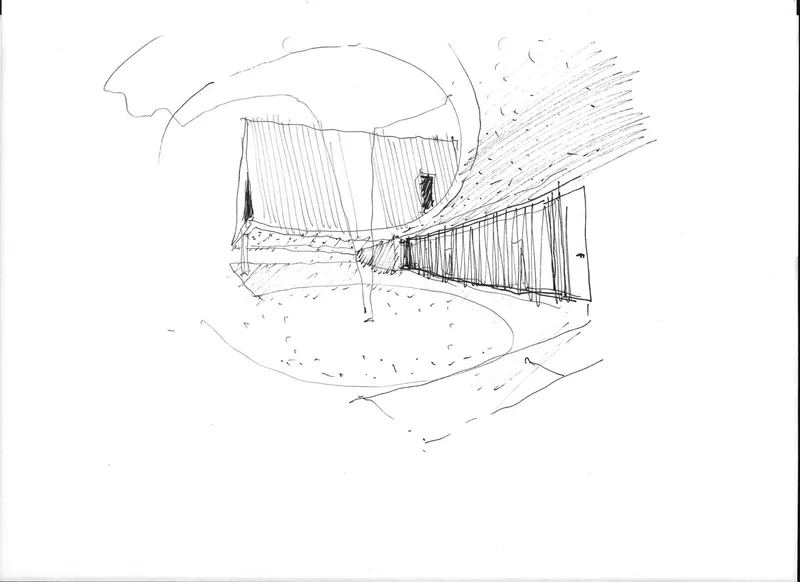
A Bold yet Respectful Architectural Gesture
Through this innovative design, Alpina Architects have successfully created a farmhouse renovation that respects the heritage of the original BS Hof House while introducing modern comforts and functionality. The project is a thoughtful response to the changing needs of the family while maintaining the farmstead’s historical essence.
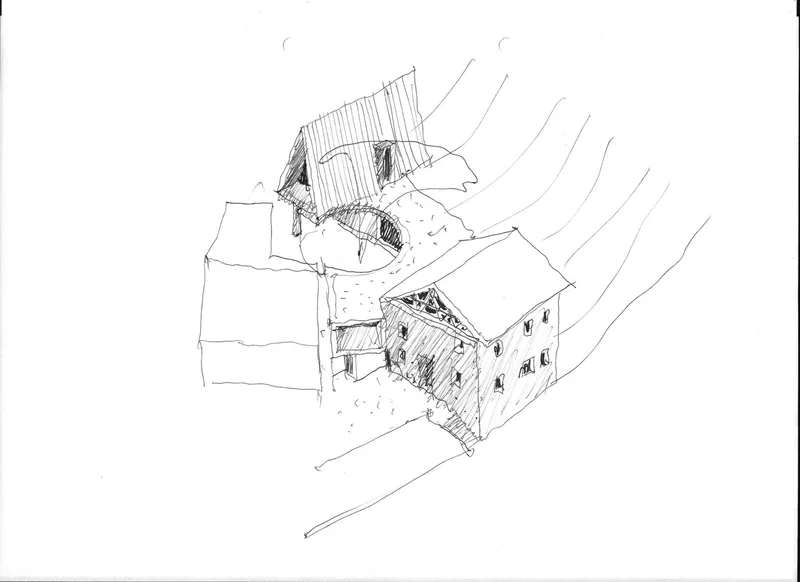
The careful integration of the new volume, its distinct materials, and the circular patio design all contribute to an architecture that is both bold and respectful, creating a space where past and future coexist.
All Photographs are works of Simone Bossi




Popular Articles
Popular articles from the community


The Earth Pod: 3D Printed Homes for Resilient Refugee Communities
The Earth Pod reimagines refugee housing through 3D printed homes made from clay, combining resilience, self-sufficiency, and rapid shelter.

Riyadh For All: Intergenerational Urban Design for Active Aging in Rabat
Riyadh For All reimagines urban design in Rabat with intergenerational co-living, adaptive courtyards, and Moroccan cultural exchange today.

Play: Fragments of Their World
Familiar architecture becomes modular playground design, creating safe spaces where displaced children can learn, connect, imagine and play.

Lunar Spiral: Space Architecture Shaped by the Mathematics of the Universe
Lunar Spiral reimagines space architecture through Fibonacci geometry, lunar regolith, levitating habitats, and self-sustaining Moon living.


Similar Reads
You might also enjoy these articles


Hodi-Mandai Geram
Project Function: Preservation and revitalization of the Intangible heritage and socio-spatial identity of the Hodi by Housing, Cultural Memory Center, Sacred Grove, landscape, local tourism economy


Olio Towers: A Mid-Rise for Performers That Fuses Housing, Rehearsal, and Stage
Located blocks from Houston's Theater District, this modular tower stacks living units around a central performance atrium.

Oasis: Modular Green Housing Carved into Dhaka's Urban Fabric
A shortlisted Plugin Housing entry reclaims unauthorized settlements in Dhaka with stepped concrete volumes, green roofs, and ventilation-driven design.

Black Hole: A Floating Megastructure for the Post-Physical Era
Emiliano Mazzarotto envisions a spherical, self-scaling arena where e-sports, digital hotels, and holographic stadiums replace traditional public space.


Explore Architecture Competitions
Discover active competitions in this discipline



Challenge to reimagine the Iron Throne


Photograph architecture without architects


Illustrate the lost glory of Angkor Wat - Render Challenge


Design challenge to reuse E-waste
Comments (0)
Please login or sign up to add comments
No comments yet. Be the first to comment!