
Cabbage Tree House by Peter Stutchbury Architecture: A Masterpiece of Site-Responsive Residential Design
Cabbage Tree House by Peter Stutchbury Architecture is a site-responsive, cave-like residence in Bayview, blending sustainability, natural ventilation, and landscape integration.


Architects: Peter Stutchbury Architecture
Harmonizing with Nature: The Essence of Cabbage Tree House
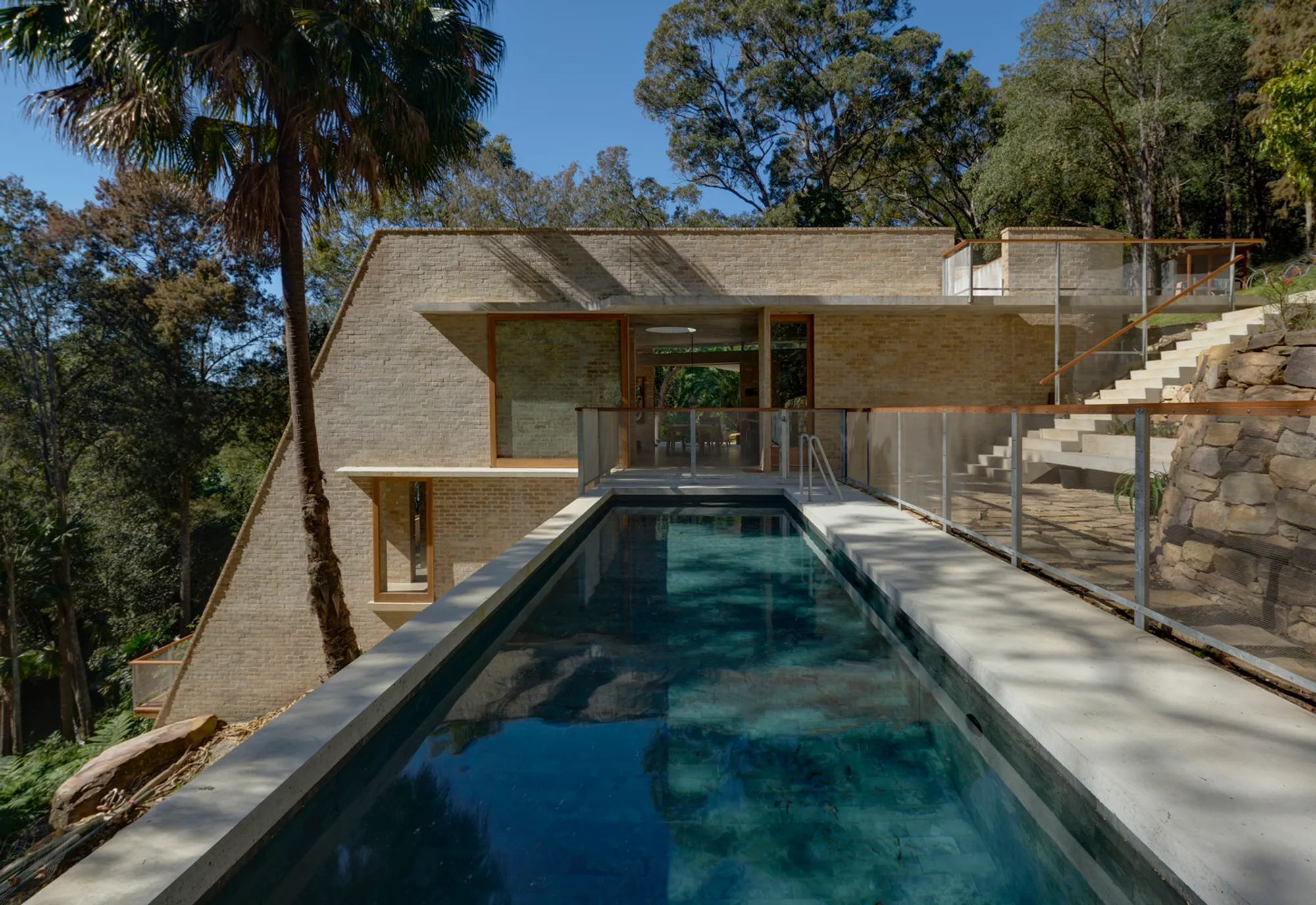
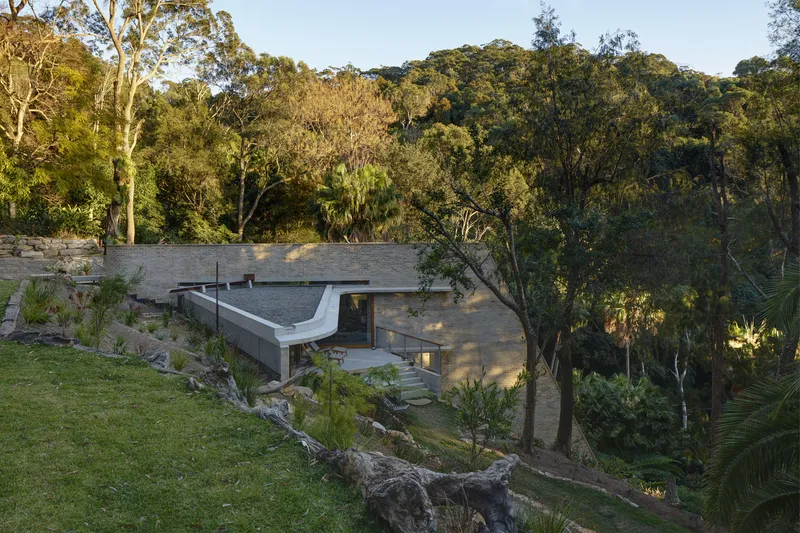
Perched on a north-facing escarpment, Cabbage Tree House exemplifies site-sensitive residential architecture. The property features a distinctive floating rock shelf and a natural waterway flowing from distant catchments through remnant swamplands into the coastal bay. The house is more than a building; it is a physical participant in the landscape, seamlessly anchoring itself to the hillside and responding thoughtfully to its environment.
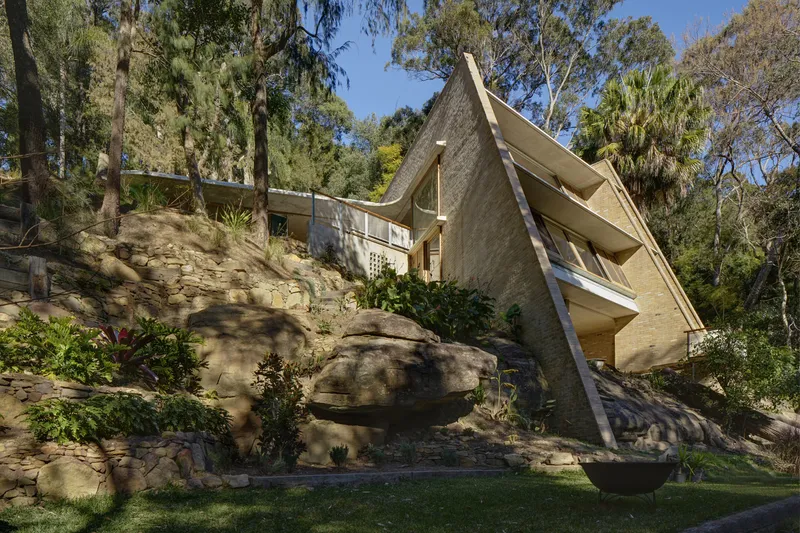
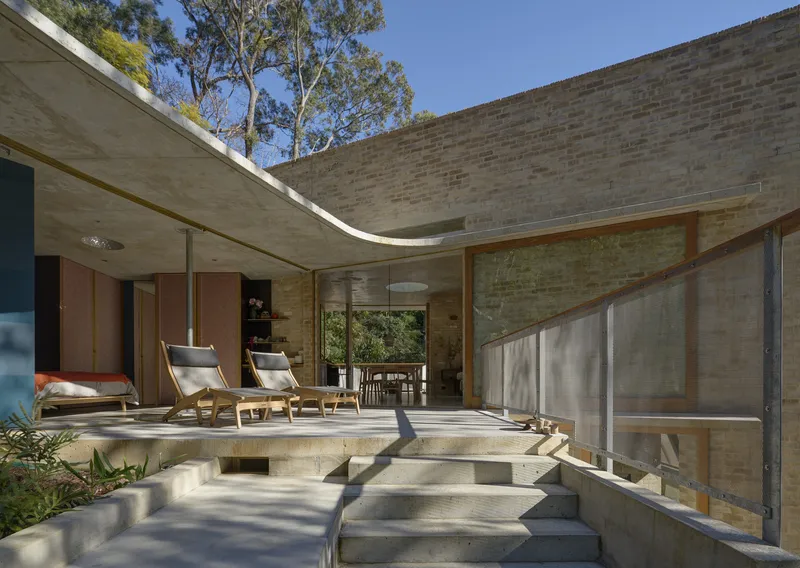
With its horizontal layers, the house mirrors the contours of the hill, guiding occupants through a physical and emotional journey across the land. The bold, leaning façade engages with both the sky and surrounding terrain, creating a poetic dialogue between architecture and nature.
Elemental Design: Minimalist, Cave-Like, and Grounded
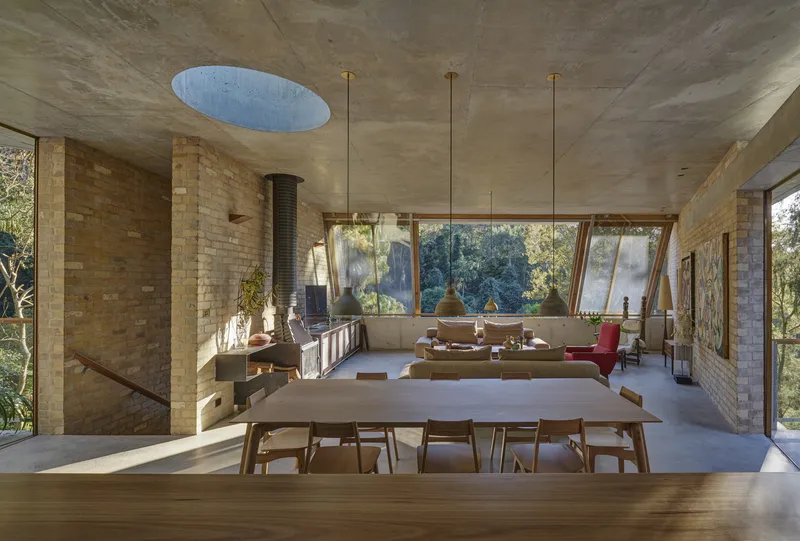
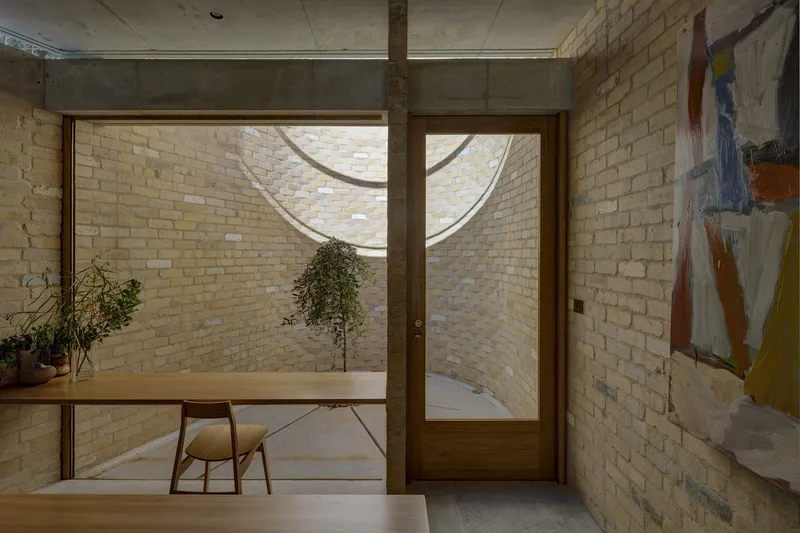
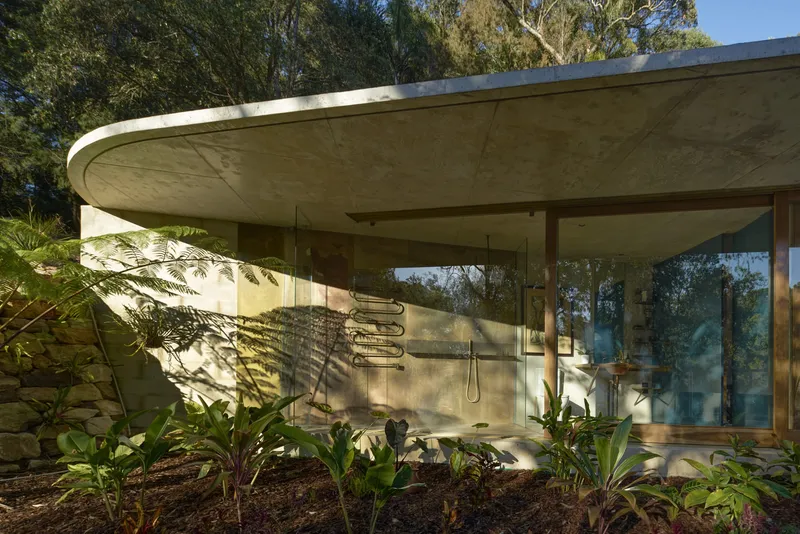
The architectural language of Cabbage Tree House is elemental and restrained, emphasizing raw living. Its cave-like quality provides both shelter and intimacy, while the horizontality of the structure enhances its integration into the landscape. This design prioritizes experience over decoration, challenging conventional residential norms and fostering awareness, sociability, and mindful living.
The project’s interdisciplinary approach brought together architectural, structural, and landscape expertise:
- Land framing and architectural vision: Peter Stutchbury Architecture
- Landscape regeneration: Luke Dewing, Joshua Tree Landscapes
- Structural masonry and integration with rock strata: Richard Matheson, Van Der Meer Consulting
The core of the house is anchored into rock strata up to 9 meters below ground, ensuring stability on the challenging terrain.
Sustainability Through Intelligence
Sustainability in architecture is more than material choice; it is site-responsive design and passive climate management. Cabbage Tree House demonstrates a sophisticated understanding of environmental forces:
- Orientation: The house is due north and splayed to capture winter sun.
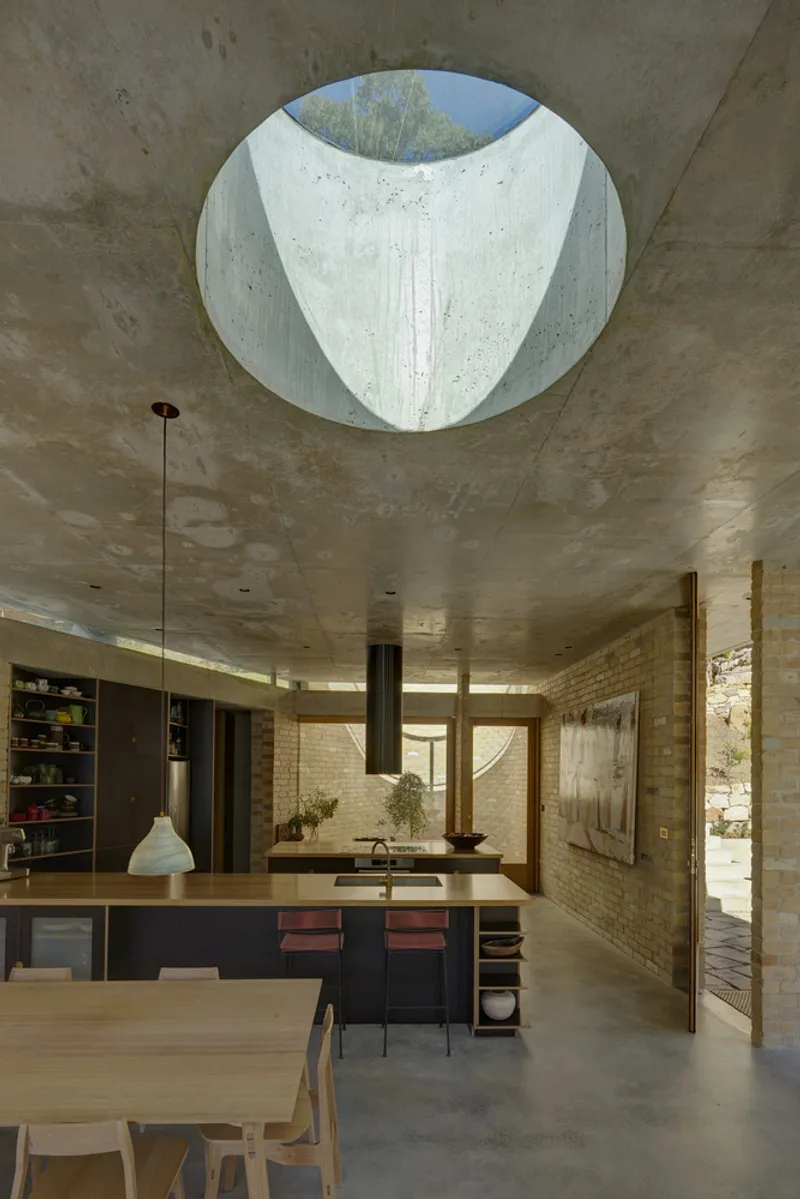
- Solar management: Materials and thermal mass stabilize internal temperatures year-round.
- Natural ventilation: Angled east façades channel cooling breezes from Pittwater in summer.
This considered approach results in a cost-effective, environmentally attuned, and low-maintenance residence, embodying sustainable design principles without overt complexity.
A House That Reflects Conscious Living
Cabbage Tree House revisits traditional living values, challenging modern tendencies to retreat behind screens and material accumulation. By fostering shared care and awareness, it serves as a reminder of the emotional and social potential of architecture. More than just a shelter, it is a thoughtful exploration of human habitation, one that resonates with elemental simplicity and elegance.
As world values shift, this project poses important questions: what role should a house play in the lives of its occupants? How can architecture nurture mindful interaction with both the environment and each other? Cabbage Tree House answers these questions through restraint, intelligence, and site-honoring design.
Key Features
- Area: 197 m²
- Site: North-facing escarpment, floating rock shelf, natural waterway
- Design Approach: Site-responsive, passive solar, elemental, cave-like aesthetics
- Sustainability: Thermal mass, natural ventilation, solar orientation
- Interdisciplinary Collaboration: Architecture, landscape, structural engineering
Cabbage Tree House by Peter Stutchbury Architecture is a masterclass in integrating architecture with landscape, climate, and human consciousness. Its restrained, elemental design encourages reflection, awareness, and sustainable living, making it an inspiring model for contemporary residential architecture in Australia and beyond.
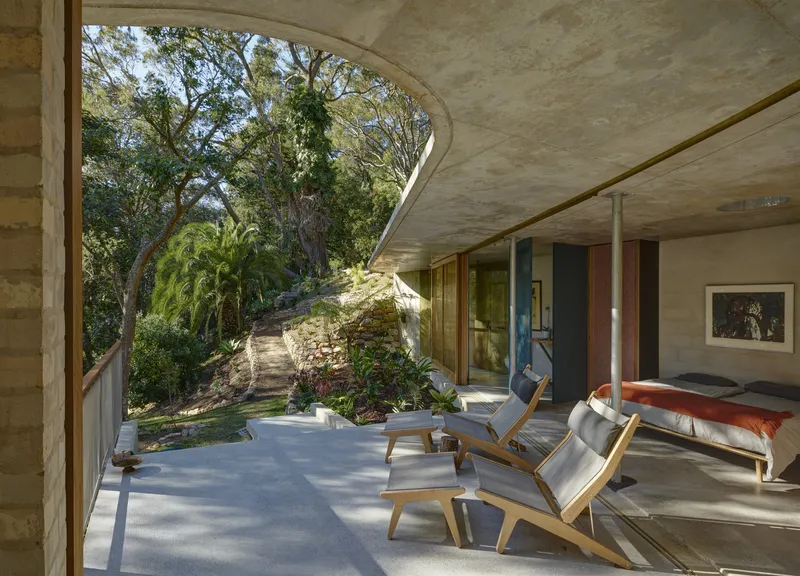
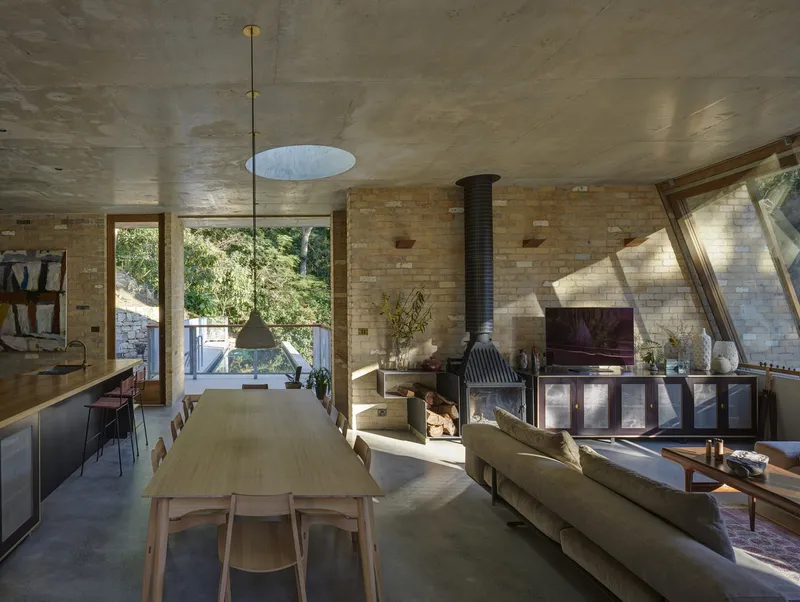
All photographs are works of Michael Nicholson



Popular Articles
Popular articles from the community


Hill & Cross Opera: Sculptural Opera House Architecture Shaped by Tallinn’s Landscape and Identity
Hill & Cross Opera reimagines opera house architecture in Tallinn through its sculptural hill, civic plaza, glass wave and a luminous cross.

Co-life: Sustainable Architecture for Age-Friendly Community Living
Co-life reimagines sustainable architecture for seniors through courtyards, rammed earth, shared gardens, and spaces designed for belonging.

The Ocean Hive: Sustainable Architecture for a Self-Sufficient Civilization at Sea
The Ocean Hive imagines sustainable architecture at sea, where modular habitats, algae, wave power and ocean waste sustain a growing colony.

Riyadh For All: Intergenerational Urban Design for Active Aging in Rabat
Riyadh For All reimagines urban design in Rabat with intergenerational co-living, adaptive courtyards, and Moroccan cultural exchange today.

Similar Reads
You might also enjoy these articles


Hodi-Mandai Geram
Project Function: Preservation and revitalization of the Intangible heritage and socio-spatial identity of the Hodi by Housing, Cultural Memory Center, Sacred Grove, landscape, local tourism economy


Olio Towers: A Mid-Rise for Performers That Fuses Housing, Rehearsal, and Stage
Located blocks from Houston's Theater District, this modular tower stacks living units around a central performance atrium.

Oasis: Modular Green Housing Carved into Dhaka's Urban Fabric
A shortlisted Plugin Housing entry reclaims unauthorized settlements in Dhaka with stepped concrete volumes, green roofs, and ventilation-driven design.

Black Hole: A Floating Megastructure for the Post-Physical Era
Emiliano Mazzarotto envisions a spherical, self-scaling arena where e-sports, digital hotels, and holographic stadiums replace traditional public space.


Explore Architecture Competitions
Discover active competitions in this discipline



Challenge to reimagine the Iron Throne


Photograph architecture without architects


Illustrate the lost glory of Angkor Wat - Render Challenge


Design challenge to reuse E-waste
Comments (0)
Please login or sign up to add comments
No comments yet. Be the first to comment!