
CACO: A Snap-On Silicone Shield Rethinking Hygiene and Comfort on Public Transit
Farwa Mumtaz and Patriceia Yu design a portable, multi-functional grip device that turns germ-prone transit poles into stress-relieving touchpoints.


Every day, millions of commuters wrap their hands around the same metal poles, gripping surfaces shared with countless strangers. It is a small, unconscious act loaded with real consequences: germ transmission, physical discomfort, and a low-grade anxiety that compounds over weeks and months of routine travel. CACO (Calm and Carry On) confronts this overlooked friction point with a deceptively simple intervention. A portable silicone grip device that snaps onto transit poles, it layers hygiene protection, tactile stress relief, and bag-hanging utility into a single compact object. The result is not a redesign of the train car itself but a personal tool that changes how a commuter's body meets shared infrastructure.
Designed by Farwa Mumtaz and Patriceia Yu, CACO received an Honorable Mention in the @ease competition, which challenged participants to design portable comfort solutions for everyday life. The project sits at the intersection of industrial design and urban architecture, treating the transit pole not as fixed furniture but as a surface open to personal customization.
Anatomy of a Grip: Snap-On Mechanism, Soft Shield, and Built-In Hooks
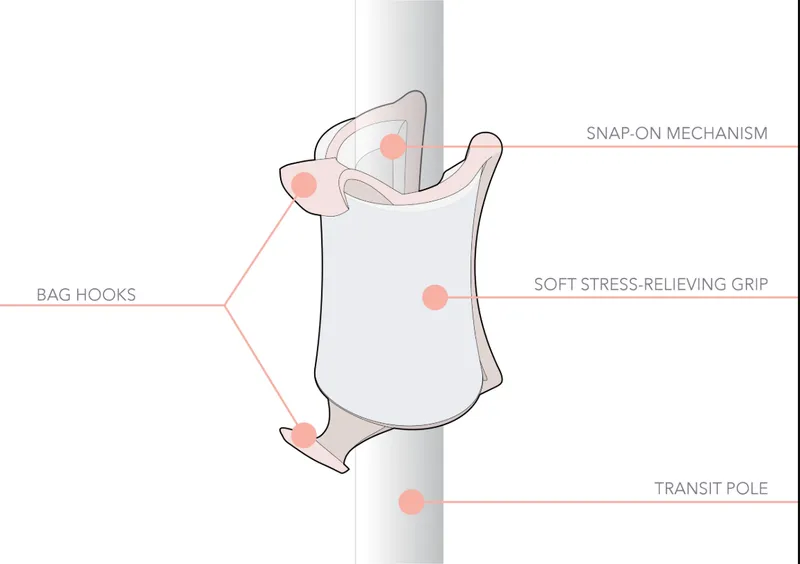
The technical diagram breaks CACO into its core components. A pliable silicone cushion forms the contact surface, soft enough to squeeze for stress relief yet firm enough to provide a stable grip during sudden stops. A robust outer shell wraps this cushion, maintaining structural durability under daily wear. The snap-on mechanism allows the device to clip quickly onto transit poles of varying diameters, thanks to an elastic mold that adapts to different circumferences. Built-in bag hooks extend from the body, letting commuters hang purses, tote bags, or grocery sacks and free both hands. Each feature addresses a specific pain point: the shield blocks skin-to-surface germ transfer, the grip reduces hand fatigue, the hooks solve the chronic problem of juggling belongings in a packed car.
Carrying Comfort: Portability as a Design Principle
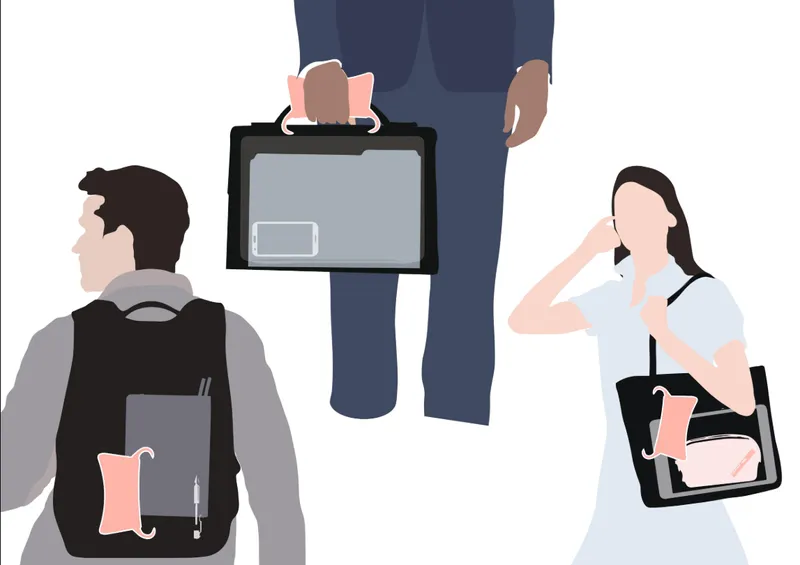
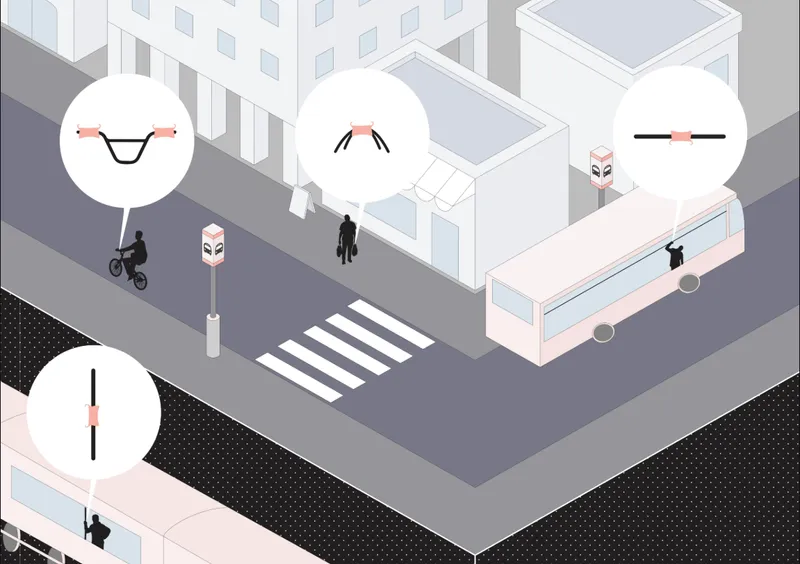
Portability determines whether a commuter accessory gets used or abandoned in a drawer. CACO is lightweight and foldable, designed to slip into a bag pocket or clip externally for quick access. The illustration of three commuters shows the device attached to backpacks in a bright pink that doubles as a visual identity and a practical locator, easy to spot and grab in a rush. The isometric urban intersection diagram expands the use case beyond the subway car, depicting grip configurations mounted on vehicles and street furniture. This broader application suggests CACO could serve bus stops, tram handles, and shared mobility hubs, scaling from a personal tool to a systemic urban comfort layer.
Crowded Cars and the Case for Mindful Commuting
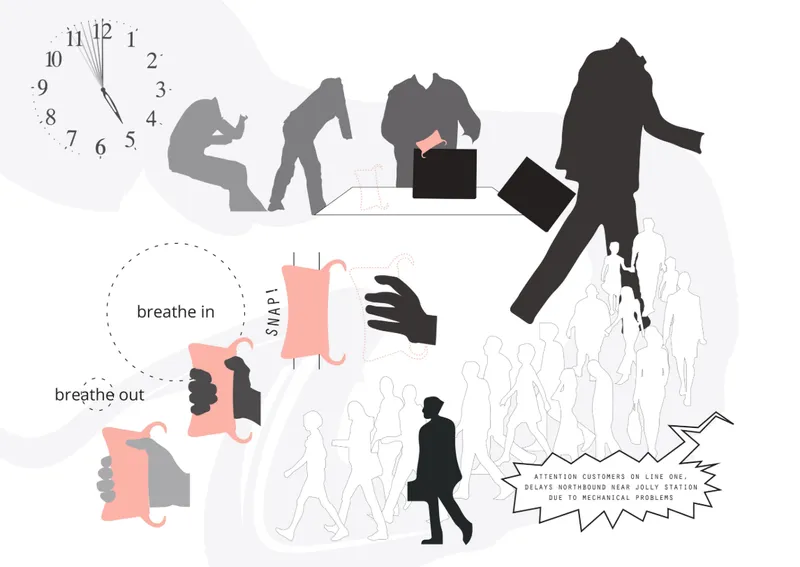
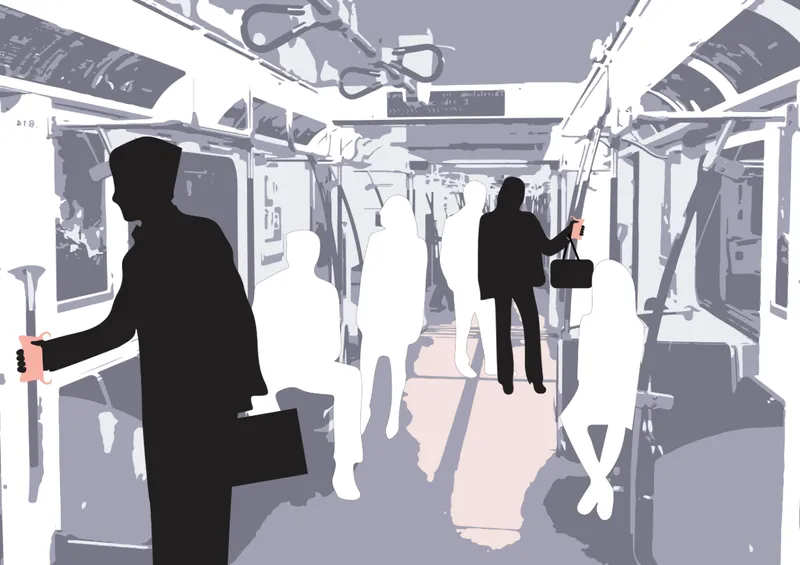
The collage illustration and the interior subway rendering drive home the conditions CACO is designed to address. Silhouetted figures press together in packed cars, hands reaching for overhead rails and vertical poles. Instructions layered into the collage walk users through the grip's deployment, framing the device as intuitive enough to use mid-commute without slowing anyone down. What stands out is the psychological dimension: CACO's textured, pliable surface is explicitly designed to encourage a calming squeeze, embedding a moment of stress relief into an action commuters already perform. The designers frame this as "mindful commuting," turning a reflexive grab into a deliberate act of self-care.
The environmental logic reinforces the health logic. A reusable silicone device replaces the disposable gloves, tissues, and single-use wipes that commuters sometimes resort to for germ protection. CACO's compact, washable form aligns with waste-reduction goals while offering a more reliable barrier than improvised alternatives.
Why This Project Matters
Transit design conversations tend to focus on the macro scale: station layouts, fare systems, rolling stock procurement. CACO operates at the micro scale, the precise point where a commuter's palm meets a shared surface. By concentrating on that single interaction, Mumtaz and Yu reveal how much friction, both physical and psychological, hides inside routine gestures. The device's multi-functional stacking of hygiene, stress relief, and storage into one object shows a disciplined approach to problem definition: rather than solving one issue elegantly, the designers mapped the full cluster of discomforts that converge at the transit pole and addressed them simultaneously.
The project also raises a productive question about where architecture ends and personal equipment begins. If a snap-on grip can meaningfully change a commuter's experience of a train car, then the architectural envelope is not the only site of design intervention. CACO suggests that portable, user-deployed accessories deserve the same rigor and inventiveness that architects bring to stations and vehicles. For a competition entry by two emerging designers, that is a confident and well-argued position.
View the Full Project
About the Designers
Designers: Farwa Mumtaz, Patriceia Yu
Enter a Design Competition on uni.xyz
uni.xyz runs architecture and design competitions year-round that reward proposals with spatial conviction and real site intelligence.
Project credits: CACO (Calm and Carry On) by Farwa Mumtaz, Patriceia Yu @ease (uni.xyz).


Popular Articles
Popular articles from the community


ALGAL REALM: A Bio-Integrated Lunar Habitat Design for Life Beyond Earth
ALGAL REALM reimagines lunar habitat design with algae-powered life support, 3D-printed regolith, and vertical living for a lunar future.

Little Red Riding Hood: Architectural Design as a Journey Through Fear, Light, and Storytelling
Little Red Riding Hood reimagines the fairy tale through architectural design shaped by fear, light, scale, memory, uncertainty, and choice.

Conexión: Biophilic Design Reimagines High-Rise Living in Hong Kong
Conexión reimagines high-rise living in Hong Kong through biophilic design, green facades, shared spaces, daylight, water and nature within.

The Ocean Hive: Sustainable Architecture for a Self-Sufficient Civilization at Sea
The Ocean Hive imagines sustainable architecture at sea, where modular habitats, algae, wave power and ocean waste sustain a growing colony.

Similar Reads
You might also enjoy these articles
ALGAL REALM: A Bio-Integrated Lunar Habitat Design for Life Beyond Earth
ALGAL REALM reimagines lunar habitat design with algae-powered life support, 3D-printed regolith, and vertical living for a lunar future.

Cinema Futurismo: Futuristic Architecture Reimagining the Future of Cinema
Cinema Futurismo merges futuristic architecture, holographic projection, intimate seating, and landscape into a new social cinema.
Little Red Riding Hood: Architectural Design as a Journey Through Fear, Light, and Storytelling
Little Red Riding Hood reimagines the fairy tale through architectural design shaped by fear, light, scale, memory, uncertainty, and choice.

Playducation: Modular Architecture That Turns Play Into a Space for Learning
Playducation transforms modular architecture into a flexible world of play, learning, and healing for children in refugee settlements.

Explore Green Transit Competitions
Discover active competitions in this discipline

Design a brochure to showcase the effects of the technosphere

Challenge to illustrate ‘A tale of Two Cities’

Deconstructivism - Illustration Design Challenge
Comments (0)
Please login or sign up to add comments
No comments yet. Be the first to comment!