
Café House by TETRO Arquitetura – A Poetic Fusion of Earth, Air, and Brazilian Culture
Café House by TETRO Arquitetura blends earth and air, concrete and light, harmonizing Brazilian cerrado landscape with poetic coffee-inspired design.


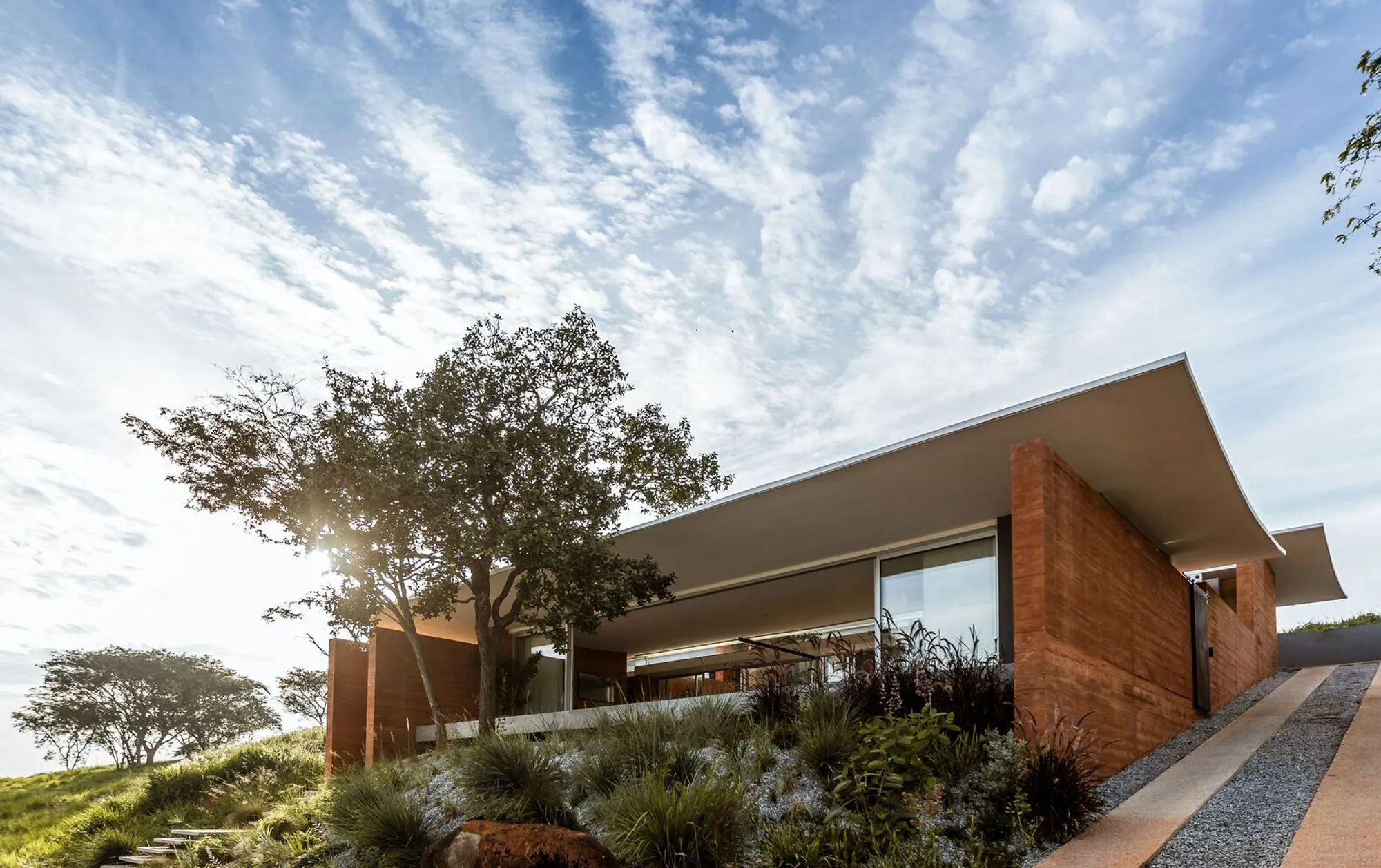
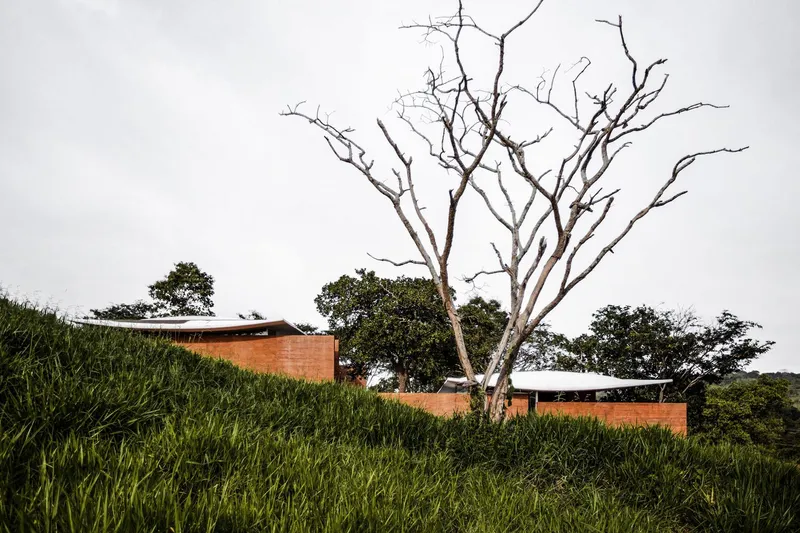
Located in Divinópolis, Brazil, Café House by TETRO Arquitetura is more than just a residence—it is an architectural narrative inspired by the Brazilian cerrado and the cultural symbolism of coffee. Designed in 2023 with a total area of 2766 ft², the house reflects the dialogue between landscape, culture, and everyday rituals, using architecture as a medium to evoke memory and meaning.
Context and Inspiration
The cerrado, a rural landscape characterized by red earth, native vegetation, and twisted tree trunks, sets the stage for Café House. In Brazil, coffee is more than a beverage—it is an invitation to gather, converse, and connect. Understanding this cultural significance, the architects, Carlos Maia, Débora Mendes, and Igor Macedo, posed a central question: How can a house embody the essence of coffee—its earthy roots, airy aroma, and cultural symbolism—through design
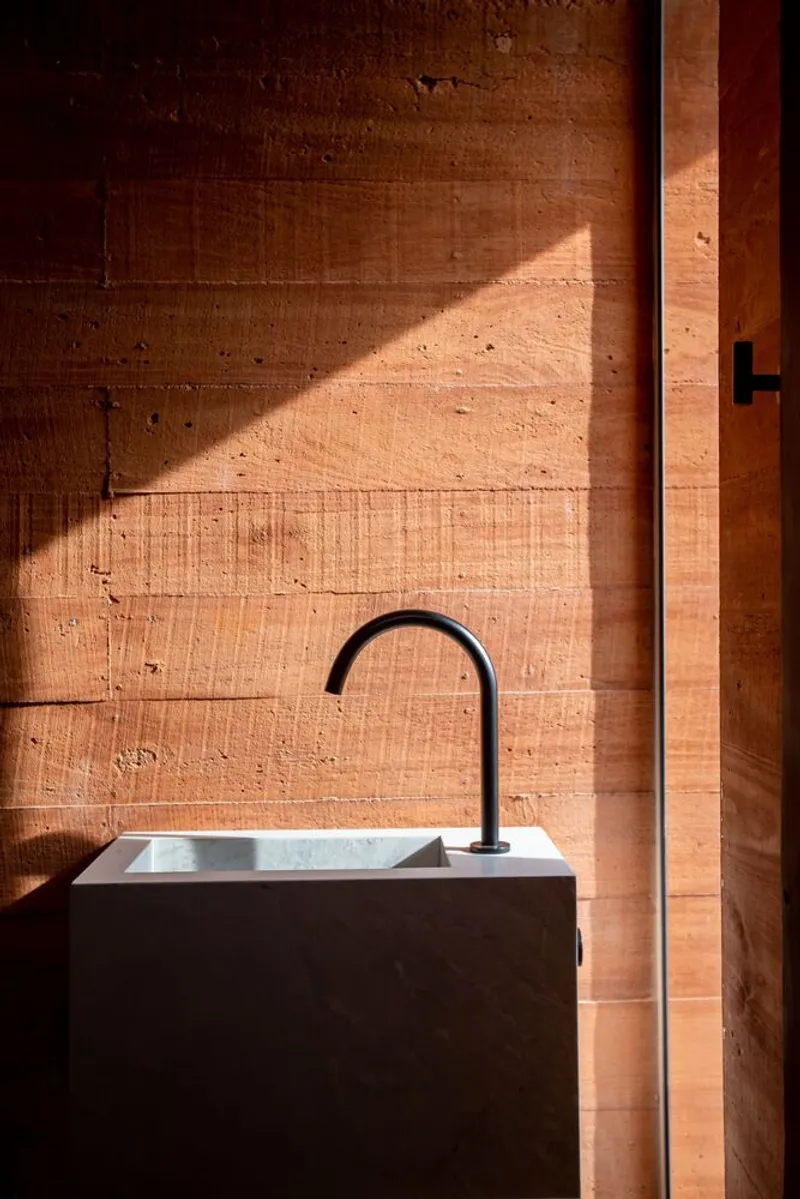
Design Concept – Earth and Air
Coffee production is profoundly influenced by land and climate, just as the sensory experience of coffee is defined by its aroma in the air. Translating these elements into built form, the architects explored a duality of weight and lightness.
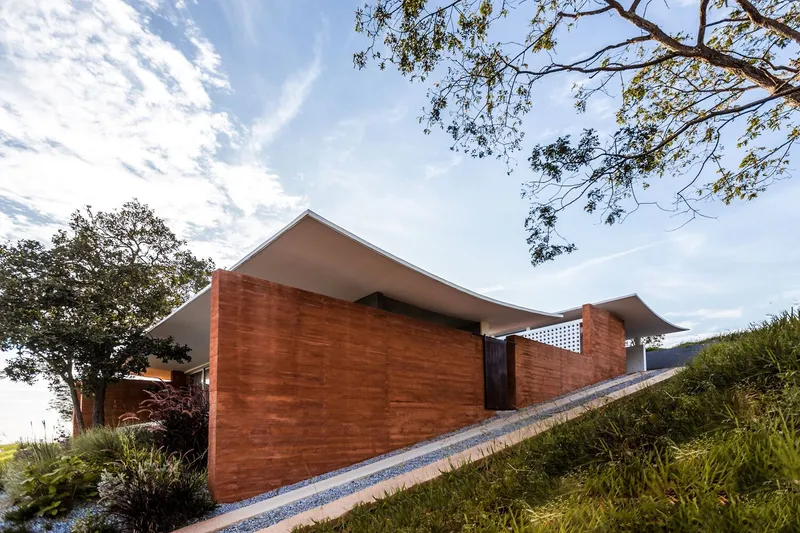
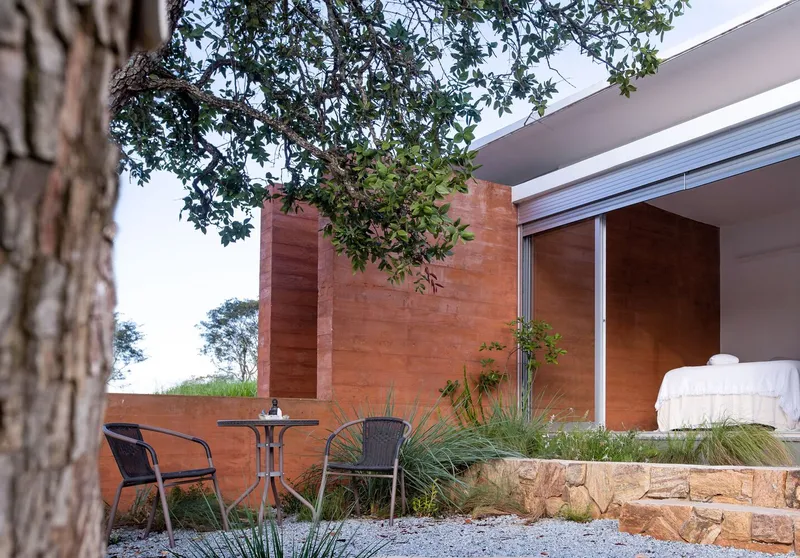
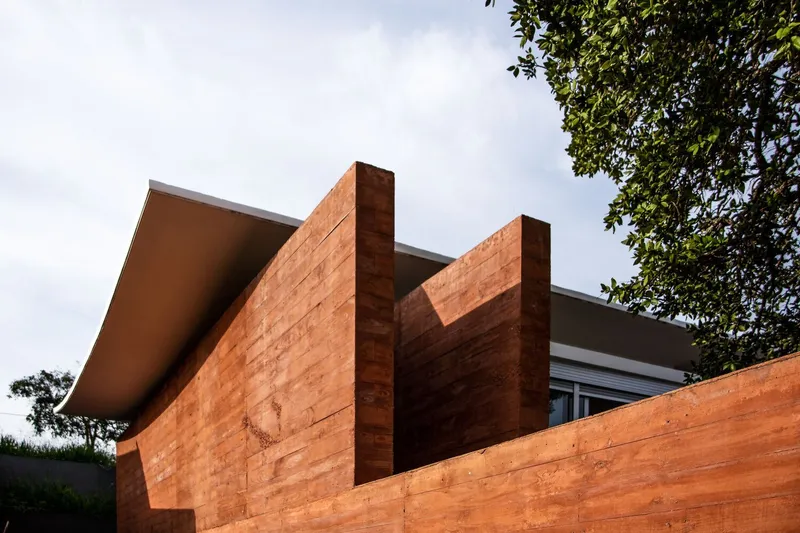
- Earth: Represented by thick, pigmented concrete walls, grounding the house in the reddish soil of the cerrado.
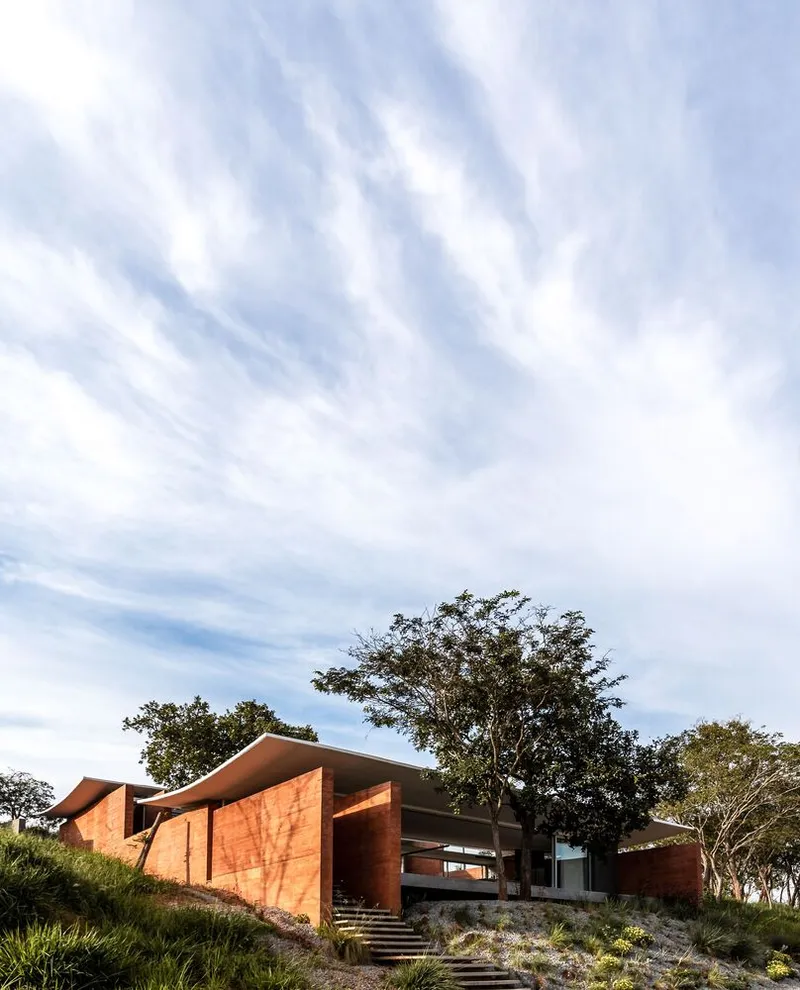
- Air: Expressed through two thin, white curved slabs that appear to float above the walls like sheets of paper suspended in space.
This poetic interplay of solidity and levity creates a home that resonates with both cultural symbolism and architectural innovation.
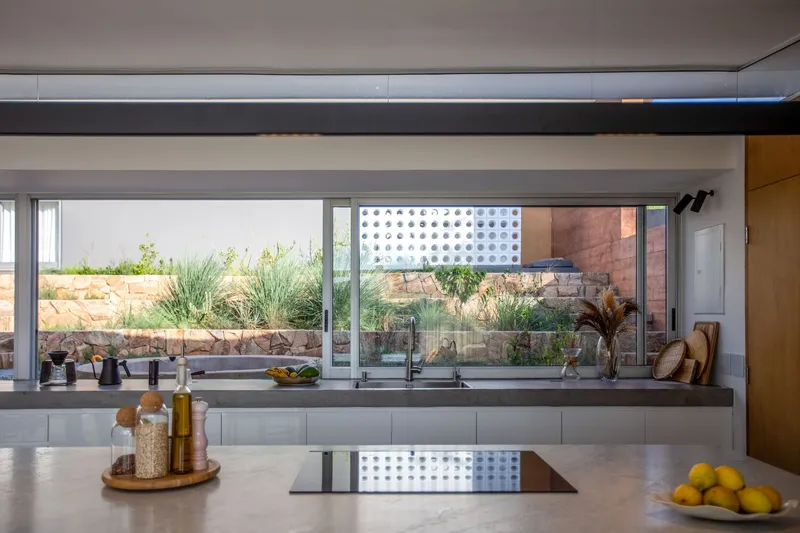
Spatial Organization
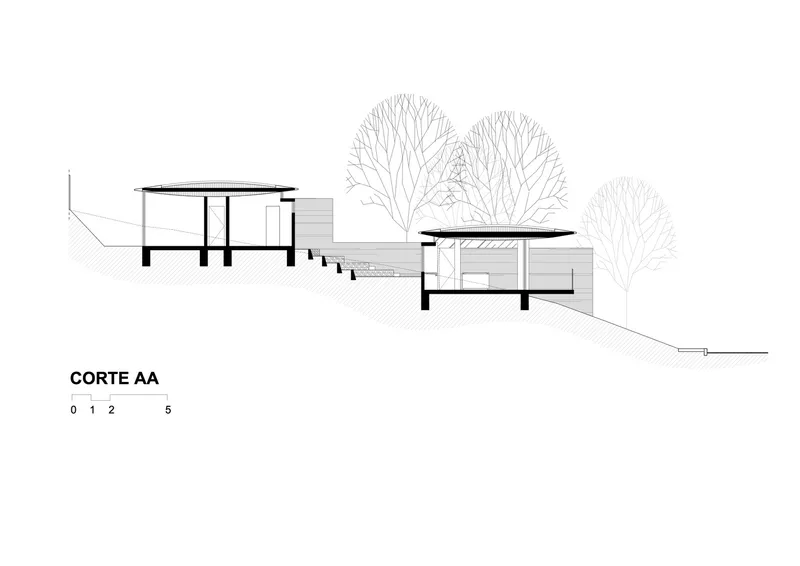
The residence is divided into two main blocks beneath the curved slabs:
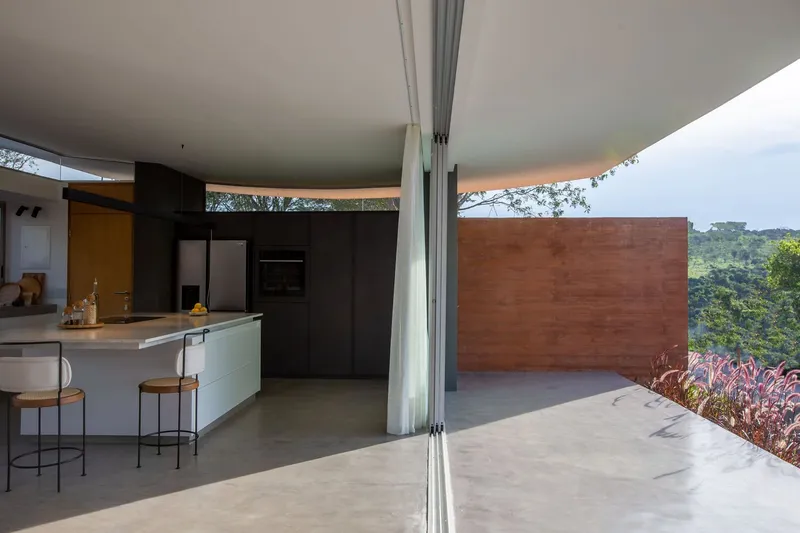
- Social Block: Spaces for gathering, dining, and hosting—reflecting the communal nature of coffee culture.
- Intimate Block: Private living quarters that offer comfort and retreat.
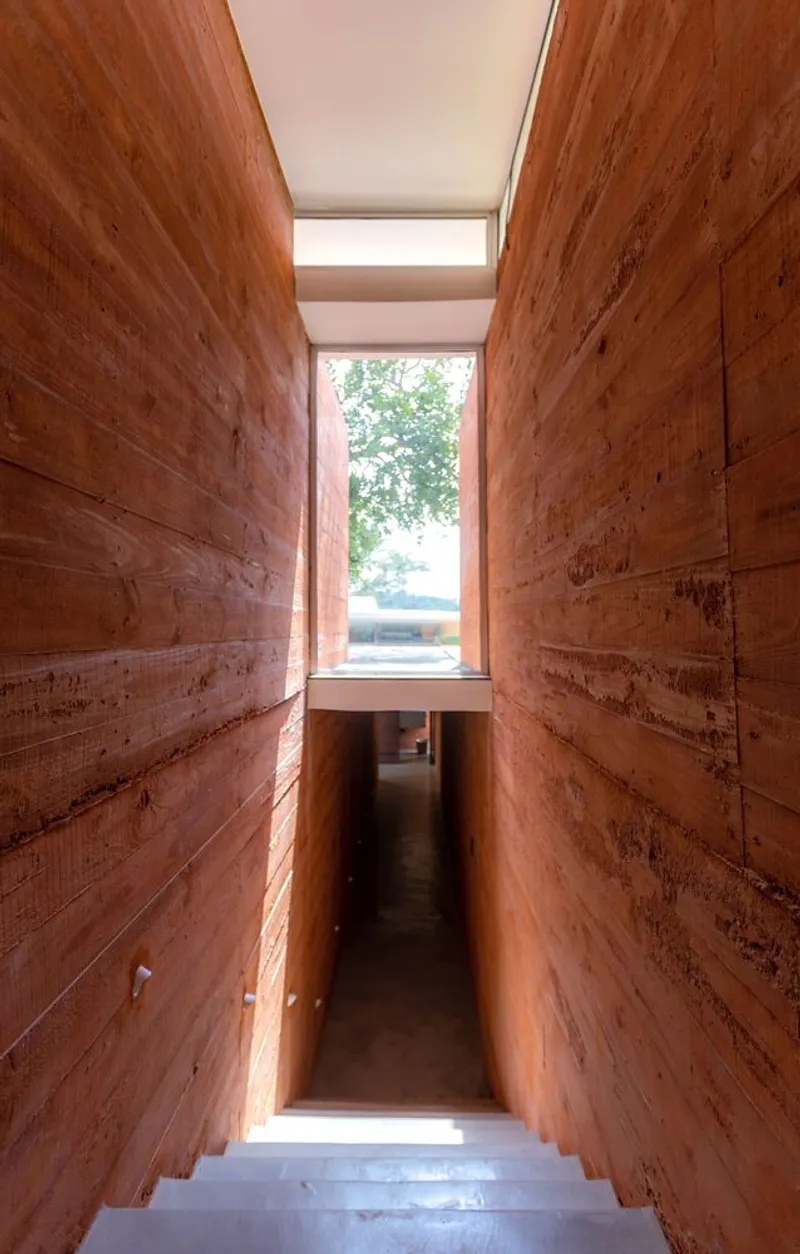
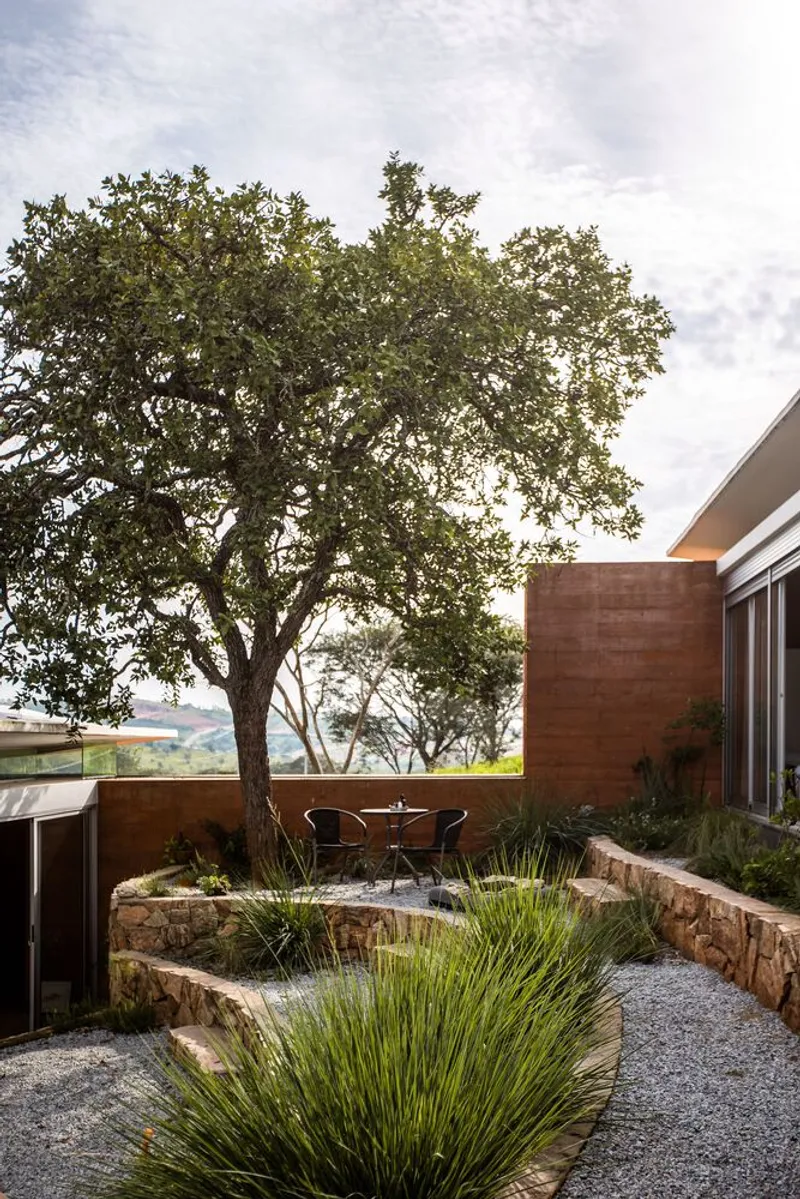
A corridor framed by earthen walls connects the two zones, symbolically guiding inhabitants between distinct atmospheres while reinforcing the tactile relationship with the land.
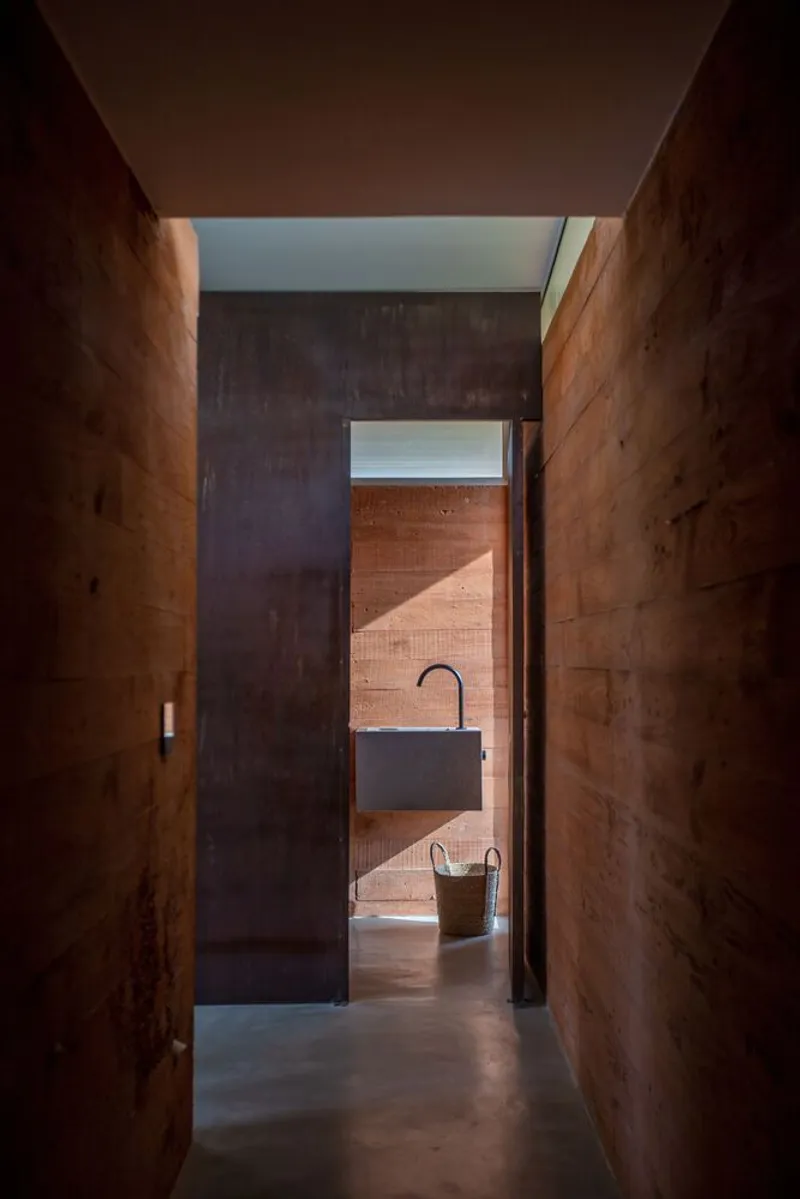
Integration with Nature
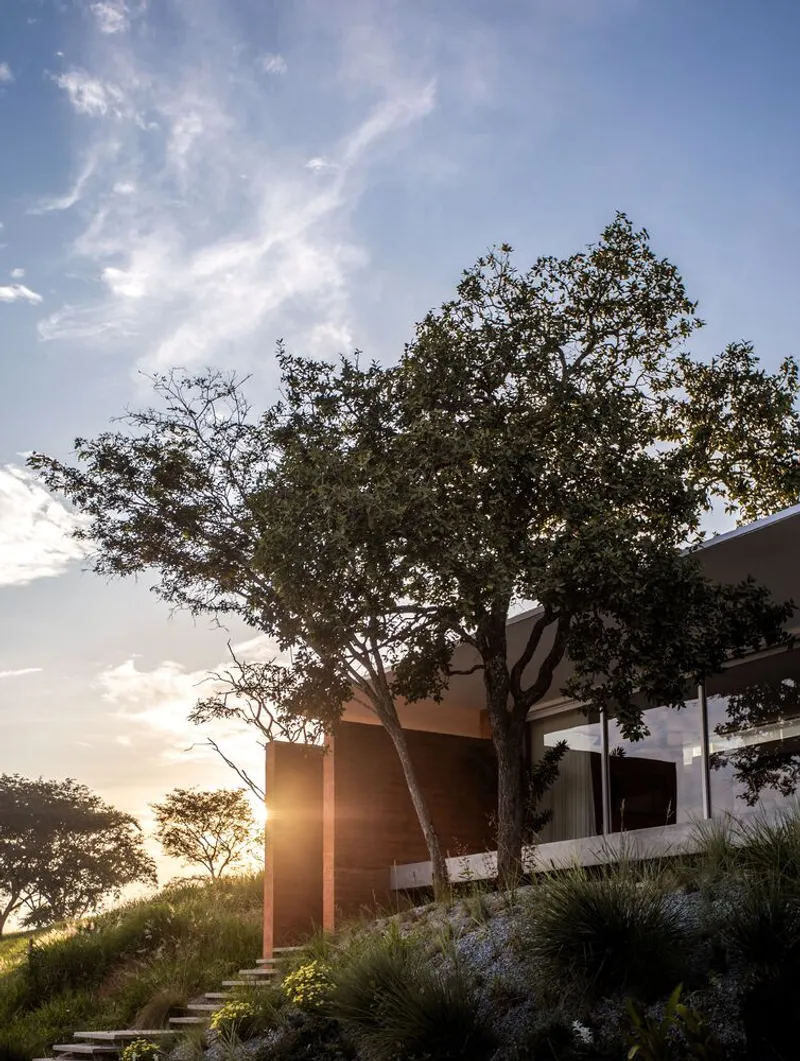
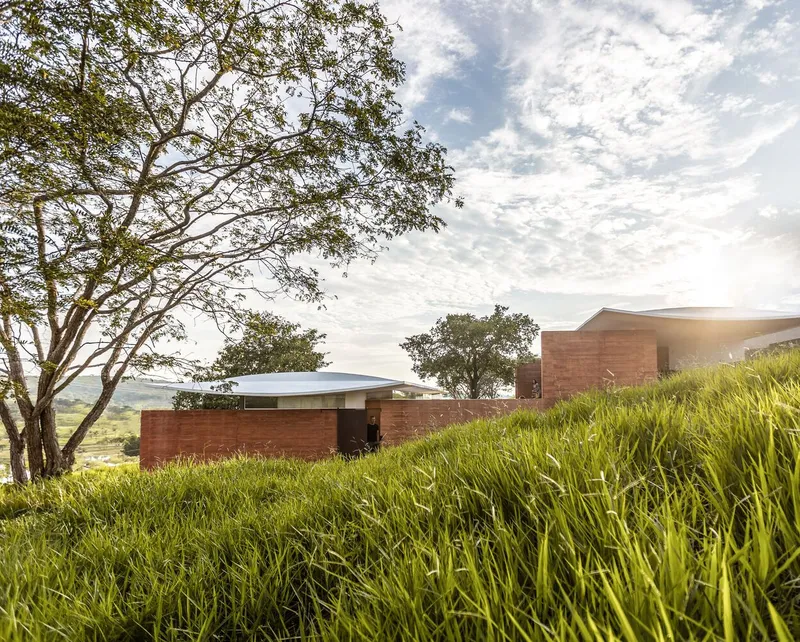
Preserving the natural terrain was fundamental to the design. The architects maintained the site’s original topography and ensured that existing trees remained untouched, weaving them into the living experience. Between the built volumes, a stepped garden was introduced, reinforcing the dialogue between built form and landscape. The result is a residence that is both sensitive to its environment and deeply connected to its cultural roots.
Materiality and Atmosphere
The careful choice of materials—concrete, brick, glass, and landscaping elements—not only enhances the tactile quality of the spaces but also grounds the architecture in its regional context. Inside, the interiors balance warmth and minimalism, with natural light filtering through windows to create a serene and contemplative atmosphere.
A Cultural and Poetic Home
Ultimately, Café House is more than a residence—it is an exploration of how architecture can embody culture, rituals, and symbolism. By rooting design in the essence of coffee and the cerrado landscape, TETRO Arquitetura crafted a home that celebrates both the intangible heritage of Brazil and the daily life of its inhabitants.
All Photographs are works of Luisa Lage



Popular Articles
Popular articles from the community


The Musturak Paradise: Senior Living Architecture for a Connected Future in Temara, Morocco
The Musturak Paradise reimagines senior living architecture in Temara via private homes, social spaces, culture, community, and shared care.

Hill & Cross Opera: Sculptural Opera House Architecture Shaped by Tallinn’s Landscape and Identity
Hill & Cross Opera reimagines opera house architecture in Tallinn through its sculptural hill, civic plaza, glass wave and a luminous cross.

Play: Fragments of Their World
Familiar architecture becomes modular playground design, creating safe spaces where displaced children can learn, connect, imagine and play.

Co-Life: Senior Housing Design That Reconnects Older Adults With the City
Co-Life reimagines senior housing design through healing gardens, shared streets, workshops, and a sustainable community across generations.
Similar Reads
You might also enjoy these articles


Hodi-Mandai Geram
Project Function: Preservation and revitalization of the Intangible heritage and socio-spatial identity of the Hodi by Housing, Cultural Memory Center, Sacred Grove, landscape, local tourism economy


Olio Towers: A Mid-Rise for Performers That Fuses Housing, Rehearsal, and Stage
Located blocks from Houston's Theater District, this modular tower stacks living units around a central performance atrium.

Oasis: Modular Green Housing Carved into Dhaka's Urban Fabric
A shortlisted Plugin Housing entry reclaims unauthorized settlements in Dhaka with stepped concrete volumes, green roofs, and ventilation-driven design.

Black Hole: A Floating Megastructure for the Post-Physical Era
Emiliano Mazzarotto envisions a spherical, self-scaling arena where e-sports, digital hotels, and holographic stadiums replace traditional public space.

Explore Cafe Competitions
Discover active competitions in this discipline



Challenge to reimagine the Iron Throne


Photograph architecture without architects


Illustrate the lost glory of Angkor Wat - Render Challenge


Design challenge to reuse E-waste
Comments (0)
Please login or sign up to add comments
No comments yet. Be the first to comment!