
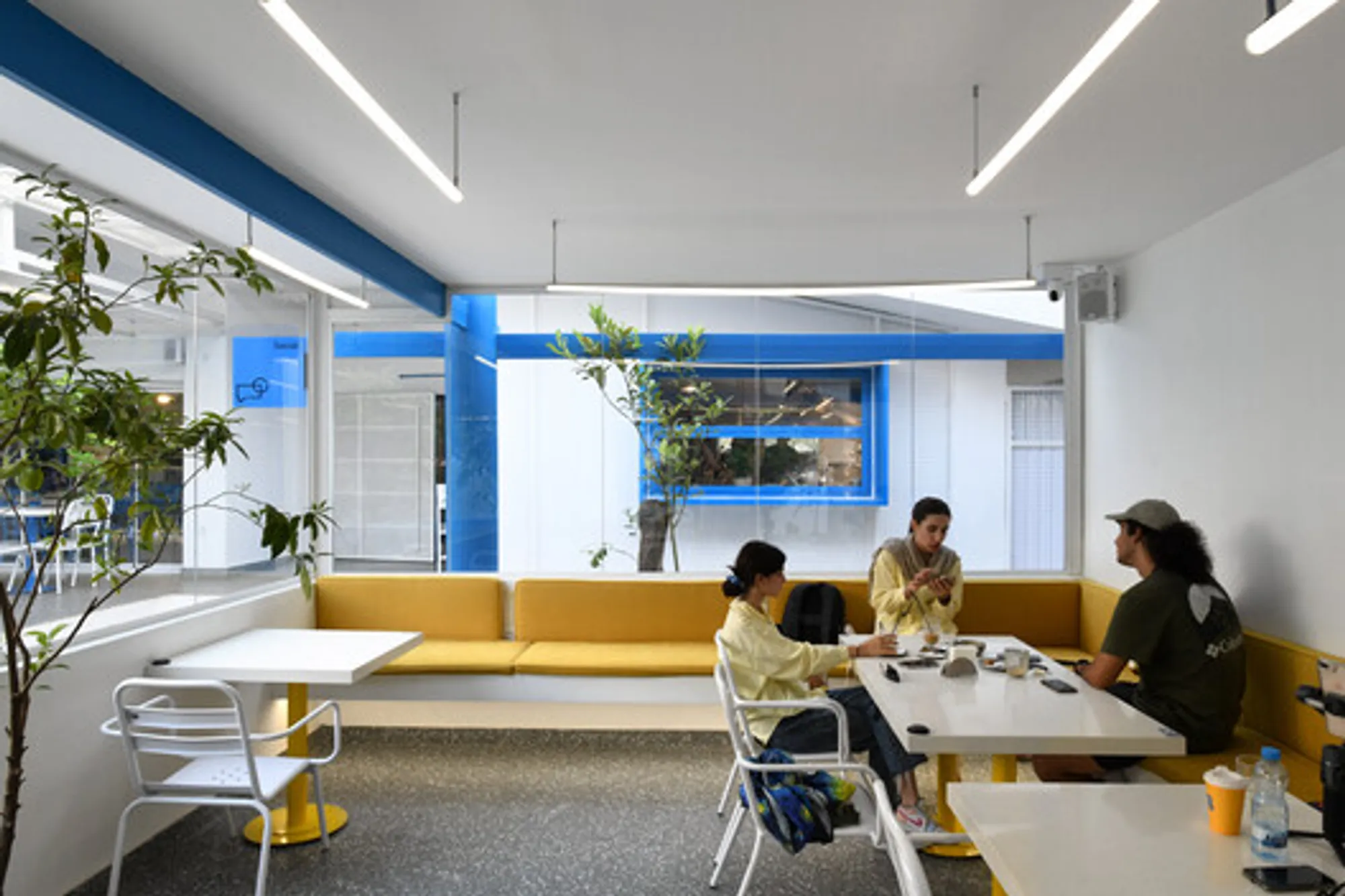
Cafe Zest by VAHID JOUDI STUDIO
Adaptive reuse of an abandoned villa transformed into a youth-driven social café, reconnecting public life through porous edges and collective engagement.


On the northern coastal edge of Iran, in the quiet residential district of Karimabad, Shahsavar, sits a villa once built for seasonal retreat — a house defined by periodic occupation rather than daily continuity. Like many homes in the region, it was shaped for temporary presence, not permanent life; a place that breathed only in summer, only when families returned. Outside of those months, it stood still. The surrounding neighborhood echoed the same rhythm — bursts of activity followed by long stretches of silence.
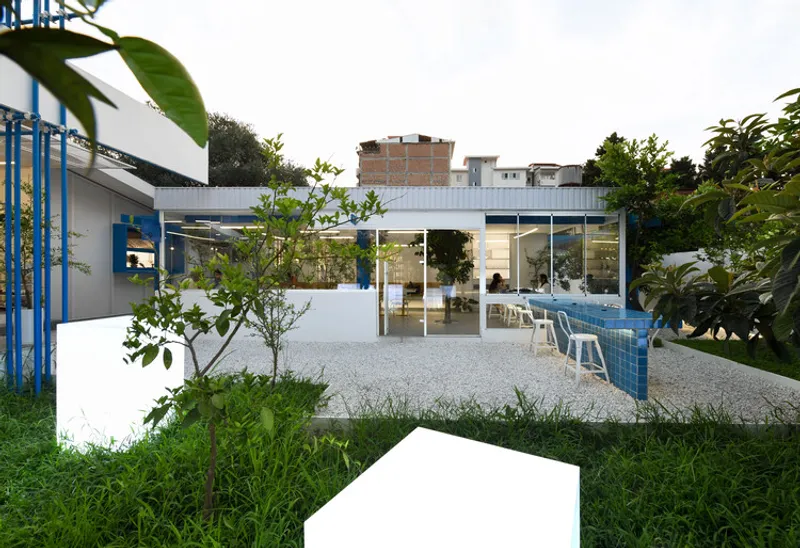
In such an environment, cafés rarely survive. They arrive, flourish briefly, fade, and vanish — unable to sustain daily relevance. What they lack is not design or cuisine but integration into everyday urban life. Without a consistent audience and without connections to social patterns, they fail to become anchors. They remain as momentary destinations instead of urban extensions.
It is precisely this condition that Cafe Zest confronts. The project begins with an abandoned villa, but its architectural ambition goes much further than renovation. VAHID JOUDI STUDIO takes what was once a private domestic shell and repositions it as a public-social interface, transforming a closed house into an urban condenser of activity, youth culture, and communal interaction. The architecture is no longer passive shelter — it becomes a catalyst.
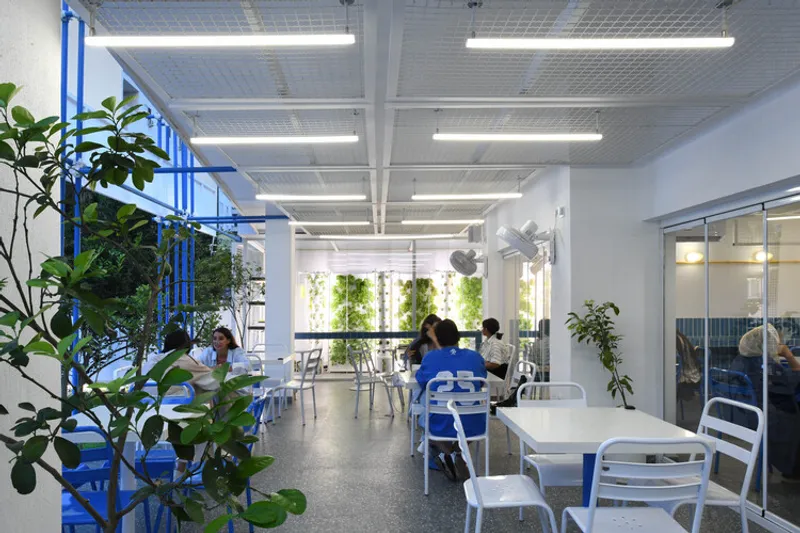
From Seasonal Enclosure to Public Platform
The initial challenge was conceptual rather than physical:How does one convert a space built for privacy into one that invites interaction, visibility, and presence?
This question shaped every decision — spatial, material, programmatic. The goal was not simply to install tables and coffee grinders inside a house; it was to rewrite its social DNA. Architecture becomes a medium through which two historically opposed states — private domesticity and public urban life — intersect.
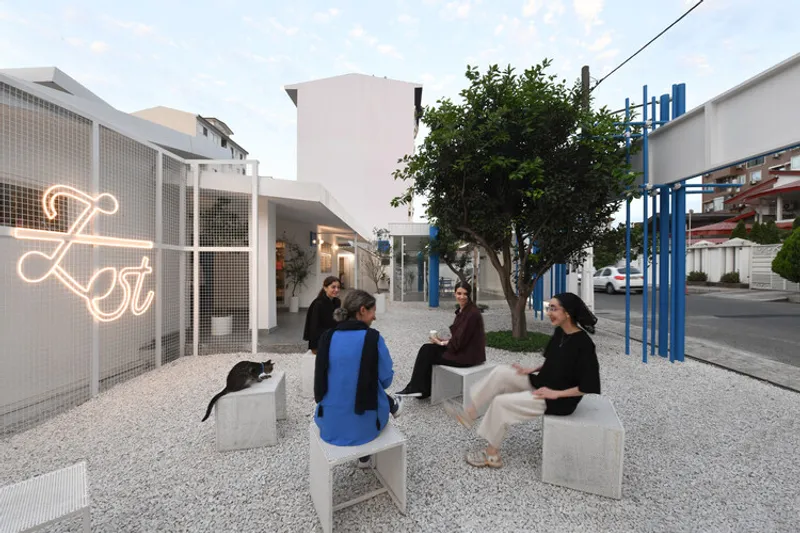
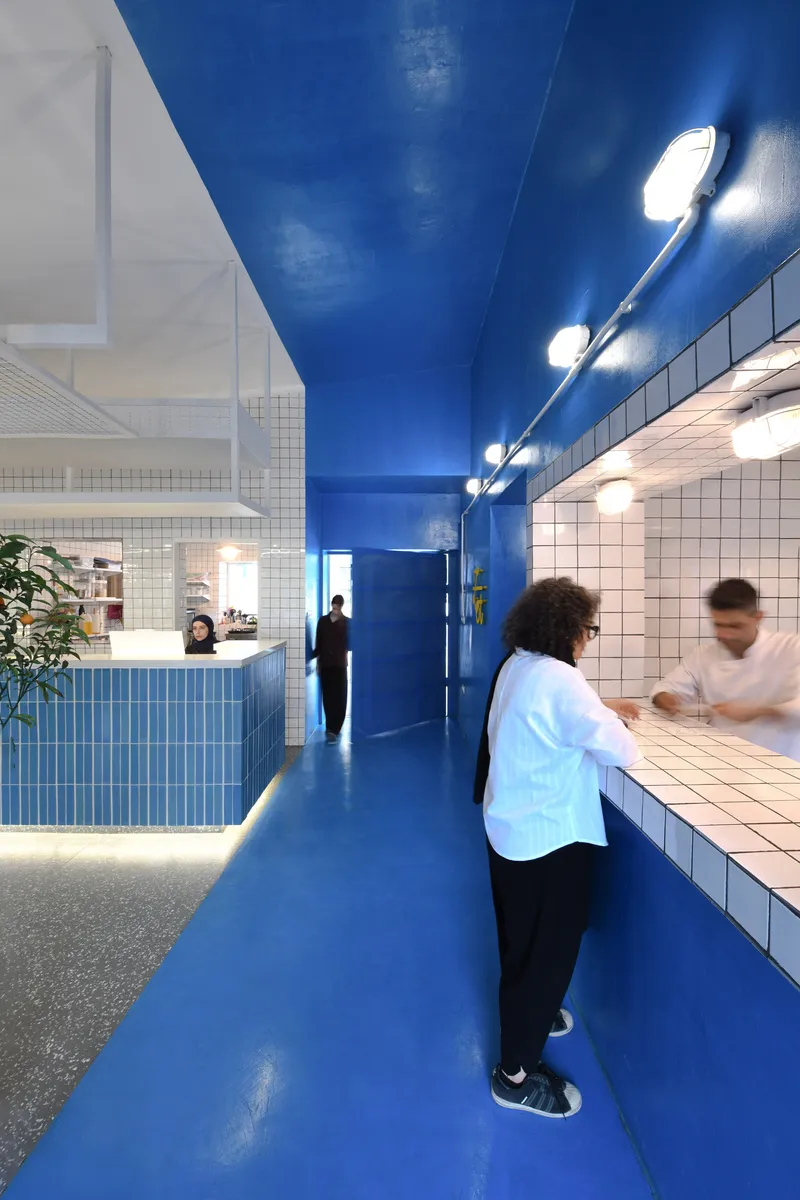
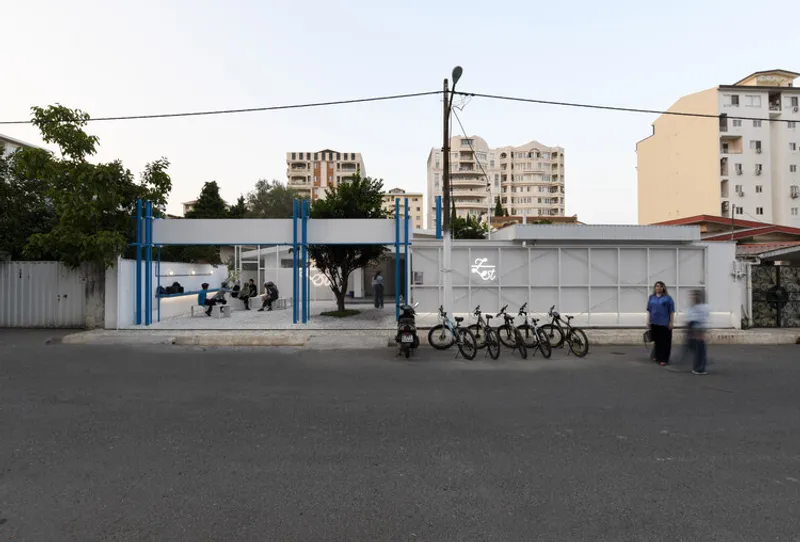
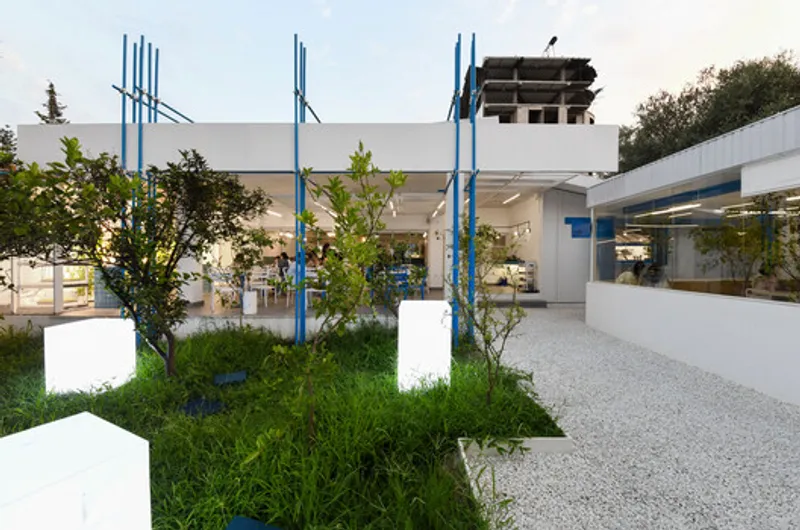
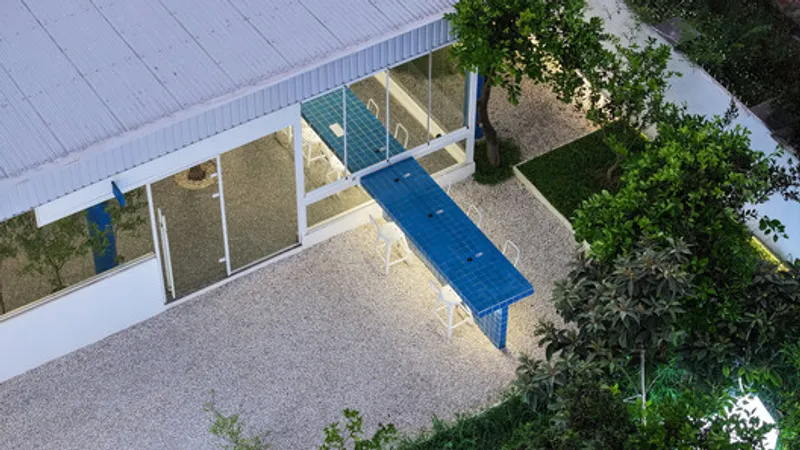
Where a conventional café would adjust interiors while leaving its urban boundaries unchanged, Cafe Zest does the opposite. The edge between building and street becomes the core of design thinking. Instead of a solid threshold dividing inside from outside, the architects dissolve the boundary into a permeable, transitional, semi-porous field. The property line becomes less a barrier and more a zone of invitation — visually open, spatially gradated, socially intuitive.
The aim was not to erase difference between private and public, but to redefine the border as a space rather than a line. A threshold one occupies, pauses at, engages, sits within — rather than simply crosses.
Architecture as Social Equipment
The brief requested a café. The architecture responded with a social instrument.
The designers introduced two programmatic insertions:
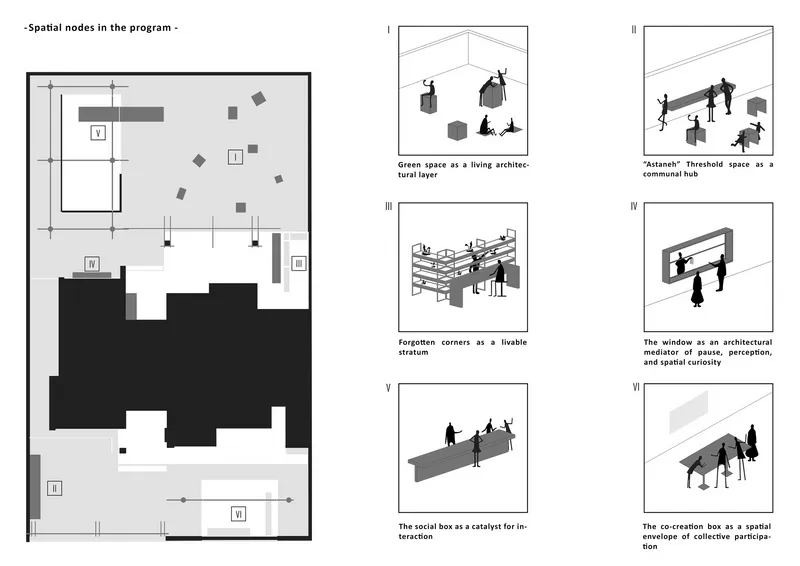
The Co-Creation Box
A flexible interior volume that hosts workshops, collaborative sessions, design meetings, pop-up events, and any collective activity requiring intellectual exchange. It functions like a studio inside a café — where creativity is produced rather than merely consumed.
The Social Box
A conversational arena — informal, extroverted, porous. It is where strangers become acquaintances, where local youth meet, where small gatherings evolve into community rituals. It enables people to sit, speak, project ideas, exchange.
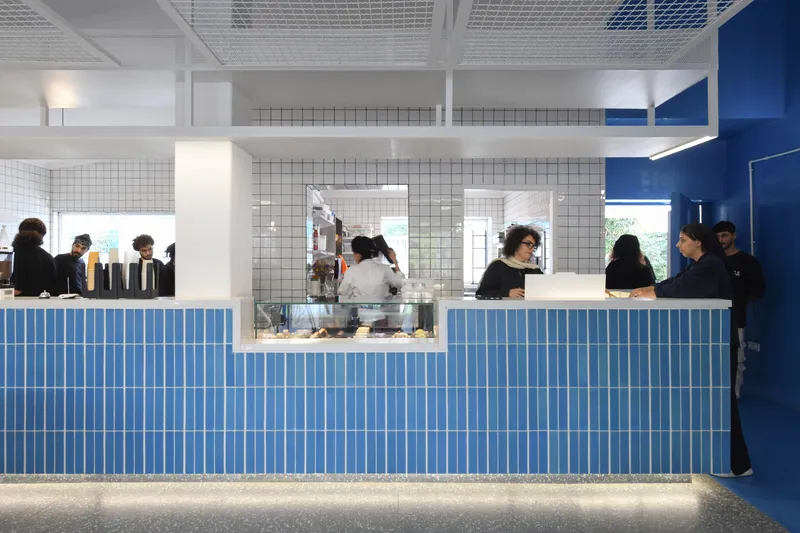
These are not additional rooms — they are extensions of purpose. They shift Zest from a café of consumption into a café of participation — a cultural generator within a previously dormant context.
The space begins to make community instead of merely serving customers.
Spatial Transformation Through Subtraction
Many adaptive reuse projects build more. Here, the strategy is the opposite — removal becomes creation.
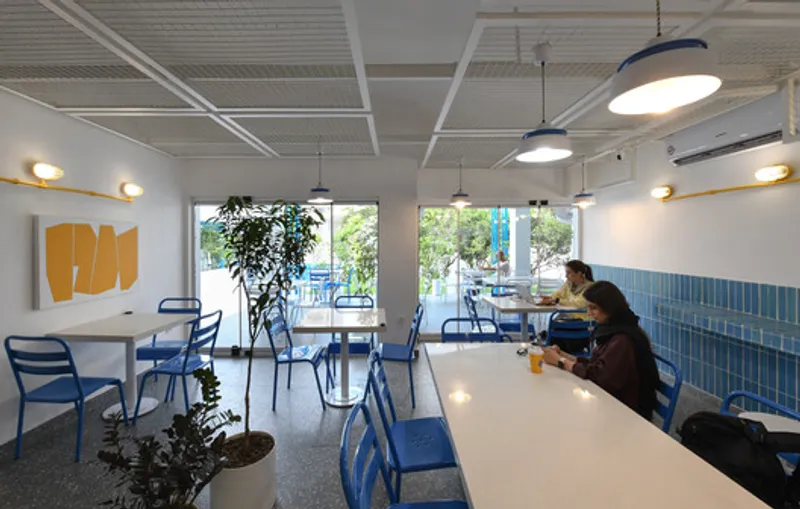
Half of the second-floor slab and more than two-thirds of the fourth-floor slab were demolished. The building, originally four levels tall, becomes two levels with double and quadruple height spatial volumes, radically expanding vertical perception. What remains is a structure that feels light, tall, breathable — as if air itself is part of composition.
This voiding of slabs generates sightlines across multiple floors:clothing and furniture float visually, ceilings layer like cut geological strata, people inhabit vertical space as much as floor space. Air circulates, light spills across surfaces, conversation travels upwards.
The result is spatial drama without spectacle — achieved not by ornamentation, but by intelligent subtraction. Space becomes experiential, not decorative.
Circulation as Urban Narrative
One of the most sophisticated achievements lies in how movement is choreographed. Vertical progression is not forced — it is seduced. The architects refined stair dimensions, landing areas, sight frames, and transitions to turn ascent into a journey rather than an effort. Circulation is intuitive: people climb because the building invites them to, not because program demands it.
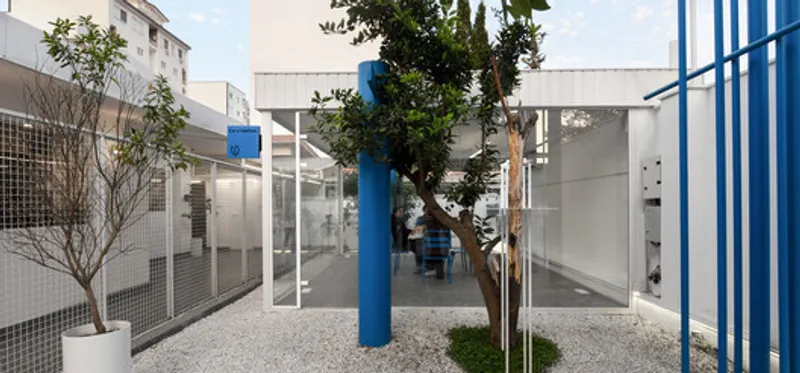
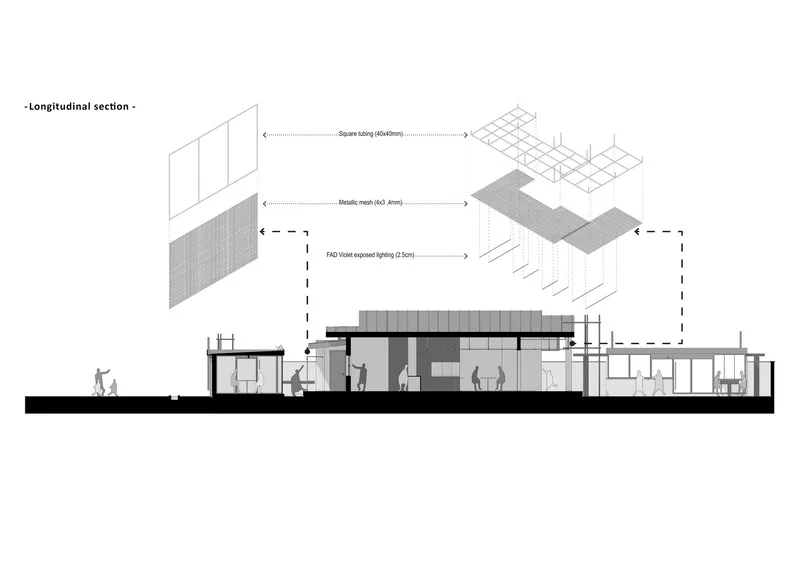
Spatial organization was shifted from centrality to distribution. Instead of one core room feeding dependent spaces, the plan becomes networked — like a miniature city with pockets, alleys, nodes, courtyards, and clearings. This encourages wandering. No room is terminal; every space leads to another. The architecture encourages lingering, meandering, discovery.
People do not simply visit. They explore.
Material Reuse and Aesthetics of Economy
The villa is a rental. Budgets are finite. Permanence must be built from pragmatism.
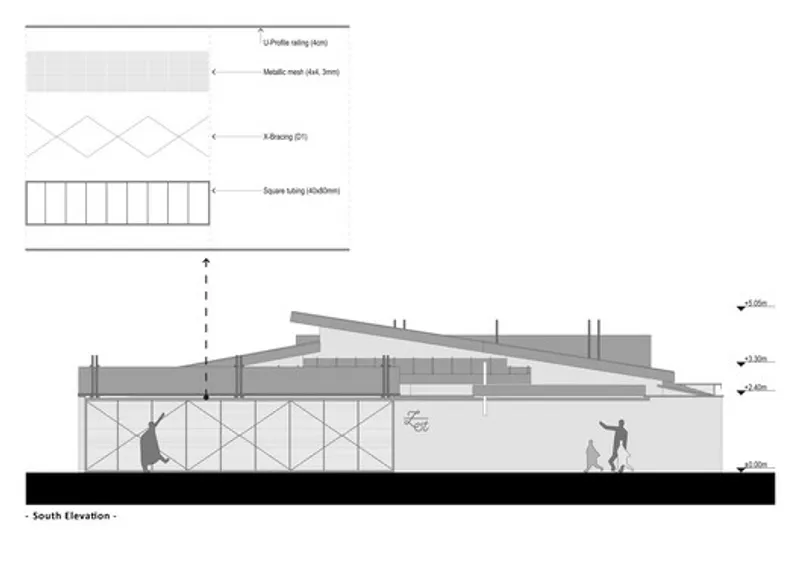
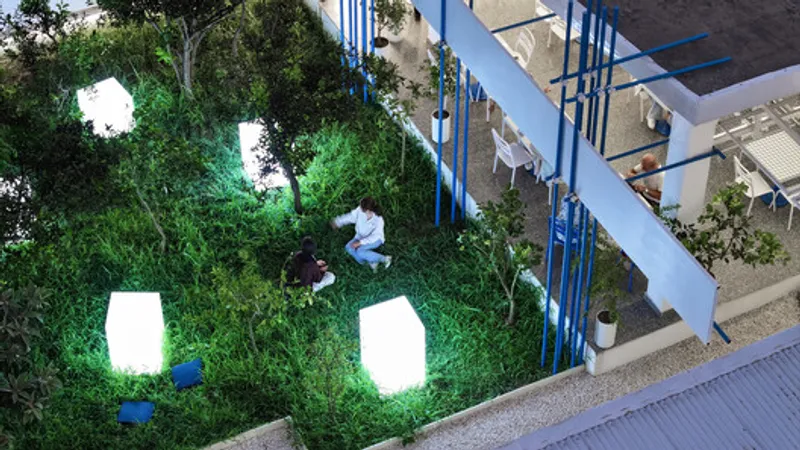
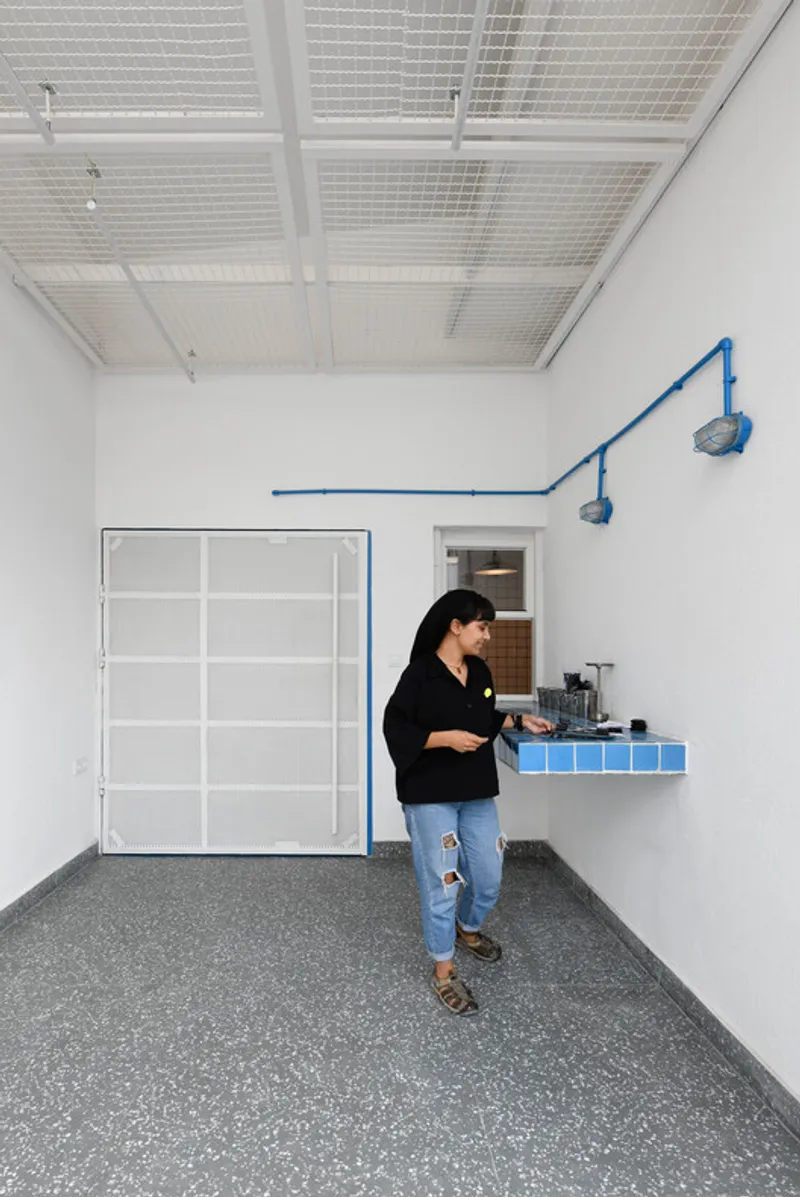
Rather than importing new materials, the architects take what already exists nearby:stored scaffolding tubes, rusting metal pipes, industrial mesh sheets, aluminium plates. These are not merely reused — they are re-imagined. Pipes become screens and shading. Mesh becomes breathable partitions. Scaffolding becomes structural skin. Aluminium becomes identity.
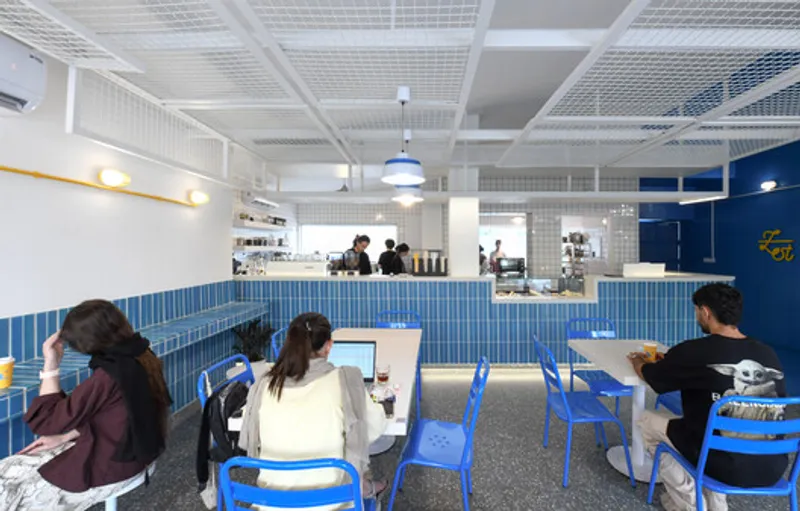
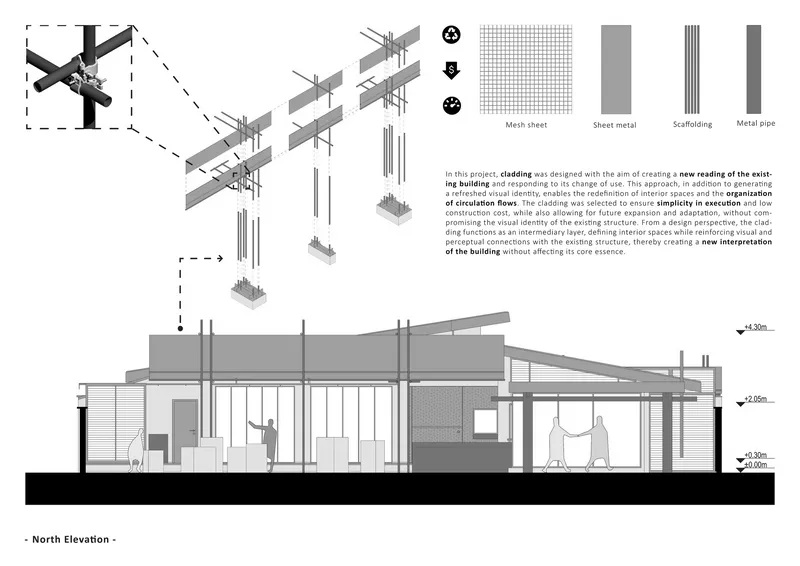
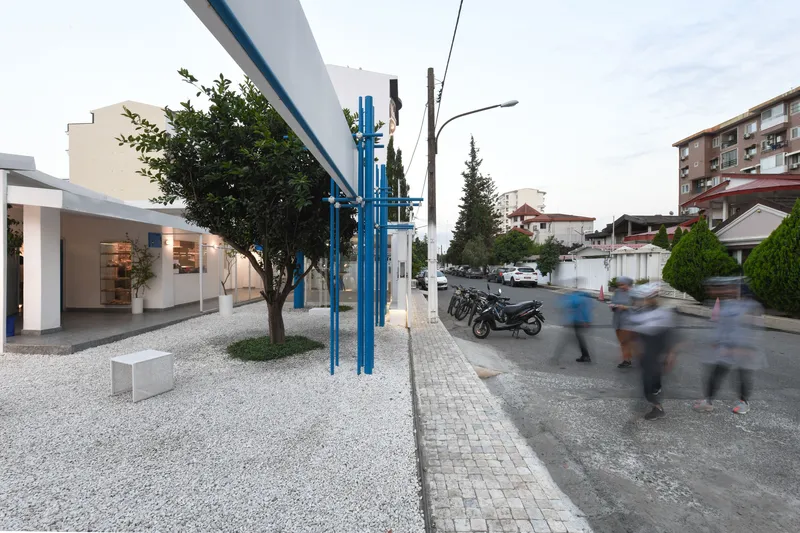
The shell introduces contemporary character without visually erasing the original house. The design does not impose alien presence; it layers a new skin onto old bone, allowing history to remain visible beneath transformation. Respect is built into modernization.
Cheap materials become architectural vocabulary. Economy becomes style.
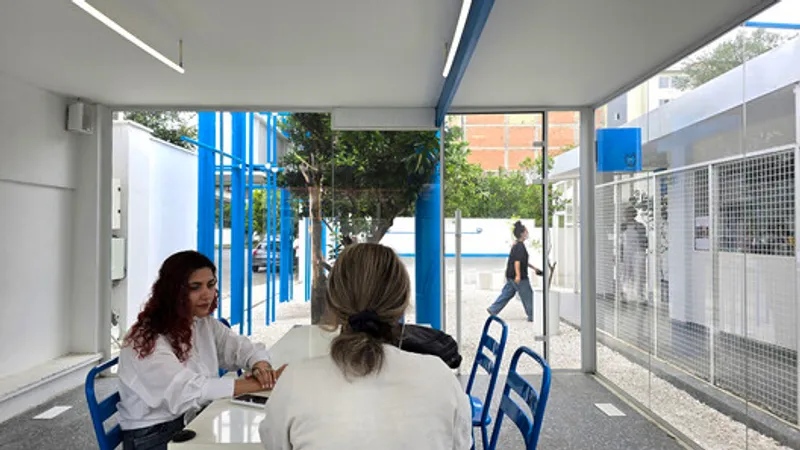
Landscaped Edges and the Urban Softening of Thresholds
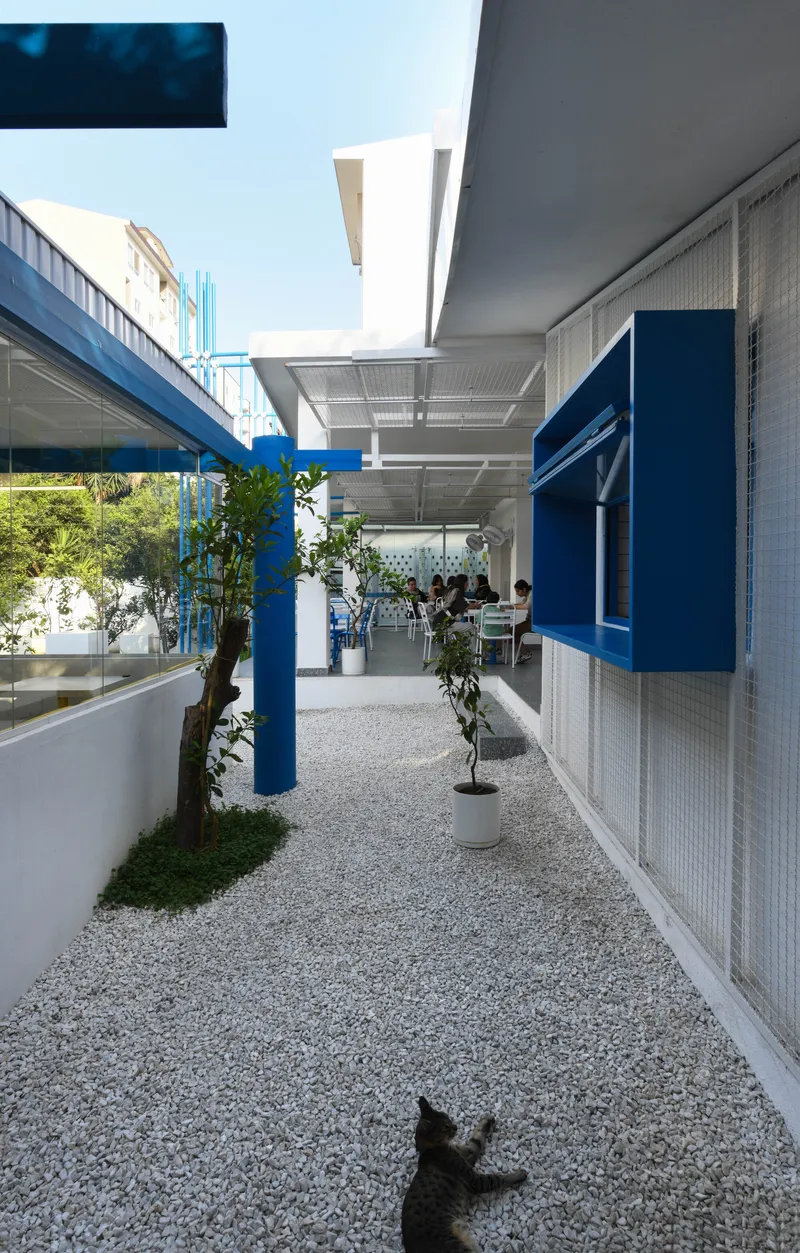
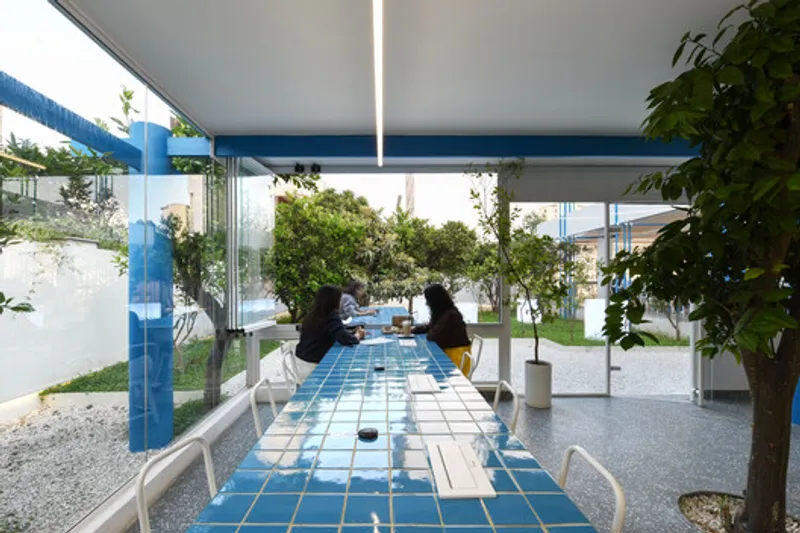
Outdoor areas are not leftover margins — they are activation zones. Gardens, courtyards, semi-open patios and porous edges create ecological atmosphere through light, shade, foliage, and air. These external transitions expand the usable footprint of the café well beyond interior walls — giving the neighborhood a space not just to sit but to be.
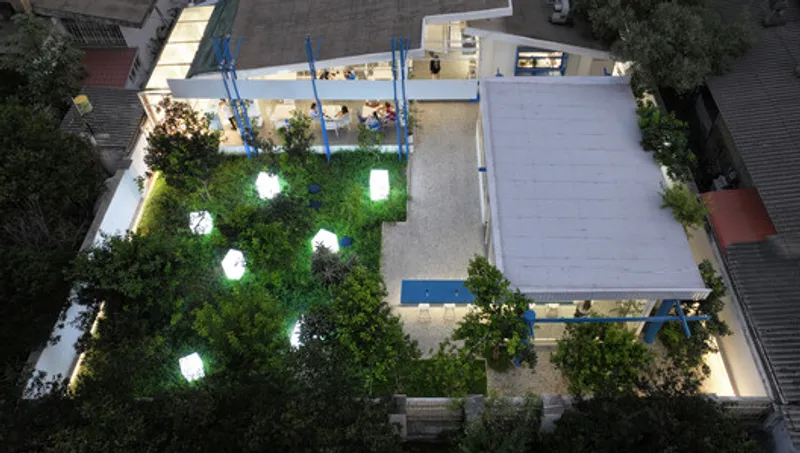
People step in from the street, settle, converse, breathe. The café gradually dissolves the transition between city and interior. Its boundary becomes a social sponge.
A villa once invisible behind walls now breathes outward — engaging the street as extended living room.
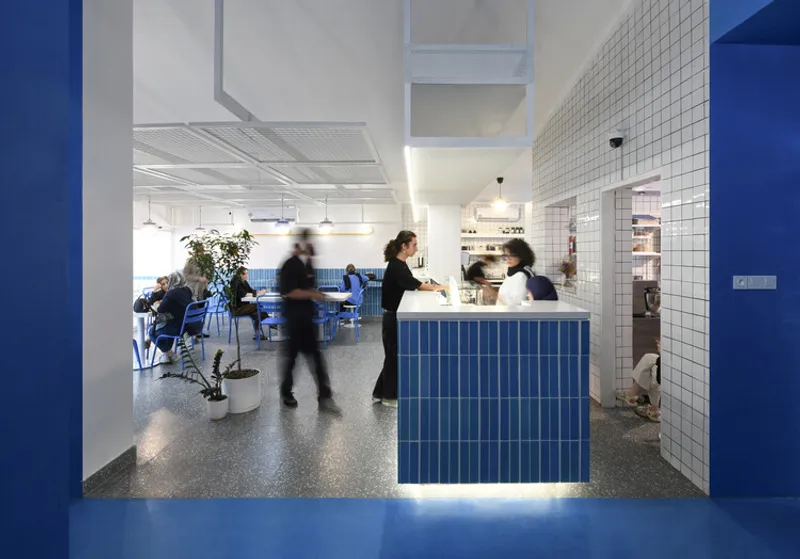
Cultural Impact: From Seasonal Dormancy to Collective Pulse
The project is not simply architecture — it is neighborhood metabolism. In a place where structures sleep through much of the year, Cafe Zest becomes an urban ignition point. Youth gather, artists convene, events multiply, and visitors return not for consumption but for community. Architecture becomes mechanism for belonging.
Through adaptive reuse, distributed programming, material ingenuity, and threshold redefinition, Zest repairs not only a building, but an urban gap — stitching seasonal private context back into continuous public life. What was once passive container evolves into a cultural platform — a civic living room for a neighborhood that did not know it needed one.
All the Photographs are works of Vahid Joudi


Popular Articles
Popular articles from the community


The Musturak Paradise: Senior Living Architecture for a Connected Future in Temara, Morocco
The Musturak Paradise reimagines senior living architecture in Temara via private homes, social spaces, culture, community, and shared care.

Conexión: Biophilic Design Reimagines High-Rise Living in Hong Kong
Conexión reimagines high-rise living in Hong Kong through biophilic design, green facades, shared spaces, daylight, water and nature within.

The Earth Pod: 3D Printed Homes for Resilient Refugee Communities
The Earth Pod reimagines refugee housing through 3D printed homes made from clay, combining resilience, self-sufficiency, and rapid shelter.

EW PARK: Sustainable Architecture Reimagines the Future of Urban Parking
EW PARK reimagines city parking as a modular wooden tower combining automation, solar energy, electric mobility, and adaptable urban design.
Similar Reads
You might also enjoy these articles


Hodi-Mandai Geram
Project Function: Preservation and revitalization of the Intangible heritage and socio-spatial identity of the Hodi by Housing, Cultural Memory Center, Sacred Grove, landscape, local tourism economy


Olio Towers: A Mid-Rise for Performers That Fuses Housing, Rehearsal, and Stage
Located blocks from Houston's Theater District, this modular tower stacks living units around a central performance atrium.

Oasis: Modular Green Housing Carved into Dhaka's Urban Fabric
A shortlisted Plugin Housing entry reclaims unauthorized settlements in Dhaka with stepped concrete volumes, green roofs, and ventilation-driven design.

Black Hole: A Floating Megastructure for the Post-Physical Era
Emiliano Mazzarotto envisions a spherical, self-scaling arena where e-sports, digital hotels, and holographic stadiums replace traditional public space.

Explore Architecture Competitions
Discover active competitions in this discipline


Challenge to design locus for the upliftment of human rights


Challenge to reimagine the Iron Throne


Photograph architecture without architects


Illustrate the lost glory of Angkor Wat - Render Challenge
Comments (0)
Please login or sign up to add comments
No comments yet. Be the first to comment!