
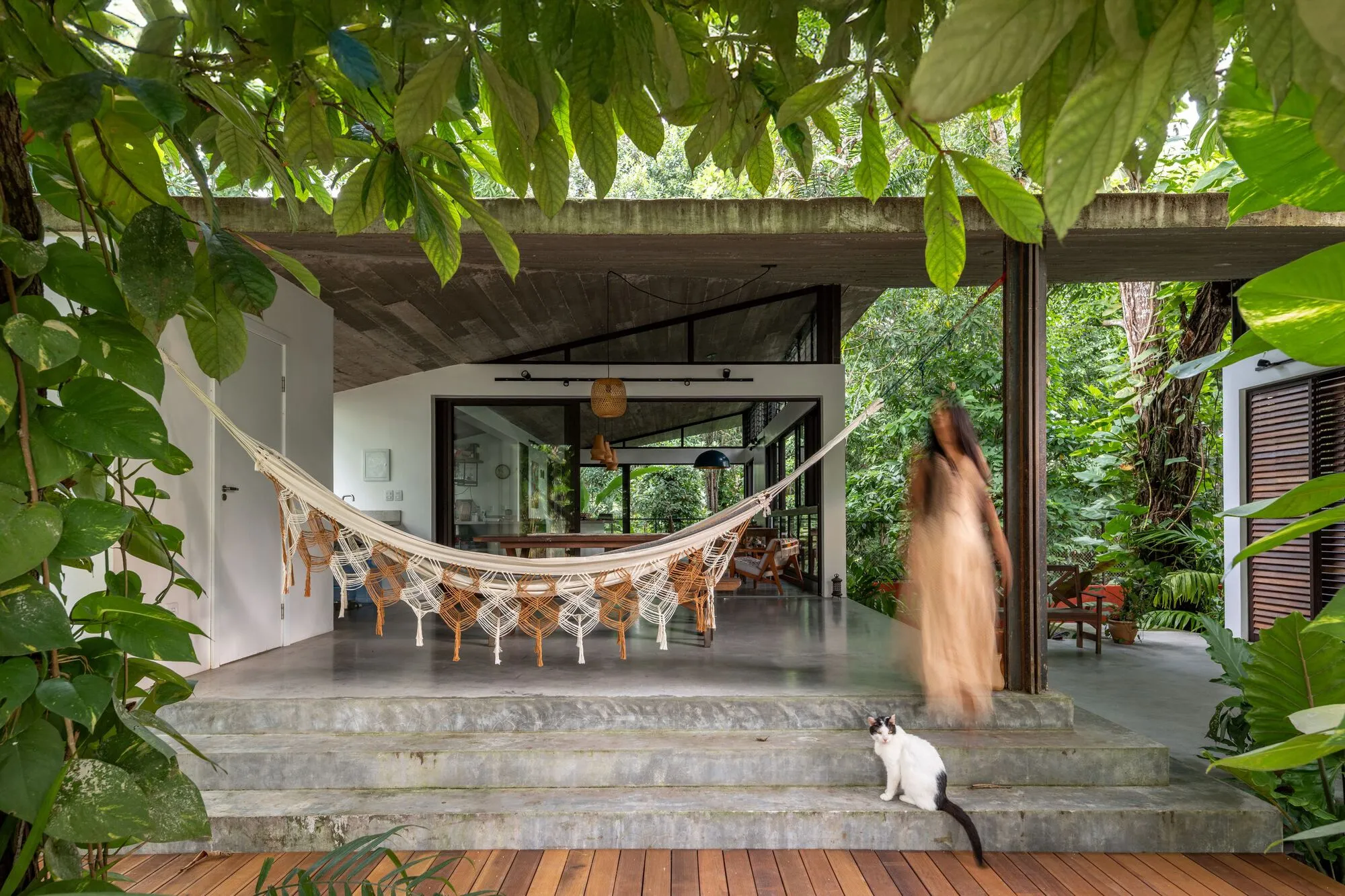
Cajuí House By Laurent Troost Architectures
Cajuí House blends tropical modern architecture with forest surroundings, featuring passive design, indoor-outdoor living, and sustainable strategies in Manaus, Brazil.


This is a contemporary tropical residence that seamlessly merges architecture, landscape, and passive sustainability in the heart of Manaus, Brazil. Designed with deep sensitivity to its Amazonian context, the 275 m² house responds to climate, vegetation, and site constraints while offering a refined model of modern outdoor living.
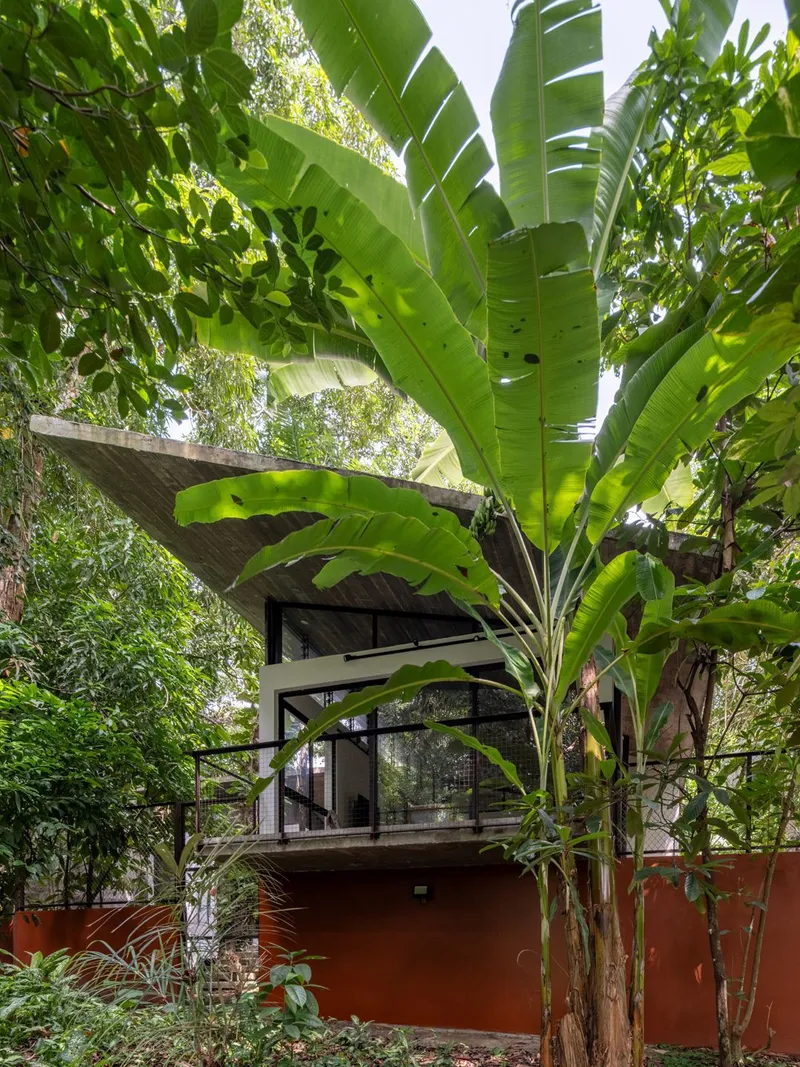
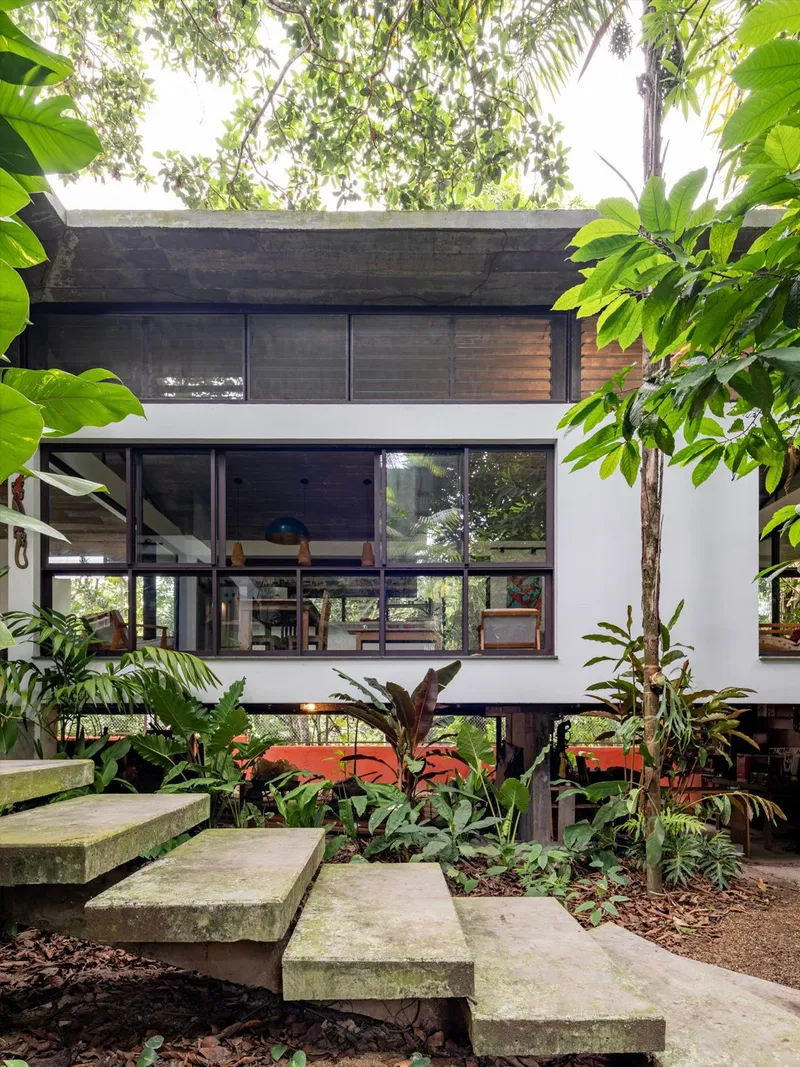
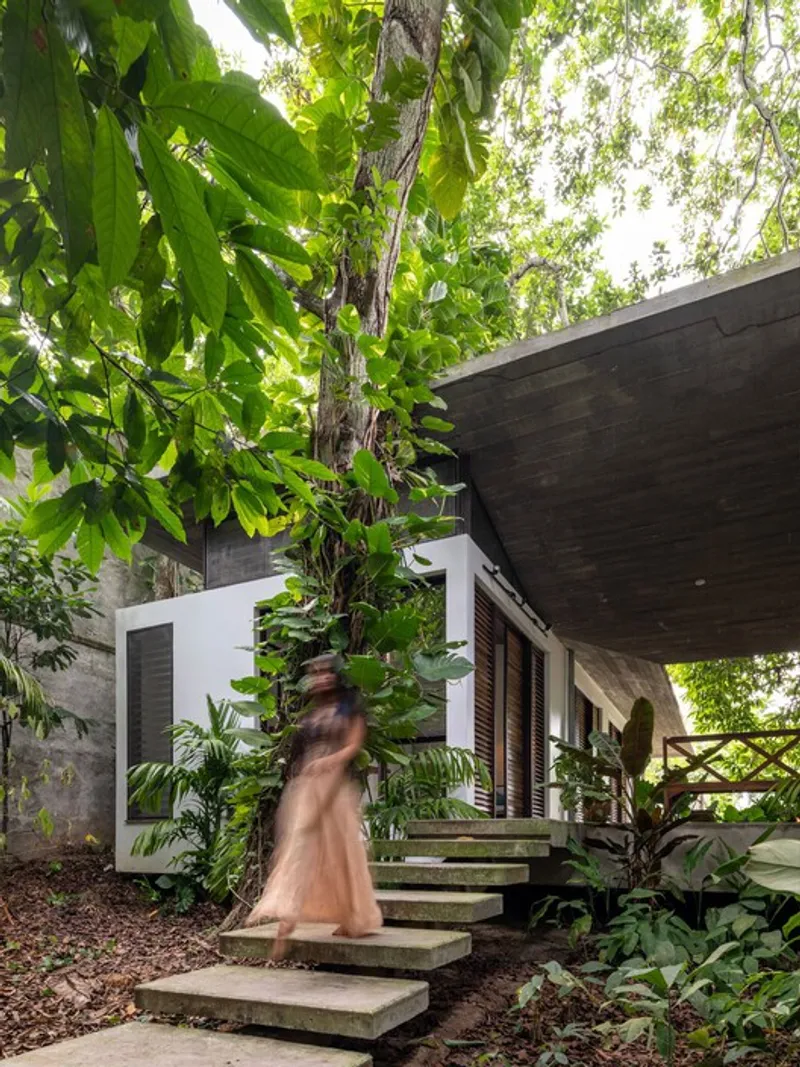
Nestled on a plot bordered on three sides by an environmental protection area, Cajuí House was carefully positioned among existing trees to preserve natural shade and maximize visual connections with the surrounding forest. Rather than imposing a rigid form, the architecture is shaped by these natural preexistences, resulting in a fluid and site-specific residential typology that feels both grounded and elevated.
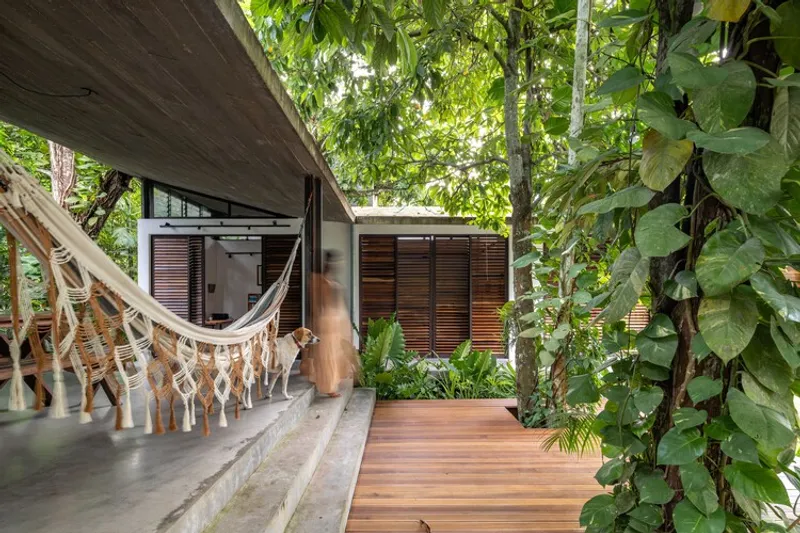
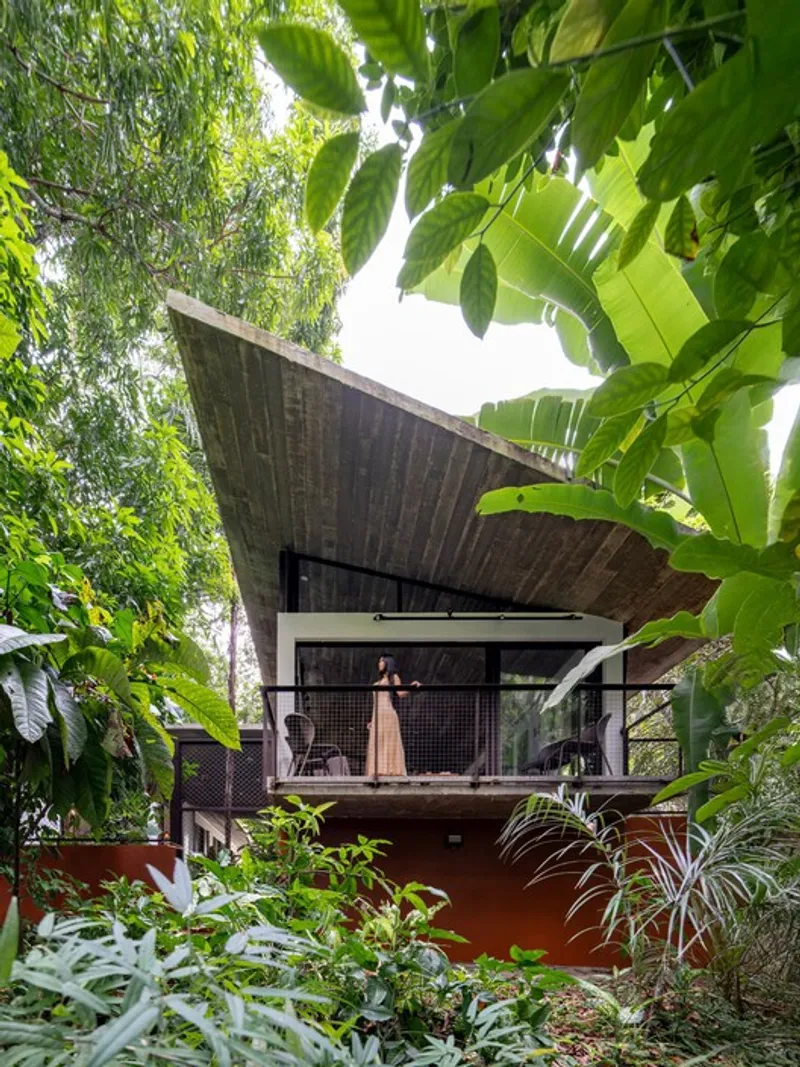
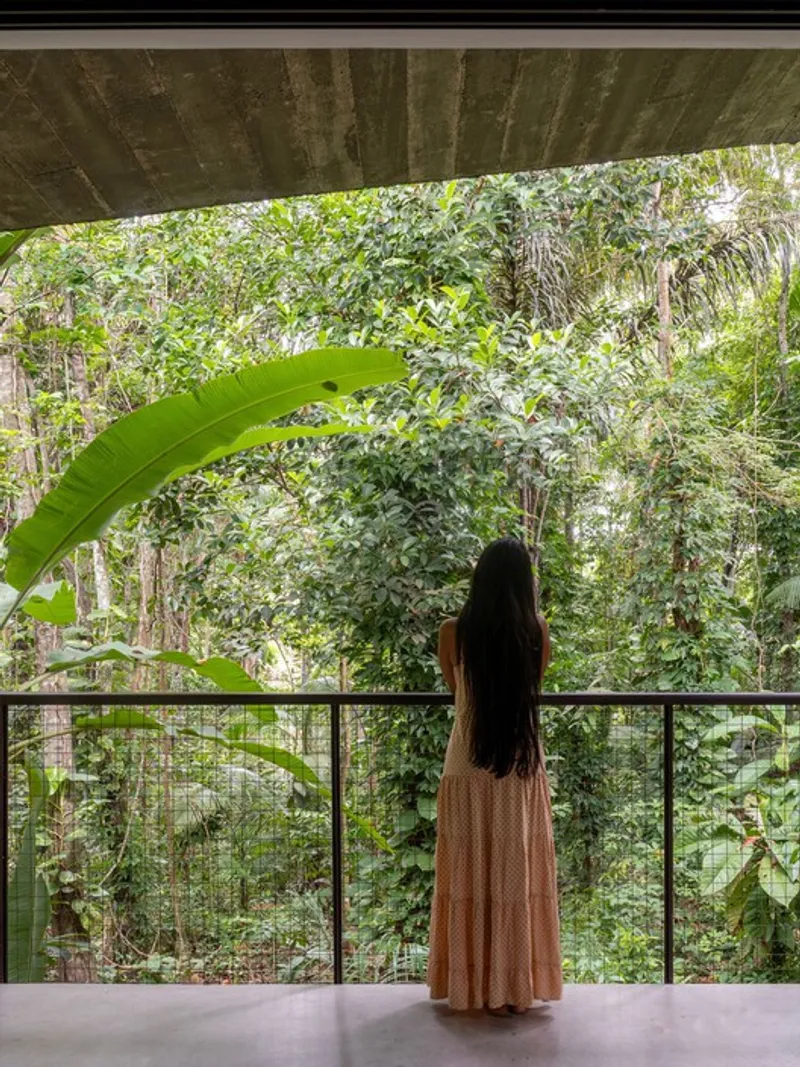
The spatial organization of the house departs from conventional layouts. The more intimate functions: bedrooms and offices: are located at the front of the plot, closer to the street, ensuring privacy and acoustic buffering. In contrast, the social spaces are placed toward the rear, slightly elevated to act as a lookout over the dense greenery. This elevation enhances views, ventilation, and the relationship between the interior and the protected landscape beyond.
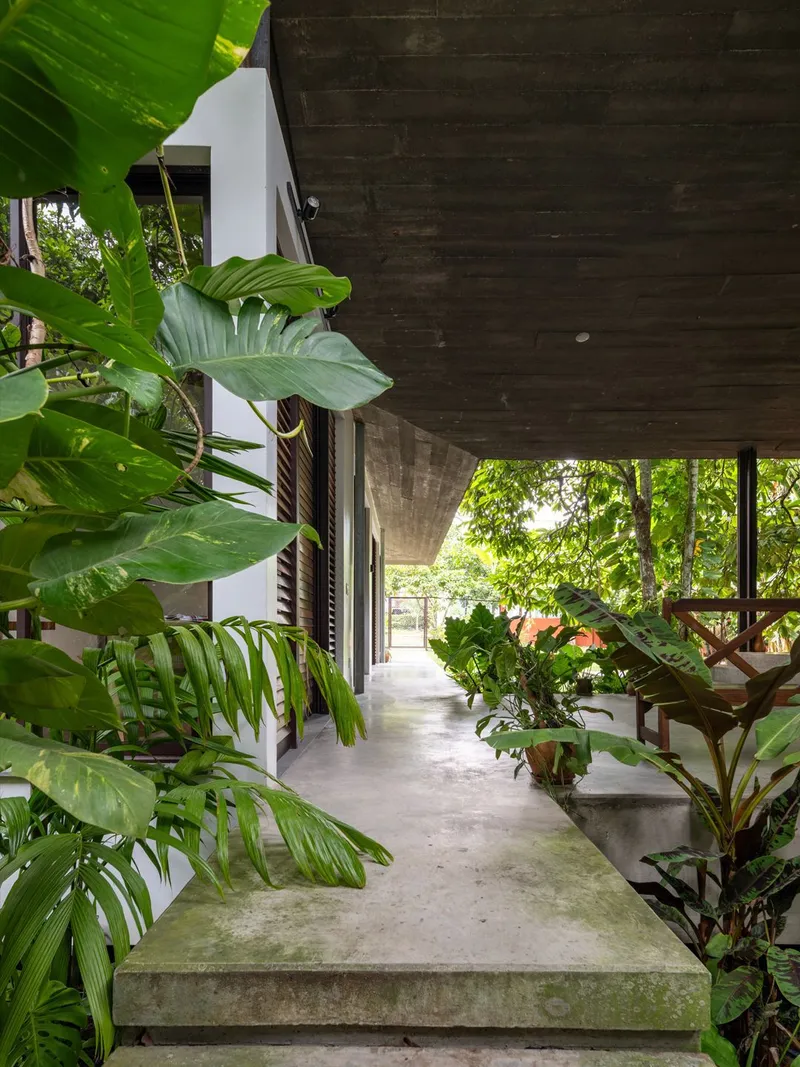
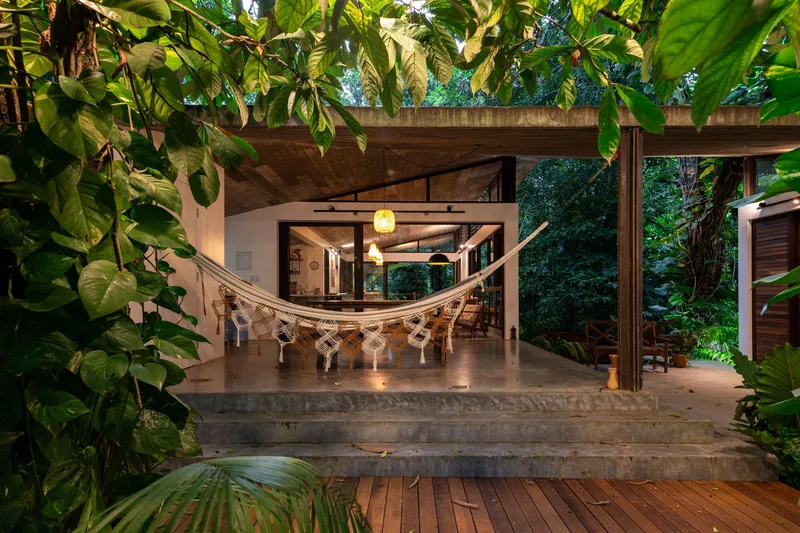
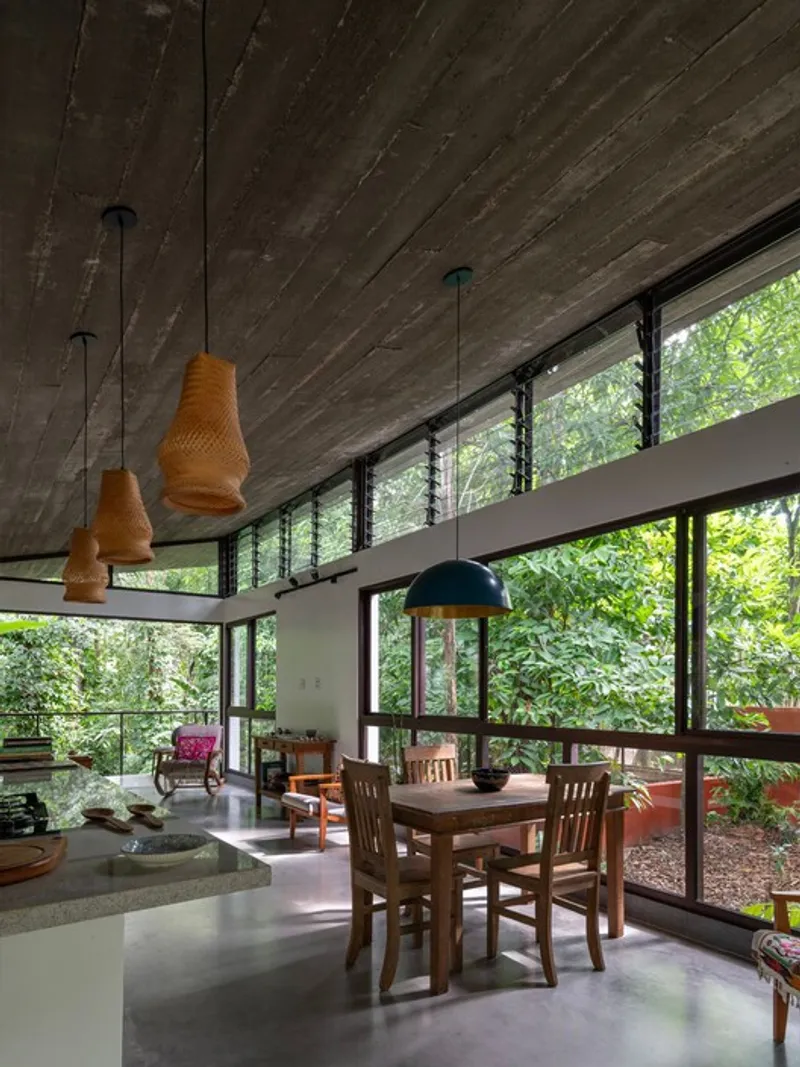
At the heart of the home lies a covered outdoor living space that acts as the central connector between all areas. This semi-open zone blurs the boundaries between inside and outside, encouraging a lifestyle closely tied to nature. Large glass openings, exposed wooden elements, and generous overhangs reinforce this sense of continuity, allowing light, air, and views to flow freely through the house.
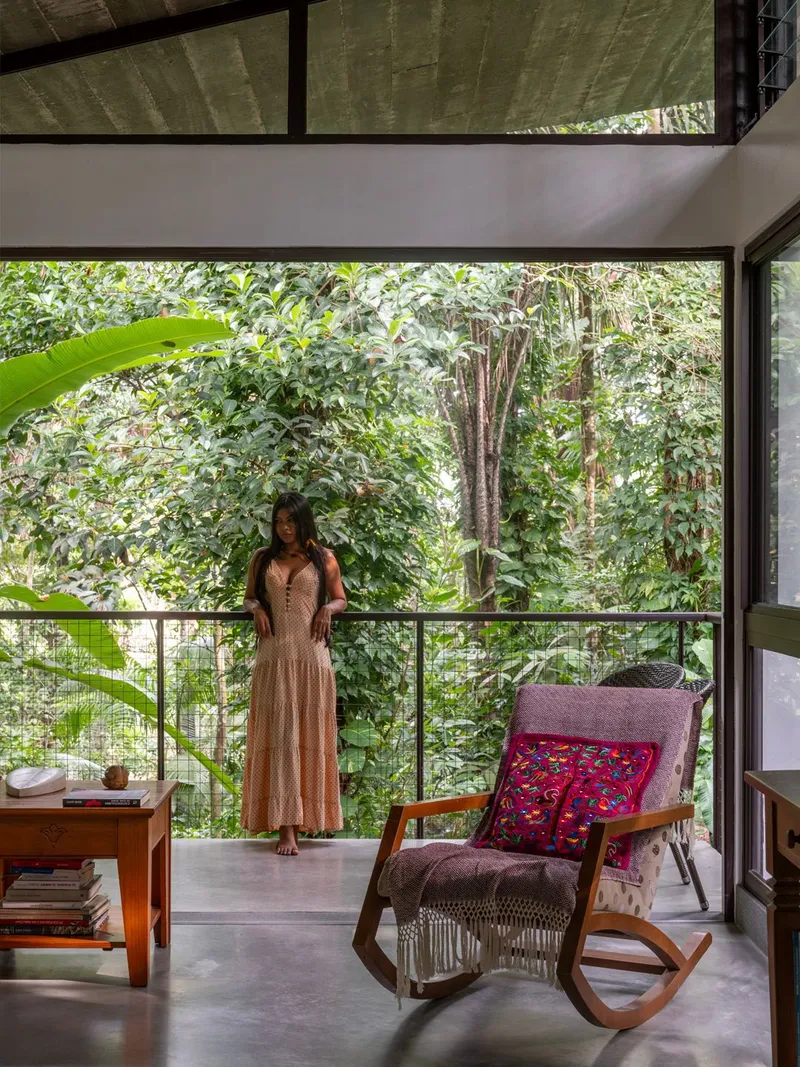
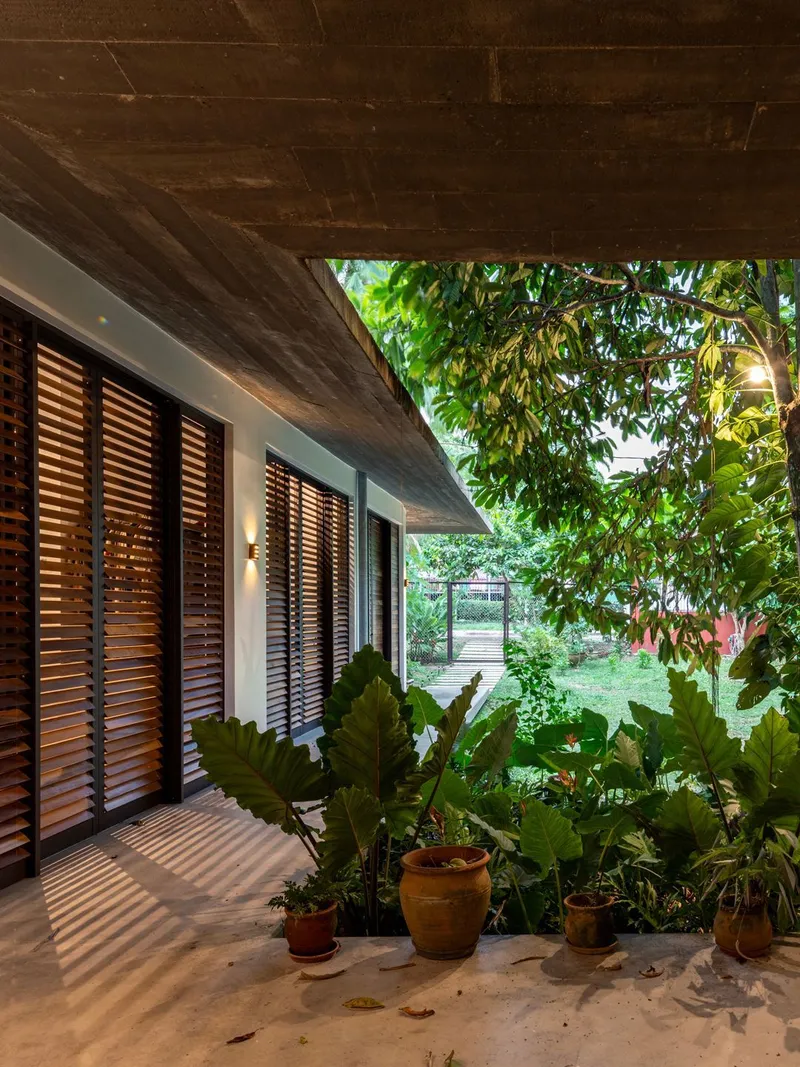
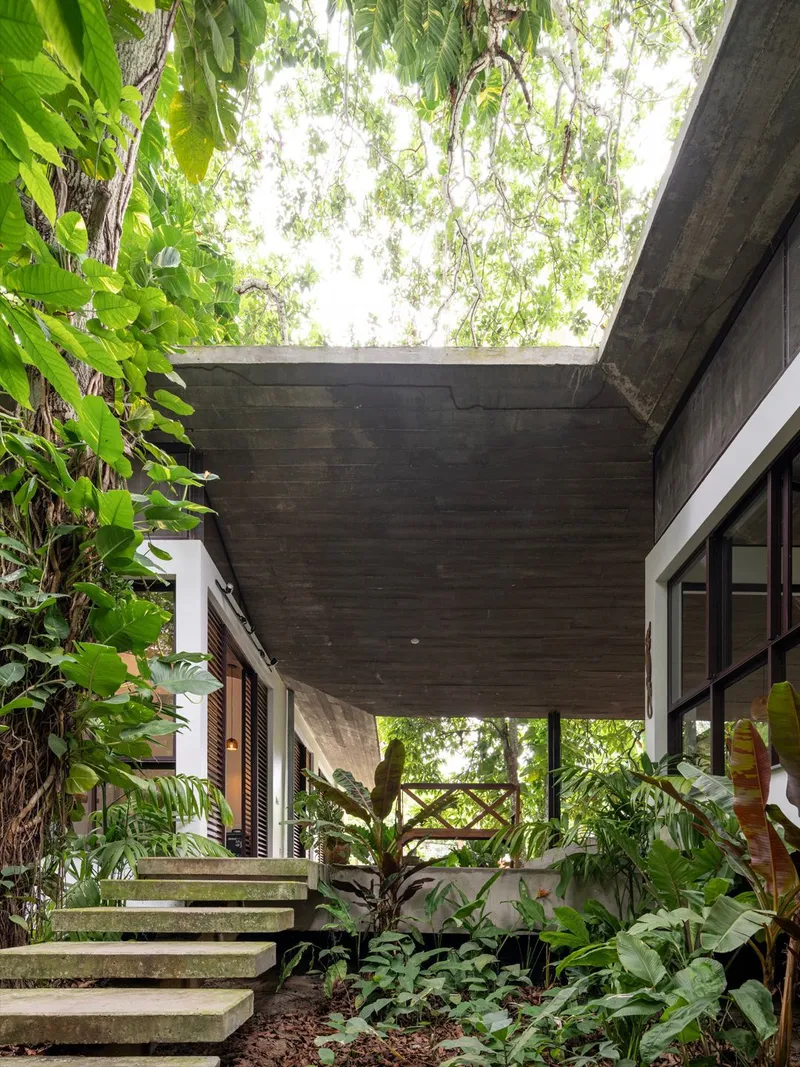
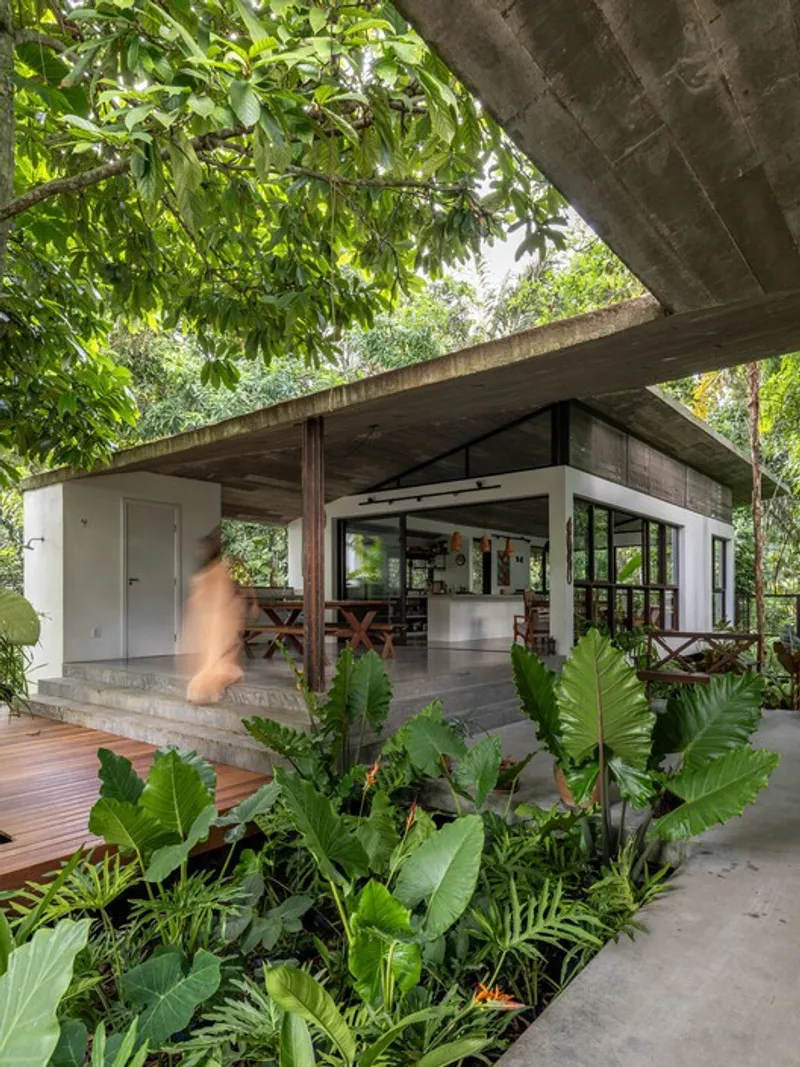
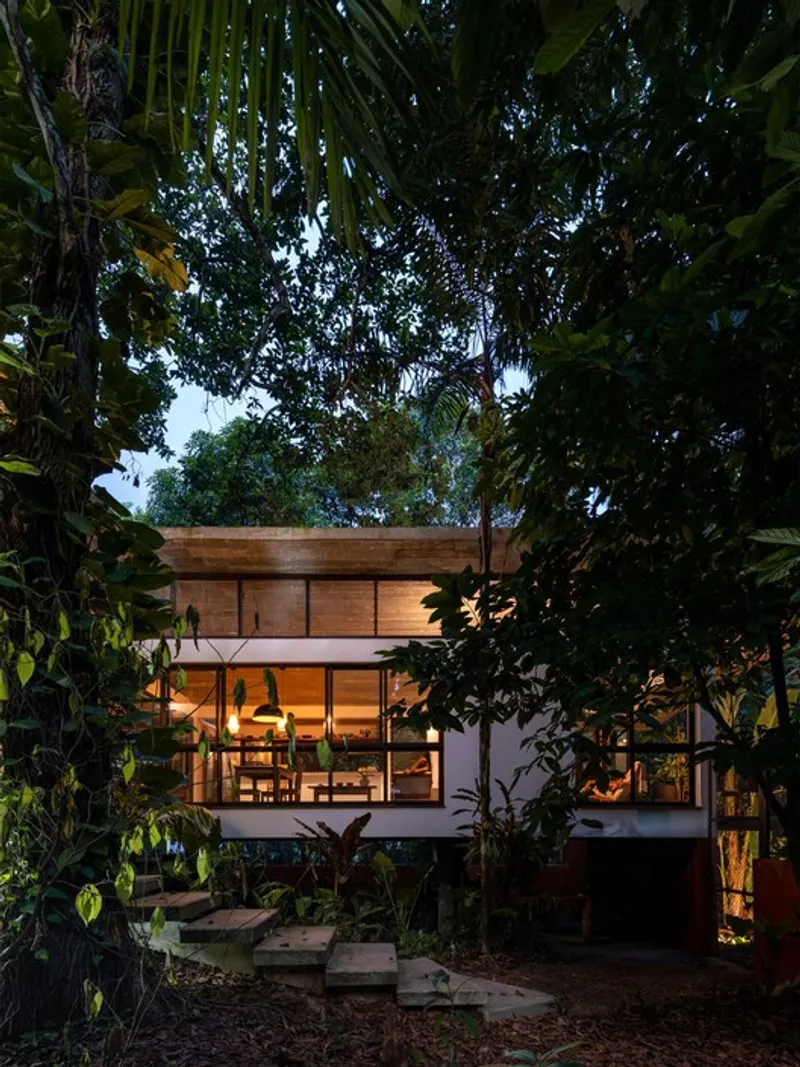
Materiality plays a crucial role in defining the atmosphere of Cajuí House. Wood is extensively used in interiors, bringing warmth and tactility, while exposed concrete adds structural clarity and thermal mass. The dining and living areas, framed by wooden beams and transparent glass walls, create a calm yet immersive environment where the forest becomes a constant backdrop.
Climate responsiveness is central to the design. To optimize cross-ventilation and solar protection, the roof was conceived as a large inclined concrete plane that follows the geometry of the house. Beyond its functional role, this roof transforms into an inhabitable surface: an elevated platform where residents can stargaze, relax, and experience the house from a unique vantage point above the canopy.
Sustainability is embedded through passive strategies rather than technological excess. The project includes a rainwater harvesting system for capturing, storing, and reusing water, significantly reducing environmental impact. By working with natural ventilation, shading, and water management, Cajuí House achieves strong environmental performance while respecting and preserving the surrounding forest ecosystem.
Ultimately, Cajuí House exemplifies tropical modern architecture at its most thoughtful: where form follows nature, indoor and outdoor spaces merge effortlessly, and sustainability becomes an integral part of daily life rather than an afterthought.
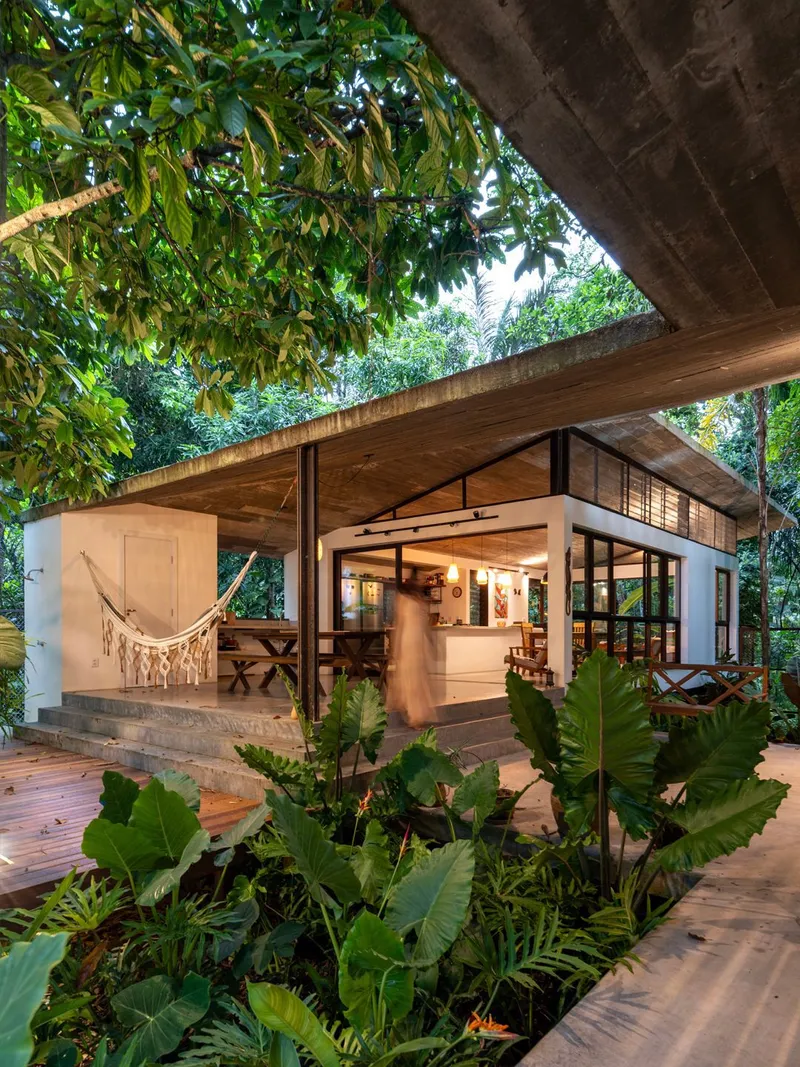
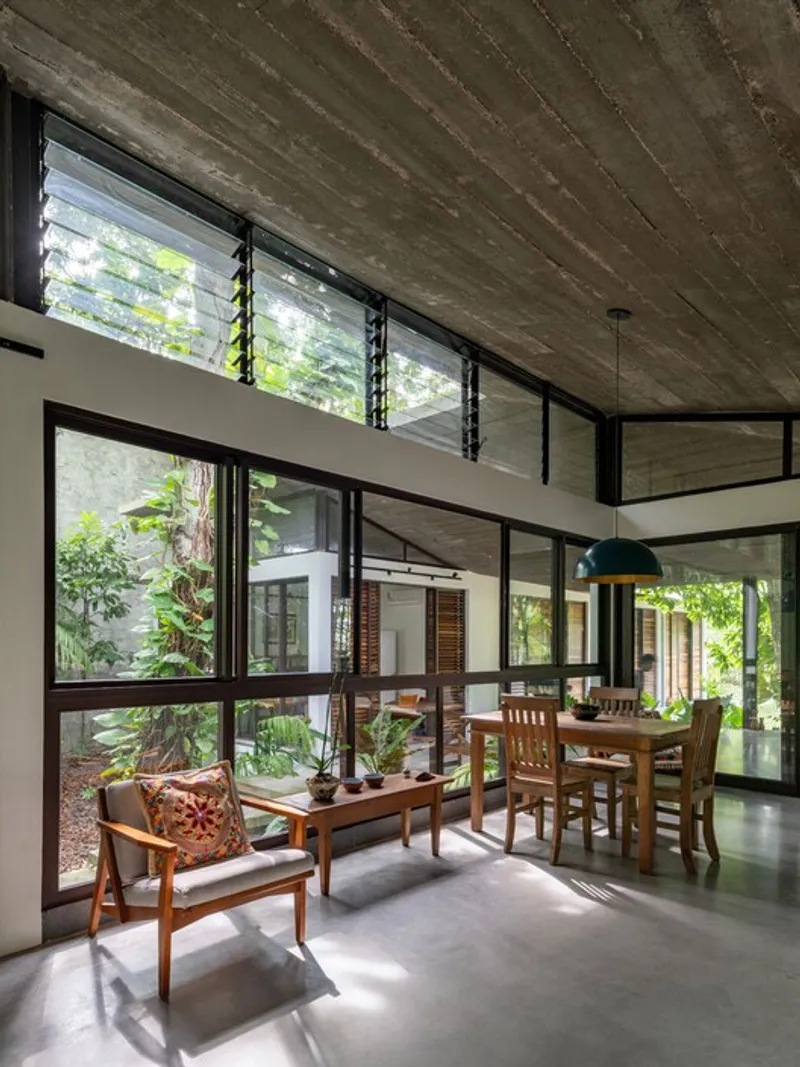
All the photographs are works of Susan Valentim



Popular Articles
Popular articles from the community


Co-Life: Senior Housing Design That Reconnects Older Adults With the City
Co-Life reimagines senior housing design through healing gardens, shared streets, workshops, and a sustainable community across generations.

The Musturak Paradise: Senior Living Architecture for a Connected Future in Temara, Morocco
The Musturak Paradise reimagines senior living architecture in Temara via private homes, social spaces, culture, community, and shared care.

Play: Fragments of Their World
Familiar architecture becomes modular playground design, creating safe spaces where displaced children can learn, connect, imagine and play.

Conexión: Biophilic Design Reimagines High-Rise Living in Hong Kong
Conexión reimagines high-rise living in Hong Kong through biophilic design, green facades, shared spaces, daylight, water and nature within.

Similar Reads
You might also enjoy these articles


Hodi-Mandai Geram
Project Function: Preservation and revitalization of the Intangible heritage and socio-spatial identity of the Hodi by Housing, Cultural Memory Center, Sacred Grove, landscape, local tourism economy


Olio Towers: A Mid-Rise for Performers That Fuses Housing, Rehearsal, and Stage
Located blocks from Houston's Theater District, this modular tower stacks living units around a central performance atrium.

Oasis: Modular Green Housing Carved into Dhaka's Urban Fabric
A shortlisted Plugin Housing entry reclaims unauthorized settlements in Dhaka with stepped concrete volumes, green roofs, and ventilation-driven design.

Black Hole: A Floating Megastructure for the Post-Physical Era
Emiliano Mazzarotto envisions a spherical, self-scaling arena where e-sports, digital hotels, and holographic stadiums replace traditional public space.


Explore Architecture Competitions
Discover active competitions in this discipline



Challenge to reimagine the Iron Throne


Photograph architecture without architects


Illustrate the lost glory of Angkor Wat - Render Challenge


Design challenge to reuse E-waste
Comments (0)
Please login or sign up to add comments
No comments yet. Be the first to comment!