
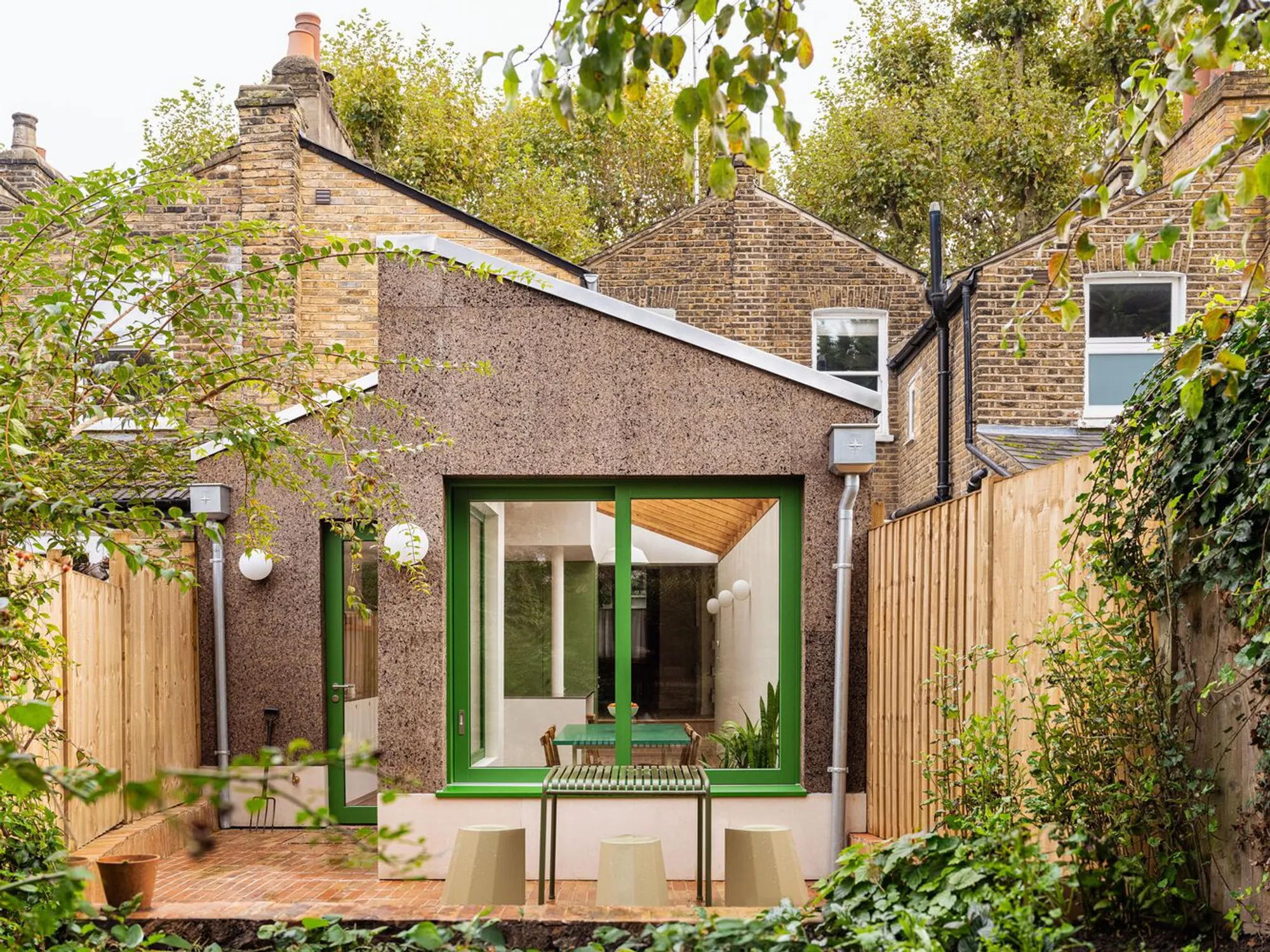
Camberwell Cork House: A Sustainable Victorian Terrace Transformation by Delve Architects
A sustainable cork-clad extension transforms a Victorian terrace into a bright, energy-efficient home with improved garden connection and modern, natural interiors.


Camberwell Cork House represents a forward-thinking approach to residential renovation, adaptive reuse, and low-carbon construction in urban London. Designed by Delve Architects, the project transforms a traditional Victorian terrace into a contemporary, energy-efficient home through a natural-materials-led rear extension, full refurbishment, and innovative use of cork cladding and insulation. With only 112 m² of total area and completed in 2023, the project demonstrates how sustainability, modern living, and architectural character can be harmoniously combined on a compact footprint.
Photographed by Fred Howarth, the home showcases warm materiality, enhanced energy performance, and a deeper connection between indoor spaces and the rear garden.
Redefining Victorian Living Through Low-Carbon Materials
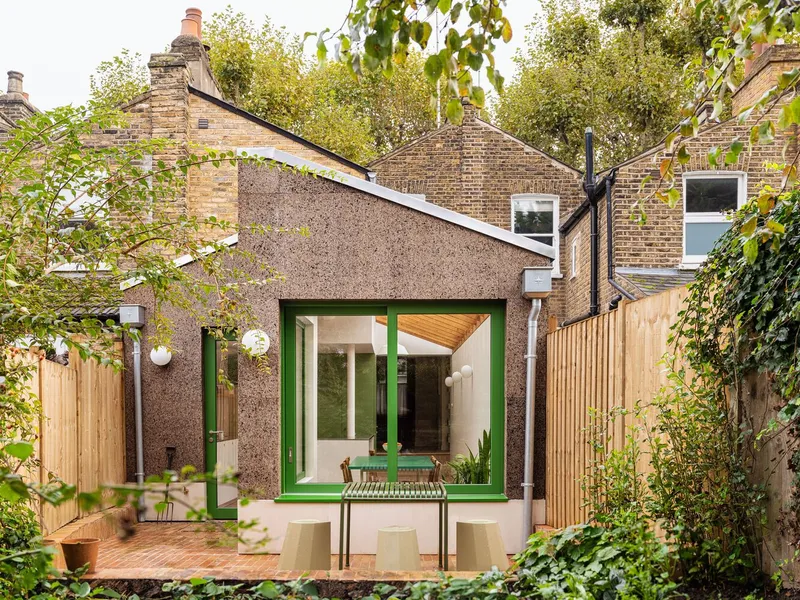
The homeowners, Theo and Emily, sought an extension that would not only expand the living space but also reflect their passion for contemporary design and environmentally conscious architecture. Their brief centered on enhancing garden connections, improving energy efficiency, and introducing a distinct material identity.
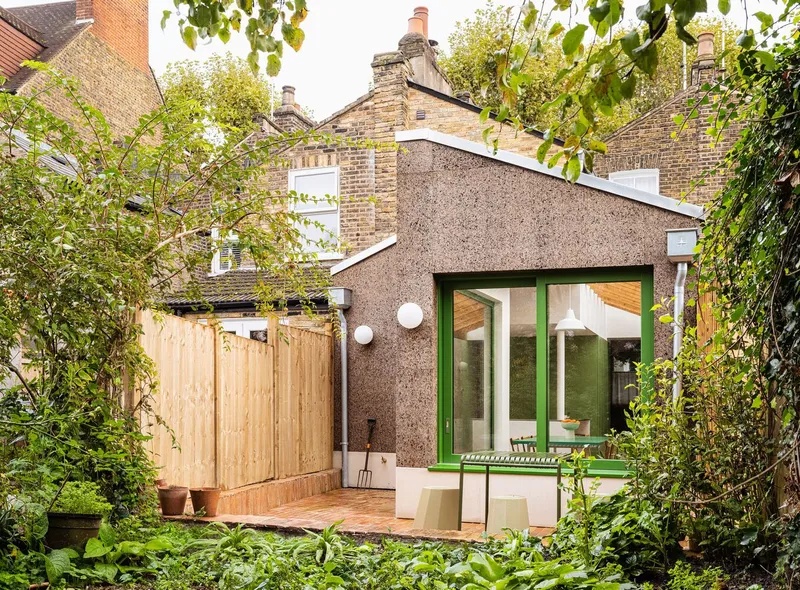
Delve Architects responded by designing a pitched-volume extension that echoes the original butterfly roof form of the house. Instead of conventional cladding, they opted for cork—a regenerative, carbon-sequestering material that delivers insulation, texture, and a unique visual signature. Used as both exterior cladding and insulation, cork significantly reduces carbon emissions while improving thermal performance.
This dual function makes the home a standout example of sustainable residential architecture in the United Kingdom, particularly in dense urban neighborhoods where environmental retrofits are increasingly essential.
A Fast and Efficient Transformation
The extension, completed in just 26 weeks, adds 20 m² of new interior space and elevates the overall environmental performance of the home. The project integrates:
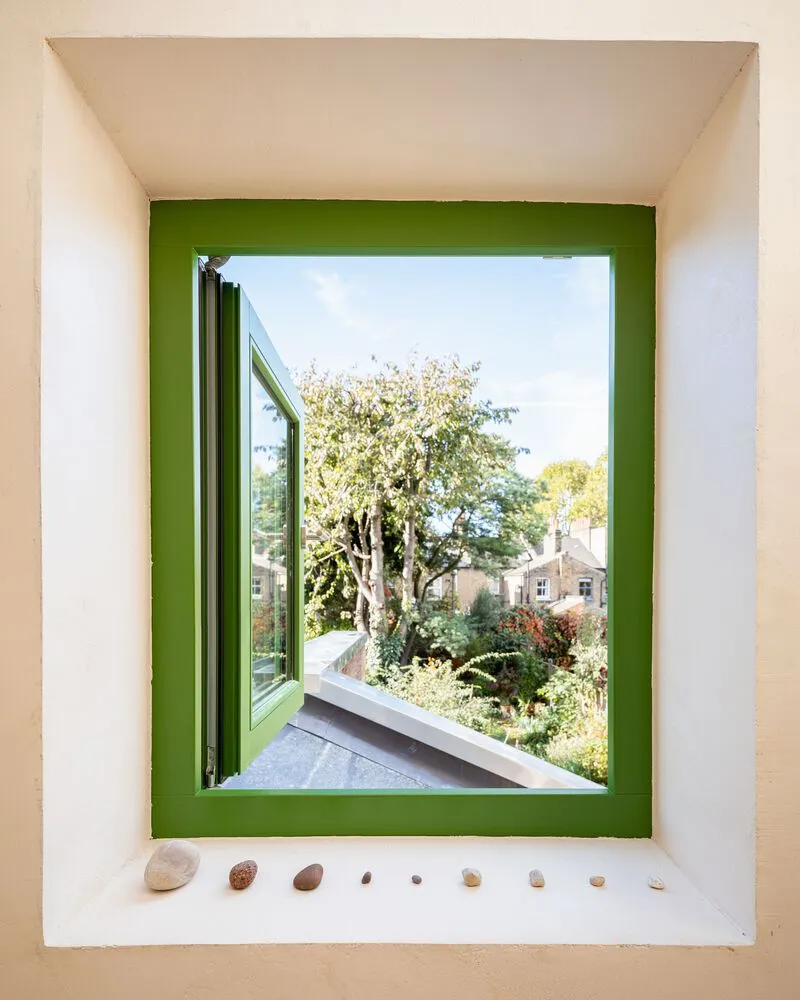
- Triple-glazed windows by Ecovia
- Low U-value construction assemblies
- High air-tightness detailing
- Cork cladding and cork insulation across the full rear façade
These choices minimize energy loss, reduce household bills, and contribute to long-term carbon reduction—a central goal for Delve Architects across their residential portfolio.
Innovative Cork Construction in a Domestic Setting
Cork’s distinctive texture, warmth, and natural aesthetic give the home a character that sets it apart from typical brick-and-glass extensions seen across London. Its regenerative nature aligns with the homeowners’ values, while its performance advantages meet the technical standards for domestic construction.
The material presented a unique challenge for the design team, requiring careful detailing to meet building regulations and deliver a tight, high-performing envelope. The result is a façade with depth, richness, and durability—all achieved through a fully sustainable approach.
Light-Filled Interiors and a Reimagined Living Experience
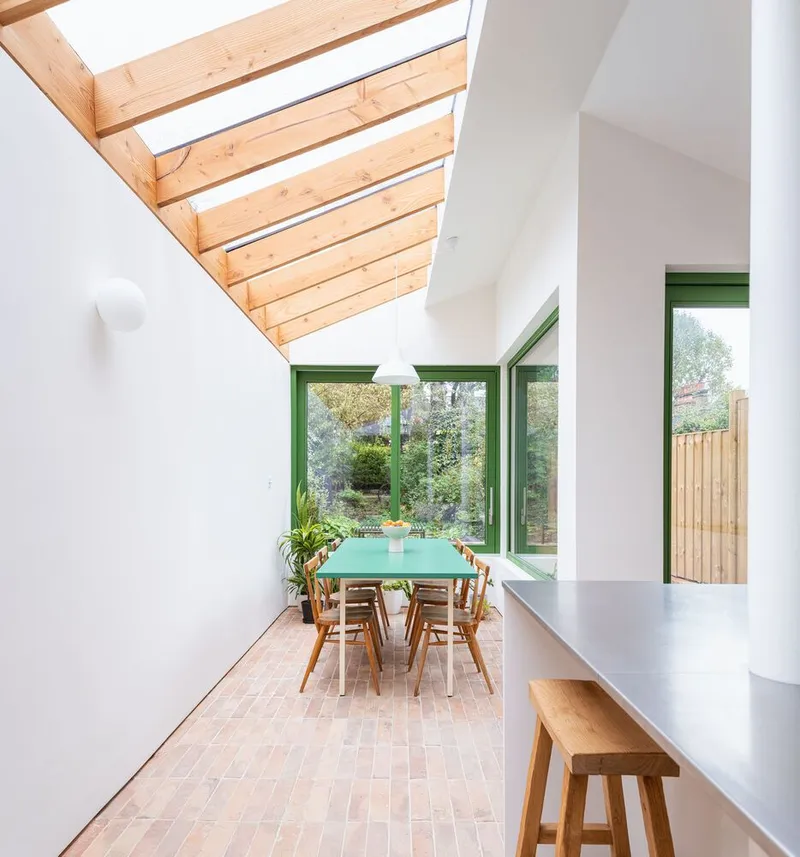
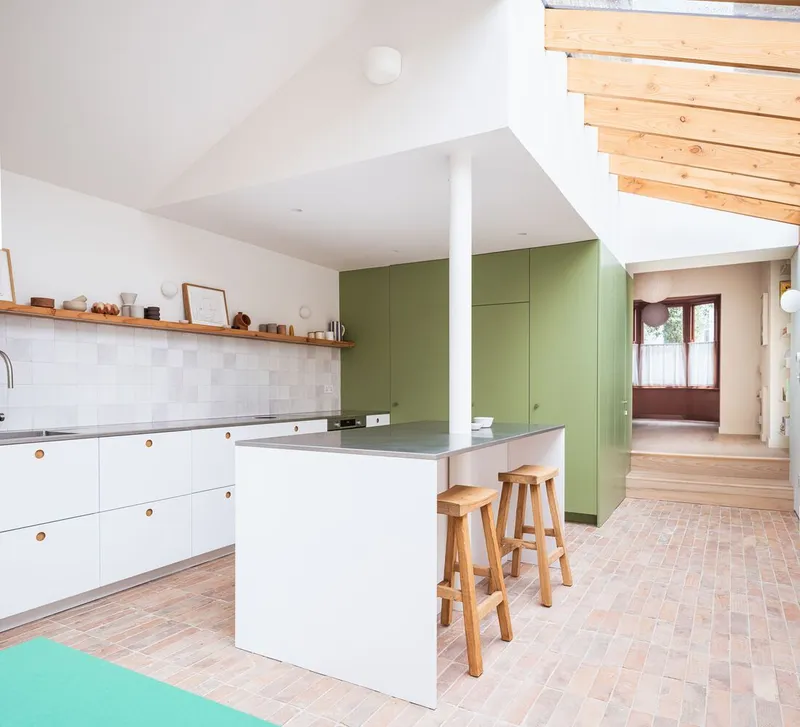
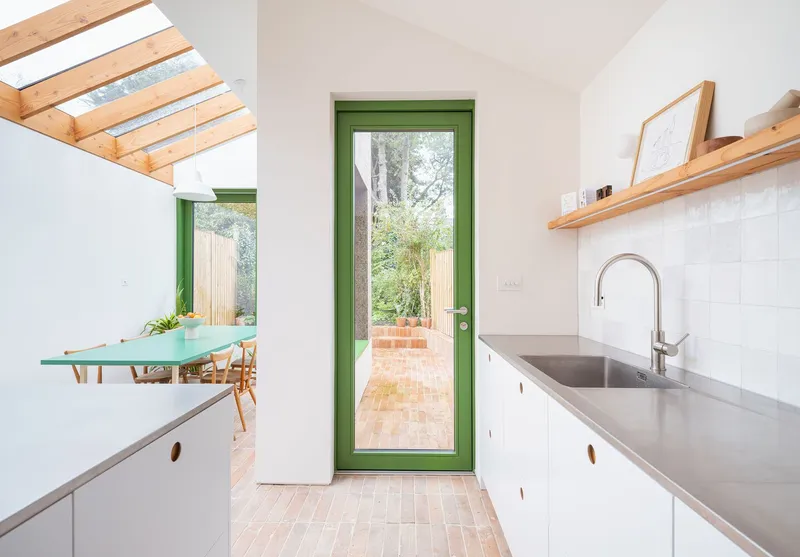
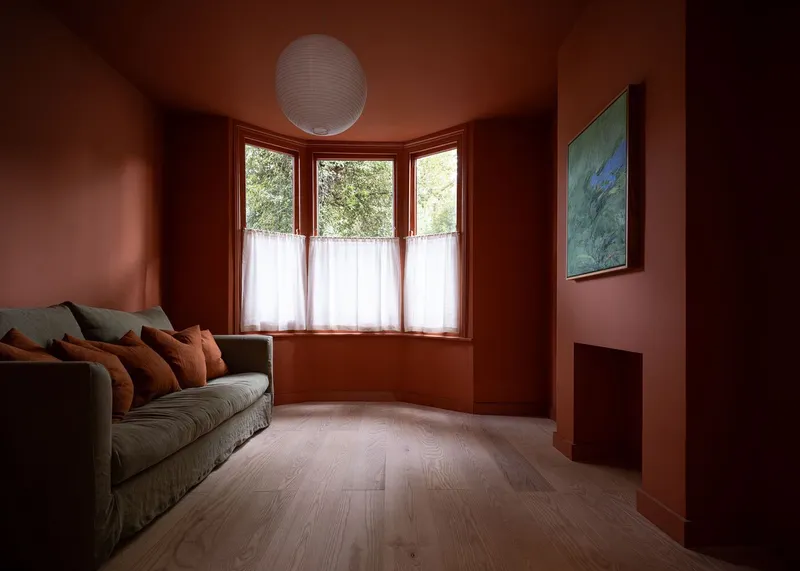
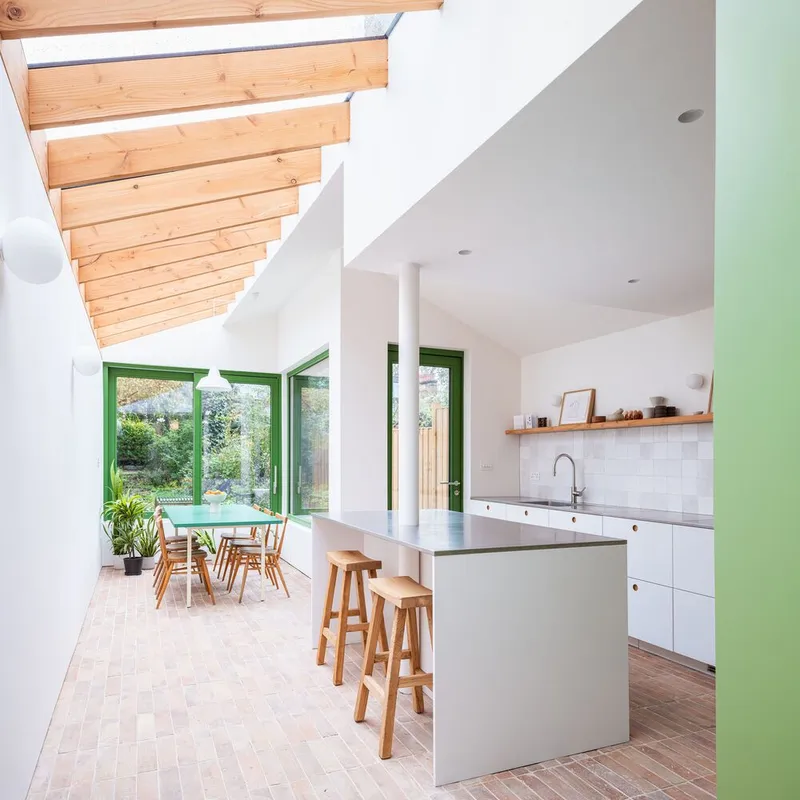
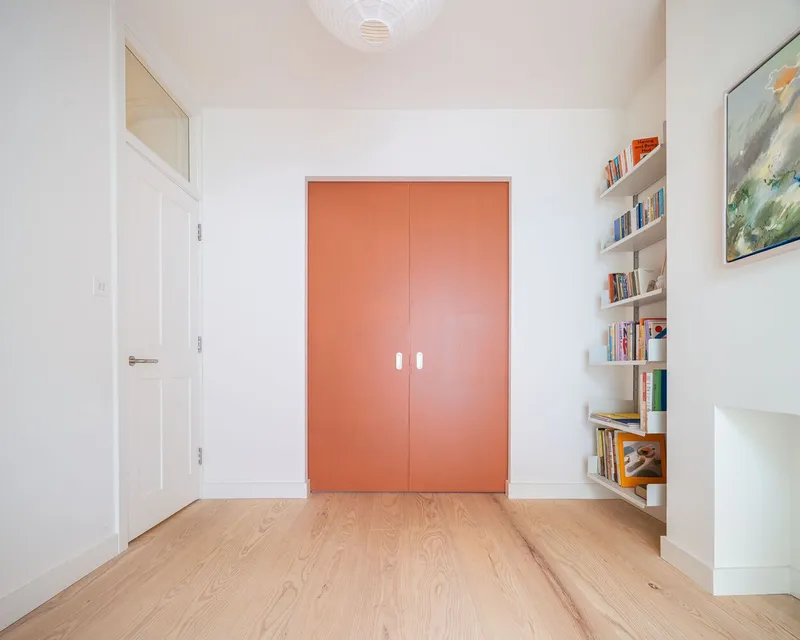
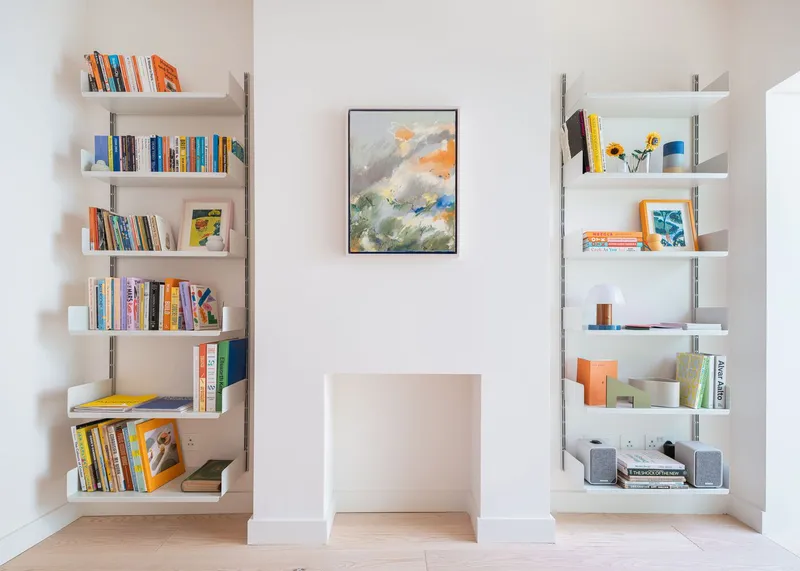
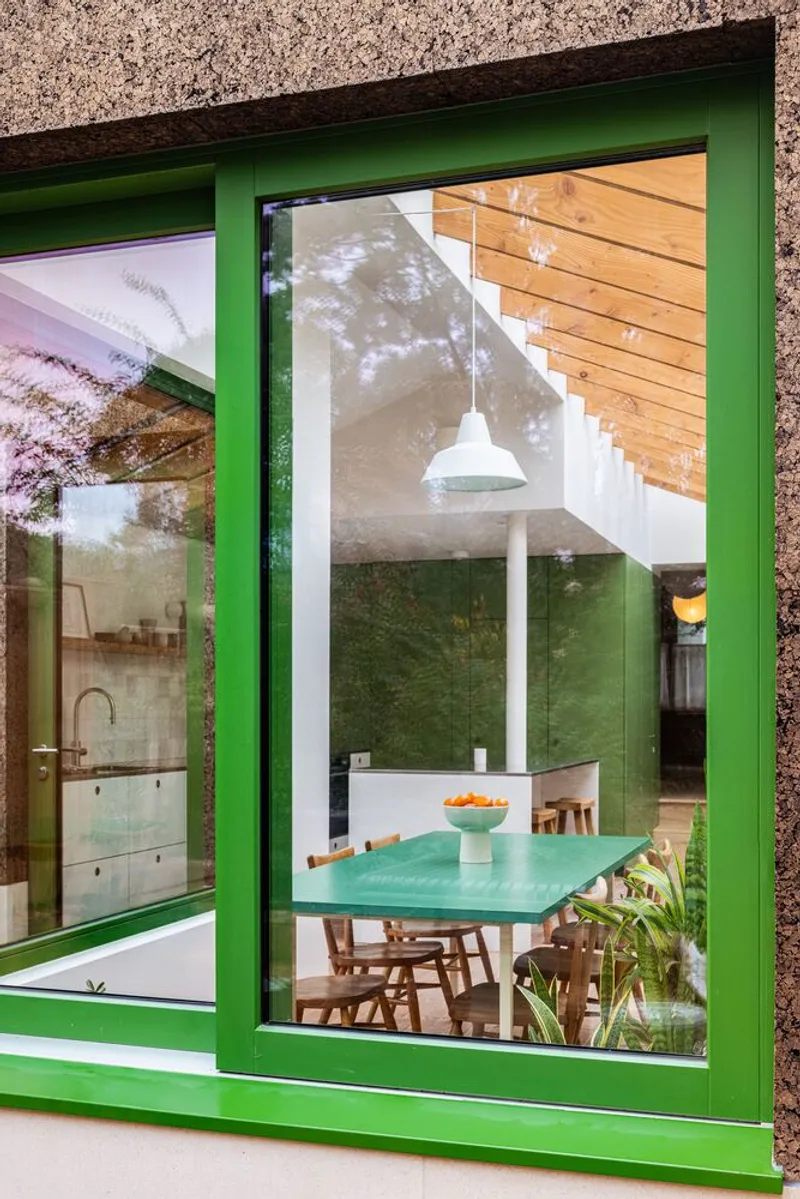
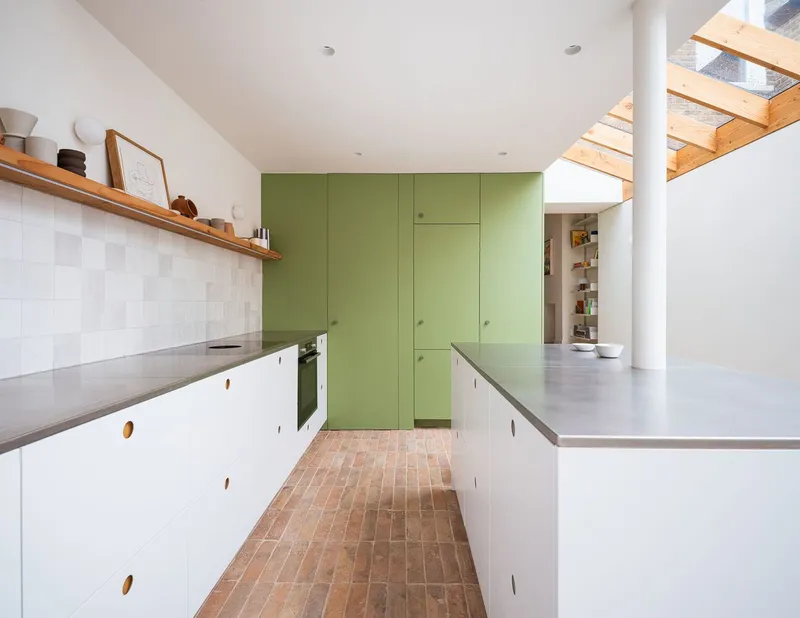
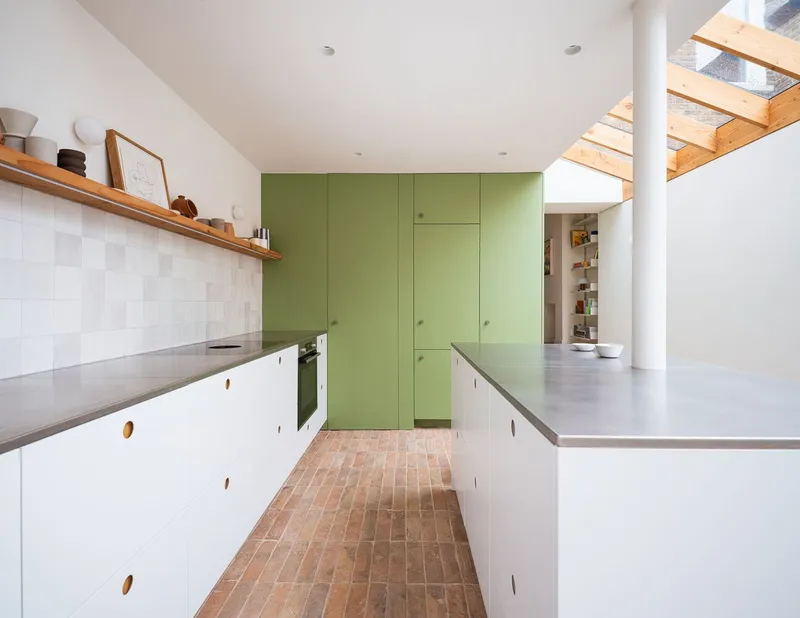
Beyond the exterior, the refurbishment transforms a once cramped rear room into a bright, fluid, and generously proportioned living environment. The new open-plan kitchen, designed by Delve, enhances day-to-day living while offering space for social gatherings, cooking, and connection with the outdoors.
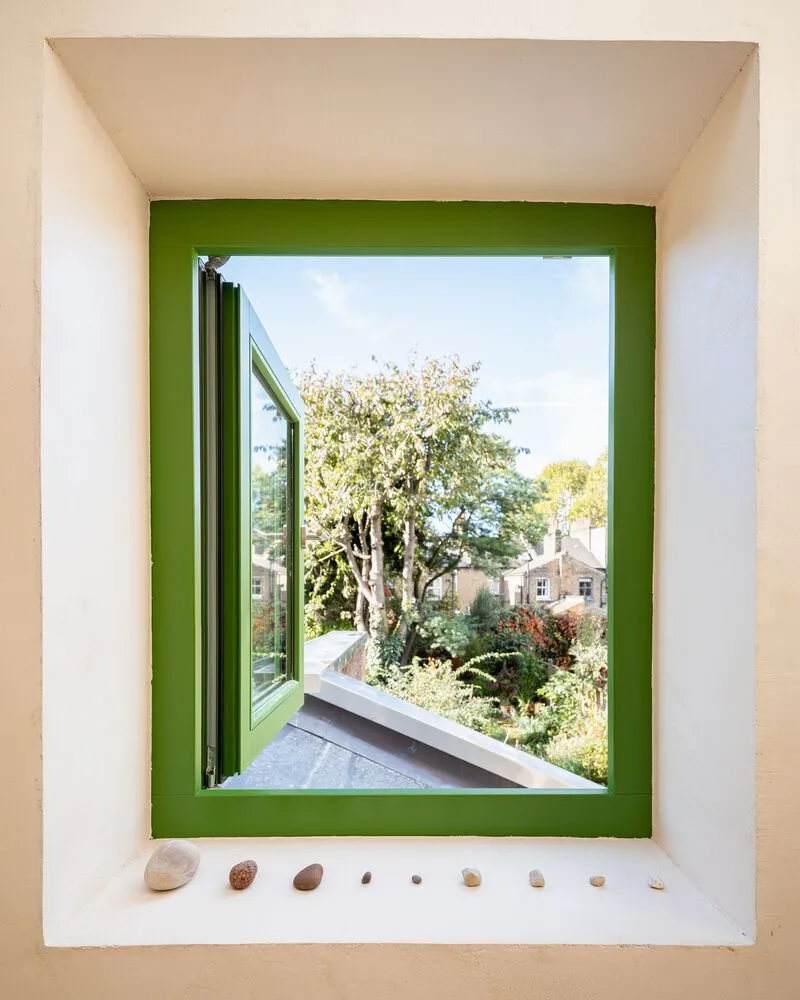
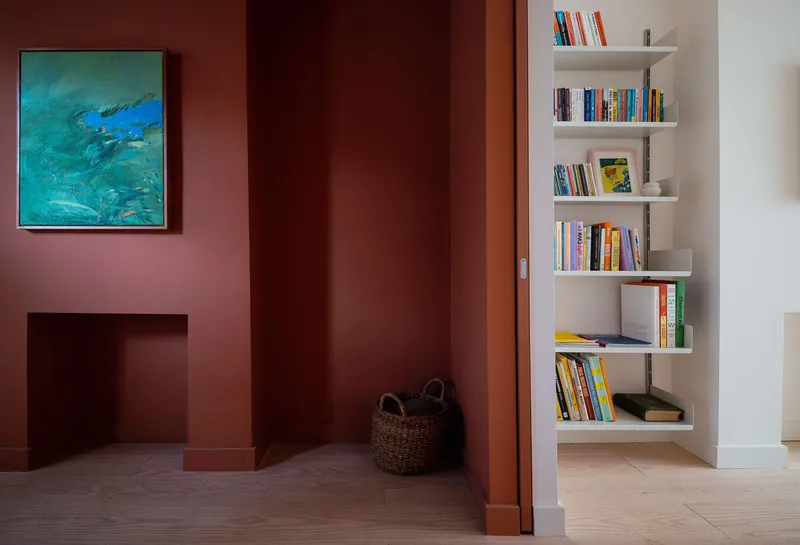
Large, triple-glazed openings frame views to the garden while ensuring excellent thermal control. The continuity between kitchen, dining area, and the adjoining lounge creates a calm and cohesive interior atmosphere, emphasizing natural light and material simplicity.
A Vision for Decarbonized Residential Architecture
Alex Raher of Delve Architects reflects on the project as a model for design-driven climate action:
“Camberwell Cork House demonstrates how you can creatively respond to the climate crisis with design-led solutions that deliver a better built environment for families. We always want to show how decarbonising can be done at any scale and loved the challenge of working with this natural material.”
All photographs are works of Fred Howarth


Popular Articles
Popular articles from the community


Co-life: Sustainable Architecture for Age-Friendly Community Living
Co-life reimagines sustainable architecture for seniors through courtyards, rammed earth, shared gardens, and spaces designed for belonging.

The Earth Pod: 3D Printed Homes for Resilient Refugee Communities
The Earth Pod reimagines refugee housing through 3D printed homes made from clay, combining resilience, self-sufficiency, and rapid shelter.

The Ocean Hive: Sustainable Architecture for a Self-Sufficient Civilization at Sea
The Ocean Hive imagines sustainable architecture at sea, where modular habitats, algae, wave power and ocean waste sustain a growing colony.

Conexión: Biophilic Design Reimagines High-Rise Living in Hong Kong
Conexión reimagines high-rise living in Hong Kong through biophilic design, green facades, shared spaces, daylight, water and nature within.


Similar Reads
You might also enjoy these articles


Hodi-Mandai Geram
Project Function: Preservation and revitalization of the Intangible heritage and socio-spatial identity of the Hodi by Housing, Cultural Memory Center, Sacred Grove, landscape, local tourism economy


Olio Towers: A Mid-Rise for Performers That Fuses Housing, Rehearsal, and Stage
Located blocks from Houston's Theater District, this modular tower stacks living units around a central performance atrium.

Oasis: Modular Green Housing Carved into Dhaka's Urban Fabric
A shortlisted Plugin Housing entry reclaims unauthorized settlements in Dhaka with stepped concrete volumes, green roofs, and ventilation-driven design.

Black Hole: A Floating Megastructure for the Post-Physical Era
Emiliano Mazzarotto envisions a spherical, self-scaling arena where e-sports, digital hotels, and holographic stadiums replace traditional public space.

Explore Housing Competitions
Discover active competitions in this discipline



Challenge to reimagine the Iron Throne


Photograph architecture without architects


Illustrate the lost glory of Angkor Wat - Render Challenge


Design challenge to reuse E-waste
Comments (0)
Please login or sign up to add comments
No comments yet. Be the first to comment!