

Camellia Complex: Estudio I LZ's Mixed-Use Solution for High-Density Urban Living in Villa Allende
A compact mixed-use complex combining six two-bedroom homes and a transparent commercial unit, maximizing space, light, and urban connectivity in Villa Allende.


Located in the evolving urban fabric of Villa Allende, Argentina, the Camellia Residential and Commercial Complex by Estudio I LZ reinterprets compact living through a thoughtful balance of density, comfort, and contemporary spatial design. Completed in 2021 and spanning 430 m², the project integrates six two-bedroom homes with a dedicated commercial unit, creating a mixed-use development that aligns with the city’s growing demand for central, efficient, and connected living spaces.
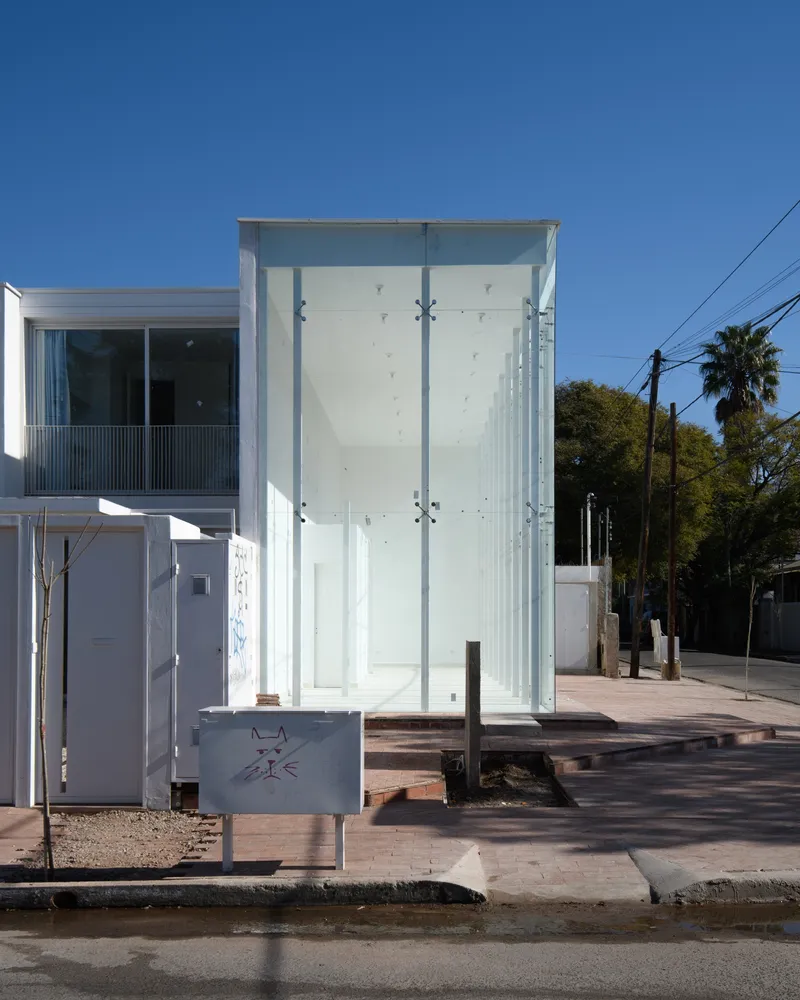
Urban Context & Design Approach
Set on a 600 m² plot north of Villa Allende’s central district, the complex is surrounded by residential architecture undergoing continuous renewal. Its privileged location—steps away from shops, services, and public infrastructure—makes it ideal for young families, professionals, and local businesses seeking proximity and convenience.
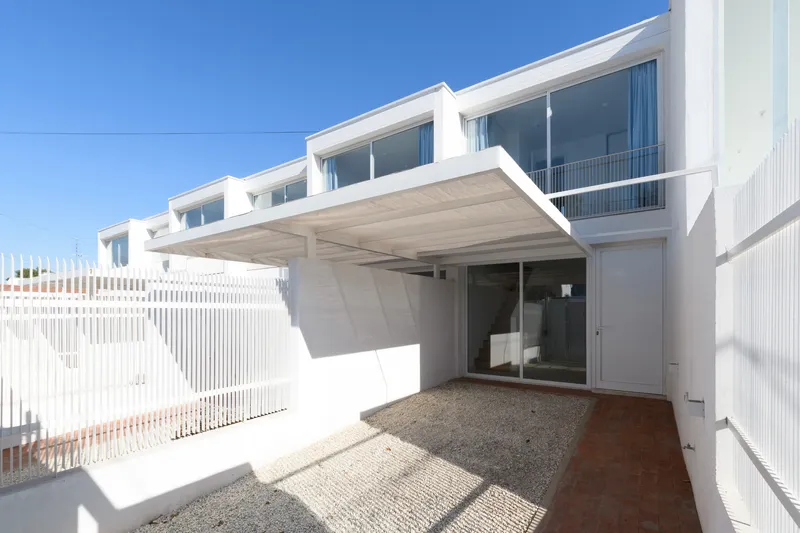


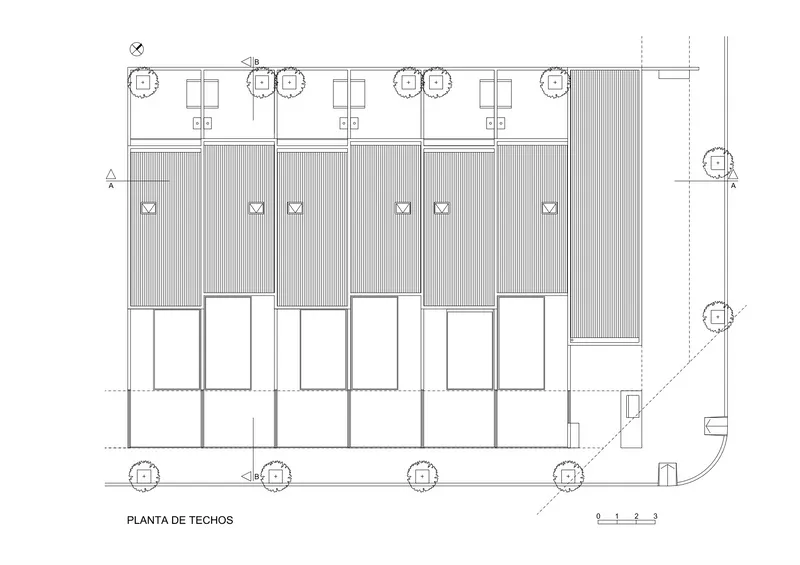
The design challenge was to achieve high-quality architecture within a compact footprint, ensuring comfort, functionality, and spatial generosity without compromising density. Estudio I LZ accomplished this by organizing the units into a single staggered volume, subtly stepping along the natural slope of the street. This move generates visual rhythm, varied shadows, and a façade that resonates with the topographic character of the site.

Residential Units: Spatial Efficiency & Domestic Comfort
Each of the six homes measures 65 m², distributed across two levels:
- Upper Floor (Private Zone)Two bedrooms and a well-appointed bathroom shape an intimate, quiet space shielded from street activity.
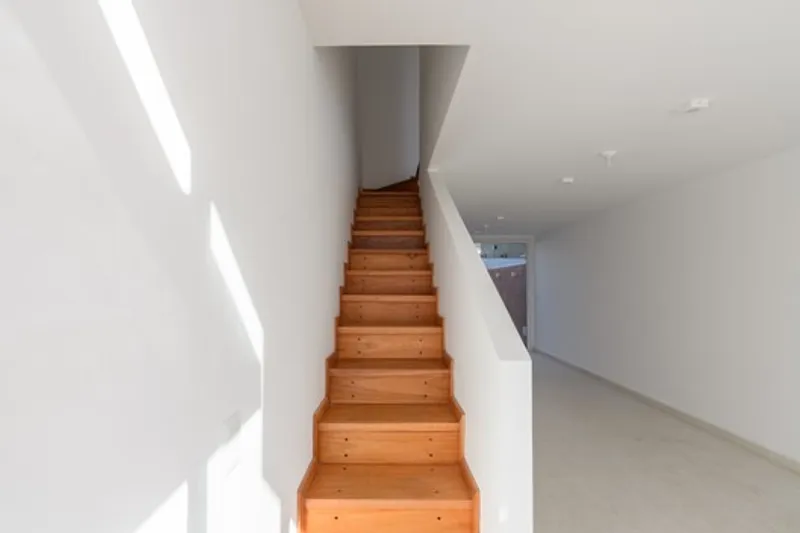
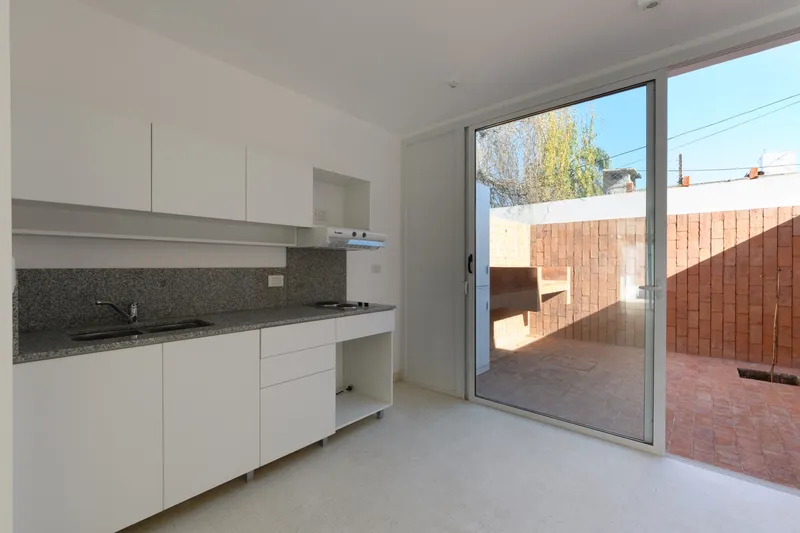
- Ground Floor (Social Zone)A fluid, flexible layout integrates the kitchen, dining, and living areas into a continuous “tube-like” space that visually and functionally connects the front and rear courtyards.The front courtyard, also used as a garage, references the traditional entrance patios found in local housing.The rear patio offers private outdoor space for recreation, greenery, or relaxation.
- The front courtyard, also used as a garage, references the traditional entrance patios found in local housing.
- The rear patio offers private outdoor space for recreation, greenery, or relaxation.


This dual-courtyard strategy enhances natural light, cross ventilation, and spatial expansion—elements essential in compact living typologies.

Commercial Space: Transparency & Urban Activation
Facing the street corner, the 70 m² commercial unit introduces openness and activity. Designed as a transparent glass box, it completes the block’s corner, anchors the complex visually, and provides flexibility for various business programs. A mezzanine increases its versatility, while two service bathrooms support functional use.

Materiality & Architectural Language
The project's architectural language is rooted in simplicity, uniformity, and natural expression:
- White façades create visual calm, unity, and spaciousness.
- Granite mosaic, wood, and brick flooring introduce authenticity, durability, and texture.
- A traditional load-bearing masonry system paired with a metal roof structure ensures robustness, cost-efficiency, and ease of maintenance.

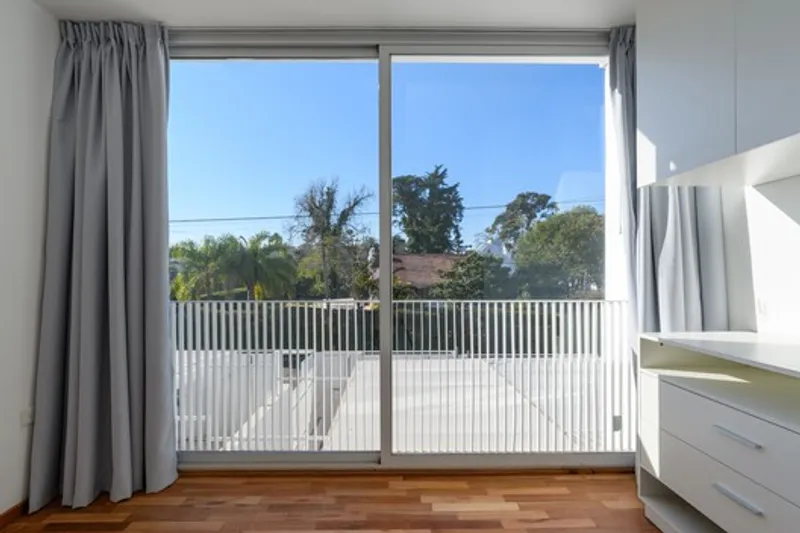
Subtle volumetric shifts on the upper floor generate a dynamic play of light and shadow, enhancing the development’s character while maintaining coherence across the ensemble.

An Urban Housing Model for Contemporary Living
The Camellia Complex emerges as a thoughtful response to the evolving needs of Villa Allende’s central district. By combining compact housing, commercial functionality, and contextual sensitivity, Estudio I LZ delivers a model that optimizes land use while respecting residential quality. Its clean lines, balanced material palette, and intelligent spatial sequencing exemplify human-centered, scalable architecture for growing urban environments.


All the Photographs are works of Gonzalo Viramonte



Popular Articles
Popular articles from the community


The Musturak Paradise: Senior Living Architecture for a Connected Future in Temara, Morocco
The Musturak Paradise reimagines senior living architecture in Temara via private homes, social spaces, culture, community, and shared care.
EW PARK: Sustainable Architecture Reimagines the Future of Urban Parking
EW PARK reimagines city parking as a modular wooden tower combining automation, solar energy, electric mobility, and adaptable urban design.

Hill & Cross Opera: Sculptural Opera House Architecture Shaped by Tallinn’s Landscape and Identity
Hill & Cross Opera reimagines opera house architecture in Tallinn through its sculptural hill, civic plaza, glass wave and a luminous cross.

Riyadh For All: Intergenerational Urban Design for Active Aging in Rabat
Riyadh For All reimagines urban design in Rabat with intergenerational co-living, adaptive courtyards, and Moroccan cultural exchange today.


Similar Reads
You might also enjoy these articles


Hodi-Mandai Geram
Project Function: Preservation and revitalization of the Intangible heritage and socio-spatial identity of the Hodi by Housing, Cultural Memory Center, Sacred Grove, landscape, local tourism economy


Olio Towers: A Mid-Rise for Performers That Fuses Housing, Rehearsal, and Stage
Located blocks from Houston's Theater District, this modular tower stacks living units around a central performance atrium.

Oasis: Modular Green Housing Carved into Dhaka's Urban Fabric
A shortlisted Plugin Housing entry reclaims unauthorized settlements in Dhaka with stepped concrete volumes, green roofs, and ventilation-driven design.

Black Hole: A Floating Megastructure for the Post-Physical Era
Emiliano Mazzarotto envisions a spherical, self-scaling arena where e-sports, digital hotels, and holographic stadiums replace traditional public space.

Explore Residential Complex Competitions
Discover active competitions in this discipline



Challenge to reimagine the Iron Throne


Photograph architecture without architects


Illustrate the lost glory of Angkor Wat - Render Challenge


Design challenge to reuse E-waste
Comments (0)
Please login or sign up to add comments
No comments yet. Be the first to comment!