
CARBON: A Radical Exploration of Urban Regeneration Architecture in Paris
A modular urban regeneration architecture transforming Paris’ forgotten railway into a flexible, inclusive public space for all generations.


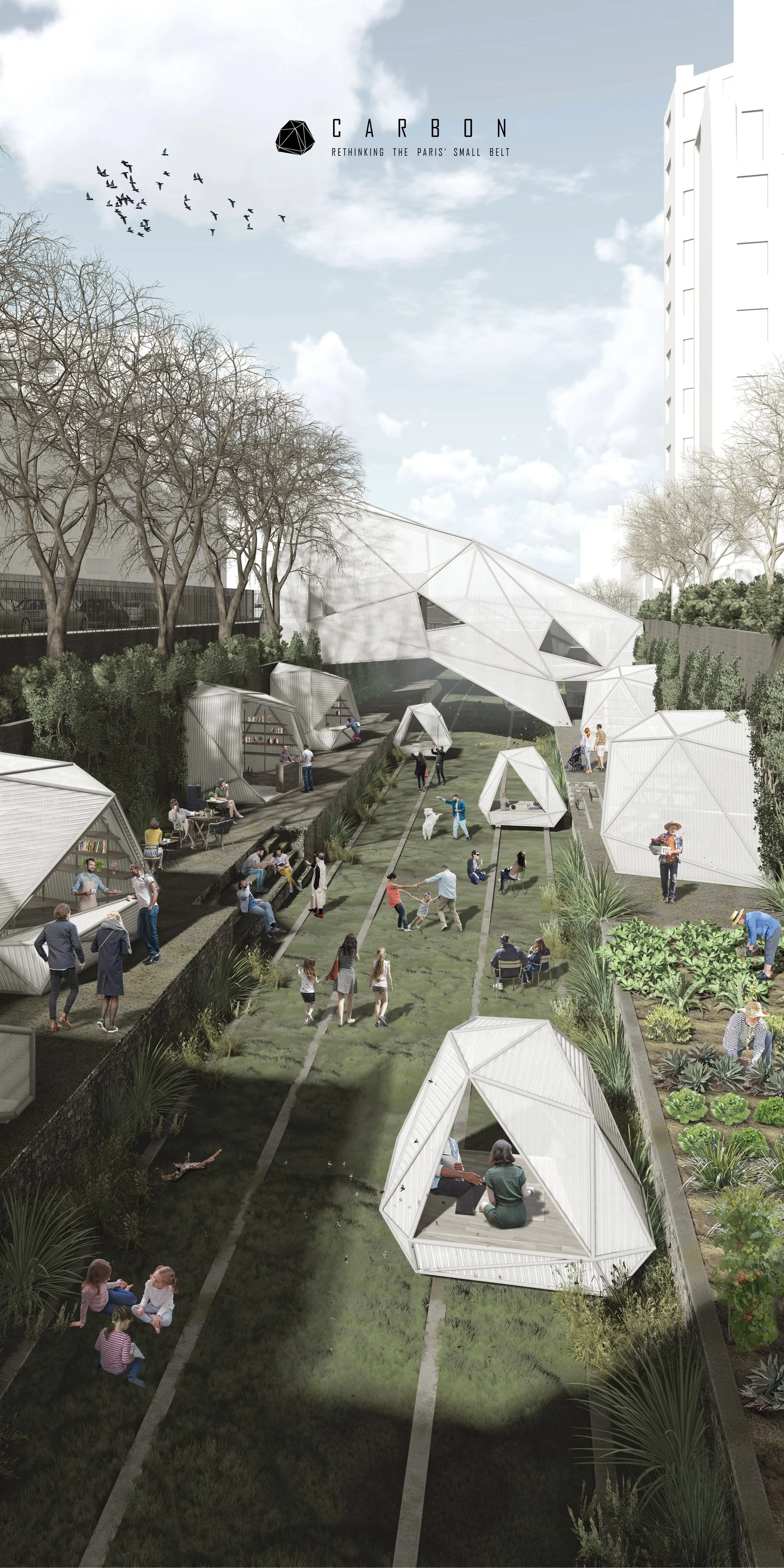
In contemporary cities, abandoned infrastructures often remain as silent voids within dense urban fabrics. The CARBON project, a runner-up entry of Salut Paris by Kévin PETITJEAN, repositions this condition through a compelling lens of urban regeneration architecture. Located along the historic Petite Ceinture railway in Paris, the proposal transforms a neglected linear corridor into a dynamic, inclusive, and adaptive public realm.
Rather than imposing a rigid masterplan, CARBON introduces a system-based architectural strategy that responds to time, users, and context. It is not a static intervention but an evolving urban ecosystem.
Concept: A Programmatic Bridge Across Generations
At its core, CARBON establishes a symbolic and physical bridge. It connects not only the two banks of the railway corridor but also different generations, communities, and urban conditions. The project reframes the site as a shared civic platform where interaction, participation, and coexistence become central.
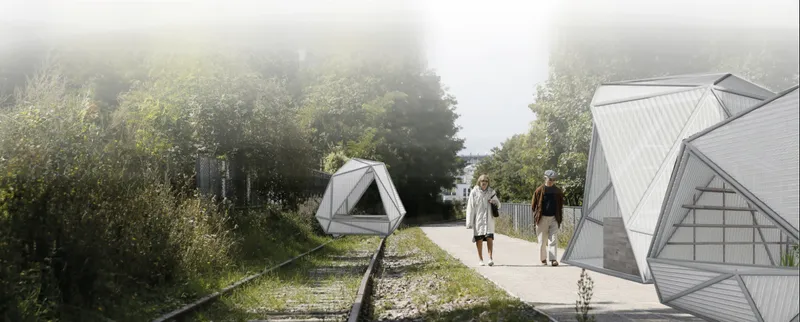
The architectural language draws inspiration from the industrial history of the Petite Ceinture. The modular structures resemble fragments of coal, referencing the railway’s legacy of transporting resources into the city. This metaphor grounds the project historically while projecting it into a sustainable future.
Urban Regeneration Architecture Through Modularity
A defining aspect of this urban regeneration architecture is its modular system. Each architectural unit is designed as a lightweight, removable, and reconfigurable element. These modules can be assembled, disassembled, and relocated across different sections of the railway, ensuring long-term adaptability.
The structural system uses recyclable steel frameworks combined with polycarbonate envelopes. This approach ensures durability while maintaining flexibility in form and use. The modules function across multiple scales:
- Urban furniture moving along the railway tracks
- Temporary and permanent market stalls
- Enclosed spaces for community programs
- A central youth center acting as the main anchor
This modular logic allows the project to evolve organically, adapting to changing social and spatial demands without requiring demolition or permanent alteration.
Breaking Linearity: Spatial Strategy of the Site
The Petite Ceinture is inherently linear, a characteristic that often limits spatial diversity. CARBON addresses this constraint through strategic interruptions and transverse insertions.
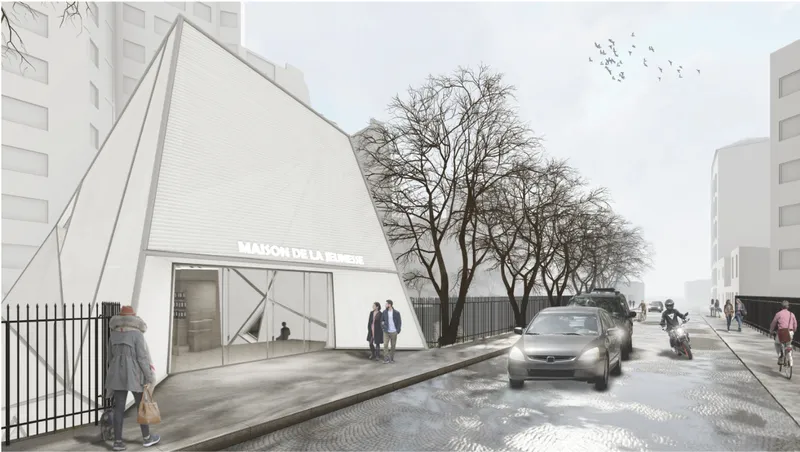
The youth center acts as a pivotal architectural intervention that cuts across the linear axis, creating moments of pause, gathering, and interaction. Around it, smaller modules are distributed along the tracks, reinforcing the linearity while simultaneously activating it.
This dual strategy ensures that the site is both continuous and punctuated, offering a rich spatial sequence rather than a monotonous corridor.
The Youth Center: Social and Programmatic Core
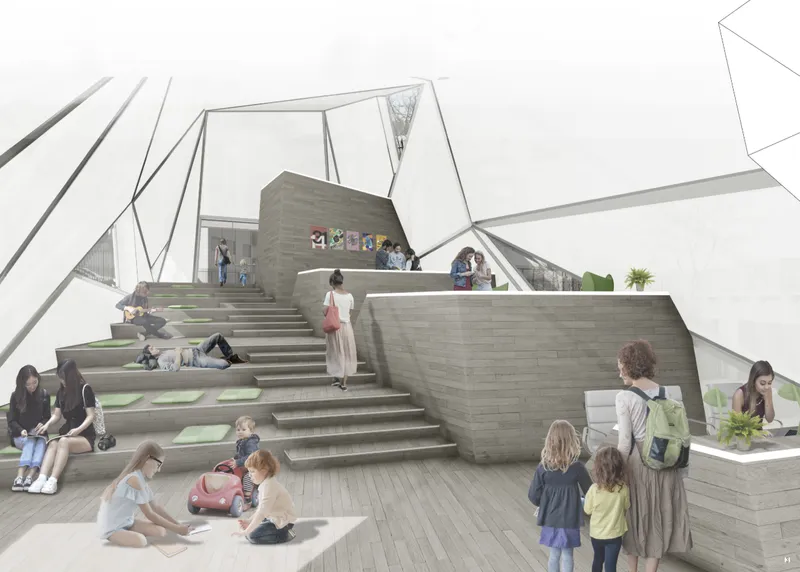
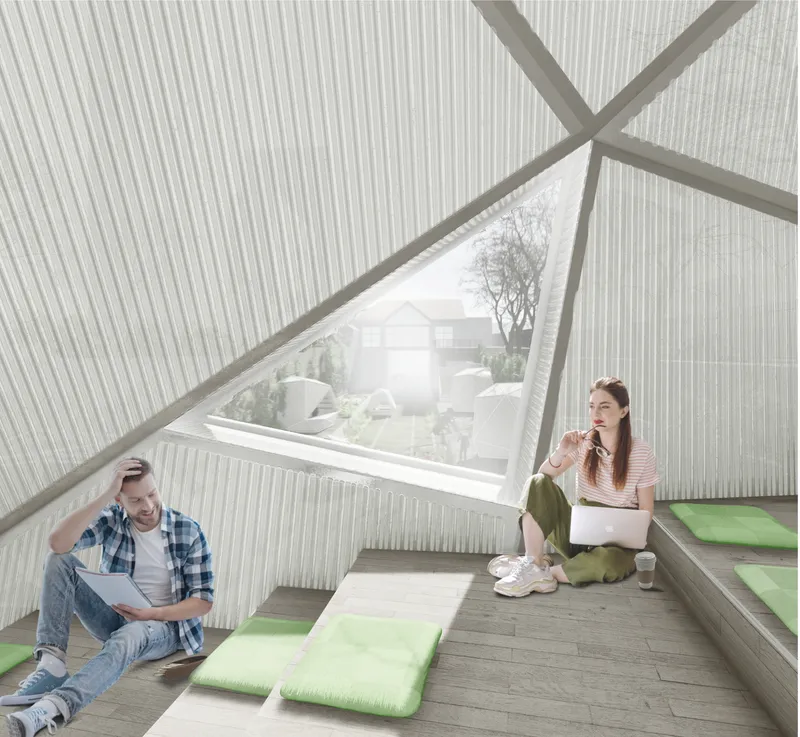
The youth center is the primary architectural anchor of the project. Designed as a multifunctional civic space, it hosts a wide range of activities including workshops, conferences, games, and community meetings.
Internally, the architecture is defined by stepped platforms, open gathering zones, and flexible interiors. The spatial configuration encourages informal interactions while accommodating organized events. The building becomes a social condenser where different user groups intersect.
Its formal expression echoes the modular language of the project while maintaining a distinct identity as the central hub.
Inclusivity and Community Engagement
CARBON positions inclusivity as a fundamental design driver. The project invites a wide demographic spectrum, from local residents and families to tourists, students, and professionals.
Public programs are distributed across the site:
- Weekly markets showcasing local crafts
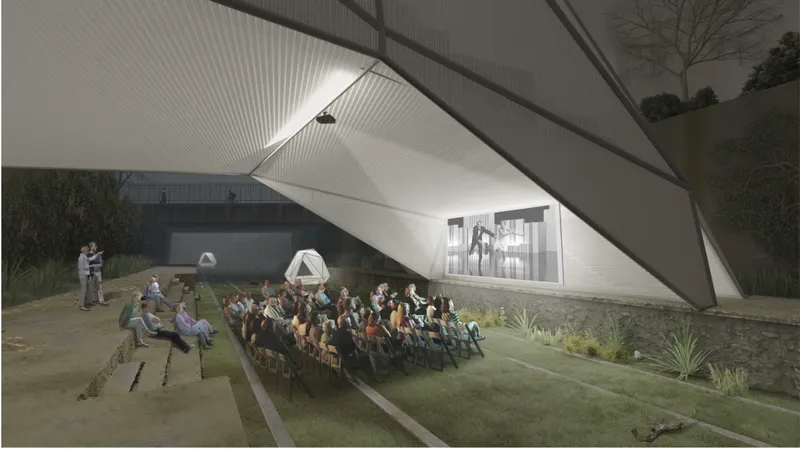
- Outdoor cinemas and cultural events
- Informal gathering spaces for leisure and relaxation
- Urban agriculture zones and vegetable gardens
The flexibility of the modules allows users to appropriate spaces freely. This open-ended approach ensures that the architecture does not dictate use but enables it.
Sustainability and Circular Design Logic
Sustainability is embedded in the project through its circular design methodology. Every component of the architecture is conceived with reuse and recyclability in mind.
Key strategies include:
- Fully removable and transportable modules
- Recyclable steel structures
- Reusable polycarbonate panels
- Minimal ground intervention to preserve the existing landscape
This approach not only reduces environmental impact but also introduces an economic model where architectural elements can be redeployed across different urban contexts.
Reclaiming the Railway Landscape
The project retains and enhances the existing ecological character of the site. Vegetation, informal pathways, and the raw texture of the railway are preserved as integral elements of the design.
New interventions such as urban gardens, green corridors, and soft landscape insertions reinforce the identity of the Petite Ceinture as a linear ecological spine within Paris.
Rather than erasing the past, CARBON amplifies it, allowing history and contemporary use to coexist.
A New Typology of Public Space
CARBON proposes a hybrid public space that blurs the boundaries between architecture, landscape, and infrastructure. It is neither a park nor a building, but a flexible framework that accommodates both.
The project challenges traditional notions of permanence in architecture. By embracing temporality and adaptability, it introduces a new typology suited to rapidly evolving urban conditions.
CARBON exemplifies the potential of urban regeneration architecture to transform neglected infrastructures into vibrant public assets. Through its modular system, sustainable logic, and inclusive programming, the project offers a replicable model for cities worldwide.
It demonstrates that the future of architecture lies not in fixed forms but in adaptable systems that evolve with their users. In doing so, CARBON redefines how we engage with urban voids, turning them into active, meaningful, and shared spaces.




Popular Articles
Popular articles from the community


Hill & Cross Opera: Sculptural Opera House Architecture Shaped by Tallinn’s Landscape and Identity
Hill & Cross Opera reimagines opera house architecture in Tallinn through its sculptural hill, civic plaza, glass wave and a luminous cross.

Conexión: Biophilic Design Reimagines High-Rise Living in Hong Kong
Conexión reimagines high-rise living in Hong Kong through biophilic design, green facades, shared spaces, daylight, water and nature within.

Co-life: Sustainable Architecture for Age-Friendly Community Living
Co-life reimagines sustainable architecture for seniors through courtyards, rammed earth, shared gardens, and spaces designed for belonging.
AL-JANNAH: Sustainable Architecture and Permaculture for Afghan Widows
AL-JANNAH uses sustainable architecture and permaculture to create resilient oasis of housing, learning, work and renewal for Afghan widows.

Similar Reads
You might also enjoy these articles

Eco Chapel: A Green Architecture Pavilion Designed in Symbiosis with the Forest
Eco Chapel uses green architecture to weave prayer, learning and reuse into a forest pavilion shaped by modular hexagonal canopies for life.
Kaffeebühnen: Coffee Shop Architecture Designed as a Civic Stage Between Vienna’s City and Park
Kaffeebühnen turns coffee shop architecture into a civic stage, linking Vienna’s park edge, urban life, warm timber yards, and coffee craft.
Healing Façade: Sustainable Architecture for Reforestation, Community, and Sacred Ecology in Ethiopia
Healing Façade reimagines sustainable architecture as a living wall that restores soil, catches water and renews Ethiopia's forest churches.


Urban Forest: A Vertical Ecosystem for 5,000 Workers in Singapore's Changi Business Park
Radially stacked pods and layered green decks turn a 7-acre plot into 47 acres of ecological workspace projected for 2040.

Explore Architecture Competitions
Discover active competitions in this discipline



Challenge to reimagine the Iron Throne


Photograph architecture without architects


Illustrate the lost glory of Angkor Wat - Render Challenge


Design challenge to reuse E-waste
Comments (0)
Please login or sign up to add comments
No comments yet. Be the first to comment!