

Carlton Cottage by Lovell Burton Architecture – A Contemporary Family Home in Carlton, Australia
Carlton Cottage by Lovell Burton Architecture transforms a historic Carlton home into a sustainable, adaptable family residence with light-filled, flexible spaces.


Reimagining a Historic Cottage
Carlton Cottage by Lovell Burton Architecture is a thoughtful transformation of a single-storey, aged dwelling on a compact urban lot in Carlton, Australia. Designed as a contemporary home for a young family, the project merges practicality with spatial elegance, addressing key concerns such as water management, natural light quality, and thermal performance. By taking cues from the existing cottage, the architects created a home that respects its historical context while introducing adaptability, regeneration, and functional design.
Site Context and Urban Integration
The site sits at a low point in Carlton, once part of a natural watercourse feeding the Yarra River. The surrounding neighborhood, shaped by European urbanization, features a working-class, eclectic mix of single dwellings, many influenced by migrant communities.
The property is flanked by Canning Street, recently revegetated under the Melbourne City Council urban forest initiative, and a rear laneway defined by a historic hat factory. A mature river gum on the neighboring plot provides a protective canopy, enriching the site’s natural character. Originally, the existing cottage was dark, enclosed, and poorly ventilated, necessitating a comprehensive redesign.
Architectural Concept and Spatial Planning
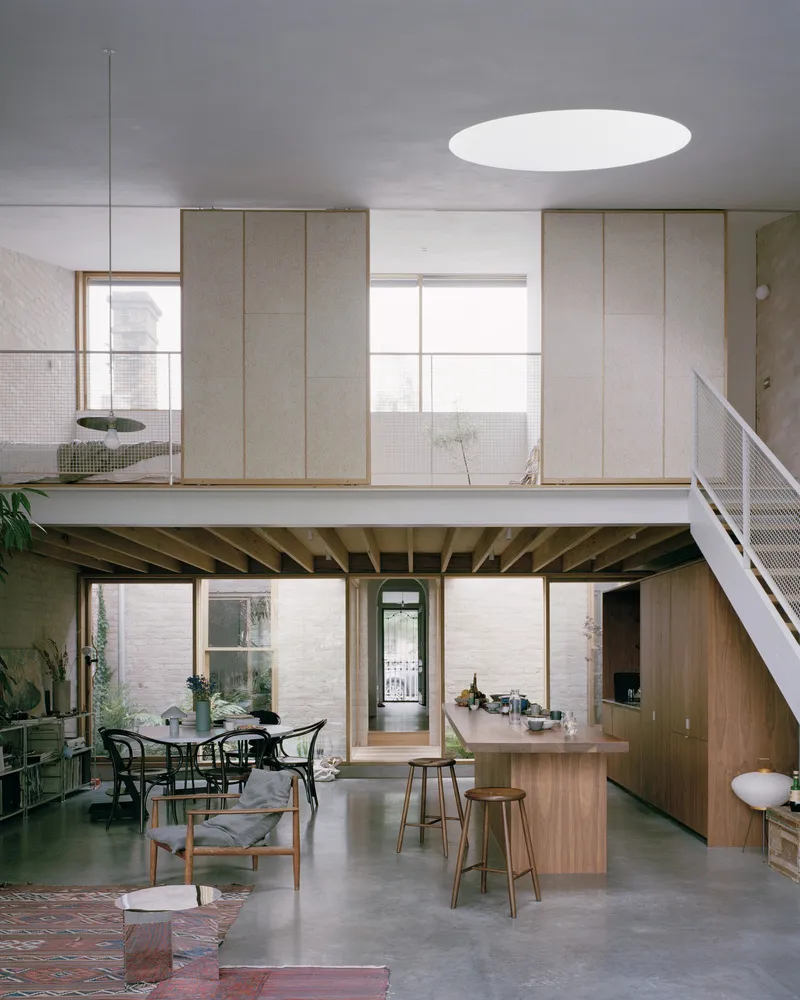
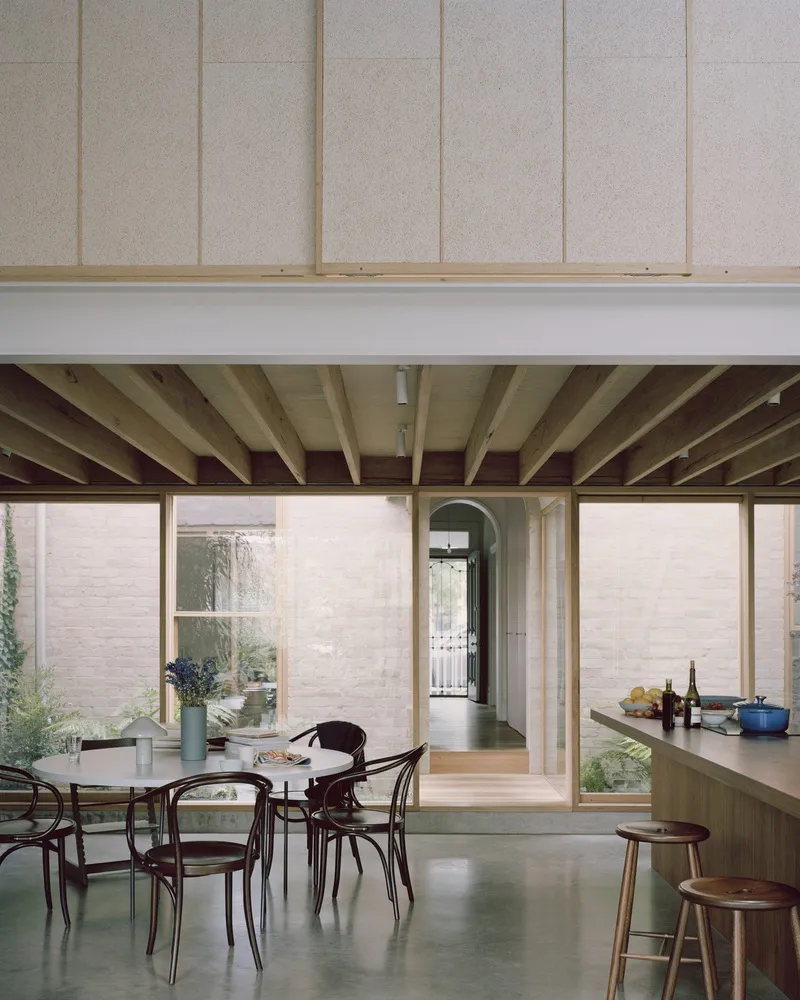
Carlton Cottage is organized into a modular arrangement of twelve squares, a strategy that allows the home to grow and evolve with the family. The original cottage was adapted into a quadrant housing children’s bedrooms, a flexible study, and wet areas. The new addition, structured over four squares, contains the kitchen, living zones, a flexible bedroom, and a bathroom on a mezzanine level.
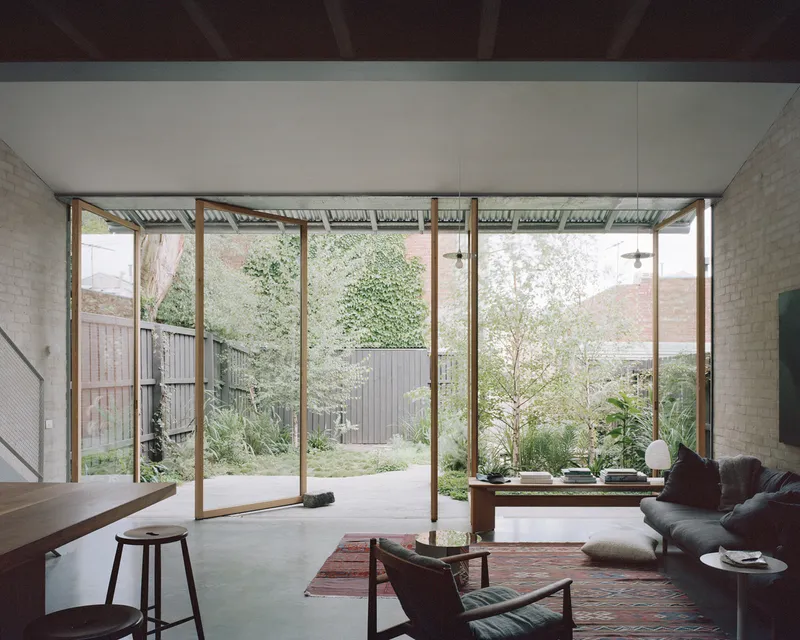
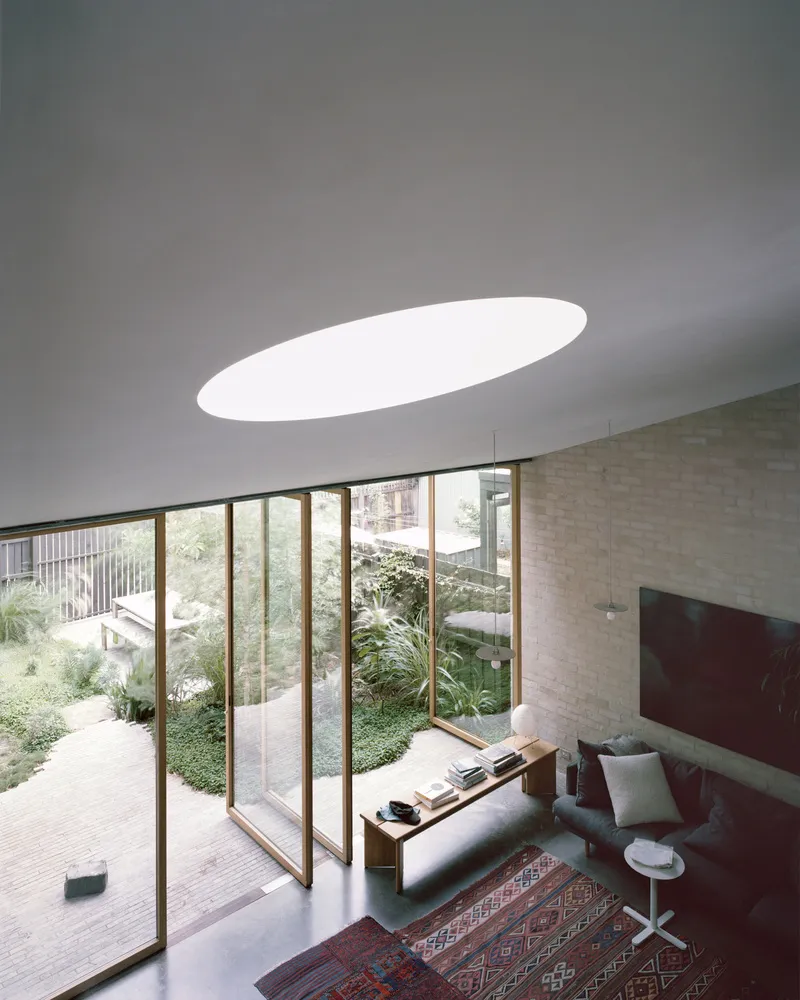
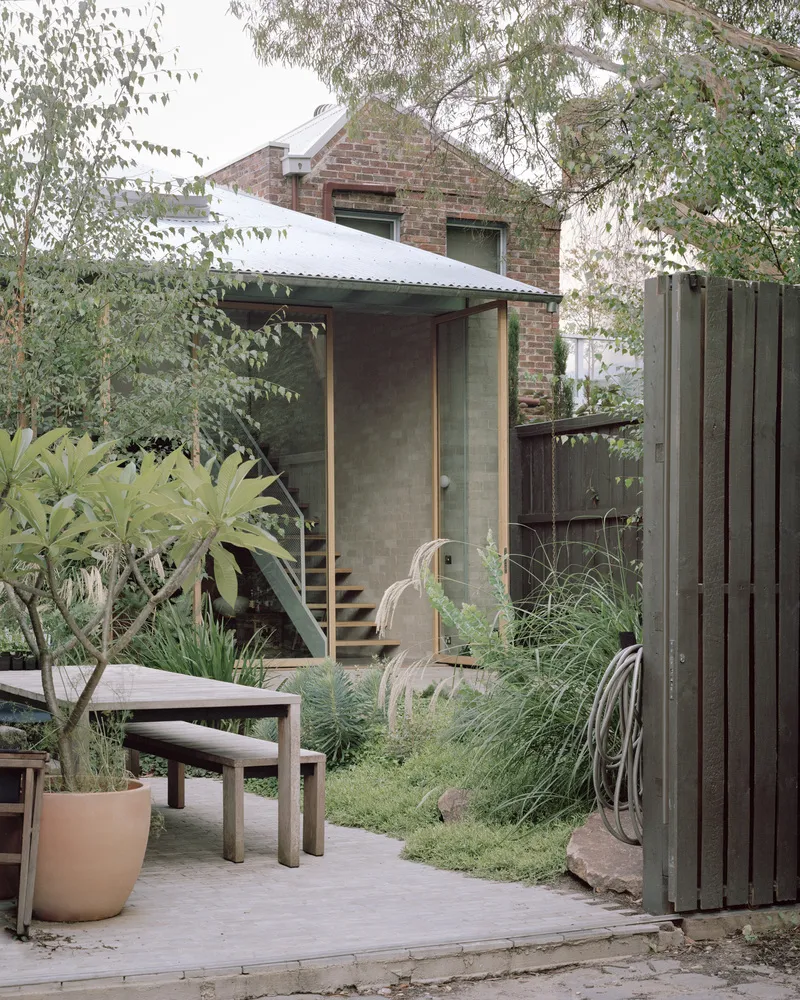
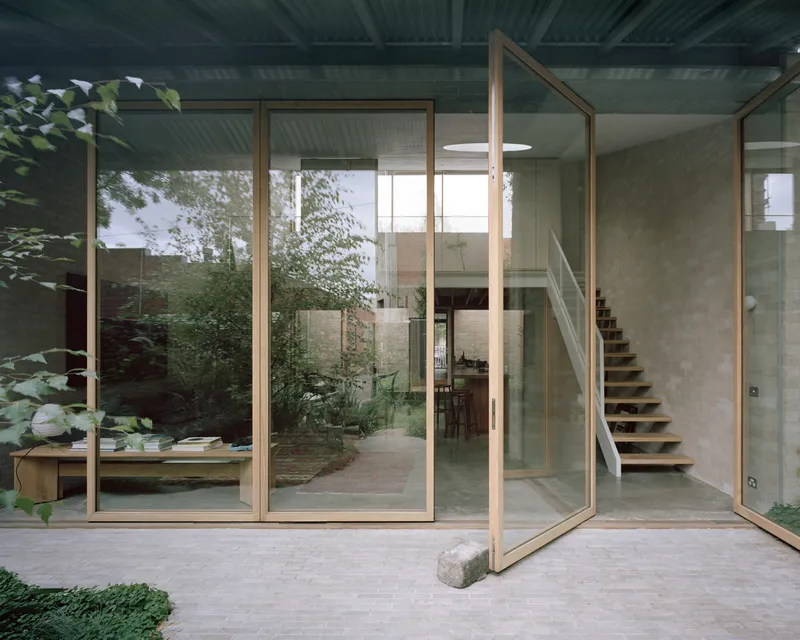
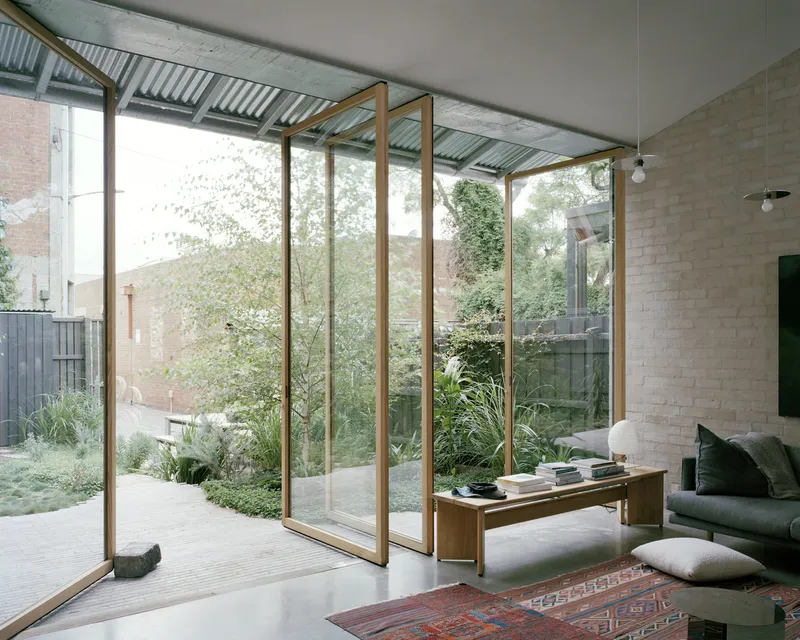
A central courtyard acts as the home’s lungs, facilitating passive cooling during warmer months. The rear garden forms a third quadrant, blending heavily landscaped screening, a terrace, a children’s play space, and outdoor dining areas. Pivoting doors along the rear façade allow fluid transitions between enclosed and open spaces, reinforcing the adaptable nature of the design.
Architectural Features and Design Elements
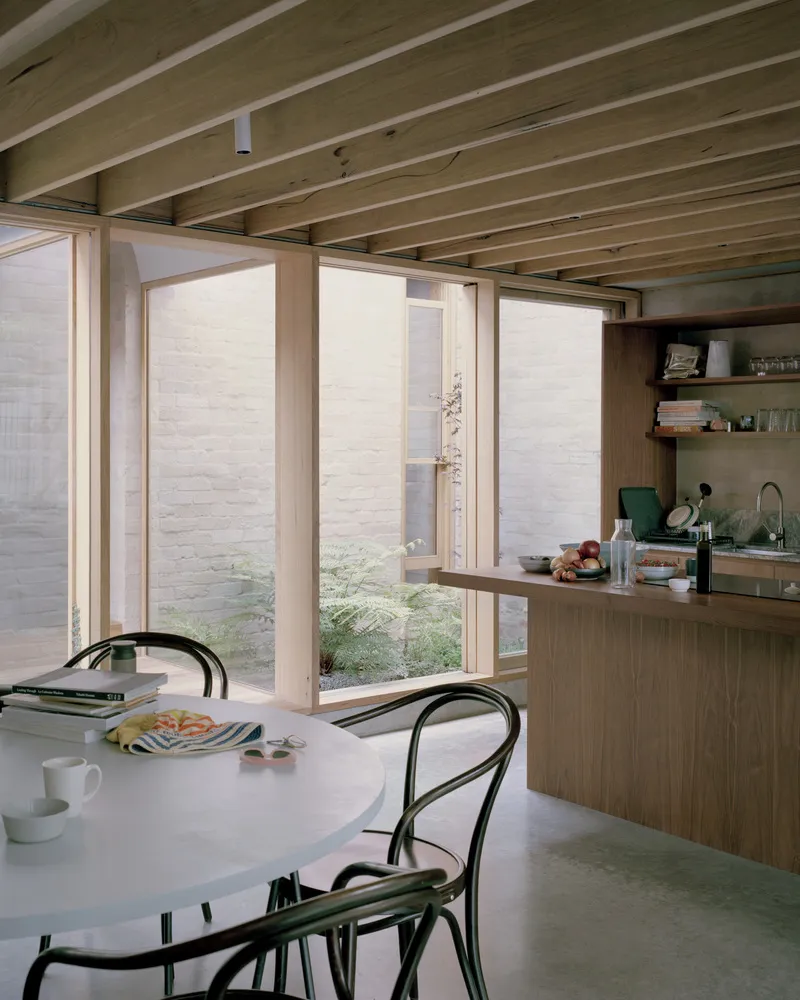
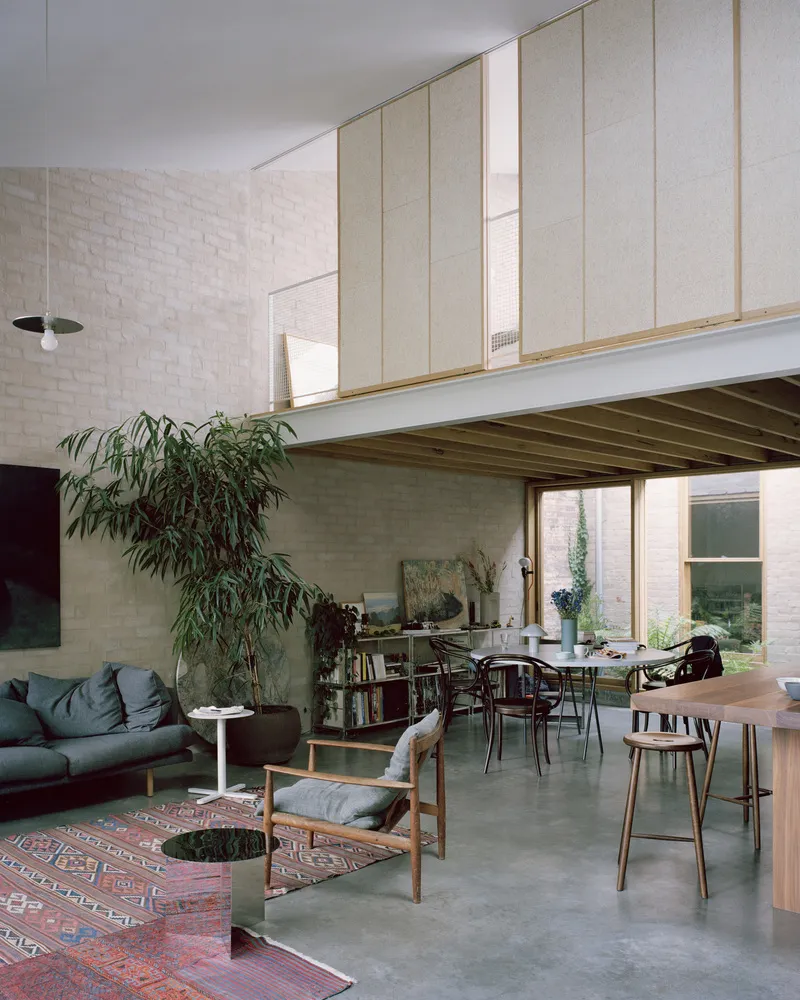
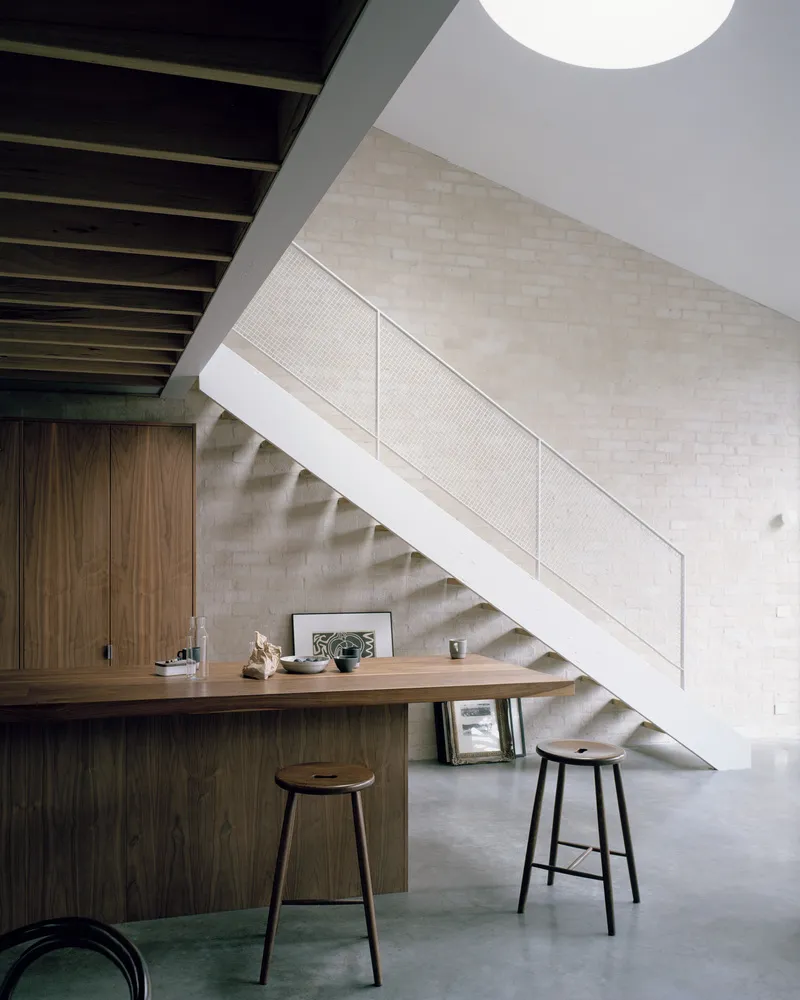
The interior features a gently stepping floor plane that subtly separates functional zones. A large skillion roof, harmonized with the existing gable, enhances light quality, redirects water for collection, and nestles the addition within its context. Internally, the skillion ceiling draws the eye upward, while a circular skylight frames the river gum canopy, introducing dynamic daylight into living spaces.
Material choices prioritize performance, sustainability, and upcycling. The original slab was replaced with a ventilated lightweight timber floor framed with repurposed local hardwood. Bricks from a demolished lean-to were reused for new walls, while a discarded stone slab from the Pilbara became a bespoke countertop. The kitchen, crafted from solid walnut, is designed to develop a natural patina over time, blending function with aesthetic longevity.
A Home for Adaptability and Connection
Contrasting the bustling streetscape, Carlton Cottage is conceived as a repairing and adaptive space, capable of evolving with the changing needs of family life. The design fosters fluid interactions with the environment, community, and each other, creating a home that is both resilient and nurturing.
Carlton Cottage demonstrates how a small urban lot can be transformed into a sustainable, adaptable, and aesthetically rich family home, balancing historical respect with contemporary living.


Popular Articles
Popular articles from the community


Cube Design Draws an Ecological Corridor Between Two Shenzhen Hills with the Nankai Building
Beside Shenzhen's container docks, the Nankai Building pairs stacked balconies with a climbing green screen to connect two hillsides across its height.

David Ortega Stacks a Two-Story Mexico City Penthouse Around a Steel Stair and a Pergola-Shaded Roof Terrace
In Colonia Roma, a 300 m² penthouse uses oak joinery, a planted steel stair and a slatted roof pergola to make a new-build apartment feel like a house.

Jaramillo Van Sluys Arquitectura and Urbanismo Turn a Demolished Registry Lot in Quito into an Orchard Plaza
In Quito's Centro Histórico, a 2,800 m² plaza exposes the San Agustín convent wall and redraws its lost Augustinian orchard in volcanic stone.

David Macias Steps a Doorless Stone and Plaster House Down a Tropical Colombian Hillside
In the humid hills of Colombia, Threshold House replaces the front door with an open void and terraces its 850 m² down the slope instead of fighting it.

Similar Reads
You might also enjoy these articles


Hodi-Mandai Geram
Project Function: Preservation and revitalization of the Intangible heritage and socio-spatial identity of the Hodi by Housing, Cultural Memory Center, Sacred Grove, landscape, local tourism economy


Olio Towers: A Mid-Rise for Performers That Fuses Housing, Rehearsal, and Stage
Located blocks from Houston's Theater District, this modular tower stacks living units around a central performance atrium.

Oasis: Modular Green Housing Carved into Dhaka's Urban Fabric
A shortlisted Plugin Housing entry reclaims unauthorized settlements in Dhaka with stepped concrete volumes, green roofs, and ventilation-driven design.

Black Hole: A Floating Megastructure for the Post-Physical Era
Emiliano Mazzarotto envisions a spherical, self-scaling arena where e-sports, digital hotels, and holographic stadiums replace traditional public space.

Explore Architecture Competitions
Discover active competitions in this discipline

Challenge to reimagine the Iron Throne

Photograph architecture without architects

Illustrate the lost glory of Angkor Wat - Render Challenge

Design challenge to reuse E-waste
Comments (0)
Please login or sign up to add comments
No comments yet. Be the first to comment!