
Casa 1.5–3: A Sensory and Proportional Coastal Retreat in Olón by Baquio Arquitectura
A proportional coastal home in Olón blending wood and concrete, organized in four functional blocks with sensory, nature-connected spaces.


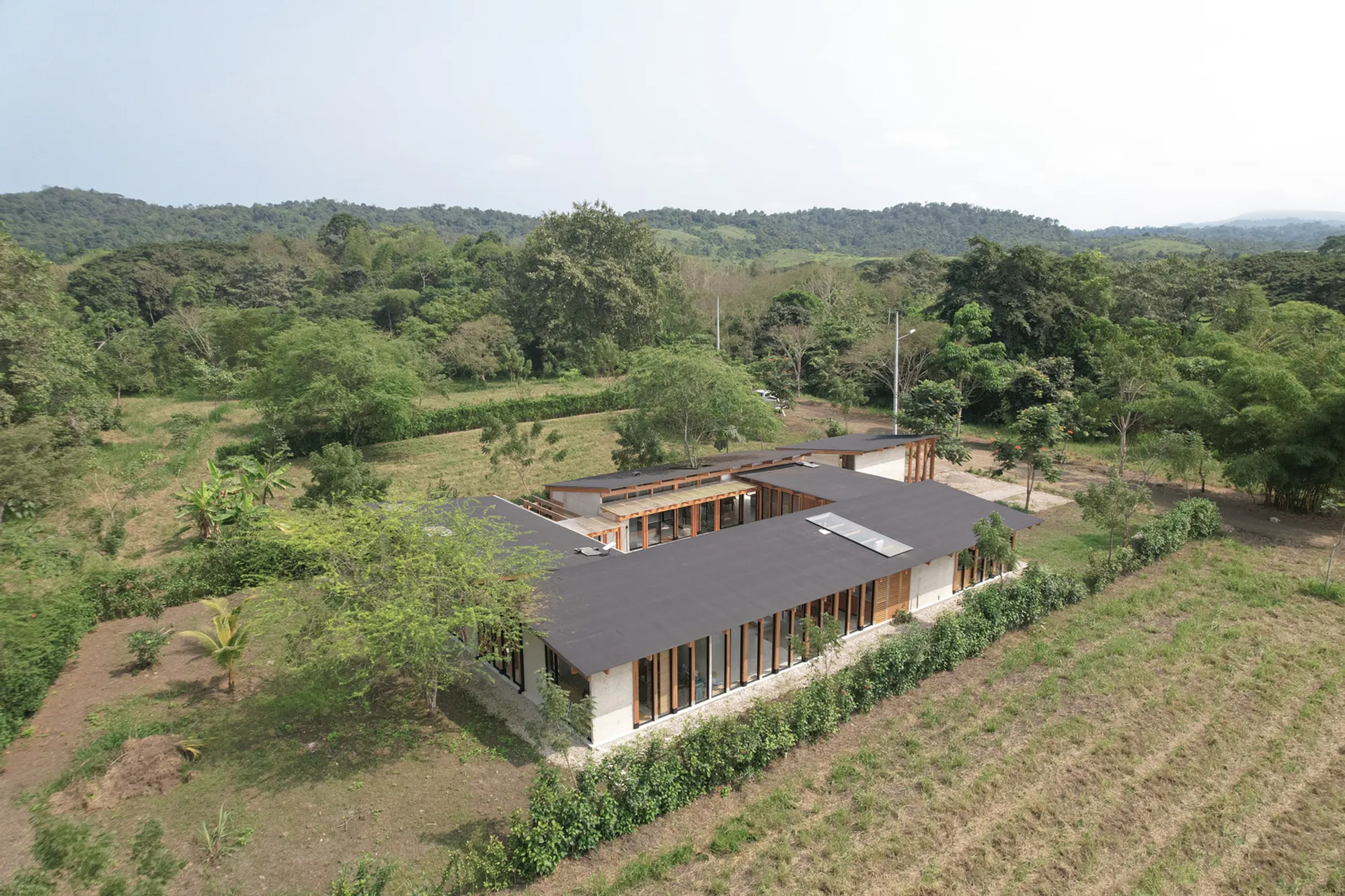
Casa 1.5–3 by Baquio Arquitectura is a 4736 ft² single-family residence located in the coastal commune of Olón, Santa Elena, Ecuador. Designed in 2024, the house is conceived as an immersive architectural experience that responds directly to its landscape, climate, and the everyday rituals of its inhabitants. The project draws heavily on Juhani Pallasmaa’s phenomenological approach to dwelling, emphasizing sensory engagement, spatial intimacy, and the subtle rhythms of daily life.
Situated on a generous 1100 m² plot, the home seeks a respectful integration with the natural environment, establishing a dialogue between built form and the ecological sensitivity of the site. Its design prioritizes emotional perception as much as functionality, creating spaces that connect inhabitants to the coastal atmosphere through proportion, materiality, and carefully choreographed spatial transitions.
A House Defined by Proportion: The 1.5–3 Grid
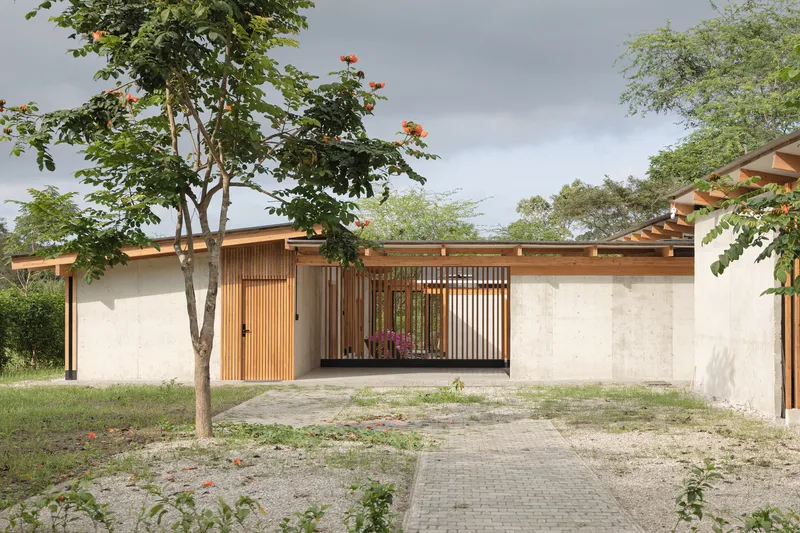
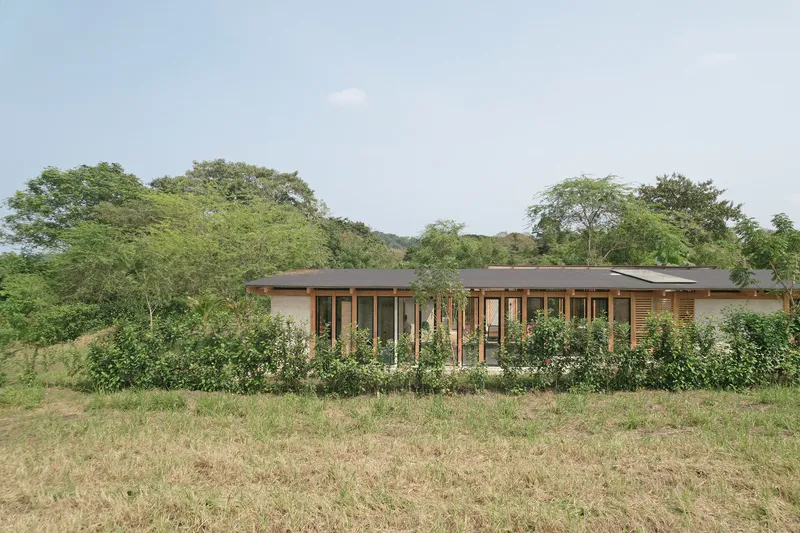
The name “Casa 1.5–3” references the proportional grid—based on 1.5 m and 3 m modules—that organizes the entire project. This grid acts as both a structural and conceptual framework, generating rhythm, order, and balance throughout the architecture. The proportions guide everything from the façade composition to the internal layout, allowing the home to achieve spatial clarity and a unified aesthetic language.
At the center of the design is an interior void, a contemplative core that visually and physically connects the home's public, semi-public, and private areas. This void becomes the heart of the house—a place where light, shadow, landscape, and circulation converge—reinforcing the project’s emphasis on perception and sensory experience.
Four Sequential Blocks Shaped by Daily Life
Casa 1.5–3 is organized into four linear blocks, each crafted to support a different layer of domestic life. These volumes create a smooth spatial journey from the public entrance zone to the more intimate private areas.
Access, Transition, and Indeterminacy
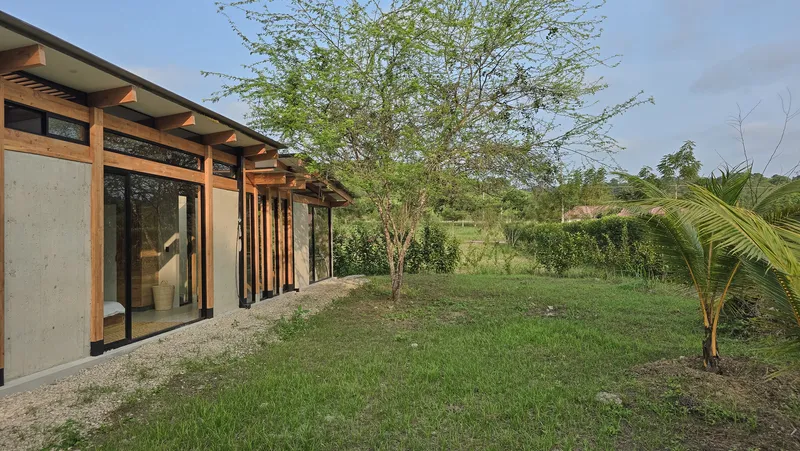
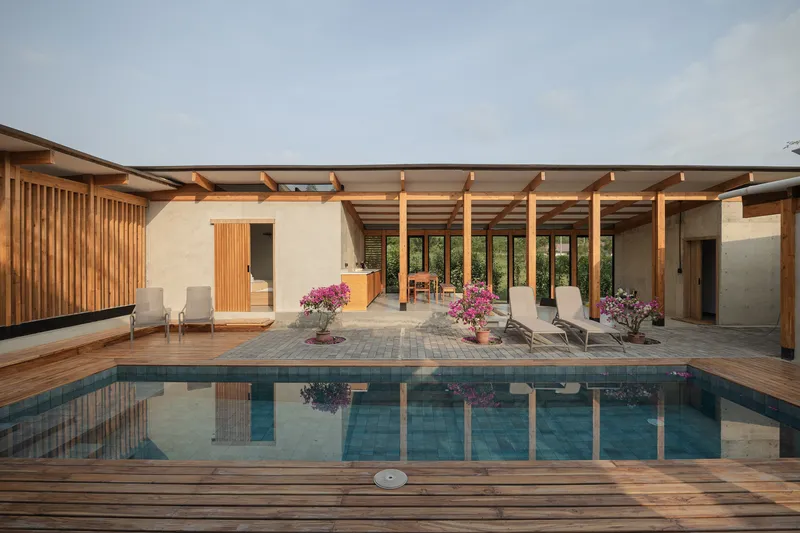
The first block introduces visitors to the dwelling’s spatial atmosphere. It establishes a transitional threshold that slowly reveals the home’s openness, natural materials, and visual relationship with the site. This entry sequence is intentionally slow and exploratory, aligning with Pallasmaa’s idea that architecture should guide perception rather than overwhelm it.
Active Collective Activities
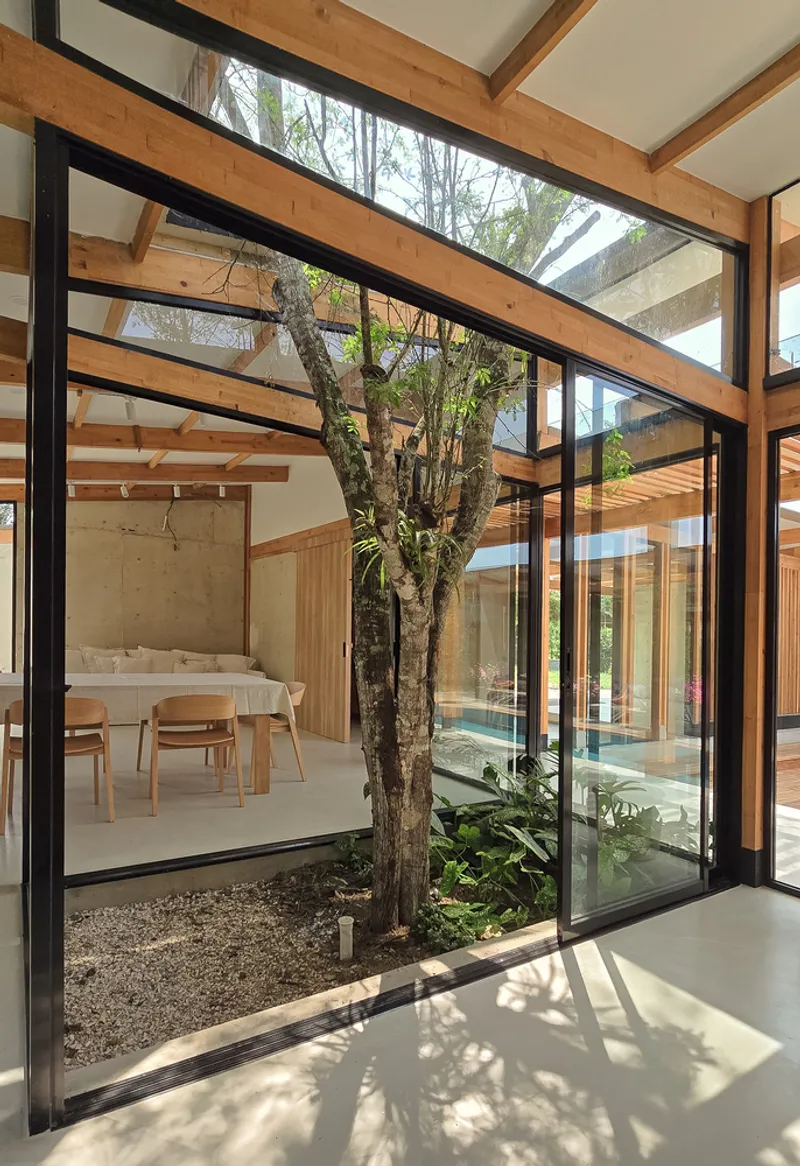
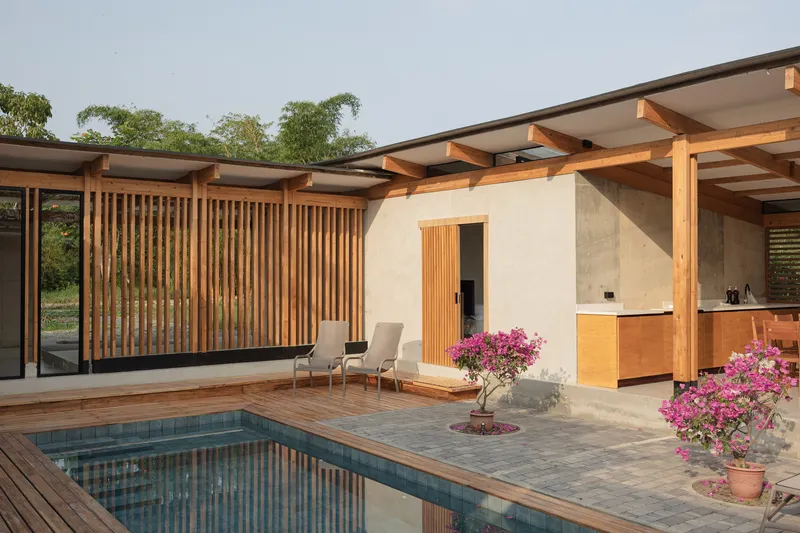
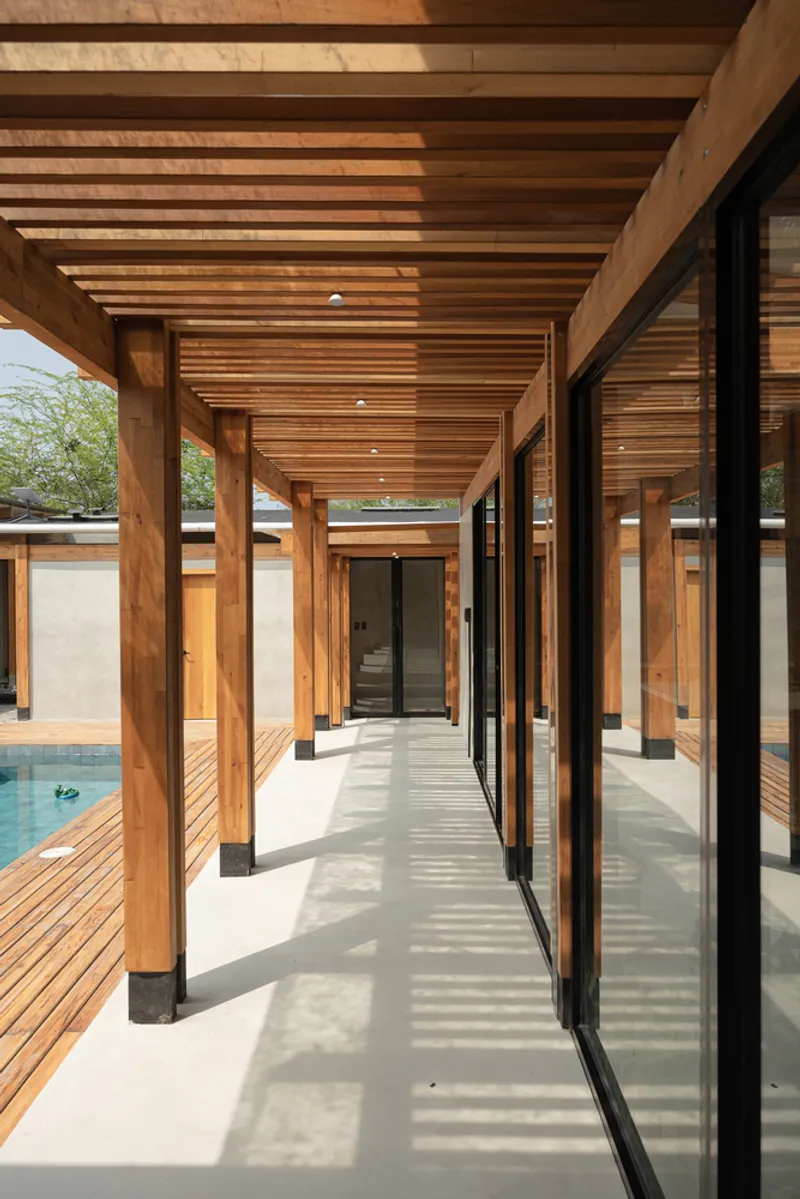
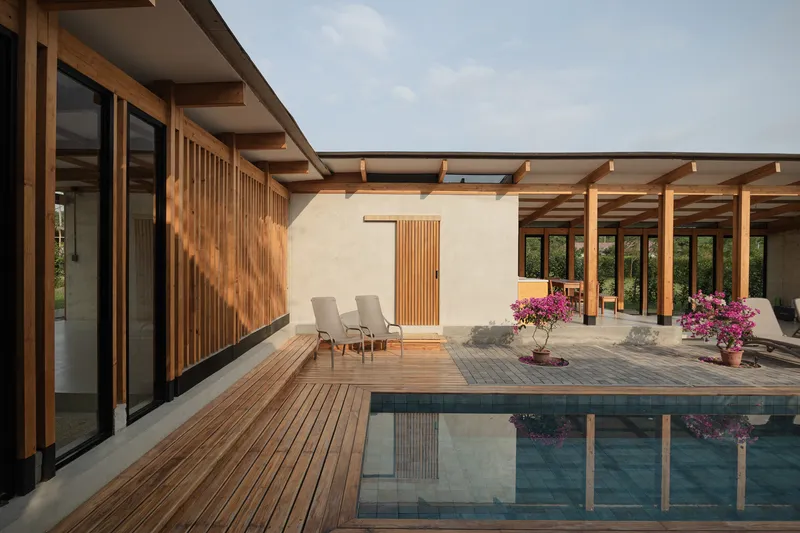
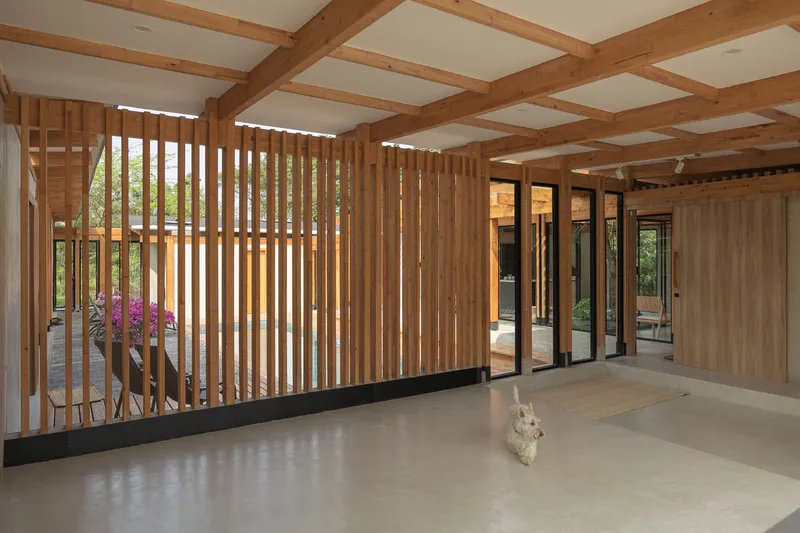
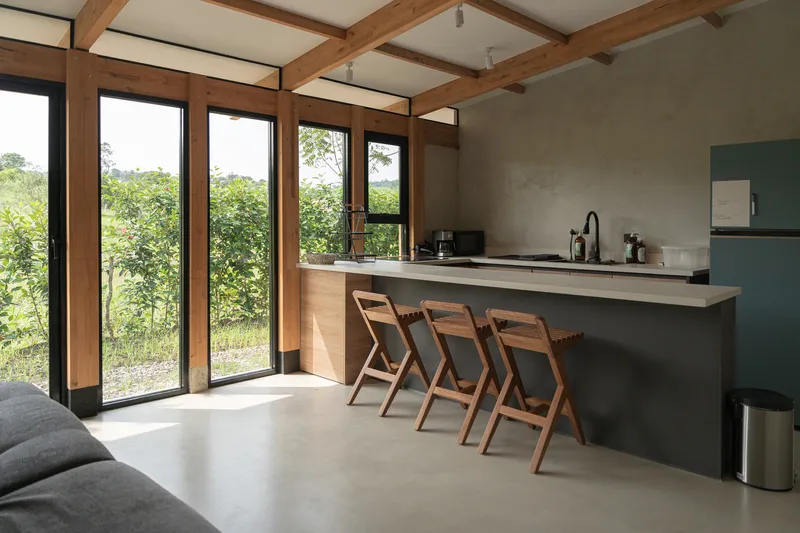
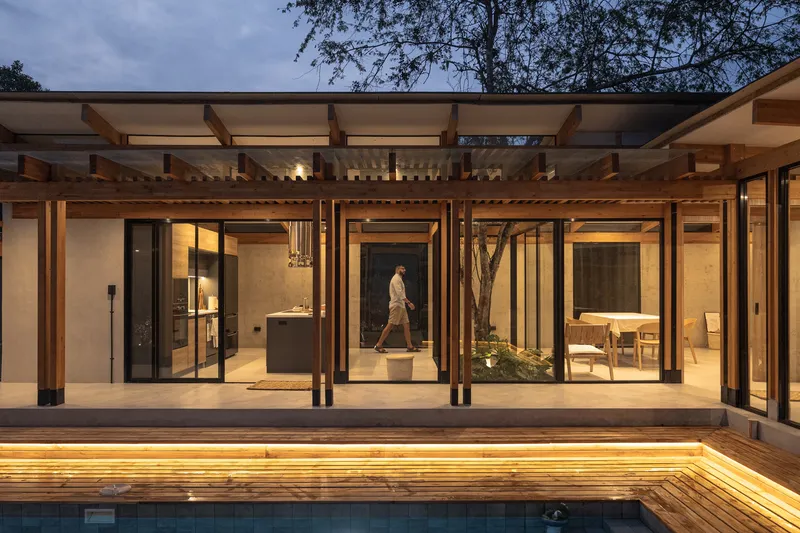
The second block contains the social heart of the home: the living room, dining room, and kitchen. A large pre-existing tree becomes a defining protagonist of the interior experience, blurring the boundaries between nature and habitation. The architecture adapts around the tree, turning it into a focal point that anchors daily life.
Private Rest Block
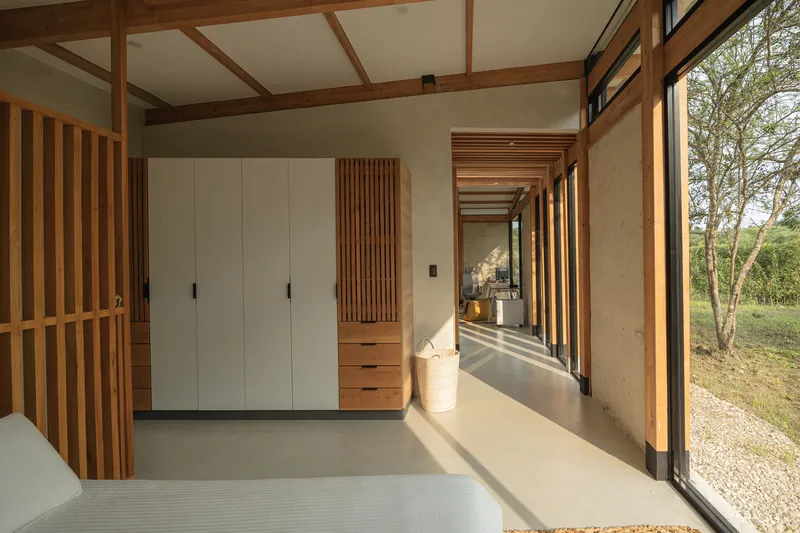
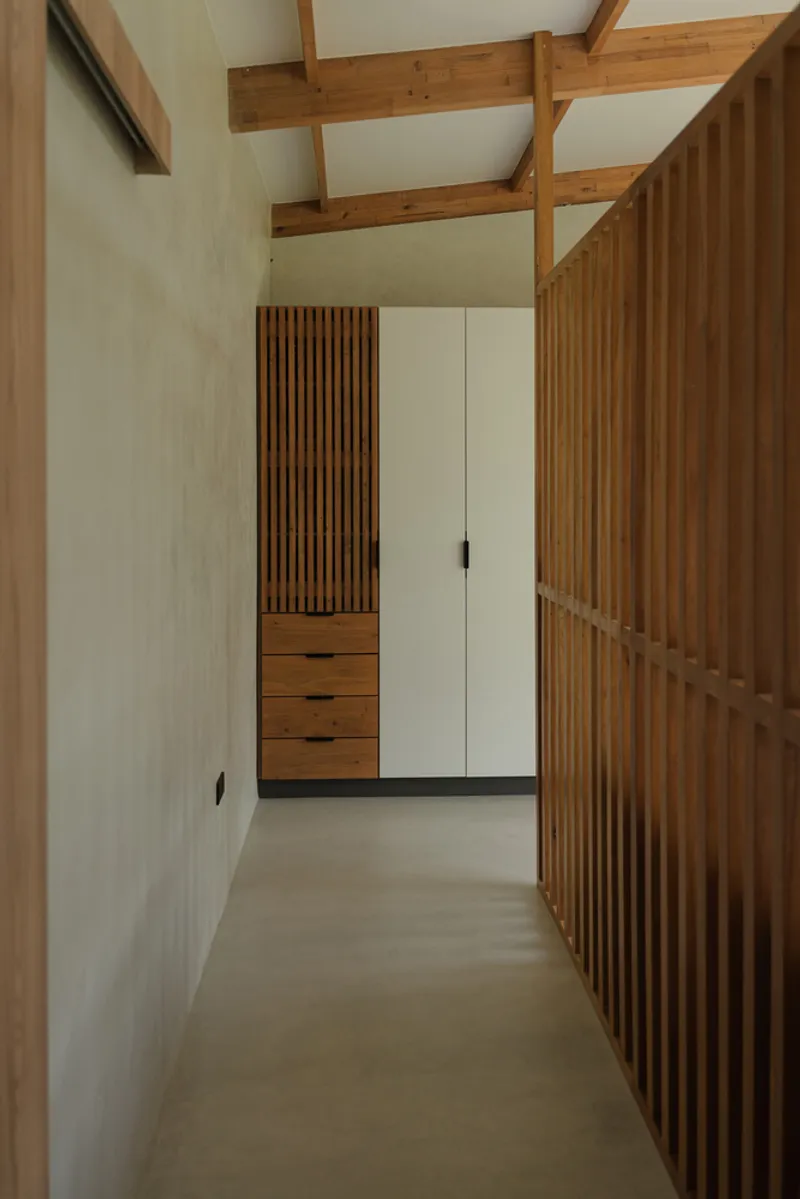
The third block houses the bedrooms, creating a quiet retreat oriented toward the back of the site. These private spaces soften the transition from communal activity to rest, offering framed views and filtered light that evoke calm and introspection.
Interior–Exterior Collective Living
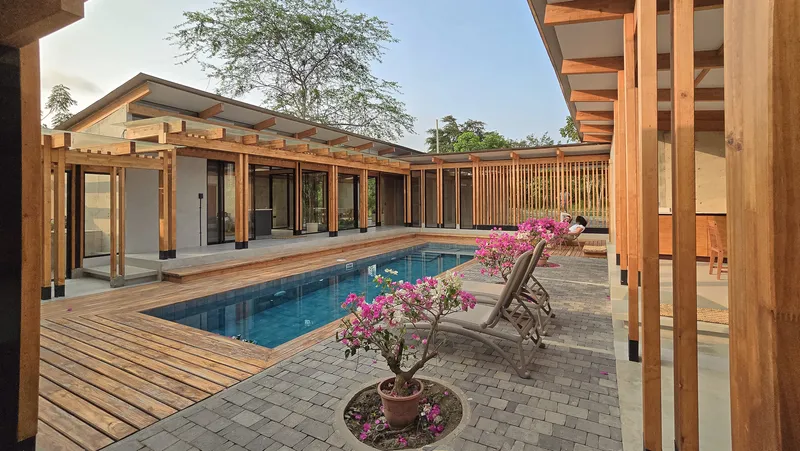
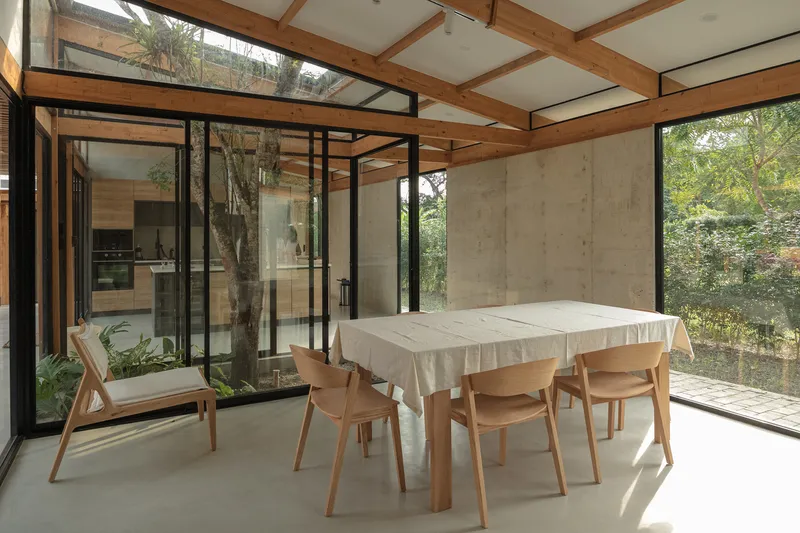
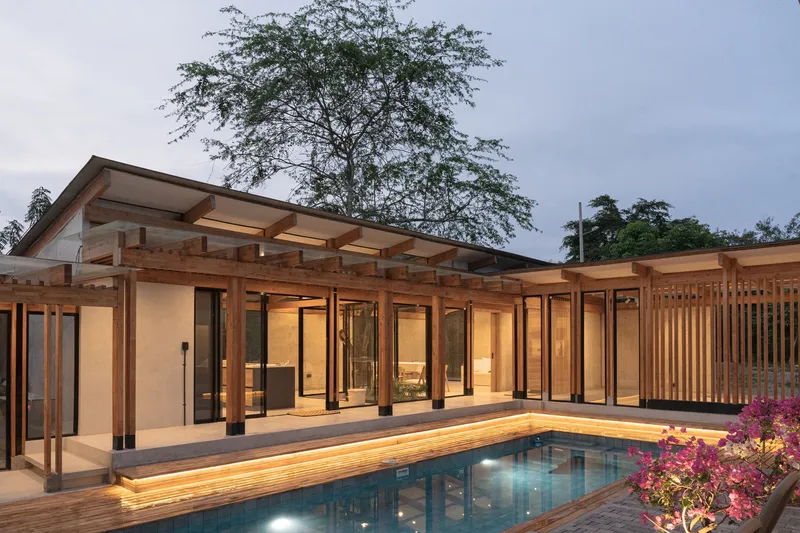
The final block merges indoor and outdoor environments, allowing inhabitants to expand or contract the home’s functionality depending on the season or need. An independent suite can function autonomously or remain part of the main house. This flexibility reflects contemporary living patterns, multigenerational arrangements, and the client’s desire for adaptable spaces.
Materiality Rooted in Honesty and Craft
Material expression is central to Casa 1.5–3. The façade and structural composition rely on an intentional dialogue between wood and concrete, reflecting the proportional grid through tectonic and stereotomic qualities. Wood, warm and tactile, conveys craft and human scale; concrete, solid and grounded, expresses permanence and structural clarity. Together, they create a balance between lightness and weight, transparency and solidity.
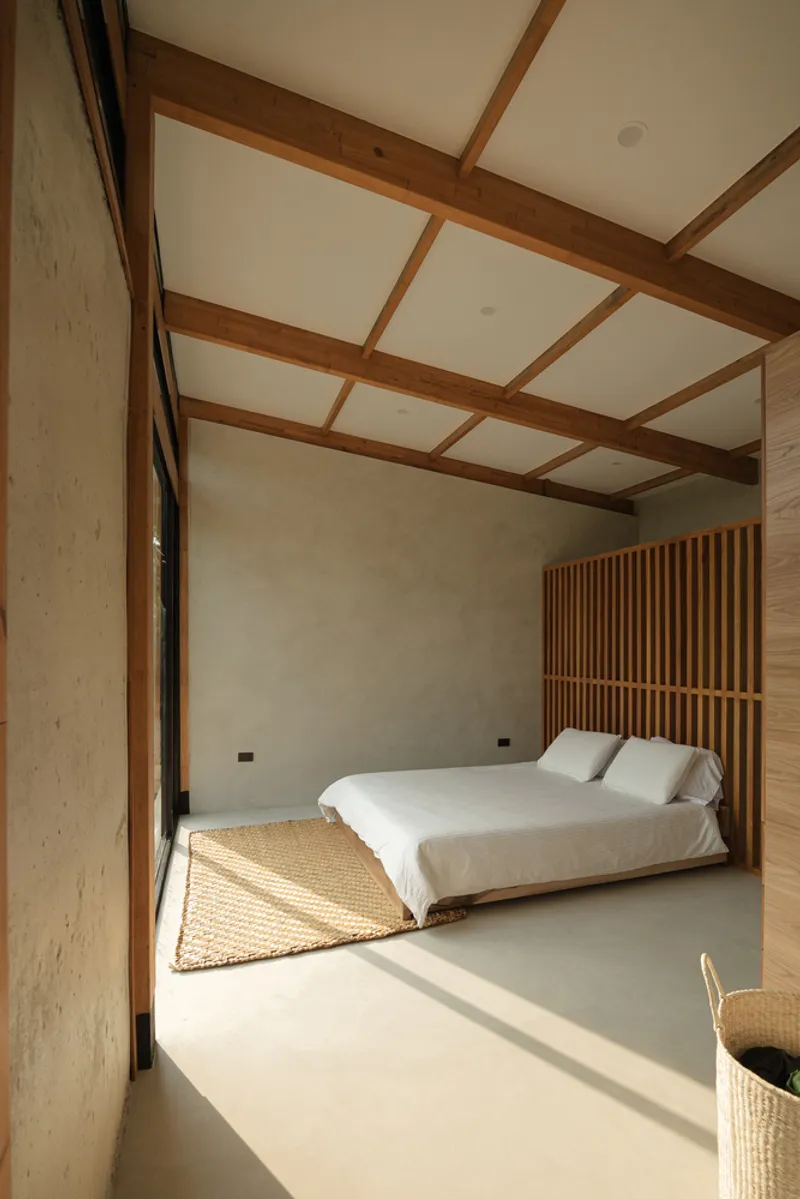
Inside, exposed beams, timber surfaces, and large openings bring the outdoors inward, fostering a sense of continuity between the coastal climate and everyday domestic life. The home’s simplicity and material honesty align with Pallasmaa’s belief that architecture should be experienced through touch, texture, scent, and sound—not only visual form.
A Phenomenological Approach to Living
Baquio Arquitectura’s design transcends functional requirements by crafting an environment that enhances the sensory experience of its inhabitants. Following Pallasmaa’s architectural philosophy, Casa 1.5–3 becomes a setting for contemplation, comfort, and emotional connection. Every block, proportion, and material decision reinforces the idea of the house as a lived, felt, and remembered experience.
All photographs are works of Punto Dos Studio



Popular Articles
Popular articles from the community


Lunar Spiral: Space Architecture Shaped by the Mathematics of the Universe
Lunar Spiral reimagines space architecture through Fibonacci geometry, lunar regolith, levitating habitats, and self-sustaining Moon living.

The Ocean Hive: Sustainable Architecture for a Self-Sufficient Civilization at Sea
The Ocean Hive imagines sustainable architecture at sea, where modular habitats, algae, wave power and ocean waste sustain a growing colony.

Conexión: Biophilic Design Reimagines High-Rise Living in Hong Kong
Conexión reimagines high-rise living in Hong Kong through biophilic design, green facades, shared spaces, daylight, water and nature within.

Co-life: Sustainable Architecture for Age-Friendly Community Living
Co-life reimagines sustainable architecture for seniors through courtyards, rammed earth, shared gardens, and spaces designed for belonging.
Similar Reads
You might also enjoy these articles


Hodi-Mandai Geram
Project Function: Preservation and revitalization of the Intangible heritage and socio-spatial identity of the Hodi by Housing, Cultural Memory Center, Sacred Grove, landscape, local tourism economy


Olio Towers: A Mid-Rise for Performers That Fuses Housing, Rehearsal, and Stage
Located blocks from Houston's Theater District, this modular tower stacks living units around a central performance atrium.

Oasis: Modular Green Housing Carved into Dhaka's Urban Fabric
A shortlisted Plugin Housing entry reclaims unauthorized settlements in Dhaka with stepped concrete volumes, green roofs, and ventilation-driven design.

Black Hole: A Floating Megastructure for the Post-Physical Era
Emiliano Mazzarotto envisions a spherical, self-scaling arena where e-sports, digital hotels, and holographic stadiums replace traditional public space.

Explore Seaside Architecture Competitions
Discover active competitions in this discipline



Challenge to reimagine the Iron Throne


Photograph architecture without architects


Illustrate the lost glory of Angkor Wat - Render Challenge


Design challenge to reuse E-waste
Comments (0)
Please login or sign up to add comments
No comments yet. Be the first to comment!