

Casa Alicia: ALTOVA's Contemporary Reinterpretation of Vernacular Architecture in Comitán's Historic Center
ALTOVA's courtyard guesthouse reinterprets Chiapas vernacular through reused brick, bioclimatic design, and sensory water features in Comitán's historic center.


Hospitality Architecture Rooted in Place
In the Historic Center of Comitán de Domínguez, Chiapas—a designated Pueblo Mágico (Magical Town) in southeastern Mexico—architecture firm ALTOVA has completed Casa Alicia, a 200-square-meter accommodation project that demonstrates how contemporary design can honor vernacular traditions while meeting modern hospitality needs. Designed specifically for the Airbnb platform, this intervention represents a thoughtful approach to adaptive reuse and contextual design, balancing the preservation of historic character with the functional requirements of contemporary short-term rental hospitality.
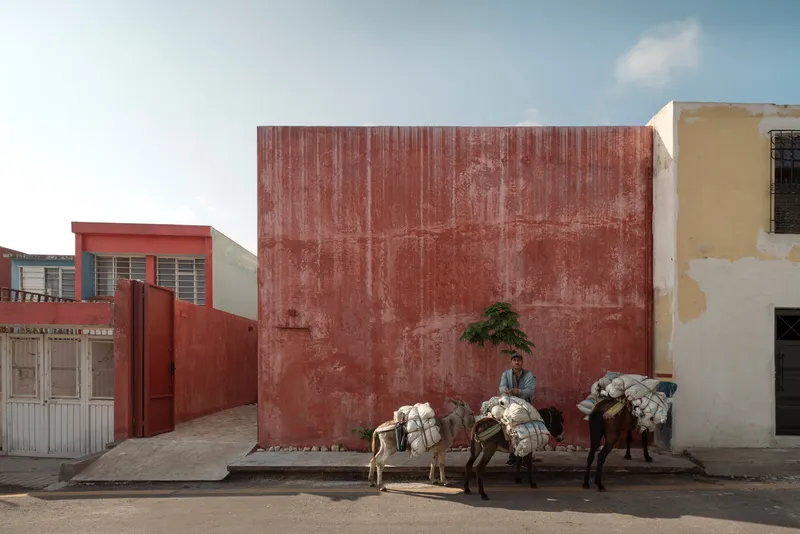
Casa Alicia stands as an exemplar of how architects can navigate the complex territory between preservation and innovation in historic urban centers. Rather than attempting to mimic historical styles through pastiche or asserting contemporary identity through jarring contrast, ALTOVA has pursued a third path: reinterpreting vernacular architecture through a modern lens, extracting fundamental principles of traditional building while expressing them through contemporary materials, details, and spatial strategies. The result is architecture that feels both timeless and of-the-moment, rooted in place yet clearly contemporary.
Comitán de Domínguez: A Magical Town Context
Understanding Casa Alicia requires appreciating the specific context of Comitán de Domínguez, a colonial-era town in the highlands of Chiapas near the Guatemalan border. Designated as one of Mexico's Pueblos Mágicos—a federal tourism program recognizing towns with exceptional historical, cultural, and symbolic attributes—Comitán carries responsibilities for preserving its architectural heritage while accommodating contemporary economic development.
Founded in the sixteenth century, Comitán developed a distinctive architectural character combining Spanish colonial planning principles with local building traditions and indigenous influences. The historic center features low-rise buildings with thick masonry walls, interior courtyards, clay tile roofs, and facades organized along narrow streets—an urban fabric shaped by both cultural traditions and climate considerations.
The town's location at approximately 1,600 meters elevation creates a temperate highland climate with cool nights and warm days, significant diurnal temperature swings, and a pronounced rainy season. Traditional architecture evolved sophisticated responses to these conditions: thick walls providing thermal mass, interior courtyards creating protected microclimates, deep overhangs sheltering from sun and rain, and natural ventilation strategies. These time-tested strategies inform ALTOVA's contemporary intervention.

The Pueblo Mágico designation brings both opportunities and constraints. Tourism development provides economic benefit, creating demand for accommodations like Casa Alicia. However, it also imposes preservation requirements, restricting modifications to historic buildings and requiring new construction to respect traditional scale, materials, and character. ALTOVA's design navigates these constraints skillfully, creating contemporary architecture that enhances rather than compromises the historic urban fabric.
The Airbnb Typology: Designing for Contemporary Hospitality
Casa Alicia was conceived specifically as accommodation for Airbnb, a design brief that shapes architectural decisions in specific ways. Unlike traditional hotels with centralized services and public spaces, or conventional residences designed for long-term occupation by single families, Airbnb properties occupy hybrid territory—residential in scale and character, yet serving transient occupancy by diverse guests.
This typology presents particular design challenges. Spaces must feel residential and authentic rather than institutional, yet they require durability, easy maintenance, and layouts that work for various guest configurations—couples, families, groups of friends. Privacy between guest rooms becomes important when multiple parties might rent simultaneously, yet common spaces should facilitate social interaction. Aesthetics matter enormously, as online platforms privilege photogenic spaces with distinctive character.
ALTOVA's response involves six independent bedrooms that promote privacy and enable flexible rental configurations. The property can accommodate a single large group using all rooms, multiple smaller parties renting individual rooms, or various combinations. This flexibility maximizes occupancy potential while maintaining appropriate privacy boundaries. The central courtyard provides shared amenity space where guests can gather if desired, without forcing interaction.

The design also addresses practical Airbnb requirements: durable materials and finishes that withstand heavy use, straightforward maintenance needs manageable by remote property owners, and distinctive aesthetic identity that photographs well for online listings. The reused brick, exposed concrete, and central water feature create memorable character that helps the property stand out in competitive short-term rental markets.
Two Volumes Connected by Bridge: Compositional Strategy
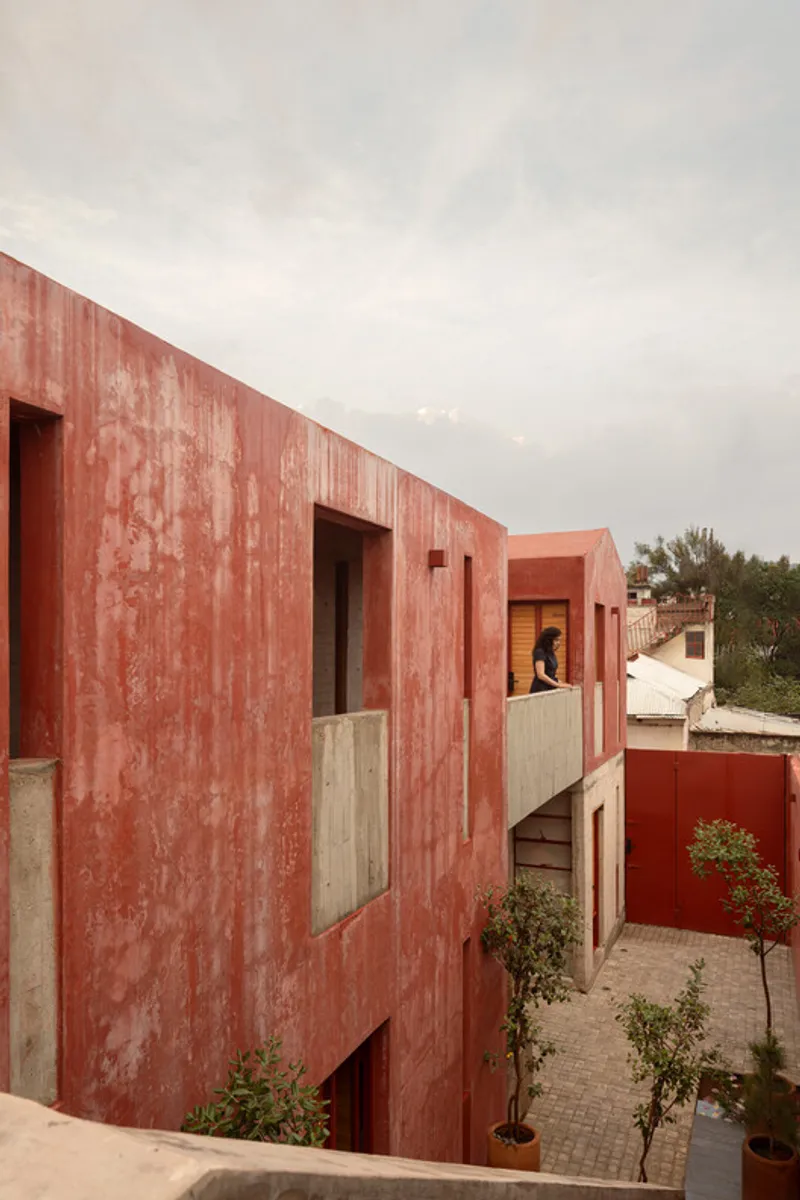
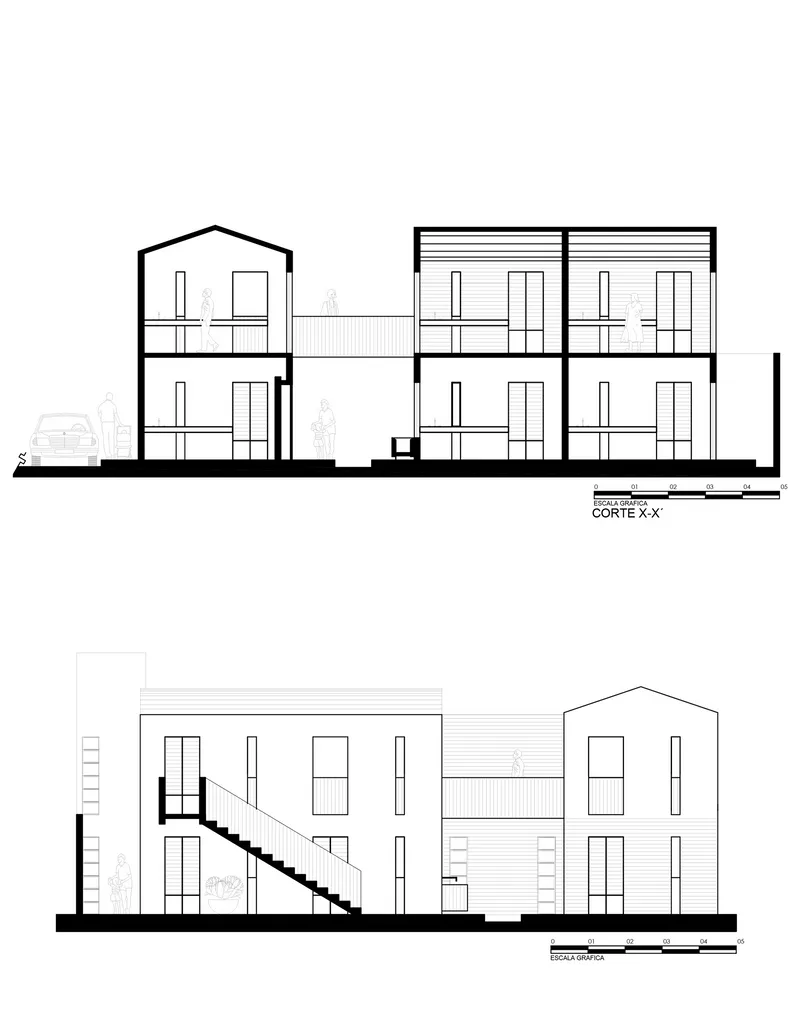
The architectural composition organizes Casa Alicia as two distinct volumes with gable roofs connected by a central bridge. This tripartite organization—two primary masses linked by transitional element—creates both functional and experiential benefits while responding to the site's proportions and constraints.
The two separate volumes allow clear functional zoning, potentially separating bedroom wings, segregating public from private areas, or creating distinct rental units. The gable roofs reference vernacular building traditions throughout Mexico and Latin America, where pitched roofs shed rain effectively while creating recognizable profiles. Unlike flat modernist roofs that can read as foreign imports, gable forms connect to local architectural memory.
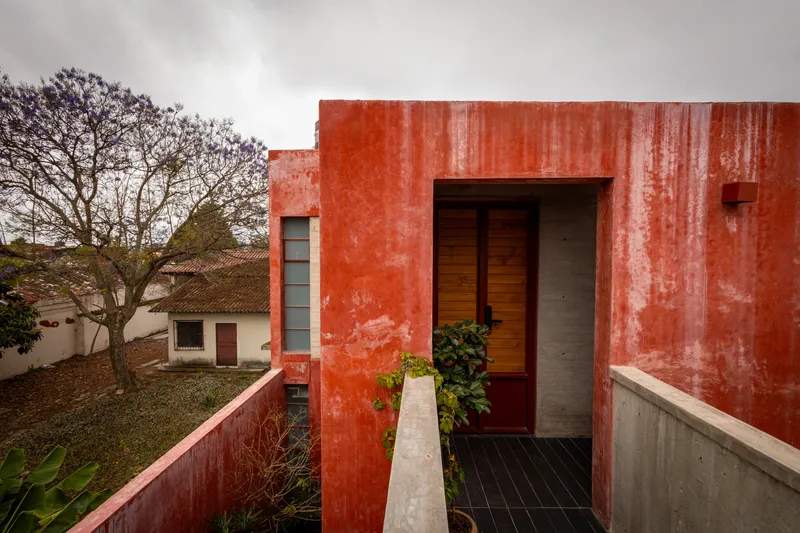
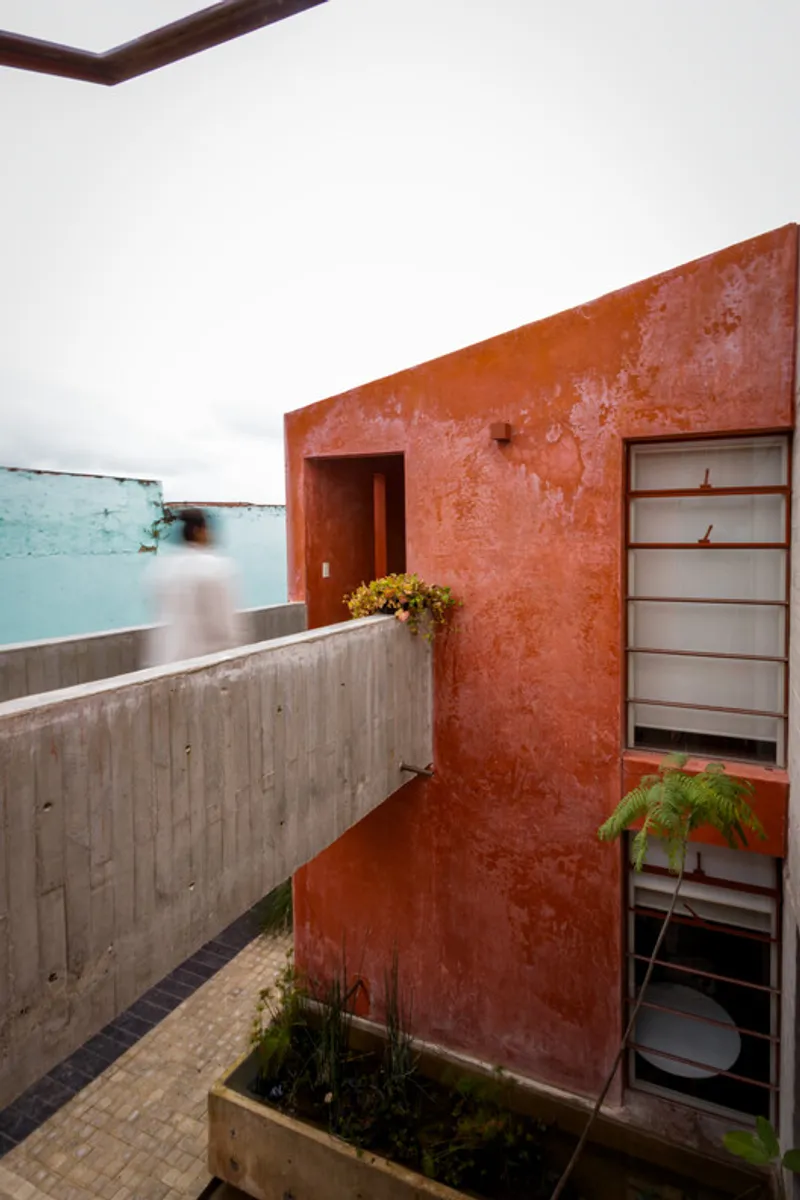
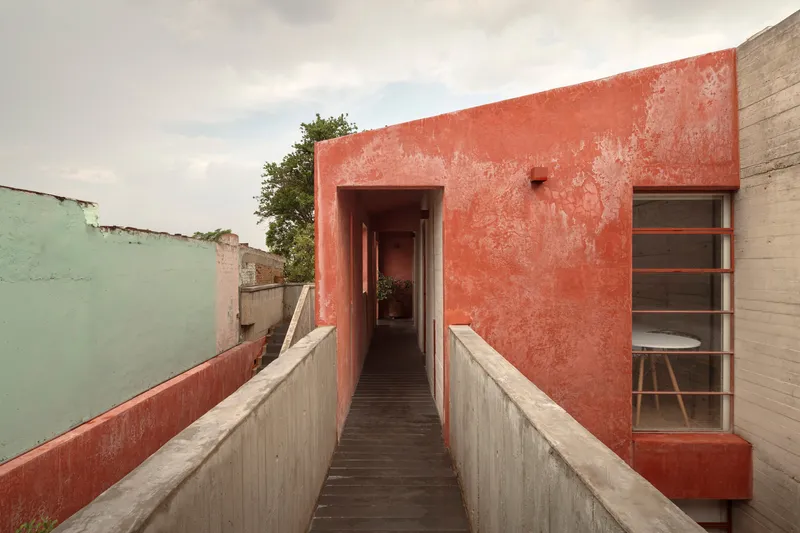
The connecting bridge serves multiple purposes beyond mere circulation. Elevated above the courtyard level, it creates a dramatic spatial experience, transforming simple passage between volumes into an architectural event. The bridge articulates circulation paths clearly, providing legible wayfinding for guests navigating the property. It also generates volumetric voids—spaces carved from building mass—that bring light deep into the plan and create visual connections between different levels and zones.
This bridge element demonstrates sophisticated three-dimensional thinking. Rather than connecting volumes at ground level through simple corridors, the elevated connection creates varied ceiling heights, introduces vertical spatial drama, and allows the courtyard to flow beneath. Guests crossing the bridge gain elevated perspective on the courtyard, experiencing the water feature and plantings from above before descending to encounter them at ground level.
Sober Monolithic Volumetry: Street Presence and Privacy
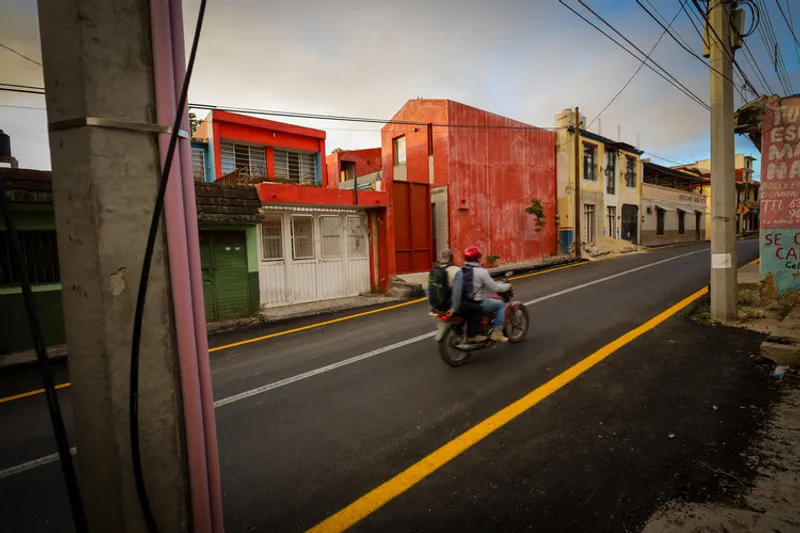
ALTOVA describes the volumetry as "sober and monolithic," closing off toward the street while opening to the central courtyard. This strategy embodies a fundamental principle of Mexican and broader Latin American residential architecture: the distinction between public street facade and private interior realm.
The street-facing elevation presents a relatively reserved character—solid, protective, minimally ornamented. This restraint serves multiple purposes. It maintains continuity with the historic streetscape, avoiding attention-seeking gestures that might disrupt the collective character of the historic center. It provides security and privacy for guests, preventing casual observation from passersby. And it creates contrast with the open, animated courtyard, making the interior discovery more dramatic.
The monolithic quality—surfaces reading as unified masses rather than assembled components—creates visual strength and permanence. This solidity connects to traditional Mexican architecture's emphasis on substantial masonry construction, where thick walls and heavy materials convey both literal and symbolic stability. In the context of hospitality design, this weightiness provides reassuring sense of shelter and protection.
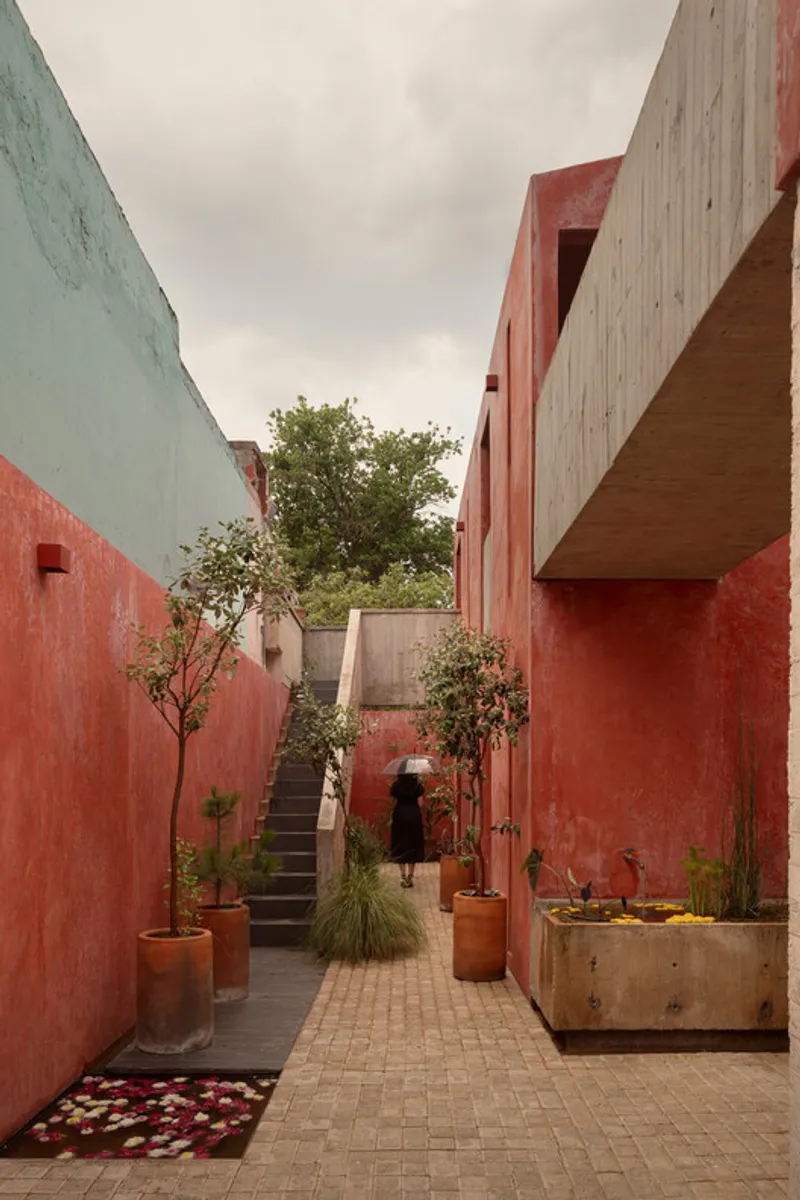
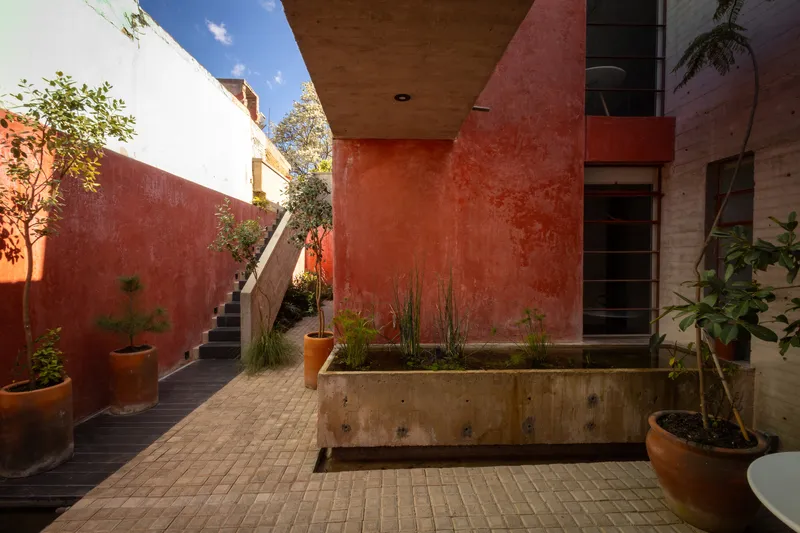
The inward focus, opening to the central courtyard rather than the street, continues the traditional Mexican casa de patio (courtyard house) typology. This organizational strategy, inherited from Spanish colonial architecture with earlier roots in Roman and Islamic building traditions, creates private outdoor space sheltered from street noise, dust, and visual intrusion. The courtyard becomes the true "face" of the building—not its street facade but its interior heart.
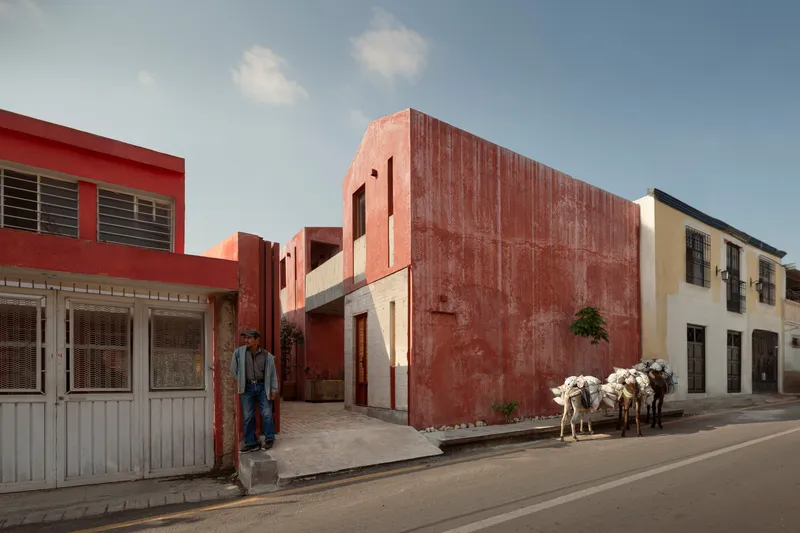
Introspective Architecture: Climate and Cultural Response
The description characterizes Casa Alicia as "introspective architecture" responding to both climate and traditional urban context. This introspection represents deliberate design philosophy rather than mere constraint response. The inward-looking organization creates architecture focused on interior experience rather than external display, on private realm rather than public presence.
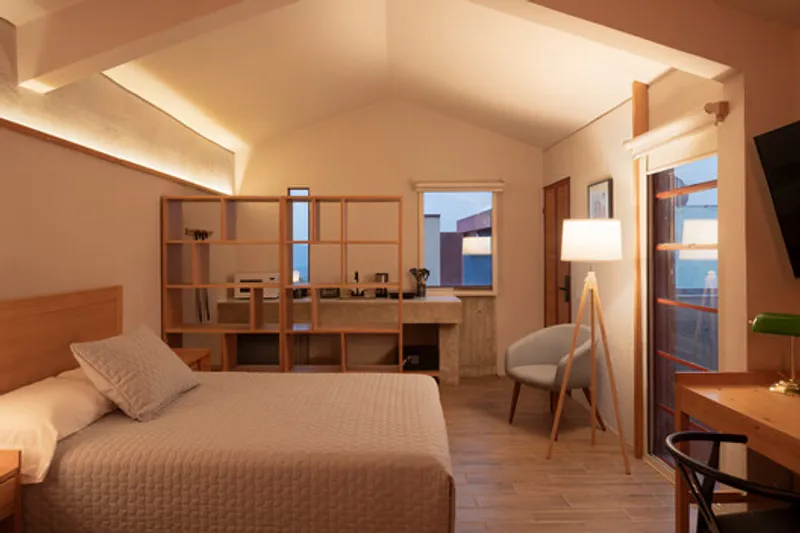
Climatically, the courtyard organization provides crucial benefits in Comitán's highland environment. The central open space creates a microclimate distinct from surrounding urban conditions. During warm days, the courtyard's vegetation and water feature provide evaporative cooling, creating a cool sink that draws breezes through surrounding rooms. At night, when temperatures drop, the courtyard allows warm air to rise and escape while cooler air settles, naturally ventilating the building. The surrounding building mass provides thermal mass that moderates temperature swings, staying cool during day and releasing stored warmth at night.
The courtyard also addresses daylighting, bringing natural light into the building's center where it would otherwise struggle to reach. Rooms surrounding the courtyard receive borrowed light reflected from courtyard surfaces, reducing reliance on artificial lighting. This daylighting strategy is both energy-efficient and experientially valuable, creating spaces illuminated by natural light throughout the day.

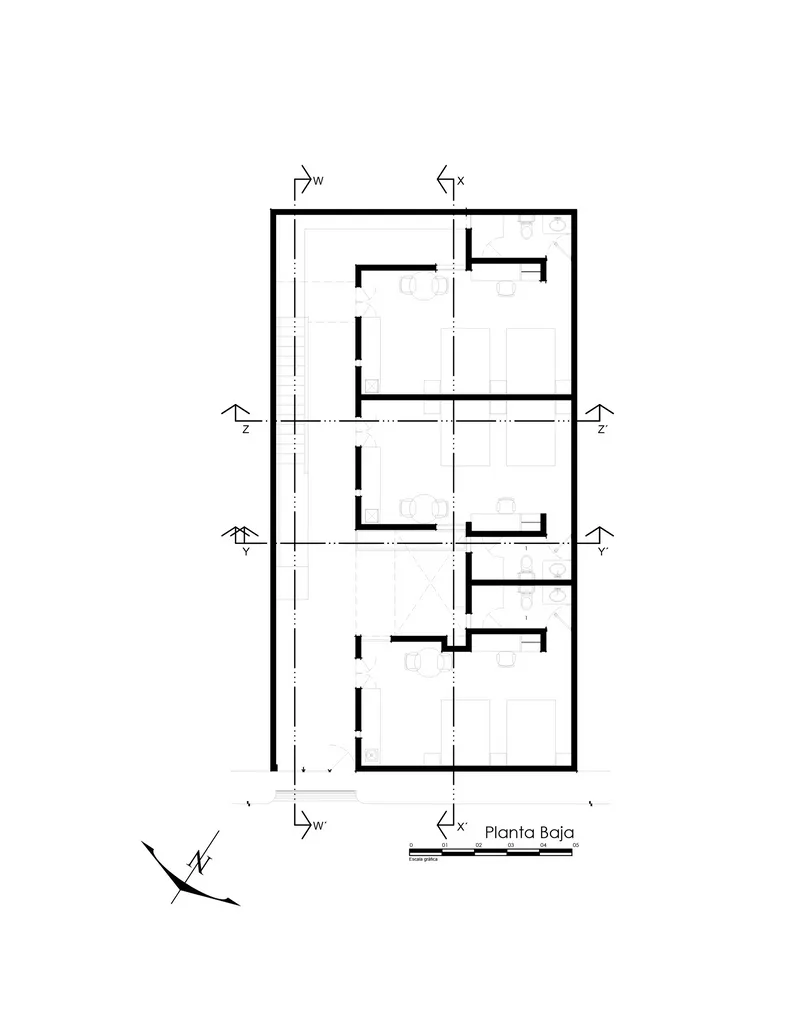
Culturally, the introspective organization reflects Mexican domestic traditions valuing privacy, family intimacy, and distinction between public and private realms. The street facade maintains propriety and reserve, while the courtyard allows relaxation and openness within protected bounds. This cultural pattern persists even in contemporary hospitality contexts, where guests appreciate the sense of sanctuary created by inward-focused design.
Material Authenticity: Reused Brick and Exposed Concrete
One of Casa Alicia's most significant sustainable gestures involves reusing bricks from previous construction on the site. This decision carries environmental, economic, aesthetic, and symbolic dimensions. Environmentally, reusing existing materials eliminates the embodied carbon of manufacturing new bricks, reduces construction waste, and conserves natural resources. Economically, salvaged materials often cost less than new products while adding character that commands premium value in hospitality contexts.
Aesthetically, the reused bricks provide texture, color variation, and patina impossible to achieve with new materials. Each brick carries evidence of its previous life—subtle wear, mortar residue, color variations from firing or weathering. This visual richness creates surfaces that reward sustained attention, avoiding the monotony of perfectly uniform industrial materials. The reddish tones of the brick connect to both regional building traditions and the warm earth tones characteristic of Mexican architecture.
Symbolically, the reused brick embodies continuity between past and present, acknowledging the site's history rather than erasing it. The description notes that the brick walls "evoke the passage of time," creating architecture that feels layered and storied rather than brand-new and disconnected from context. In a historic center, this temporal depth helps new construction integrate with existing fabric.
The exposed concrete paired with reused brick creates material dialogue between tradition and modernity. Concrete represents contemporary construction technology and aesthetic preferences, while brick connects to centuries of regional building practice. Together, they form what ALTOVA describes as "reddish walls"—a unified color palette despite different materials, creating visual coherence across the composition.
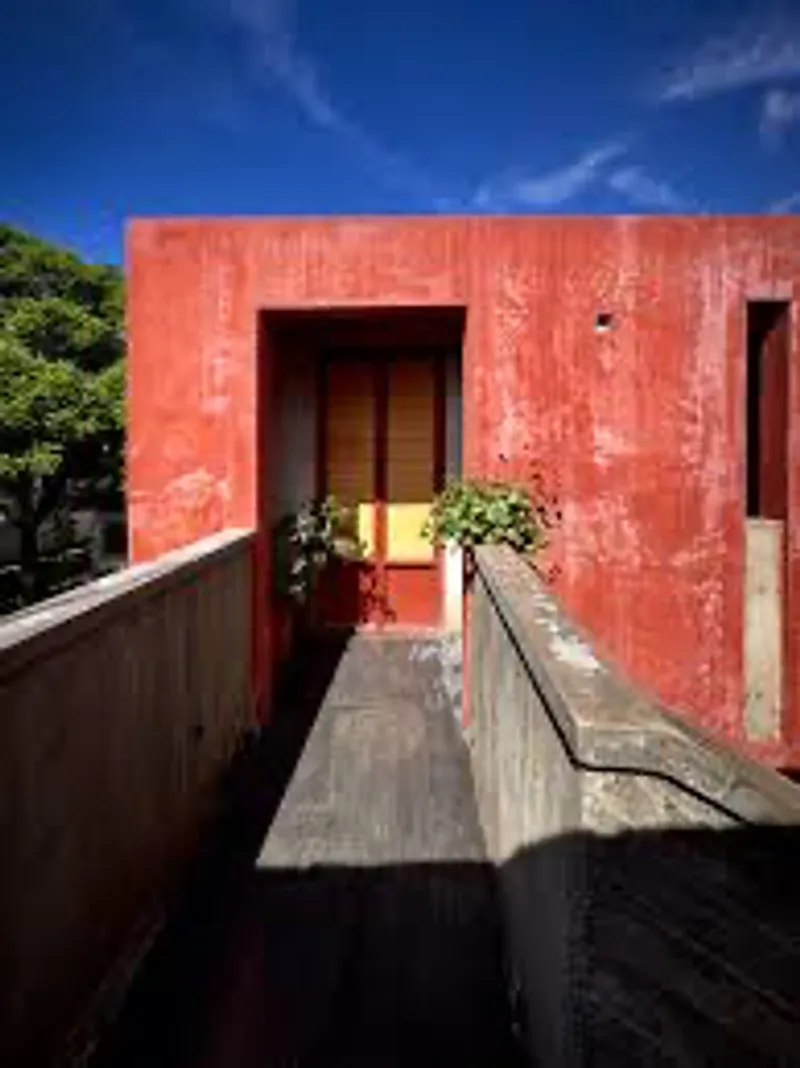
Both materials function as thermal mass—their density and weight allow them to absorb, store, and slowly release heat. This thermal mass moderates interior temperatures, keeping spaces cool during warm days and releasing stored warmth during cool nights. In Comitán's climate with significant day-night temperature variation, this passive climate control provides comfort while reducing energy consumption for heating or cooling.
Low Maintenance Design: Practical Hospitality Considerations
The repeated emphasis on "low maintenance" reflects practical realities of managing short-term rental properties, particularly in locations distant from owners' primary residences. High-maintenance materials, complex systems, or delicate finishes become liabilities in hospitality contexts with heavy use, frequent turnover, and limited direct owner oversight.
The material selections—exposed concrete, durable brick, presumably tile or sealed concrete floors—require minimal upkeep beyond routine cleaning. These materials withstand heavy foot traffic, resist damage from luggage or furniture movement, and don't require refinishing or frequent replacement. Unlike painted drywall that shows every scuff or carpet that stains and wears, the robust materials in Casa Alicia age gracefully without constant maintenance.
The courtyard landscaping likely emphasizes drought-tolerant endemic species requiring minimal irrigation and little pruning or fertilization. Water features might incorporate recirculating systems with minimal water loss and automatic fill mechanisms, reducing maintenance intervention. Lighting probably uses LED technology with multi-year lifespans, minimizing bulb replacement needs.
Mechanical systems, if any, are presumably simple and robust, avoiding complex equipment requiring specialized maintenance. Natural ventilation strategies reduce dependence on HVAC systems that need regular service. Simple, durable plumbing fixtures minimize repair needs. These decisions reflect understanding that system failures in rental properties create guest dissatisfaction, negative reviews, and lost revenue far exceeding any initial cost savings from cheaper equipment.
The low-maintenance approach also reduces environmental impact. Materials and systems requiring constant replacement, repair, or chemical treatments create ongoing environmental costs. Durable, passive, simple solutions minimize these long-term impacts while improving property economics.
All the Photographs are works of Cesar Belio, Roberto Torres Valle


Popular Articles
Popular articles from the community


longwave studio Reorganizes a 112 m² Tainan Apartment Around the Daily Routines of a Family and Two Cats
In Tainan, Taiwan, birch plywood, rust-red furniture and a freestanding plaster wall link arrival, storage, work and family life in one apartment.

Jaramillo Van Sluys Arquitectura and Urbanismo Turn a Demolished Registry Lot in Quito into an Orchard Plaza
In Quito's Centro Histórico, a 2,800 m² plaza exposes the San Agustín convent wall and redraws its lost Augustinian orchard in volcanic stone.

U.GA Architects Wraps an Oval Rooftop Pool in Curved Board-Formed Concrete on Busan's Jeollidan-gil
In Busan's Jeonpo-dong, a 454 m² mixed-use block stacks a neighborhood facility, guest rooms and an oval rooftop pool inside spiraling concrete walls.

David Ortega Stacks a Two-Story Mexico City Penthouse Around a Steel Stair and a Pergola-Shaded Roof Terrace
In Colonia Roma, a 300 m² penthouse uses oak joinery, a planted steel stair and a slatted roof pergola to make a new-build apartment feel like a house.

Similar Reads
You might also enjoy these articles


Hodi-Mandai Geram
Project Function: Preservation and revitalization of the Intangible heritage and socio-spatial identity of the Hodi by Housing, Cultural Memory Center, Sacred Grove, landscape, local tourism economy


Olio Towers: A Mid-Rise for Performers That Fuses Housing, Rehearsal, and Stage
Located blocks from Houston's Theater District, this modular tower stacks living units around a central performance atrium.

Oasis: Modular Green Housing Carved into Dhaka's Urban Fabric
A shortlisted Plugin Housing entry reclaims unauthorized settlements in Dhaka with stepped concrete volumes, green roofs, and ventilation-driven design.

Black Hole: A Floating Megastructure for the Post-Physical Era
Emiliano Mazzarotto envisions a spherical, self-scaling arena where e-sports, digital hotels, and holographic stadiums replace traditional public space.

Explore Hospitality Building Competitions
Discover active competitions in this discipline

Challenge to reimagine the Iron Throne

Photograph architecture without architects

Illustrate the lost glory of Angkor Wat - Render Challenge

Design challenge to reuse E-waste
Comments (0)
Please login or sign up to add comments
No comments yet. Be the first to comment!