
Casa Carceller: A Contemporary Revival of Traditional Foios Architecture by Quadrat Estudio
Casa Carceller blends traditional Foios architecture with modern spatial clarity, using handcrafted brick, natural light, and a central courtyard to create a serene home.


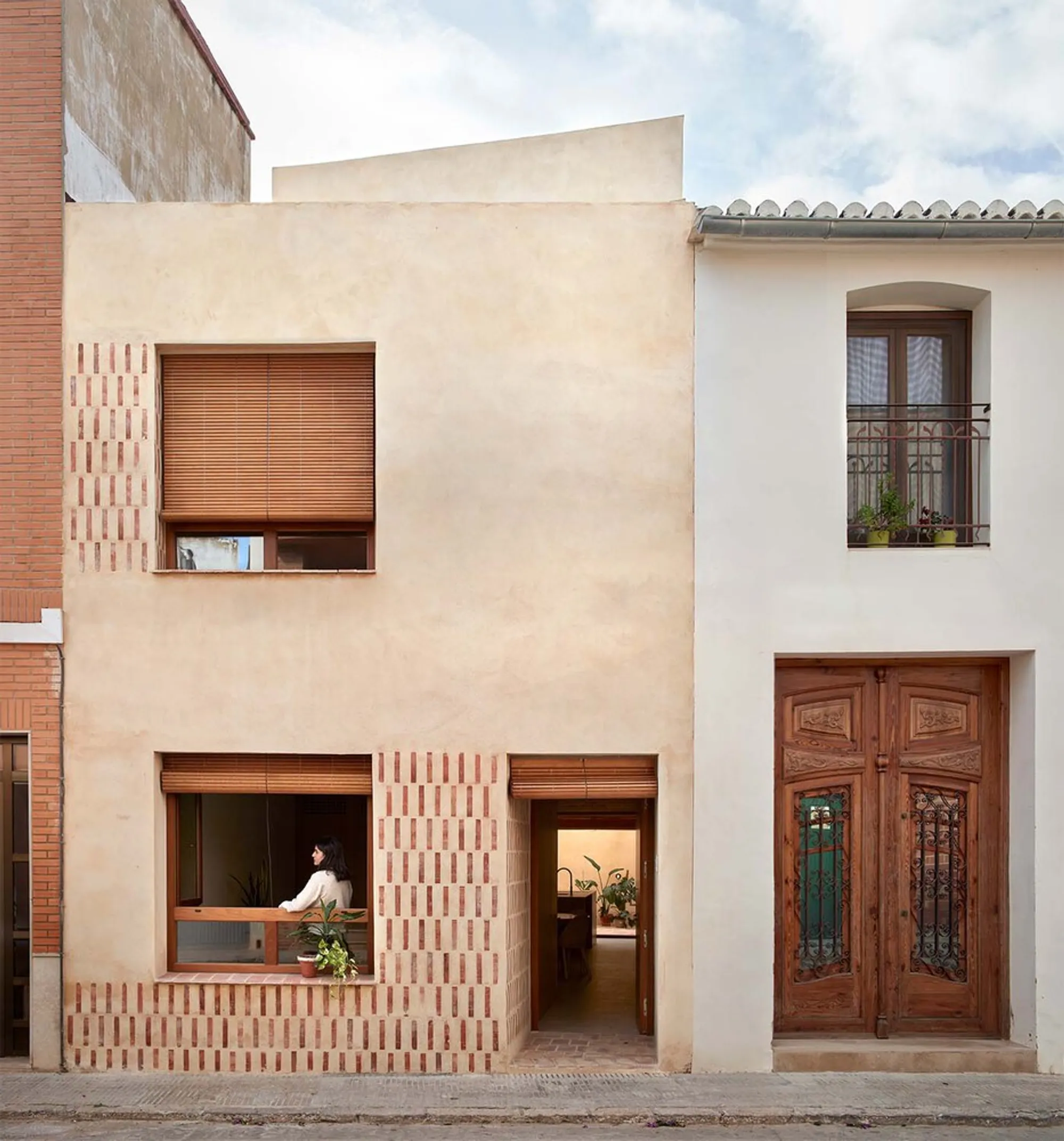
Casa Carceller by Quadrat Estudio is a contemporary reinterpretation of traditional residential architecture in Foios, Spain. Completed in 2022, the project embraces the material heritage, spatial proportions, and intimate scale of the historic working-class neighbourhood while introducing a refined, modern architectural language. With a design driven by privacy, natural light, and spatial continuity, the house transforms a narrow and constrained urban plot into a serene, luminous home centered on craft, material honesty, and contextual sensitivity.
Revisiting Local Heritage Through Contemporary Design
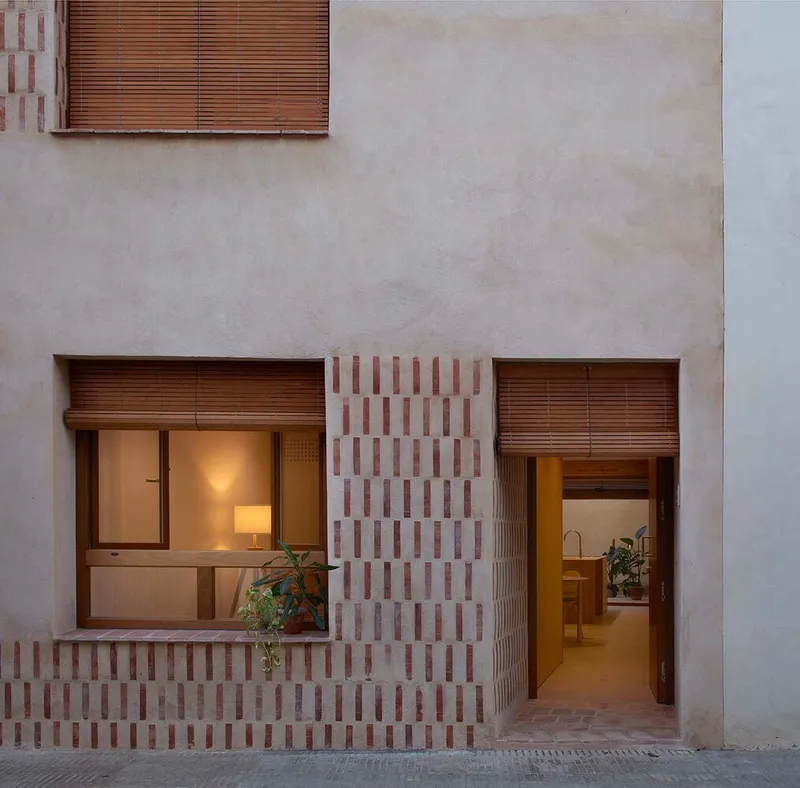
Situated among low-rise, tightly packed plots, Casa Carceller maintains the rhythm and character of its surroundings through its height, silhouette, and tactile material palette. Rather than standing out, the architecture aims to blend seamlessly with Foios’s traditional dwellings, reinforcing continuity within the neighbourhood’s urban fabric.
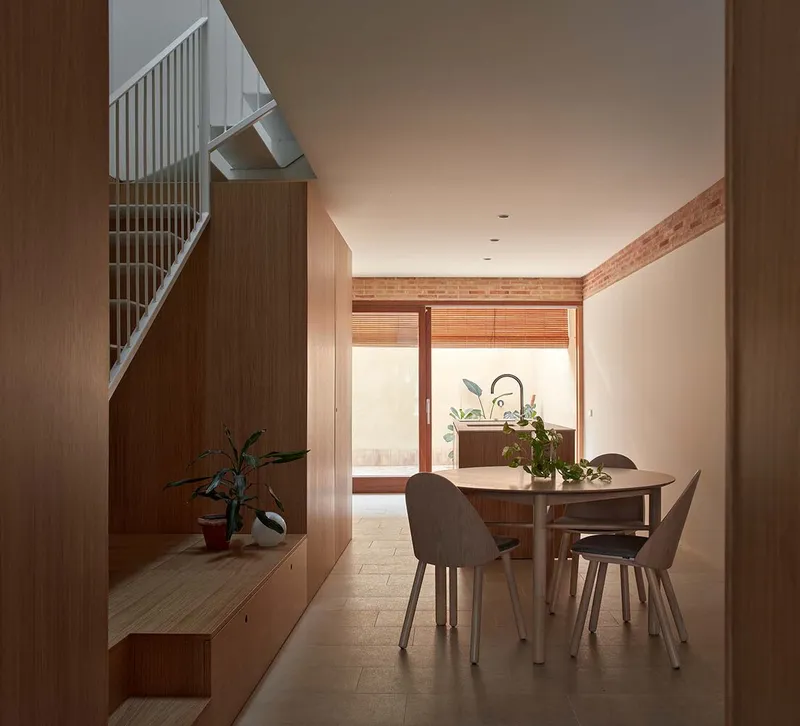
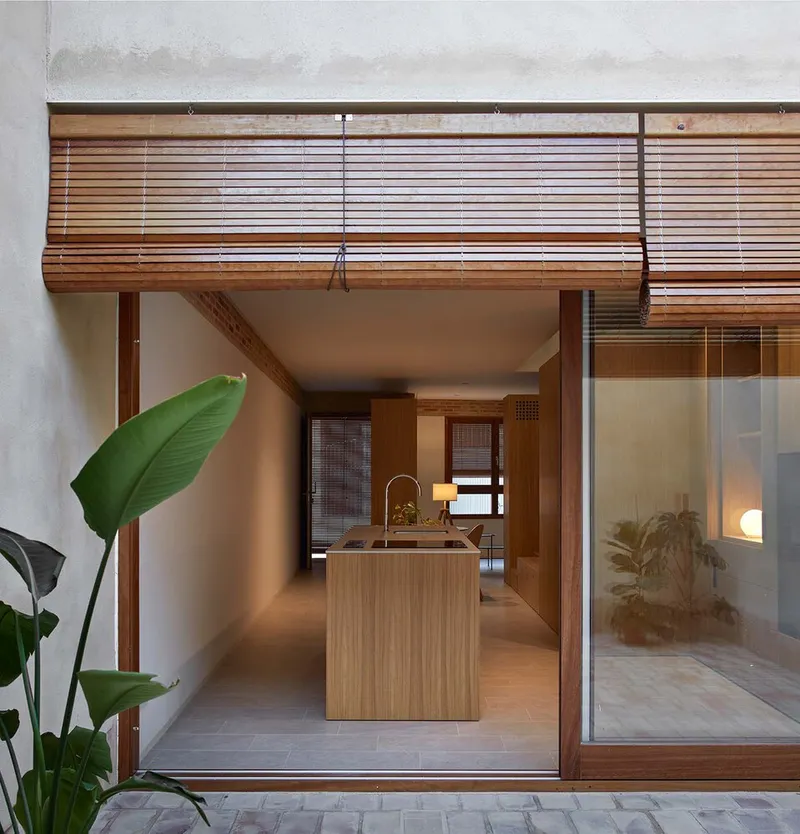
The design strategy prioritizes the length of the plot, creating a fluid spatial sequence that enhances functional depth. The house opens progressively through a series of well-composed spaces, allowing light and ventilation to permeate even the deepest interior zones.
Spatial Composition: Light, Privacy, and Movement
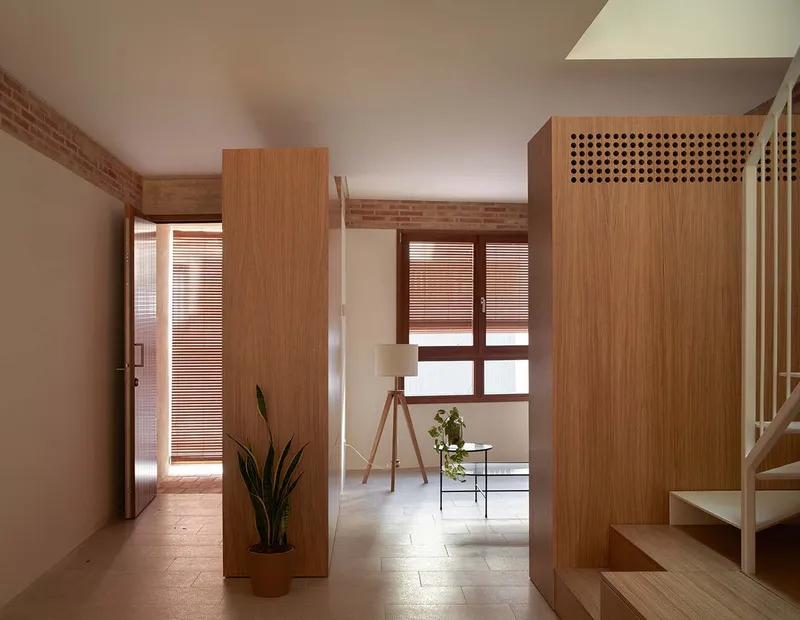
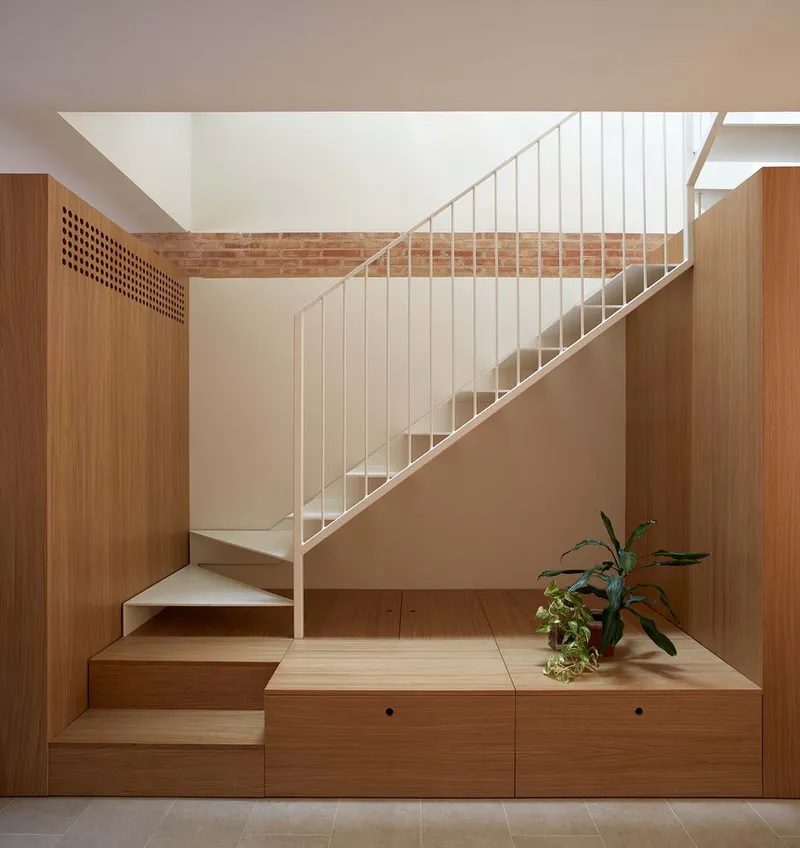
A key feature of Casa Carceller is its carefully choreographed circulation. The interior layout defines space without interrupting the ceiling line, maintaining an uninterrupted sense of volume throughout the home.
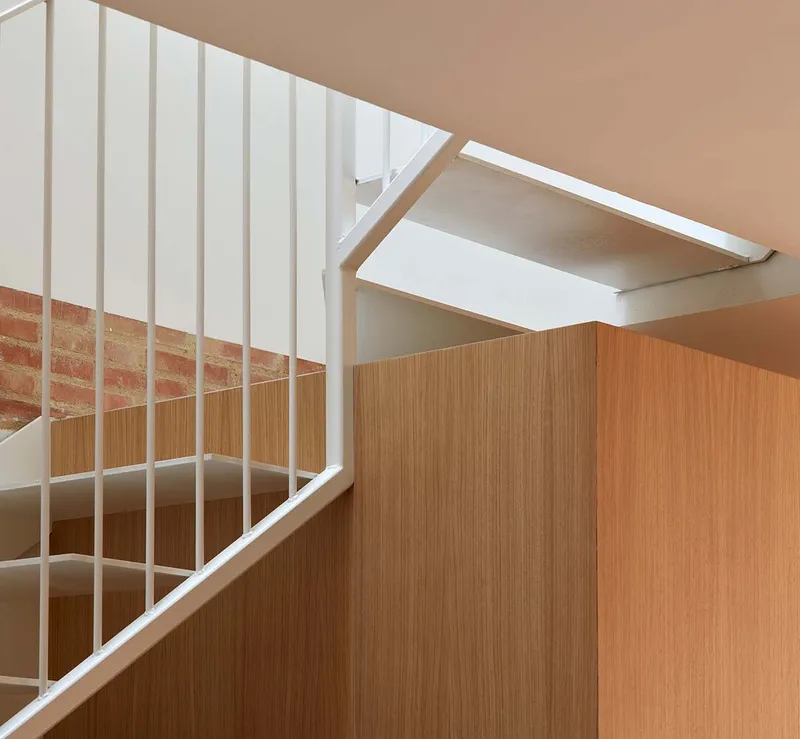
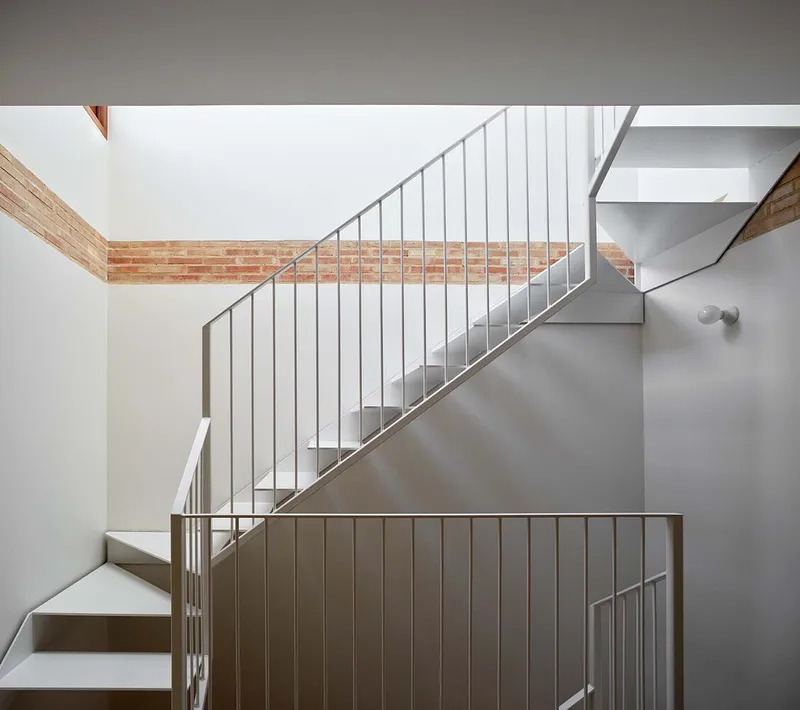
A centrally located staircase—illuminated from above—acts as the home’s vertical and spatial anchor. This gesture naturally organizes the interior program and unites all levels with a gentle, sculptural presence.
Complementing this is an inner courtyard that physically and visually separates the home from its neighbouring structure. This void allows natural light to enter the living spaces, creating a calming atmosphere and reinforcing the sense of privacy crucial to the project’s conceptual foundation.
Materiality Rooted in Craft and Context
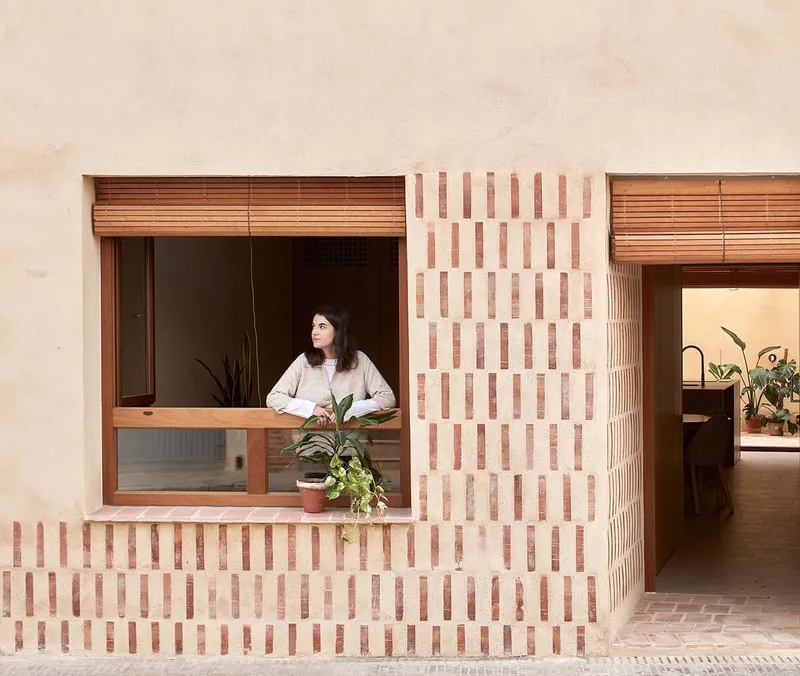
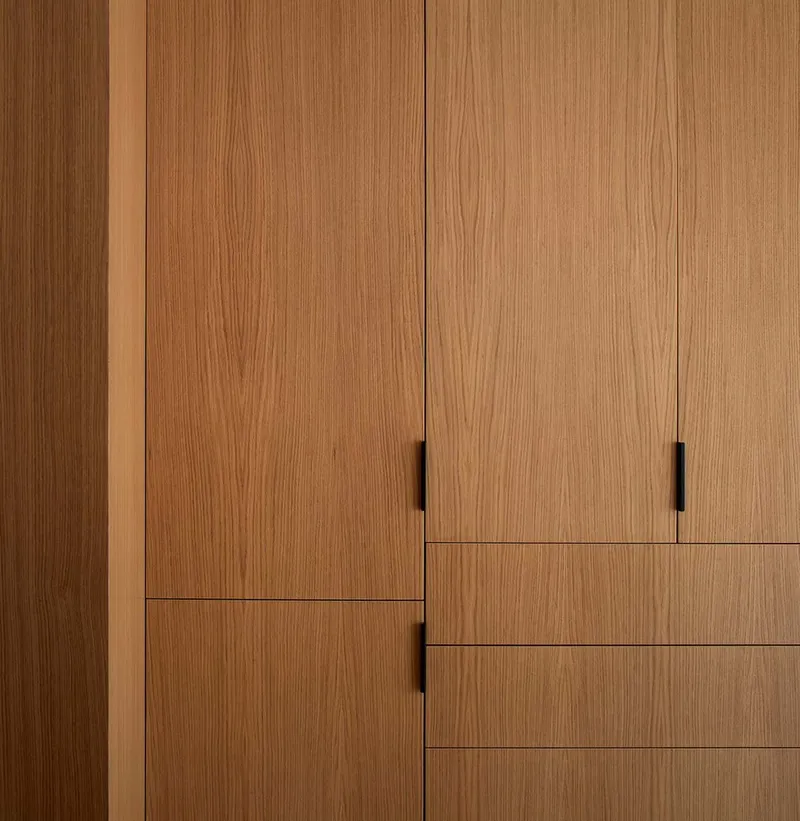
Material choices play a central role in the architectural identity of Casa Carceller. Quadrat Estudio draws from the village’s local brick industry, integrating handcrafted ceramic elements that celebrate imperfection and authenticity.
The use of bricks in varied formats ensures both structural integrity and expressive character. They serve multiple purposes throughout the home:
- Facade cladding that harmonizes with neighbouring houses
- Extended-format bricks forming integrated gutters
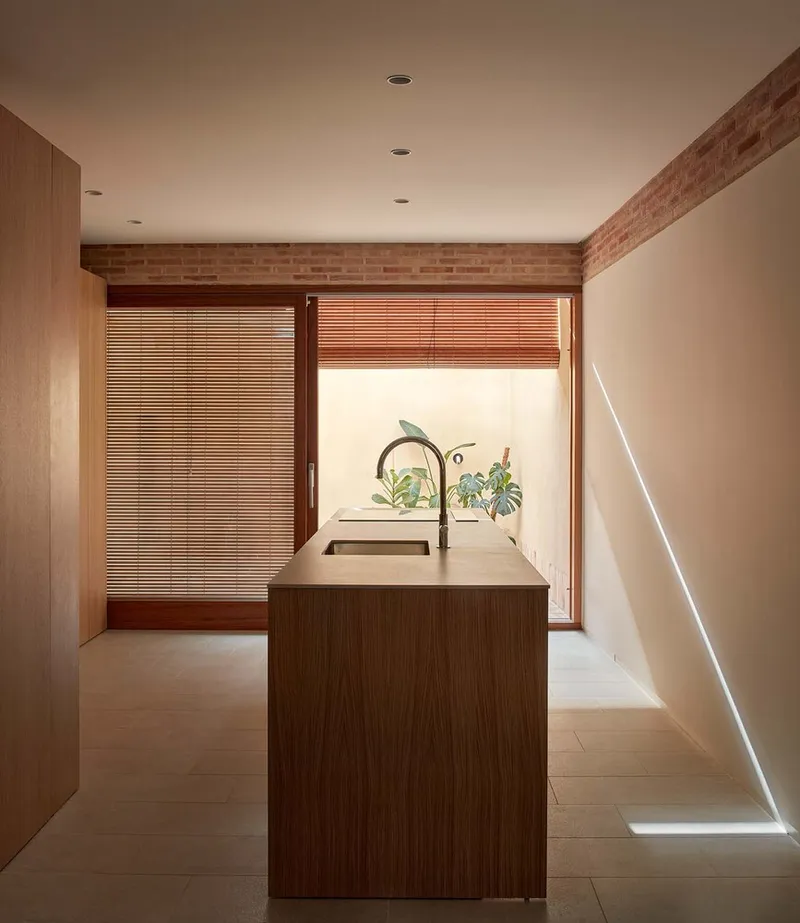
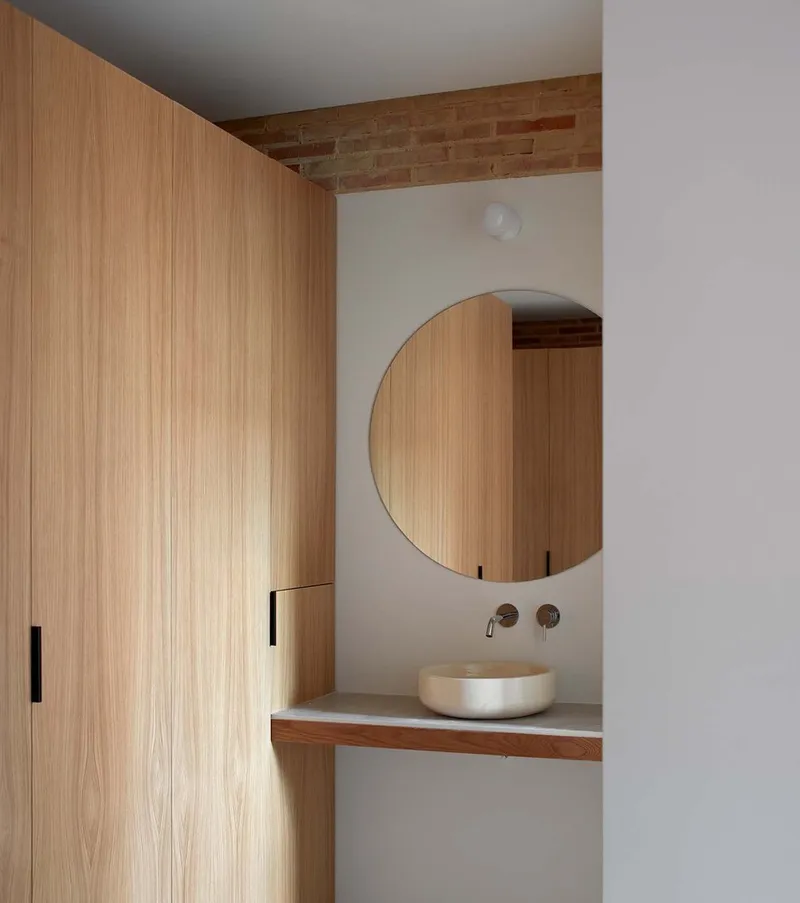
- Solid interior bricks used as finishes and tactile surfaces
- Vertical arrangements with intentional gaps, emphasizing their non-structural role and adding texture and depth
The visible sand and white cement used in the grout further enhances the handcrafted appearance, giving both the interior and exterior a distinctive, artisanal quality.
A Simple Home Elevated by Craft and Place
Casa Carceller is a testament to how simplicity, restraint, and contextual respect can create a timeless architectural statement. Through its careful material strategy, sensitive scale, and luminous interior, it offers more than shelter—it presents a quiet, meaningful living environment shaped by tradition, craftsmanship, and contemporary design thinking.
All photographs are works of Mariela Apollonio



Popular Articles
Popular articles from the community


Lunar Spiral: Space Architecture Shaped by the Mathematics of the Universe
Lunar Spiral reimagines space architecture through Fibonacci geometry, lunar regolith, levitating habitats, and self-sustaining Moon living.

The Musturak Paradise: Senior Living Architecture for a Connected Future in Temara, Morocco
The Musturak Paradise reimagines senior living architecture in Temara via private homes, social spaces, culture, community, and shared care.

The Ocean Hive: Sustainable Architecture for a Self-Sufficient Civilization at Sea
The Ocean Hive imagines sustainable architecture at sea, where modular habitats, algae, wave power and ocean waste sustain a growing colony.

Hill & Cross Opera: Sculptural Opera House Architecture Shaped by Tallinn’s Landscape and Identity
Hill & Cross Opera reimagines opera house architecture in Tallinn through its sculptural hill, civic plaza, glass wave and a luminous cross.


Similar Reads
You might also enjoy these articles


Hodi-Mandai Geram
Project Function: Preservation and revitalization of the Intangible heritage and socio-spatial identity of the Hodi by Housing, Cultural Memory Center, Sacred Grove, landscape, local tourism economy


Olio Towers: A Mid-Rise for Performers That Fuses Housing, Rehearsal, and Stage
Located blocks from Houston's Theater District, this modular tower stacks living units around a central performance atrium.

Oasis: Modular Green Housing Carved into Dhaka's Urban Fabric
A shortlisted Plugin Housing entry reclaims unauthorized settlements in Dhaka with stepped concrete volumes, green roofs, and ventilation-driven design.

Black Hole: A Floating Megastructure for the Post-Physical Era
Emiliano Mazzarotto envisions a spherical, self-scaling arena where e-sports, digital hotels, and holographic stadiums replace traditional public space.

Explore Residential Design Competitions
Discover active competitions in this discipline



Challenge to reimagine the Iron Throne


Photograph architecture without architects


Illustrate the lost glory of Angkor Wat - Render Challenge


Design challenge to reuse E-waste
Comments (0)
Please login or sign up to add comments
No comments yet. Be the first to comment!