
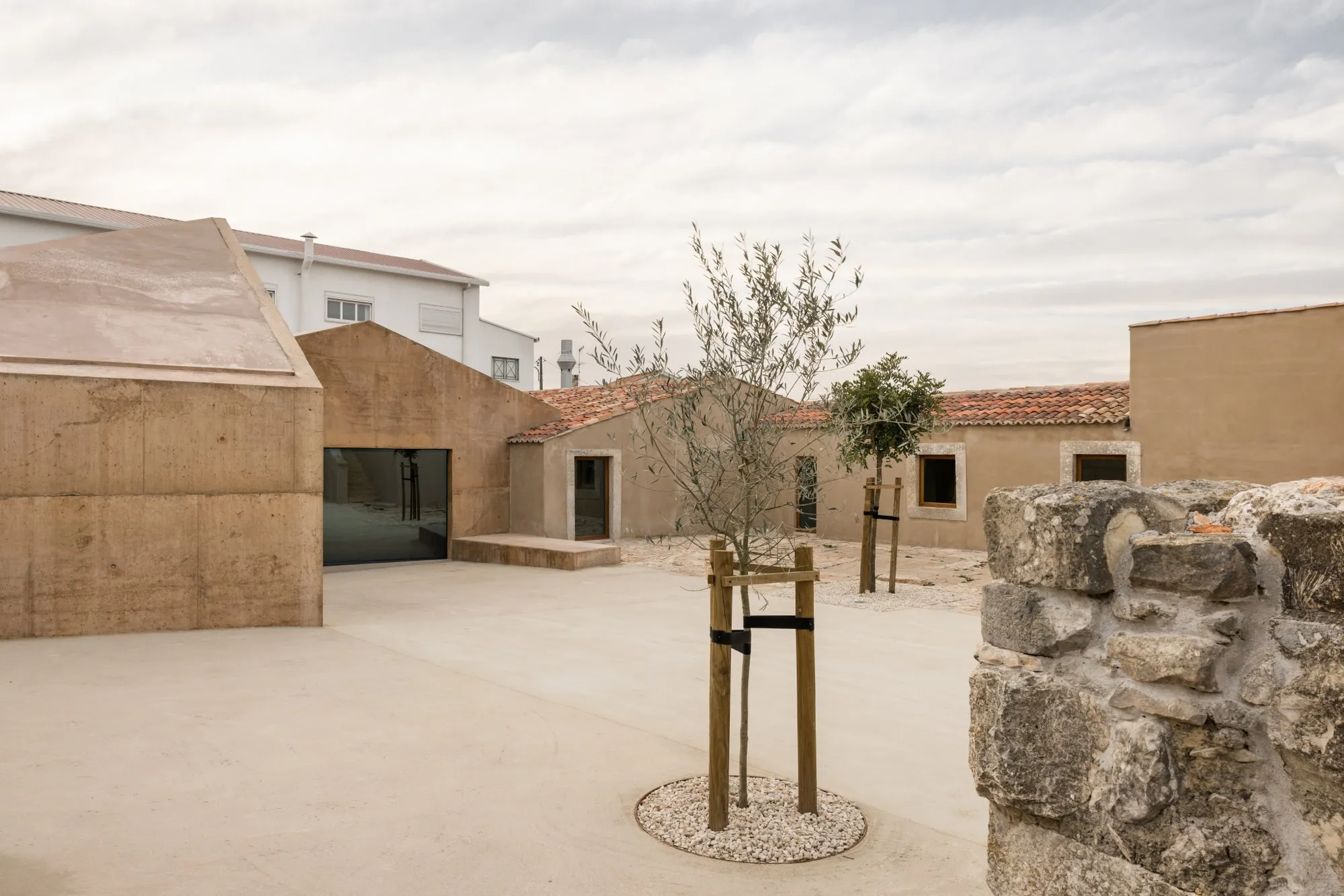
Casal Saloio – Museum of Rurality by Miguel Marcelino
Casal Saloio – Museum of Rurality by Miguel Marcelino preserves Portugal’s rural heritage, blending historic layers with contemporary architectural expansion.


The Casal Saloio – Museum of Rurality in São Domingos de Rana, Portugal, designed by Miguel Marcelino, is a remarkable architectural project that preserves cultural memory while adapting an ancient rural dwelling for contemporary use. This transformation balances heritage conservation, sustainable architecture, and modern design, offering a space that narrates the history of rural life in the region.
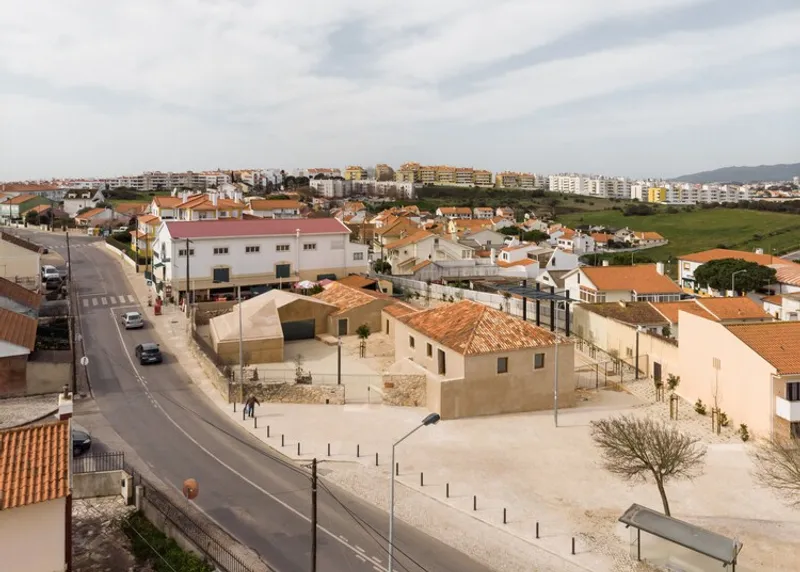
Historical Background
The Casal Saloio de Outeiro de Polima is one of the few surviving examples documenting the earliest rural settlements in this territory. Originally a humble rural house, it underwent multiple phases of growth and transformation over centuries.
At its core, it began as a single compartment. Over time, various additions were made, including:
- An annex room and side wing
- A traditional stone oven
- Corral spaces for animals
- A second floor
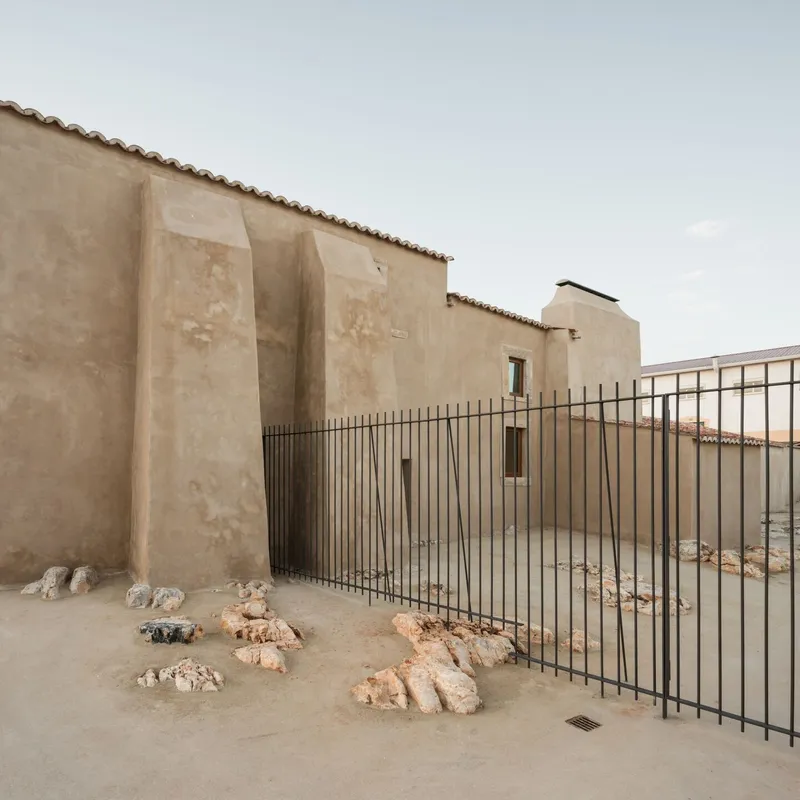
- Structural buttresses to stabilize the building
This organic and informal construction process reflected the needs of generations, showing how rural architecture evolved through necessity, resourcefulness, and adaptation.

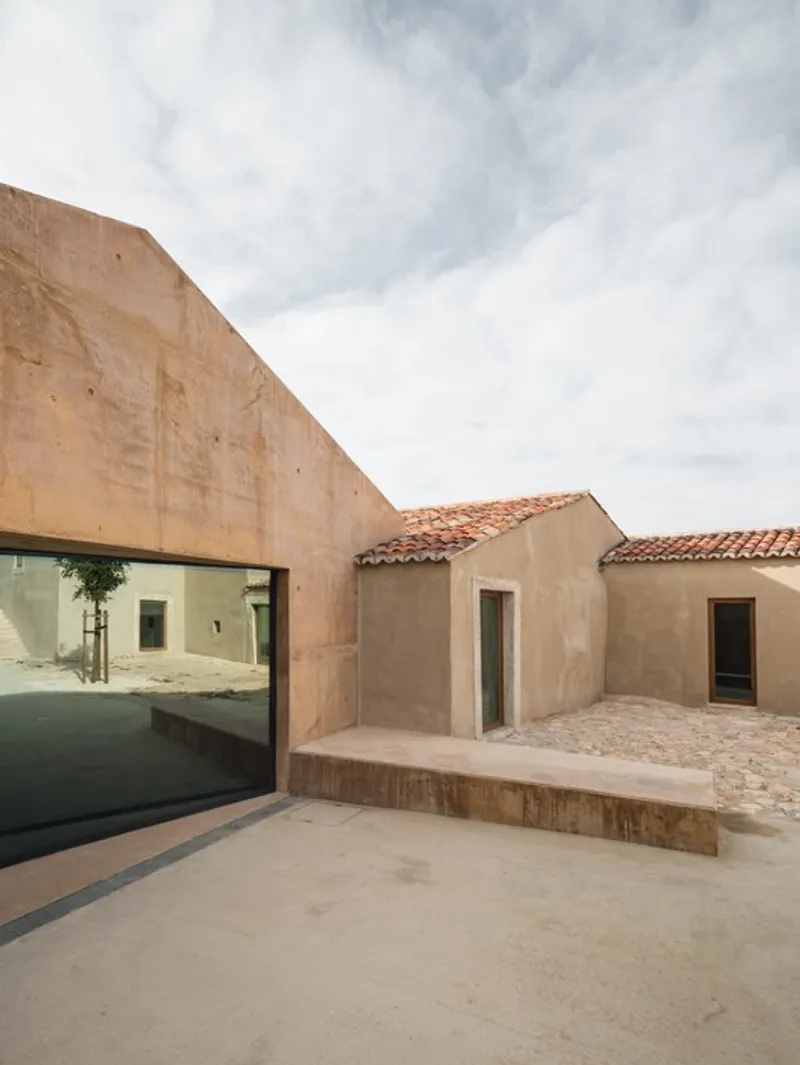
Architectural Restoration and Design
Miguel Marcelino’s intervention consolidates the rural house in its last recognizable configuration, preserving the broken and uneven geometry that tells the story of its layered evolution. Instead of erasing irregularities, the project highlights them, ensuring that the building remains a living archive of rural memory.
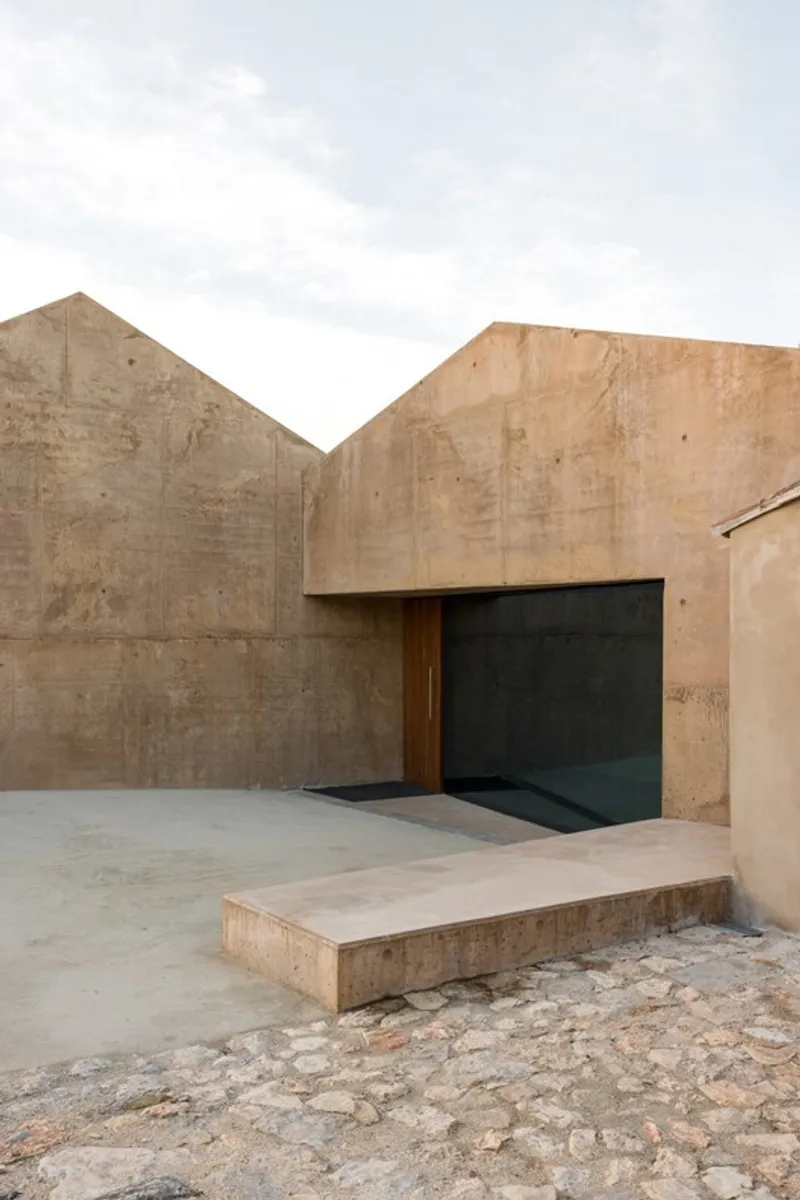
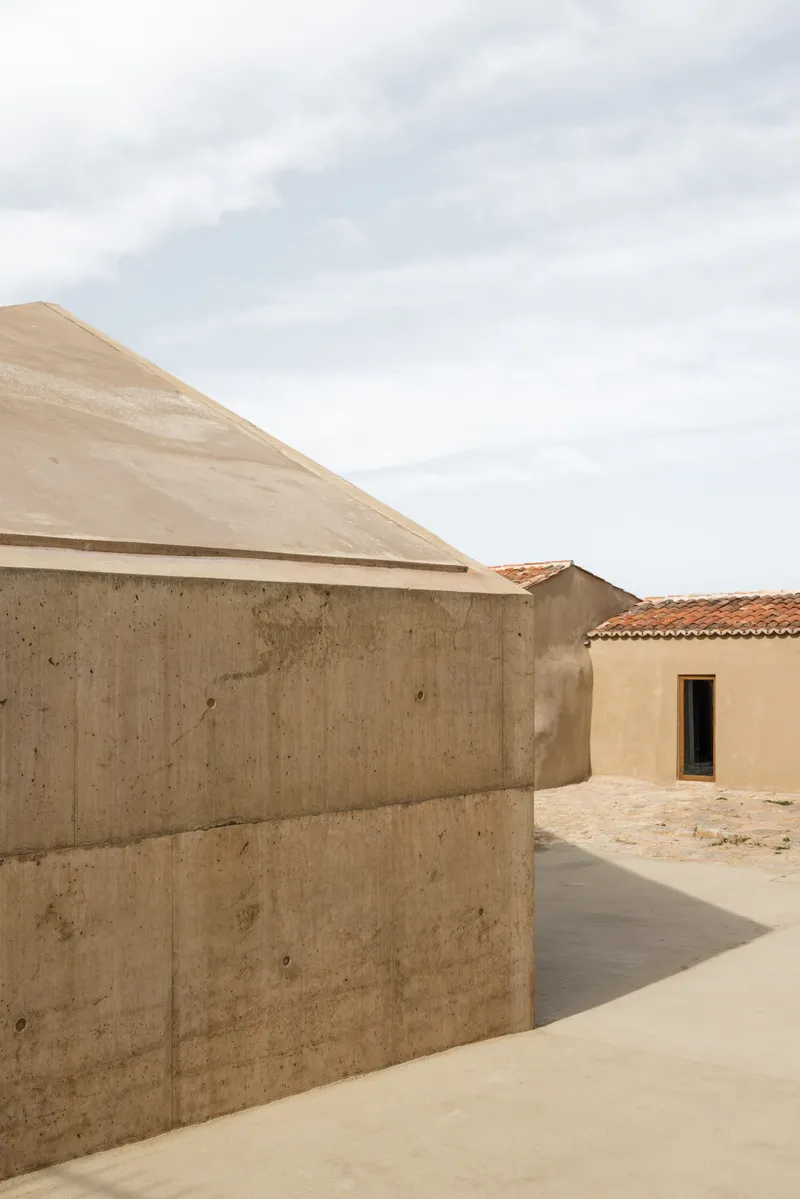
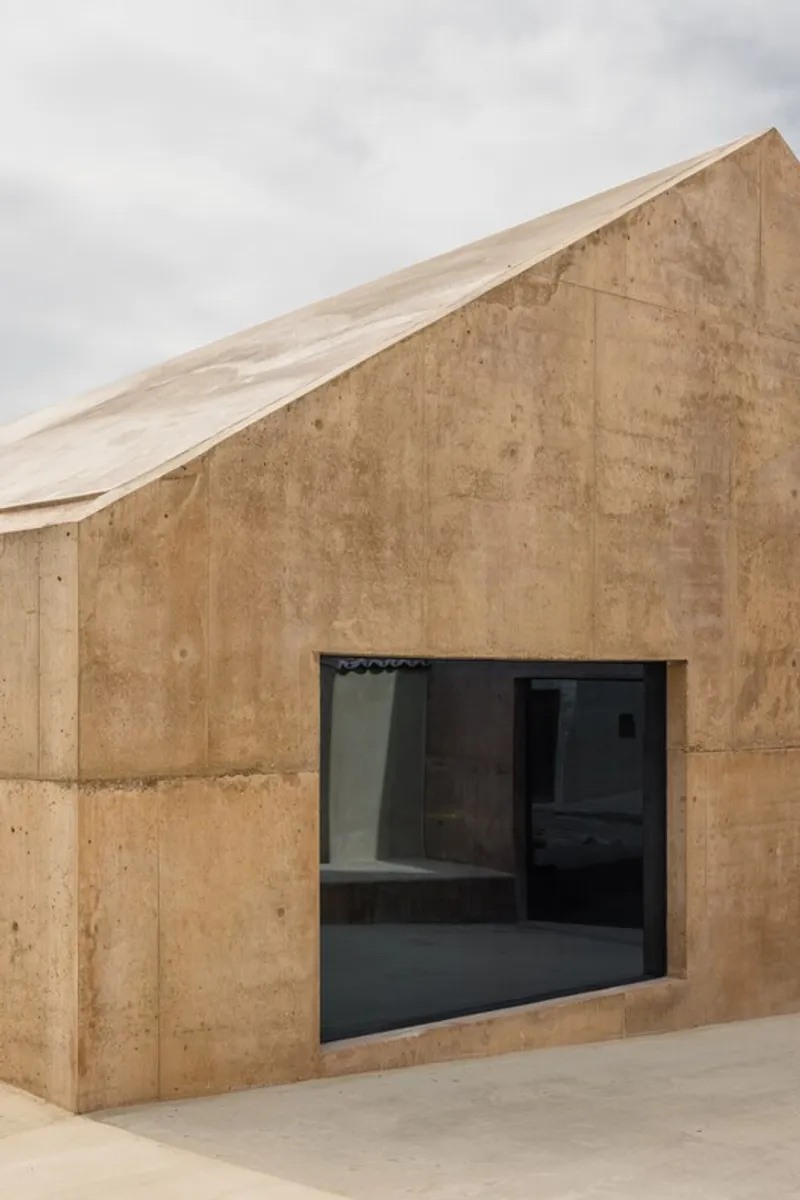
The new architectural expansion introduces two intersecting volumes in an L-shape, forming a courtyard that dialogues with the historic structure. These contemporary additions respect the original scale and proportions, maintaining the spirit of successive rural expansions while inserting a 21st-century layer of architecture.
The design respects the vernacular character of the original dwelling, while the new elements reinterpret rural simplicity with modern construction methods and materials.
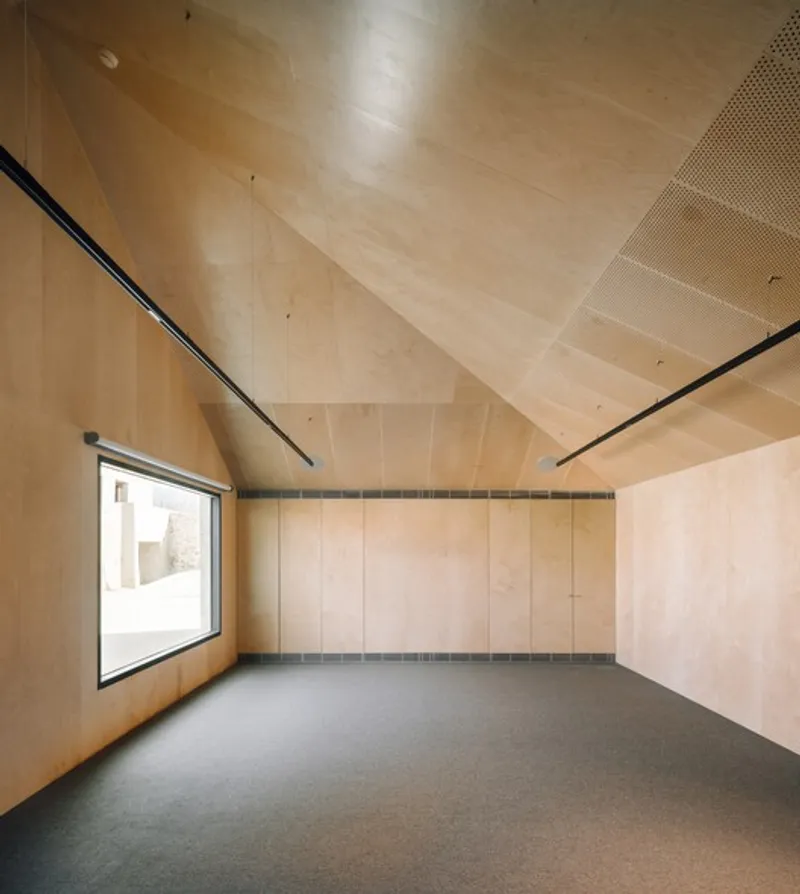
Interior Spaces and Museum Identity
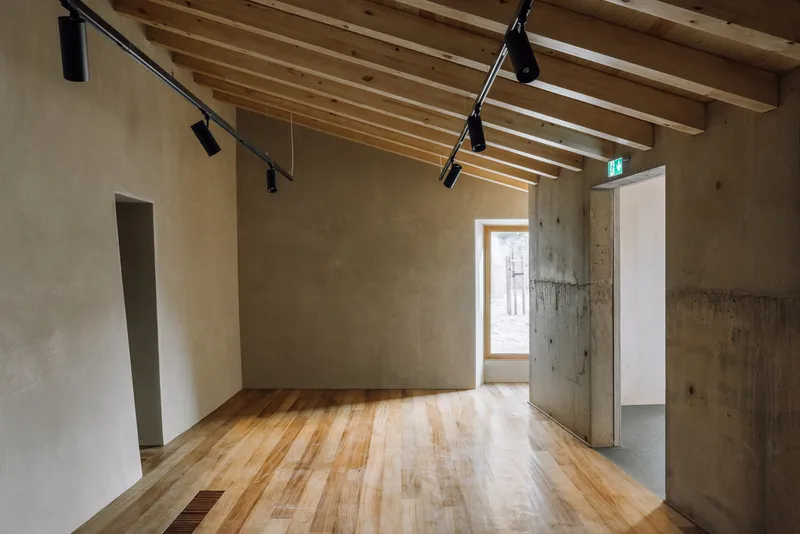
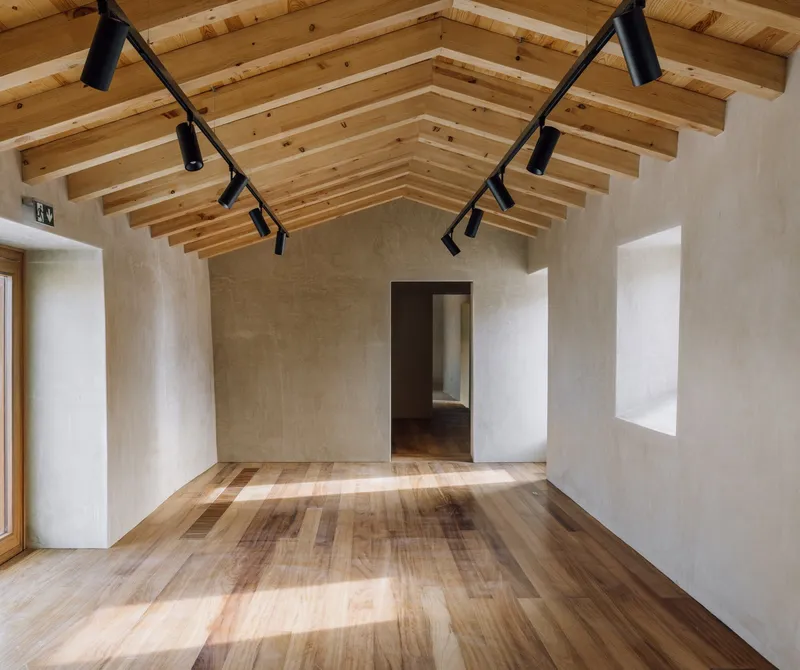
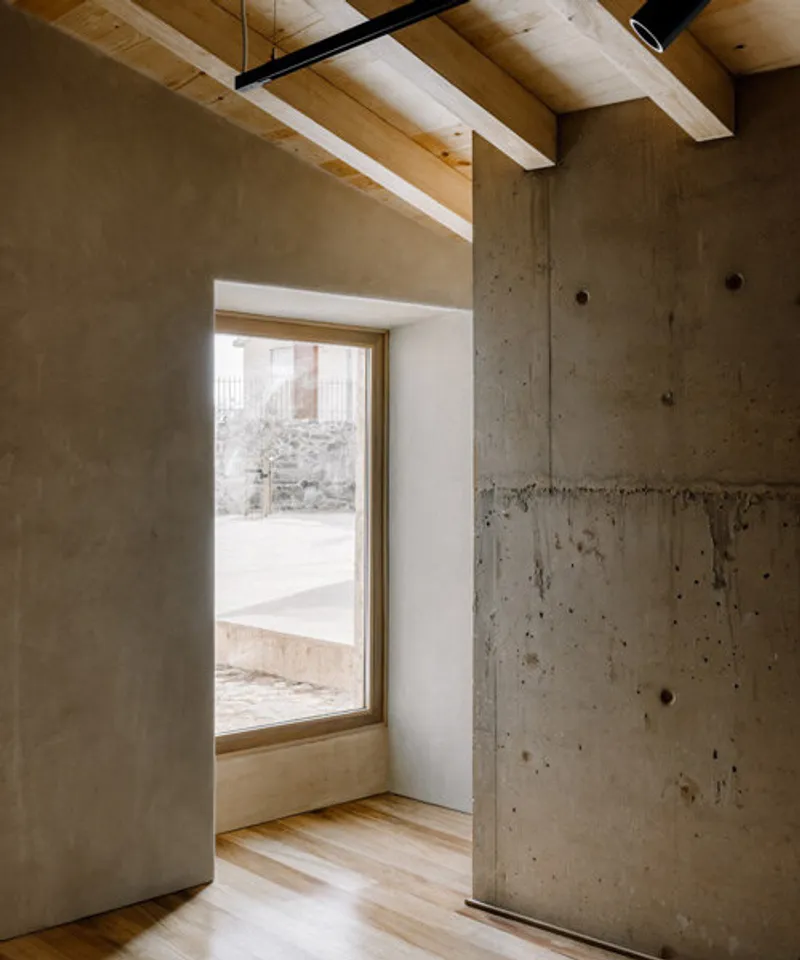
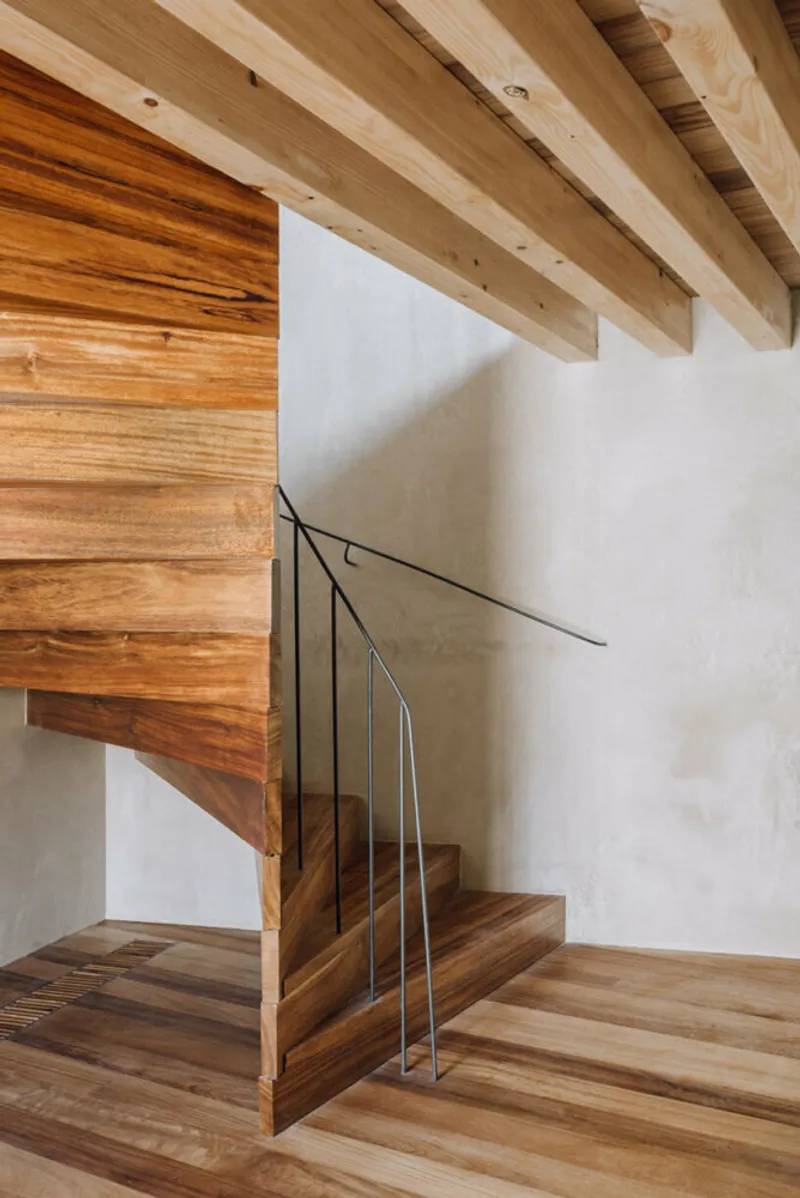
Inside, the Museum of Rurality showcases both architectural authenticity and exhibition functionality. Wooden beams, stone textures, and traditional rural detailing remain visible, enhancing the museum’s narrative of continuity and transformation.
The geometry and circulation allow visitors to read the historical layers of construction, engaging with the house not only as a museum but also as an artifact in itself.
Architectural Significance
Casal Saloio – Museum of Rurality stands as a model of adaptive reuse architecture, where preservation and modern design work hand in hand. The project highlights how architecture can safeguard intangible heritage—such as ways of living, building, and inhabiting—while adapting to contemporary needs.
It is not only a museum but also a cultural landmark that reflects Portugal’s rural identity and demonstrates the potential of architecture as a tool for memory, education, and community engagement.
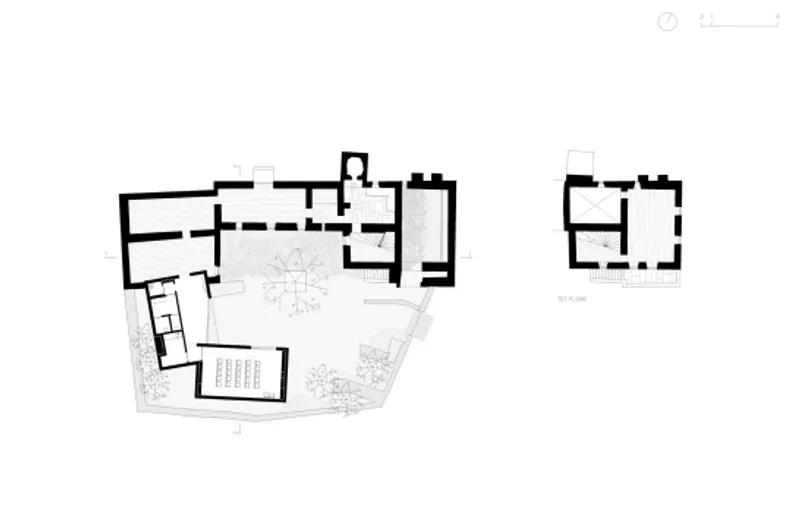
All the photographs are works of Archive Miguel Marcelino (photo by Lourenço T. Abreu), Archive Miguel Marcelino




Popular Articles
Popular articles from the community


Co-Life: Senior Housing Design That Reconnects Older Adults With the City
Co-Life reimagines senior housing design through healing gardens, shared streets, workshops, and a sustainable community across generations.

The Ocean Hive: Sustainable Architecture for a Self-Sufficient Civilization at Sea
The Ocean Hive imagines sustainable architecture at sea, where modular habitats, algae, wave power and ocean waste sustain a growing colony.

The Musturak Paradise: Senior Living Architecture for a Connected Future in Temara, Morocco
The Musturak Paradise reimagines senior living architecture in Temara via private homes, social spaces, culture, community, and shared care.

Riyadh For All: Intergenerational Urban Design for Active Aging in Rabat
Riyadh For All reimagines urban design in Rabat with intergenerational co-living, adaptive courtyards, and Moroccan cultural exchange today.


Similar Reads
You might also enjoy these articles


Hodi-Mandai Geram
Project Function: Preservation and revitalization of the Intangible heritage and socio-spatial identity of the Hodi by Housing, Cultural Memory Center, Sacred Grove, landscape, local tourism economy


Olio Towers: A Mid-Rise for Performers That Fuses Housing, Rehearsal, and Stage
Located blocks from Houston's Theater District, this modular tower stacks living units around a central performance atrium.

Oasis: Modular Green Housing Carved into Dhaka's Urban Fabric
A shortlisted Plugin Housing entry reclaims unauthorized settlements in Dhaka with stepped concrete volumes, green roofs, and ventilation-driven design.

Black Hole: A Floating Megastructure for the Post-Physical Era
Emiliano Mazzarotto envisions a spherical, self-scaling arena where e-sports, digital hotels, and holographic stadiums replace traditional public space.

Explore Hospitality Building Competitions
Discover active competitions in this discipline



Challenge to reimagine the Iron Throne


Photograph architecture without architects


Illustrate the lost glory of Angkor Wat - Render Challenge


Design challenge to reuse E-waste
Comments (0)
Please login or sign up to add comments
No comments yet. Be the first to comment!